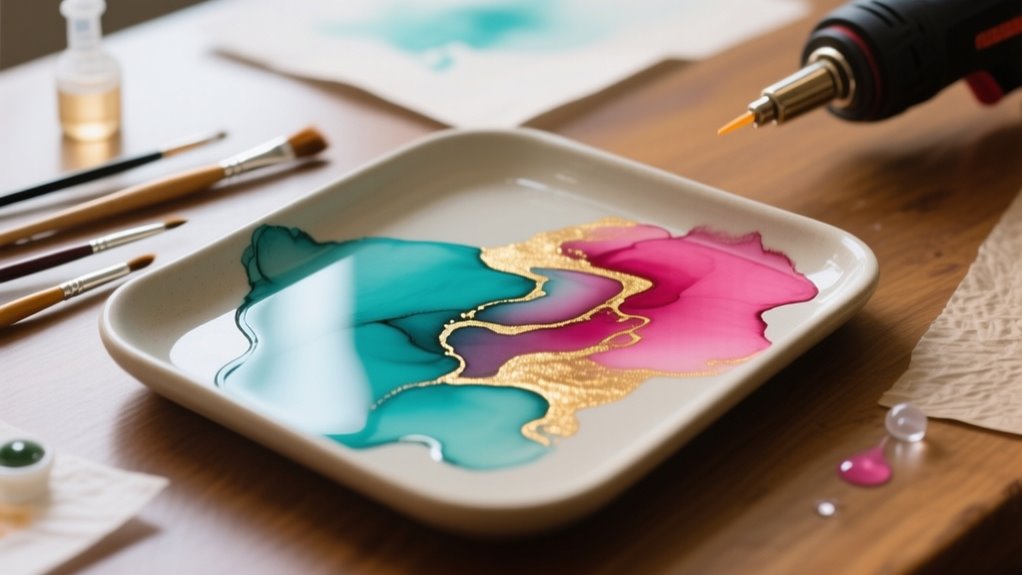
You use alcohol ink to create vibrant, flowing artwork on non-porous surfaces like glass, ceramics, metal, and resin. It’s perfect for making abstract paintings, decorative home décor, jewelry, and mixed media projects thanks to its quick drying and easy blending properties.
You can experiment with various tools and techniques to produce unique textures and effects. Keep going, and you’ll discover even more creative ways to apply and protect your alcohol ink art.
What Is Alcohol Ink and How It Works
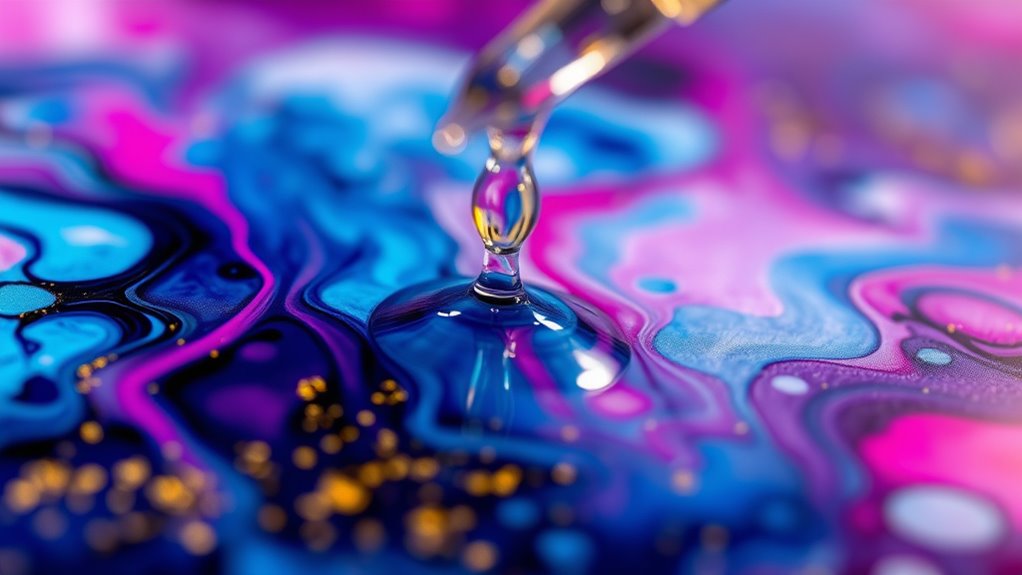
What makes alcohol ink unique is its vibrant, fast-drying pigment that works best on non-porous surfaces. You’ll find that this alcohol-based dye creates stunning effects because it disperses and blends effortlessly when applied.
Alcohol ink stands out with its vibrant, fast-drying pigment that blends beautifully on smooth, non-porous surfaces.
As you work, the alcohol in the ink causes the pigment to spread and interact, forming flowing, transparent layers filled with vibrant color. This interaction produces distinctive patterns and textures that you can’t achieve with traditional paints.
If you dilute the ink with isopropyl alcohol, you’ll notice even more transparency and fluid movement, allowing you to control the depth and softness of your colors. Because of these qualities, alcohol ink is perfect for abstract art and decorative projects where you want bold, translucent visuals.
When you use it, you tap into a medium that’s both dynamic and versatile, giving you a fresh way to bring your creative ideas to life on smooth, non-porous surfaces.
Best Surfaces for Alcohol Ink Art
Although alcohol ink can be applied to various materials, you’ll get the best results on non-porous surfaces like Yupo paper, ceramic tiles, glass, and plastic. These surfaces prevent ink absorption, allowing the vibrant colors to flow freely and blend smoothly.
Yupo paper, a popular synthetic option, is water-resistant and won’t warp, making it perfect for detailed and vivid alcohol ink art. Ceramic tiles and glazed surfaces offer durability and can be sealed for decorative or functional pieces like coasters and plates. Using non-porous surfaces enhances your ability to control the ink’s movement and achieve rich blending effects.
While you can use porous materials like canvas, they require special preparation to handle alcohol ink properly. Sticking to non-porous surfaces ensures your artwork maintains its vibrancy and allows you to experiment confidently with blending, dropping, and pouring techniques without worrying about unwanted absorption or dull colors.
Techniques for Creating Unique Alcohol Ink Effects
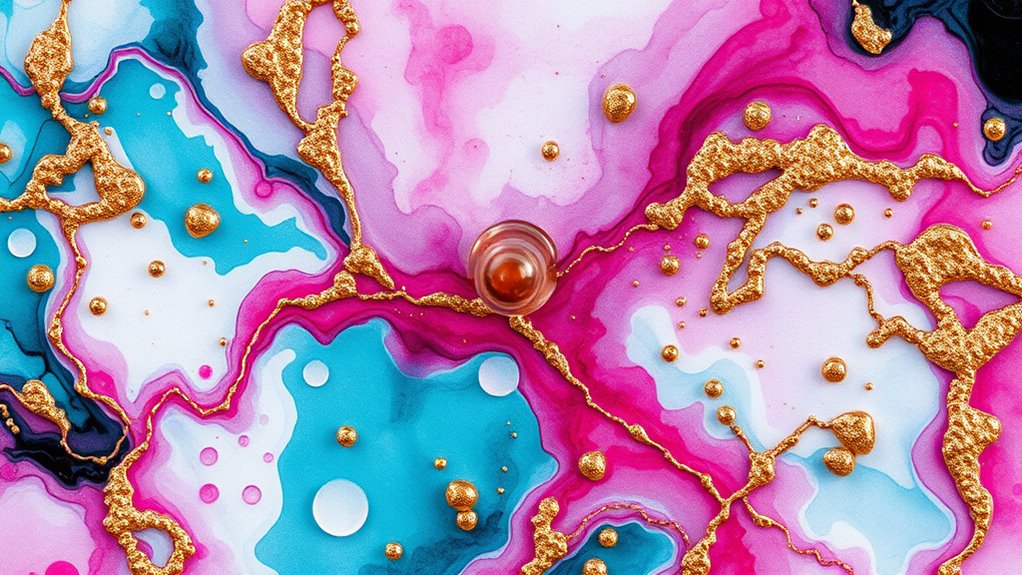
You can create stunning effects by blending and diluting alcohol inks with isopropyl alcohol. This helps you control transparency and color flow in your artwork. Plus, using tools like brushes, droppers, or heat guns lets you really play around with how the ink moves and interacts with the surface.
Try experimenting by tilting or rocking your piece while the ink is still wet. This adds organic textures and makes each artwork truly one-of-a-kind. It’s all about having fun and seeing where the ink takes you!
Blending And Dilution
When you blend alcohol inks with isopropyl alcohol or specialized blending solutions, you create smooth shifts and soft gradients that bring your artwork to life. Dilution with high-percentage alcohol enhances transparency, letting you build delicate layers.
Dropping alcohol onto wet ink causes natural spreading and unique textures, adding depth. Mastering blending and dilution techniques lets you design vibrant, nuanced pieces.
| Technique | Effect | Tip |
|---|---|---|
| Blending | Smooth gradients | Use blending solution |
| Dilution | Increased transparency | Try 99% isopropyl alcohol |
| Dropping alcohol | Organic shapes | Apply on wet ink |
| Layering | Depth and complexity | Build up thin layers |
| Controlled spread | Texture and interest | Manipulate with straws |
Application Tools Usage
Mastering blending and dilution sets the stage for experimenting with various application tools that shape how alcohol ink behaves on the surface. You can use droppers and squeeze bottles for precise placement, allowing controlled blending and layering of colors.
Brushes help add fine details or lift excess ink, creating texture or negative space effects. Air tools like hairdryers or canned air blow the ink, encouraging spontaneous mixing and forming abstract, organic patterns.
Spraying and tilting the surface further enhance this dynamic interaction. These techniques let you manipulate flow and color *shift*, giving you creative control while embracing the unpredictability that makes alcohol ink art so *engaging*. Using diverse application tools, you can achieve unique effects that elevate your artwork beyond simple brushstrokes.
Surface Interaction Effects
Although alcohol ink behaves differently on various surfaces, understanding these interactions helps you create striking effects. When you apply alcohol ink on wet surfaces, you facilitate smooth blending that produces flowing, marbled patterns.
Dropping isopropyl alcohol onto wet ink triggers cellular effects, creating textured, bloom-like details that add depth. You can also use a straw or air blower to spread the ink organically, enhancing these surface interaction effects.
Applying ink on dry surfaces, on the other hand, gives you sharp edges and distinct markings, perfect for contrast and detail. By manipulating the ink with tools like brushes or heat guns, you control the texture further, from soft gradients to intricate lines.
Mastering these techniques lets you access endless creative possibilities with alcohol ink.
Abstract Painting With Alcohol Ink
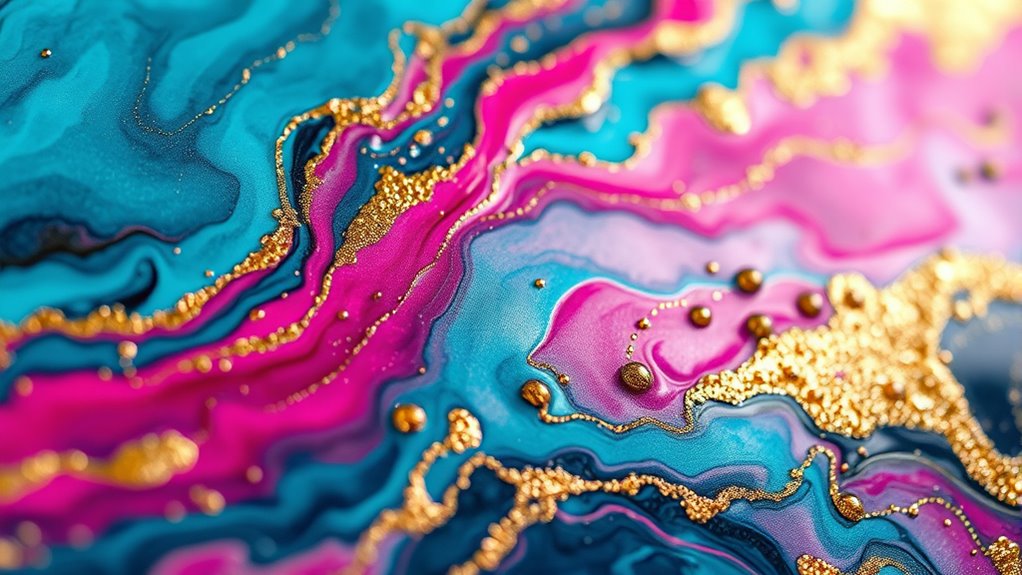
When you use alcohol ink for abstract painting, you get to dive into some really cool fluid art techniques that make vibrant, flowing designs. It’s pretty fun to see how the colors blend smoothly, especially on non-porous surfaces like Yupo paper, which helps you achieve some stunning effects.
And the best part? You can experiment with different surfaces and blending methods. This way, you discover unique textures and gradients that really make your artwork stand out. It’s all about playing around and seeing what happens!
Fluid Art Techniques
Because alcohol ink dries quickly, you can layer and rework your designs easily to create vibrant, abstract fluid art. Using alcohol inks on non-porous surfaces like Yupo paper or ceramic, you’ll explore fluid art techniques such as pouring, dropping, and tilting to manipulate the ink’s flow and texture.
These methods let you craft mesmerizing, marbled effects that feel both spontaneous and controlled.
Try these techniques to deepen your understanding:
- Blow gently on the ink to create delicate, wispy patterns.
- Use heat tools to encourage movement and texture.
- Tilt your surface to guide the ink’s flow naturally.
- Layer colors quickly to build luminosity and depth.
These fluid art techniques harness alcohol inks’ fast-drying, transparent qualities for dynamic abstract compositions.
Color Blending Effects
Mastering fluid art techniques sets the stage for exploring color blending effects with alcohol ink. You’ll find alcohol inks perfect for creating smooth, seamless gradients thanks to their fluid nature.
By diluting them with isopropyl alcohol, you can achieve transparent washes that offer soft gradations between hues. Using tools like air blowers or brushes, you can manipulate the inks to form organic patterns, like marbled swirls or infinity rings, that showcase vibrant color blending.
Plus, alcohol ink’s quick-drying property lets you layer and reactivate dried areas to build complex, multi-dimensional works. This rapid drying encourages experimentation, helping you create dynamic abstract pieces with rich, fluid color interactions.
With alcohol inks, you have a versatile medium for mastering striking color blending effects.
Surface Compatibility
Where can you best use alcohol ink to release its vibrant, flowing potential? You’ll want to focus on non-porous surfaces, as they offer the ideal surface compatibility for this medium. Smooth, slick materials like Yupo paper, glass, metal, and ceramic allow the ink to flow, blend, and create luminous abstract effects without soaking in.
Preparing your surface with sealing or priming enhances color vibrancy and protects your piece from damage or ink reactivation. Keep these tips in mind for optimum results:
- Choose non-porous surfaces to prevent ink absorption
- Use sealing to lock in colors and protect the artwork
- Opt for smooth surfaces to encourage fluid blending
- Avoid porous materials that hinder ink flow and vibrancy
Alcohol Ink in Resin and Mixed Media
When you mix alcohol ink with resin, you release a world of vibrant colors and intricate patterns that bring your art to life. Alcohol inks in resin art create unique color dispersions, producing marbled and abstract effects that add depth and texture.
Dropping alcohol ink onto curing resin allows you to achieve cellular or petri dish patterns with metallic or transparent highlights. This technique lets you experiment with color blending, layering, and fluid designs.
Sealing alcohol inks in resin also protects your work from fading, giving it a glossy, durable finish perfect for jewelry, coasters, and decorative pieces.
| Technique | Effect | Application |
|---|---|---|
| Alcohol ink drops | Cellular patterns | Resin surfaces |
| Color blending | Marbled effects | Mixed media art |
| Layering | Depth and texture | Jewelry and decor |
| Sealing with resin | Glossy, durable finish | Long-lasting artwork |
Decorating Ceramics and Glass With Alcohol Ink
How can you transform plain ceramics and glass into vibrant, eye-catching art? By decorating these smooth, non-porous surfaces with alcohol ink, you can create stunning, glossy finishes that bring your designs to life. Alcohol ink’s transparency and fluidity allow you to blend, layer, and manipulate colors easily, making it perfect for custom artwork on ceramic tiles, mugs, and glassware.
When decorating ceramics and glass with alcohol ink, keep these tips in mind:
Use glazed or smooth surfaces for better ink adhesion and a glossy look. Experiment with abstract designs, marbling, or gradient effects to add unique flair. Seal your artwork with resin or spray varnish to protect it from fading and damage. Take advantage of alcohol ink’s quick drying time to layer colors efficiently.
With alcohol ink, decorating ceramics and glass becomes an accessible way to create personalized, vibrant pieces that stand out.
Alcohol Ink for Furniture and Home Décor
Although furniture and home décor often start as plain and simple, you can transform them into vibrant statement pieces using alcohol ink. This versatile medium works beautifully on surfaces like glass, ceramic, and wood, allowing you to add metallic, abstract, and colorful designs that stand out.
You can customize tabletops, vases, or decorative tiles by blending and layering colors seamlessly, giving your furniture a unique, artistic flair. Once you’ve created your design, sealing it with resin or varnish protects your work, ensuring it lasts as part of your home décor.
Using alcohol ink for furniture lets you express creativity and personalize your space with one-of-a-kind pieces that bring modern style and energy. Whether you want to refresh an old item or craft a bold new look, alcohol ink offers endless possibilities to elevate your home décor with vivid, eye-catching effects.
Jewelry and Small Crafts With Alcohol Ink
Why settle for ordinary jewelry and crafts when you can transform them with alcohol ink’s vibrant colors and unique effects? Using alcohol ink on jewelry and small crafts lets you create one-of-a-kind pieces with stunning marbled, metallic, or transparent finishes.
Elevate your jewelry and crafts with alcohol ink’s vibrant hues and unique, mesmerizing finishes.
Whether you’re working on pendants, beads, keychains, or decorative tags, alcohol ink adds a bold splash of color that stands out.
Here’s why alcohol ink is perfect for your next project:
It adheres beautifully to surfaces like metal, glass, ceramic, and plastic.
You can blend and layer colors to achieve intricate, eye-catching designs.
Small crafts such as charms and ornaments become vibrant statement pieces.
The ink’s quick drying time speeds up your creative process.
Sealing and Protecting Alcohol Ink Artwork
After adding vibrant colors to your jewelry or crafts with alcohol ink, you’ll want to protect your work to keep it looking fresh. Sealing your artwork with varnish or resin prevents fading, UV damage, and environmental wear. It also stops the inks from reactivating, which can cause smudging or color spreading.
Applying at least two coats of a UV-resistant spray enhances durability and guarantees your piece stays vibrant longer. Proper sealing makes cleaning easier and safeguards your art during handling or display. Keep sealed pieces out of direct sunlight to prolong their life.
| Step | Purpose |
|---|---|
| Use varnish or resin | Protect from UV damage and fading |
| Apply UV-resistant spray | Enhance durability and longevity |
| Coat twice | Prevent smudging and color spreading |
| Avoid direct sunlight | Maintain vibrant colors |
| Handle carefully | Preserve artwork integrity |
Sealing truly helps protect your alcohol ink creations effectively.
Where to Buy Alcohol Ink Supplies and Materials
When you’re ready to gather your alcohol ink supplies, you can find a wide selection at popular art stores like Michaels and Hobby Lobby, as well as specialty online retailers such as Jackson’s Art and Blick Art Materials. These art stores and online retailers offer a variety of brands, including Ranger, Jacquard Piñata, Copic, and Spectrum Noir, each with unique color ranges and formulations.
Buying from these sources guarantees you get quality materials to enhance your creativity.
Consider these tips when shopping for your supplies:
- Explore kits that bundle inks, blending solutions, and applicators, perfect for beginners and pros alike.
- Check out Amazon Affiliates Shop Pages for convenient access and discounts.
- Support content creators by purchasing through affiliate links, helping them share more tips and techniques.
- Compare brands to find the best fit for your style and project needs.
With these options, you’ll have everything needed to plunge into alcohol ink art confidently.
Frequently Asked Questions
Is Alcohol Ink Safe for Use Around Children and Pets?
Alcohol ink can be safe around children and pets if you take proper precautions. For child safety, always keep containers sealed and out of reach to avoid spills or ingestion.
Pet risks mainly come from accidental contact or inhaling fumes, so use it in well-ventilated areas and consider wearing masks. If you’re worried, non-toxic alternatives might be a better choice. Once dried and sealed, alcohol ink poses minimal risk in your home.
How Long Does Alcohol Ink Take to Dry Completely?
Think of alcohol ink drying like a sunset. It unfolds at its own pace. Your drying time usually ranges from 10 to 15 minutes for touch-dry, but complete drying can take up to 72 hours.
Environmental factors like humidity and airflow affect this, as do your application techniques. Thinner layers dry faster, while thicker ones need patience. Using a heat gun speeds things up, helping you seal your masterpiece without smudging.
Can Alcohol Ink Be Removed From Clothing or Skin?
Yes, you can remove alcohol ink from clothing and skin with proper stain removal techniques. For skin cleaning, wash the area immediately using soap and an alcohol-based hand sanitizer or rubbing alcohol to lift the ink.
When it comes to clothing treatment, blot the stain with rubbing alcohol or a stain remover before laundering. Keep in mind some fabrics need special care, and stubborn stains might require multiple treatments, so act quickly for best results.
What Are the Best Storage Tips for Unopened Alcohol Ink?
Imagine you’re prepping for a big project using color blending and transparency effects. To keep your unopened alcohol ink fresh, store it cool and dark, ideally between 60-75°F, and upright to prevent leaks.
This way, you maintain the quality needed for technique variations. Avoid sunlight and humidity, which can ruin pigments. Following these tips guarantees your inks stay vibrant and ready whenever inspiration strikes.
Are There Eco-Friendly or Non-Toxic Alcohol Ink Options Available?
Yes, you can find eco friendly alternatives to traditional alcohol inks that use organic dye options, making them safer for you and the environment. Choosing non toxic ink benefits your health by reducing exposure to harmful chemicals and improves indoor air quality.
Many brands now offer formulas with low VOCs or solvent-free ingredients. Just make sure you check labels carefully to confirm these features before buying to enjoy safer, greener art supplies.
Conclusion
Think of alcohol ink as a vibrant river flowing through your creative landscape, shaping every stone and leaf with its unpredictable dance. Whether you’re painting abstract dreams, crafting jewelry, or invigorating furniture, this liquid art breathes life into your vision.
Just like a garden needs care, sealing your work protects its brilliance. So plunge in, explore the colorful currents, and let your imagination sail freely on this ever-changing, radiant tide.
Leave a Reply