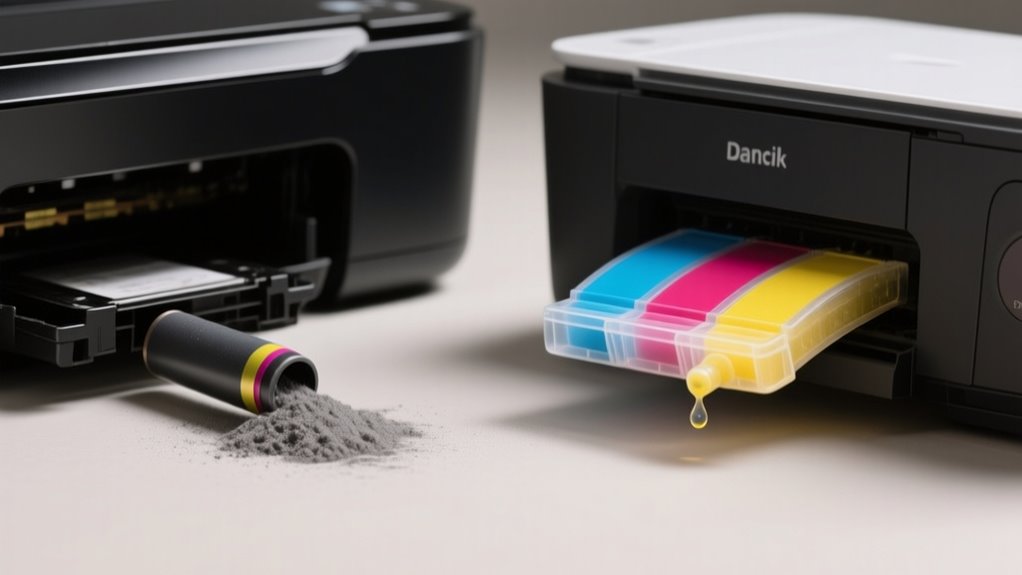
You’ll notice toner and ink differ mainly in printing methods and durability. Inkjet printers use quick-drying liquid ink, great for vibrant photos and detailed images, but ink can dry out and smudge.
Toner, a dry powder used by laser printers, offers sharp, long-lasting text and fast printing speeds, ideal for heavy use. Toner cartridges last much longer and cost less per page over time.
If you want to understand which suits your needs best, there’s more to explore about their uses and costs.
How Ink and Toner Printing Technologies Differ
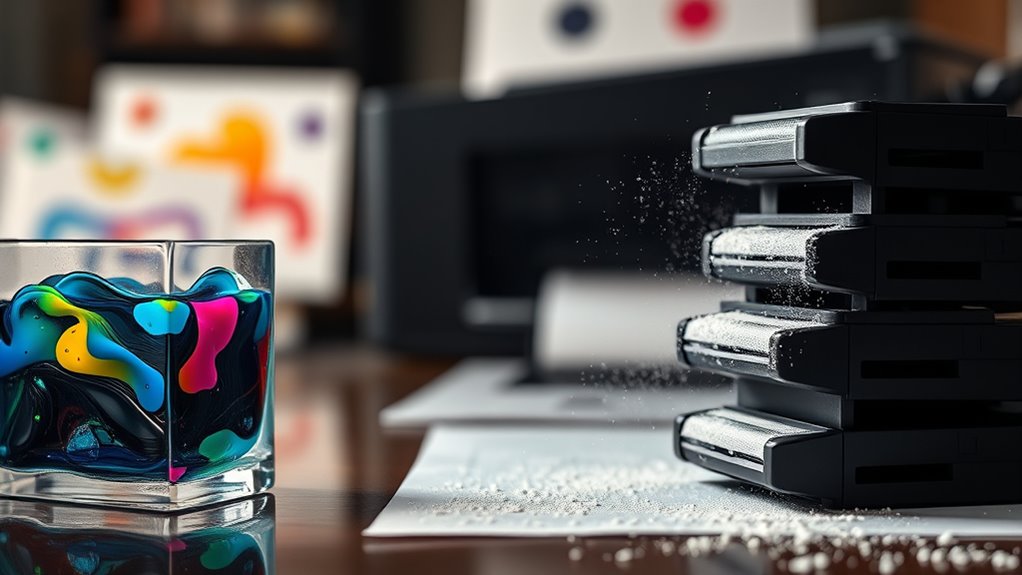
Understanding the difference between ink and toner starts with how they print. Inkjet printers spray tiny droplets of liquid ink through microscopic nozzles, directly onto the paper. This water-based ink dries quickly, making it perfect for detailed images and vibrant photos.
Inkjet printers use tiny droplets of water-based ink for vibrant photos and detailed images.
On the other hand, laser printers use a laser to create an electrostatic image on a charged drum. Then, toner, a dry powder, is fused onto the paper with heat, resulting in sharp, crisp text.
When you compare the two, ink cartridges generally print fewer pages, around 200-300, and need replacing more often. Toner cartridges, however, can handle thousands of pages and typically last much longer.
Ink cartridges can also dry out or expire after about 18 months, while toner cartridges usually don’t have that problem. Both ink and toner have their unique printing technologies, so understanding these differences helps you make smarter choices for your printing needs.
Which Printer Should You Choose: Inkjet or Laser?
When you’re deciding between inkjet and laser printers, it really comes down to how you plan to use it—whether it’s for home or business—and the kind of print quality you want. Inkjet printers are great if you need detailed color photos because they handle those really well. On the other hand, laser printers tend to be faster and are better suited for printing a lot of text.
You’ll also want to think about the costs involved. It’s not just the initial price of the printer but also the ongoing expenses like ink or toner. Depending on how much you print regularly, one might be more cost-effective than the other. So, taking a moment to consider your typical print volume can help you make the best choice.
Home Versus Business Use
Although both inkjet and laser printers serve your printing needs, choosing the right one depends largely on where and how you plan to use it. If you print occasionally at home, an inkjet printer fits best. It offers vibrant color and handles various paper types, perfect for photos and casual projects.
Its lower initial cost makes it a smart choice for low to moderate print volumes. On the other hand, if you run a business requiring faster speeds and higher volume, a laser printer with toner provides durable, efficient output.
Laser printers excel in sharp text and consistent print quality, making them ideal for professional environments. Ultimately, your decision hinges on balancing print volume, budget, and the type of documents you produce most often.
Print Quality Differences
Choosing between an inkjet and a laser printer isn’t just about speed or volume. It also comes down to the kind of print quality you need. Inkjet printers shine when producing vibrant, true-to-life images and photographs because they use liquid ink colors.
If you’re aiming for high-quality photo prints, inkjets are your best bet. On the other hand, laser printers deliver sharper, crisper text and higher resolution, making them ideal for professional documents. They use toner to create precise, uniform images, perfect for detailed graphics and clear text.
Keep in mind, inkjet print quality can suffer if cartridges dry out or nozzles clog, which might affect image detail. So, consider what you print most to choose the right printer for your needs.
Cost And Volume Considerations
Since your printing needs directly affect expenses, understanding the cost and volume differences between inkjet and laser printers is essential. Inkjet printers have a lower initial cost and cheaper cartridges, making them ideal if you print fewer than 1,000 pages monthly.
However, ink cartridges only yield about 200-300 pages, so frequent replacements drive up long-term costs. On the other hand, laser printers come with higher upfront costs but shine when handling high-volume printing. Their toner cartridges can produce 2,000-3,000 pages at a lower cost per page, making them more economical if you print over 2,000 pages each month.
Ultimately, choosing between inkjet and laser depends on your monthly print volume and how much you’re willing to spend on cartridges over time.
Why Ink Is Best for Photos and Color Documents
Why does ink perform better than toner when it comes to photos and color documents? When you use inkjet printers, you get vibrant, true-to-life color that’s hard to match. The liquid ink blends smoothly on paper, letting you capture subtle gradations and fine details that make photos stand out.
Inkjet printers handle various photo paper types, producing high-resolution, glossy images with impressive richness and color accuracy. Plus, the water-based ink dries quickly, so you don’t have to worry about smudging your colorful prints.
If you want professional-quality photographs or any detailed color documents, inkjet printers are your best bet. They’re specifically designed to bring out the depth and vibrancy in photos, ensuring every shade looks just right. So, for stunning color output and sharp photos, inkjet printers and their liquid ink give you superior results compared to toner.
Why Toner Is Better for Text and High-Speed Printing
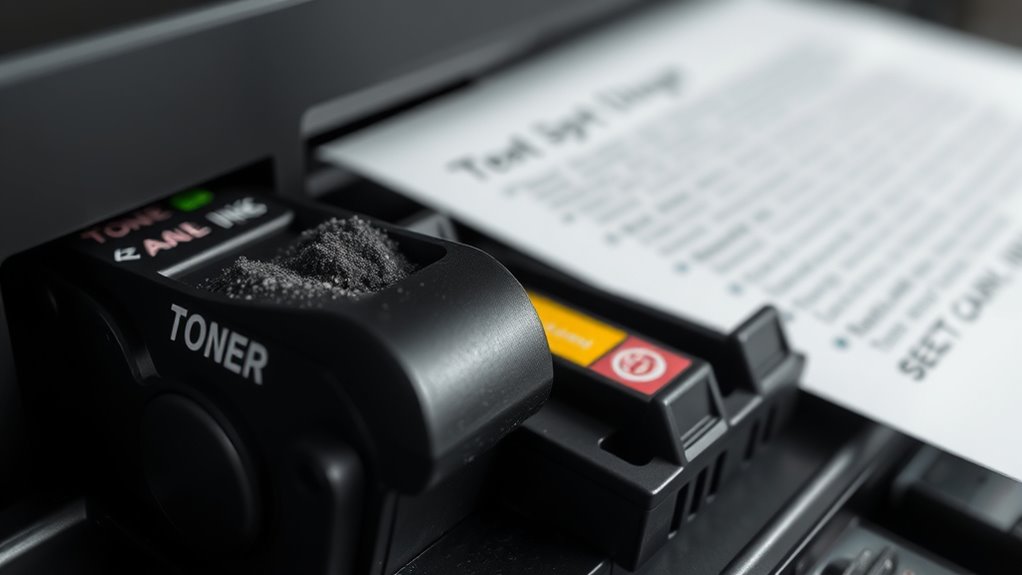
When you need sharp, clear text, toner really comes through with superior print quality and precise detail. Plus, it helps your printer work faster, so it can handle high-volume jobs without slowing down. That means you get crisp documents quickly—perfect for busy offices or heavy printing tasks.
Superior Text Clarity
Although both toner and ink can produce printed text, toner delivers sharper, crisper results that stand out with higher resolution. Thanks to its fine powder and precise layering, toner prints maintain excellent sharpness, ensuring your documents look professional and easy to read.
Plus, toner prints resist smudging and water damage, keeping text clear over time.
Here’s a quick comparison to highlight why toner excels in text clarity:
| Feature | Toner |
|---|---|
| Text Sharpness | High, precise edges |
| Resolution | Superior high resolution |
| Durability | Water- and smudge-resistant |
When you need clear, high-resolution text for important documents, toner is the better choice every time.
Faster Print Speeds
How quickly do you need your documents printed? If speed is a priority, toner-based laser printers have a clear advantage over inkjet printers. Laser printers can reach print speeds of up to 55 pages per minute, making them ideal for high-volume text printing.
This speed comes from the dry toner powder that fuses onto paper instantly with heat, eliminating any drying time that inkjet printers require. Inkjet printers, on the other hand, deliver slower print speeds because their liquid ink needs time to dry. This can cause delays especially with large print jobs.
How Ink and Toner Cartridge Types Affect Printer Performance
Why does the type of ink or toner cartridge matter for your printer’s performance? Using the right cartridge directly affects print quality and reliability. OEM ink cartridges guarantee compatibility with your printer, ensuring consistent results. Compatible or remanufactured cartridges can save you money but may sometimes compromise print quality or cause issues.
Choosing the right cartridge ensures print quality and reliability, with OEM options offering guaranteed compatibility.
Ink cartridges usually print 200-300 pages before needing replacement, so you’ll replace them more often, which might impact performance over time.
Toner cartridges, especially high-yield types, can print up to 10,000 pages, boosting productivity by reducing how often you change cartridges. Toner quality influences sharpness and resolution, which is essential for text-heavy documents.
Ensuring proper cartridge compatibility with your printer model helps avoid smudging, streaks, or faded prints. In short, choosing the right ink or toner cartridge type helps maintain peak print quality and keeps your printer running smoothly.
What Cartridge Yields Mean for Your Printing Budget
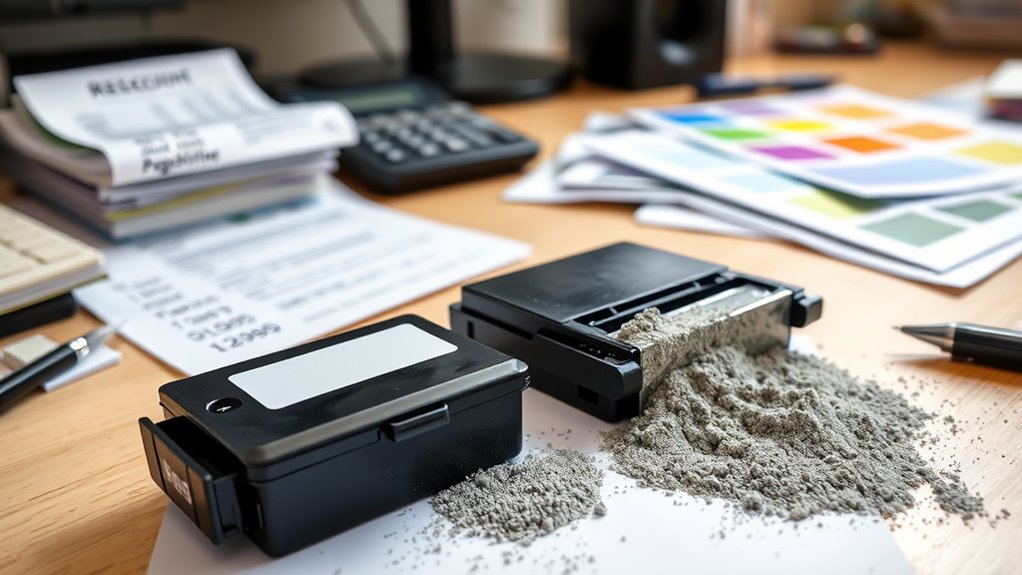
When you choose a cartridge, its yield directly impacts your printing budget by determining how many pages you can print before replacement. Cartridge yield measures the number of pages a cartridge produces, which influences your overall printing costs.
Standard toner cartridges usually print 2,000–3,000 pages, but high-yield toner options can handle 10,000 pages or more, offering more value upfront. Ink cartridges, on the other hand, typically yield 200–300 pages, with high-yield ink reaching up to 1,000 pages.
Although high-yield cartridges cost more initially, they lower your cost per page, making them smarter for frequent printing. Keep in mind that actual yields depend on your print coverage. Standard estimates assume about 5% coverage, so higher coverage reduces total yield.
Why Businesses Prefer Toner for High-Volume Printing
When you print a lot, toner really helps you save money because it lasts longer and lowers your cost per page. And it’s not just about saving cash—toner also speeds up your workflow with fast printing that keeps productivity high. On top of that, toner delivers sharp, durable prints that resist smudges and fading, which is perfect for professional documents. So, all in all, toner makes high-volume printing easier and more efficient for businesses.
Cost Efficiency Over Time
How can businesses save money on printing without sacrificing quality? Toner cartridges offer a lower cost per page compared to inkjet printers, especially for high-volume tasks. Despite higher upfront costs, toner’s longevity and durability cut expenses over time.
You won’t worry about smudges or frequent replacements, which means fewer reprints and less waste.
| Feature | Toner Cartridges | Inkjet Printers |
|---|---|---|
| Page Yield | Up to 10,000 pages | Few hundred pages |
| Cost Per Page | As low as 3 cents | Higher |
| Cartridge Storage | Long shelf life, no drying | Dries out quickly |
Choosing toner means you’ll see quicker returns on investment and consistent print quality without the hassle.
Speed And Productivity
Saving money on printing is important, but speed and productivity can make an even bigger impact on your business operations. Toner printers deliver impressive speed, producing up to 55 pages per minute, far faster than most inkjet models.
This rapid output streamlines high-volume tasks like reports and business documents, letting you meet tight deadlines with ease. Toner cartridges also offer a high page yield, often exceeding 8,000 pages, so you won’t waste time on frequent replacements.
Because toner fuses to paper with heat, your printer runs continuously without drying delays, maximizing productivity. By choosing toner, you guarantee consistent, professional-quality prints at a pace that keeps your workflow moving efficiently, making it the preferred option for businesses handling heavy printing demands.
Print Durability And Quality
Although inkjet printers may suit casual use, businesses rely on toner for print durability and quality that withstand heavy handling and time. Toner produces high-quality prints that resist smudging, water, and fading, making them ideal for long-lasting documents.
The precise layering of toner ensures sharper text and images, maintaining consistent quality even with frequent use. This durability supports high-volume printing demands, delivering professional results that stand the test of time.
| Feature | Toner Advantage |
|---|---|
| Print Durability | Resists smudging, water, and fading |
| Quality | Sharper, crisper text and images |
| Consistency | Maintains quality over time |
| Speed | Up to 55 pages per minute |
| Suitability | Ideal for archival and professional use |
Comparing Environmental Impact and Cost Efficiency of Ink and Toner Printing
When you compare ink and toner printing, you’ll find that toner cartridges offer better environmental benefits and cost efficiency. Toner cartridges produce less waste because they last longer, meaning you replace them less often. This reduces the overall environmental impact since fewer resources are used in manufacturing and less packaging waste is generated.
Toner-based printers also consume less energy during operation, which lowers their greenhouse gas emissions compared to inkjet printers.
Ink cartridges, on the other hand, require frequent replacements and often come with more packaging, increasing their environmental footprint. Over time, the cost of buying multiple ink cartridges adds up, making ink printing less economical.
Furthermore, properly recycling and remanufacturing toner cartridges further reduce their environmental impact, making toner printing a greener and more cost-efficient choice for your printing needs.
Cartridge Longevity and Replacement Tips for Ink and Toner
Because toner cartridges last much longer than ink cartridges, you won’t need to replace them as often. Some high-yield toner cartridges can print up to 10,000 pages. Ink cartridges, on the other hand, usually require replacement after just 200-300 pages. This difference in cartridge longevity means you’ll spend less time swapping toner cartridges and more time printing efficiently.
To maximize the shelf life of both ink and toner, store your replacement cartridges in a cool, dry place away from direct sunlight. Keep an eye on print quality. If you notice streaks or faded prints, it’s time to install new cartridges. Prompt replacement helps avoid damage and keeps your printer running smoothly.
How to Maintain Your Printer for Best Results
To keep your printer running smoothly and produce high-quality prints, you should regularly clean its printhead and internal parts. This prevents clogs that can degrade print quality and cause streaks or fading. Follow the manufacturer’s recommended maintenance cycles to guarantee thorough cleaning without damaging components.
Replace cartridges promptly when you notice uneven color or streaks to avoid further print issues. Store ink and toner cartridges in a cool, dry place away from direct sunlight to keep them from drying out or deteriorating before use.
Always monitor your cartridge levels and refill or replace them before they run completely empty. This prevents interruptions and maintains consistent performance. Regular maintenance not only improves print quality but also extends your printer’s lifespan and reduces costly repairs.
Frequently Asked Questions
Can I Refill Toner or Ink Cartridges Myself Safely?
Yes, you can safely do DIY refilling for both toner and ink cartridges if you follow proper cartridge safety steps. Make sure to use quality refill kits and clean cartridges thoroughly to avoid leaks or clogs.
Keep in mind that toner refilling is messier and needs extra caution. DIY refilling saves money compared to buying new cartridges, but always check your printer’s warranty because some manufacturers void it after refills.
How Do Temperature and Humidity Affect Ink and Toner Storage?
You might not realize that humidity over 70% can cause ink to clump or smudge, ruining prints. The humidity impact on both ink and toner means you need to prioritize temperature stability and follow proper storage guidelines.
Keep cartridges in a cool, dry place to avoid drying out or damage from heat fluctuations. This way, your ink and toner stay reliable longer, preventing costly printing problems.
Are There Health Risks Associated With Toner Powder or Ink Fumes?
Yes, you should be aware of health concerns linked to toner powder and ink fumes. Toner powder contains fine particles that pose inhalation risks, especially if you’re exposed frequently or have asthma.
Ink fumes might release VOCs, causing dizziness or irritation. To protect yourself, take exposure precautions like using printers in well-ventilated areas and maintaining equipment regularly.
These steps help minimize any potential health risks effectively.
What Should I Do if My Printer Shows a Cartridge Error?
If your printer shows a cartridge error, start with cartridge troubleshooting by checking if the cartridge is properly installed and clicks into place. Inspect for damage or leaks.
Use the printer reset steps via its maintenance software to clear error messages. Clean the cartridge contacts and chips to improve communication.
If the error persists, replace the cartridge. These error message solutions usually fix the problem quickly and get your printer working again.
Can Toner or Ink Cartridges Be Recycled or Reused?
Yes, you can recycle and reuse both toner and ink cartridges. Cartridge recycling programs make eco-friendly disposal easy by offering collection bins at stores or mail-in options.
Many manufacturers run reuse programs that clean, refill, and test cartridges to guarantee quality before resale. By participating, you help reduce landfill waste and conserve resources.
Conclusion
Understanding the difference between toner and ink can save you time and money. Did you know laser printers with toner can print up to 2,000 pages per cartridge, compared to just 200 pages for inkjet cartridges?
This means toner is ideal if you print a lot, while ink is best for vibrant photos. Knowing these facts helps you choose the right printer and cartridges, ensuring high-quality results and better efficiency for your needs.
Leave a Reply