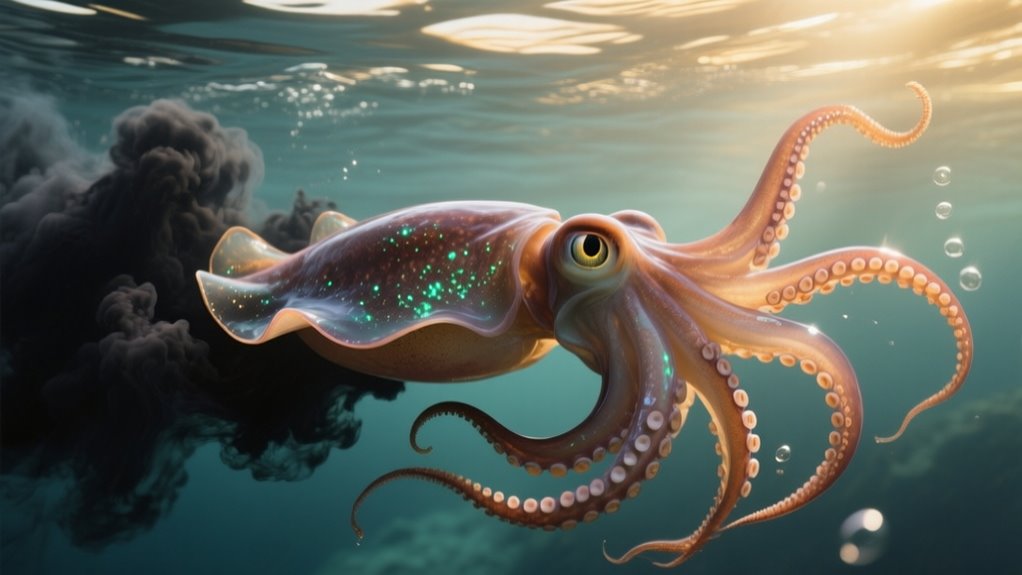
You have ink to protect yourself by quickly ejecting a dense, dark cloud that blocks a predator’s view and irritates its senses. This gives you a chance to escape.
You control the ink’s shape and texture, like thick mucus or body-shaped smokescreens, to confuse and mislead attackers.
This chemical and visual defense can even signal danger to other squid nearby.
There’s a lot more to how your ink works and its surprising uses beyond defense.
What Squid Ink Is Made Of
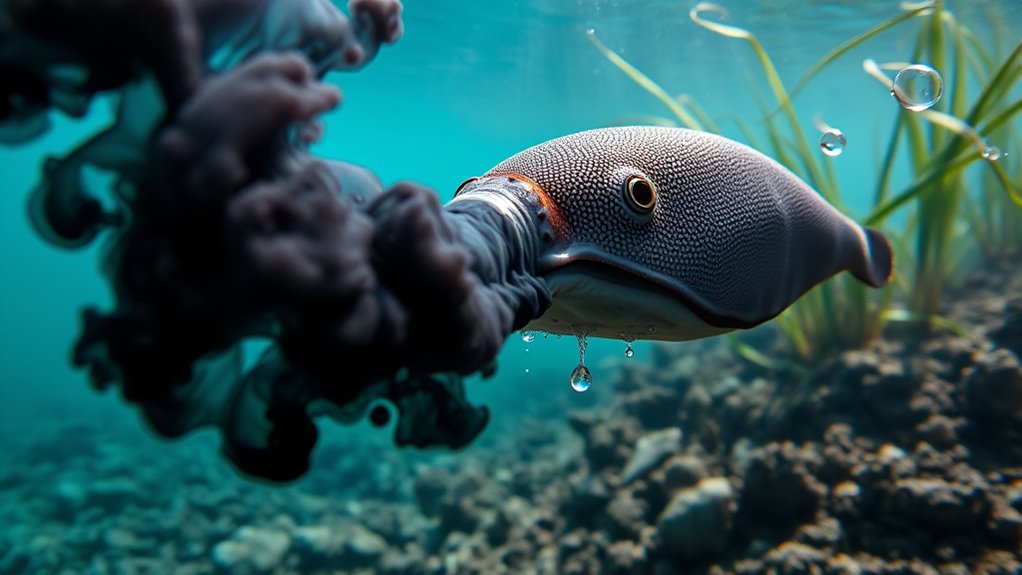
Although squid ink might look simple, it’s actually a complex mixture dominated by melanin, the pigment that gives it its dark color and opacity. When you examine squid ink closely, you’ll find it packed with melanin, which provides that deep black or dark brown shade and helps block vision.
Alongside melanin, the ink contains essential enzymes like tyrosinase, which play a role in melanin production and other chemical reactions within the ink. You’ll also find various amino acids such as glutamate, taurine, and alanine, which contribute to the ink’s chemical makeup and possibly its biological functions.
These components combine to form a substance that’s both dense and effective. So, while melanin steals the spotlight, enzymes and amino acids quietly support the ink’s unique properties, making it more than just a simple liquid. Understanding this blend helps you appreciate how squid ink functions as a sophisticated natural tool.
How Squid Ink Chemicals Affect Predators?
When a squid releases its ink, it’s not just creating a cloud of darkness. The ink contains chemicals like tyrosinase that actually irritate predators and mess with their senses. This irritation can be pretty intense, making it hard for a predator to smell or track the squid.
Because of this, the squid gets a crucial edge to make its escape. But it’s not only about blocking their view. The chemicals in the ink actively interfere with how predators perceive their surroundings, throwing them off even more. So, the squid’s ink is a clever defense that works on multiple sensory levels.
Chemical Irritants in Ink
Because squid ink contains chemicals like tyrosinase, dopamine, and L-DOPA, it can irritate a predator’s eyes and disrupt their sense of smell. These chemical irritants cause disorientation, giving the squid precious moments to escape.
The enzymes and amino acids in the ink amplify this effect, working together with the dark cloud to overwhelm predators.
| Chemical | Role in Ink |
|---|---|
| Tyrosinase | Eye irritation, disorientation |
| Dopamine | Chemical irritant, sensory disruption |
| L-DOPA | Sensory disruption |
| Amino acids | Enhance irritant properties |
| Enzymes | Increase chemical effects |
You’ll find that these components combine to create a powerful, multi-layered defense, making squid ink an effective chemical deterrent.
Disruption of Predator Senses
If you’ve ever wondered how squid manage to slip away from predators so effectively, their ink plays an essential role by disrupting the predators’ senses. When threatened, squid release ink from their ink sacs, creating a dense cloud that acts as both a visual smokescreen and a chemical barrier.
The ink contains chemical irritants like tyrosinase that overwhelm and irritate predators’ chemosensory and olfactory systems, especially in fish and sharks. These irritants cause discomfort and sensory overload, reducing the predator’s ability to detect prey or continue pursuit.
How Squid Use Ink To Escape Predators?
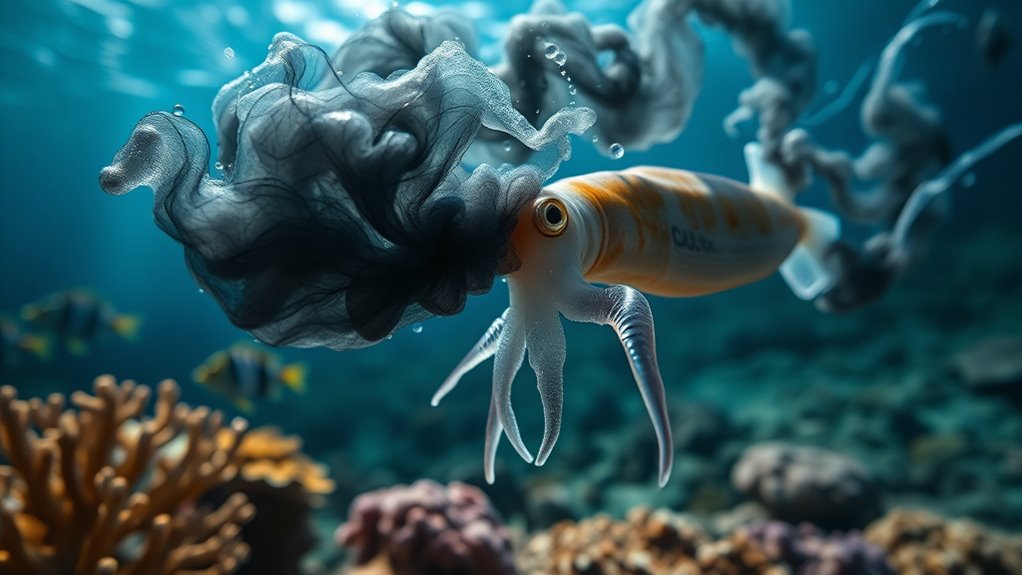
Although predators can strike quickly, squid use a clever defense by ejecting ink from their ink sac through the siphon. This creates a dark cloud that blocks their attackers’ vision. This dark ink mixes with mucus, forming a thick plume you can see as a smokescreen underwater.
It not only obscures vision but can also mimic squid tentacles or shapes, confusing predators. This gives the squid a chance to jet away and escape from predators rapidly. Some species even create pseudomorphs, ink clouds that look like their own body parts, to further distract foes.
| Defense Mechanism | Description |
|---|---|
| Ink Sac | Source of dark ink ejection |
| Ink Cloud | Dark, thick, mucus-mixed plume |
| Mimicry | Ink shapes confuse predators |
| Rapid Expulsion | Quick release to escape threats |
| Pseudomorphs | Ink forms resembling squid body |
This smart use of ink greatly increases the squid’s chances of survival.
How Squid Ink Signals Danger To Other Squid?
Squid don’t just use ink to confuse predators. They also send clear danger signals to other squid nearby. When a squid senses predators, it releases ink not only as a smokescreen but also as a warning to its companions.
This ink cloud carries chemical irritants that alert nearby squid to the lurking threat. You can think of it as a chemical and visual alarm, signaling others to stay alert and take immediate action.
Types Of Ink Shapes Squid Create To Escape
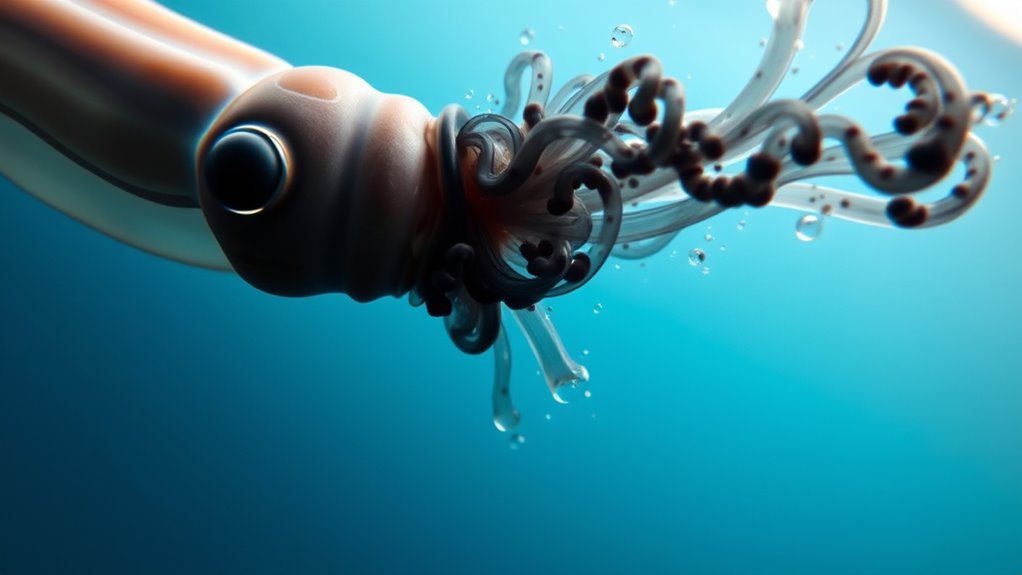
When predators close in, these clever creatures release different ink shapes to throw off their attackers and make a swift getaway. Squids use ink shapes like clouds, pseudomorphs, ropes, and diffuse puffs as a defense mechanism.
Large ink clouds act as smoke screens, giving you a quick visual distraction to slip away. Pseudomorphs are especially fascinating. They mimic the squid’s body shape and contain mucus to hold form longer, fooling predators into attacking a fake target.
Ropes and long ink streams create physical barriers, obscuring your movement and making it harder for predators to track you. Each ink shape is carefully chosen based on the squid’s escape strategies and environmental conditions.
Why Squid Ink Color And Texture Vary?
Ink shapes like clouds and pseudomorphs serve different purposes, but the color and texture of the ink also play a big role in how effective these defenses are. You’ll notice squid ink color varies from black and brown to reddish and dark blue, depending largely on the species and the concentration of melanin and other chemicals.
The ink texture changes too, ranging from thick, mucus-like pseudomorphs to more fluid clouds. This is influenced by the mucus content and how the ink is expelled. These differences in ink color and texture aren’t random; they’re adaptations shaped by the squid’s chemical composition to help camouflage, confuse predators, or mimic objects in the water.
For example, variations in metal content and pigment concentration directly affect how the ink looks and behaves. This makes it a versatile tool for escape. Understanding these factors helps you appreciate the sophisticated defense mechanisms squid have evolved.
How Squid Control Ink Release?
You’ll find that squid control ink release by using muscles to squeeze their ink sac, pushing ink out quickly. Inside the sac, ink mixes with mucus to create a thick, manageable cloud. This combination helps squid direct their ink precisely when they need to escape.
Ink Sac Anatomy
Although it might seem like a simple defense, squid control their ink release with remarkable precision by contracting specialized muscles connected to their nervous system. The ink sac, a muscular pouch, stores the ink and plays a central role in ink ejection.
When threatened, you can imagine the squid tightening these muscles, pushing ink from the sac into the rectum. From there, it moves toward the siphon, a muscular tube that lets the squid shoot ink out as a focused plume.
This muscular control lets the squid time and aim the ink precisely, creating effective distractions. The coordination between the nervous system and the muscles around the ink sac and siphon allows quick, targeted ink ejection, helping the squid evade predators efficiently.
Mucus-Ink Mixing
The squid’s ability to release ink with precision relies on more than just muscular control. It also depends on how it mixes ink with mucus inside the ink sac. This mucus blends with the ink to create a thick, opaque suspension that disperses slowly in water, giving the squid control over its escape tactics.
When you watch a squid release ink, it’s actually pumping this mucus-ink mixture from the ink sac through its rectum and out the siphon, using muscular contractions. This mix lets the squid control the size, shape, and density of the ink cloud, making it an effective visual and chemical distraction.
Thanks to this clever mucus-ink blend, the squid can confuse predators and make a clean getaway.
How Ink Helps Squid Hide And Confuse Predators
When threatened, squid release a dark ink cloud that quickly blocks a predator’s view, giving them a chance to escape. This ink doesn’t just create a simple smokescreen; it can form shapes called pseudomorphs that look like the squid’s tentacles or other objects.
These false targets confuse predators, making it harder for them to figure out where the squid actually is. You’ll notice squid can eject ink rapidly through their siphons, which helps them distract predators in an instant.
Some species mix ink with mucus to create long ropes or diffuse puffs, adding another layer of disguise. This visual disruption, combined with the chemical signals in the ink, throws off predators’ senses, increasing the squid’s chances of slipping away unnoticed.
Distinct Inking Strategies Among Squid Species
You’ll notice that different squid species use their ink in unique ways. Some create shapes like puffs, others make ropes, and a few even form body-like shapes. It all depends on their environment and the predators they face. When you understand these distinct inking strategies, it really shows how squids adapt to survive.
Species-Specific Ink Uses
Although squid share the common ability to release ink, each species has developed unique inking strategies tailored to their environment and predators. When you observe squid ink, you’ll notice species-specific defense mechanisms at work.
For example, some squids eject dense clouds to quickly hide, while others create pseudomorphs, ink shapes that mimic their body to confuse attackers. Certain species even produce luminous ink, adding a surprising twist to their defense.
The ink’s composition, including mucus and particle size, varies to suit different habitats and threats. By using these species-specific tactics, squid maximize their chances of escape, showing how evolution has finely tuned their inking abilities.
You can see how squid ink isn’t just a simple smokescreen but a sophisticated survival tool.
Inking Behavior Variations
Because each squid species faces different environments and predators, their inking behaviors have evolved distinct strategies. You’ll notice species variation in how squids release ink clouds: some, like the Australian giant squid, produce dense, large clouds to create a quick visual barrier, allowing a rapid escape.
Others, such as the Caribbean reef squid, use subtler ink releases to communicate or signal nearby squid. Certain species, like the European common squid, take it further by creating pseudomorphs, ink shapes that mimic their body, to confuse predators and improve camouflage.
The shape and size of these ink clouds or streams directly reflect each species’ ecological niche and predation pressures. Understanding these inking behavior differences reveals how squids adapt their defense tactics uniquely across species.
Surprising Ways People Use Squid Ink
When you think of squid ink, you might picture its use in cooking, but its applications go far beyond the kitchen. Squid ink is prized not only for culinary uses, adding rich umami flavor and striking black color to pasta and sauces, but also for its health benefits.
Packed with antioxidants and antimicrobial compounds, it supports wellness and is even used in traditional medicine to improve blood circulation.
Here are some surprising uses of squid ink:
| Use Type | Description |
|---|---|
| Culinary Uses | Adds flavor and color to dishes worldwide |
| Traditional Medicine | Enhances blood circulation and fights microbes |
| Historic Art & Writing | Used as ink for drawing and writing in cultures |
Frequently Asked Questions
Can Squid Ink Be Used for Medical Treatments?
Yes, you can explore squid ink for medical treatments because it shows promising medicinal properties. Researchers focus on ink extraction methods to isolate bioactive compounds useful in biomedical applications.
While clinical proof is limited, early studies highlight its potential to combat infections and cancer. If you follow ongoing research, you’ll see squid ink might become a valuable natural source for developing new drugs and supplements in the future.
Is Squid Ink Safe for Human Consumption?
You can think of squid ink as a dark treasure chest, safe and rich for your culinary applications. When you try dishes with squid ink, like pasta or sauces, you’re tapping into its nutritional benefits, melanin and amino acids that add flavor without harm.
Ink harvesting guarantees it stays pure, and for most people, it’s perfectly safe. Just be cautious if you have shellfish allergies, as reactions might sneak in.
How Long Does Squid Ink Remain Visible in Water?
Squid ink remains visible in water for about 10 to 20 minutes, depending on conditions. You’ll notice the ink coloration starts strong but gradually fades as ink dispersal occurs.
In calm water, you might see it up to 30 minutes, but water visibility decreases faster with currents and turbulence. Factors like temperature and salinity also affect how long you can spot that dark cloud before it fully diffuses into the surrounding water.
Do All Squid Species Produce Ink?
Not all squid species produce ink; about half of them lack ink sacs entirely. When you rely on camouflage techniques, you might not need ink for predator defense.
The ink composition, mainly melanin, helps create a dark cloud to confuse attackers, but deep-sea squid and some juveniles skip this. So, whether you use ink depends on your species’ habitat and evolutionary needs, showing nature’s clever diversity in survival tactics.
Has Squid Ink Been Used Historically in Art?
Yes, squid ink has played a key role in historical art techniques. You’ll find that many ancient cultures mastered ink extraction methods to harvest this rich pigment. Its deep black color made it ideal for calligraphy and brush painting, especially in Mediterranean, Japanese, and Chinese traditions.
When you use squid ink, you tap into its cultural significance, connecting with centuries of artists who valued its unique, lasting qualities in their work.
Conclusion
Next time you see a squid release ink, remember it can squirt up to 25 milliliters in one blast. That’s like a tiny black smoke grenade underwater! This clever defense not only confuses predators but also signals danger to other squid nearby.
So, squid ink isn’t just a simple cloud; it’s a smart survival tool, helping these fascinating creatures slip away safely while keeping their friends alerted. Pretty impressive, right?
Leave a Reply