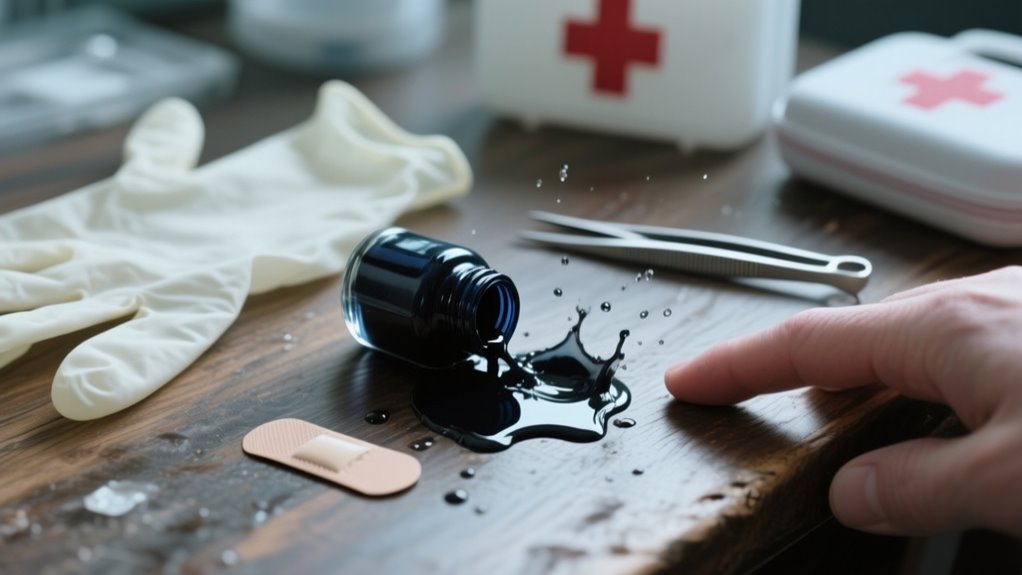
You can get ink poisoning if you swallow large amounts of certain inks, like industrial or art-grade ones, but everyday inks usually cause only mild stomach upset or skin staining.
If you accidentally ingest ink, rinse your mouth and drink water, but avoid vomiting unless told otherwise.
Keep ink products away from children and handle them carefully.
Watch for symptoms like nausea or irritation, and seek medical help if needed.
Understanding risks and safety tips can help you protect yourself effectively.
What Is Ink Poisoning: Is It Really Dangerous?
Although the idea of ink poisoning might sound alarming, everyday writing inks rarely pose a real danger because they contain minimal toxic substances. You’re unlikely to face serious health risks from accidental ingestion or skin contact with typical pen ink.
Most inks are made from dyes and water, which are generally non-toxic in small amounts. If you swallow a bit of ink, it usually just causes mild stomach upset or staining, not severe poisoning.
Most inks consist of dyes and water, causing only mild upset or staining if ingested in small amounts.
Similarly, brief skin contact might lead to minor irritation or discoloration but won’t result in systemic toxicity. That said, it’s smart to avoid prolonged skin contact or deliberately ingesting ink to keep yourself safe.
Proper handling and storage also help prevent any potential health risks. So, while ink poisoning sounds scary, everyday inks aren’t something you need to worry about unless you’re exposed to large quantities or industrial-grade products.
Which Types of Ink Cause Ink Poisoning Risks?
Which types of ink should you watch out for when it comes to poisoning risks? While regular writing inks in pens and markers usually pose minimal risk, some inks contain chemicals that can lead to ink poisoning if ingested or mishandled. Here are the main types you should be cautious about:
- Industrial inks often contain hazardous solvents and chemicals. Their chemical composition makes them highly toxic, so any ink ingestion can be dangerous.
- Printer cartridges and stamp pad inks can cause poisoning if swallowed in large amounts due to their toxic ingredients.
- Art-grade inks sometimes include chemical compounds that increase poisoning risks, especially if you handle them without protection.
Tattoo inks are less likely to cause systemic poisoning but may cause allergic reactions. Understanding the chemical composition of inks helps you avoid toxic inks and reduce the risk of ink poisoning. Always handle inks carefully to stay safe.
How Much Ink Is Too Much?
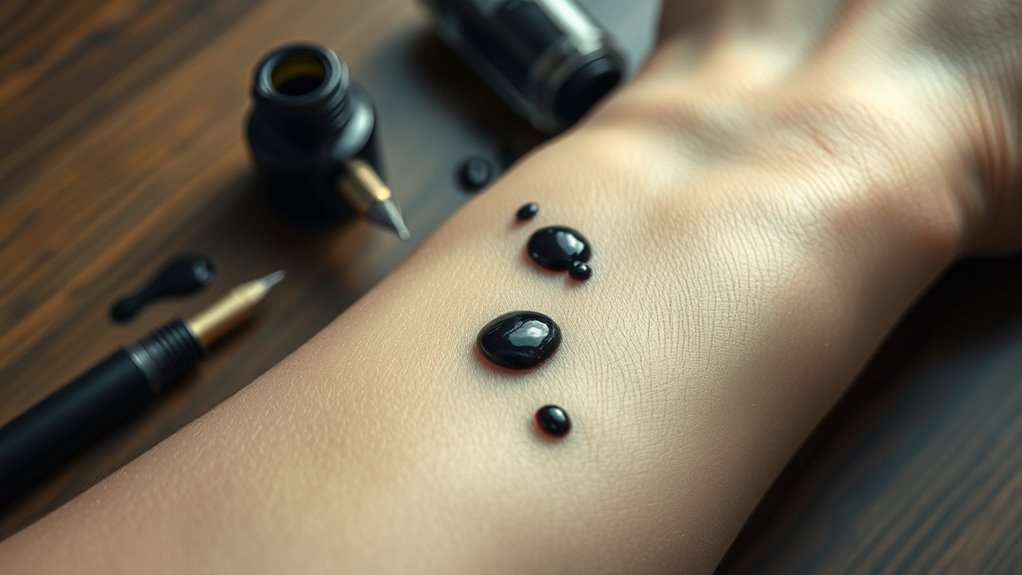
You might be wondering just how much ink is actually dangerous to swallow. Well, small amounts—like less than 1 or 2 milliliters—usually won’t harm you. But if you ingest larger quantities, things can get tricky depending on how toxic the ink is. So, let’s take a closer look at what’s considered safe and when you should start to worry about ink exposure.
Ink Quantity Thresholds
When you swallow ink, the amount matters more than the type in most everyday cases. Ink ingestion generally becomes a concern once you exceed the toxicity threshold. Here’s what you need to know:
- Small amounts (less than 1 mL) usually cause only mild stomach upset or staining, not poisoning.
- Large quantities, around 30 mL (one ounce), increase the risk of toxicity and require immediate medical attention.
- Ink volumes between these ranges, like those in printer cartridges (up to 2.5 mL), pose a low but potential risk, especially with industrial inks.
Toxicity Levels By Volume
Understanding toxicity levels by volume is essential to gauge how much ink is too much for your health. Small amounts, like the 0.7 to 1.2 mL in pens, usually pose minimal toxicity risk and rarely cause poisoning.
However, ingestion of larger volumes, especially over 30 mL, markedly raises the chance of symptoms such as nausea, vomiting, and abdominal pain. Ink bottles and cartridges contain varying volumes—from 2.5 mL up to 30 mL—that, if ingested in large quantities, increase toxicity risks.
Keep in mind, industrial or art inks often contain harmful solvents, meaning even smaller volumes can be dangerous. Ultimately, the toxicity you face depends largely on the volume of ink ingested, so understanding these thresholds helps you avoid potential poisoning.
Safe Ink Exposure Limits
Knowing how much ink exposure is safe can help you avoid health risks from ingestion or skin contact. Most common writing inks are non-toxic in small amounts, usually under 1.2 mL. However, ink toxicity varies a lot depending on the type and volume.
Here are some key safe exposure guidelines to keep in mind:
- For household and office inks, try to stay below a few milliliters to avoid poisoning risks.
- Avoid ingesting more than 30 mL since this might need medical advice because higher ingestion limits are exceeded.
- Be extra cautious with industrial or art inks, as they can be hazardous even in smaller amounts.
Always follow manufacturer instructions and store inks safely. This helps minimize exposure and prevents accidental ingestion.
What Are the Common Ink Poisoning Signs?
If you swallow a large amount of ink, you might start feeling nausea, vomiting, or stomach pain. It’s not very common, but it can happen. Now, if you get ink on your skin, it usually just leaves stains. However, some people might experience irritation or even an allergic reaction. And if ink gets into your eyes, you could notice redness or tearing. The good news is that these symptoms typically get better after rinsing your eyes out.
Ink Poisoning Symptoms
What signs should you watch for if you suspect ink poisoning? Recognizing symptoms early helps you stay safe. Ink poisoning symptoms often show up after ingestion or contact, and they range from mild to more concerning.
Here are three common symptoms to look for:
- Mild stomach upset: nausea or stomach pain can occur if you swallow a notable amount of ink.
- Irritation: redness or discomfort in the eyes if ink gets in contact, or stained skin or tongue from exposure.
- Allergic reaction: skin rashes, swelling, or other sensitivity signs might mean you’re reacting to components in the ink.
Most symptoms are temporary and mild, but watch closely to avoid serious complications.
Exposure Routes Effects
Although ink poisoning is uncommon, you should recognize its signs based on how exposure occurs. Ink ingestion can cause symptoms like nausea, vomiting, and abdominal pain, especially with large amounts.
Skin staining and tongue discoloration are usually temporary and harmless. Eye irritation often brings redness and temporary white staining but rarely leads to lasting damage.
More serious symptoms, such as skin rash or respiratory irritation, may suggest higher toxicity or allergic reactions.
| Exposure Route | Common Symptoms |
|---|---|
| Ink Ingestion | Nausea, vomiting, abdominal pain, dizziness |
| Skin Contact | Skin staining, rash (rare) |
| Eye Exposure | Redness, irritation, white staining |
| Respiratory | Irritation, allergic reactions |
| Tongue | Temporary staining |
Is Ink on Your Skin or Tongue Harmful?
When you get ink on your skin or tongue, it usually just causes temporary staining and isn’t harmful. Ink from pens, markers, or highlighters isn’t toxic in small amounts and generally poses no safety risk. You don’t need to worry about poisoning unless you ingest large quantities, which is uncommon during casual contact.
Here’s what you should keep in mind:
- Ink on your skin can be cleaned easily with soap or alcohol without health concerns.
- Accidental ink on your tongue is unlikely to cause toxicity but avoid swallowing it intentionally.
- If you notice irritation, allergic reactions, or persistent stains, consult a healthcare professional for advice.
What to Do If Ink Gets in Your Eyes?
Getting ink on your skin or tongue usually isn’t harmful, but your eyes need more careful attention. If you get ink in your eye, immediately rinse with water. Use cool, clean water and flush your eye for at least 15 minutes to remove ink particles.
Avoid rubbing your eye, as this can worsen irritation or cause damage. If eye irritation persists after rinsing, don’t hesitate to seek medical attention.
Temporary staining of the eye’s white part can happen but usually fades without issues. However, if you notice blurred vision, persistent pain, or if the ink is from industrial sources, contact a healthcare professional promptly.
| Action | Reason |
|---|---|
| Rinse with water | Removes ink, reduces irritation |
| Avoid rubbing | Prevents further eye damage |
| Seek medical attention | For persistent symptoms |
Following these steps guarantees your eye safety after an ink accident.
How to Handle Ink Ingestion Safely
If you accidentally swallow ink, don’t panic. Small amounts from pens or markers usually won’t cause serious harm. Ink ingestion in these cases is generally minimally toxic. However, you should manage the situation carefully to stay safe.
Here’s what to do:
- Rinse your mouth thoroughly with water to remove any residual ink. Avoid inducing vomiting unless a healthcare professional tells you to.
- Drink a small amount of water to help dilute the ink swallowed, reducing potential irritation.
- Seek medical help immediately if you swallowed a large amount (over 30 mL), or if the ink came from industrial sources or printer cartridges, as these pose higher risks.
To prevent incidents, practice safe handling by keeping ink products out of children’s reach and securely capping pens and markers. Remember, most cases of swallowing ink involve minimally toxic amounts, but prompt, careful action ensures your safety.
How to Manage Tattoo Ink Reactions and Infections
You’ll want to keep an eye out for signs of a tattoo infection, such as fever, chills, or intense redness around the area. Allergic reactions can also pop up, usually as itchy rashes, particularly with some ink colors. If you notice any of these symptoms, don’t hesitate—get medical treatment right away to prevent any complications.
Recognizing Tattoo Infections
Although tattoos are a popular form of self-expression, they can sometimes lead to infections or allergic reactions caused by the ink. Recognizing tattoo infections early is key to preventing serious complications.
You should watch for these infection symptoms:
- Redness, swelling, or a skin rash that worsens instead of improving.
- Pus or unusual discharge from the tattoo site, often due to contaminated ink.
- Fever, chills, or general feeling of illness signaling a deeper infection.
If you notice any of these signs, seek medical attention promptly. Proper aftercare, like keeping your tattoo clean and moisturized, reduces risks.
Common Allergic Reactions
How can you tell if your tattoo ink is causing an allergic reaction? Common signs include redness, swelling, and persistent itching around the tattoo site, especially with red, yellow, green, or blue pigments.
These allergic reactions happen when your immune system responds to certain components in the ink. To manage these symptoms, you can apply topical corticosteroids or take antihistamines to reduce inflammation and itching.
Maintaining proper hygiene and choosing a reputable artist who uses sterilized equipment helps lower your risk of reactions or infections. If you notice these signs, keep an eye on your tattoo and avoid scratching.
Also, reporting any adverse reactions to your healthcare provider helps monitor tattoo ink safety and improve regulations.
Seeking Medical Treatment
When should you seek medical treatment for tattoo ink reactions or infections? If you notice symptoms like fever, chills, or swelling, you need prompt care to prevent the infection from getting worse. Allergic reactions such as redness, rash, or blistering also require evaluation by a medical professional.
Here’s what to do:
- Contact a healthcare provider immediately if you experience severe pain, persistent swelling, or symptoms of systemic illness after your tattoo.
- Follow prescribed treatments like antibiotics or antihistamines exactly as directed to manage infection or allergic reactions.
- Report any injury or unusual reaction to your medical professional for proper diagnosis and care.
Getting medical treatment quickly helps you avoid complications and makes sure your tattoo heals safely and properly.
When Should You Seek Medical Help for Ink Exposure?
If you ingest more than 30 mL of ink or experience symptoms like nausea, vomiting, or abdominal pain, you should seek medical help immediately. Ingesting large quantities of ink can be harmful, so don’t hesitate to get professional advice.
Also, if you have persistent eye irritation, blurred vision, or ink gets into your eyes and causes discomfort that won’t go away after rinsing, contact a healthcare provider. Inhalation of aerosolized ink that leads to breathing difficulties, dizziness, or respiratory discomfort requires prompt medical attention.
Skin contact with ink usually isn’t dangerous, but if you notice allergic reactions, rashes, or signs of infection, it’s important to seek medical help. When you’re unsure about the severity of exposure, especially with industrial or unregulated inks containing harmful solvents, always err on the side of caution and consult a doctor.
Recognizing these symptoms and acting quickly helps prevent complications from ink exposure.
Practical Tips to Prevent Ink Poisoning at Home
Since ink products can pose risks if mishandled, you should always keep pens, markers, and ink bottles out of children’s reach. Store them securely in sealed containers away from food and drinks.
Keep all ink products securely stored away from children and food to prevent accidental exposure and risks.
To enhance household safety and prevent ink poisoning, focus on proper ink storage and educating your family about ink risks.
Here are practical tips for preventing ingestion and ensuring child safety:
- Store all ink products in a designated, secure area, separate from food and drinks to avoid accidental exposure.
- Follow manufacturer instructions for safe handling and disposal, especially with industrial or art-grade inks.
- Use inks only as intended on paper or skin with approved products to minimize unnecessary contact or ingestion.
Frequently Asked Questions
Can Ink Poisoning Affect Children Differently Than Adults?
Yes, ink poisoning affects children differently than adults. Since small children have smaller bodies, accidental ingestion leads to higher toxin concentrations. You’ll notice child symptoms like nausea or irritation appearing faster and more severe.
Because kids may not clearly express how they feel, watch for warning signs closely. If you suspect poisoning, act quickly and call emergency response to guarantee your child gets prompt treatment and stays safe.
Are Natural or Homemade Inks Safer Than Commercial Inks?
You’ll find that natural or homemade inks often wear a gentler mask compared to commercial inks. When you use DIY ink, herbal inks, or natural dye, you’re choosing homemade pigments that tend to be kinder and more eco friendly.
These inks usually avoid harsh chemicals, making them safer for your skin and environment. Still, you should always check ingredients carefully, since even natural options can sometimes cause reactions if not used thoughtfully.
How Long Does Ink Poisoning Take to Show Symptoms?
Symptoms from ink exposure usually show up within 1 to 6 hours, but the symptom onset can vary depending on how much ink you’ve come into contact with.
If it’s a small amount, symptoms might take up to 12 hours or longer. Skin reactions and allergic responses can appear later, sometimes after 24 hours.
Can Ink Poisoning Cause Long-Term Health Issues?
Long-term effects, chronic exposure, and immune response all matter when considering ink poisoning. You probably won’t face neurological damage from typical ink, but repeated contact might trigger skin reactions or allergic sensitization.
You should avoid ingesting large quantities and limit prolonged skin exposure to reduce risks. By handling ink carefully and staying mindful, you’ll prevent most long-term health issues linked to ink poisoning and keep yourself safe.
Are There Specific Inks Used in Printers That Pose Higher Risks?
Yes, certain printer inks pose higher risks because of their chemical composition and hazardous components. You’ll find that inks with solvents like toluene or xylene have elevated toxicity levels.
These ingredients increase exposure risks, especially if mishandled or ingested. To stay safe, you should always check the ink’s safety data sheets and handle cartridges carefully to avoid harmful contact or inhalation.
Conclusion
Think of ink like a tiny storm: a little splash on your skin is usually harmless, but swallowing large amounts can stir trouble. For example, a child once accidentally drank ink and felt fine after a quick check-up, showing small doses often aren’t dangerous.
Still, you shouldn’t take risks. Always handle ink carefully, watch for symptoms, and seek medical help if anything feels off. Staying safe with ink is all about respect and caution.
Leave a Reply