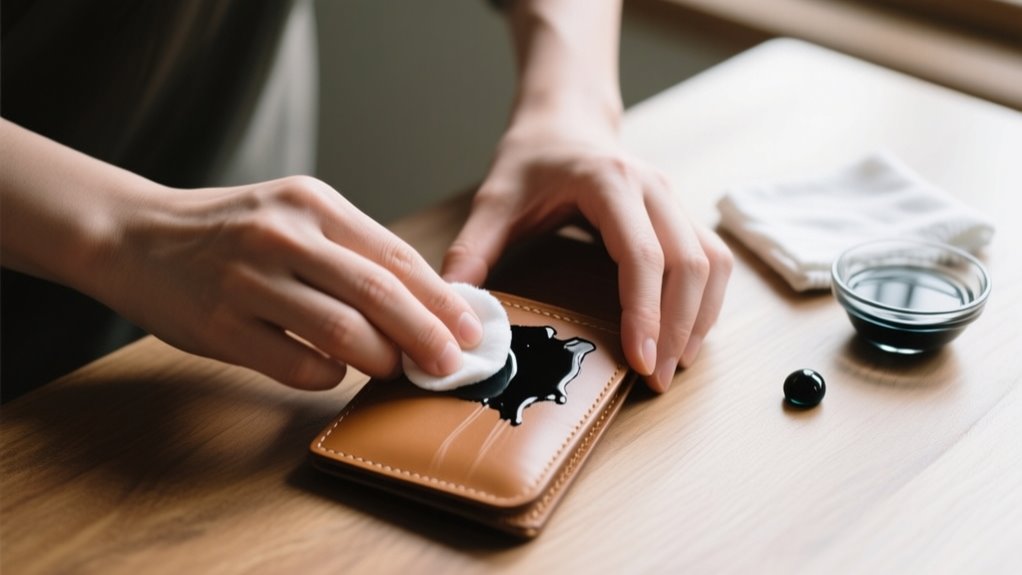
You’ll want to act fast by blotting fresh ink with a clean cloth, avoiding rubbing.
Test cleaning solutions like mild soap and water or diluted rubbing alcohol on a hidden spot first.
For tough stains, gently dab with vinegar, hairspray, or acetone-free nail polish remover.
Then carefully use a Magic Eraser if needed.
Always condition your leather after cleaning to keep it soft and shiny.
Keep going to explore detailed tips that help protect your leather’s look and feel.
Act Quickly to Blot Fresh Ink Stains on Leather
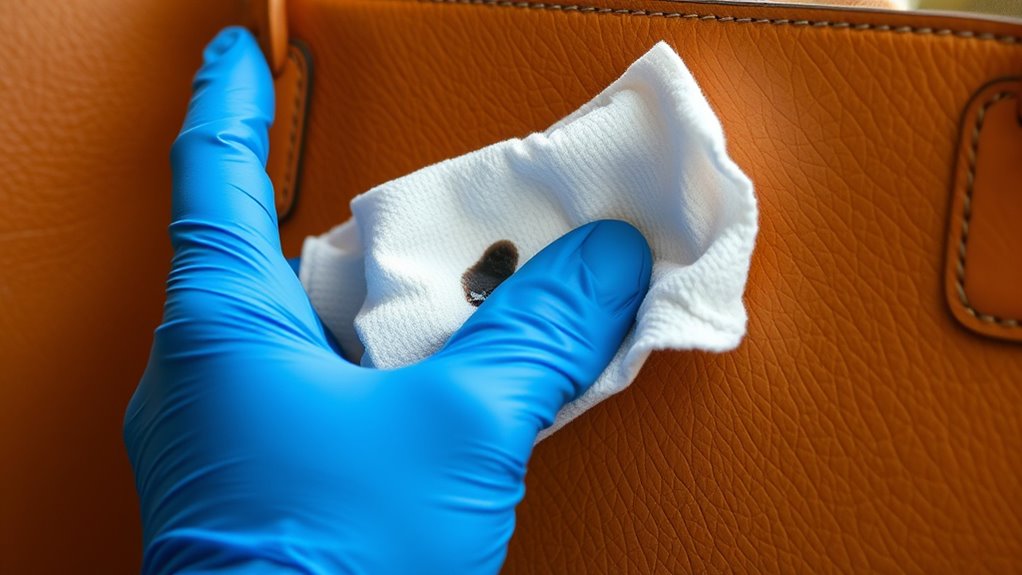
If you catch an ink stain on your leather, act quickly and blot it immediately with a clean, dry cloth or paper towel. This helps absorb excess ink before it seeps deeper into the leather fibers.
When blotting fresh ink stains, use gentle pressure to lift the ink without rubbing, which can spread or embed the stain further. Acting quickly is crucial to prevent setting, as ink becomes more difficult to remove once it dries.
After blotting, dampen a cotton swab slightly with isopropyl alcohol and gently dab the affected area to aid ink removal. This targeted approach helps break down the stain without damaging the leather.
Prompt cleaning not only improves your chances of successful ink removal but also keeps your leather looking pristine. Remember, the key to effective ink removal is to act fast, blot carefully, and use gentle pressure throughout the process.
Test Cleaning Solutions on a Hidden Area First
After blotting fresh ink stains and applying isopropyl alcohol carefully, you’ll want to test any further cleaning solutions on a hidden area first. This step helps prevent unexpected damage and discoloration to your leather. Always apply the cleaning solutions to a small, discreet spot like an interior seam or the underside using a soft cloth or cotton swab. Dilute harsh chemicals to reduce the risk of harm. Then, observe the area for at least 10-15 minutes to catch any negative reaction.
Always test cleaning solutions on a hidden leather spot to prevent damage and discoloration before full application.
Keep these tips in mind when you test:
- Choose a hidden area that’s easy to monitor without affecting the leather’s appearance
- Use a small amount of solution to avoid soaking the leather
- Wait patiently to observe any color change or surface damage
- Document your results to decide if the cleaning solution is safe for wider use
Testing first guarantees you protect your leather while effectively tackling ink stains.
Use Mild Soap and Water to Gently Lift Ink Stains
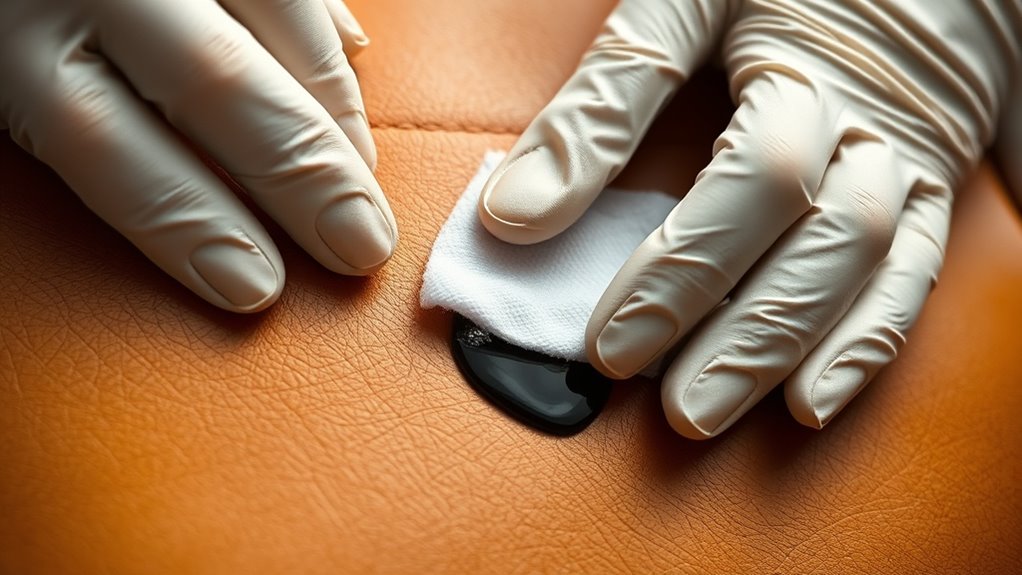
When you need to remove ink stains from leather, using a mild soap and water solution offers a gentle yet effective approach. Start by mixing a small amount of mild soap with warm water to create a gentle cleaning solution.
Dip a soft, clean cloth into the soapy water and wring it out so it’s only slightly damp. Gently wipe the ink-stained surface, working from the outer edges toward the center to prevent spreading. This method helps lift ink stains without damaging the leather.
Afterward, use a separate clean, damp cloth to rinse away any soap residue from the leather’s surface. Finally, pat the area dry with a soft towel and let the leather air dry completely before applying any conditioner.
This careful process allows you to remove ink effectively while preserving the leather’s finish and texture.
Use Rubbing Alcohol or Vinegar to Remove Tough Ink Stains From Leather
When you’re using rubbing alcohol or vinegar to get rid of tough ink stains, just remember to dilute the vinegar with water. Also, make sure you’re using the right concentration of alcohol so you don’t accidentally damage your leather.
Go ahead and apply these solutions gently with a soft cloth. Instead of rubbing, try blotting the stain—that way, you lift the ink without spreading it around.
And hey, don’t forget to condition your leather afterward. This helps keep it soft and stops it from drying out.
Dilution Ratios Matter
Although rubbing alcohol and vinegar are powerful at tackling tough ink stains on leather, you need to dilute them properly to avoid damaging the material. Proper dilution ratios help balance effective ink stain removal with gentle cleaning, ensuring leather preservation.
For example, mixing vinegar and water 1:1 lifts ink without harming the surface. With rubbing alcohol, using at least 70% isopropyl alcohol diluted slightly (like 80% alcohol with 20% water) prevents over-drying. Always test your solution on a hidden patch to confirm no discoloration occurs.
Keep these stain removal techniques in mind:
- Equal parts vinegar and water for gentle cleaning
- Slight dilution of rubbing alcohol to protect leather
- Use water to reduce solution strength
- Test diluted mixtures on inconspicuous leather areas before applying
Following proper dilution ratios is key to safe, effective leather cleaning.
Application Techniques Explained
How exactly do you apply rubbing alcohol or vinegar to remove tough ink stains from leather without causing damage? Start by doing a spot test on a hidden area to make certain the alcohol or vinegar solution won’t discolor your leather surfaces.
For stain removal, soak a cotton swab in 70-90% rubbing alcohol or a diluted vinegar solution (equal parts white vinegar and water). Gently blot the ink stain using the swab, working from the outside toward the center to prevent spreading.
Avoid rubbing harshly; this gentle cleaning technique helps lift the ink safely. Once the stain is treated, don’t forget to apply a leather conditioner to restore moisture and maintain suppleness.
These application techniques guarantee effective ink removal while protecting your leather’s integrity.
Post-Cleaning Conditioning
Why is conditioning your leather essential after using rubbing alcohol or vinegar to remove ink stains? These cleaning agents strip natural oils, leaving your leather dry and prone to cracking. Applying a leather conditioner helps restore moisture and maintain flexibility, making sure your leather stays soft and resilient.
After cleaning, use a soft cloth to evenly distribute the conditioner and let it absorb fully. This step is vital for preserving the longevity of your leather.
Remember to test the conditioner on a hidden spot first to avoid discoloration.
Here’s what conditioning does for your leather:
- Restores essential moisture lost during cleaning
- Replenishes natural oils for softness
- Maintains flexibility to prevent cracking
- Preserves the leather’s clean, fresh appearance
Use Hairspray or Acetone-Free Nail Polish Remover Sparingly on Ink Stains
When you spot an ink stain on your leather, you can try using hairspray or acetone-free nail polish remover to lift it gently. Both contain alcohol that helps break down ink stains, but acetone-free nail polish remover is safer for leather since it lacks harsh chemicals that might cause cracking or discoloration.
Before you start, always do a patch test on a hidden area to prevent damage. Use a soft cloth or cotton swab for gentle application. Dab the stain carefully instead of rubbing it.
After treating the ink, wipe the area with a damp cloth to remove any residue. Finally, apply a leather conditioner to restore moisture and keep your leather supple. This cleaning method works well when used sparingly and carefully, helping you remove ink stains without harming your leather’s finish or texture.
Gently Use a Magic Eraser for Stubborn Ink Stains
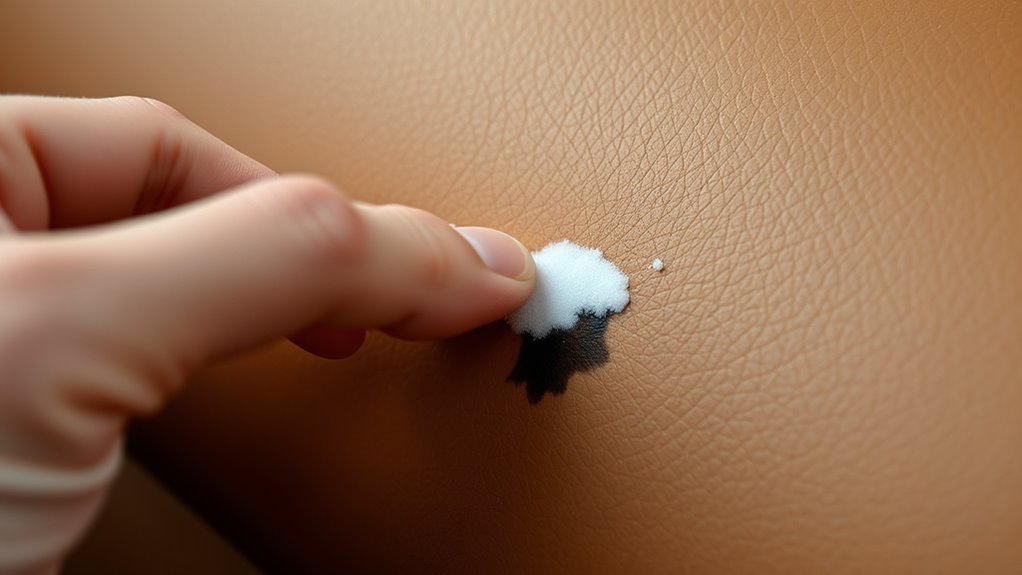
If you’ve got stubborn ink stains that just won’t come off, a Magic Eraser might be your best friend. It works gently to lift the ink without needing any harsh chemicals.
Just dampen the eraser a little bit and rub the stain lightly in circular motions. Make sure you test it first on a hidden spot, so you don’t accidentally damage your leather.
Once you’re done, don’t forget to apply some leather conditioner. This will keep your leather soft and protected for the long haul.
Magic Eraser Benefits
Although Magic Erasers are mildly abrasive, you can use them carefully to tackle stubborn ink stains on leather. Their gentle abrasive action lifts light marks without harsh chemicals, making them ideal for quick touch-ups. Before you start, testing an inconspicuous area is essential to avoid abrasion risk or discoloration of the leather finish.
You’ll appreciate how the Magic Eraser targets ink stains while preserving the leather surface when used properly.
Benefits include:
- Effectively removes light ink stains without harsh scrubbing
- Gently lifts marks using a dampened Magic Eraser in a circular motion
- Minimizes damage compared to stronger cleaners
- Helps maintain the leather’s natural look by reducing discoloration risks
This tool offers a practical way to refresh your leather’s appearance with care.
Proper Usage Technique
Since ink stains can be stubborn, you’ll want to gently rub a damp Magic Eraser over the affected area, applying just light pressure to protect the leather’s surface. First, test the Magic Eraser on an inconspicuous area to avoid discoloration or damage to the leather finish.
Use a gentle, circular motion with the Magic Eraser, limiting passes to prevent erosion of the surface layer. Afterward, wipe the area with a damp cloth and apply a leather conditioner to restore moisture.
| Step | Action | Purpose |
|---|---|---|
| Test | Test inconspicuous area | Prevent discoloration |
| Apply | Gentle pressure, circular motion | Protect leather finish |
| Finish | Limit passes, condition leather | Prevent damage, restore softness |
Precautions And Aftercare
When you tackle stubborn ink stains with a Magic Eraser, you need to be extra careful not to damage the leather’s finish. Always start by testing on an inconspicuous spot to confirm gentle cleaning won’t harm the leather.
Use light pressure to prevent stripping the protective layer or causing abrasions. After erasing, immediately wipe away any leftover debris and moisture with a clean, dry cloth. Follow up with a leather conditioner to restore moisture and keep the leather soft.
Keep these precautions and aftercare tips in mind:
- Test on hidden areas to prevent damage
- Use gentle, controlled motions
- Remove any leftover debris promptly
- Apply leather conditioner for proper leather care
This routine helps protect your leather and prolong its life.
Condition Leather After Cleaning to Restore Softness and Shine
To keep your leather soft and shiny after removing ink, you’ll want to apply a quality leather conditioner. Conditioning leather helps restore softness by replenishing natural oils stripped during cleaning. This guarantees your leather stays supple and vibrant.
Choose a leather conditioner suited for your leather type to promote proper absorption and effective leather preservation. Before applying, test the conditioner on a small, hidden area to avoid any unwanted changes in color or finish.
Apply the conditioner evenly, allowing it to moisturize leather thoroughly. This leather treatment not only restores softness but also enhances leather shine, improving overall leather care.
Regular conditioning, every 3 to 6 months, supports leather maintenance by preventing dryness, cracking, and fading. This protects leather over time.
After applying, gently buff with a soft cloth to distribute the moisturizer evenly and boost shine. This simple step ensures your leather remains beautiful and well-preserved for years to come.
Frequently Asked Questions
Can Ink Stains on Leather Damage Its Color Permanently?
Yes, ink stains on leather can cause permanent staining and discoloration, especially if the stain penetrates deeply. You risk color fade and long-term damage if you don’t act quickly.
Harsh cleaning might cause leather dye migration or color alteration, which can lead to bleaching or fading effects. Surface damage from untreated ink often worsens over time. This makes professional help necessary to prevent irreversible color loss or permanent staining on your leather.
Are There Any Ink Types That Are Impossible to Remove From Leather?
Yes, you’ll find some ink types impossible to remove from leather, especially oil-based inks. These cause permanent stains because the ink absorbs deeply and penetrates the leather fibers.
Marker stains and pen ink removal efforts often leave ink residue behind, which can lead to color fading or surface damage. Leather’s stain resistance varies, but once ink settles in, it’s tough to erase. Acting fast improves results, but some stains remain stubbornly permanent.
How Long Should I Wait Before Applying Conditioner After Cleaning?
You should wait at least 24 hours before applying leather conditioning after cleaning. Studies show 40% of leather damage happens when moisture gets trapped during leather care.
Using proper cleaning techniques and stain removal methods, you want the leather completely dry and free of residue. This helps protective treatments and leather dyes absorb better.
Follow product recommendations and maintenance tips to prevent stains. Using the right cleaning tools ensures effective stain prevention and ideal leather conditioning results.
Can Professional Leather Cleaning Services Guarantee Ink Stain Removal?
Professional leather cleaning services can’t guarantee ink stain removal every time, but they do offer a thorough professional assessment to maximize success. They use specialized cleaning tools and tailored cleaning solutions to guarantee damage control and leather preservation.
Is It Safe to Use Heat to Dry Leather After Cleaning Ink Stains?
You shouldn’t use heat drying after ink stain removal because it risks leather damage. Heat can evaporate natural oils, causing cracking and brittleness. This harms leather safety.
Instead, choose gentle drying methods that support leather care and preservation. Proper cleaning techniques include air-drying at room temperature. This helps prevent warping or setting stains improperly.
Prioritizing stain prevention and avoiding heat guarantees your leather stays flexible and beautiful for years to come.
Conclusion
Now that you know how to tackle ink stains on leather, you might wonder if quick action really makes a difference. It does. Blotting fresh ink prevents it from setting and saves you effort later.
By testing solutions first and using gentle methods, you protect your leather’s finish. So don’t wait. Act fast, clean carefully, and condition your leather to keep it looking its best.
Give it a try and see how much easier cleanup can be!
Leave a Reply