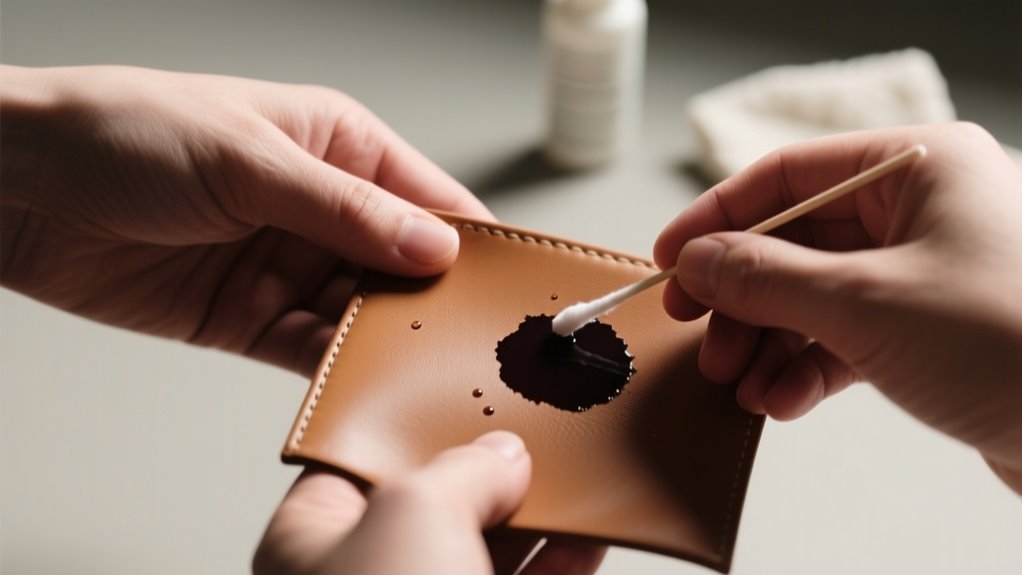
To remove ink stains from leather, first blot fresh ink quickly with a dry cloth. Don’t rub or add water.
Always test any cleaner on a hidden spot to avoid damage.
Avoid harsh chemicals like bleach or alcohol-based products. Use mild soap and water to gently lift stains, or dab rubbing alcohol carefully if needed.
You can also try a magic eraser with care.
Finish by conditioning your leather to keep it soft and shiny.
Follow these steps to restore your leather effectively.
Act Quickly to Blot Fresh Ink Stains on Leather

If you catch an ink stain on your leather early, act fast by blotting it with a dry cloth. When fresh ink lands on leather, it can quickly seep into the fibers, making removal much tougher.
Your best bet is to blot the stain immediately, using gentle pressure to absorb the excess ink. Avoid rubbing, as that only spreads the ink and deepens the stain. Don’t reach for water or cleaning solutions just yet because these can cause the ink to set deeper into the leather.
Acting within the first few minutes is vital. The sooner you blot, the higher your chances of removing the stain successfully. Prompt action not only stops the ink from soaking in but also helps preserve the leather’s appearance, sparing you from harsher cleaning methods later.
Always Test Cleaners on a Hidden Spot First
After blotting a fresh ink stain, you’ll want to clean the leather carefully to avoid setting the ink or causing damage. Before applying any cleaning products, always perform a spot test on a hidden, inconspicuous area.
Use a small amount of the cleaner and wait at least 10 minutes to watch for any discoloration or changes in texture. This step is essential because different leather types react differently to various products.
Testing the actual cleaning solution you plan to use ensures compatibility and helps prevent irreversible damage. If the test spot shows no change in color or finish, you can confidently proceed with treating the stain.
Skipping the spot test risks worsening the stain or causing permanent discoloration. Taking this precaution saves your leather from harm and keeps it looking its best throughout the cleaning process.
Avoid Chemicals That Damage Leather and Ink Stain Removal
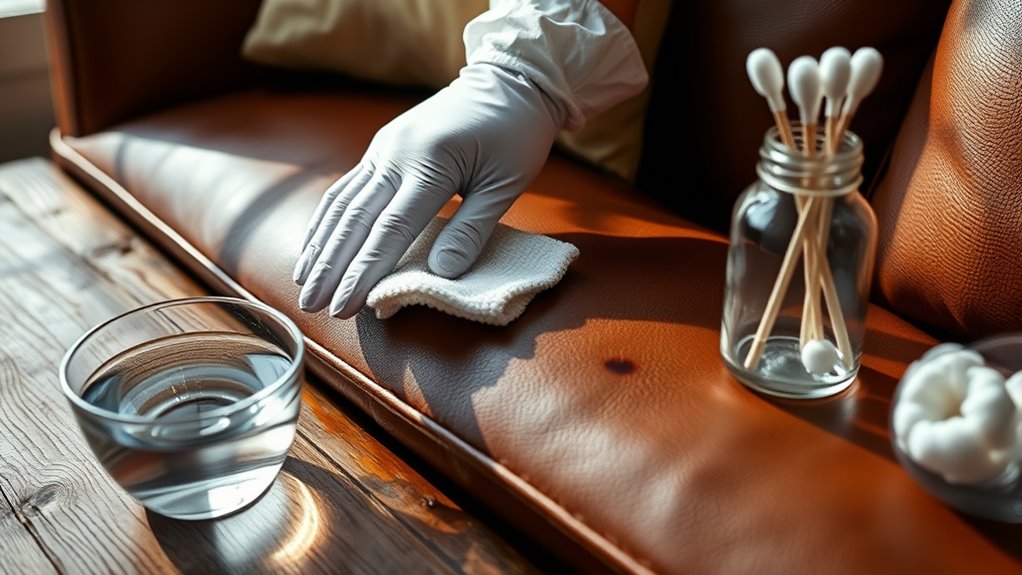
While tackling ink stains on leather, you should steer clear of harsh chemicals that can cause more harm than good. Using damaging substances not designed for leather can lead to discoloration, cracking, or even deterioration. To protect your leather, avoid these common pitfalls:
Avoid harsh chemicals on leather to prevent discoloration, cracking, and deterioration when removing ink stains.
- Bleach or ammonia. They cause discoloration and weaken leather fibers.
- Acetone-based nail polish remover. It strips natural oils and harms the finish.
- Alcohol-based products like certain hand sanitizers. These dry out and make leather brittle.
- Vinegar. It alters pH balance, leading to softening or discoloration over time.
Always perform a patch test on a hidden area before applying any cleaner. This simple step helps you avoid irreversible damage and ensures the product won’t harm your leather. By steering clear of harsh chemicals and testing first, you’ll keep your leather looking its best while effectively removing ink stains.
Use Mild Soap and Water for Gentle Ink Removal
When you need to remove ink stains from leather, using a mild soap and water solution offers a safe and effective approach. Start by mixing a small amount of mild soap, like dish soap or saddle soap, with warm water to create a gentle cleaning solution.
Dampen a soft cloth with the soapy water, making sure it’s not too wet to avoid soaking the leather. Gently blot the ink stain, working from the outer edges inward to prevent spreading the ink further. Avoid rubbing or scrubbing vigorously, as this can damage or discolor the leather’s surface.
After blotting, rinse the cloth with clean water and use it to wipe away any soap residue. Finally, pat the area dry with a clean towel. This method provides gentle cleaning that helps remove ink stains without harming your leather, preserving both its appearance and texture.
Apply Rubbing Alcohol or Vinegar to Lift Ink Stains
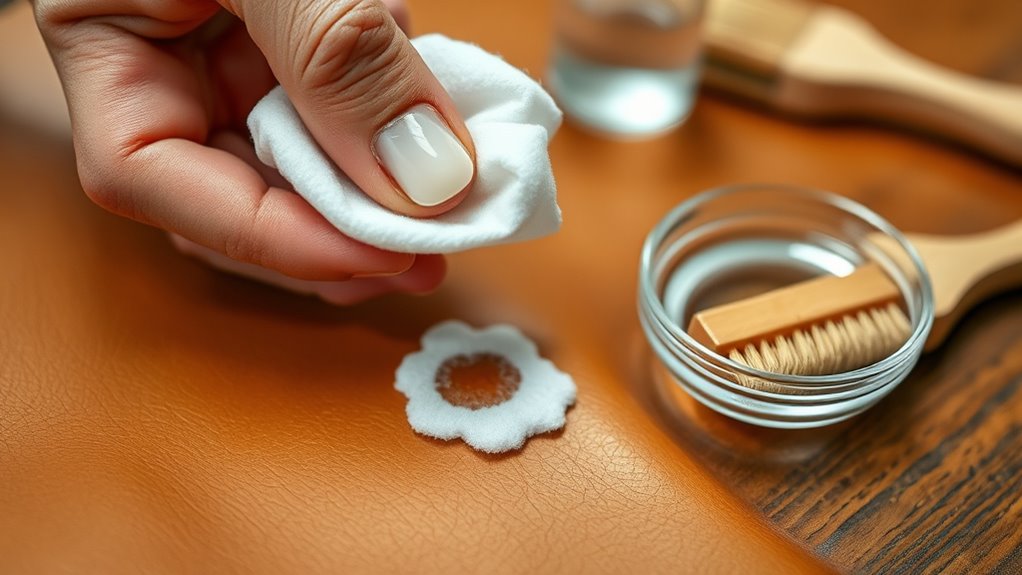
You’ve got two good options for tackling ink stains on leather: rubbing alcohol or diluted vinegar. Both work well, but each has its own perks. Just grab a cotton swab soaked in alcohol or gently blot the stain with your vinegar solution.
Before you dive in, though, it’s a smart idea to test whichever you choose on a hidden spot first. This way, you can make sure it won’t damage the leather.
Once you’ve treated the stain, wipe away any leftover residue with a damp cloth. And don’t forget to condition the leather afterward to keep it soft and supple.
Alcohol Vs. Vinegar
How do you decide between rubbing alcohol and vinegar to tackle ink stains on leather? Both can work, but choosing depends on your leather type and stain severity. Here’s a quick guide:
- Rubbing alcohol dissolves ink pigments fast, making it effective for fresh, tough ink stains.
- Vinegar, diluted 1:1 with water, uses mild acidity to break down ink more gently.
- Alcohol dries quickly but can dry out leather, so condition afterward to avoid brittleness.
- Vinegar is gentler but may need repeated use and thorough rinsing to clear ink residues.
Always test on a hidden spot, as both can damage leather if overused. This way, you pick the best option to safely lift your ink stains.
Application Tips
Although ink stains can be stubborn, applying rubbing alcohol or vinegar carefully can make a big difference. Start by doing a spot test in an inconspicuous area to verify the leather’s color and finish won’t be harmed.
For application, dab a small amount of rubbing alcohol onto a cotton swab or soft cloth. This lets you target the ink stain precisely without over-saturating the leather. If you choose vinegar, dilute it with water in a 1:1 ratio to protect the leather while still lifting the stain.
Use gentle, light dabbing motions rather than rubbing, as rubbing can spread the ink or damage the leather. After treatment, wipe away residue with a clean, damp cloth and condition the leather to restore its moisture and flexibility.
Use a Magic Eraser Carefully on Leather Ink Stains
When dealing with ink stains on leather, a Magic Eraser can lift marks gently if you handle it with care. This tool, made of melamine foam, offers gentle removal of ink stains without harsh chemicals.
To use it effectively and safely, follow these steps:
To use it effectively and safely, follow these careful steps for gentle ink stain removal on leather.
- Test the Magic Eraser on a hidden spot to check for any finish damage or discoloration.
- Lightly dampen the eraser and gently rub it over the ink stain using minimal pressure. Avoid scrubbing aggressively to prevent harming the leather.
- Wipe away any residue with a damp cloth immediately after treatment to keep the surface clean.
- Limit use to a few seconds per area to reduce abrasion and protect your leather’s finish.
Using a Magic Eraser this way ensures you remove ink stains with care, preserving the leather’s look and texture.
Condition Your Leather to Keep It Soft and Shiny
Once you’ve removed those pesky ink stains, the next step is to condition your leather to keep it feeling soft and looking shiny. You’ll want to pick a high-quality conditioner that really nourishes the leather and protects it from drying out or cracking.
Make sure to apply it evenly, and try to do this regularly—about every 3 to 6 months should do the trick. This way, you’ll help maintain your leather’s natural luster and keep it durable for years to come.
Importance Of Leather Conditioning
Conditioning your leather regularly restores the moisture it loses during cleaning, keeping it soft and flexible rather than dry and brittle. Using a good leather conditioner is essential because it forms a protective barrier that helps resist future stains, including ink. Here’s why conditioning matters:
- It replenishes lost moisture, preventing cracking and creasing.
- The protective barrier reduces absorption of ink and other liquids.
- Conditioning maintains your leather’s natural shine and supple texture.
- Regular care prolongs the lifespan of your leather items by preventing surface deterioration.
Choosing The Right Conditioner
Although choosing the right leather conditioner might seem straightforward, selecting one that suits your specific leather type and needs guarantees your item stays soft and shiny. Look for a leather conditioner with natural oils like lanolin, which penetrate deep into the fibers to restore moisture and maintain flexibility.
This is especially important after removing ink stains, as it helps preserve the leather’s natural shine and prevents discoloration. You’ll also want to think about conditioners that include UV protectants to shield your leather from sun damage, keeping it looking fresh over time.
Before applying any conditioner, test it on a small, hidden area to make sure it won’t cause unwanted discoloration. This careful selection keeps your leather supple and protected for the long haul.
Application Tips For Conditioning
When you want to keep your leather soft and shiny, applying conditioner correctly makes all the difference. Conditioning restores moisture, preventing dryness and cracking after cleaning ink stains. Follow these tips for best results:
- Choose a high-quality conditioner suited to your leather type.
- Use a soft cloth to apply the conditioner in gentle, circular motions, helping it penetrate the leather.
- Let the conditioner sit for 10-15 minutes to fully absorb moisture.
- Buff off any excess conditioner for a smooth, shiny finish.
Regular conditioning not only maintains softness and shine but also prolongs your leather’s lifespan by preserving its natural luster and flexibility. Keep up this routine after every cleaning to protect your leather investment.
Frequently Asked Questions
Can Ink Stains Permanently Damage Leather if Not Treated Quickly?
Yes, ink stains can permanently damage leather if you don’t act quickly. The ink can seep deep into the leather dyeing, causing discoloration that’s tough to reverse.
To prevent this, you need prompt stain prevention by using proper cleaning tools designed for leather. Waiting too long lets the ink set, making removal difficult and possibly requiring professional restoration.
What Types of Leather Are Most Susceptible to Ink Stains?
If you’re dealing with leather dye, ink penetration, and surface coating, you’ll find untreated aniline and semi-aniline leathers most susceptible to ink stains. You’ll notice they lack a protective surface coating, so ink soaks deep quickly.
In contrast, full-grain and top-grain leathers with strong surface coatings resist ink better. So, when choosing leather, remember: the less surface coating it has, the more vulnerable it is to permanent ink damage.
How Often Should I Condition Leather After Removing Ink Stains?
You should condition your leather immediately after removing ink stains to restore moisture and prevent dryness.
For ongoing leather care, condition every 3 to 6 months as part of your maintenance tips. This routine helps with stain prevention by preserving the leather’s natural oils and keeping it supple.
Prompt and regular conditioning ensures your leather stays protected, looks great, and resists future damage effectively.
Are There Any Natural Alternatives to Rubbing Alcohol for Ink Removal?
They say, “Necessity is the mother of invention,” and when it comes to ink stains, natural remedies can really help. You can try homemade solutions like white vinegar diluted with water or a paste made from baking soda and water.
Lemon juice mixed with a bit of baking soda also works as an eco-friendly option. These alternatives are gentle yet effective, helping you avoid harsh chemicals while keeping your leather clean and conditioned.
Can Professional Leather Cleaning Services Remove Old Ink Stains Effectively?
Yes, professional leather cleaning services can effectively remove old ink stains. They use specialized cleaning solutions tailored to your leather dye and type, ensuring safe and thorough stain removal.
These experts assess the damage and apply advanced techniques that target ink deeply embedded in the leather without causing harm. So, if home remedies haven’t worked, turning to professionals markedly boosts your chances of restoring your leather’s original look.
Conclusion
By boldly battling bothersome blotches, you’ll bring back your leather’s lovely luster. Always act after spotting stains, apply alcohol or a gentle soap, and avoid abrasive agents.
Test treatments tactfully, tackle tough marks with a magic eraser carefully, and condition consistently to keep your leather soft and shiny. With these simple steps, you’ll swiftly save your stylish stuff from stubborn stains, showcasing savvy stain solutions that shine with success.
Leave a Reply