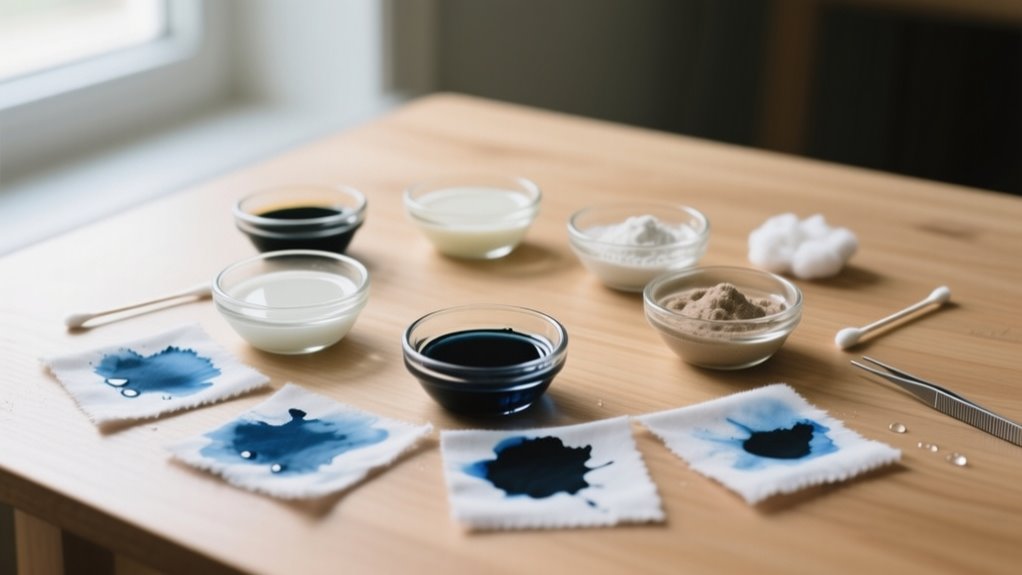
You can remove ink stains fast by blotting excess ink with a cold, damp cloth and avoiding heat, which sets stains.
Try rubbing alcohol or hand sanitizer on sturdy fabrics, testing first. For delicate materials, use a vinegar-water mix or gentle blotting.
OxiClean works well for fresh or dried spots. Soak or spray and launder afterward.
Home remedies like baking soda paste or hairspray also help lift ink.
Keep these tricks in mind, and you’ll soon master effective stain removal techniques.
Quick Steps to Remove Ink Stains Before They Set
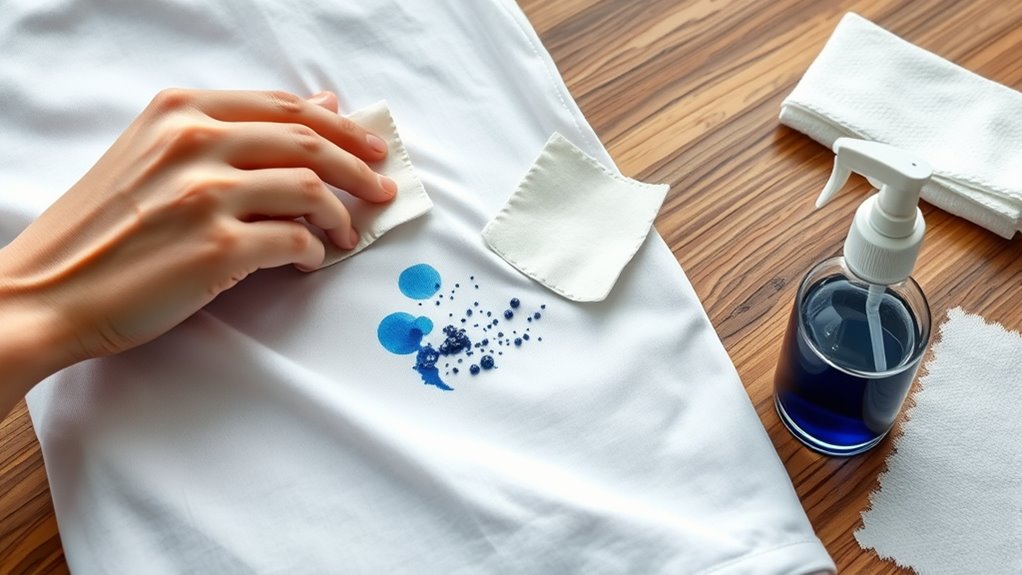
If you catch an ink stain early, you’ll have a much easier time removing it. The first thing you should do is blot excess ink gently using a clean cloth or paper towel. Avoid rubbing, as this only spreads the ink stain further.
Next, rinse with cold water to dilute the ink, which makes it easier to remove ink stains effectively. Once rinsed, pretreat the area with a suitable stain remover. This could be rubbing alcohol or a specialized product designed for ink.
Make sure to apply the stain remover as soon as possible to prevent the ink from setting into the fabric. Always test any solvent like rubbing alcohol on a hidden spot to ensure it won’t damage or discolor your clothing. By following these quick steps, blot excess ink, rinse with cold water, and pretreat immediately, you’ll greatly improve your chances of completely removing ink stains before they become permanent.
Household Solvents: Rubbing Alcohol and Hand Sanitizer for Ink Stains
When you pretreat an ink stain, household solvents like rubbing alcohol and hand sanitizer can be highly effective. Both contain isopropyl or ethyl alcohol, which acts as an alcohol-based cleaner that excels in stain dissolving.
For safe ink stain removal, test the solvent on a hidden fabric spot first to avoid damage. Dab the ink gently with a cloth soaked in rubbing alcohol or hand sanitizer, and avoid rubbing to prevent spreading.
Hand sanitizers with 70% or more alcohol usually offer better ink removal than those with added moisturizers. After treatment, rinse with cold water and wash normally.
Using OxiClean Products for Fresh and Dried Ink Stains
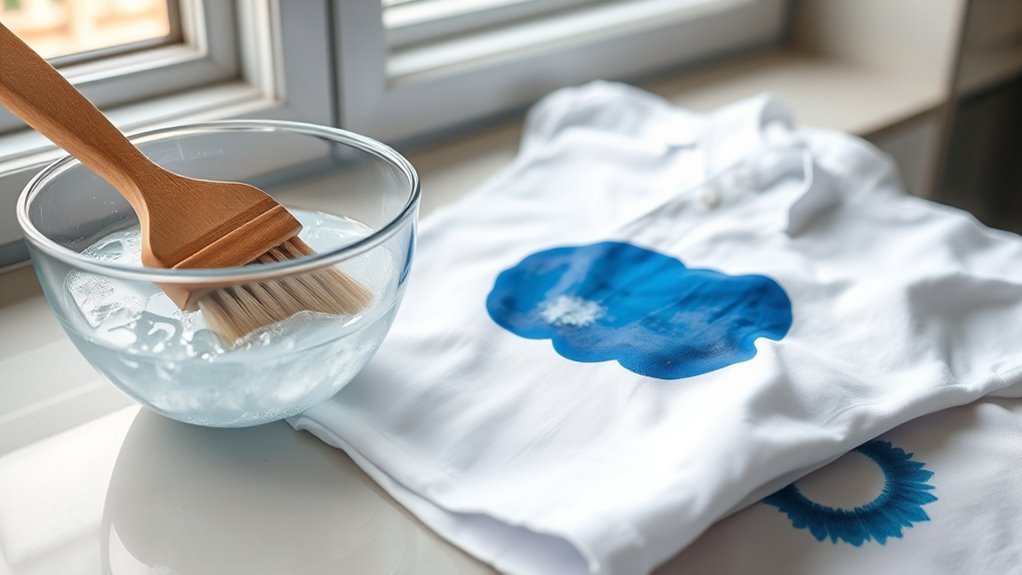
You can tackle fresh and dried ink stains effectively by soaking your clothes in OxiClean powder dissolved in warm water for a few hours. It really helps to loosen up the ink and makes it easier to remove.
Now, if you’re dealing with tougher, dried stains, try applying OxiClean Max Force spray directly to the spot. Let it sit for a while—that really boosts your chances of getting the stain out completely.
And hey, don’t forget to always test the product on a hidden area first before treating the stain. It’s a simple step that can save your clothes from any unwanted surprises!
OxiClean Powder Soaking
Though ink stains can be stubborn, OxiClean powder offers a reliable solution by soaking your fabric in a warm water mixture with 2 to 4 scoops for up to six hours. This soaking method works well for both fresh and dried ink stains, allowing the solution to penetrate and break down the ink effectively.
Adjust soaking time based on stain severity. Older or tougher stains may need longer treatment. After soaking, launder the fabric in the hottest water safe for it to guarantee maximum stain removal.
Always test a small, hidden area first to prevent damage or discoloration. By combining proper soaking with careful laundry, you can confidently tackle ink stains and restore your fabric’s appearance using OxiClean’s proven stain treatment.
Max Force Spray Use
How can you quickly tackle both fresh and dried ink stains? Max Force Spray, an OxiClean product, is designed to treat ink on fabric stains effectively. It penetrates and breaks down ink molecules, making it ideal for both fresh ink and stubborn dried ink.
For maximum stain removal, apply Max Force Spray directly onto the affected area and let it sit for at least five minutes before washing. While it works well on most colorfast fabrics, always test a small hidden spot first to avoid discoloration.
If the ink stain persists, just repeat the stain treatment process. These stain removal tips help guarantee even tough, set-in ink stains come out, restoring your fabrics without hassle.
Safe Ink Stain Removal Methods for Common Fabric Types
When you’re dealing with ink stains, it’s important to pick your method based on the type of fabric you’re working with so you don’t accidentally ruin it. For sturdier fabrics like cotton and denim, rubbing alcohol usually does the trick pretty well. But if you’ve got something more delicate, like silk, you’ll want to go for gentler options—vinegar treatments can help, or sometimes it’s best to leave it to the pros. Either way, always remember to test your chosen method on a small, hidden area first to make sure the fabric won’t get damaged.
Durable Fabric Techniques
If you act quickly, rubbing alcohol or Tide Ultra Stain Release can remove ink stains from durable fabrics like shirts, jeans, and pants effectively. To tackle ink stains on durable fabrics without causing fabric damage, follow these steps:
First, test rubbing alcohol or stain remover on an inconspicuous spot to check for colorfastness and avoid harming fabric dyes. For canvas or linen, apply rubbing alcohol with a cotton swab or hold fabric taut over a jar to draw out ink gently.
For denim or heavy fabrics, soak in a mixture of dish soap, vinegar, and water to loosen ink before washing.
Delicate Fabric Care
Although delicate fabrics like silk and wool require extra care, you can still tackle ink stains effectively by using gentle blotting with cold water and minimizing rubbing. For silk, try a mixture of white vinegar and cornstarch applied sparingly to lift ink without harsh chemicals.
Always test any stain removal method on an inconspicuous area to guarantee colorfastness and avoid discoloration. Wool benefits from similar gentle blotting techniques to protect its fibers.
When caring for delicate fabrics, avoid aggressive scrubbing and focus on careful cleaning techniques. If stains persist, consider professional cleaning services to prevent damage.
Gentle Ink Stain Removal Techniques for Delicate and Textured Fabrics
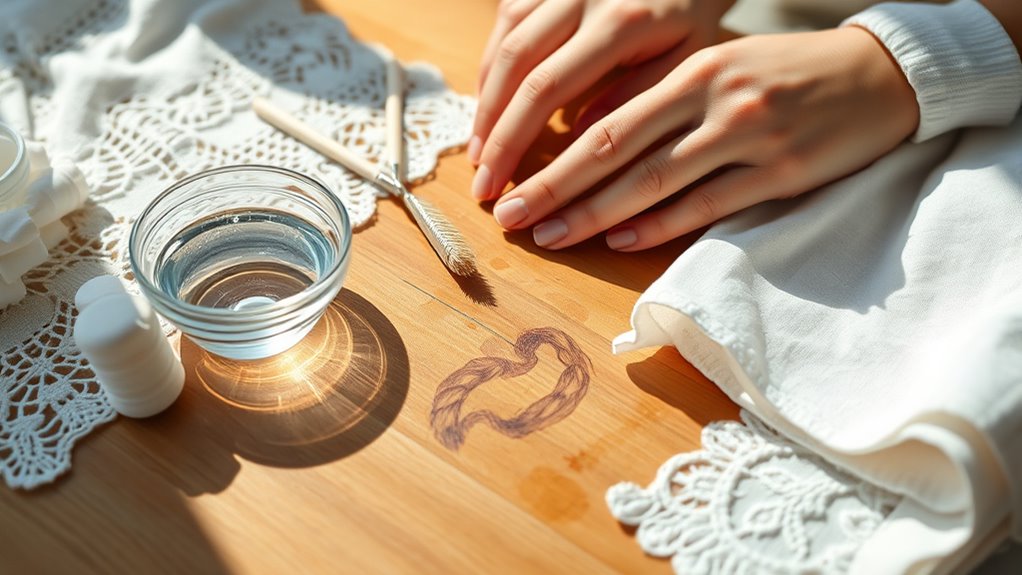
Because delicate and textured fabrics are easily damaged, you’ll need to treat ink stains with extra care. When working on delicate fabrics like silk or wool, start with gentle blotting using cold water and mild solutions. Avoid vigorous rubbing to protect fabric preservation.
For textured fabrics such as velvet and chenille, soak the area in a mild vinegar and water solution before carefully applying an alcohol dab if necessary.
Follow these steps to guarantee successful stain removal:
- Always begin by testing stain removal agents on an inconspicuous spot to avoid discoloration or damage.
- Use soft dabbing motions instead of scrubbing to prevent fraying or distortion.
- Allow the fabric to air dry after treatment so you can monitor progress and prevent heat from setting residual ink.
Simple Home Remedies to Try for Ink Stains
When tackling ink stains at home, you’ll find several simple remedies that can effectively break down and lift the ink from your fabrics. Start by dabbing rubbing alcohol or hand sanitizer directly onto the stain. Alcohol works wonders on many types of ink stains, especially water-based ink.
Another reliable home remedy is using a mixture of white vinegar and water. Dab it gently with a white cloth to lift the ink without spreading it. For tougher stains, apply a paste made from baking soda and water, then rub gently to aid stain removal.
Hairspray can also help dissolve ink. Spray it on, let it sit briefly, then blot with a clean cloth. After treating the stain, rinse the area with cold water to prevent setting.
These straightforward methods use common household items, making ink stain removal practical and accessible without harsh chemicals.
Preventing Ink Stains From Setting and Final Care Tips
After applying home remedies to tackle ink stains, you’ll want to act quickly to stop the stain from setting. Preventing ink set is crucial to effective stain removal. Start with these steps:
- Use cold water for initial rinsing and blotting. Cold water helps dilute the ink within fabric fibers, making it easier to lift without spreading the stain.
- Always check the care label and test solutions on a hidden area. This prevents damage or color loss and ensures your chosen cleaner is safe for the fabric.
- Avoid heat at all costs. Don’t use hot water or a dryer until the stain’s completely gone. Heat can permanently set ink stains, making them impossible to remove.
Once treated, air dry the fabric to monitor if the ink stains have fully disappeared. Following these final care tips ensures your stain removal efforts last and keeps your clothes looking fresh.
Frequently Asked Questions
Can Ink Stains Be Removed From Leather or Suede Materials?
Yes, you can remove ink stains from leather or suede materials if you act quickly. Leather care involves using gentle cleaners that respect dye compatibility and prevent further stain absorption.
For suede cleaning, avoid water and focus on dry methods, keeping ink penetration minimal. Understanding stain history helps you choose the right treatment.
Always perform material testing first, then apply leather conditioner or suede protection to restore the surface and prevent future stains.
Are There Any Professional Cleaning Services Specialized in Ink Stain Removal?
Imagine you spilled ink on your favorite leather jacket before an important event. You’ll find professional cleaning services specializing in ink stain removal who use advanced stain removal techniques and tailored cleaning solutions.
These experts know stain prevention and laundry tips, debunk stain removal myths, and use specialized stain removal tools and kits. Don’t rely solely on household cleaning; professional cleaning can save your item and restore it beautifully.
How Do Ink Stain Removers Affect Clothing With Prints or Dyes?
Ink stain removers can affect your clothing with prints or dyes by causing fading or bleeding if they’re not print safe solutions. To protect your garments, choose dye friendly removers that prioritize dye stability and printed textile protection.
Understanding fabric printing methods helps you select color preserving techniques that maintain washable ink products’ integrity. For stain resistant clothing or ink safe dyes, always test first to guarantee printed fabric care without damaging your apparel’s look.
What Should I Do if Ink Stain Removal Causes Discoloration?
Imagine rushing to fix a spill only to make it worse, like a chef burning a perfect sauce. If ink removal causes discoloration, act quickly: stop treatment, assess fabric sensitivity, and avoid harsh chemicals.
Use stain testing on hidden areas next time to prevent discoloration. Try natural remedies or alternative methods to minimize color fading.
Are There Eco-Friendly Ink Stain Removal Products Available?
Yes, you’ll find plenty of eco-friendly ink stain removal products that use biodegradable solvents and plant-based removers. These natural stain solutions rely on sustainable cleaning agents and non-toxic solvents, so you can trust they’re environmentally safe products.
Green stain removers and organic ink removal options offer eco-conscious cleaning without harsh chemicals. Choosing these guarantees you protect both your fabrics and the planet while effectively tackling ink stains.
Conclusion
You might think ink stains are impossible to remove, but with quick action and the right methods, they don’t have to ruin your favorite items. While harsh chemicals can seem like the go-to fix, gentle home remedies often work just as well without damage.
By combining speed with care, you’ll turn a frustrating mess into a simple, manageable task, proving that even tough stains meet their match when you know what to do.
Leave a Reply