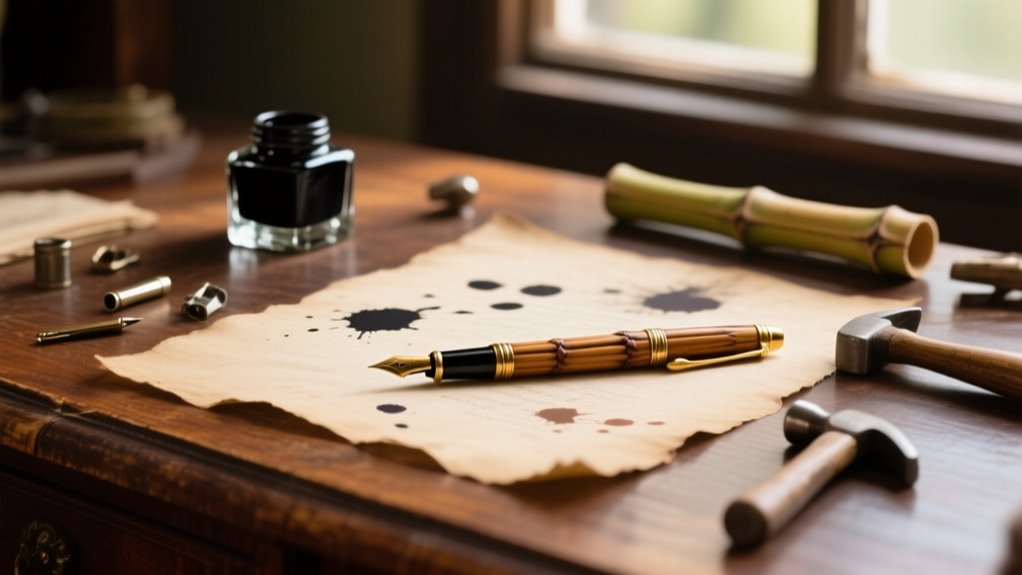
You can trace the ink pen’s invention back to 953 AD in Egypt with early fountain pens holding ink inside. Later, inventors like Petrache Poenaru and Lewis Waterman improved refillable reservoirs and ink flow systems.
To make your own, gather a sturdy reed or feather, carve a precise slit nib, and prepare simple homemade ink with natural ingredients like soot and gum arabic.
Keep going, and you’ll uncover tips on perfecting, maintaining, and exploring exciting pen variations.
Who Invented the Ink Pen?
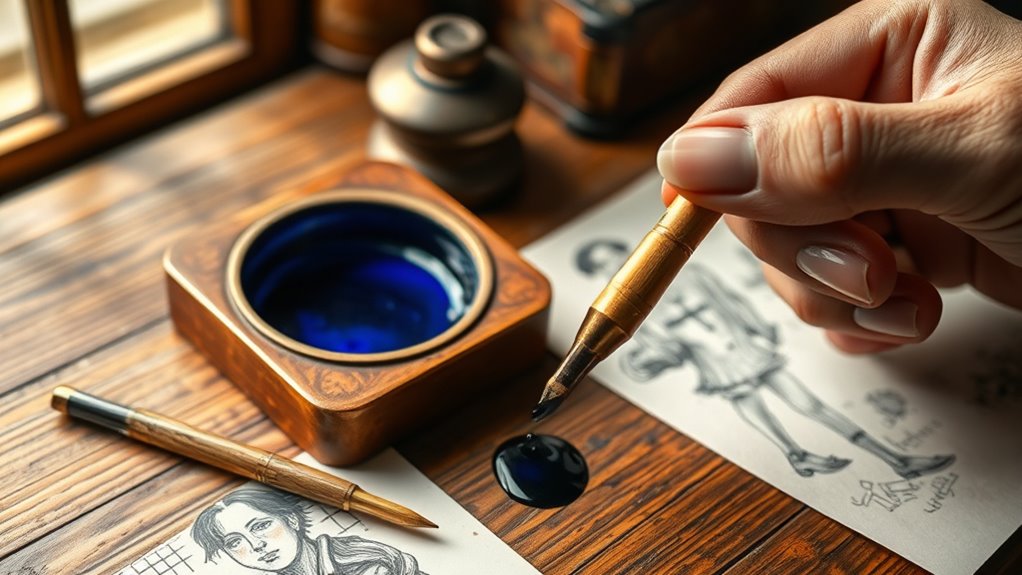
Who exactly invented the ink pen? The answer isn’t simple because the ink pen evolved over centuries. The first practical fountain pen was invented in 953 AD in Egypt, featuring an internal ink reservoir that allowed ink to flow by gravity.
Later, in 1827, Petrache Poenaru received a patent for a fountain pen using a quill as a refillable ink reservoir with a sealed mechanism. However, the modern fountain pen really took shape thanks to Lewis Waterman, who patented a reliable feed system in 1884.
His innovation improved ink flow regulation and drastically reduced leaks, making fountain pens practical and popular. So, while no single person invented the ink pen, these milestones—from early ink reservoirs to Waterman’s feed system—paved the way for the modern fountain pen you might use today.
You can see how each innovation contributed to creating a writing tool that’s both functional and elegant.
How Early Writing Tools Inspired Ink Pens
You know, early writing tools like reed pens really set the stage for ink pens. They used sharpened tips to make marks on surfaces, which was pretty clever for the time. These simple instruments, inspired by ancient carvings, gradually evolved to give people better control and more detail when writing. When you think about where they started, it’s easier to appreciate how ink pens eventually came to be.
Origins of Writing Tools
Although modern ink pens seem commonplace, their origins trace back to ancient writing tools like reed pens and quills, which you might find surprisingly ingenious. Early reed pens, crafted from reed stalks, featured a slit at the pen nib that held ink, enabling ink-based writing on papyrus.
Later, quill pens made from bird feathers improved control over ink flow through a similarly designed nib. These writing instruments depended on natural ink reservoirs created by the slit, allowing smoother and more consistent writing.
The development of ink and suitable writing surfaces drove the evolution of these tools. By understanding how these ancient writing tools functioned, you can appreciate how the need for precision and durability inspired the sophisticated ink pens we use today.
From Reed Pens
Ancient reed pens laid the groundwork for the ink pens we use today by showing how to manage ink flow and precision in writing. Made from cut reeds or bamboo, these ancient writing tools featured a sharpened tip shaped into a nib that held ink.
They relied on capillary action to draw ink from an ink reservoir, allowing smooth, continuous writing without frequent re-dipping. This clever design inspired the crafting of more advanced ink pens by demonstrating effective ink flow control.
Even now, reed pens remain popular in traditional calligraphy across regions like India and Pakistan, highlighting their lasting influence. When you explore making your own ink pen, understanding reed pens’ principles provides invaluable insight into balancing ink flow and nib design.
Major Innovations That Shaped Today’s Ink Pens
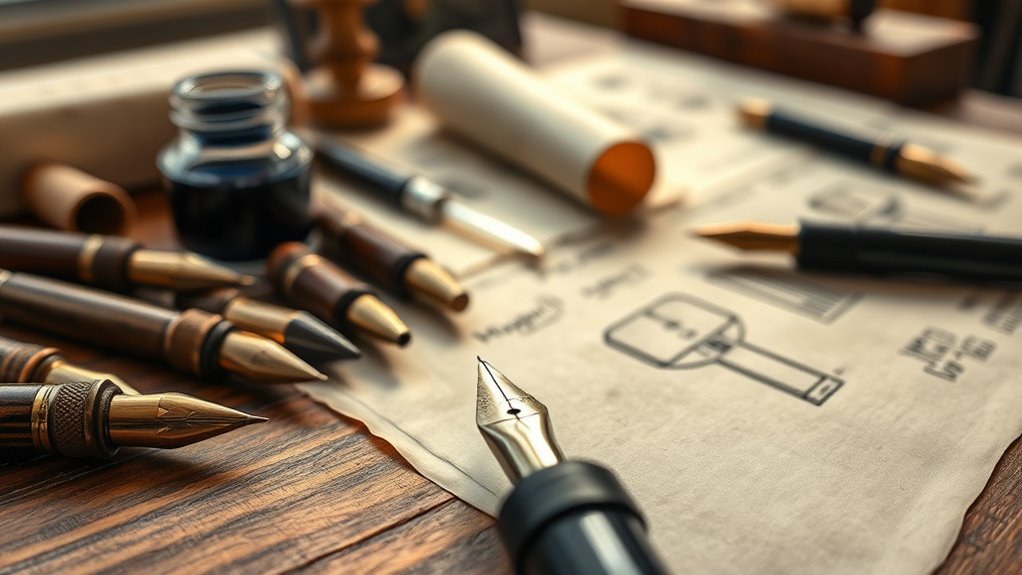
When you use a modern ink pen, you benefit from a series of key innovations that transformed its design and functionality. Lewis Waterman’s invention of the ink feed system in 1884 revolutionized the fountain pen by regulating ink flow reliably, preventing leaks and blotches. This advancement laid the foundation for the internal ink reservoir, ensuring a steady supply of ink as you write.
Later, John Jacob Parker’s self-filling mechanism, using a rubber sac, made refilling easier and more portable. Parker also introduced the Lucky Curve system, which minimized ink leakage, keeping your pen cleaner and more durable.
Furthermore, the introduction of gold nibs tipped with iridium gave pens greater longevity and a smoother writing experience. These innovations combined to shape the pens you use today, enhancing reliability, convenience, and craftsmanship. Understanding these breakthroughs helps you appreciate the sophisticated design behind every modern ink pen you hold.
Materials Needed to Make a Simple Ink Pen at Home
To make a simple ink pen at home, you’ll need a sturdy pen body, a fine nib, and an ink applicator to control the flow. It’s important to choose the right ink, whether it’s store-bought or homemade, because that really affects how smoothly your pen writes.
Also, don’t forget to think about the type of paper or surface you’ll be using. That can change how the ink looks and how quickly it dries. So, keeping these things in mind will help you create a pen that works just the way you want.
Essential Pen Components
Although making an ink pen at home might seem complex, you only need a few essential materials to get started. First, choose a sturdy writing tip. Metal nibs work best because they are durable and precise.
Next, you’ll need an ink reservoir to hold your ink source securely. Connect the writing tip to the reservoir using a shaft, often a wooden or plastic tube.
To guarantee smooth ink flow, rely on capillary action. This can be enhanced by a slit in the nib or a porous material that draws ink toward the writing surface.
Finally, include a sealing mechanism or wick to control ink flow and prevent leaks. With these components, you can craft a functional ink pen tailored to your needs.
Types Of Ink Options
Since the ink you choose defines your pen’s character, you’ll want to explore various options before making your own. Traditional ink options include carbon-based, iron gall, and vegetable dyes, each with unique ink ingredients.
For homemade ink, you can mix soot or charcoal with water and gum arabic for black ink. Colored inks come from natural extracts like beet juice or turmeric, combined with natural dyes and a binder.
Some ink recipes even use gelatin or egg yolk for durability.
| Ink Type | Key Ingredients |
|---|---|
| Carbon-based | Soot, water, gum arabic |
| Natural dyes | Beet juice, turmeric, berries |
| Gelatin/Egg yolk | Pigment, gelatin or egg yolk |
These ink options let you customize your homemade ink pen perfectly.
Suitable Writing Surfaces
When you make a simple ink pen at home, choosing the right writing surface is essential for smooth ink flow and clear marks. Your pen tip needs a smooth surface to deliver ink evenly, ensuring controlled application. To find the best fit, test ink on various materials. Consider these options:
- Paper or cardboard: flat, absorbent, and ideal for everyday writing tests.
- Untreated wood: provides a natural texture but requires a steady ink reservoir.
- Non-porous surfaces like glass or ceramic: perfect for testing ink flow without absorption or damage.
For your pen’s body, use durable materials like bamboo or reed. Store your ink in a small, sealable container to keep it fresh, ready for your next creative stroke.
Choosing and Preparing Ink for Your Handmade Ink Pen
Choosing and preparing the right ink is essential for making your handmade ink pen work smoothly and create beautiful writing. You can make homemade ink using natural ingredients like soot, gum arabic, and water, or opt for commercial ink powders and bottled ink.
Selecting and preparing the right ink ensures smooth writing and enhances the beauty of your handmade pen creations.
Traditional recipes mix black carbon-based soot with gum arabic to achieve a smooth, erasable ink. To add vibrant colors, incorporate natural pigments such as crushed berries, turmeric, or charcoal.
Pay close attention to viscosity; adjusting the amount of gum arabic guarantees the ink flows well and adheres properly to your writing surface. Before you start writing, always test your homemade ink on scrap paper.
Check for consistency, drying time, and color to avoid smudges or uneven lines. By carefully selecting and preparing your ink, you set a solid foundation for your ink pen’s performance and the beauty of your handwritten work.
How to Craft Your Own Ink Pen From Reed or Quill
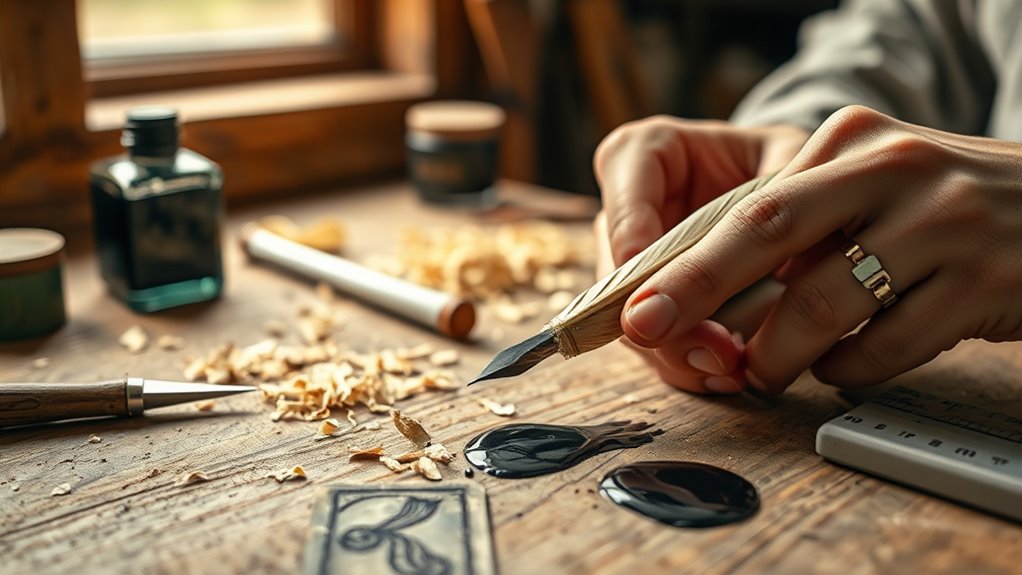
Although crafting your own ink pen from a reed or quill takes some patience, you’ll find the process rewarding and surprisingly simple. Start by selecting a straight, sturdy reed or a feather with a smooth quill, like from a goose or swan.
Cut it to your preferred length, then carefully carve a slit at the tip to form the nib. This slit needs to be narrow enough to hold ink yet wide enough for smooth ink flow.
Here’s how to create your homemade pen:
- Carve a fine V-shaped slit at the nib’s tip to help the ink draw in through capillary action.
- Shave the edges gently to ensure controlled ink flow and consistent writing.
- Dip your pen into ink and test it on paper, adjusting the carving if needed for better ink absorption.
With these steps, your reed or quill pen will be ready to bring your writing to life.
How to Prepare and Cut the Nib for Smooth Ink Flow
To achieve smooth ink flow, start by sharpening the nib’s tip gradually with a fine file or craft knife. Create a smooth, beveled edge that guides the ink evenly.
During nib preparation, focus on cutting the nib’s slit at an angle of about 45 degrees to optimize capillary action for consistent ink delivery. Use a magnifying glass to inspect the slit closely, refining the nib by removing any burrs or uneven edges that might disrupt ink flow.
Slightly round the nib’s edges with fine sandpaper to prevent ink skipping or pooling. This enhances your pen customization for a comfortable writing experience.
After each adjustment, test the nib on scrap paper to guarantee it produces clean, smooth lines. This careful process of nib preparation and cutting the nib is essential for securing reliable ink flow and making your handmade pen truly functional and enjoyable to use.
Tips for Maintaining and Using Your Ink Pen Properly
Once you’ve prepared and cut your nib for ideal ink flow, keeping your ink pen in good condition guarantees it writes smoothly every time. Proper use and regular maintenance prevent clogs and extend your pen’s life.
Maintaining your ink pen ensures smooth writing and prevents clogs, extending its lifespan with proper care.
Focus on these key tips:
- Cleaning: Rinse the nib and feed with water regularly to stop ink buildup. This keeps the ink flow steady and prevents clogging.
- Refilling: Use the recommended ink cartridge or ink type to avoid drying or damage. Refill carefully to prevent overfilling, which can cause leaks.
- Storage: Store your ink pen horizontally or with the nib downward. This avoids ink drying out and leaking.
Exploring Ink Pen Variations
When you explore ink pens, you’ll find a variety of types designed for different writing styles and purposes. Fountain pens, classic reservoir pens, use metal nibs and rely on capillary action for smooth ink flow. They deliver water-based liquid ink from an internal reservoir.
Ballpoint pens offer a different approach, dispensing oil-based ink through a tiny rotating ball. This ensures reliable ink delivery with less mess.
Rollerball pens blend the best of both worlds, using liquid ink with a ball tip for smoother, faster writing than traditional ballpoints.
Felt-tip pens, another variation, feature porous tips saturated with ink. They’re perfect for vibrant colors and varied line thicknesses, especially in artistic work.
Each pen variation optimizes ink delivery and ink flow to suit specific needs. Understanding these differences helps you choose the right pen for your style, whether you prefer the elegance of a fountain pen or the practicality of a ballpoint pen.
Why the Ink Pen Still Matters in the Digital Age
Although digital devices dominate how we communicate and take notes, ink pens still hold a special place for many people. Using a fountain pen or traditional ink pens offers a unique writing experience you won’t get from typing. The smooth ink flow and tactile feedback create a connection between you and your words.
Plus, craftsmanship shines through in every pen, especially those with refillable reservoirs designed for longevity.
Here’s why ink pens still matter:
- They enhance focus and mindfulness, turning writing into a calming ritual.
- Artists and calligraphers rely on their artistic versatility and precise ink flow for stunning creations.
- Ink pens symbolize professionalism and tradition, adding elegance to your handwritten notes.
Frequently Asked Questions
Can Ink Pens Be Used for Calligraphy and Artistic Purposes?
You can definitely use ink pens for calligraphy and artistic purposes. They give you excellent ink flow control, which is essential for mastering calligraphy techniques and creating artistic ink styles.
With decorative pen designs and various artistic pen tips, you can explore traditional ink methods or try creative ink applications like ink color blending. These features help you achieve unique, expressive strokes and bring your artwork to life with precision and flair.
How Do Ink Pens Compare to Modern Ballpoint Pens in Writing Quality?
Like a river carving its path, ink pens offer smoother writing and richer ink flow than ballpoints. You’ll notice superior writing smoothness and ink consistency, giving your words elegance. However, ink drying time is longer, and pen durability may require more care.
Ballpoints score higher in grip comfort, pen weight, and convenience. Ink pens shine with diverse ink color options and artistic flair, but ballpoints stay reliable for everyday use.
Are There Eco-Friendly Ink Pen Options Available Today?
Yes, you can find eco-friendly ink pen options today that use sustainable materials like recycled barrels and biodegradable ink. Many refillable pens feature plant-based inks or natural dyes, which help reduce environmental impact.
Eco-conscious brands focus on producing pens with eco-friendly inks made from vegetable-based or water-based formulas. Choosing these pens lets you support sustainability while enjoying quality writing tools made from renewable resources.
What Are Common Issues When Using Handmade Ink Pens?
When using handmade ink pens, you’ll often face leakage problems and ink drying issues if the reservoir isn’t sealed well. Inconsistent flow and clogging troubles can disrupt your writing, especially if the nib isn’t shaped correctly or if ink corrodes internal parts.
You might notice nib damage from improper sharpening, while ink smudging can ruin your work. Also, grip discomfort is common, so customizing your pen’s feel matters for comfort.
Can Children Safely Make and Use Homemade Ink Pens?
Yes, children can safely make and use homemade ink pens with DIY safety in mind. You should provide child supervision and age-appropriate tools while using non-toxic materials to guarantee risk prevention.
This hands-on activity encourages creative exploration and develops crafting skills. Plus, it offers educational benefits by teaching patience and fine motor control.
Always remind kids to handle materials carefully and wash hands afterward to keep the experience fun and safe.
Conclusion
As you craft your own ink pen, you’re not just making a tool, you’re joining a timeless dance of creativity and expression. Though digital gadgets often steal the spotlight, the ink pen quietly holds its charm. It offers a gentle nudge back to thoughtful, personal touch.
So, embrace this subtle art form, and let your handmade ink pen remind you that sometimes, the simplest tools carry the richest stories.
Leave a Reply