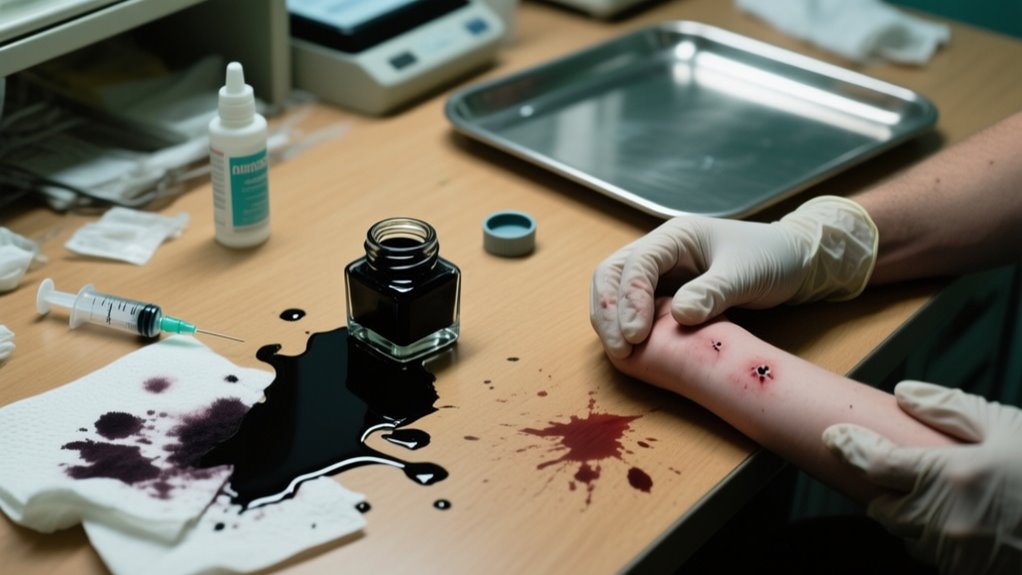
You’re unlikely to die from ink poisoning since everyday inks are usually low in toxicity, but swallowing large amounts, over 30 mL, can cause serious symptoms needing prompt care.
If you ingest ink, rinse your mouth without inducing vomiting and seek medical help quickly.
Watch for signs like vomiting or breathing trouble, and contact poison control for guidance.
Taking proper precautions diminishes risks, and understanding how to respond guarantees you stay safe if exposure happens.
What Is Ink Poisoning?
Although ink poisoning is uncommon, it happens when you ingest large amounts of ink containing toxic solvents, dyes, or pigments. Most everyday writing inks are minimally toxic in small amounts, so accidental ingestion usually doesn’t cause serious problems.
However, inks used in tattooing or industrial settings may carry higher toxicity risks and lead to more severe symptoms.
If you experience ink poisoning, symptoms often include nausea, vomiting, and abdominal pain, especially after swallowing a larger quantity. These signs indicate that the toxins in the ink are affecting your body and require immediate attention.
Proper handling and storage of ink can help prevent accidental ingestion. If you suspect ink poisoning, don’t hesitate to treat it as a medical emergency, seeking prompt professional care to avoid complications.
Understanding what ink poisoning involves helps you respond quickly and keep yourself or others safe.
How Serious Is Ink Poisoning? Can It Cause Death?
Ink poisoning from everyday writing inks is rarely serious and almost never fatal. That said, swallowing large amounts of industrial or unregulated inks can be risky. If that happens, it’s important to get medical help quickly. Knowing how serious the situation is and when to act can really keep you safe.
Ink Poisoning Severity
While swallowing a small amount of everyday writing ink is unlikely to harm you seriously, ingesting large quantities or industrial inks can pose significant health risks. The severity of ink poisoning depends largely on the type and amount ingested.
Small doses typically cause mild symptoms like stomach upset or skin staining, rarely requiring medical attention. However, ingesting more than 30 mL of ink, especially industrial or unregulated types, can lead to more severe symptoms and complications.
Although death from ink poisoning is extremely rare, it’s essential to seek prompt medical attention if you suspect significant ingestion. Early treatment reduces risks and helps manage symptoms effectively, preventing severe outcomes in most cases.
Always treat ink ingestion seriously to guarantee your safety.
Fatality Risks Overview
Understanding the potential fatality risks from ink poisoning can help you respond appropriately if exposure occurs. Most everyday inks, like those in pens or markers, carry a very low toxicity risk and rarely cause serious harm when ingested in small amounts.
However, ingesting large quantities, especially industrial or unregulated inks, can increase the fatality risk, though such cases are extremely rare. Consuming over 30 mL of ink might lead to toxic effects, but with prompt medical treatment, death is still unlikely.
Ink poisoning deaths usually involve significant ingestion of toxic industrial inks or intentional poisoning. Overall, while ink ingestion should never be ignored, the chance of fatality remains very low, especially when you seek timely medical care.
How Much Ink Is Dangerous to Swallow?
Although swallowing a small amount of pen ink, usually less than 1.2 mL, rarely causes serious harm, ingesting larger quantities, especially over 30 mL, can be dangerous and requires prompt medical attention. The amount of ink you swallow plays an essential role in the risk of ink poisoning.
Small doses, such as from ink cartridges containing up to 2.5 mL, generally lead to minor effects like mild stomach upset or staining rather than toxicity. However, swallowing ink in larger volumes increases the potential for harmful effects, largely depending on the ink’s chemical makeup.
Since ink formulations vary, the toxicity level can differ, making it critical to assess how much ink has been ingested. If you or someone else swallows a significant amount of ink, don’t hesitate to seek medical help immediately, especially if symptoms arise. Early intervention can prevent complications related to ink poisoning and guarantee proper treatment.
What Are the Common Signs of Ink Poisoning?
How do you know if you’ve been poisoned by ink? After ingestion of a large amount, common symptoms of ink poisoning include nausea, vomiting, and abdominal pain.
While skin staining or irritation might happen from contact, these usually aren’t signs of poisoning. If ink gets into your eyes, you might notice eye irritation, redness, or temporary staining of the white part.
Sometimes, fever, chills, or skin rashes develop, indicating an allergic or infectious reaction related to ink exposure. It’s important to watch for persistent or severe symptoms like difficulty breathing or dizziness. These require immediate medical attention.
Recognizing these signs early helps you respond appropriately to potential ink poisoning. Remember, mild irritation alone doesn’t necessarily mean poisoning, but any troubling symptoms following ink ingestion should never be ignored.
What Should You Do Right After Swallowing Ink?
If you swallow ink, start by rinsing your mouth thoroughly with water to help dilute the substance and ease irritation. This first aid step is vital to lessen the ink’s immediate effects.
Avoid inducing vomiting unless a medical professional or poison control center specifically instructs you to do so, as this can sometimes worsen poisoning.
Next, seek emergency medical assistance promptly, especially if you’ve swallowed a large amount of ink or if symptoms like nausea, abdominal pain, or difficulty breathing appear.
Be ready to provide healthcare providers with the ink container or label to guarantee accurate identification of the substance involved. Monitor your condition closely and communicate any developing symptoms to medical responders.
Acting quickly and calmly by following these steps will help reduce the risk of severe complications after swallowing ink and guarantee you get the appropriate medical care.
How to Treat Ink on Your Skin and in Your Eyes
When ink gets on your skin, it usually just leaves a temporary stain that washing with soap and water can easily remove. Skin irritation from ink is uncommon and doesn’t lead to poisoning, so gentle cleaning is your best first aid. Avoid harsh chemicals or alcohol on the skin, as they may worsen irritation.
If needed, alcohol-based cleansers can help remove stubborn stains, but the ink will typically fade over time without health risks.
If you get ink in your eye, rinse it thoroughly with cool water for at least 15 minutes to reduce irritation and prevent damage. Don’t use any chemicals or soaps in your eye.
Persistent discomfort, redness, or blurred vision after rinsing means you should seek medical help immediately. Remember, proper first aid and staying informed with accurate health information can keep you safe and comfortable when dealing with ink exposure.
When Is It Time to Get Emergency Medical Help?
Although most ink exposures are harmless, you should seek emergency medical help immediately if you or someone else swallows large amounts of ink or shows serious symptoms like persistent vomiting, severe abdominal pain, or difficulty breathing. If over 30 mL of ink is ingested, call 911 or your local emergency number without delay.
Emergency medical help is also vital if ink exposure causes ongoing eye or skin irritation, swelling, or other allergic reactions. Watch for signs of poisoning such as unconsciousness, seizures, or trouble swallowing or breathing. These require urgent care.
In cases involving children or severe symptoms, don’t hesitate to seek medical attention. If you’re unsure whether the situation is critical, contact Poison Control at 1-800-222-1222 for guidance. Acting promptly can prevent complications and guarantee safety when dealing with potential ink poisoning.
What Are the Risks of Tattoo Ink Poisoning and Infections?
You should know that contaminated tattoo ink can lead to serious infections. Symptoms might include fever, pus, and swelling. If you spot any of these signs, it’s really important to get prompt treatment with antibiotics or see a medical professional to avoid complications. Also, using sterile equipment and choosing licensed tattoo artists can go a long way in reducing these risks.
Tattoo Ink Contamination
Because tattoo ink can harbor harmful bacteria, fungi, or other pathogens, using contaminated ink puts you at risk of serious infections. Tattoo ink contamination often results from poor sterilization or unhygienic practices. The FDA hasn’t approved many pigments used in tattoos, which increases the chance of allergic reactions and other health risks.
While systemic toxicity is rare, infections from contaminated ink can cause swelling, fever, and pus.
Consider these risks:
- Bacterial or fungal infections from unsterilized ink
- Allergic reactions to unapproved pigments
- Health risks linked to unregulated tattoo supplies
- Increased infection risk due to poor sterilization protocols
Being aware of these dangers helps you protect your health when getting a tattoo.
Infection Symptoms And Treatment
How can you tell if a tattoo ink infection is developing? Watch for symptoms like redness, swelling, pus, and fever around the tattoo site. These signs suggest your body is fighting an infection, possibly from contaminated tattoo ink or unsterile application.
Allergic reactions can mimic infections, causing inflammation, rash, and itching, so it’s important to distinguish between them. If you notice infection symptoms, seek medical attention promptly.
Treatment often involves antibiotics to clear the bacteria, but severe cases might require surgical intervention. Ignoring these signs can lead to serious complications.
Always report any adverse reactions to your healthcare provider to ensure proper treatment and prevent worsening conditions. Taking quick action can protect your health and keep your tattoo healing safely.
How Can You Prevent Ink Poisoning at Home and Work?
To prevent ink poisoning at home and work, it’s essential to store pens, ink bottles, and markers where children can’t reach or see them. Keeping these items out of sight reduces accidental ingestion risks, especially for young kids. You should also make sure ink caps are tightly closed when not in use to avoid spills and exposure. Practicing safety in both home and workplace environments helps protect everyone from harmful ink contact.
Here are key steps to prevent ink poisoning:
- Store ink products in secure, high places away from children.
- Always close ink containers tightly after use.
- Use inks only on intended surfaces, avoiding skin or mouth contact.
- Work with proper ventilation and protective gloves when handling strong inks.
How Can Poison Control Help With Ink Poisoning?
Preventing ink poisoning is important, but accidents can still happen. When they do, poison control is your best resource for immediate, expert medical advice. They assess the toxicity of the ink involved by considering the type and amount of exposure, helping you understand the severity of the situation.
Poison control professionals guide you through the necessary first aid steps, like rinsing eyes or skin, to reduce absorption and prevent further harm. They also advise whether you need urgent medical attention or if home care is sufficient.
Frequently Asked Questions
Can Ink Poisoning Cause Long-Term Health Problems?
Yes, ink poisoning can cause long-term health problems if you’re repeatedly exposed to artificial dyes and chemicals. You might develop skin reactions or allergic sensitivities, especially with chronic chemical exposure.
Inhalation risks from industrial inks can lead to respiratory issues over time. To protect yourself, avoid prolonged contact and seek medical advice if you notice persistent symptoms after exposure to ink or its fumes.
Are Certain Types of Ink More Toxic Than Others?
Did you know tattoo inks can cause allergic reactions in up to 10% of users? Yes, certain types of ink are more toxic than others because of their ink composition and ingredient variations.
Industrial inks often have higher toxicity levels due to chemical hazards like solvents and heavy metals. These variations not only impact your health but also the environmental impact during disposal.
Always check the ink’s source and ingredients before using it.
Is It Safe to Use Home Remedies for Ink Ingestion?
You shouldn’t rely on DIY remedies, natural treatments, herbal solutions, home cures, or alternative therapies for ink ingestion. These approaches can make things worse or delay proper care.
Instead, you should contact poison control or emergency services right away. Professionals can provide the safest, most effective treatment. Trying home remedies without guidance puts you at risk, so skip the guesswork and get expert help immediately.
Can Ink Poisoning Affect Children Differently Than Adults?
You should know children absorb ink faster, making them 3 times more vulnerable to toxicity symptoms than adults. Their age vulnerability means ingestion risks are higher since their smaller bodies can’t process toxins well.
You need to watch for signs like nausea or rash and act quickly. Taking protective measures, like keeping ink away from kids, helps prevent serious health issues and guarantees you respond properly if ingestion occurs.
How Do Ink Ingredients Vary Between Brands and Impact Toxicity?
Ink composition varies a lot between brands, causing chemical variations that impact toxicity. You’ll find some brands use safer, water-based inks, while others include toxic ingredients like harmful solvents or unregulated chemicals.
These brand differences mean ingredient safety isn’t guaranteed across all products. When handling ink, you should always check the label and avoid exposure to inks with questionable or toxic ingredient lists to reduce health risks effectively.
Conclusion
Imagine ink as a dark river flowing through your body. Small amounts might cause little ripple, but too much can flood your system with harm. You don’t want to let that ink poison your life.
If you swallow ink, act quickly: rinse your mouth, avoid panic, and seek help if symptoms worsen. Protect yourself by handling ink safely, and remember, poison control is your lifeline, ready to steer you back to calm waters.
Leave a Reply