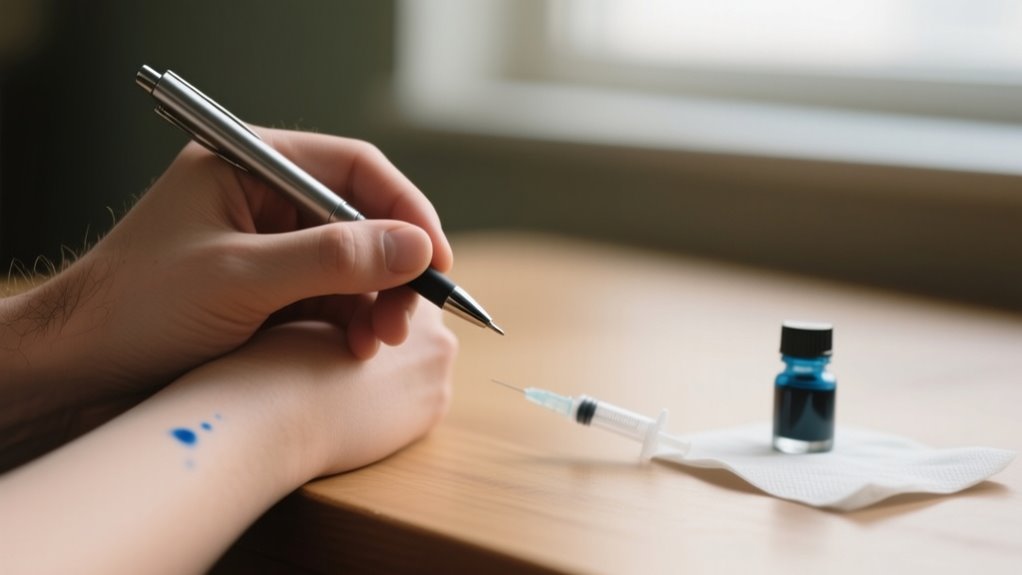
You shouldn’t use pen ink for stick and poke tattoos because it contains harmful chemicals that aren’t made for skin. These chemicals can cause infections, allergic reactions, or even chemical burns.
Pen ink also fades quickly and looks blotchy, leading to poor tattoo quality.
Instead, use proper tattoo ink that’s sterile, safe, and designed for skin.
If you want to avoid risks and get better results, it helps to understand the best options and safety tips for DIY tattoos.
Why Pen Ink Is Unsafe for Stick and Poke Tattoos
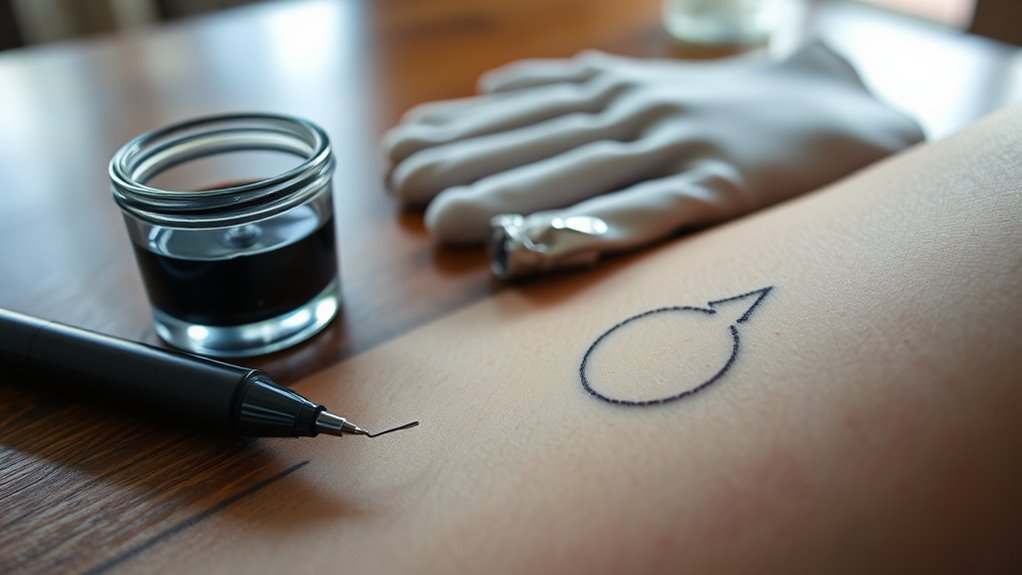
Although it might seem convenient, using pen ink for stick and poke tattoos poses serious risks. Pen ink isn’t designed for skin application, unlike tattoo inks, which are formulated with stable pigments and meet strict sterile standards.
When you use pen ink, you expose yourself to toxic chemicals that can be absorbed through your skin, increasing the risk of allergic reactions and irritation. Because pen ink isn’t sterile, it also raises the chance of infections, which can lead to severe health complications.
Furthermore, pen ink’s unpredictable chemical makeup can cause your tattoo to fade unevenly or discolor over time, ruining the design. Tattoo inks undergo rigorous testing to ensure safety and longevity, but pen ink lacks these essential qualities.
Which Pen Ink Chemicals Can Harm Your Skin
When you apply pen ink to your skin, you expose yourself to a mix of harmful chemicals like carbon black, azo dyes, and heavy metals such as lead and chromium. These toxic chemicals aren’t meant for skin contact and can cause serious skin irritation.
Many pen inks also contain solvents like xylene, toluene, or alcohol, which can trigger allergic reactions or even chemical burns. The harmful dyes in pen ink aren’t regulated for safety on skin, so you don’t really know what you’re putting into your body.
Pen ink solvents like xylene and toluene can cause allergic reactions and burns, with unregulated harmful dyes posing unknown risks.
Some inks include plastic-based pigments that can inflame your skin or cause allergic dermatitis. Since pen ink ingredients are often proprietary or unlisted, it’s impossible to identify all the risks.
Using pen ink for tattoos exposes your skin to a cocktail of toxic chemicals that can lead to painful irritation and other skin problems. It’s best to avoid pen ink to protect your skin’s health.
Health Risks of Using Pen Ink for Tattoos
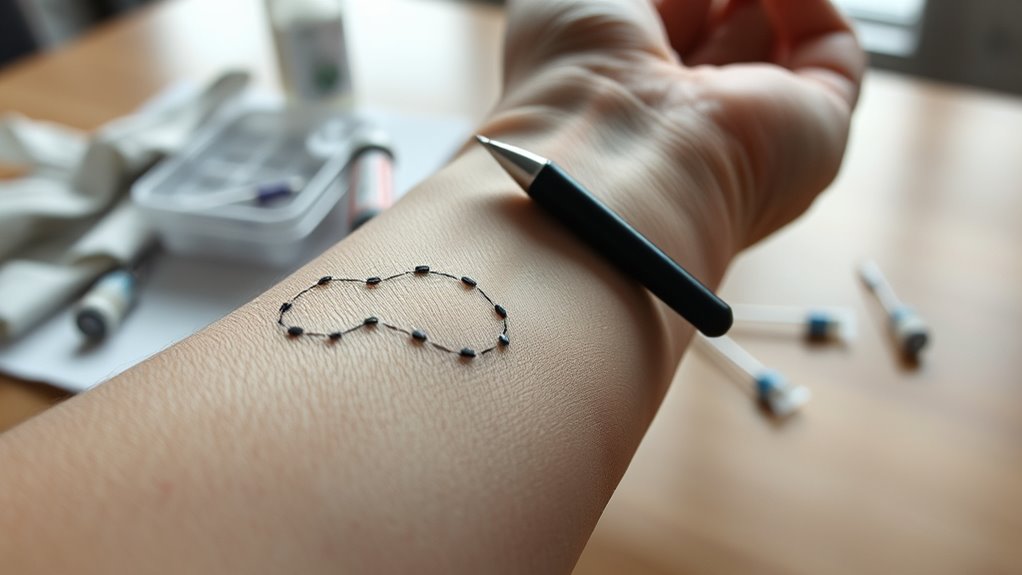
Because pen ink isn’t sterile or designed for skin, using it for tattoos puts you at high risk of infections and allergic reactions. Pen ink can introduce harmful bacteria, causing serious infection. It also contains toxic chemicals and heavy metals that may trigger allergic responses or skin irritation.
These health risks can escalate to inflammation or chemical burns, especially if your tools aren’t sterile.
Here’s a snapshot of the main health risks when using pen ink for tattoos:
| Health Risk | Cause |
|---|---|
| Infection | Non-sterile ink introducing bacteria |
| Allergic Reactions | Toxic chemicals and metals |
| Skin Irritation | Chemical burns and inflammation |
| Systemic Toxicity | Absorption of harmful substances |
Using pen ink for stick and poke tattoos puts your skin safety in jeopardy. Avoid it to prevent these health risks and infection.
How Pen Ink Affects Tattoo Longevity and Appearance
Beyond health risks, using pen ink for stick and poke tattoos also impacts how your tattoo looks and lasts. Pen ink isn’t made for skin, so it fades quickly, often within just a few months. Since its pigments don’t penetrate deeply, the ink struggles to adhere properly, causing poor tattoo longevity.
You’ll notice your design losing vibrancy and clarity much sooner than with proper tattoo ink. The inconsistent particle size in pen ink results in uneven lines and blotchy spots, making your tattoo appear less sharp and professional. Using pen ink as your ink for stick and poke means accepting a markedly shorter lifespan and lower quality overall.
If you want your tattoo to maintain its appearance over time, relying on pen ink will only lead to disappointment. The way pen ink affects tattoo longevity and visual appeal makes it a poor choice for stick and poke tattoos.
Why You Need Proper Tattoo Ink for Safe DIY Tattoos
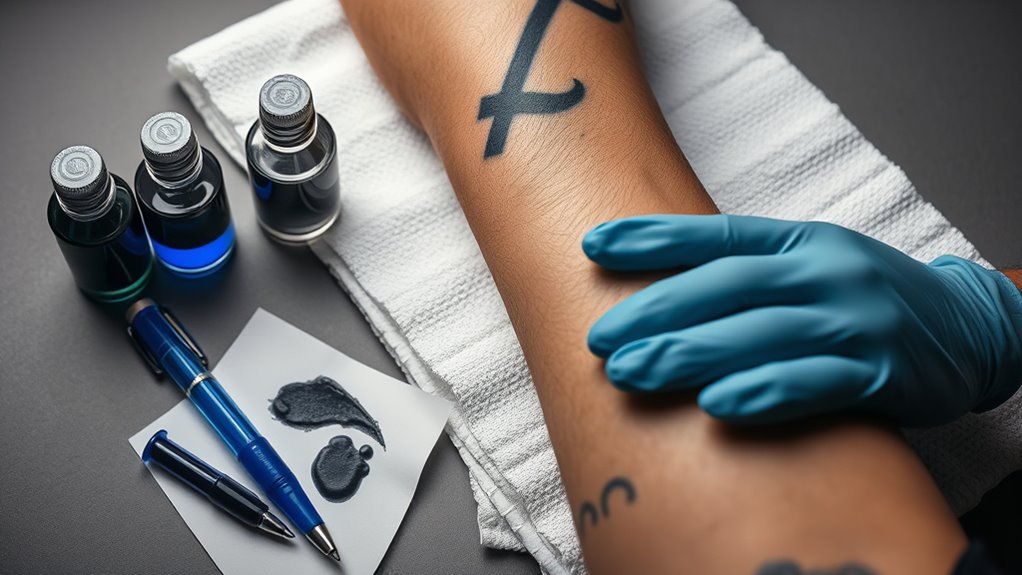
You need proper tattoo ink because it’s sterile and safe for your skin. This helps reduce the risk of infections and allergic reactions.
Using unsafe ink, like pen ink, can expose you to harmful chemicals and contaminants. So, it’s really important to choose approved tattoo ink to keep your DIY tattoo both safe and long-lasting.
Importance Of Sterile Ink
Although it might seem convenient to use pen ink for your stick and poke tattoo, choosing sterile, professional tattoo ink is essential for your safety. Sterile ink is specifically formulated to minimize the risk of infections and allergic reactions. Pen ink can easily cause these issues due to bacteria and pathogens.
Proper tattoo ink uses safe pigments and carriers tested for health safety, ensuring your skin heals well without adverse reactions. Unlike pen ink, professional tattoo ink maintains consistent color and lasts longer, giving your tattoo a better appearance over time.
Risks Of Unsafe Ink
Choosing the right ink goes beyond just preventing infections. It directly impacts your safety and the quality of your tattoo. Using pen ink for stick and poke tattoos is risky because it’s not sterile and contains chemicals that can cause skin irritation or allergic reactions.
Here’s why you should avoid unsafe ink:
- Pen ink isn’t designed for skin and may harbor bacteria, increasing infection risk.
- Its chemical makeup can lead to harmful reactions if it enters your bloodstream.
- Pen ink lacks proper pigments, causing tattoos to fade quickly or blur.
To guarantee a safe DIY tattoo, always use sterile, approved tattoo ink. Your skin deserves ink that’s both safe and reliable.
What’s in Safe, Professional Stick and Poke Tattoo Ink
You’ll want to know what goes into safe, professional stick and poke tattoo ink before you start. These inks combine sterilized pigments with carriers like witch hazel to guarantee even application and reduce irritation.
It’s pretty important to understand the types of ink and their safety because that way, you can pick the best option for your skin and design. Knowing what’s inside helps you feel confident about what you’re putting on your body.
Components Of Tattoo Ink
When you look closely at safe, professional stick and poke tattoo ink, you’ll find it contains stable pigments combined with carriers designed specifically for use on skin. These components work together to guarantee safety and quality. Here’s what you need to know:
- Pigments: These are metal, vegetable, or plastic-based powders that provide the color. They’re thoroughly tested to be safe and stable for long-term skin application.
- Carriers: These liquids, like water or alcohol, help disperse the pigments evenly and keep the ink compatible with your skin.
- Sterile formulation: Professional inks are sterile and free from harmful toxins to minimize allergic reactions and skin irritation.
Understanding these components helps you see why professional tattoo ink is a safer choice than pen ink for stick and poke tattoos.
Role Of Witch Hazel
Although it might seem like a simple additive, witch hazel plays an essential role in safe, professional stick and poke tattoo ink. Derived from hamamelis water, witch hazel offers natural skin-soothing benefits that help reduce redness and irritation during and after tattooing.
Its anti-inflammatory properties promote skin health, making the tattooing process more comfortable for you. Witch hazel acts as an astringent, tightening the skin to minimize bleeding and prevent ink rejection.
Furthermore, it contains tannins that contribute to antiseptic effects, reducing the risk of infection. In high-quality inks, witch hazel helps disperse pigments evenly and maintain the ink’s stability, ensuring a consistent application.
Using ink with witch hazel supports a safer, more effective stick and poke experience overall.
Ink Types And Safety
Since your skin reacts directly to what you apply, choosing the right ink is essential for stick and poke tattoos. Unlike pen ink, which contains unregulated chemicals and toxins, professional tattoo inks prioritize safety and permanence. Here are key points about safe ink types:
Professional inks use sterile pigments made from metal, vegetable, or plastic-based powders combined with carriers like water or alcohol to guarantee proper dispersion.
These inks undergo rigorous testing for biocompatibility and stability, minimizing allergic reactions and infections.
Approved tattoo inks adhere to health standards designed for long-term skin placement, unlike pen ink that can cause adverse skin reactions and isn’t sterile.
Always opt for sterile, professional ink types to assure your tattoo heals safely and lasts beautifully.
How to Choose Safe Ink for Your DIY Tattoo
Choosing safe ink for your DIY tattoo requires careful attention to the product’s ingredients and source. You should always select tattoo ink specifically labeled for skin use, as these are formulated to be sterile and non-toxic, minimizing infection risks.
Avoid inks containing heavy metals or harmful chemicals, which are often found in regular pen inks and can cause adverse reactions. Make sure to buy from reputable suppliers or brands that provide clear ingredient lists and sterilization details.
Check that the ink comes in a sealed, unopened container with a valid expiration date to guarantee it’s fresh and safe to apply. By focusing on sterile, non-toxic tattoo ink designed for skin, you protect yourself from complications and achieve better results.
How to Handle and Store Tattoo Ink Safely
To keep your tattoo ink safe and effective, make sure you store it in a cool, dark place. Always keep the cap tightly sealed to prevent any air or dust from getting in. When you need to transfer the ink, use sterile tools and put it into a clean container. This way, you’ll avoid any contamination. Following these simple steps will help maintain the ink’s quality, especially for your stick and poke tattoos.
Proper Ink Storage
When handling tattoo ink, you’ll want to store it in a cool, dark place away from sunlight and heat to keep its chemical makeup stable. Proper ink storage is essential for maintaining quality and safety. Follow these tips:
- Always seal the ink cap tightly after use to prevent contamination and evaporation.
- Avoid freezing the ink, as it causes pigments and carriers to separate, degrading the product.
- Use the ink before its expiration date, usually up to three years, to ensure it stays sterile and effective.
Also, wipe excess ink with a sterile cloth rather than dipping the needle directly into the bottle. This helps keep your ink clean and safe for your stick and poke tattoos.
Preventing Ink Contamination
Although it’s tempting to dip your needle directly into the ink bottle, you should never do this to prevent contamination. Always transfer your tattoo ink into a small, sterile container using sterile tools and gloves.
This step is essential for contamination prevention because re-dipping needles into the original ink bottle can introduce bacteria and pathogens. After each use, tightly seal the ink bottle and store it in a cool, dark place away from sunlight and heat to maintain its integrity.
Proper ink storage reduces the risk of airborne particles contaminating your ink. Before each session, shake the ink bottle thoroughly to evenly disperse pigments and avoid sediment buildup.
Following these guidelines helps keep your tattoo ink safe and hygienic for every stick and poke.
Maintaining Ink Quality
How can you guarantee your tattoo ink stays fresh and safe for every stick and poke session? Proper handling and storage are key to maintaining ink quality and preventing chemical degradation. Follow these steps:
Store the ink bottle in a cool, dark place, away from sunlight to avoid chemical breakdown and preserve pigment integrity. Keep the ink bottle tightly sealed when not in use to maintain a sterile environment and prevent evaporation or contamination.
Shake the ink bottle well before each use to ensure even pigment dispersion and consistent color.
Avoid freezing the ink as it alters its properties. Also, always check the expiration date. Using ink within three years helps guarantee safety and maximum performance during your tattooing process.
Safe Alternatives to Pen Ink for Temporary and DIY Tattoos
Since pen ink isn’t designed for skin, you should opt for safer alternatives when creating temporary or DIY tattoos. Using pen ink risks irritation and infection, so try temporary tattoo markers instead. These markers use skin-safe ink formulated specifically for body art, providing vibrant colors that wash off easily with soap and water.
Henna is another excellent option. It’s a natural dye that stains your skin temporarily, lasting from one to three weeks when applied properly.
For longer-lasting designs, consider cosmetic tattoo inks used in semi-permanent makeup. These inks are sterile, approved for skin application, and can last several months.
Whatever you choose, always pick products labeled as skin-safe or approved for cosmetic use to avoid allergic reactions and skin irritation. By steering clear of pen ink and using these safer alternatives, you’ll enjoy temporary tattoos without compromising your skin’s health.
When to Seek Professional Tattoo Services Instead
If you want a tattoo that’s safe, vibrant, and long-lasting, you should seek professional tattoo services instead of relying on DIY methods. Professional tattoo artists use sterile ink specifically formulated for skin, which guarantees your tattoo heals well and retains its color. Plus, licensed studios follow strict hygiene protocols, reducing the risk of infections or allergic reactions.
Consider going professional when you want a tattoo that lasts and stays vibrant. Pen ink fades quickly and unevenly. You need a safe procedure with sterilized equipment and sterile ink, not homemade or potentially unsafe alternatives. Also, you want to avoid health risks associated with poor hygiene and unregulated practices.
Choosing a professional tattoo not only guarantees better results but also ensures compliance with legal regulations and protects your health. Don’t compromise on quality or safety when it comes to your skin.
Frequently Asked Questions
Can Pen Ink Cause Stains on Clothing After Tattooing?
Yes, pen ink can cause stains on clothing after tattooing because it easily transfers when wet or healing. You should consider pen ink safety since it’s not designed for skin and may irritate you.
Stick and poke ink color options made specifically for tattoos offer better ink longevity and reduce staining risks. Using proper tattoo ink ensures your design lasts and keeps your clothes stain-free during the healing process.
How Long Does Pen Ink Take to Fade on Skin?
You’ll notice pen ink tattoos fade in about 2 to 6 months, with most disappearing around month 4. The ink longevity is limited because the skin fading process breaks down ink molecules quickly.
Plus, ink color stability is poor since pen ink isn’t designed for skin, causing colors to lighten fast. So, if you want a temporary tattoo, pen ink offers a short-lived but fun option before it fades away.
Is It Possible to Remove Pen Ink Tattoos at Home?
Yes, you can try some home removal techniques for pen ink tattoos, like exfoliation or using tattoo removal creams, but these methods usually only lighten the ink. Ink removal methods at home may cause skin irritation or scarring if you’re too aggressive.
For safer, more effective results, you should consider professional removal options like laser treatments or chemical removal, as they’re designed to target ink without damaging your skin.
Can Pen Ink Tattoos Trigger Allergic Reactions Years Later?
Think of your skin as a ticking time bomb when it comes to pen ink tattoos. Yes, you can experience ink allergy and delayed reactions years later because your skin’s sensitivity can change over time.
The chemicals in pen ink might lie dormant, then suddenly trigger irritation or allergic symptoms long after application. So, even if you don’t notice anything at first, your body could surprise you with an unwelcome response down the road.
Are There Specific Pen Brands People Use for Stick and Poke?
You won’t find reliable pen brand recommendations for stick and poke tattoos because no pen ink is designed for safe skin use. If you’re thinking about ink consistency, keep in mind that pen inks vary widely and often contain harmful chemicals.
For safety, it’s best to avoid pen inks altogether to prevent allergic reactions or skin irritation. Instead, use tattoo-specific ink to protect your skin and health during stick and poke sessions.
Conclusion
You might think using pen ink for stick and poke tattoos saves time and money, but it’s actually unsafe and risks infection or allergic reactions. Pen inks aren’t made for your skin and can cause lasting damage or fading.
Instead, choose proper tattoo ink designed for DIY use to protect your health and get better results. When in doubt, seeking professional help guarantees your tattoo is safe and looks great for years to come.
Leave a Reply