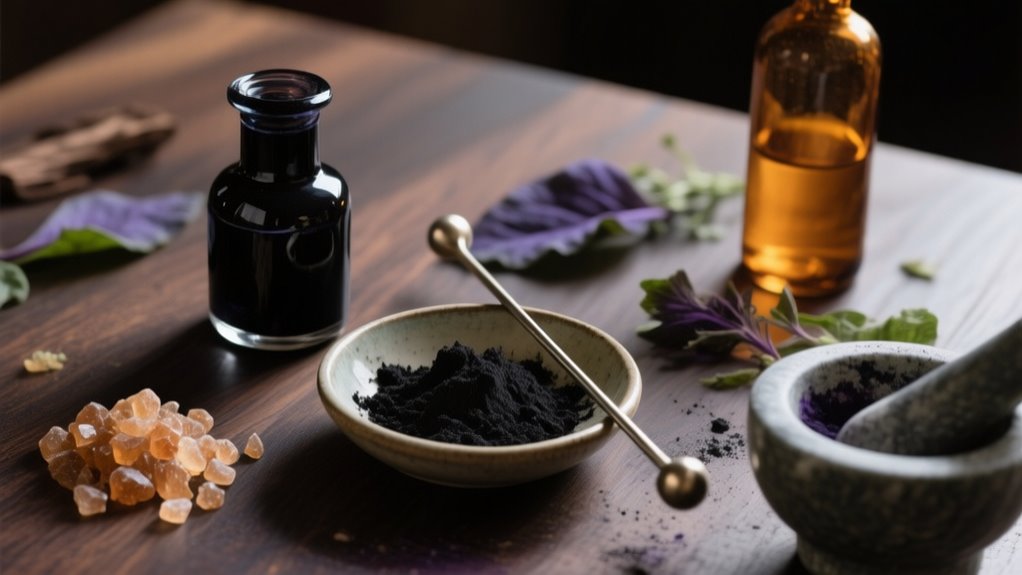
Ink is made from a blend of pigments or dyes that give it color, solvents that help it flow smoothly and dry properly, resins that bind the color to surfaces, and additives that improve stability and performance.
Pigments offer opacity, while dyes provide vivid hues.
Solvents control drying and viscosity, and additives fine-tune ink’s durability.
Different formulations serve various purposes, from everyday printing to secure, indelible marks.
Exploring these components reveals how ink works in everyday and special applications.
What’s Inside Ink? Key Components Explained
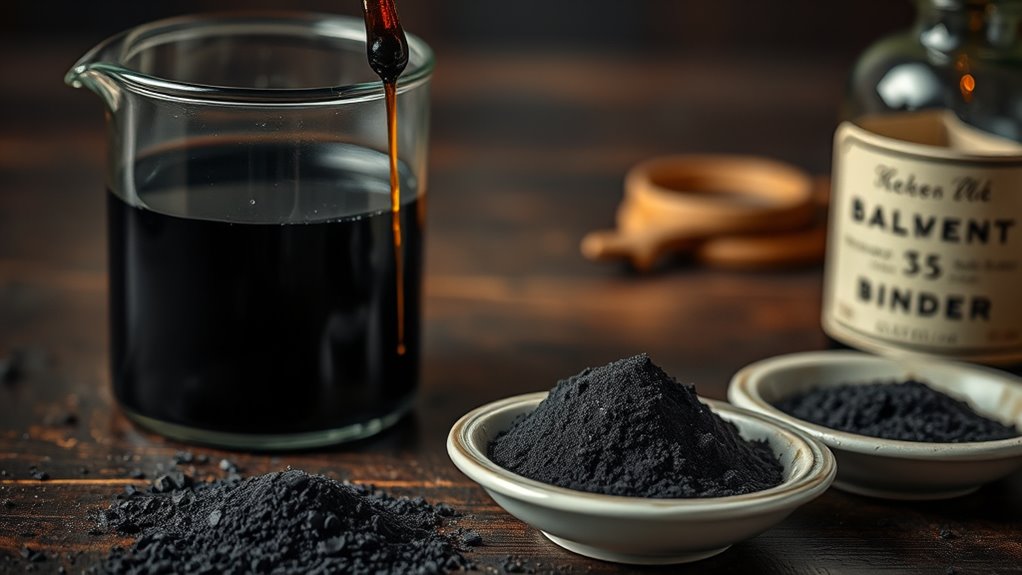
Although ink may seem simple, it actually contains several key components that work together to create the colors and effects you see on paper. At its core, ink relies on pigments or dyes to provide color.
Pigments are tiny particles that give ink opacity and durability, often made from inorganic or organic materials. Dyes, on the other hand, dissolve completely, producing vivid, transparent hues. Both play essential roles depending on the ink type.
Solvents act as carriers, suspending pigments or dissolving dyes to help you apply ink smoothly and guarantee it dries properly. Common solvents include water and various alcohols.
Additives are also vital; they improve the ink’s flow, stability, and resistance to microbes. Surfactants help spread ink evenly, stabilizers keep the mixture consistent, and biocides prevent mold growth. Together, these components form a balanced formula that delivers the vibrant, lasting results you expect from ink.
How Do Resins and Solvents Help Ink Work?
You’ll find that resins act like binders, holding the pigment or dye firmly to the surface once the ink dries. On the other hand, solvents play a key role by dissolving these resins and controlling how smoothly the ink flows. So, when you put it all together, they make sure the ink dries properly, sticks well, and lasts longer.
Role of Resins
How do resins and solvents work together to make ink effective? Resins act as binders that guarantee the pigment or dye sticks firmly to the surface. As the solvent evaporates, resins form a protective film, enhancing durability and preventing smudging.
Here’s how resins play their role:
- Adhesion: Resins bind pigments tightly to surfaces, preventing fading or washing away.
- Film Formation: They create a continuous film once the solvent evaporates, safeguarding the print.
- Customization: Different resins adjust flexibility, gloss, and compatibility with other ink components.
Function of Solvents
Why do solvents matter so much in ink formulation? Solvents dissolve resins and other ingredients, letting the ink flow smoothly and uniformly. They control drying time by evaporating at a set rate, ensuring the ink adheres well and finishes properly.
Solvents also aid in the even dispersion of pigments and fillers, preventing clumps and ensuring consistent color. Plus, they affect the ink’s viscosity, surface tension, and compatibility with various surfaces.
Here’s a quick look at how different solvents influence ink properties:
| Solvent Type | Drying Time | Effect on Viscosity |
|---|---|---|
| Water | Slow | Low viscosity |
| Alcohol | Moderate | Medium viscosity |
| Ketones | Fast | High viscosity |
Choosing the right solvent balances drying time, dispersion, and viscosity for your application.
What Types of Pigments and Dyes Give Ink Its Color?
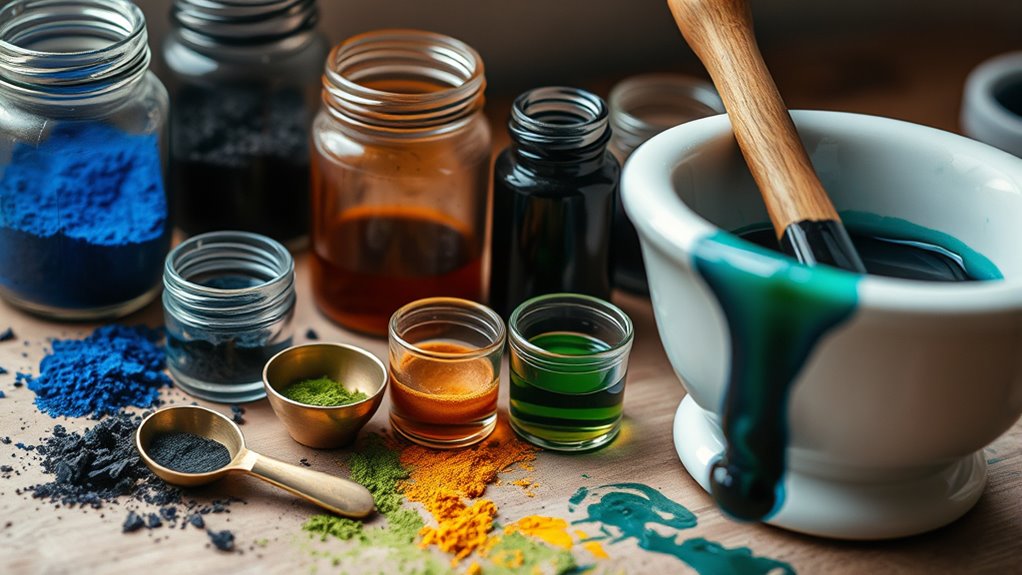
You’ll find that ink gets its color mainly from two sources: pigments and dyes. Pigments are tiny solid particles that offer durability and opacity. On the other hand, dyes dissolve to create bright, vivid hues. Understanding these colorants helps you see how inks achieve their unique shades and properties.
Pigment-Based Colorants
Although pigments and dyes both give ink its color, they work in distinct ways that affect the ink’s appearance and durability. When it comes to pigment-based colorants, you’ll find they’re made of tiny, insoluble particles suspended in the ink binder.
Here are key types you should know:
- Organic pigments, like carbon black or plant-derived dyes, offer bright, vibrant colors but usually have lower lightfastness. This means they can fade faster under sunlight.
- Inorganic pigments, such as titanium dioxide and iron oxide, are mineral-based and provide greater stability, opacity, and excellent resistance to fading.
- Specialty pigments include fluorescent, phosphorescent, or metallic particles, which add unique visual effects or security features to the ink.
Understanding these pigments helps you choose ink with the right balance of color and durability.
Dye-Based Colorants
Because dyes dissolve easily in water, they create vibrant, transparent colors that bring ink to life. These water-soluble dyes, like eosin, methylene blue, and indigo, are organic pigments derived from plants or animals.
You’ll find dyes such as logwood and madder known for their bright, intense hues. Unlike pigment-based colorants, dyes penetrate surfaces, offering vivid, luminous shades but less opacity.
When you use dye-based colorants, you get rich, vibrant colors that stand out but may fade faster without pigments’ durability. By combining dyes with organic pigments, ink manufacturers balance transparency and color intensity, ensuring the ink looks lively while maintaining some level of stability.
How Do Additives Improve Ink Quality and Performance?
When you add specific additives to ink, you dramatically enhance its quality and performance. These components fine-tune properties like flow, adhesion, and durability, ensuring your prints come out flawless every time.
Here’s how some key additives work:
- Wetting agents and thickeners improve how ink spreads and flows by reducing surface tension and adjusting viscosity. This means smoother application and consistent printing across various surfaces.
- UV stabilizers protect the ink from light damage, while biocides prevent microbial growth. Both help extend the ink’s shelf life and durability.
- Drying accelerators speed up evaporation and chemical curing, so your ink dries faster and resists smudging or fading.
What Role Does Carbon Play in Ink Formulations?
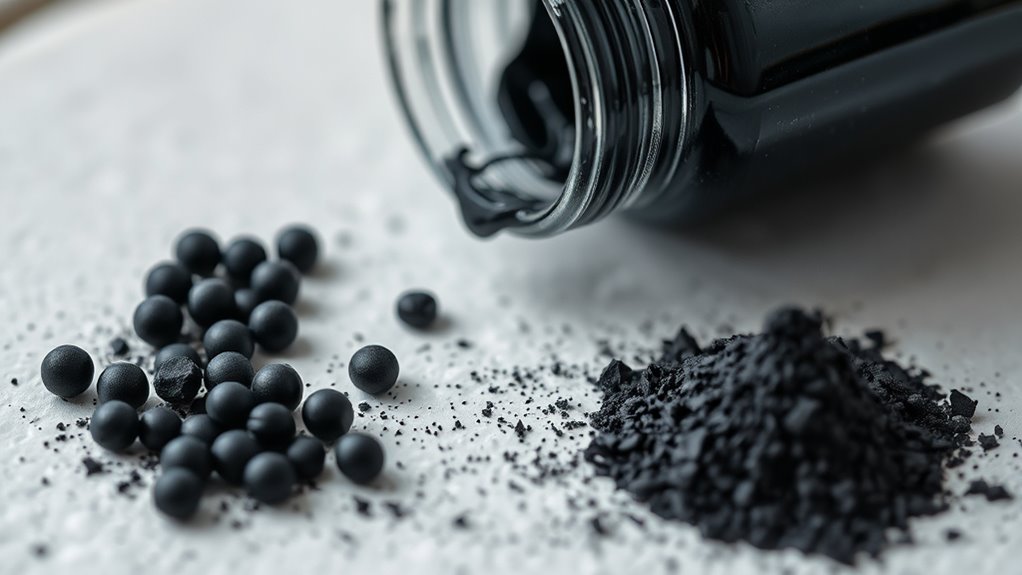
Additives can improve many aspects of ink, but the pigment you choose defines its color and opacity. Carbon, especially in the form of soot or lampblack, plays a vital role in ink formulations as a primary pigment. Its finely ground particles create a deep, intense black color that stands out in printing and drawing.
You’ll appreciate carbon’s chemical stability. It resists fading and remains unaffected by light exposure, ensuring your ink maintains its boldness over time. This stability also makes carbon-based inks non-reactive and environmentally stable, which is why they’re widely used in both artistic and industrial applications.
When suspended in a liquid binder, carbon black produces durable, fade-resistant ink that offers excellent opacity. So, when you choose carbon as your pigment, you’re opting for an ink that delivers lasting color and reliable performance across various uses.
How Is Iron Gall Ink Made? A Historical Perspective
If you want to understand how iron gall ink was made, you’ll need to look back at traditional methods that relied on natural materials. This ink was crafted by extracting tannic acids from oak galls and combining them with ferrous sulfate to produce a dark, lasting pigment.
Here’s how the process typically worked: first, you’d crush oak galls and boil them to release tannic acids, the key ingredient. Next, you’d mix these tannins with ferrous sulfate, causing a chemical reaction that formed the ink’s distinctive black color.
Crush and boil oak galls to release tannins, then mix with ferrous sulfate for rich, lasting black ink.
Finally, gum arabic and water were added to bind and dilute the mixture, sometimes aging it to enhance stability. The iron-tannin complex starts black and darkens to brownish-black over time.
Iron gall ink was highly valued in medieval Europe for its permanence, though its corrosive nature sometimes damaged manuscripts centuries later. Understanding this process reveals why iron gall ink was both revolutionary and challenging for historical documentation.
How Does Modern Printer Ink Differ in Composition?
Although modern printer inks share the basic purpose of marking surfaces, their compositions differ drastically from traditional inks like iron gall. You’ll find that printer inks rely on dyes or pigments suspended in specialized solvents, such as glycol derivatives and ketones, which help control drying time and surface tension.
Additives play a crucial role too, enhancing flow, adhesion, and ensuring compatibility with digital printing technologies like inkjet or laser printers. These inks are engineered for precise viscosity and performance, unlike the simpler formulations of historical inks.
Many modern inks also use water-based or vegetable oil-based solvents to reduce harmful volatile organic compounds, making them safer and more environmentally friendly. Advanced inks might even include nanoparticles or microencapsulated dyes to add unique properties like photochromism or conductivity.
What Environmental and Health Concerns Surround Ink Ingredients?
Because many ink ingredients contain hazardous substances like heavy metals and toxic dyes, you should be aware of the environmental and health risks they pose. Heavy metals such as lead, mercury, and cadmium can accumulate in the environment and harm both ecosystems and your health.
Many inks contain hazardous heavy metals and dyes that pose serious environmental and health risks.
Furthermore, volatile organic compounds (VOCs) in ink contribute to air pollution and can cause respiratory issues if inhaled frequently. Some pigments and dyes carry toxicity risks, causing skin irritation or allergic reactions.
Here are three key concerns to keep in mind:
- Heavy metals in ink can contaminate soil and water, negatively impacting wildlife and humans.
- Volatile organic compounds released during ink use degrade indoor and outdoor air quality.
- Toxic pigments and dyes may cause neurological effects and skin problems upon exposure.
Understanding these risks helps you choose safer ink products and promotes responsible disposal practices.
How Is Indelible Ink Formulated for Secure Use?
You’ll find that indelible ink relies on key chemical components like silver nitrate to create permanent marks on the skin. It’s pretty fascinating how this simple ingredient works to make the marks last. Now, how the ink is applied actually plays a big role in how effective and secure it is. So, let’s dive into the formulation techniques and also look at the challenges involved in keeping these marks tamper-proof.
Chemical Components Used
When you need indelible ink that stands up to washing and smudging, the chemical composition plays an essential role. It relies on carefully selected chemical compounds, stabilizers, pigments, and binders to ensure durability and clarity. Here’s what goes into it:
- Chemical Compounds: Silver nitrate or heavy metal salts create a permanent mark that resists washing and smudging.
- Binders and Stabilizers: Binders help the ink stick firmly to skin or surfaces, while stabilizers preserve its chemical stability and shelf life.
- Pigments: Specific dyes or pigments provide the visible color, usually black or blue, that remains long after application.
This precise formula guarantees indelible ink is both effective for secure use and safe for human skin or other surfaces.
Application Techniques
How does indelible ink maintain its security and durability once applied? The answer lies in precise application techniques combined with carefully chosen ink ingredients. Silver nitrate, a key component, reacts with skin or paper to create a permanent mark. Stabilizers and preservatives guarantee long-lasting adhesion and prevent microbial growth.
To optimize flow and thickness, formulators add thickening agents and surfactants, which improve how the ink spreads and sticks to surfaces. Balancing drying properties is essential. If the ink dries too fast, it won’t bond well; if it dries too slow, it may smudge.
These factors together ensure the ink remains resistant to washing and fading, yet safe for users. By mastering these application techniques, indelible ink achieves secure, reliable performance in high-stakes uses like elections.
Security Challenges
Although indelible ink must remain visible and permanent, it also has to resist tampering and forgery. To guarantee security, indelible ink is carefully formulated with chemical stability and permanence in mind.
You’ll find it typically contains compounds like silver nitrate or indelible dyes that create marks resistant to washing or erasure. Here’s how it tackles security challenges:
- It includes stabilizers and preservatives that maintain permanence over time, preventing fading or removal.
- The ink’s chemical stability withstands environmental factors such as water, heat, and light, keeping marks intact.
- Formulations are tailored to prevent manipulation or forgery, ensuring reliable authentication in elections and official documents.
This balance of permanence and forgery prevention makes indelible ink a trusted tool for secure use.
Innovations Shaping the Future of Ink Technology
What if the ink you use could change color with temperature or light, or even conduct electricity? Thanks to advances in nanotechnology, smart inks are making this possible. These inks use microencapsulated dyes and quantum dots to respond to stimuli, offering dynamic color changes and enhanced security.
Imagine ink that shifts color with heat or light and conducts electricity through nanotech innovation
You’re also seeing a shift towards biodegradable, plant-based inks made from vegetable oils and natural pigments, which help reduce environmental impact. Conductive nanomaterials like graphene and carbon nanotubes are transforming inks into flexible circuits, powering wearable devices and printed electronics.
This means the ink on your paper might soon double as a sensor or electronic component. Innovations in inkjet and 3D printing are pushing precision and functionality even further, enabling high-resolution applications in optics, electronics, and biomedicine.
The future of ink technology is not just about color. It’s about smart, sustainable, and multifunctional materials that adapt and interact with their environment.
Frequently Asked Questions
How Is Ink Stored to Maintain Its Quality Over Time?
To maintain ink’s quality over time, you should store it in airtight containers made from materials that don’t react with the ink’s chemical composition, like glass or certain plastics. Use preservation techniques such as keeping the ink in a cool, dry place, away from sunlight and temperature fluctuations.
This minimizes environmental exposure effects like evaporation or chemical breakdown, ensuring the ink stays consistent and prevents contamination or color fading.
Can Ink Ingredients Cause Allergic Reactions on Skin?
Imagine your skin as a delicate garden. Chemical irritants in ink can be like invasive weeds. Yes, ink ingredients can cause allergic reactions, especially if you have skin sensitivity.
Allergen exposure from dyes, solvents, or heavy metals in ink might trigger redness, itching, or dermatitis. If you notice irritation after contact, wash the area promptly and avoid repeated exposure to protect your skin’s health.
What Is the Process for Recycling Used Ink Cartridges?
When you recycle used ink cartridges, start by dropping them off at ink collection centers or participating in refill programs. Cartridge recycling involves sorting and cleaning plastic and metal parts, then shredding or melting plastics for reuse.
Metal components get extracted and recycled to recover valuable materials. You can choose eco-friendly disposal options by refurbishing cartridges or processing them into raw materials, reducing waste and promoting sustainable practices.
How Do Temperature Changes Affect Ink Performance?
Did you know that just a 10°C rise can cut ink drying time almost in half? Temperature sensitivity plays a huge role in ink performance.
When temperatures drop, ink viscosity increases, making flow sluggish and causing clogs. Higher heat speeds drying but can mess with color consistency, leading to fading or separation.
To keep your prints sharp, you need to maintain stable temperatures, ensuring smooth flow and vibrant, consistent colors every time.
Are There Inks Specifically Designed for Artistic Use?
Yes, there are inks specifically designed for artistic use. You’ll find artistic ink types with carefully balanced ink pigmentation to deliver vibrant, intense colors. These inks often have tailored ink viscosity to suit different techniques, ensuring smooth flow and precision.
Plus, they emphasize color longevity, so your artwork resists fading over time. Whether you work on paper, fabric, or canvas, these inks meet your creative needs with durability and rich, lasting hues.
Conclusion
So, next time you scribble or print, remember ink’s not just colorful goo. It’s a cocktail of resins, solvents, pigments, and secret additives working hard behind the scenes.
Ironically, something so simple-looking actually involves complex chemistry and even raises environmental eyebrows. Who knew your everyday ink had such a dramatic backstory?
But don’t worry, you’re not just making marks; you’re wielding a tiny masterpiece of science every time you write.
Leave a Reply