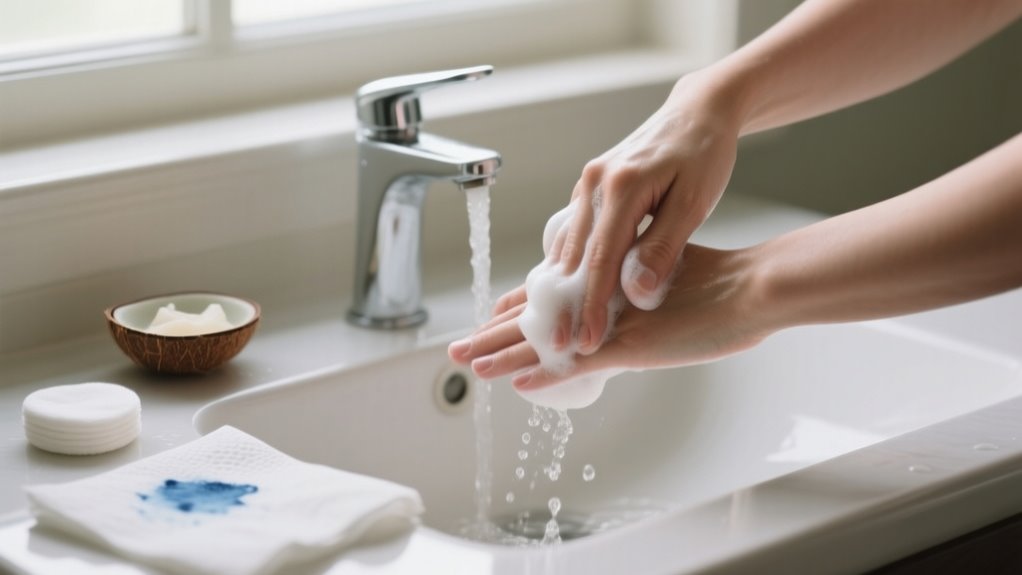
Act quickly to prevent stamp ink from setting on your skin by blotting with warm water and a paper towel.
Identify if your ink is water- or oil-based to choose the right remover.
Test any cleaning agent on a small skin patch first.
Use gentle oils or rubbing alcohol to break down fresh ink, then softly scrub with a damp cloth.
Rinse thoroughly and repeat as needed.
Finish by moisturizing to soothe your skin.
Keep going to uncover more effective, safe removal techniques.
Act Quickly to Prevent Ink From Setting
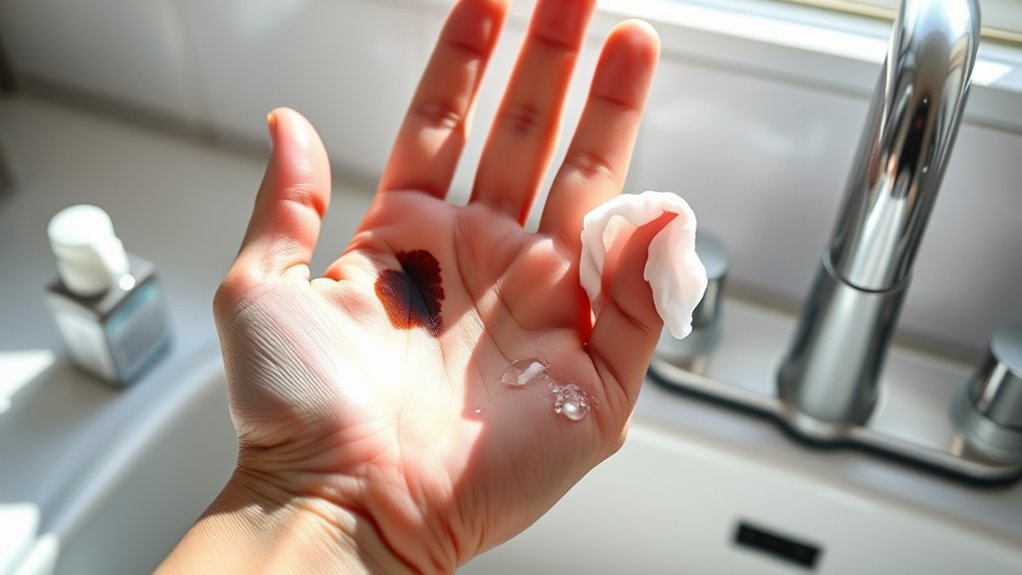
Although it might seem minor, acting quickly when you get stamp ink on your skin makes removal much easier. The longer the ink stays, the more it sets and bonds with your skin cells, making it tougher to remove ink stains later.
Acting quickly when ink gets on your skin makes removal easier before it sets and bonds with skin cells.
As soon as you notice ink, try using warm water and a paper towel to blot the area gently. If that doesn’t work, rubbing alcohol or nail polish remover can help, but make sure to test a small patch first.
Depending on the type of ink, whether it’s pen ink, fountain pen ink, or even a permanent marker, you might need to repeat the process or try different products like baby oil or a clean magic eraser. Using a nail brush can assist in scrubbing stubborn spots with little effort.
When it comes to removing ink, acting fast gives you the best chance to remove it completely without harsh scrubbing or irritating your skin.
Identify Your Ink Type for Best Removal Results
Once you’ve acted quickly to blot or treat the ink, the next step is to figure out what kind of ink you’re dealing with. Stamp inks vary. Some are water-based, while others are solvent-based or oil-based.
Permanent ink stamps usually contain oil or pigment inks, which resist removal more than dye-based inks. Identifying whether your ink is alcohol-soluble or water-soluble is key because it guides your choice of cleaning agents.
For example, water-based inks respond well to soap and water. Solvent-based inks may need alcohol or specialized removers. Acting fast is essential since some inks contain chemicals that can permanently stain your skin if left untreated.
How to Safely Test Cleaning Agents on Sensitive Skin
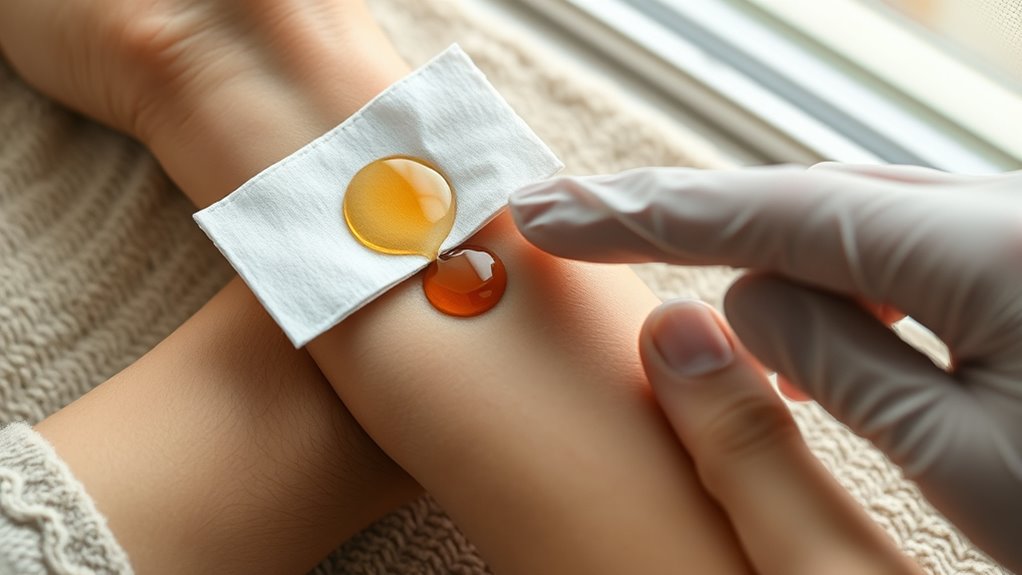
How can you make sure a cleaning agent won’t irritate your sensitive skin before using it to remove stamp ink? Start by performing a patch test. Apply a small amount of the cleaning agent on a discreet area of your skin, like the inside of your wrist or elbow, where skin sensitivity is similar. Make sure this area is clean and free from other products to avoid skewed results. Use only a tiny dab of the agent, such as rubbing alcohol or soap, to minimize potential irritation.
Wait at least 24 hours to observe any redness, itching, swelling, or discomfort. If you notice any adverse reaction, discontinue use immediately. This cautious approach helps you identify if the product triggers sensitivity before applying it broadly, protecting your skin’s health.
Testing first lets you confidently choose a safe method for ink removal without risking a painful or allergic response.
Use Oils and Soaps for Gentle Ink Removal
If you want to remove stamp ink without irritating your skin, using oils and soaps offers a gentle and effective solution. Oils like baby oil and mineral oil have proven effectiveness in breaking down ink residues without harsh chemicals.
You can apply a small amount of olive or coconut oil first to loosen the ink. Then, wash the area with warm water and a gentle hand soap, preferably one with pumice or exfoliants, to lift away the ink particles.
Here’s a quick guide to help you:
| Product | Purpose |
|---|---|
| Baby oil | Breaks down ink gently |
| Mineral oil | Effective for sensitive skin |
| Olive/Coconut oil | Loosens ink before washing |
| Pumice hand soap | Scrubs away ink particles |
This method guarantees thorough cleansing without causing irritation, making it ideal for sensitive skin types.
Use Rubbing Alcohol to Break Down Fresh Ink
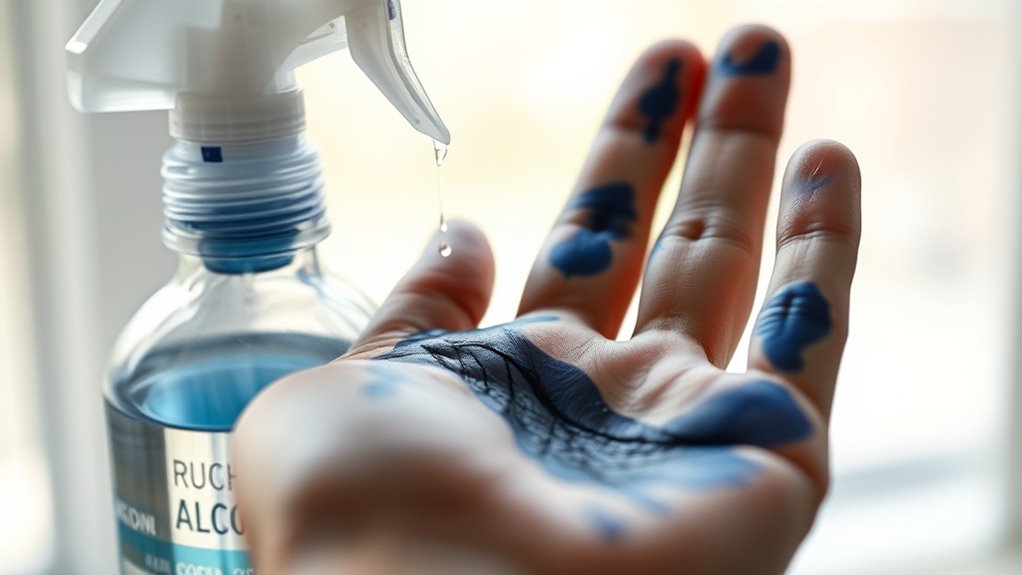
When you’re using rubbing alcohol to get rid of fresh ink, it’s best to choose the right kind—like isopropyl alcohol—for the best results. Just apply it gently with a cotton ball so you don’t irritate your skin.
And hey, don’t forget to test a small area first to make sure you’re not sensitive to it before going after the whole stain.
Choose Appropriate Alcohol Type
Two common types of rubbing alcohol, isopropyl and ethyl, work effectively to break down fresh stamp ink on your skin. When it comes to alcohol selection, both types serve as excellent solvents that break apart ink molecules, making removal easier.
Isopropyl alcohol is widely available and often preferred for its strong cleaning power, while ethyl alcohol, commonly found in hand sanitizers, can also do the job. Choosing the right type depends on what you have on hand, but either will help prevent the ink from setting if used promptly.
Apply Gently With Cotton
Although fresh stamp ink can be stubborn, you can effectively break it down by dampening a cotton ball or pad with rubbing alcohol. Take a gentle approach: press the alcohol-soaked cotton onto the inked skin and rub lightly in a circular motion. This helps lift the ink without irritating your skin.
Be sure to apply the rubbing alcohol soon after the ink gets on your skin to prevent it from setting in. If needed, reapply alcohol to the cotton and continue the gentle rubbing until the ink fades. Avoid harsh scrubbing, as this can damage your skin.
Using this gentle approach with rubbing alcohol and cotton makes removing fresh stamp ink quick and safe.
Test Skin Sensitivity First
Why should you test your skin’s sensitivity before applying rubbing alcohol to remove fresh stamp ink? Because rubbing alcohol can cause irritation or trigger skin allergies, especially if your skin is sensitive.
Before treating the stained area, apply a small amount of rubbing alcohol to a discreet spot on your skin. Wait a few minutes to check for any redness, itching, or inflammation.
Fresh ink responds well to rubbing alcohol since it hasn’t set yet, but skipping this test could lead to painful reactions. By performing this patch test, you reduce the risk of skin damage and verify rubbing alcohol is safe for you. Taking this simple precaution helps protect your skin while effectively breaking down fresh ink stains.
Apply Commercial Ink Removers for Stubborn Ink Stains
When stubborn stamp ink just won’t budge, it’s time to reach for a commercial ink remover like KRESTO Stoko. This kind of product is made specifically to tackle tough ink stains. Just be sure you pick the right one—look for something labeled for ink and dye removal, not just a general hand cleaner.
Once you have the right remover, follow the application instructions carefully. And don’t forget to rinse your skin thoroughly afterward. This helps prevent irritation and keeps your skin safe and healthy.
Choosing Suitable Removers
If you’re dealing with stubborn stamp ink stains, commercial ink removers like KRESTO Stoko offer a powerful and safe solution. When choosing removers, opt for products specifically labeled as “ink and dye removvers” rather than general hand cleaners.
These removers are specially formulated to dissolve ink quickly, often within five minutes, without harming your skin. You’ll typically find them at industrial supply houses rather than regular stores.
Make sure to follow the manufacturer’s instructions carefully and rinse your skin thoroughly afterward to avoid irritation. Unlike household solvents, these commercial removers target ink chemicals precisely, preventing damage to your skin tissue.
Application Techniques
Although stubborn stamp ink can be tough to remove, applying a commercial ink remover correctly makes the process much easier. Start by choosing a product like KRESTO Stoko that’s specifically labeled for ink removal.
Apply it directly onto the stained skin using a cotton swab or soft cloth, spreading it gently over the entire inked area. Let it sit for a few minutes to dissolve the ink, following the manufacturer’s recommended contact time.
Then, softly scrub with a cloth or soft brush to lift the ink residue. Finally, rinse thoroughly with soap and water to wash away any leftover chemicals. This supports proper ink safety and helps prevent skin irritation.
Using these application techniques guarantees effective removal while protecting your skin.
Safety Precautions
Because commercial ink removers contain strong chemicals, you should always follow safety precautions to protect your skin. Prioritize skin safety by choosing products specifically labeled as “ink and dye remover,” not just “hand cleaner.”
To use them safely, conduct a patch test on a small skin area to check for adverse reactions, especially if you have sensitive skin. Apply the remover gently with a cotton pad or cloth, avoiding excessive rubbing that can irritate your skin.
Follow the manufacturer’s instructions precisely to ensure effective and safe use. Then rinse your skin thoroughly with soap and water after removal to wash away residual chemicals and minimize irritation.
Taking these steps helps you remove stubborn ink stains while keeping your skin safe and healthy.
Soft Scrubbing Techniques to Remove Ink Without Irritation
When you want to remove stamp ink without irritating your skin, using soft scrubbing techniques is key. Start by dampening a soft cloth or sponge and apply gentle pressure. Avoid harsh rubbing to protect sensitive skin.
Combine mild soap or a gentle cleaning agent with water to create a light lather. Then gently scrub the stained area using these gentle techniques. If needed, use a soft-bristled toothbrush or a non-abrasive scrub pad to enhance cleaning without causing irritation.
Remember to rinse your skin frequently during scrubbing to wash away loosened ink and prevent buildup that could aggravate your skin. After you’ve removed the ink, apply a moisturizer or soothing lotion to restore hydration and calm any potential irritation caused by scrubbing.
Rinse Thoroughly and Repeat as Needed
After gently scrubbing the ink, make certain to rinse your skin thoroughly with soap and water. Effective rinsing is key to removing most of the stamp ink quickly and preventing it from settling deeper into your skin.
Don’t hesitate to repeat the rinsing process multiple times, especially if some ink remains stubborn. To maximize removal, consider these steps:
- Rinse your skin under warm water while applying soap to lift ink particles.
- Use rubbing alcohol or an alcohol-based hand cleaner during rinsing to break down ink residues.
- Repeat the rinsing and scrubbing cycle until you see no visible ink traces.
- Make certain you rinse off all soap and cleaning agents completely to avoid irritation and prevent ink from re-adsorbing.
Moisturize Skin to Soothe After Ink Removal
Though you’ve successfully removed the stamp ink, your skin may feel dry or irritated from the cleaning process. Applying a fragrance-free moisturizer right after cleaning gives your skin a much-needed hydration boost, helping to soothe and restore its natural barrier. Harsh solvents like alcohol or bleach can strip your skin, so moisturizing immediately prevents further dryness and irritation.
You can also use oils such as mineral or baby oil to create a protective layer, calming any residual tightness or discomfort. For faster healing, pick a gentle lotion with soothing ingredients like aloe vera or chamomile. They reduce redness and promote skin repair.
Regularly moisturizing after ink removal is especially important if you have sensitive or dry skin, as it helps prevent cracking and keeps your skin healthy. By giving your skin this hydration boost, you’ll feel more comfortable and support its recovery after the cleaning process.
When to Call a Dermatologist for Help
If your skin starts to feel irritated—like getting red, swollen, or painful—after you try to remove ink, it’s a good idea to call a dermatologist. Don’t wait too long if the ink stain just won’t come off, even after you’ve cleaned it several times. And if you see any signs of infection, that’s another clear reason to get professional help. A dermatologist can offer safe and effective treatments, especially for ink that’s stubborn or has soaked in deeply.
Signs Of Skin Irritation
How do you know when stamp ink removal has gone too far? Watch for signs of skin irritation, especially if you experience an allergic reaction. You should pay attention to:
- Redness, swelling, itching, burning, or blistering at the treated area.
- Irritation that lasts more than 24-48 hours or worsens despite care.
- Severe pain, spreading rash, or signs of infection.
- Increased inflammation if you have pre-existing conditions like eczema or psoriasis.
If you notice any of these, stop all removal methods immediately and consider consulting a dermatologist. Early intervention can prevent complications and ensure your skin heals properly. Don’t ignore persistent discomfort or unusual symptoms. Your skin’s health matters.
Persistent Ink Stains
When persistent ink stains refuse to fade despite your best removal efforts, it’s important to contemplate professional help. If the ink remains after several days and multiple home treatments, or if you notice an ink reaction causing irritation, a dermatologist’s advice can be vital.
Those with sensitive or damaged skin conditions like eczema or psoriasis should be especially cautious. Watch for signs of infection such as redness, swelling, pain, or pus around the stained area. These symptoms require immediate medical attention.
Furthermore, if you experience allergic reactions like severe itching, blistering, or swelling linked to the ink, don’t hesitate to seek professional care. For stubborn or deeply embedded stains that resist standard methods, a dermatologist can guide you on the safest and most effective next steps.
Professional Treatment Options
Although many ink stains come off with home remedies, you should reach out to a dermatologist if the marks won’t budge or your skin reacts badly. A Dermatologist Consultation can provide professional treatment options that are safer and more effective.
Consider seeing a dermatologist if ink stains persist after trying multiple home treatments. Also, if your skin shows signs of irritation, burns, or allergic reactions from chemical exposure, it’s time to get professional help.
If the ink has penetrated deeply or caused skin damage or infection, or if you’re unsure about the safety of your skin’s reaction to the ink or cleaning attempts, a dermatologist can guide you.
They can recommend medicated scrubs or topical solvents that safely remove stubborn ink without harming your skin. Don’t hesitate to seek professional advice to protect your skin health.
Frequently Asked Questions
Can Stamp Ink Cause Allergic Reactions on Skin?
Yes, stamp ink can cause allergic reactions on your skin. If you’re sensitive or have conditions like eczema, you’re more likely to experience redness, itching, or swelling after contact.
You might not notice a reaction immediately, but repeated exposure can increase your risk. To protect yourself, you should perform a patch test before using new stamp inks extensively.
If you notice any irritation, stop using the ink and wash the area promptly.
Is It Safe to Use Nail Polish Remover on Skin Ink Stains?
You can use nail polish remover on skin ink stains, but you should be cautious about safety concerns. It often contains acetone, which can irritate or dry out your skin, especially if you have sensitive skin.
Always test a small area first and avoid prolonged use. Afterward, rinse thoroughly with soap and water to remove any residue. Taking these precautions helps protect your skin while effectively removing ink.
How Long Does It Take for Stamp Ink to Naturally Fade?
The fade duration for stamp ink on your skin usually takes several days to about a week. It depends on factors like the ink type, your skin, and how often you wash or exfoliate.
Fresh stains may start fading within a few days, but heavily pigmented inks can stick around longer. To speed up the fade duration, keep cleaning and expose the area to sunlight, but remember it varies from person to person.
Can Children Use Rubbing Alcohol for Ink Removal Safely?
You wouldn’t let a child wander through a thorny forest without guidance, right? When it comes to using rubbing alcohol for ink removal, children’s safety must be your priority.
Their sensitive skin reacts differently, so it’s best to avoid direct use or dilute it heavily with adult supervision. Instead, stick to gentle soap and water.
Always check with a healthcare professional before trying stronger solutions on kids to keep them safe and irritation-free.
What Are Natural Alternatives to Chemical Ink Removers?
You can use herbal remedies like tea tree oil to break down ink stains gently. Baby oil also works well by softening your skin and dissolving ink.
Lemon or orange juice offers a natural, mild acidic option to lift ink without harsh chemicals. These alternatives provide a safer, soothing way to remove stamp ink while protecting your skin. Just apply, gently scrub, and rinse for best results.
Conclusion
So, now that you’re practically a stamp ink removal guru, you can proudly flaunt your spotless hands like a magic trick, but less applause-worthy. Remember, rushing to scrub your skin with harsh chemicals is not the same as winning a battle. It’s just a fast track to dryness and irritation.
If your skin rebels, don’t be a hero. Call a dermatologist. After all, your hands deserve a spa day, not a chemistry experiment gone wrong!
Leave a Reply