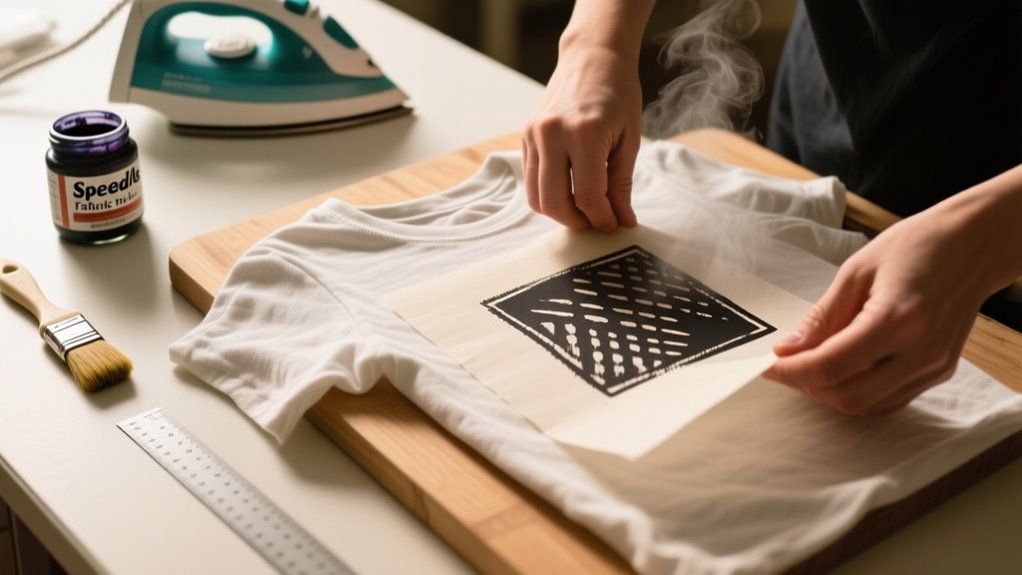
To heat set Speedball fabric ink, first wash and dry your fabric thoroughly to remove residues.
Let the ink naturally cure for 7 to 10 days in a ventilated area.
Choose a heat method: iron, heat press, or oven, set to 320°F.
Evenly heat the design for 3 to 5 minutes, keeping the iron moving.
Flip the fabric and heat the reverse side the same way.
Let it cool completely before washing.
These steps guarantee vibrant, long-lasting prints, and there’s more to guarantee perfect results.
Prepare Fabric By Washing And Drying Thoroughly
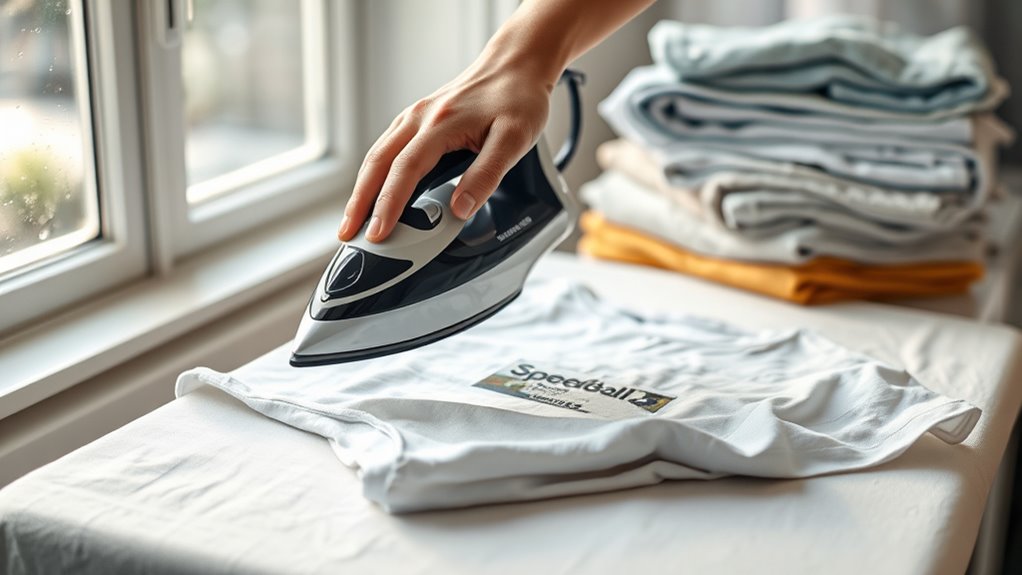
Before you apply Speedball fabric ink, make sure to wash your fabric thoroughly to remove any sizing, chemicals, or residues that could prevent the ink from adhering properly. You’ll want to pre-wash the fabric to guarantee it’s clean and ready for printing.
Always pre-wash fabric to remove residues that can hinder Speedball ink adhesion for optimal printing results.
After washing, allow the fabric to dry completely; no moisture should remain before you move on to printing or heat setting. It’s best to wait at least 24 hours after washing so the fabric stabilizes fully.
Once dry, use a hot, dry iron to remove wrinkles and create a smooth surface for better ink application. This thorough preparation helps the ink bond well and last longer.
To be safe, test a small fabric sample by washing and drying it first to confirm your process works. By following these steps, you’ll set the stage for a successful heat setting and vibrant Speedball fabric ink results.
Allow Ink To Cure Naturally For 7 To 10 Days
You’ll want to let your printed fabric air dry undisturbed for 7 to 10 days. This gives the ink time to cure naturally and fully bond with the fibers.
Trust me, this waiting period is key to getting the best durability and wash resistance. Being patient here really pays off by protecting your design from fading or damage too soon.
Natural Ink Curing
Although heat setting is common, you can let Speedball fabric ink cure naturally by air drying your printed fabric for 7 to 10 days. During this natural curing process, the fabric ink slowly bonds with the fibers through evaporation of moisture, strengthening the print’s durability.
To guarantee proper curing, keep your fabric in a well-ventilated area away from direct sunlight, which can cause premature fading. Avoid washing or excessive handling during this time to allow the ink to fully set.
This method relies solely on air dry conditions rather than heat, making it a gentle alternative. After the curing period, you can perform a wash test to confirm the ink’s resistance.
Natural ink curing offers a reliable way to set your fabric ink without heat application.
Optimal Drying Time
How long should you let Speedball fabric ink cure naturally? You should allow the printed fabric to air dry for 7 to 10 days. This drying time is essential for proper curing of the fabric ink.
During this period, keep your fabric in a well-ventilated area away from direct sunlight to guarantee natural drying without premature damage. Avoid handling or folding the fabric, as it can disrupt the ink’s adhesion.
Proper natural drying before heat setting maximizes the ink’s durability and wash resistance. Taking the time for this curing process helps the ink bond deeply with the fabric, reducing fading and smudging after washing.
Trusting this ideal drying time ensures the best long-term results for your Speedball fabric ink projects.
Benefits Of Patience
Giving your Speedball fabric ink the full 7 to 10 days to cure naturally offers significant benefits for your project’s longevity. By practicing patience and allowing proper air drying, you guarantee the ink’s solvents fully evaporate, which strengthens the bond between ink and fabric fibers.
This curing process maximizes adhesion, reducing the chance of fading or cracking after washing. If you rush and heat set too soon, you risk incomplete bonding that compromises the design’s long-term durability. Waiting the recommended period aligns with manufacturer guidelines, giving you confidence that your design will hold up well over time.
Choose The Best Heat Setting Method For Fabric Ink
Choosing the right heat setting method really depends on the type of fabric you’re working with, the size of your design, and the tools you have on hand. You’ll want to find the perfect balance between timing and temperature so you don’t accidentally damage your fabric. At the same time, you need to make sure the ink cures properly for the best results. So, let’s dive into some of the best options to help you get durable and vibrant prints every single time.
Heat Setting Options
When selecting the best heat setting method for Speedball fabric ink, you’ll want to take into account the tools you have and the size of your project. Using a household iron on the highest fabric setting for 3-5 minutes per side is a reliable choice for most projects.
If you have access to a heat press, setting it to 320°F (160°C) for about 40 seconds offers even heat and faster curing time. The oven method, heating fabric wrapped in a towel at 400°F for roughly 10 minutes, works well but requires caution to prevent scorching.
For small areas, a heat gun held 4-5 inches away on medium-high heat for 1-2 minutes ensures proper curing. Each option balances temperature control and curing time for suitable fabric ink setting.
Fabric Compatibility Considerations
Although Speedball fabric ink works well on many materials, the type of fabric you’re using plays a crucial role in determining the best heat setting method. Fabric compatibility affects ink durability, so understanding your fabric is key.
Polyester fabrics handle higher heat settings without fading, making them ideal for longer or hotter curing. Cotton fabrics, or blends with more cotton, tend to fade faster and usually need gentler heat setting or alternative curing methods.
Proper fabric preparation, like pre-washing and drying, ensures the ink adheres well and lasts longer. Since design thickness and size impact heat setting duration, test a small sample on your specific fabric first. This way, you’ll find the perfect balance to maximize durability without damaging your fabric.
Timing And Temperature
Knowing your fabric type helps you pick the right timing and temperature for heat setting Speedball fabric ink. The ideal temperature for curing is about 320°F (160°C), held for 3-5 minutes or 40 seconds if you use a heat press or EasyPress.
Avoid going above 350°F to prevent scorching. If you use a household iron, set it to the highest fabric setting and press for 3-5 minutes, guaranteeing even heat without damage. A heat gun can also work but requires steady movement to avoid overheating spots.
Oven curing at 400°F for 10 minutes is an option, but watch out for synthetic fibers that might melt. Consistent timing and temperature during heat setting ensure your fabric ink cures properly, delivering durable, wash-resistant prints.
Set Your Heat Source To 320°F (160°C)
To achieve the best results with Speedball fabric ink, you’ll want to set your heat source to exactly 320°F (160°C). This precise heat setting guarantees the ink cures properly without scorching the fabric or causing discoloration.
Before you start, confirm your heat source’s temperature with a reliable thermometer or digital control. Allow the heat source to stabilize at 320°F for a few seconds to guarantee even heat distribution across your design. Avoid exceeding this temperature, as higher heat can damage both fabric and ink.
| Heat Source Type | Recommended Temperature | Notes |
|---|---|---|
| Heat Press | 320°F (160°C) | Use digital control |
| EasyPress | 320°F (160°C) | Allow time to stabilize |
| Iron | 320°F (160°C) | Use thermometer to check |
| Heat Gun | Not recommended | Temperature control issues |
| Oven | Not recommended | Uneven heat distribution |
Setting your heat source accurately is vital for a flawless finish.
Heat The Design Evenly For 3 To 5 Minutes
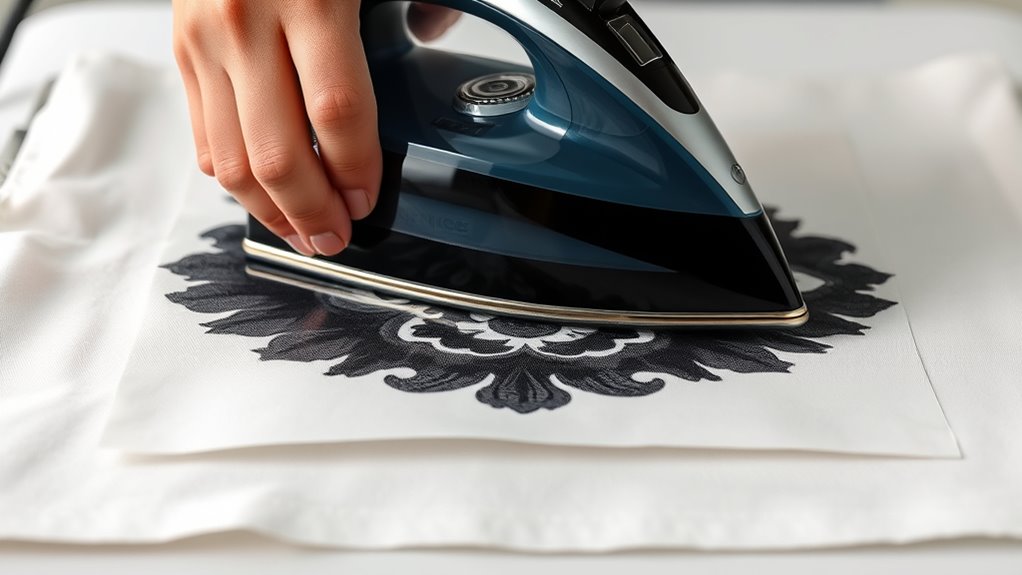
When you heat the design, set your iron to the highest dry heat setting without steam and keep it moving continuously over the entire area for 3 to 5 minutes. This steady motion guarantees the heat distributes evenly, preventing hot spots that could damage the fabric or cause uneven curing.
Place a pressing cloth or parchment paper between the iron and your design to protect the ink and fabric from sticking or scorching. Overlap your strokes as you move the iron, maintaining consistent contact with the fabric to make sure every part of the design reaches the proper temperature.
Don’t rush the process. Spending a full 3 to 5 minutes applying heat is essential for properly curing the Speedball fabric ink. By applying heat evenly and steadily, you’ll lock in your design’s durability and vibrancy, ensuring it stands up to washing and wear.
Flip Fabric And Heat The Reverse Side
Although you’ve already heated the front side, flipping the fabric and applying heat to the reverse side is essential for locking in your design’s durability. This step helps the heat penetrate the ink layer directly, improving the cure and ensuring your design lasts through many washes.
Heating the fabric’s reverse side locks in your design’s durability for long-lasting, vibrant results.
Before you flip, make sure the ink is fully air-dried to avoid smudging or incomplete curing.
When you flip the fabric, follow these key steps:
- Set your iron or heat press to 320°F for even heat application on the reverse side.
- Protect the fabric with parchment paper or a Teflon sheet to prevent scorching.
- Apply heat evenly for about 40 seconds to bond the ink securely to the fabric fibers.
Let Fabric Cool Completely Before Washing
How long should you wait before washing your fabric after heat setting? It’s essential to let your fabric cool completely before you wash it. After heat setting, the ink is still in a delicate state, and rushing to wash the fabric can cause the ink to smudge, shift, or fade prematurely.
Typically, you’ll want to allow at least 30 minutes to 1 hour for proper cooling and drying. During this cooling period, the ink solidifies and bonds effectively to the fabric fibers, ensuring durability.
If you wash the fabric while it’s still warm, the ink may loosen, leading to less vibrant designs and reduced longevity. So, be patient and let the fabric dry and cool thoroughly before washing.
This simple step safeguards the integrity of your artwork and keeps your printed design looking fresh through many washes.
Frequently Asked Questions
Can I Use a Hairdryer Instead of an Iron to Heat Set?
You shouldn’t rely on a hairdryer as a heat setting technique for Speedball fabric ink. Hairdryer alternatives like an iron or heat press offer better temperature control, reaching the necessary heat for proper curing.
Using a hairdryer can extend drying times and compromise ink longevity, especially with fabrics needing consistent heat. To guarantee fabric compatibility and durable results, choose tools that maintain ideal temperatures, not just blow hot air.
Is Heat Setting Necessary for All Fabric Ink Colors?
No, heat setting isn’t necessary for all fabric ink colors. You’ll find that ink color durability and long-term adhesion depend on the curing temperature and fabric type compatibility.
Darker shades often benefit from heat setting to prevent color fading and maintain ink flexibility. Lighter or specialty inks might cure well without heat.
Always consider the ink’s formula and instructions to guarantee your design lasts without sacrificing softness or flexibility.
How Does Humidity Affect the Heat Setting Process?
Humidity impacts the heat setting process by increasing drying time and causing moisture interference, which weakens ink adhesion. You’ll notice environmental effects like slower ink curing and a higher risk of smudging in humid conditions.
Climate considerations mean you should let your fabric ink dry longer before heat setting to guarantee proper bonding. Managing humidity with good ventilation helps prevent these issues, improving the durability of your fabric design.
Can Heat Setting Damage Delicate Fabrics?
Yes, about 60% of delicate fabrics can get damaged if you don’t manage temperature control and setting duration carefully. When working with sensitive fabric textures, you must prioritize fabric compatibility to avoid scorching or deformation.
Proper heat setting guarantees ink adhesion without compromising the fabric’s integrity. Always follow safety precautions and test a small area first. This way, you protect your fabric while achieving great results.
How Do I Fix Ink That Smudges After Heat Setting?
If you notice ink smudging after heat setting, start fixing mistakes by immediately applying a light layer of ink over the smudged area. Use proper drying techniques by letting the ink fully air dry for 24 hours before heat application next time.
Check your ink consistency and fabric preparation to prevent issues. When reheating, press gently with a clean cloth or parchment paper to help the ink bond better and avoid uneven smudging.
Conclusion
Now that you’ve mastered heat setting Speedball fabric ink, imagine your design locking in like a vibrant sunset sealed beneath glass. It will last and stay radiant. Just follow these simple steps, and your creativity will shine wash after wash.
Remember, patience and care turn your fabric into a masterpiece that stands the test of time. So, heat it right, let it cool, and wear your art proudly. Know that it’s set to stay vivid and strong.
Leave a Reply