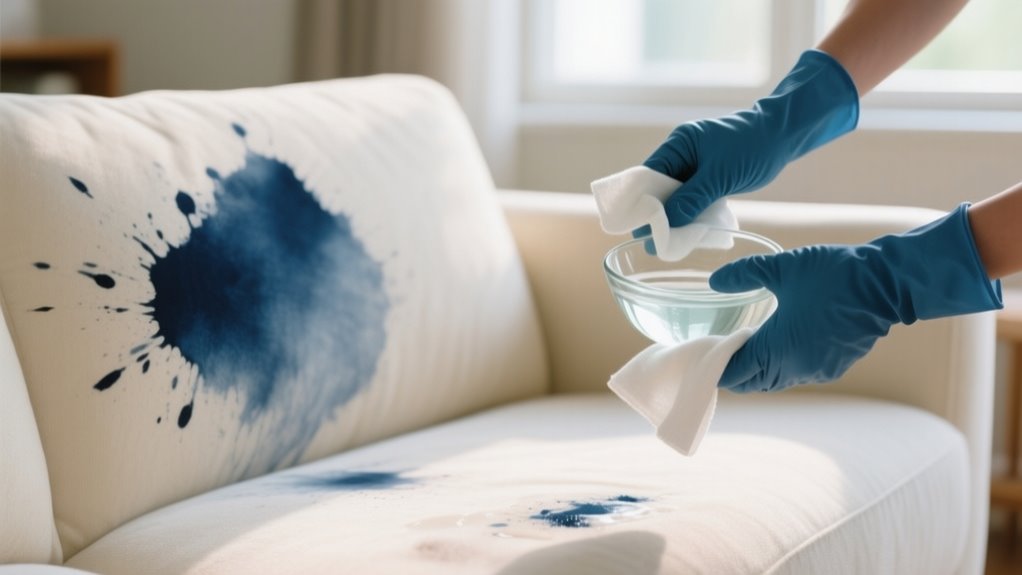
First, check your upholstery tag to know its cleaning code.
Blot fresh ink gently with a clean cloth from the edges inward, don’t rub.
Test rubbing alcohol on a hidden spot, then dab it on the stain.
For tough ink, mix vinegar and soap to blot repeatedly.
You can also try milk and baking soda for natural removal.
Avoid heat drying; instead, air-dry and condition leather if needed.
Keep going to uncover more helpful tips for spotless upholstery care.
Identify Your Upholstery Type and Cleaning Code
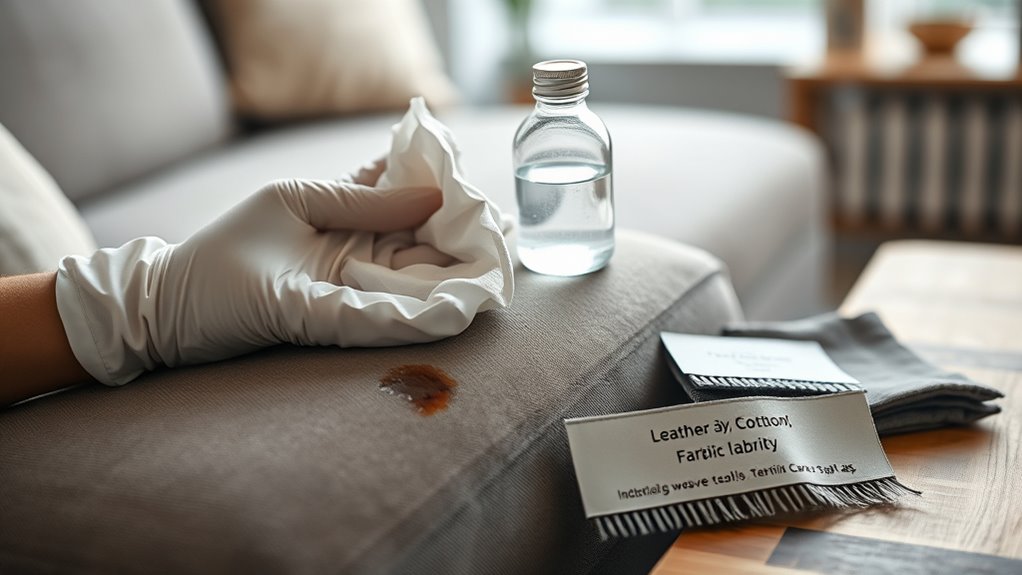
Before you begin cleaning ink from your upholstery, you need to identify its type and cleaning code. Look for the upholstery tag, usually found under cushions or on the sofa platform, which reveals the fabric type and cleaning code.
These codes “W” for water-based cleaners, “S” for solvent-based, “S-W” for either, and “X” for vacuuming only guide you in choosing the safest cleaning methods. Following the manufacturer instructions is vital because using the wrong cleaner can cause discoloration or damage, complicating stain removal.
Knowing your upholstery’s fabric care requirements assures you use the proper cleaning process, maintaining your furniture’s look and longevity. This step is fundamental not just for effective ink stain removal but also for stain prevention in the future.
Blot Fresh Ink Stains Immediately to Prevent Spreading
When you notice fresh ink on your upholstery, blot it immediately with a clean, dry cloth or paper towel to soak up as much ink as possible before it sets. Acting fast helps absorb excess ink and prevents spreading, which can make removal harder. Use gentle pressing motions instead of rubbing to avoid pushing ink deeper into the fabric.
Follow these steps for best results:
Follow these steps carefully to effectively remove fresh ink stains from your upholstery without spreading or embedding the ink.
- Use a clean cloth or paper towel to blot the fresh ink stain with immediate, gentle pressing from the outside edges toward the center to prevent spreading.
- Change to a dry section or a new cloth frequently to absorb ink effectively and avoid re-deposit onto the upholstery.
- Refrain from rubbing, as this can embed the ink further, increasing the chance of a permanent stain.
Use Rubbing Alcohol and Household Solutions for Ink Removal
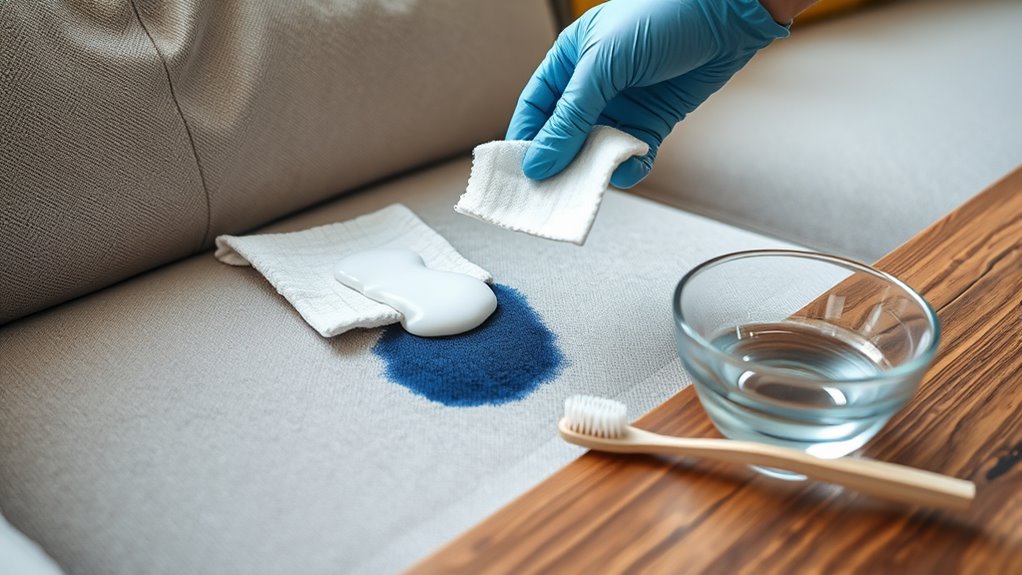
You can tackle ink stains by using rubbing alcohol. It breaks down the ink effectively when you dab it gently onto the fabric. Just make sure to test it on a hidden spot first so you don’t accidentally damage your clothes.
If rubbing alcohol isn’t handy, you can try a mix of vinegar and soap. This combo can also help lift those stubborn stains—just remember to blot carefully.
Alcohol-Based Ink Removal
How exactly can rubbing alcohol help you remove ink from upholstery? Rubbing alcohol, especially 90% isopropyl alcohol, dissolves ink pigments quickly, making it ideal for alcohol-based removal.
To treat ink stains effectively, follow these steps:
- Test rubbing alcohol on a hidden upholstery spot to avoid damage.
- Dab the stain gently with a clean cloth soaked in alcohol, working from the outside inward without rubbing.
- For stubborn stains, apply alcohol repeatedly, then rinse with water and blot dry to remove residue.
Using a clean cloth ensures you lift the ink without spreading it. This method targets both fresh and dried ink stains, making it a reliable solution for alcohol-based ink removal on upholstery.
Vinegar And Soap Solutions
Why settle for just one method when combining household solutions can boost your ink stain removal efforts? Mix 1 tablespoon of white vinegar, 1 tablespoon of dish detergent, and 2 cups of cool water to make an effective cleaning solution.
Blot the ink stain on your upholstery immediately with a cloth soaked in this vinegar and soap solution. Gently press and dab every 5 minutes for about 30 minutes to lift the ink.
Once treated, rinse the area with a damp cloth to remove residue and blot dry to avoid moisture damage. Repeat if needed, always blotting gently to prevent spreading.
| Step | Action |
|---|---|
| Prepare Solution | Mix vinegar, soap, and water |
| Apply & Blot | Gently press and dab the stain |
| Rinse & Dry | Use damp cloth, then blot dry |
Use Vinegar and Soap to Tackle Tough Ink Stains
Although ink stains can be stubborn, mixing a solution of dish detergent, white vinegar, and cool water can help you tackle even the toughest spots on your upholstery. This powerful vinegar and soap cleaning solution works to loosen and lift stubborn ink stains effectively.
Here’s how to use it:
- Blot the ink stain immediately with a clean cloth or paper towel to prevent it from setting deeper.
- Dab the vinegar and soap solution onto the stain and let it sit for about 30 minutes to loosen the ink particles.
- Every 5 minutes, blot the stain with a clean cloth dipped in the solution to gradually lift the ink.
Once the stain shows signs of fading, rinse the area thoroughly with a damp cloth to remove any soap residue. This step guarantees your upholstery stays clean without any leftover stains or stickiness.
Try Gentle Natural Remedies Like Milk and Baking Soda
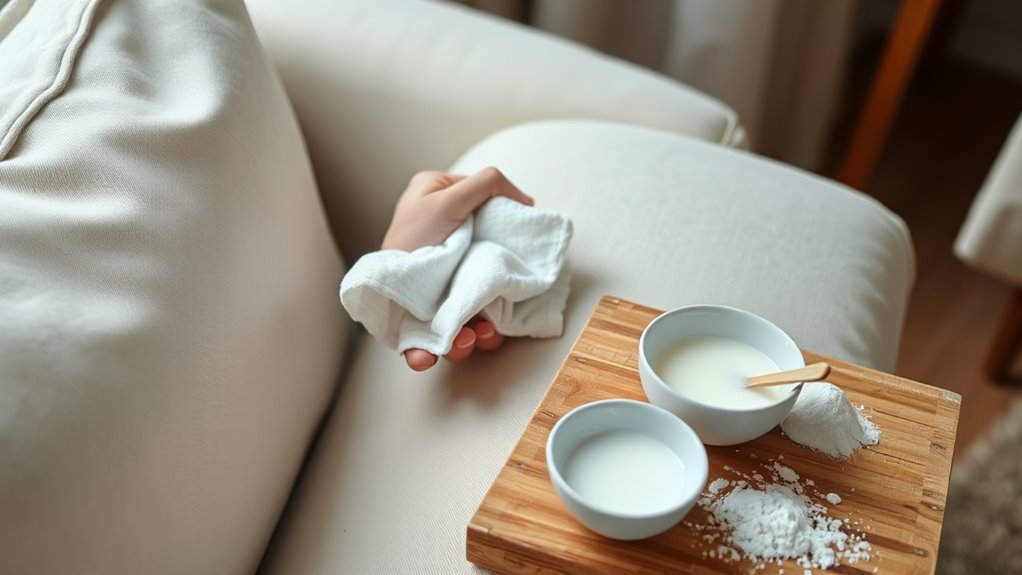
You can pour milk directly onto the ink stain to soften it and make it easier to lift. After that, sprinkle some baking soda over the milk. This helps absorb the loosened ink particles. Then, gently scrub the area to remove the stain without damaging your upholstery.
Milk Soften Ink
Wondering how to tackle ink stains without harsh chemicals? Using milk to soften ink is an effective and gentle stain treatment for upholstery. Milk helps loosen ink particles, making stain removal easier. Here’s how you can do it:
- Pour milk directly onto the ink stain to allow stain penetration and loosen ink from fibers.
- Sprinkle baking soda over the milk; it enhances absorption and acts as a mild abrasive.
- After letting the mixture sit for several minutes, gently scrub the area with a soft cloth, then rinse with a damp cloth to remove residue.
This simple method combines natural ingredients to break down stubborn ink stains while protecting your upholstery.
Baking Soda Absorption
Milk helps soften ink stains, but combining it with baking soda takes stain removal a step further by absorbing and lifting ink from upholstery fibers. Start by pouring milk directly onto the ink stain to loosen ink particles.
Then, sprinkle baking soda over the milk-covered area to create a gentle abrasive that aids in stain lifting. Use a soft cloth or sponge to gently scrub the stain, working the milk and baking soda into the fabric for effective absorption.
After scrubbing, wipe the treated area with a clean, damp cloth to remove any residue. Finally, let the upholstery dry completely to avoid moisture buildup, which can cause further damage or re-staining.
This natural method offers a gentle scrub for delicate upholstery while ensuring thorough ink removal.
Avoid Common Mistakes That Can Damage Upholstery
Although it might seem like scrubbing the ink stain aggressively will get rid of it faster, this can actually push the ink deeper into the fabric, making removal harder. To protect your upholstery, avoid these common mistakes:
- Don’t use harsh chemicals or hot water, as they can set the ink permanently and cause staining. Instead, opt for gentle cleaning agents.
- Avoid excessive cleaning or soaking the fabric, which may lead to water damage, mold growth, or fabric damage.
- Steer clear of abrasive tools or rough cloths. These can scratch or weaken delicate fabric fibers, causing discoloration and permanent damage.
Also, always test any cleaning solution on a hidden area first to prevent unexpected discoloration or fading. By handling your upholstery carefully and avoiding these errors, you’ll improve the chances of successfully removing ink without harming the fabric.
Dry and Condition Upholstery After Ink Removal
Once you’ve carefully removed the ink stain without damaging the fabric, your next step is to dry and condition the upholstery properly. Start by blotting the cleaned area with a clean, dry towel to absorb as much moisture as possible, preventing it from settling into the fabric.
After removing the ink, gently blot the area with a dry towel to absorb moisture and protect the fabric.
Avoid using direct heat sources like hair dryers, as they can warp delicate materials. Instead, use a fan or an air blower to speed up the drying process and guarantee no residual moisture remains.
For leather upholstery, once it’s completely dry, apply a leather conditioner to restore suppleness and prevent cracking. Proper drying and conditioning not only maintain the upholstery’s appearance but also prevent mold growth and re-staining.
Make sure the area is fully dry before using the furniture again to keep your upholstery looking clean and fresh. Taking these steps guarantees your upholstery stays in great shape after ink removal.
Frequently Asked Questions
Can Ink Stains Be Removed From Leather Upholstery?
Yes, you can remove ink stains from leather upholstery with the right leather cleaning and spot treatment techniques. Use gentle cleaning solutions like isopropyl alcohol or specialized leather cleaners to lift ink, but always test a small area first.
Incorporate upholstery care and leather maintenance by applying a conditioner afterward to keep your leather supple. Using proper cleaning tools and DIY methods helps improve stain resistance and supports effective stain prevention for your leather furniture.
How Long Should I Wait Before Attempting Ink Removal?
You should wait at least 15 to 30 minutes before attempting ink removal to allow proper drying time and stain absorption. Depending on the ink type, upholstery material, and stain size, longer waiting might improve stain visibility and treatment duration.
Adjust cleaning frequency based on how the stain responds. Consider your drying environment and use appropriate cleaning tools for the best results. Patience helps maximize ink removal success.
Are There Professional Services for Ink Stain Removal?
You bet there are professional services for ink stain removal! When your upholstery looks like a crime scene, these pros bring powerful cleaning solutions and expert stain removal tips.
Forget risky DIY methods. They use precise stain identification and advanced cleaning tools to guarantee stain removal safety. They combine stain treatment with upholstery care, saving your fabric from damage.
Plus, their professional cleaning guarantees stain prevention and restores your furniture’s look like new.
Can Ink Stains Cause Permanent Discoloration?
Yes, ink stains can cause permanent discoloration, especially when ink penetration is deep and fabric porosity is high. The longer the stain stays, the more complex the absorption becomes, which increases fiber damage and color fading.
Aging effects make the stain more visible and the surface discoloration worse, so removal gets harder over time. You’ll notice that old ink stains bond tightly with fibers. That’s why acting quickly is essential to prevent permanent marks and keep your upholstery looking good.
How to Prevent Ink Stains on Upholstery in the Future?
Think of your upholstery as a fortress. Using ink-resistant fabric and stain-resistant treatments acts like a strong shield. You’ll want to apply fabric coating or upholstery sealing regularly to strengthen defenses.
Quick spill response is key, so keep cleaning supplies handy. Protective covers guard high-risk spots, and knowing ink marker types helps you prepare better.
Stick to stain prevention tips and boost upholstery maintenance by increasing your cleaning frequency to keep your fortress impenetrable.
Conclusion
Now that you’ve gently lifted the ink stain, imagine your upholstery looking fresh and vibrant again, free from blotches and smudges. By acting quickly and choosing the right solutions, you’ve restored its beauty like a skilled artist touching up a masterpiece.
Remember to dry and condition your fabric so it feels soft and inviting. With these simple steps, your furniture will continue to brighten your space, ink-free and effortlessly charming.
Leave a Reply