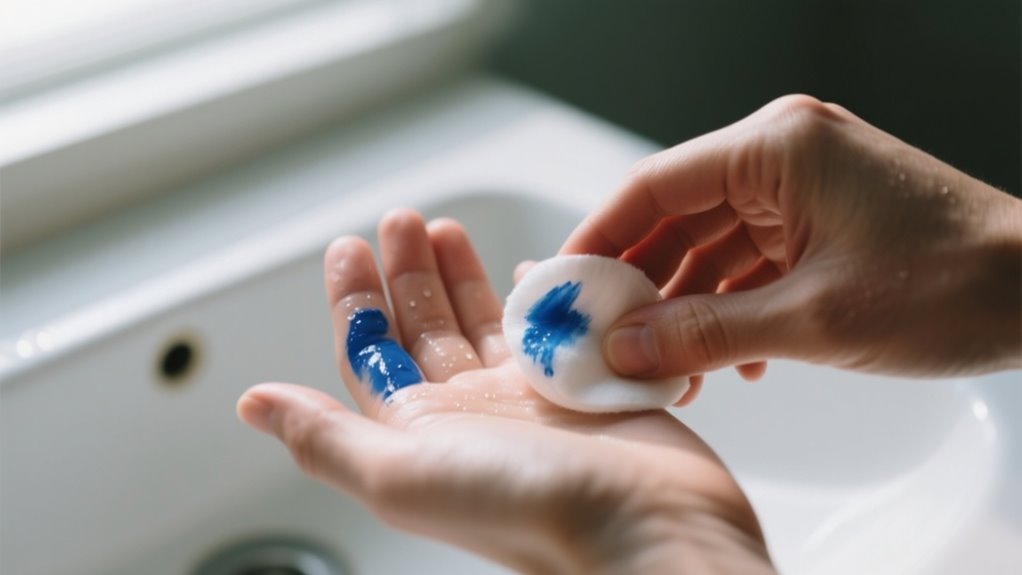
To remove pen ink from your skin quickly, act right away before it sets. Use warm water and soap to gently loosen and wash away fresh ink stains.
If that’s not enough, dab a cotton ball with rubbing alcohol and softly rub the area to break down stubborn ink.
For sensitive skin, try natural options like milk or oils to protect while cleaning.
Keep going to discover more easy techniques and tips for dealing with ink stains.
Remove Pen Ink Quickly: Why Speed Matters
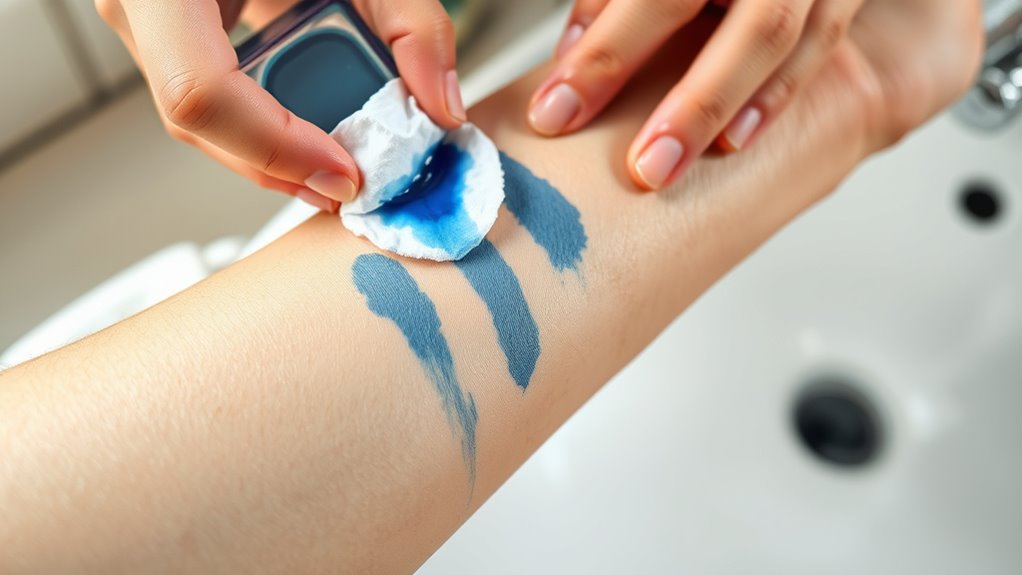
Although it might seem minor, removing pen ink quickly makes a big difference because fresh stains are much easier to dissolve before they set into your skin. When you take immediate action to remove ink quickly, you prevent the ink from bonding deeply with your skin cells.
Fresh stains respond better to cleaning methods, so addressing them right away means you won’t have to work as hard or use harsh chemicals later. Waiting too long allows the ink to penetrate further, making removal tougher and often requiring vigorous scrubbing.
That scrubbing can lead to skin irritation, which you definitely want to avoid. By acting fast, you increase your chances of completely removing the ink with minimal effort and without damaging your skin. So, whenever you notice a fresh stain, don’t hesitate. Immediate action is your best bet to keep your skin clean and irritation-free.
Use Soap and Warm Water for Fresh Ink Stains
When you catch a fresh ink stain, start by washing the area immediately with warm water to stop the ink from settling into your skin. Using soap and water is one of the simplest, most effective ways to remove ink quickly. Warm water helps loosen the ink pigments, while soap breaks them down.
To remove ink stains effectively, follow these tips:
- Apply a generous amount of dish soap or hand soap on the ink-stained area.
- Gently rub the skin with your fingertips or a soft cloth to lift the ink.
- Rinse thoroughly with warm water, repeating the process if needed.
Keep washing and rubbing gently until the ink begins to fade. Soap and water won’t damage your skin and are safe for quick cleanup. Acting fast with warm water and soap helps prevent ink stains from setting, making removal much easier.
Apply Rubbing Alcohol to Remove Pen Ink Safely
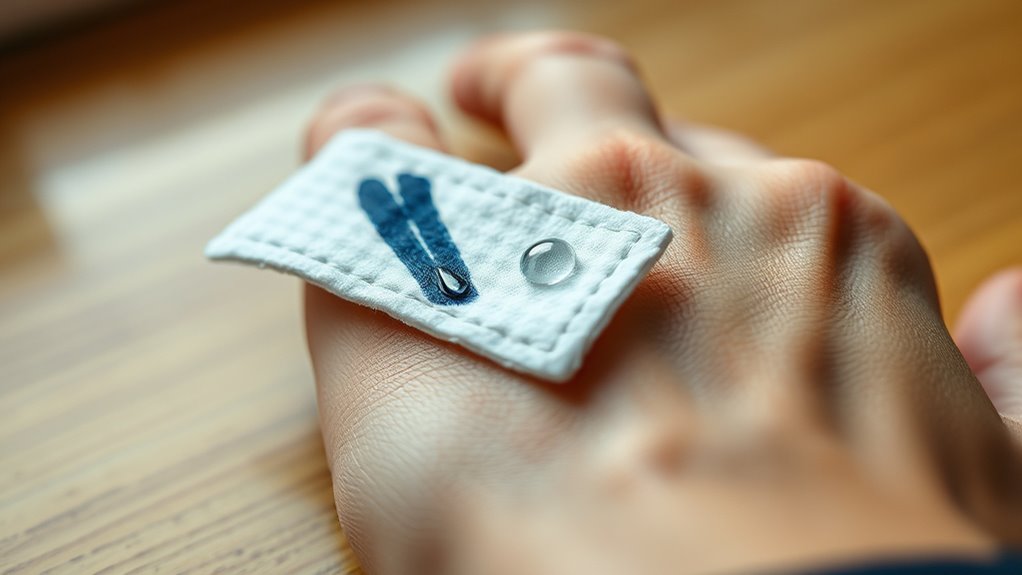
If soap and water don’t fully remove the ink, you can turn to rubbing alcohol for a quicker solution. Soak a cotton ball or pad in rubbing alcohol, then gently dab it onto the ink-stained skin. Use circular motions to break down and lift the ink pigments without harsh scrubbing.
Let the rubbing alcohol sit on the skin for a few seconds to dissolve stubborn ink stains. Afterward, rinse the area with warm water to wash away loosened ink and alcohol residue. To prevent dryness, follow up by washing with soap and water.
Since rubbing alcohol can irritate sensitive skin, use it sparingly and perform a patch test on a small area first. This method helps you remove pen ink quickly and safely, leaving your skin clean without damage.
Keep in mind, rubbing alcohol is effective but should always be used with care to protect your skin’s health.
Try Milk and Tea Bags to Lift Ink Naturally
Since harsh chemicals can irritate your skin, you can try milk and tea bags to lift ink naturally and gently. Both milk and tea bags contain natural fats and oils that interact with ink pigments, helping you remove ink stains without causing irritation.
Here’s how you can use them: soak your hands in milk or rub a milk-soaked cloth on the ink stains to dissolve the ink naturally. Use a cooled, used tea bag and gently rub it over the stained area to loosen the ink.
Repeat these methods as needed to gradually remove stubborn ink stains. This chemical-free approach is especially suitable for sensitive skin. By using milk and tea bags, you avoid harsh ingredients while still effectively lifting ink from your skin’s surface.
Make a Baking Soda Paste to Exfoliate Ink Stains
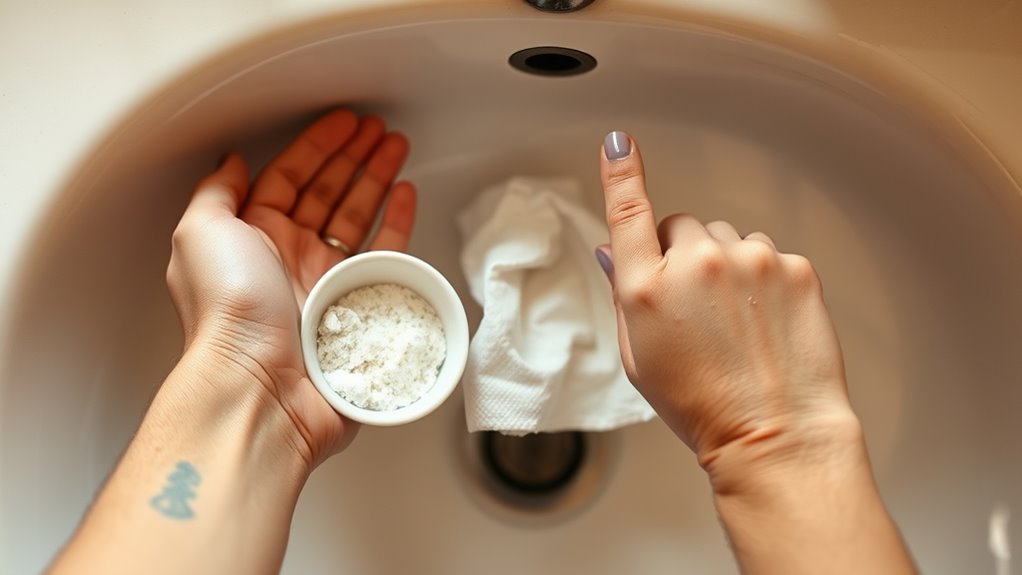
Milk and tea bags offer a gentle way to lift ink from your skin, but sometimes you need a slightly more abrasive method to remove stubborn stains. Making a baking soda paste is an effective exfoliating technique to tackle ink stains.
Mix equal parts baking soda and water to form a thick paste. Apply it to the ink-stained skin using gentle circular motions. Let it sit for a few minutes to loosen the ink particles, then rinse thoroughly with warm water.
If ink remains, repeat the process, scrubbing gently to avoid irritating your skin.
| Step | Action |
|---|---|
| Mix | Equal parts baking soda & water |
| Apply | Gently on ink-stained skin |
| Wait | Let sit for a few minutes |
| Rinse & Repeat | Warm water rinse; repeat if needed |
This method exfoliates your skin while lifting ink stains effectively.
Use Oils to Break Down Pen Ink Stains
You can use oils like coconut or olive oil to gently break down pen ink on your skin without causing irritation. Just apply a small amount and massage it into the stain — this helps dissolve the ink pigments. After that, simply wipe it away with a cloth and rinse with soap and water for a clean finish. Easy, right?
Benefits Of Using Oils
Although pen ink can be stubborn, using oils like coconut or olive oil quickly breaks down the ink’s oily pigments. This makes it easier for you to wipe the stain away gently and effectively. Oils dissolve the ink’s oily components, helping to remove ink without harsh scrubbing.
When you apply oil, it creates a barrier that lifts ink from skin cells, protecting your skin from irritation or dryness.
Using oils offers several benefits:
- Gently breaks the bonds between ink dyes and skin cells for effective removal
- Forms a protective barrier that prevents skin irritation
- Suitable for all skin types, especially sensitive skin
Types Of Effective Oils
Several types of oils work effectively to break down pen ink stains on your skin. Olive oil’s natural lubricating properties help dissolve ink, making stubborn stains easier to remove.
Baby oil, which is mineral oil-based, also loosens and lifts ink from your skin’s surface effectively. You can turn to essential oils like tea tree or eucalyptus, as they have solvent-like qualities that assist in dissolving ink, but use them cautiously to avoid irritation.
Furthermore, coconut oil contains medium-chain fatty acids that break down ink pigments efficiently. These oils penetrate the ink, helping to break it apart so you can wash it away more easily. Using these oils gives you a simple, gentle way to tackle ink stains without harsh chemicals.
Application Techniques For Oils
When tackling pen ink stains on your skin, applying oils like olive, coconut, or baby oil correctly can make all the difference. These oils break down ink pigments by dissolving the ink’s oils and dyes on your skin. To get the best results, follow these steps:
Apply a generous amount of oil to the ink-stained area and gently massage to loosen the ink particles. Let the oil sit for a few minutes on stubborn stains to penetrate and break down the ink.
Rinse thoroughly with soap and water, then moisturize your skin to prevent dryness. Using oil this way works best on fresh or semi-set ink stains, helping you remove ink without harsh scrubbing or irritation.
Protect Sensitive Skin When Removing Ink
When you’re removing pen ink, it’s best to stick with gentle cleaning methods like diluted soap or natural oils. These help protect your sensitive skin from getting irritated.
It’s always a good idea to test a small area first, just to make sure your skin doesn’t react badly. And try to avoid using harsh chemicals for too long—they can be tough on your skin.
Once you’ve cleaned the area, go ahead and apply a moisturizer. This will help soothe your skin and keep it from drying out.
Gentle Cleaning Methods
Although removing pen ink quickly might tempt you to scrub hard, protecting your sensitive skin requires a gentler approach. Use gentle cleaning techniques to avoid irritation and redness. Instead of harsh chemicals, try mild, alcohol-free cleansers like gentle hand soap or hand sanitizer with moisturizing properties.
Natural remedies such as olive oil or coconut oil also work well to break down ink without harming your skin. Here’s how to proceed carefully:
Always do a patch test to check for allergic reactions before full application. Gently pat or rub the ink stain rather than scrubbing aggressively. After cleaning, apply a moisturizing lotion to soothe and protect sensitive skin.
These methods help remove ink effectively while keeping your skin calm and healthy.
Skin Irritation Prevention
Protecting your skin during ink removal goes beyond choosing gentle cleaners. To prevent skin irritation, always perform a patch test on a small area before using any ink removal solution. This helps you spot potential allergic reactions early.
Opt for gentle cleaning agents like mild soap instead of harsh chemicals that can damage sensitive skin. Limit how long the solution stays on your skin and rinse thoroughly to avoid dryness.
Wearing protective gloves is a smart move to shield your hands from direct contact with irritants. After cleaning, apply a moisturizer to soothe and restore your skin’s natural barrier.
When to Use Commercial Ink Removers
If household methods like soap and alcohol don’t fully remove stubborn or permanent ink stains, you’ll want to turn to commercial ink removers. These products are designed specifically for tackling tough ink stains on skin when natural remedies fall short. Using ink removers can save you time and effort, especially with older or deeply set stains that just won’t budge.
When soap and alcohol fail, commercial ink removers effectively tackle stubborn, deeply set ink stains on skin.
Before you dive in, keep these tips in mind:
- Choose ink removers formulated for skin to avoid irritation.
- Always do a patch test to check for allergies or sensitivities.
- Follow the product’s instructions carefully, including how long and how often to apply it.
What to Do If Ink Stains Don’t Come Off
Wondering what steps to take when ink stains just won’t come off? Start by applying a small amount of rubbing alcohol to the stained area and gently massage it before rinsing thoroughly.
If that doesn’t work, wash the area repeatedly with soap and warm water; patience is key, as stubborn ink stains can require multiple attempts. For persistent marks, consider using a commercial stain remover designed for ink, like Amodex, but always test it on a small skin patch first to avoid irritation.
If ink stains still remain after several tries, it’s best to consult a dermatologist. They can offer safer alternatives and help prevent skin damage from harsh chemicals.
Simple Habits to Prevent Ink Stains
You can prevent ink stains by adopting a few simple habits while writing. For starters, wearing gloves can really help. Also, try adjusting your grip and holding the pen away from the nib—these small changes keep ink off your skin.
Plus, using blotting paper is a great way to reduce smudges. And don’t forget to wash your hands regularly; it goes a long way in keeping those pesky stains at bay.
Protective Writing Practices
Although ink stains can be stubborn, adopting simple protective writing habits can save you time and hassle. When you’re handling or refilling pens, wearing gloves helps keep ink off your skin. Using blotting paper right after writing absorbs excess ink and prevents smudges.
Adjusting your grip and writing angle minimizes ink transfer, especially if you’re left-handed.
Try these tips to protect your hands:
- Wear gloves or finger cots during pen refilling to avoid direct contact with ink.
- Use blotting paper or a rocker blotter immediately after writing to soak up excess ink.
- Hold the pen away from the nib while refilling to reduce accidental spills and ink transfer.
These practices help keep your skin clean and make cleaning ink stains much easier.
Ink Handling Techniques
Since ink stains can be tricky to remove, adopting simple handling habits can make a big difference in keeping your skin clean. By mastering effective ink handling techniques, you reduce the chances of needing stain removers to remove ink stains later.
For example, wearing gloves during ink refilling or using blotting paper right after writing minimizes ink from your skin. Adjusting your grip and holding the pen away from the nib also helps prevent ink transfer.
| Technique | Benefit |
|---|---|
| Wear gloves | Prevents ink contact |
| Use blotting paper | Absorbs excess ink immediately |
| Adjust grip angle | Reduces smudging |
| Hold pen away from nib | Limits ink on fingers |
These habits keep your skin stain-free and reduce the hassle of removing ink stains.
Smudge Prevention Tips
When handling ink, adopting simple habits can save you from frustrating smudges and stains. To prevent ink from staining your skin, focus on these easy prevention tips.
First, use a pen with a built-in cap or wear gloves to minimize accidental ink contact. Second, hold your pen at an angle that reduces ink leakage and keeps ink off your fingers and palm.
Third, keep blotting paper or tissue nearby to absorb excess ink immediately after writing or refilling. If ink does get on your skin, have a damp cloth or hand sanitizer ready to remove it quickly.
Frequently Asked Questions
Can Pen Ink Cause Allergic Reactions on the Skin?
Yes, pen ink can cause allergic reactions on your skin, especially if you have an ink allergy. You might notice skin irritation, redness, or itching after contact.
These allergic symptoms often show up as contact dermatitis, which means your skin becomes inflamed where the ink touched it. Permanent or alcohol-based inks tend to cause stronger reactions, so if you’re sensitive, it’s best to avoid prolonged exposure to ink on your skin.
Is It Safe to Use Nail Polish Remover on Ink Stains?
Like handling fire, using nail polish remover on your skin demands caution. Yes, nail polish remover can work for ink removal, but skin safety is key. Its acetone may trigger chemical reactions, causing dryness or irritation.
Test a small patch first and avoid broken skin. Use removal techniques sparingly, then wash and moisturize thoroughly. This way, you protect your skin while effectively tackling ink stains without lasting harm.
How Long Does It Take for Ink Stains to Fade Naturally?
Ink fading on your skin usually takes a few hours to a day, depending on how long the stain has been there and how your skin absorbs the ink. If your skin is oily or exfoliates quickly, the stain will naturally disappear faster.
Water-based inks fade quicker than permanent types. Regular washing speeds up the process, and sun exposure can boost skin cell turnover. So, be patient because your skin’s natural absorption helps clear the stain over time.
Can Children’s Skin Be Treated With the Same Ink Removal Methods?
Treating children’s skin for ink is like handling a delicate flower. You can’t use harsh methods. You shouldn’t apply nail remover safety solutions or strong chemicals because children’s skin is sensitive and prone to ink allergy.
Instead, rely on natural fading techniques like gentle soap and water or mild lemon water. Always patch test first to avoid irritation. If the ink persists or reactions occur, consult a pediatrician for safe treatment options.
Are There Any Home Remedies to Prevent Ink Stains From Setting?
Yes, you can use DIY remedies and natural solutions to prevent ink stains from setting. Apply a bit of hand lotion or oil right after ink contact as a quick fix to create a barrier.
Household hacks like rinsing with warm water and soap or using a damp cloth immediately can also stop ink from bonding to your skin. These simple steps help you tackle ink before it becomes stubborn.
Conclusion
When pen ink lands on your skin, acting fast is the name of the game. Whether you reach for soap and warm water, rubbing alcohol, or natural remedies like milk and tea bags, quick action makes all the difference.
Remember, don’t throw the baby out with the bathwater. Protect your skin while tackling the stain. With these tips, you’ll keep ink at bay and your skin looking fresh in no time.
Leave a Reply