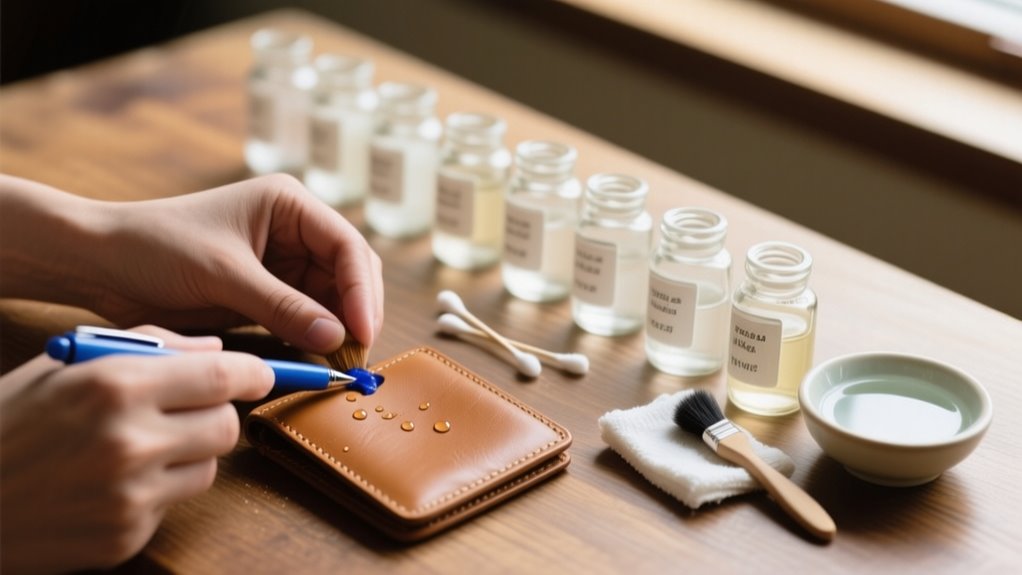
To remove pen ink from leather, first identify the stain size and leather type. Then quickly blot the ink without rubbing.
Test any cleaning solution on a hidden spot to avoid damage.
Use mild soap and water for light stains, and try rubbing alcohol or vinegar for tougher ones.
You can cautiously apply hairspray or acetone-free nail polish remover.
Gently scrub stubborn spots with a soft toothbrush, and condition the leather afterward.
If needed, professional help can guarantee safe removal.
Keep exploring to uncover detailed tips and tricks.
Assess Ink Stain Size and Leather Type
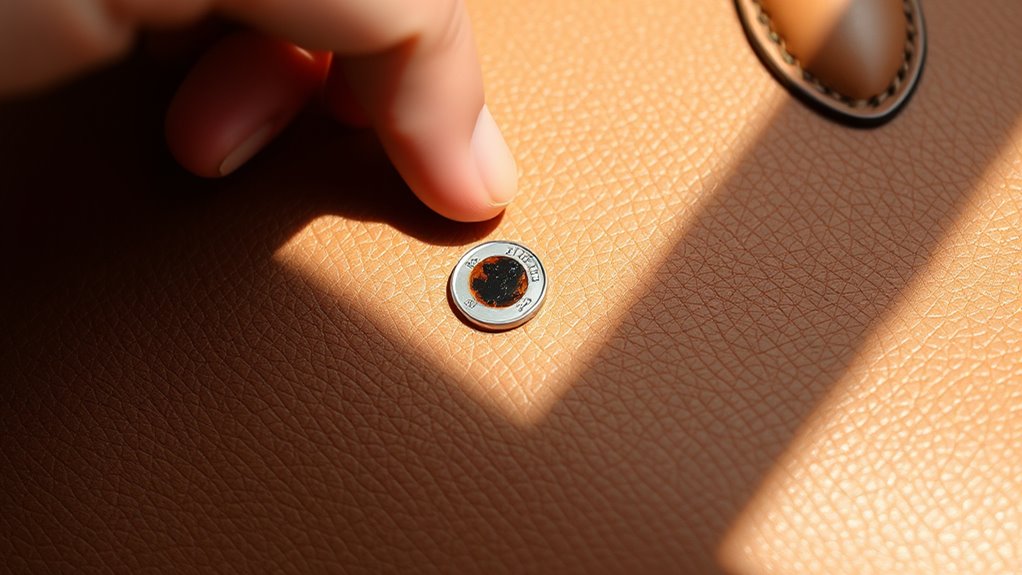
Before you begin removing pen ink from leather, start by evaluating the stain’s size and the type of leather you’re dealing with. The first step is to determine stain size, as small ink stains often require gentler cleaning methods, while larger stains might need more intensive treatment.
Next, identify the leather type, whether it’s full-grain, suede, or patent, since each leather surface reacts differently to cleaning products. Porous leather like suede absorbs ink more deeply, demanding specialized care to avoid surface damage.
Carefully examine the stain extent and stain location on your leather item to focus your cleaning efforts precisely and prevent spreading the ink further. Also, check the leather surface’s finish and condition before applying any cleaning method, ensuring you don’t cause discoloration or harm.
Blot Ink Immediately Without Rubbing
You need to act quickly and blot the ink with a soft, dry cloth to stop it from soaking deeper into the leather. Just press gently—don’t rub or scrub—so you don’t spread the stain around. Using a paper towel or soft cloth, work from the stain’s edge inward for the best results.
Act Quickly To Blot
The first few minutes after an ink spill are critical. Act quickly to blot the stain with a clean, dry cloth. You need to blot the ink stain immediately to prevent it from setting into the leather and causing permanent damage.
Use gentle dabbing motions rather than rubbing, because rubbing can spread the ink and push it deeper into the leather fibers. Acting fast helps remove ink right away, making initial stain removal much easier.
Avoid delays since dried ink can be stubborn and may require harsh chemicals that risk harming your leather. By focusing on blotting right away, you protect the clean leather surface and improve your chances of lifting the ink completely without spreading it further.
Quick, careful action is essential to prevent permanent damage to your leather item.
Use Soft Dry Cloth
After blotting the ink with a clean cloth, grab a soft, dry cloth to continue lifting the stain immediately. Use gentle dabbing motions to blot the ink stain carefully, avoiding any rubbing that could push the ink deeper into the leather surface.
This immediate action helps prevent spreading and soaks up excess ink effectively. Applying light pressure with your soft cloth supports ink removal without damaging the delicate leather.
Remember, using a dry cloth is essential at this stage. Moisture can cause the ink to set or spread further. By acting quickly and gently, you increase your chances to remove ink from leather successfully while preserving the material’s integrity.
Consistently blot with a soft cloth for the best results during this vital step.
Avoid Rubbing Or Scrubbing
Although it might be tempting to scrub away the ink, doing so only pushes it deeper into the leather, making removal much harder. You should always avoid rubbing and use gentle blotting instead.
Patience and a delicate technique with light pressure help lift the ink without damaging the leather or causing cracks. Use a soft, damp cloth to dab the stain carefully, which prevents ink spread and preserves the leather’s texture.
| Action | Tool Used | Benefit |
|---|---|---|
| Gentle blotting | Soft cloth | Ink lift |
| Dab with light pressure | Damp cloth | Prevent ink spread |
| Avoid rubbing | N/A | Preserve leather |
Test Cleaning Solutions on a Hidden Spot
Before you apply any cleaning solution to the visible ink stain, make sure you test it on a hidden spot of the leather first. This initial testing helps you avoid unexpected color change or damage to the leather.
Always test cleaning solutions on a hidden leather spot first to prevent color changes or damage.
Choose a small, inconspicuous area and apply a bit of the cleaning solution onto a soft cloth rather than directly on the leather. Gently dab the test spot and wait 15 to 30 minutes to observe any adverse reaction, such as discoloration or texture changes.
This patch test is essential for damage prevention, ensuring the cleaning solution is safe before treating the leather stain. Document your spot test results carefully. If you notice any negative effects, avoid using that solution on the visible stain.
Taking these precautions with a thorough patch test will protect your leather and improve the chances of successful ink removal without causing further harm.
Clean Light Ink Stains With Mild Soap and Water
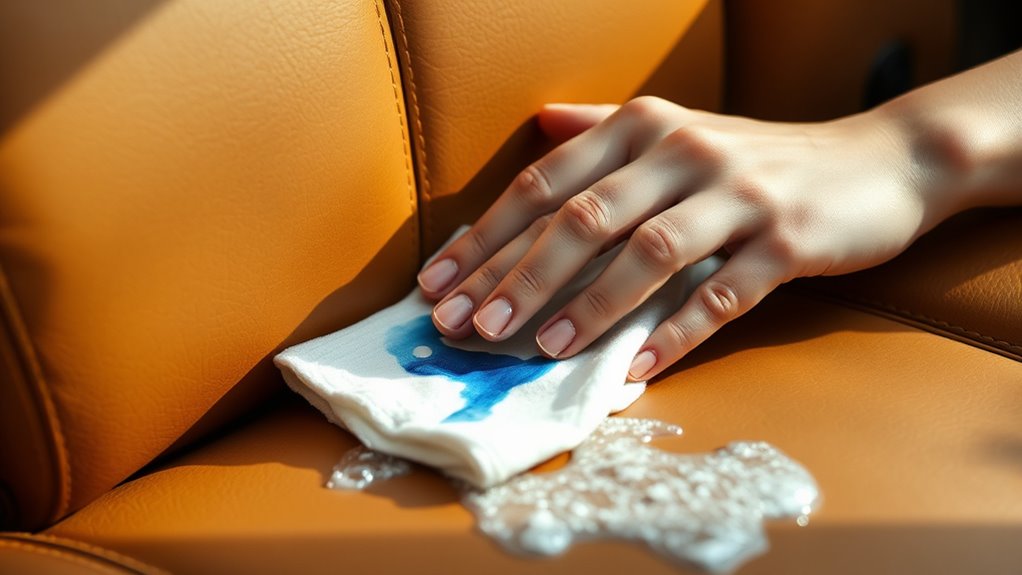
If you’re dealing with a light ink stain on your leather, mixing a small amount of mild dish soap or saddle soap with warm water creates a gentle cleaning solution that won’t damage the material. Dampen a soft cloth with this mild soap and water mixture, making sure it’s only lightly moist to avoid oversaturating the leather.
Use the damp cloth to gently clean the ink stains by rubbing in circular motions, starting from the outer edges and working inward to prevent spreading. Afterward, take a clean, damp cloth to wipe away any soap residue and loosened ink particles from the leather surface.
Finally, dry the area with a soft, dry cloth to remove moisture completely. This gentle cleaning method effectively lifts light ink stains without harsh chemicals, preserving the leather’s quality.
To keep your leather soft and prevent drying, follow up with a leather conditioner after cleaning.
Remove Tough Ink Stains Using Rubbing Alcohol or Vinegar
Light soap and water work well on minor ink stains, but tougher marks call for stronger solutions. When removing ink from leather, start by testing rubbing alcohol or a vinegar and water mixture on a hidden spot to avoid discoloration.
Light soap and water suit minor ink stains; tougher marks need testing stronger solutions like rubbing alcohol or vinegar first.
Dampen a cotton swab with rubbing alcohol and gently dab the ink stains, taking care not to saturate the leather. Alternatively, apply the vinegar and water mixture with a soft cloth to lift stubborn ink marks.
Let the solution sit for a few minutes to break down the stain before gentle blotting with a clean, soft cloth. After treatment, immediately wipe the area with a damp cloth to remove residue.
Finish by applying a leather conditioner to prevent dryness and maintain the leather’s softness. Always use gentle blotting techniques to avoid damaging the surface, ensuring effective stain removal without compromising the leather’s quality.
Clean Ink Naturally With Baking Soda Paste
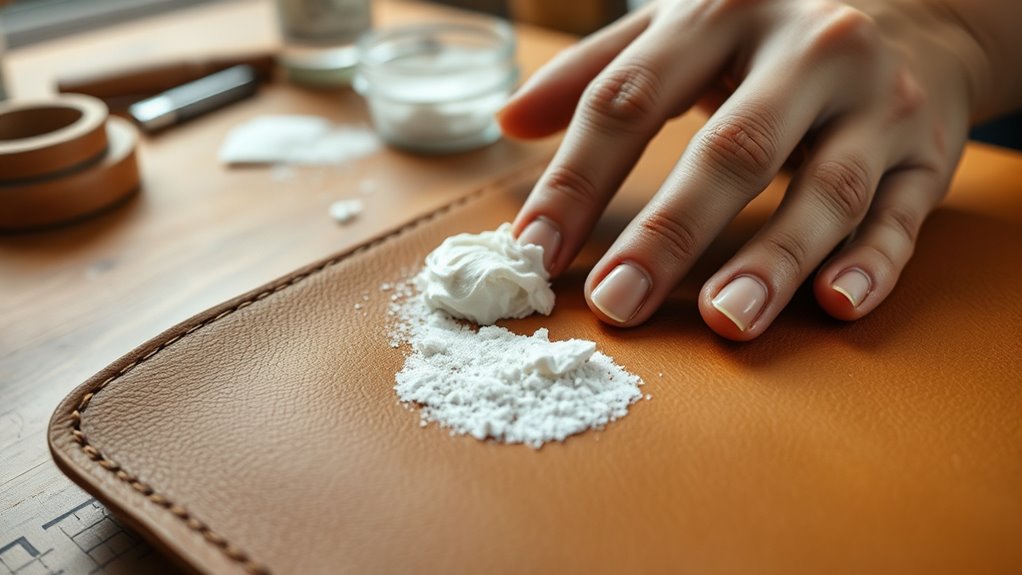
One effective way to remove pen ink from leather naturally is by using a baking soda paste. Start by mixing equal parts baking soda and water to create a mild paste perfect for ink stain removal.
For paste application, use a soft cloth or sponge to gently spread the mixture over the ink stain, taking care not to press too hard. Let the paste sit for 10-15 minutes to allow the baking soda to help lift the ink particles from the leather.
Next, perform a gentle scrub with a soft-bristled toothbrush or cloth to loosen the ink without harming the leather surface. Afterward, wipe away the residue with a damp cloth to remove the baking soda and lifted ink.
To complete your leather cleaning and stain treatment, apply a leather conditioner to restore moisture and keep the leather soft. This natural method offers an effective and safe way to tackle ink stains while preserving your leather’s quality.
Apply Hairspray or Nail Polish Remover Cautiously on Leather
Although hairspray and nail polish remover can effectively break down ink stains on leather, you need to use them cautiously to avoid damage. Hairspray contains alcohol, which helps dissolve ink residues, while nail polish remover should be acetone-free to protect the leather surface.
Before applying either, perform a patch test on a hidden area to ensure there’s no discoloration or adverse reaction. When ready, spray hairspray or apply nail polish remover sparingly and hold the can close to the stain.
Let it sit for 3-5 minutes, then gently blot the area to lift the ink without spreading it. Avoid rubbing, which can worsen the stain or harm the leather. After blotting, use a leather conditioner to restore moisture and prevent drying out.
This cautious approach helps you remove ink effectively while maintaining your leather’s appearance and durability.
Gently Scrub Stubborn Ink With a Soft Toothbrush
When stubborn ink won’t budge, gently scrubbing with a soft toothbrush can help lift it without harming your leather. Use a soft-bristled toothbrush dipped in a mild cleaning solution like leather cleaner or a vinegar-water mix.
This gentle agitation helps break down ink particles embedded deep in the leather pores. Move the toothbrush in small circular motions, applying light pressure to avoid scratching or deforming the leather surface. These circular motions work to loosen ink effectively while protecting your leather’s integrity.
After scrubbing stubborn ink, wipe the area with a damp cloth to remove loosened ink and residual cleaning agents. This guarantees no leftover solution harms the leather or attracts dirt.
Condition Leather to Restore Moisture After Cleaning
After removing ink from your leather, you’ll want to condition it to replenish the natural oils that cleaning can strip away. Conditioning leather after cleaning is essential to maintain its softness and flexibility. This helps prevent dryness or cracking.
Conditioning leather after ink removal restores natural oils, keeping it soft, flexible, and protected from damage.
Here’s how to properly condition the leather:
Choose a high-quality leather conditioner designed for your specific leather products. Test the conditioner on a hidden area to ensure it won’t alter the color or finish.
Apply a small amount evenly with a soft cloth to avoid over-saturating the surface. Let it sit for 10-15 minutes to fully absorb and restore moisture.
Buff gently to create a protective barrier that helps fend off future stains and damage.
When to Seek Professional Leather Cleaning Services
How do you know if it’s time to call in a professional for your leather ink stain? If DIY methods fail after several tries, it’s wise to seek professional leather cleaning. Professionals use specialized equipment to tackle deep or ingrained ink stains without causing further damage.
Also, if your leather is valuable or antique, consulting experts prevents accidental harm. Large ink stains spreading over significant areas or signs of discoloration or cracking after cleaning attempts are clear signals to get professional services.
| Situation | Risk Level | Recommended Action |
|---|---|---|
| Deep or ingrained ink stains | High | Professional leather cleaning |
| Valuable or antique leather | Very High | Avoid DIY, hire professionals |
| Large ink stains or damage | High | Seek professional services |
Don’t risk worsening the condition. Professional help ensures safe, effective ink removal.
Frequently Asked Questions
Can Pen Ink Damage Leather Permanently if Left Untreated?
Yes, pen ink can permanently damage leather if left untreated. The durability and quality of the ink affect how deeply it penetrates the leather’s surface porosity.
High ink absorption rates increase the ink’s penetration depth, making stain removal difficult. Leather stain resistance varies depending on the type of leather, so some leathers absorb ink faster than others.
The longer the ink takes to dry, the more it bonds with the leather, reducing your chances of cleaning it before permanent discoloration sets in.
What Types of Leather Are Most Resistant to Ink Stains?
You’ll find full-grain and patent leather most resistant to ink stains thanks to their dense surfaces and protective coatings. When practicing leather care, focus on stain prevention by using cleaning solutions suited for these types.
Always perform stain testing before applying any product. Understanding ink types and using proper cleaning tools helps maintain your leather’s appearance.
Regular leather maintenance slows leather aging and keeps surfaces less prone to stubborn stains.
How Often Should Leather Be Conditioned After Cleaning Ink Stains?
You should condition your leather every 3 to 6 months after cleaning ink stains to support leather maintenance and stain prevention. If you use intensive cleaning techniques often, condition more frequently, every 4 to 8 weeks, to aid moisture control and texture preservation.
Proper conditioning helps with color restoration and protects against leather aging. Always apply protective coatings as recommended, and follow storage tips to keep your leather supple and looking great.
Are There Any Ink Types That Cannot Be Removed From Leather?
Yes, some ink types can’t be removed from leather easily. Permanent ink and metallic ink have high ink durability and low ink solubility, making them tough to erase. Gel pen ink and fountain pen ink vary, but their ink composition often leads to deep ink absorption, which complicates removal.
Erasable ink is usually easier to tackle. Understanding the ink composition and how it interacts with leather helps you decide if removal is possible or if professional help is needed.
Can Ink Removal Methods Affect Leather Color or Texture?
Yes, ink removal methods can affect leather color or texture. When you clean leather, ink absorption and stain penetration vary, so using the right cleaning techniques is essential.
Harsh products may damage the surface finish or clash with dye compatibility, causing fading or patchiness. Improper methods accelerate leather aging and weaken its structure.
Always prioritize product safety and test solutions first to prevent stains and protect your leather’s original look and feel.
Conclusion
Removing pen ink from leather can feel frustrating yet rewarding. While the stain challenges your patience, your careful, gentle cleaning revives the leather’s beauty.
You move from immediate blotting to cautious scrubbing, each step balancing damage and restoration. Though ink may seem permanent, your thoughtful approach proves otherwise.
Sometimes, despite your best efforts, professional help becomes the wiser choice, reminding you that some battles are best left to experts.
Leave a Reply