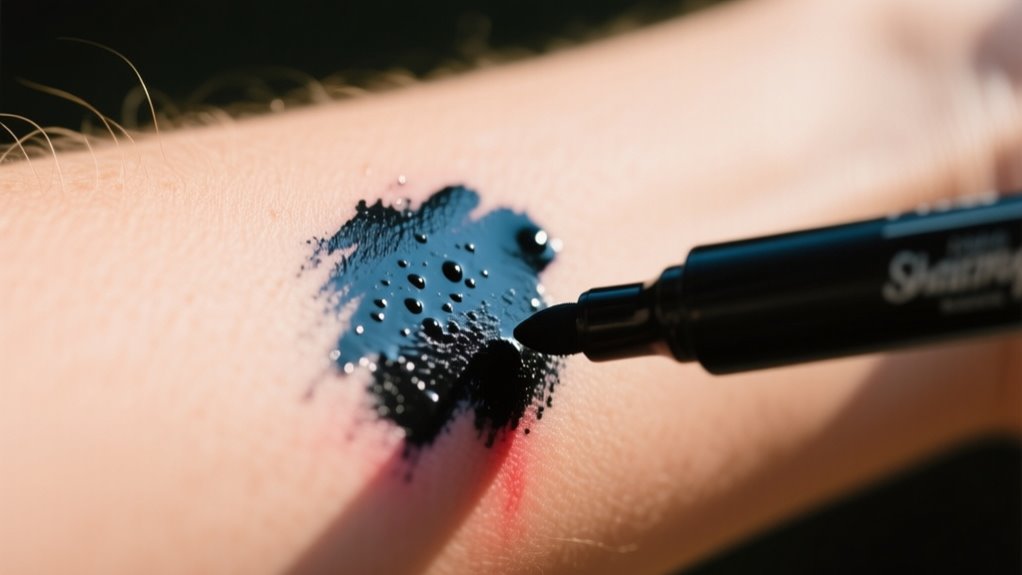
You can get ink poisoning from a Sharpie if its solvents, like xylene or toluene, soak into your skin, especially through cuts or wounds.
Prolonged or repeated contact increases the chance of these chemicals entering your bloodstream, which might cause irritation or more serious reactions.
While brief contact is usually safe, damaged skin makes absorption easier and riskier.
If you want to understand how to protect yourself and handle exposure safely, there’s more important information ahead.
What Is Sharpie Ink Made Of And Is It Toxic On Skin?
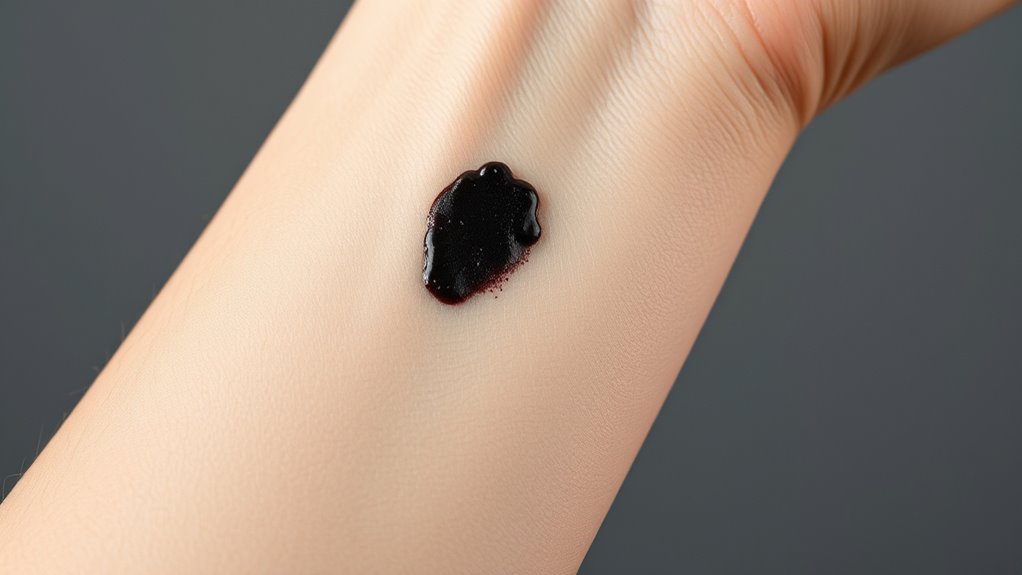
Although Sharpie ink contains solvents like xylene or toluene along with resins and pigments to create permanent marks, it’s formulated to be non-toxic for brief skin contact. You’ll find that Sharpie ink’s ingredients are chosen to produce vibrant, long-lasting lines rather than to be safe for skin use.
While it’s generally not toxic on skin during short exposure, the company doesn’t test or recommend these markers for direct skin application or body art. If you get Sharpie ink on your skin, it’s usually harmless, but extended or repeated contact can cause irritation.
Some people with sensitive skin may experience allergic reactions due to certain ingredients in the ink. Keep in mind that Sharpie ink isn’t meant to be ingested or applied to broken skin, as that increases the risk of toxicity or irritation.
How Can Sharpie Ink Cause Health Risks Or Reactions?
If you come into frequent or prolonged contact with Sharpie ink, you might experience skin irritation or allergic reactions, especially if you have sensitive skin. While Sharpie ink is generally non-toxic, repeated exposure can lead to discomfort and sometimes more serious skin issues.
Here’s how Sharpie ink might cause health risks or reactions:
- Contains solvents like xylene that can dry out your skin, causing redness or dermatitis.
- Minimal absorption occurs through intact skin, but open cuts can let chemicals enter your bloodstream.
- Prolonged exposure may trigger allergic reactions or dermatitis in sensitive individuals.
- Avoid unnecessary drawing on skin and wash ink off promptly to reduce risk.
Being mindful of these factors helps you prevent skin irritation and allergic reactions from Sharpie ink, keeping your skin healthier and safer.
Can Sharpie Ink Cause Skin Irritation Or Allergies?
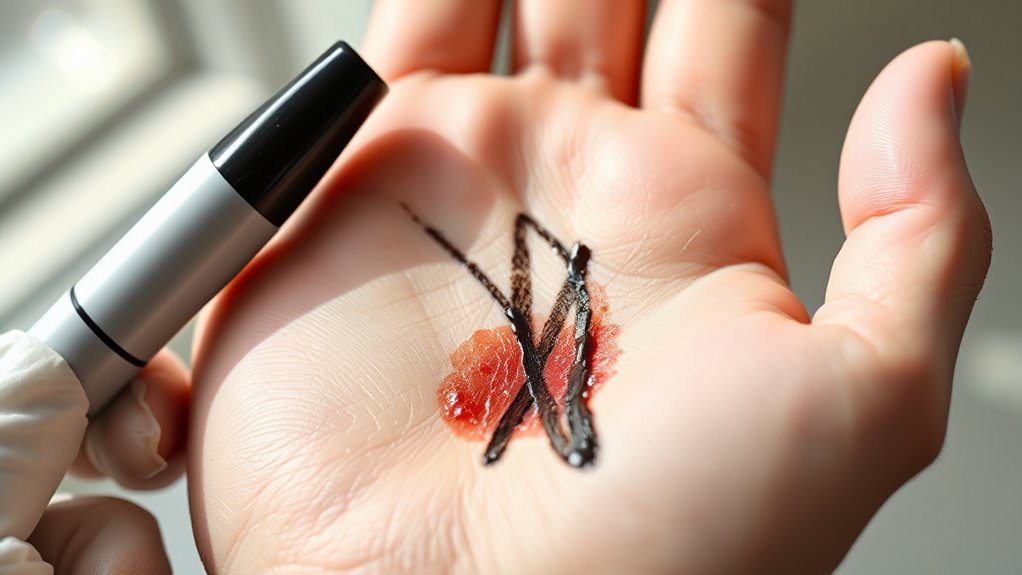
You might notice some skin irritation or even an allergic reaction if Sharpie ink stays on your skin for too long, especially if your skin is sensitive or broken. Keep an eye out for redness, itching, or a rash—these could be signs that your skin is reacting.
To avoid any sensitivity, it’s a good idea to wash the ink off as soon as you can and try not to let it sit on your skin for extended periods.
Skin Irritation Risks
While Sharpie ink is generally non-toxic and safe for most people, it can cause mild skin irritation or allergic reactions in some individuals. This is especially true with prolonged or repeated contact. If you have sensitive skin or pre-existing conditions, be cautious when using Sharpies on your skin. Here’s what you should know about skin irritation risks:
Prolonged contact with Sharpie ink can lead to redness or mild skin irritation. Allergic reactions, though rare, may cause itching, swelling, or rash. Applying ink on broken or irritated skin increases the chance of irritation or allergic responses.
People with allergies or dermatitis might experience heightened skin sensitivity to Sharpie ink. To minimize skin irritation risks, avoid excessive or repeated exposure and never apply Sharpie ink on damaged skin.
Allergic Reaction Signs
How can you tell if Sharpie ink is causing an allergic reaction? If you notice skin irritation like redness, swelling, or itching where the ink touched your skin, it’s a sign. Sharpie ink can trigger allergic reactions, especially if you have sensitive skin or allergies to certain dyes.
Repeated exposure increases the risk, and severe reactions such as blistering or hives may occur.
| Symptom | Description |
|---|---|
| Redness | Inflamed skin at contact site |
| Itching | Persistent urge to scratch |
| Rash | Raised, discolored skin patches |
| Blistering/Hives | Severe reaction with swelling |
If you spot these signs after using Sharpie ink, it’s likely an allergic reaction or skin irritation.
Preventing Sharpie Sensitivity
Recognizing allergic reactions to Sharpie ink is just the first step. Taking measures to prevent sensitivity can protect your skin from irritation or more severe allergic responses. Sharpie ink contains solvents like xylene that may trigger skin irritation or allergic reactions, especially with repeated contact.
To minimize risks, follow these tips:
- Avoid using Sharpie ink on broken or irritated skin to prevent worsening sensitivity.
- Test a small skin area before extensive use to check for allergic reactions.
- Limit prolonged exposure to Sharpie ink to reduce chances of dermatitis.
- Wash skin promptly after contact to remove ink residues and reduce irritation.
Is Drawing On Skin With Sharpies Risky?
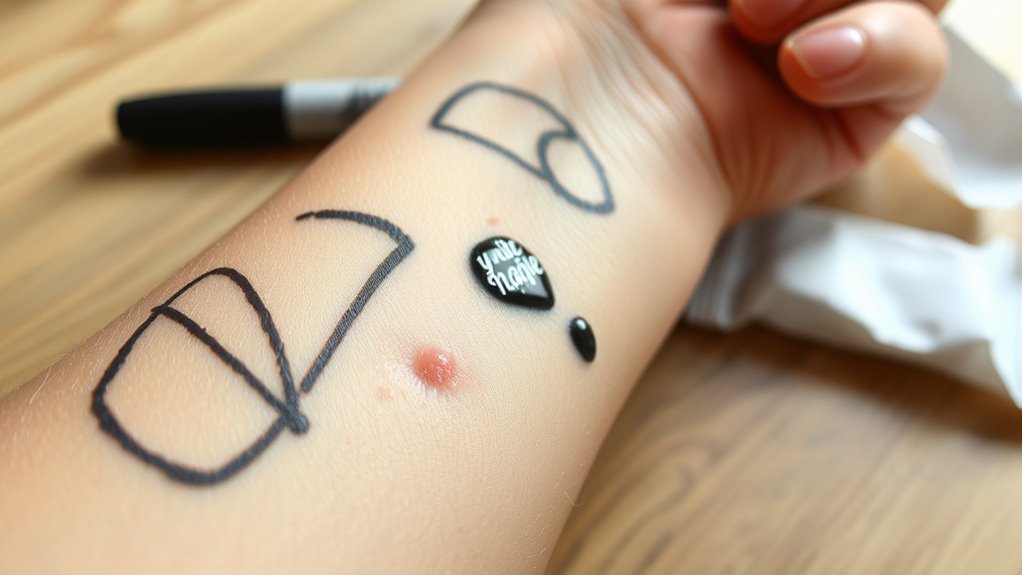
You might be wondering if drawing on your skin with Sharpies is risky. Well, the ink is generally safe and non-toxic, so a little doodling now and then isn’t usually a problem. But if you use them a lot or put Sharpie ink on broken skin, it could cause irritation or other health issues.
Ink Safety On Skin
Wondering if drawing on your skin with Sharpies is risky? Generally, Sharpie ink is non-toxic and designed for paper, making casual skin drawing low risk. When it comes to ink safety, here’s what you should know:
Sharpie ink can temporarily stain your skin but doesn’t cause poisoning or lasting harm. Skin absorption is minimal unless you draw on open cuts or wounds, which increases chemical exposure risks.
Prolonged or repeated use might irritate sensitive skin or cause allergic reactions. Avoid ingesting Sharpie ink or applying it heavily on broken skin to minimize potential health concerns.
Potential Health Concerns
Although Sharpie ink is non-toxic and safe for occasional skin use, drawing on your skin frequently or in large amounts can cause irritation or allergic reactions, especially if you have sensitive skin. Sharpie ink contains solvents like xylene, which, if absorbed through broken skin or open wounds, may pose health risks.
While ink poisoning from typical skin contact is rare, ingesting large amounts or covering extensive skin areas increases the chance of chemical absorption and potential toxicity. You might experience skin irritation, redness, or itching after repeated exposure.
To minimize risk, avoid applying Sharpie ink on damaged skin and limit frequent use. Overall, occasional use is generally safe, but being cautious about solvents and skin condition helps prevent unwanted health concerns linked to Sharpie ink.
Best Practices For Use
When using Sharpies on your skin, it’s important to remember that while the ink is non-toxic, frequent or prolonged application can lead to irritation or allergic reactions. This is especially true if you have sensitive skin. To minimize skin irritation and safely enjoy Sharpie ink, follow these best practices:
Avoid drawing on broken or open skin to prevent ink absorption and potential health risks. Limit how often and how long you apply Sharpie ink to reduce allergic reactions.
Wash off Sharpie ink promptly using soap and water to prevent staining and irritation. Don’t ingest Sharpie ink by biting or swallowing, as the solvents can be harmful in large amounts.
What Happens If Sharpie Ink Gets On Broken Or Damaged Skin?
If you get Sharpie ink on broken or damaged skin, it’s usually not a cause for serious concern since the ink is generally non-toxic. However, broken skin allows for easier chemical absorption, so you might absorb some solvents from the ink into your body.
While small amounts are unlikely to cause harm, prolonged contact or large quantities increase the risk of irritation or minor reactions. To minimize the chance of chemical absorption and ink in your skin, you should clean the area promptly with soap and water.
| Factor | What You Should Know |
|---|---|
| Ink Toxicity | Sharpie ink is generally non-toxic |
| Broken Skin | Absorbs chemicals more readily |
| Chemical Absorption | Increased risk with prolonged contact |
Taking quick action and keeping the wound clean helps prevent potential irritation or systemic effects, though these remain rare.
What Symptoms Indicate A Reaction Or Poisoning From Sharpie Ink?
Sharpie ink usually only causes temporary skin staining, but you should watch for signs like redness, irritation, or a rash that could indicate a reaction. Most people don’t experience serious issues from Sharpie ink on their skin, but if you notice any discomfort, it’s important to recognize potential skin reaction or poisoning symptoms early.
Look out for these signs:
- Persistent redness or swelling around the inked area
- Itching or burning sensation indicating irritation
- Development of a rash or blistering suggesting allergic dermatitis
- Unusual sensitivity or pain at the contact site
Serious poisoning symptoms from Sharpie ink on intact skin are extremely rare. However, if you have broken skin or prolonged exposure, the risk of a skin reaction increases. If you suspect any severe symptoms or your condition worsens, seek medical advice promptly to rule out complications.
How To Clean Sharpie Ink Off Skin Safely
If you happen to get Sharpie ink on your skin, just start by washing it gently with some soap and warm water. Sometimes that’s all it takes! But if the stain is a bit stubborn, you can try using rubbing alcohol or hand sanitizer. Just be careful not to use any harsh chemicals because they might irritate your skin.
Once you’ve cleaned it off, don’t forget to moisturize. Keeping your skin healthy and preventing dryness is super important after using those kinds of products.
Safe Removal Methods
When you need to remove ink from your skin, start by washing the area gently with soap and warm water. This helps lift the stain without causing irritation. For safe removal of Sharpie ink, follow these tips:
Use alcohol-based products like rubbing alcohol or hand sanitizer to break down ink pigments effectively. You can also apply acetone-based nail polish remover cautiously since it can cause skin irritation.
Avoid abrasive scrubbing tools that might damage your skin while trying to remove the ink. After cleaning, moisturize the skin with lotion to soothe dryness or irritation caused during removal.
Household Cleaning Solutions
Although ink stains can be stubborn, you can safely remove Sharpie ink from your skin using common household items. Start by washing the area with soap and water to break down the ink’s pigments.
If the stain lingers, dab some rubbing alcohol or hand sanitizer on a cloth and gently rub the spot; these household cleaning solutions dissolve ink effectively. You can also apply baby oil, petroleum jelly, or olive oil to loosen the stain without harsh scrubbing.
Avoid using toxic or harsh chemicals like bleach or acetone because they can irritate or damage your skin. For persistent marks, try gently exfoliating with a soft scrub or a baking soda paste. These methods clean ink safely without risking skin harm.
Skin Care Tips
Since Sharpie ink is designed to be non-toxic and skin-safe, you can remove it effectively using simple methods. Even though the ink isn’t toxic, you should avoid getting ink in your eye because it can cause irritation. To clean Sharpie ink off your skin safely, try these tips:
Wash the area with soap and warm water to remove most of the ink. Use rubbing alcohol or hand sanitizer to break down stubborn stains gently. Scrub with a soft cloth or gentle exfoliating scrub to lift ink without harming your skin. Avoid harsh solvents like acetone or bleach, as they can irritate or damage your skin.
If any ink lingers, just apply moisturizer to soothe your skin and reduce staining safely.
When To Seek Medical Help For Sharpie Ink Exposure?
If Sharpie ink gets into your eyes or causes persistent redness and irritation, you should seek medical help immediately. While Sharpie ink on skin is generally harmless and only causes temporary staining, certain situations require prompt attention.
If you notice an allergic skin rash or signs of infection after skin contact with the ink, contact a healthcare professional right away. Also, if you accidentally ingest a large amount of Sharpie ink or experience symptoms like nausea or dizziness, seek medical help promptly.
Unusual symptoms such as difficulty breathing, swelling, or severe discomfort after exposure indicate a serious reaction, and you should get emergency care immediately. Most cases of Sharpie ink exposure resolve without complications, but knowing when to seek medical help guarantees your safety and well-being.
Don’t hesitate to reach out to a doctor if you’re unsure about your symptoms following Sharpie ink contact.
Are Sharpie Markers Safe For Children’s Skin?
While Sharpie markers aren’t designed for use on skin, you might wonder if they’re safe for your child’s skin. Sharpie markers contain dyes and solvents that are generally non-toxic, but they’re not labeled as skin-safe products. The manufacturer clearly states these markers aren’t intended for skin use and haven’t undergone dermatological testing for skin safety.
Sharpie markers contain non-toxic dyes but are not tested or labeled safe for use on skin.
Here’s what you should know about Sharpie markers and toxic ink on kids’ skin:
- Prolonged or frequent use may cause irritation or allergic reactions in sensitive children.
- Accidental skin contact is usually harmless but repeated exposure increases risk.
- Ingesting or large amounts of ink on skin could pose health risks, though rare.
- It’s best to choose markers specifically designed for children’s skin to avoid potential issues.
Understanding these points helps you weigh the risks when Sharpie markers touch your child’s skin and prioritize skin safety.
How To Prevent Reactions Or Risks From Sharpie Ink On Skin
To keep your child safe when Sharpie ink comes into contact with their skin, you’ll want to take simple but effective precautions. First, always choose non-toxic, water-based Sharpie markers designed to minimize skin reactions.
Avoid drawing on open wounds, broken skin, or bug bites since damaged skin absorbs chemicals more easily. When your child has Sharpie ink on their skin, promptly wash with soap and water to remove the ink and reduce prolonged exposure that could cause irritation.
Limit how often and how long your child’s skin is marked to further reduce the risk of allergic reactions or skin irritation. By selecting skin-safe, non-toxic markers and practicing good hygiene, you can safely enjoy creative activities without worrying about ink poisoning or adverse skin effects.
Consistently following these steps helps guarantee your child’s skin stays healthy while using Sharpies.
Frequently Asked Questions
Can Sharpie Ink Transfer to Clothes or Bedding From Skin?
Yes, Sharpie ink can transfer to your clothes or bedding from your skin. If the ink is still wet or your skin is sweaty, ink transfer becomes more likely, causing clothing contamination and bedding stains.
Rubbing or friction makes it easier for the ink to spread. To avoid this, you should let the ink dry completely or cover the area with a barrier like clothing or a towel to prevent any unwanted stains on your fabrics.
Does Sharpie Ink Stain Skin Permanently?
No, Sharpie ink doesn’t stain your skin permanently. While the chemical composition allows ink absorption into the outer skin layers, it only causes temporary skin discoloration.
Your skin naturally sheds cells, so the stain fades in a few days. If you want to speed up the process, you can use soap or alcohol-based cleansers to remove leftover ink.
Permanent staining won’t happen because Sharpie ink isn’t designed to absorb deeply or alter your skin long-term.
Are There Differences Between Sharpie Ink and Other Marker Inks?
Yes, there are differences between Sharpie ink and other marker inks. You’ll find that Sharpie ink’s composition includes solvents like xylene, which increase its chemical toxicity compared to water-based markers. This affects ink absorption through your skin, potentially causing more irritation.
Other markers might use dye-based or less toxic inks, making them safer for skin contact. So, always consider the ink composition and toxicity before using markers on skin.
Can Sharpie Ink Affect Tattoos or Permanent Makeup?
You might wonder if Sharpie ink affects tattoos or permanent makeup. The truth is, Sharpie ink’s chemical composition isn’t designed for skin absorption like professional tattoo ink.
If you apply it over tattoos or makeup, it can cause skin reactions or irritate the area. Since Sharpie ink contains solvents and dyes not meant for deep skin layers, it could interfere with the original pigments.
This might alter their appearance or cause unwanted skin issues.
Is It Safe to Use Sharpie Ink for Temporary Body Art?
It’s not safe to use Sharpie ink for temporary body art, even though it’s marketed as a non-toxic marker. Sharpie ink composition isn’t designed for prolonged skin contact, and temporary skin safety isn’t guaranteed.
While brief use might not cause harm, repeated or large-area application can irritate your skin or trigger allergic reactions. For safe temporary body art, choose products specifically formulated and tested for skin use instead.
Conclusion
While Sharpie ink is generally safe on intact skin, about 5% of people may experience allergic reactions or irritation. You should avoid using Sharpies on broken skin, as toxins can enter the bloodstream more easily.
If you notice redness, swelling, or discomfort, clean the area and consider medical help. To stay safe, always wash Sharpie ink off your skin promptly, especially when using it on children, to minimize any health risks or allergic reactions.
Leave a Reply