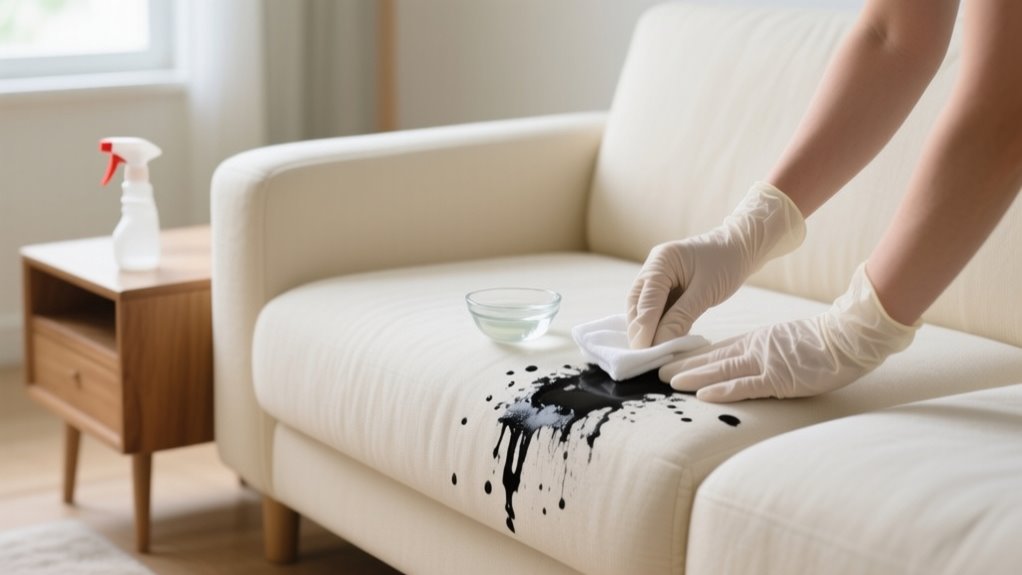
To get ink out of upholstery in 7 easy steps, start by blotting excess ink immediately without rubbing to prevent spreading.
Next, test cleaning methods on a hidden spot.
Pick a cleaner suited to your fabric type and gently dab it on the stain.
Rinse carefully with a damp cloth to remove residue.
Then, dry the area thoroughly with a soft towel and air circulation.
Know when to call a professional for tough or delicate stains.
Keep following for a detailed, step-by-step guide.
Blot Excess Ink Immediately To Prevent Spread
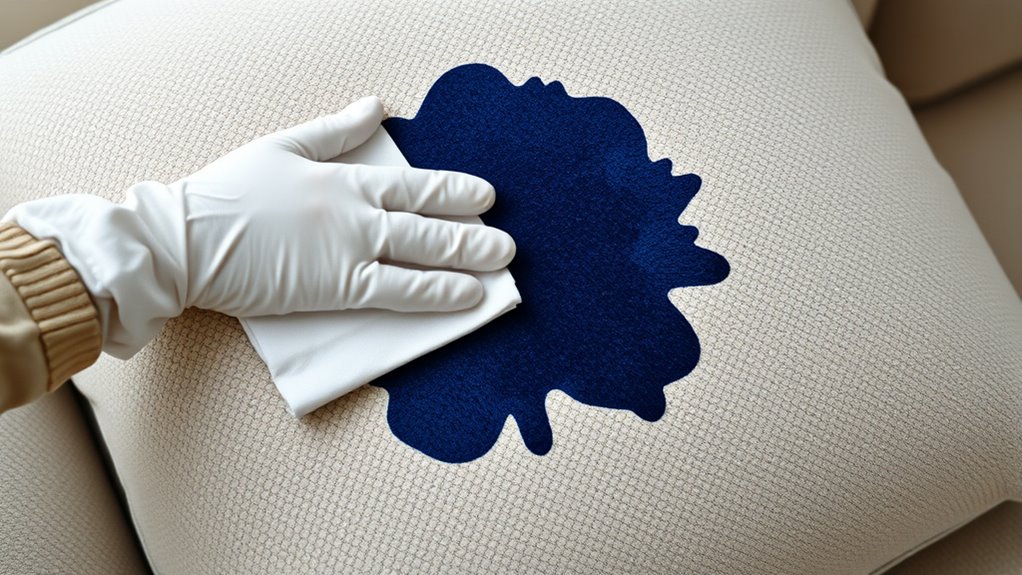
If you catch the ink stain early, blot it immediately with a clean, dry cloth or paper towel to stop it from spreading. When dealing with ink on upholstery, press gently with the cloth, using light tampon movements. This helps absorb excess ink without pushing it deeper into the fabric.
Avoid rubbing or scrubbing, as that only drives the ink further into the upholstery fibers, making removal much harder. Act quickly because fresh ink stains are far easier to lift than dried or set-in ones.
Make sure to replace the blotting cloth or paper towel regularly; using a saturated cloth won’t absorb more ink. By blotting carefully and promptly, you prevent the ink stain from spreading and set yourself up for more effective cleaning later.
Test Cleaning Methods On Your Upholstery Fabric
Before applying any cleaning solution to your upholstery, you should always test it on a hidden area to verify it won’t damage or discolor the fabric. Start by choosing a discreet spot, like the underside or back of a cushion, where a patch test won’t be noticeable.
Always test cleaning solutions on a hidden upholstery spot to prevent damage or discoloration.
Use a small cloth or cotton swab to gently apply a bit of the cleaner you plan to use. Wait at least 15 minutes to watch for any discoloration, fabric damage, or texture changes. This waiting period is essential because some reactions aren’t immediate.
Make sure the patch area dries completely before deciding if it’s safe to proceed. If you notice any discoloration or weakening, avoid using that cleaner on the stained area.
Keeping a record of which solutions pass your test helps you confidently tackle ink stains without risking further damage. This careful testing step ensures your upholstery stays intact while you clean.
Pick The Best Cleaner For Your Upholstery
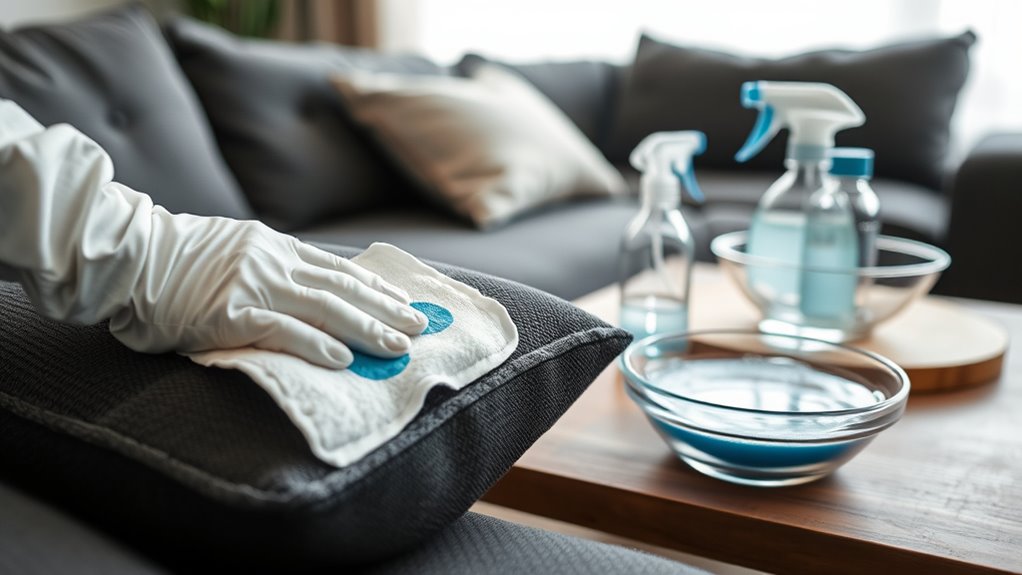
First, figure out what type of fabric your upholstery is made from and take a look at its care label. This will help you pick the right cleaner. It’s important to match your cleaner carefully—go for gentle solutions if the fabric is delicate, and stronger ones if it’s more durable.
Also, always test the cleaner on a hidden spot first. This way, you can avoid any damage or discoloration before applying it to the whole piece.
Identify Fabric Type
Because each upholstery fabric reacts differently to cleaning products, you need to identify your fabric type to choose the best cleaner. Start by checking the manufacturer’s care label or cleaning code. W means water-based cleaners, S means solvent-based, S-W means either, and X means professional cleaning only.
For example, velvet is sensitive to moisture, so avoid water-based cleaners. Microfiber resists stains and handles gentle cleaning well. Leather needs special products to prevent cracking, and suede or delicate fabrics often require professional care.
Before applying any cleaner, always test it on a hidden fabric area to confirm it won’t cause discoloration or damage. This simple test protects your upholstery and helps you select the safest, most effective cleaning method for your specific fabric.
Match Cleaner Carefully
Although selecting the right cleaner might seem straightforward, you need to match it carefully to your upholstery fabric to avoid damage. Start by identifying the fabric type and consulting its care label to choose an appropriate cleaning agent.
For example, alcohol-based solutions like isopropyl alcohol or hairspray can work well on some fabrics for ink removal, but they’re not safe on delicate materials like silk or velvet. Always avoid harsh chemicals like acetone, as they can cause irreversible damage or discoloration.
While testing is essential, that’s a separate step; here, focus on picking a cleaner that suits your fabric’s needs. If you’re unsure about the fabric or cleaner, it’s best to seek professional cleaning to prevent unwanted damage during your ink stain removal.
Test Cleaner First
Before applying any cleaner to your upholstery, always test it on a hidden spot to make certain it won’t cause discoloration or damage. Find a small, inconspicuous area and apply a bit of the cleaner. Then wait 5-10 minutes to see if the fabric reacts negatively.
Different materials need different cleaners. Synthetics often handle alcohol-based solutions well, while delicate fabrics like silk or velvet require gentler options. Check your upholstery’s care label or cleaning code to guide your choice.
This test step is vital to avoid permanent stains or damage. By testing the cleaner first, you protect your upholstery and increase the chances of successfully removing the ink without harming the fabric. Always prioritize this simple but essential precaution before tackling any stain.
Gently Dab Cleaning Solutions Onto The Stain
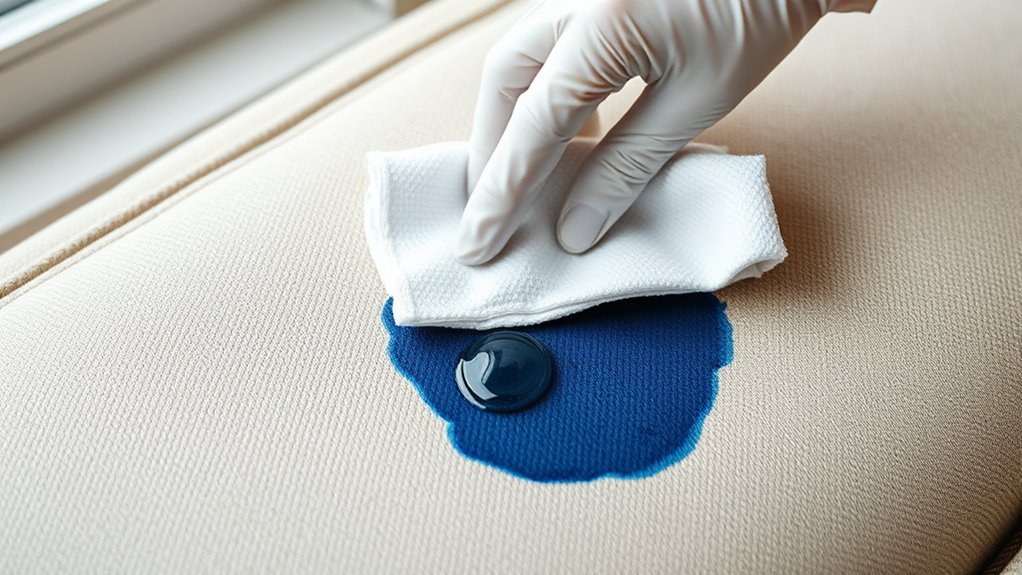
First, pick a cleaning solution that’s safe for your upholstery. It’s a good idea to test it on a hidden spot first, just to make sure it won’t cause any damage. Then, take a clean cloth or a cotton swab and gently dab the solution onto the ink stain. Avoid rubbing the stain—just softly dab it. This way, you can lift the ink without spreading it or harming the fabric.
Choose Suitable Cleaning Solutions
When you choose a cleaning solution, gently dabbing it onto the ink stain with a soft cloth or cotton swab helps prevent the ink from spreading further. For effective ink stain removal on upholstery, select solutions like rubbing alcohol, diluted vinegar, or mild soap.
Apply these sparingly to avoid soaking the fabric, which can cause damage. Always test your chosen cleaning solutions on a hidden area first to ensure they won’t discolor or weaken the upholstery.
Dab Without Rubbing
Although it may be tempting to rub the stain, you should gently dab the cleaning solution onto the ink instead. Dab with light, tapping motions using a clean cloth or cotton swab. This gentle approach lifts ink without spreading or embedding the stain deeper.
Always work from the outer edges inward to contain the ink. Apply small amounts of cleaning solution to avoid over-saturating the fabric. Patience is key; repeated gentle dabbing works better than rubbing and protects your upholstery’s integrity.
| Step | Action | Purpose |
|---|---|---|
| 1 | Apply solution lightly | Prevent over-saturation |
| 2 | Dab outer edge gently | Contain the stain |
| 3 | Move inward gradually | Avoid enlarging the stain |
| 4 | Use tapping motions | Lift ink particles |
| 5 | Repeat patiently | Preserve fabric condition |
Test On Hidden Areas
Before you gently dab cleaning solutions onto the ink stain, you should always test the product on a hidden area of your upholstery. This patch test helps prevent any unexpected damage or discoloration.
Follow these steps:
- Apply a small amount of the cleaning solution with a soft cloth onto an inconspicuous patch.
- Wait 5 to 10 minutes to see if any discoloration, bleeding, or texture changes occur.
- Confirm the tested area is completely dry before proceeding.
If the fabric shows signs of damage, stop using the product right away. This simple test protects your upholstery and makes sure you’re using a safe method to treat the visible ink stain without causing more harm. Always prioritize this step before tackling the main stain.
Rinse The Area Carefully To Remove Residue
Since leftover ink and cleaning solution can damage your upholstery if not properly removed, you’ll want to rinse the area carefully using a damp cloth soaked in lukewarm water. Gently blot the stained spot with the damp cloth to lift away any residual ink and cleaning agents. Avoid soaking the fabric; instead, lightly dab to prevent water damage or moisture buildup.
Use a separate clean, damp cloth to repeatedly blot the area, ensuring all residue is removed from the upholstery fibers. This step is vital to stop ink and chemicals from settling deeper into the fabric. Remember to test this rinsing method on a hidden section first to check for any adverse reactions like discoloration.
Once you’ve successfully rinsed the area and removed the residue, press a dry towel lightly against the upholstery to absorb excess moisture. This careful rinsing process helps protect your upholstery while preparing it for drying.
Dry Upholstery After Ink Removal
When you’ve finished rinsing the ink stain, gently blot the upholstery with a dry, clean towel to soak up any leftover moisture. Press a dry microfiber cloth or soft towel lightly on the area, avoiding rubbing to prevent re-soaking the fabric. Proper drying is essential to protect your upholstery from damage or mold.
To dry upholstery effectively after ink removal, follow these steps:
- Air dry the area in a well-ventilated room, steering clear of direct sunlight that can cause fading or harm the fabric.
- Use a fan or a hairdryer on a cool setting to speed up drying without risking heat damage.
- Ensure the cleaned upholstery is completely dry before using the furniture again to avoid lingering moisture issues.
Know When To Call A Professional For Ink Stains
Although many ink stains can be tackled at home, you should call a professional if the stain is old, deeply set, or on delicate fabrics like silk or velvet. Professional cleaning is your best bet for stubborn stains that DIY methods can’t remove.
Delicate fabrics require specialized care that only trained experts can provide without causing damage. If you’ve tried multiple treatments and the stain persists, it’s time to seek expert help. Large or extensive ink stains, especially on valuable or antique upholstery, also demand professional attention to prevent further harm.
Furthermore, if you notice any discoloration, fabric damage, or worsening of the stain despite your efforts, don’t hesitate to consult a professional. Taking this step ensures the stain is treated safely and effectively, preserving your upholstery’s appearance and integrity. Sometimes, knowing when to call in the pros saves you time, effort, and potential costly damage.
Frequently Asked Questions
Can Ink Stains Cause Permanent Damage to Upholstery Fabric?
Yes, ink stains can cause permanent damage to upholstery fabric if you don’t act quickly. You should always do a colorfast test before trying any stain prevention method to avoid worsening the damage.
Keep fabric considerations in mind. Delicate materials like silk or velvet are more vulnerable to lasting stains. By addressing ink spills promptly and carefully, you’ll protect your upholstery and keep it looking its best over time.
Are All Ink Types Equally Difficult to Remove From Upholstery?
Not all ink types are equally hard to remove from upholstery. It’s like peeling layers of paint; some come off easily, while others cling tight. Your success depends on ink absorption, stain color, and fabric texture.
Water-based inks absorb less and fade faster. Permanent markers bond deeply, making removal tough. Delicate fabrics soak ink differently, so you’ll need to adjust your cleaning approach based on these factors for the best results.
How Long Should I Wait Before Attempting to Clean an Ink Stain?
You should act quickly for the best stain removal techniques, ideally within minutes of the ink spill. However, if you can’t clean it right away, wait until the ink is completely dry before treating it.
Cleaning timeframes depend on ink absorption factors like fabric type and ink composition. Acting too late risks setting the stain, making it harder to remove. So, balance prompt action with letting the ink dry fully if needed.
Can Homemade Cleaning Solutions Damage Upholstery Fibers?
About 60% of DIY remedies for cleaning upholstery can harm fabric safety if used improperly. Yes, homemade cleaning solutions can damage upholstery fibers, especially if they contain harsh acids, alkalis, or abrasive ingredients.
To guarantee stain prevention without ruining your fabric, always test solutions on a hidden spot first. Avoid strong chemicals that strip natural oils, and choose pH-balanced cleaners to protect your upholstery’s color and texture.
Is It Safe to Use Commercial Ink Removers on All Fabric Types?
No, it’s not safe to use commercial products on all fabric types. You need to take fabric compatibility into account carefully because some chemicals can damage delicate fibers like silk or wool.
Always follow safety precautions by checking the manufacturer’s label and testing the remover on a hidden spot first. If you’re dealing with sensitive or antique upholstery, it’s smarter to seek professional cleaning instead of risking harm with commercial ink removers.
Conclusion
Removing ink from upholstery can feel like finding a needle in a haystack, but following these steps makes it manageable. By acting quickly, testing cleaners, and treating stains gently, you’ll save your fabric without causing damage.
Remember to rinse and dry thoroughly to keep your upholstery looking fresh. And if the stain’s too stubborn, don’t hesitate to call in a professional. Sometimes it’s best to know when to pass the baton.
Leave a Reply