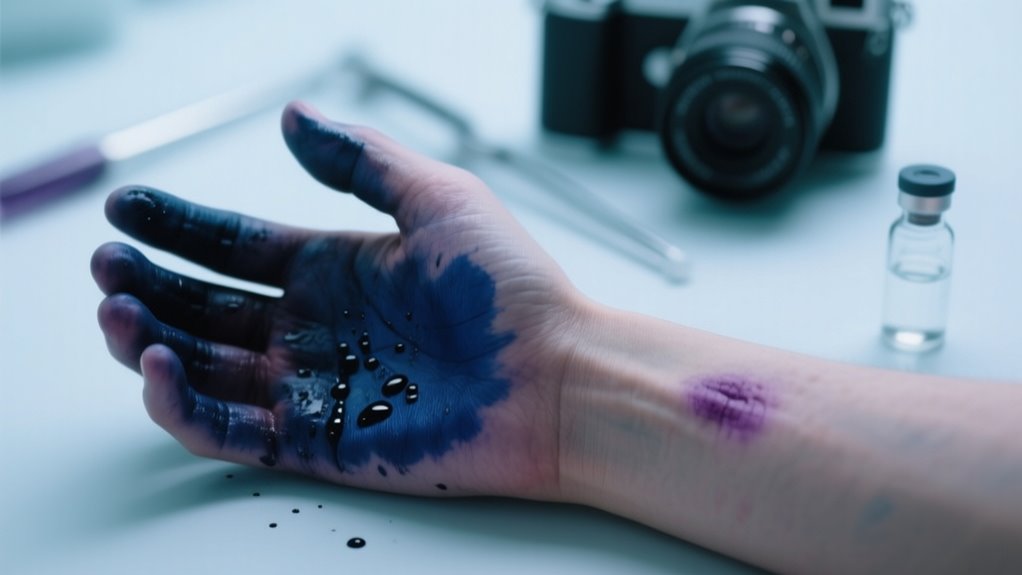
If you’ve swallowed or come into contact with ink, watch for signs like nausea, vomiting, skin or eye irritation, and staining around your mouth or skin.
Small amounts from pens or markers usually cause minor upset, but larger ingestions or exposure to industrial inks with toxic solvents can be more serious.
Rinse affected areas immediately and seek help if symptoms worsen.
Understanding the risks and proper care can help you stay safe and know what to do next.
What Is Ink Poisoning? How Common Is It?
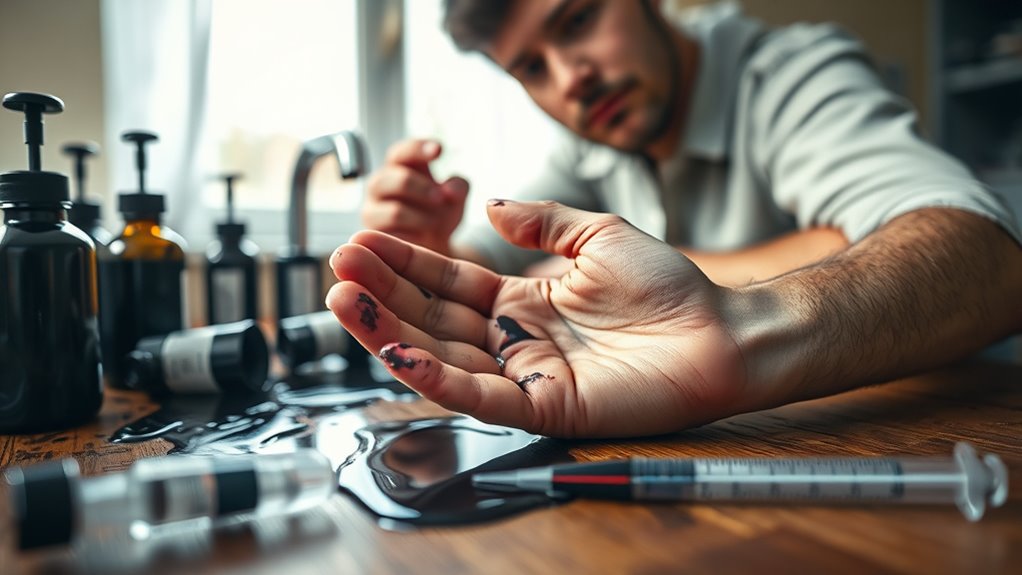
What exactly is ink poisoning, and how likely are you to experience it? Ink poisoning happens when you ingest or absorb harmful substances from ink. But with everyday writing inks, this is extremely rare because they have low toxicity.
Most inks contain nonpoisonous dyes, pigments, and water, so swallowing small amounts accidentally usually doesn’t cause serious harm. If you happen to ingest ink, the effects are typically minor, like mild stomach upset or skin staining, rather than severe poisoning.
Larger quantities, such as from ink bottles or industrial inks, might present a higher risk, but even then, serious cases are uncommon. You can reduce the already low risk by handling and storing ink properly in your home or office.
Harmful Ingredients in Ink
Although most common writing inks are made with low-toxicity dyes, pigments, solvents, and water, some types of ink contain harmful ingredients you should be aware of. Everyday pen ink ingredients like solvent, resin, and dye are generally safe when used properly. However, industrial or tattoo inks may include toxic solvents and unregulated chemicals.
These can pose significant health risks if handled improperly or in large quantities.
Here’s a breakdown of typical ink ingredients and their potential effects:
| Ingredient Type | Common Use | Potential Health Risks |
|---|---|---|
| Dyes/Pigments | Coloring agents | Usually low toxicity |
| Solvents | Ink flow and drying | Can be toxic in high doses |
| Unregulated Chemicals | Industrial inks | Possible skin irritation, poisoning |
Knowing which ink ingredients could be toxic helps you stay cautious and avoid exposure that might lead to ink poisoning.
Where Can You Find Potentially Harmful Ink?
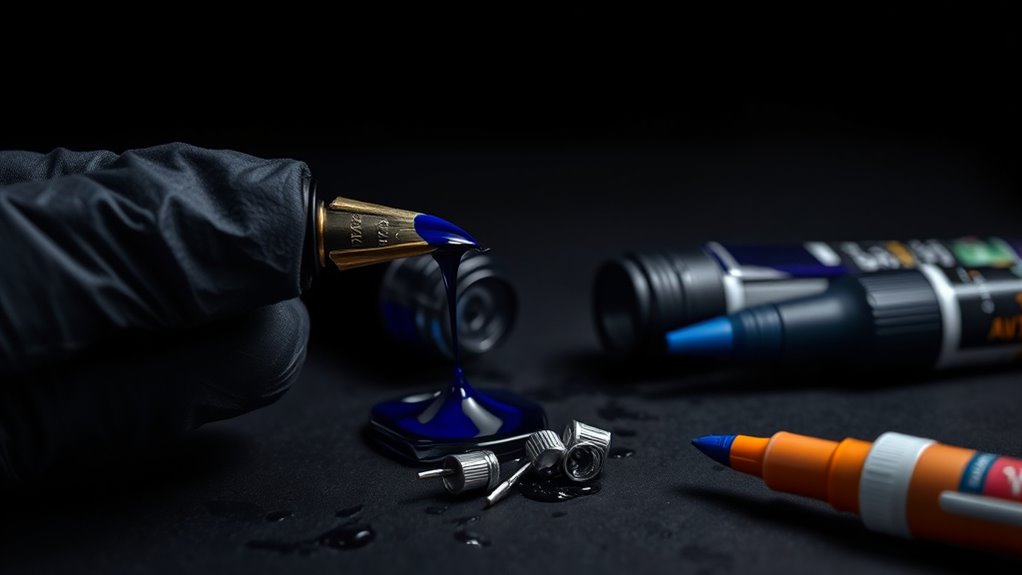
When you handle everyday items like pens, markers, or printer cartridges, you might not realize they contain ink that could be harmful if swallowed in large amounts. Household ink sources can sometimes act as a poison, especially if ingested accidentally or by children.
Everyday inks in pens and cartridges can be harmful if swallowed, especially by children.
Here are common places you can find potentially harmful ink:
- Bottled ink, pens, markers, and highlighters used daily at home or school.
- Printer cartridges and stamp-pad inks, which hold larger volumes and extra chemicals.
- Industrial and art inks, often containing solvents and toxic substances beyond standard writing inks.
- Tattoo inks and industrial-use inks, which carry higher risks due to unregulated, hazardous ingredients.
While small amounts of common writing ink usually aren’t poisonous, ingesting large quantities or specific toxic compounds found in some inks can pose serious health risks. Always be cautious with household inks and keep them out of children’s reach.
Symptoms of Ink Poisoning
Handling ink safely means knowing the signs that something might be wrong. Ink poisoning symptoms usually involve irritation and localized effects rather than serious health issues. If you come into contact with ink, you may notice eye irritation, skin staining, or mucous membrane staining.
Ingesting a large amount, over 1 oz (30 mL), could cause nausea, vomiting, or abdominal pain. Most symptoms are mild, but if you experience severe reactions like difficulty breathing or fever, seek medical help immediately.
Here’s a quick overview of common symptoms:
| Symptom Type | Description | Severity |
|---|---|---|
| Skin & Eye Irritation | Redness, itching, or staining | Usually mild |
| Gastrointestinal | Nausea, vomiting, abdominal pain | Possible with large ingestion |
| Serious Reactions | Difficulty breathing, fever, allergies | Requires urgent care |
Being aware of these ink poisoning symptoms helps you respond promptly and stay safe.
What to Do After Swallowing Ink
If you’ve swallowed ink, don’t panic. Small amounts usually aren’t harmful and might only cause mild stomach upset or staining in your mouth. Here’s what you should do:
If you swallow ink, stay calm—small amounts are typically harmless and may only cause minor stomach upset or staining.
- Rinse your mouth thoroughly with water for 15 minutes to help remove ink and reduce staining.
- Drink a few sips of water to dilute any ink swallowed and soothe your stomach.
- Avoid inducing vomiting unless a healthcare professional or poison control center advises you to do so.
- Contact the poison control center at 1-800-222-1222 or seek medical attention if you experience persistent nausea, vomiting, abdominal pain, or if you swallowed a large amount.
Following these steps helps manage minor ink ingestion safely. Remember, small amounts rarely cause serious harm. But when in doubt, reaching out to poison control center professionals ensures you get the right guidance quickly.
How to Treat Ink Exposure on Skin and Eyes
If you get ink on your skin, just rinse the area thoroughly with soap and water to help reduce any irritation. It’s pretty straightforward and usually does the trick. Now, if ink gets in your eyes, it’s important to flush them gently with lukewarm water for at least 15 minutes. This can really help ease the discomfort. And remember, if you notice any redness, pain, or changes in your vision that don’t go away, don’t hesitate to get medical help right away.
Skin Exposure First Aid
Although ink exposure on your skin or eyes is usually harmless, you should act quickly to minimize irritation and staining. Proper first aid helps prevent prolonged discoloration and discomfort.
For skin exposure first aid, follow these steps:
- Rinse the affected area immediately with soap and water to remove ink and reduce irritation.
- Avoid harsh chemicals or alcohol-based cleaners that may worsen skin irritation.
- If irritation or rash appears, wash the area again and apply a gentle, fragrance-free moisturizer.
- Seek medical care if symptoms worsen or don’t improve.
Prompt action guarantees your skin clears quickly without complications. Remember, ink on the skin is typically a temporary issue, not systemic poisoning.
Eye Irritation Relief
How should you handle ink exposure to your eyes to ease irritation? First, immediately rinse with water. Clean, lukewarm water is best. Keep your eye under a gentle stream for at least 15 minutes to flush out the ink and reduce eye irritation.
Avoid using any chemicals or soap directly in your eye because this can make the discomfort worse. Don’t rub or scrub the eye since that might cause further damage.
For ink on your skin, wash gently with soap and water or use a commercial ink remover. Just be careful not to get these products in your eyes.
If redness, pain, or persistent eye irritation continues after rinsing, it’s important to seek medical attention promptly to prevent complications.
When To Seek Help
When should you seek help after ink exposure to your skin or eyes? If you notice persistent redness, swelling, or pain after rinsing thoroughly, it’s time to seek medical help. Ink in the mouth or large amounts on skin can cause toxicity, so don’t ignore symptoms.
For eye exposure, rinse with lukewarm water for 15 minutes. If irritation continues, get prompt medical attention.
- Rinse skin with soap and water immediately.
- Flush eyes with lukewarm water for at least 15 minutes.
- Avoid harsh chemicals or alcohol on skin stains.
- Seek medical help if irritation persists or if ink in the mouth causes discomfort.
Taking quick action can prevent complications from ink exposure.
When to Call Poison Control or Get Emergency Help
If someone swallows more than an ounce of ink or starts feeling nauseous, vomiting, or has trouble breathing, you should call poison control immediately at 1-800-222-1222. Even if symptoms seem mild, it’s important to contact poison control for guidance, especially if a large amount of ink was ingested. Don’t try to induce vomiting or give anything by mouth unless a healthcare professional or poison control instructs you to do so.
Seek emergency medical help if the person develops severe symptoms like persistent vomiting, chest pain, or loses consciousness. Also, call emergency services if ink causes significant eye irritation, skin reactions, or if large quantities are swallowed. Acting quickly and knowing when to call poison control or emergency help can prevent serious complications and ensure proper care for ink poisoning symptoms.
What to Expect at the ER After Ink Exposure
After contacting poison control or emergency services, you’ll be taken to the ER where medical staff will quickly evaluate your condition. They’ll monitor your vital signs and assess the severity of your symptoms caused by ink exposure. Depending on your situation, treatment varies to provide the necessary medical help and supportive care.
Here’s what you can expect at the ER:
- Thorough rinsing of your eyes or skin to remove residual ink and reduce irritation.
- Administration of activated charcoal if a large amount of ink was ingested, to limit toxin absorption.
- Continuous monitoring of symptoms like nausea or skin irritation to guide further treatment.
- A variable duration of stay depending on symptom severity and ingestion amount.
Most cases receive prompt supportive care, helping you recover quickly without complications.
Severity and Outlook of Ink Poisoning
If you have ink poisoning, you’ll usually notice mild symptoms like skin stains or a slight upset stomach. Most of the time, recovery happens pretty quickly, especially if you get medical care right away. How much ink you swallowed and how fast you get treated really make a big difference in how things turn out.
Typical Symptom Severity
Although ink poisoning can sound alarming, most cases from everyday writing inks cause only minor symptoms like skin staining or mild stomach upset. When ink causes issues, it’s usually because you’ve ingested a small amount or had direct contact with the skin or eyes. Here’s what you might expect:
- Mild upset such as nausea or slight stomach discomfort after swallowing a small amount of ink.
- Skin staining and mild irritation that fades with washing.
- Eye redness or irritation that resolves quickly after rinsing.
- Rarely, larger ingestion may cause vomiting or abdominal pain, but serious effects are uncommon.
Recovery Expectations
Because typical writing inks are generally nonpoisonous, most cases of ink poisoning have a favorable outlook. If you experience small exposures, your recovery will likely be quick with minimal or no lasting effects.
Prompt medical treatment, like washing your eyes or skin, plays an essential role in speeding up healing and preventing complications. Even if a larger amount is ingested, early intervention usually leads to a good prognosis.
Medical professionals will monitor your vital signs and symptoms to guarantee you recover fully and safely. By seeking timely care and following medical advice, you can expect a smooth recovery from ink poisoning in most situations.
Factors Affecting Prognosis
When determining how serious ink poisoning might be, the amount of ink you’ve been exposed to plays a crucial role. Ingesting more than about one ounce (30 mL) raises the risk of complications. The severity of ink poisoning depends largely on this, along with other key factors.
Here’s what affects your outlook:
- The amount of ink swallowed. Larger quantities increase risks.
- The type of ink. Industrial inks with harmful solvents are more dangerous.
- Prompt medical treatment. Quick eye or skin washing and monitoring improve recovery.
- Early identification. Recognizing symptoms early leads to better prognosis.
Most writing inks are nonpoisonous when used properly, so with prompt care, your chances of a favorable outcome are high.
Preventing Ink Poisoning and Keeping Families Safe
To keep your family safe from ink poisoning, always store ink and writing supplies out of children’s reach. Make sure ink bottles are sealed tightly when not in use.
Proper storage of ink is essential for preventing ink poisoning because it minimizes accidental spills and ingestion. Ensure pens and ink containers have secure caps, and keep them in places children can’t access or see.
Store ink securely with tight caps, out of children’s reach, to prevent accidental spills and ingestion.
Educate everyone in your household, especially kids, about the dangers of swallowing or mishandling ink products. Use inks in well-ventilated areas and strictly follow the manufacturer’s safety instructions to avoid inhalation risks.
Also, dispose of used ink containers properly instead of refilling or altering them, which can lead to accidental poisoning.
Frequently Asked Questions
Can Ink Poisoning Cause Long-Term Health Problems?
Ink poisoning rarely causes long-term health problems if you limit exposure and get treated quickly. However, if you’re dealing with ink toxicity from industrial inks, chronic effects might develop due to toxin absorption over time.
Large or repeated exposures increase risks, potentially leading to internal damage or allergic reactions. So, if you suspect serious exposure, seek medical help promptly to prevent any lasting health issues.
Is Ink Poisoning More Dangerous for Children Than Adults?
Yes, ink poisoning is more dangerous for children than adults because they are smaller and less able to detoxify harmful substances. You should know the risks of ink exposure and follow safe handling tips to protect kids.
Always store ink products out of reach and supervise children to avoid accidental ingestion. Taking these prevention steps helps keep children safe and lowers the risk of serious health problems from exposure.
Are All Types of Ink Equally Toxic if Ingested?
No, all types of ink aren’t equally toxic if ingested. The ink composition plays a big role in how dangerous it can be. Toxic ink types, like industrial or some tattoo inks, contain harmful chemicals and solvents that increase ingestion risks.
Everyday writing inks usually have safer formulations, so swallowing small amounts isn’t typically harmful. You should always check what kind of ink you’re dealing with to understand the potential health risks better.
Can Pets Suffer From Ink Poisoning Too?
Yes, pets can suffer from ink poisoning too. For pet safety, you need to watch for animal symptoms like vomiting, diarrhea, or drooling after potential toxic exposure to ink.
Some inks contain harmful chemicals that can seriously affect your pet’s health. If you suspect your pet has ingested ink, don’t wait. Get immediate veterinary help to prevent complications and keep your furry friend safe.
Does Ink Poisoning Require a Hospital Stay?
You might need a hospital stay if poisoning symptoms get severe, if you ingest a large amount, or if treatment options at home aren’t enough. You don’t always require hospitalization for ink poisoning, especially with minor exposure or quick ink removal.
But if you experience breathing difficulty, persistent vomiting, or skin irritation, seek medical help immediately. Doctors will monitor you closely and provide supportive care to guarantee your safety.
Conclusion
So, if you’re thinking ink poisoning is just a fancy excuse for doodling too much, think again. Swallowing ink isn’t exactly your ticket to becoming a superhero. It’s more like a trip to the ER.
Keep those pens away from your mouth, or you might find yourself starring in a very unfunny medical drama. Stay smart, stay safe, and remember: ink belongs on paper, not inside you.
Leave a Reply