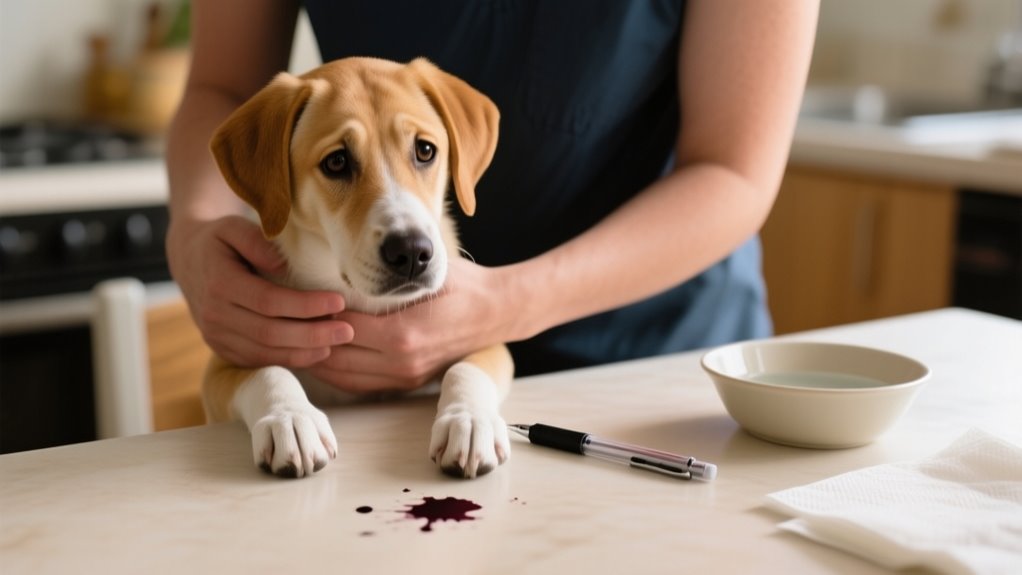
Pen ink is usually non-toxic to dogs in small amounts, but swallowing pen parts can cause serious problems like intestinal blockages.
If your dog gets ink on their mouth or paws, rinse gently and offer water to help dilute it.
Watch for symptoms like vomiting or lethargy, and avoid inducing vomiting unless instructed by a vet.
Prompt attention is key, especially if your dog ate plastic pieces.
You’ll find useful tips on managing and preventing this issue ahead.
Is Pen Ink Toxic to Dogs? What Happens After Ingestion
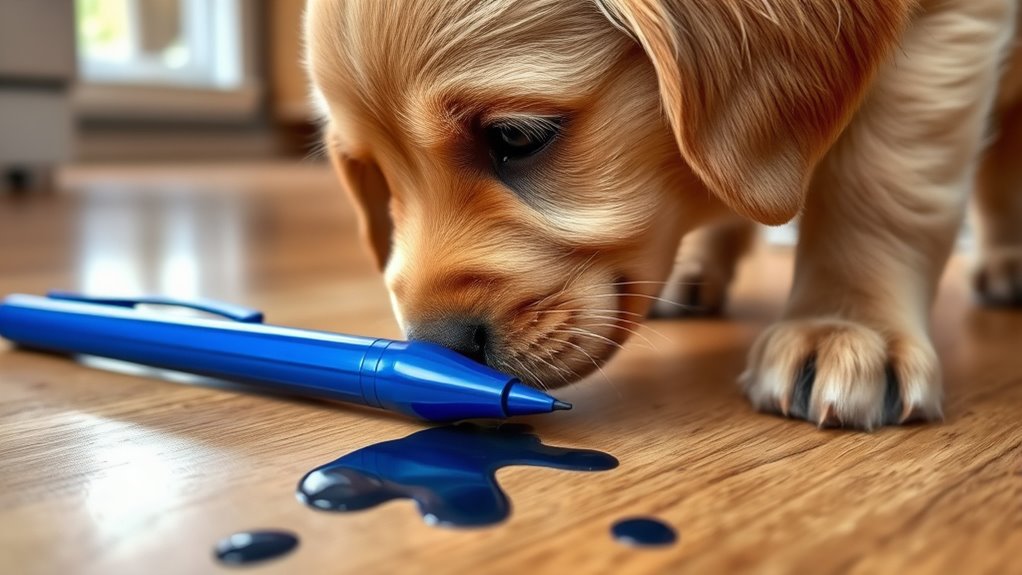
Wondering if pen ink is harmful to your dog? Most ballpoint pen inks are considered non-toxic in small amounts, so if your furry friend licks or chews a pen, it’s usually not cause for panic.
However, pet owners should know that larger amounts of pen ink can cause gastrointestinal upset. You might notice staining on your dog’s tongue, throat, or fur, but this typically doesn’t lead to serious illness.
That said, the bigger concern is the plastic casing of the pen. If your dog swallows the plastic parts, it can cause an intestinal obstruction, which is a serious health risk.
If you suspect your pet has ingested a pen, keep an eye on their behavior. Prompt veterinary assessment is important, especially if you notice any unusual symptoms. Understanding these risks helps you act quickly and protect your dog’s health.
Symptoms of Pen Ink and Plastic Ingestion in Dogs
After your dog has ingested pen ink or plastic parts from a pen, you’ll want to watch for certain symptoms that can indicate how their body is reacting. Signs of ink ingestion often include drooling, vomiting, and a decreased appetite.
Monitor your dog for drooling, vomiting, or appetite loss after ingesting pen ink or plastic parts.
While ink is usually not toxic in small amounts, larger quantities can upset your dog’s stomach. You might also notice stained tongues or fur, which, although alarming, don’t usually mean poisoning.
On the other hand, swallowing plastic parts poses a greater risk. Plastic can cause intestinal blockages, which are more serious and may lead to symptoms like vomiting, abdominal pain, or lethargy. These signs suggest your dog is in distress and requires prompt attention.
Keep an eye out for any unusual behavior or discomfort after ink or plastic ingestion, as early recognition of symptoms can help ensure your dog stays safe and healthy.
What to Do Immediately After Your Dog Eats Ink or a Pen
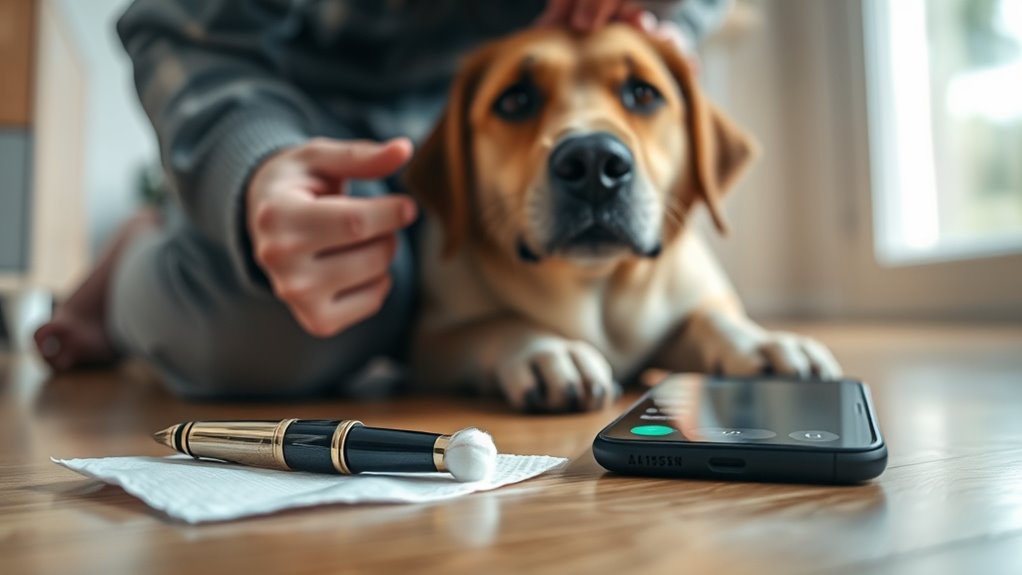
If your dog eats ink or a pen, the first thing you should do is gently rinse their mouth and paws to get rid of any leftover ink. After that, keep a close watch on them for any signs like drooling or vomiting. Make sure they always have fresh water to drink—it helps flush out any toxins. And if you notice anything unusual or if they seem off, don’t hesitate to call your vet right away.
Immediate Cleaning Steps
Although it can be alarming when your dog eats ink or a pen, you should start by gently rinsing their mouth and paws with mild soap and water to remove any ink residue. This step helps reduce further ingestion or skin irritation.
Next, provide fresh water to encourage hydration and help dilute any remaining ink in their system. Carefully observe symptoms such as drooling, vomiting, or unusual behavior, as these may indicate distress.
Avoid inducing vomiting unless your veterinarian specifically advises it, since it can cause more harm. If you notice any signs of illness or are uncertain about how much ink your dog ingested, contact your veterinarian immediately for professional guidance.
Acting quickly and calmly is key to your dog’s safety.
Monitoring For Symptoms
When your dog swallows ink or a pen, you’ll want to watch them closely for signs of distress like vomiting, diarrhea, or loss of appetite during the first few hours. Check for behavioral changes such as lethargy, excessive drooling, or difficulty breathing, which could mean toxicity or a blockage.
Gently rinse your pet’s mouth and paws with water to remove any remaining ink or debris and prevent further ingestion. Make certain your pet has access to fresh water to stay hydrated, which also helps dilute any harmful substances.
If you notice abnormal symptoms or aren’t sure how much ink was ingested, contact your veterinarian right away. They may monitor your pet’s blood pressure and other essential signs to ensure safety and provide appropriate care.
How to Clean Ink Off Your Dog Safely
To clean ink off your dog safely, start by using mild soap and water. You’ll want to avoid harsh chemicals or alcohol-based products since they can irritate your pup’s skin.
Once you’ve gently cleaned the area, make sure to rinse and dry it thoroughly. This helps prevent any leftover ink from causing irritation or your dog from accidentally ingesting it.
After you’re done, keep an eye on your dog for any skin reactions or unusual behavior—just to be on the safe side. If anything seems off, it’s a good idea to check in with your vet.
Safe Cleaning Methods
Since ink can irritate your dog’s skin and mouth, you’ll want to clean it off gently using mild soap and water. Focus on areas with ink stains, such as fur, paws, and around the mouth. Apply gentle cleaning to prevent causing skin irritation.
Avoid harsh chemicals or solvents, as they can worsen irritation or harm your dog’s eyes. Rinse thoroughly to remove all soap and ink residues, preventing further skin discomfort.
After washing, dry your dog completely to stop moisture from causing irritation or discomfort. Keep an eye on your dog for any signs of skin irritation or if they’ve ingested ink.
If you notice any unusual symptoms, contact your veterinarian promptly to ensure your dog’s safety and comfort.
Suitable Cleaning Products
Cleaning ink off your dog requires choosing products that won’t harm their skin or health. For safe cleaning, stick to mild soap and water as your primary cleaning products. Gently wash the ink-stained fur and paws to remove the ink without causing irritation.
Avoid harsh chemicals or solvents since they could irritate your dog’s sensitive skin or be toxic if ingested. After washing, rinse thoroughly to remove all soap and ink residue. Dry your dog completely to prevent skin irritation or further staining.
Monitoring Post-Cleaning
How should you keep an eye on your dog after removing ink? Start by monitoring your dog closely for any signs of distress, such as drooling, vomiting, or unusual behavior. These could indicate irritation or ink ingestion.
Make sure your dog drinks plenty of water to help flush out any leftover ink and stay hydrated. Avoid harsh chemicals or vigorous scrubbing during cleaning because that can make skin irritation worse.
If you notice persistent discomfort or think your dog might have ingested ink during cleaning, contact your veterinarian right away. Careful post-cleaning monitoring keeps your dog safe and helps you respond quickly if any problems come up.
Staying attentive after cleaning is key to preventing complications from pen ink exposure.
When to Call a Vet After Pen or Ink Ingestion
If your dog swallows pen ink or parts of a pen, you should contact your veterinarian immediately, especially if they start vomiting, drooling, or acting lethargic. Pen ink ingestion can cause toxicity or blockages, so prompt veterinary care is vital.
Contact your vet immediately if your dog swallows pen ink or parts, especially with vomiting or lethargy.
You should call your vet right away if your dog shows signs of vomiting, excessive drooling, or lethargy after pen ink ingestion. Also, if they have difficulty breathing or show signs of abdominal pain, don’t wait.
If they swallowed a pen or a large amount of ink, the risk of obstruction or poisoning goes up, so it’s important to get professional help quickly. Even if your dog seems fine, it’s a good idea to consult your vet for monitoring and advice.
Always have your veterinarian’s contact information on hand so you can act swiftly in case of pen or ink ingestion. Early intervention can prevent serious health issues and keep your dog safe.
How Vets Treat Pen and Plastic Blockages
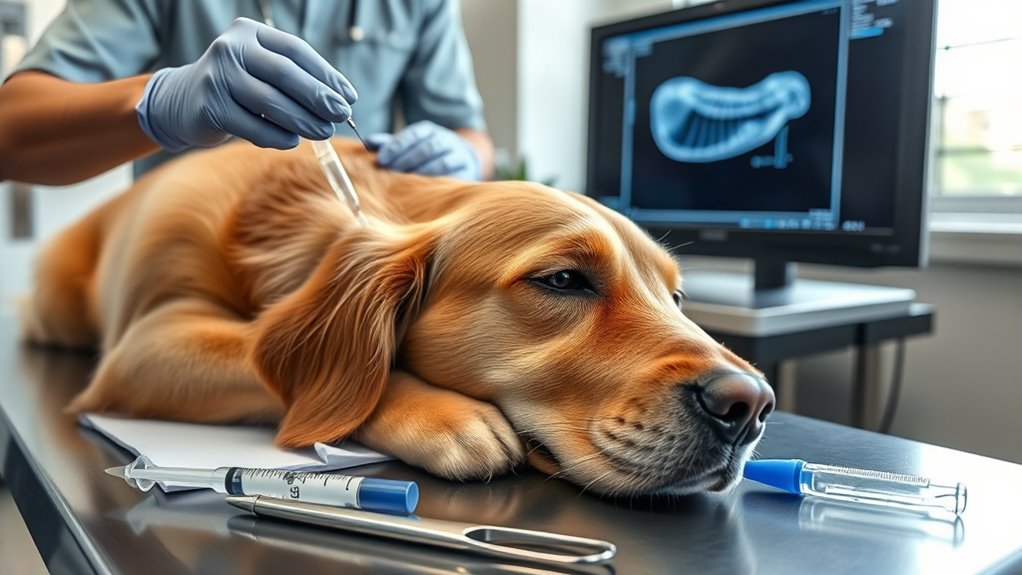
When your dog swallows pen parts or plastic, vets usually start by taking X-rays and doing ultrasounds to find where the blockage is. Then, they often try to remove the objects using an endoscopy, which is less invasive. If that doesn’t work, surgery might be necessary to safely take out the blockage and repair any damage.
Diagnostic Procedures Overview
Wondering how veterinarians locate and treat pen ink or plastic blockages in your dog’s digestive system? They rely on diagnostic imaging to pinpoint the object’s location and assess any gastrointestinal obstruction. Common approaches include:
X-rays and ultrasounds help identify the presence and position of foreign bodies. Endoscopy uses a flexible tube with a camera to view and sometimes remove objects from the stomach.
If the object has passed into the intestines, surgery may be required to extract it safely. Early detection via these methods improves treatment success and lowers complication risks.
Non-Surgical Removal Methods
Although surgery is sometimes necessary, veterinarians often use non-surgical methods like endoscopy to remove pen ink or plastic blockages from your dog’s stomach. Endoscopy is a minimally invasive procedure where a flexible tube with a camera and specialized tools is inserted through your dog’s mouth to locate and perform foreign object removal.
This technique allows vets to extract the blockage quickly, usually under sedation or general anesthesia, which helps reduce recovery time compared to surgery. Endoscopy works best when the blockage is caught early and still in the stomach or upper gastrointestinal tract.
If the object has moved beyond that, vets might need to explore other treatments. Using endoscopy, you can avoid more invasive procedures while effectively treating your dog’s blockage.
Surgical Intervention Necessity
How do veterinarians handle severe blockages caused by pen ink or plastic in your dog’s digestive system? When plastic ingestion leads to a gastrointestinal obstruction, surgical intervention is often necessary. Vets perform surgery to carefully remove the blockage, especially if the plastic is large or deeply lodged.
Here’s what you can expect during this process:
- Prompt surgery improves success and reduces complications.
- Surgeons extract the plastic and repair any damaged tissue.
- Postoperative care includes pain management and infection monitoring.
- Hospitalization allows close observation during recovery.
If your dog swallows plastic or pen parts causing a blockage, early veterinary care is crucial. Timely surgical intervention can restore normal digestion and prevent serious health issues.
Common Risks From Plastic Parts of Pens
What happens if your dog swallows the plastic parts of a pen? These plastic parts can cause serious problems, especially if they lead to a gastrointestinal obstruction. When swallowed, the plastic pieces might get stuck in your dog’s stomach or intestines, blocking the normal flow of food and fluids.
This blockage can cause pain, vomiting, and even damage to the digestive tract. Since plastic parts are often indigestible, they rarely break down inside your dog’s system and may need surgical removal to avoid further complications.
While small pieces might pass through naturally, larger or oddly shaped fragments pose a higher risk. If you suspect your dog has ingested any part of a pen, don’t wait. Seek veterinary attention immediately. Prompt care is essential to prevent these obstructions from becoming life-threatening.
Understanding these risks helps you act quickly to protect your dog’s health.
Preventing Pen and Ink Ingestion in Dogs
Since ingesting plastic parts of pens can lead to serious health issues for your dog, taking steps to prevent pen and ink ingestion is key. You want to keep pens and inked items away from your dog’s reach. This simple action reduces the risk of accidental swallowing.
Preventing access to these products also means creating a safe environment where your dog isn’t tempted to chew on pens.
Here are some practical tips for preventing pen and ink ingestion:
- Store pens securely in drawers or containers your dog can’t open.
- Provide plenty of dog-friendly toys to satisfy their chewing needs.
- Supervise your dog closely in areas where pens or ink products are present.
- Educate everyone in your household about the risks and ensure they put pens away properly.
What to Do If You’re Unsure Whether Your Dog Ate a Pen
If you suspect your dog might have swallowed a pen or its parts, don’t wait to take action. Even though small amounts of ink from a ballpoint pen are unlikely to be toxic, the plastic components can cause harm or blockages.
Contact your veterinarian immediately if you’re unsure about the ingestion. While waiting for professional advice, monitor your dog closely for symptoms like vomiting, diarrhea, or loss of appetite, which could indicate gastrointestinal distress.
Keep an eye on any abnormal behavior and be ready to seek prompt veterinary evaluation if needed. Early intervention is key to preventing complications.
Keeping Your Dog Safe: Tips for Pen Owners
Although pens may seem harmless, they can pose serious risks to your dog if left within reach. Ballpoint pens and ink pens, often used daily, contain ink that may be toxic or cause choking if chewed or swallowed. To keep your dog safe, you should:
Store all pens in secure containers out of your dog’s reach to prevent accidental ingestion. Supervise your dog when you’re using stationery to stop them from chewing on pens.
Regularly check your environment for any pens left lying around that could be hazardous. Educate family members and visitors about the dangers so everyone helps maintain a safe space.
Frequently Asked Questions
Can Pen Ink Cause Long-Term Health Problems in Dogs?
You generally won’t see long-term health problems from pen ink in dogs unless they ingest large amounts repeatedly. Ink poisoning is rare with typical ballpoint ink, but you should watch for toxic symptoms like vomiting or diarrhea.
Digestive issues can occur if your dog swallows a lot, so keep an eye on them and contact your vet if symptoms persist. Quick action helps prevent serious complications.
Are Certain Types of Pen Ink More Toxic Than Others?
Yes, certain types of pen ink are more toxic than others. You should know that ink composition directly affects toxicity levels; solvent-based and permanent inks often contain harmful chemicals like xylene or toluene, increasing risk to your dog. Water-based inks usually pose less danger.
To keep your pet safe, follow pet safety guidelines by avoiding exposure and contacting a vet if ingestion occurs. Always store pens out of your dog’s reach.
Can Puppies Be More Affected by Pen Ink Than Adult Dogs?
Think of a puppy like a sponge soaking up ink risks. Yes, puppies can be more affected by pen ink than adult dogs. Their puppy ink sensitivity means their young dog absorption rates are higher, making them vulnerable.
Juvenile toxicity risks arise because their bodies can’t process toxins as efficiently. So, you should keep pens away and watch for any signs of distress to keep your little one safe and sound.
Is It Safe to Give My Dog Water After Ink Ingestion?
Yes, it’s safe and important to offer your dog water after ink ingestion to support hydration. Encouraging water intake helps dilute the ink and soothes the gastrointestinal tract.
Use safe drinking practices by providing fresh, clean water but don’t compel your dog to drink if they’re vomiting or distressed. Keep an eye on their condition, and always consult your vet for guidance to ensure your dog’s health and safety.
Can Pen Ink Cause Allergic Reactions in Dogs?
Pen ink rarely causes allergic reactions in dogs, but you should watch for allergic symptoms like itching, redness, or swelling after ink ingestion risks. If your dog’s skin or fur contacts ink, use safe removal methods like gentle washing with mild soap and water.
Always monitor your dog closely, and if you notice any unusual signs, consult your vet promptly to guarantee your pet stays healthy and comfortable.
Conclusion
You might think a little pen ink is harmless, but what if it’s not? Even small amounts can cause unexpected problems for your dog. Don’t wait to see symptoms. Taking quick action could make all the difference.
If you’re ever unsure whether your dog swallowed ink or pen parts, trust your instincts and call your vet immediately. Your dog’s safety depends on what you do next, so stay alert and prepared.
Leave a Reply