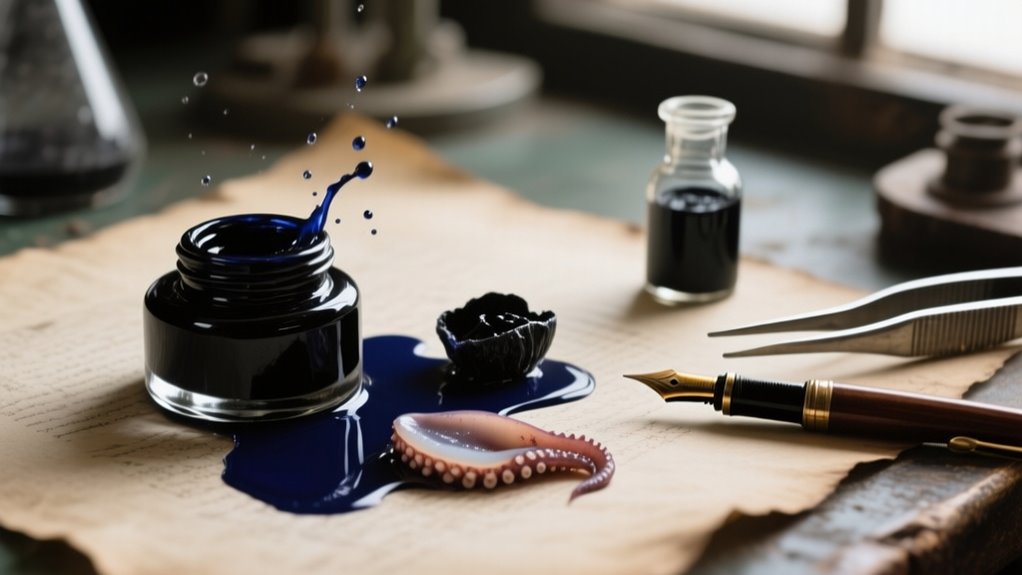
You might think ink only comes from squid, but it’s made by several marine animals like cuttlefish, octopuses, and even sea haares.
Squid ink is known for its dark color and smooth texture, thanks to melanin and special enzymes.
Different creatures produce ink with unique colors and chemical makeup that serve defense and communication.
If you want to understand how these inks vary and why humans value them, there’s plenty more to explore.
What Is Squid Ink And How Is It Made?

Although you might know squid ink as a mysterious dark fluid, it’s actually produced in specialized sacs inside the squid’s body. These sacs are packed with melanin, enzymes, amino acids, and metals. They serve as reservoirs where the squid stores this unique mixture.
When threatened, the squid releases the ink through its siphon, mixing the melanin-rich pigment with mucus from the funnel organ. This combination helps create a dense, cloud-like smokescreen in the water. You can think of squid ink as a clever defense mechanism because it distracts predators by obscuring the squid’s escape route.
The melanin gives the ink its characteristic dark color, but other chemical components like enzymes and neurotransmitters help maintain its consistency and effectiveness. The entire process allows the squid to protect itself quickly and efficiently. So, squid ink is far more than just a pigment; it’s a sophisticated biological tool designed for survival.
Which Cephalopods Produce Squid Ink: And Why?
When you observe cephalopods in the wild, you’ll notice that many, including various squid species like Loligo vulgaris, produce ink as a key defense strategy. Squid ink primarily comes from these squids, which have evolved specialized ink production to escape predators by creating visual and chemical distractions.
Besides squids, other cephalopods such as cuttlefish and octopuses also produce ink, though their ink’s color and composition vary depending on their ecological needs. Nautiluses, however, don’t produce ink; they rely on their shell coloration for defense instead.
This diversity in ink production among cephalopods highlights how essential ink is as a defense mechanism. By releasing ink, these animals effectively confuse or deter attackers, giving them a chance to flee.
How Does Squid Ink Differ From Octopus And Cuttlefish Ink?
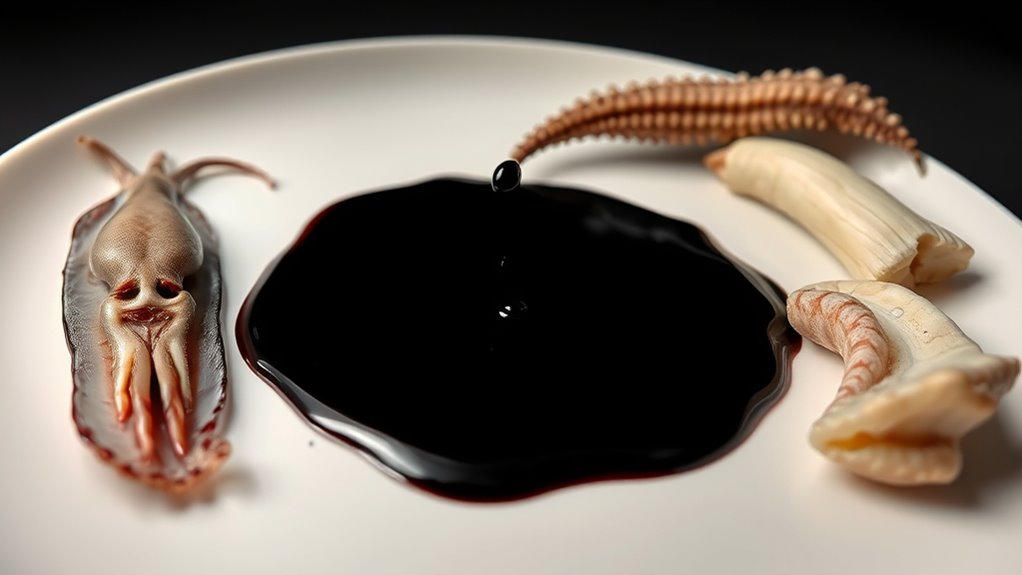
You’ll notice that squid ink usually has a bluish-black color. On the other hand, octopus and cuttlefish inks tend to be darker and more brownish. Each type of ink has its own unique composition, which affects its texture and color. This also influences how the ink is used, whether in cooking or art. Knowing these differences helps you appreciate why each cephalopod’s ink serves distinct purposes.
Ink Composition Differences
Ink from squid, octopus, and cuttlefish differs noticeably in composition, affecting its color, texture, and function. When you examine the ink composition, squid ink primarily contains melanin, enzymes like tyrosinase, and amino acids, giving it a distinct chemical profile.
Cuttlefish ink, or sepia, stands out with a higher mucus content and varied metal concentrations, making it less viscous than octopus ink. Octopus ink tends to be darker and thicker, thanks to unique proteins and pigments that set its chemical profile apart from the others.
These differences in cephalopod ink composition influence not only their physical properties but also their biological roles. Understanding these nuances helps you appreciate how each species produces ink tailored to its needs.
Color And Usage Variations
Although all three cephalopods produce ink as a defense mechanism, squid, octopus, and cuttlefish inks differ remarkably in color and texture, which affects their uses. Squid ink is known for its dark ink, rich in melanin, creating dense ink clouds that disperse quickly to confuse predators.
Octopus ink, often brownish or reddish, contains more mucus, forming pseudomorphs that mimic the octopus’s shape. Cuttlefish ink, called sepia, has a deep reddish-brown hue and a velvety texture, thanks to its unique chemical composition.
This richness makes cuttlefish ink popular in artistic applications, unlike the thinner squid ink. Understanding these color and texture variations helps you appreciate how each cephalopod adapts its ink for survival and how humans utilize these natural materials differently.
What Chemicals Make Squid Ink Unique?
Because squid ink contains a blend of melanin, enzymes like tyrosinase, neurotransmitters such as dopamine, and trace metals including cadmium and copper, its chemical makeup stands out from other natural inks. You’ll find melanin giving the ink its dark color, while enzymes and amino acids like glutamate and taurine add complexity. Trace metals influence its density and physical traits.
Here’s a quick look at what makes squid ink unique:
| Component | Role | Examples |
|---|---|---|
| Melanin | Provides dark pigmentation | Present in skin and hair |
| Enzymes | Catalyze reactions | Tyrosinase |
| Amino Acids | Chemical diversity | Glutamate, taurine |
| Trace Metals | Affect physical properties | Cadmium, copper, lead |
This unique combination of organic compounds and metals creates a chemical profile unlike most other inks.
How Does Squid Ink Composition Affect Its Color And Texture?
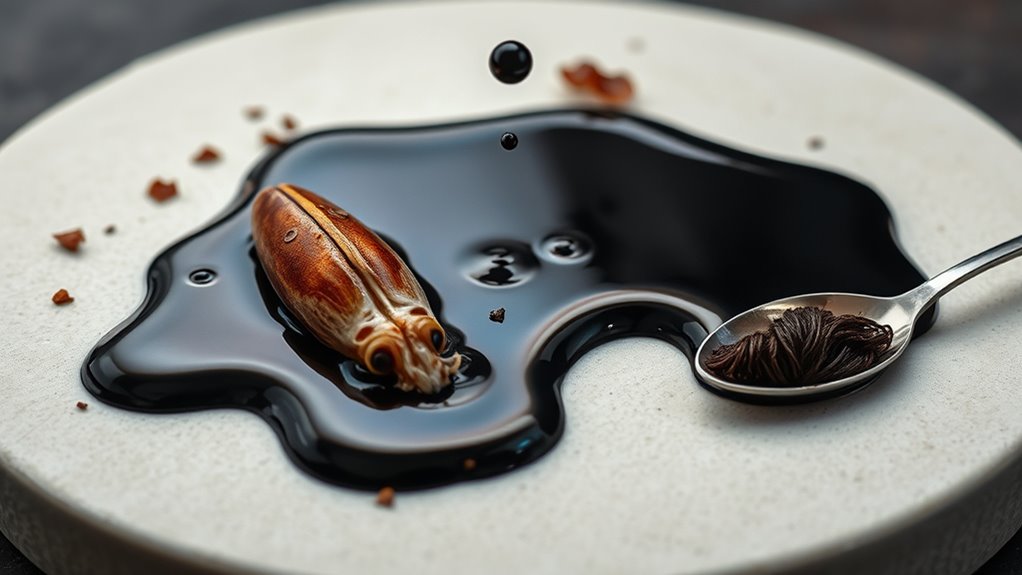
When you look closely at squid ink, its color and texture reveal a complex interplay of chemical components. The dark pigment primarily comes from melanin, forming tiny particles that suspend in the liquid. These melanin particles vary in size and distribution, directly affecting the ink’s viscosity and how thick or fluid it feels.
Besides melanin, the chemical composition includes metal ions like copper and cadmium, which influence the ink’s shade and opacity. The amount of mucus and polysaccharides mixed in also changes the texture, making the ink more viscous or runny.
Different squid species produce ink with unique chemical profiles, causing variations in color intensity and consistency. So, when you observe squid ink, you’re actually seeing a dynamic balance of pigment, metals, and organic compounds that define its distinctive look and feel.
This chemical complexity is why squid ink’s color ranges from deep black to dark brown and why its texture can shift from watery to thick.
Which Marine Animals Besides Cephalopods Produce Ink?
You might not know this, but some marine mollusks besides cephalopods produce ink too. For example, sea hares use ink as a defense mechanism. And it’s not just them—other creatures like the gastropod Navanax and certain marine worms also release ink or pigment-rich mucus to escape predators. So, let’s dive in and explore these fascinating ink sources beyond the usual squid and octopus.
Ink-Producing Marine Molluscs
Although cephalopods are the most famous ink producers in the marine world, you might be surprised to learn that other molluscs like sea hares also release ink. These marine molluscs use ink primarily for defense, employing melanin-rich secretions to deter predators.
Here are some ink-producing marine molluscs besides cephalopods:
- Sea hares release a dark, ink-like mucus that combines pigments, chemicals, and mucus.
- Some gastropod snails eject dark mucus or ink to confuse attackers.
- The ink contains melanin, creating both visual smokescreens and chemical deterrents.
- These secretions help marine molluscs camouflage or escape threats in their environment.
Sea Hares’ Ink Defense
How do sea hares defend themselves in the ocean’s dangerous environment? They release sea hare ink, a dark purple or black substance, quickly when threatened. This ink acts as both a visual distraction and a chemical deterrent, helping sea hares avoid predators in their marine environment.
Unlike cephalopods, their ink contains mucus that forms a protective cloud or pseudomorph, confusing attackers. The pigment aplysioviolin in sea hare ink also offers antioxidant properties, adding to its effectiveness.
| Feature | Description |
|---|---|
| Ink Color | Dark purple or black |
| Defense Mechanism | Visual distraction and chemical deterrent |
| Ink Composition | Contains mucus and aplysioviolin |
| Release Speed | Rapid release upon threat |
| Marine Role | Protects sea hares in their environment |
Other Aquatic Ink Sources
While cephalopods are the most famous ink producers in the ocean, several other marine animals also release ink or ink-like substances to defend themselves. You might be surprised to learn that various marine mollusks and other species use ink secretion as a defense mechanism, though their chemical composition often differs from cephalopod ink.
Here are some notable examples:
- Sea hares, a type of marine mollusk, secrete melanin-rich ink mixed with mucus to confuse predators.
- Certain gastropod mollusks, like some sea slugs, produce ink-like secretions for protection.
- Spiny oysters release ink-like substances during stress or attacks.
- Some sea cucumbers emit defensive secretions resembling ink.
Each uses ink or similar chemicals to deter threats, showcasing diverse defense strategies beyond cephalopods.
Why Is Squid Ink Preferred For Cooking And Art?
Because squid ink contains a high level of melanin, it delivers a rich, deep black color that stands out in both cooking and art. When you use squid ink, its dark color gives your dishes and artworks a striking visual appeal that’s hard to match.
Squid ink’s rich melanin provides a bold black hue, enhancing the visual impact of both food and art.
Chefs especially appreciate squid ink for culinary uses like pasta and sauces, where its smooth, velvety texture enhances flavor and presentation. Artists rely on squid ink because it produces consistent, vibrant pigmentation essential for lasting impressions.
Compared to other marine inks, squid ink’s chemical consistency makes it more reliable, so you can trust it to perform well every time. Plus, squid ink comes from widely harvested species, making it a practical, sustainable choice.
Whether you’re cooking or creating art, squid ink’s unique qualities let you produce bold, memorable results that few other inks can match.
How Have Human Uses Of Squid Ink Evolved Over Time?
When did squid ink first capture human interest beyond the ocean? Its historical use dates back to ancient civilizations where it was prized for writing, art, and even cosmetics. Over time, the ways you use squid ink have evolved considerably. Here’s a quick look at its journey:
- Ancient times: Used in manuscripts, art, and cosmetics by various cultures.
- 19th and early 20th centuries: Valued by European and Japanese artists for ink drawings and calligraphy.
- Modern culinary applications: Now a popular ingredient in dishes like ink pasta and sauces, appreciated for flavor and natural coloring.
- Emerging uses: Scientific research explores potential medicinal benefits, expanding your understanding of squid ink beyond traditional artistic and culinary uses.
What Are The Biological And Ecological Roles Of Cephalopod Ink?
Although you might mostly associate cephalopod ink with artistic or culinary uses, it plays essential biological and ecological roles in the animals’ survival. Cephalopod ink acts primarily as a defense mechanism, released from specialized ink sacs when predators threaten.
This ink creates both a visual smokescreen and a chemical distraction, confusing predators and allowing the cephalopod to escape. The ink contains compounds like tyrosinase and amino acids that irritate or disable predators’ chemosensory systems, reducing their ability to track the cephalopod.
Furthermore, cephalopod ink often forms pseudomorphs, blobs that mimic the animal’s shape, which further mislead attackers. Beyond defense, the ink serves as a chemical alarm signal, warning nearby cephalopods of danger in their environment.
This dual function of cephalopod ink highlights its vital role not only in individual survival but also in maintaining the ecological balance within their communities.
Can Ink Come From Non-Cephalopod Sources?
Where else can ink come from besides cephalopods? While cephalopod ink, like that from squid or cuttlefish, has historically inspired ink production, many non-cephalopod sources now contribute to ink manufacturing.
You’ll find that modern inks mostly rely on synthetic inks, created for durability and consistency. However, natural non-cephalopod sources also exist and are gaining attention:
- Certain marine mollusks, such as sea hares, produce ink chemically distinct from cephalopod ink but serve similar defensive roles.
- Plant-based ingredients offer ethical, sustainable alternatives to animal-derived inks.
- Synthetic inks dominate commercial printing and art due to their stability and ease of production.
- Emerging research explores bacteria and fungi as sources of bio-ink, useful in biotechnology and medical applications.
Frequently Asked Questions
How Is Squid Ink Harvested Sustainably?
You can harvest squid ink sustainably by following eco friendly harvesting methods that prioritize marine conservation efforts. You’ll focus on squid population management by limiting catch numbers and using sustainable fishing practices to avoid overfishing.
Breeding squids in aquaculture also helps reduce pressure on wild stocks. By respecting seasonal regulations and carefully extracting ink sacs, you support healthy squid populations and guarantee ink availability without harming the marine ecosystem.
Does Squid Ink Have Any Nutritional Benefits?
You’ll find squid ink offers some nutritional benefits, mainly from its antioxidants and amino acids. When you use it in culinary applications, it not only enhances flavor but also adds unique coloring properties to your dishes.
Chefs often include it in gourmet recipes for that rich, briny taste and dramatic black hue. While the nutritional impact is modest, it definitely elevates both the taste and appearance of your meals.
Can Squid Ink Cause Allergic Reactions?
Yes, squid ink can cause allergic reactions, especially if you have seafood allergies. Since it comes from a mollusk, your immune system might react to proteins in the ink, leading to symptoms like itching or swelling.
If you have ink sensitivity or a history of shellfish allergies, you should be cautious. Your immune responses could be triggered, so checking labels and avoiding squid ink products is a smart move to stay safe.
How Long Does Squid Ink Last When Stored?
Squid ink’s shelf life depends on storage conditions and preservation methods. In the fridge, it lasts 2-3 months sealed, but once opened, use it within 1-2 weeks to maintain freshness.
Freezing extends shelf life up to 6 months or more without quality loss. Always store squid ink in a sealed, dark container to prevent spoilage. Freshness indicators include a sour smell or discoloration, signaling it’s time to discard.
Is Squid Ink Used in Traditional Medicines?
You might imagine squid ink as a magical elixir, and in traditional medicines, it’s treated almost like that! Beyond its culinary uses, it holds cultural significance, especially in Mediterranean and Asian regions.
The ink extraction process is careful, preserving its potent qualities. Regional variations shape how it’s used, sometimes topically, sometimes ingested to tap into its antimicrobial and anti-inflammatory powers, making it a fascinating blend of food and healing tradition.
Conclusion
Now that you know squid ink isn’t just from squids but also from other cephalopods, you see its unique chemistry and uses shine through. Whether in cooking or art, its rich color and texture set it apart.
Remember, “Don’t judge a book by its cover.” This ink’s true value lies beneath the surface. So next time you encounter squid ink, appreciate its fascinating biological role and diverse origins beyond just the squid.
Leave a Reply