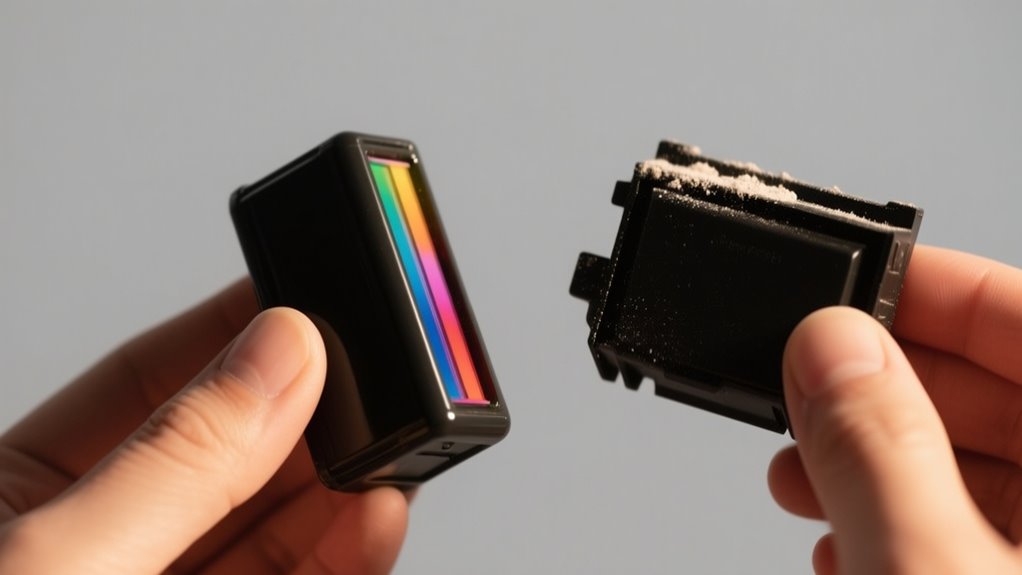
You won’t confuse ink and toner once you know the basics. They’re not the same. Ink is liquid and used in inkjet printers for detailed, colorful photos.
Toner is powdered and meant for laser printers, handling fast, high-volume text printing.
Ink cartridges are smaller and glossy. Toner cartridges are bulkier with a matte finish. Each fits only its own printer type.
If you want to understand their uses, cost, and how to spot when to replace them, keep exploring.
How Do Ink and Toner Cartridges Differ?
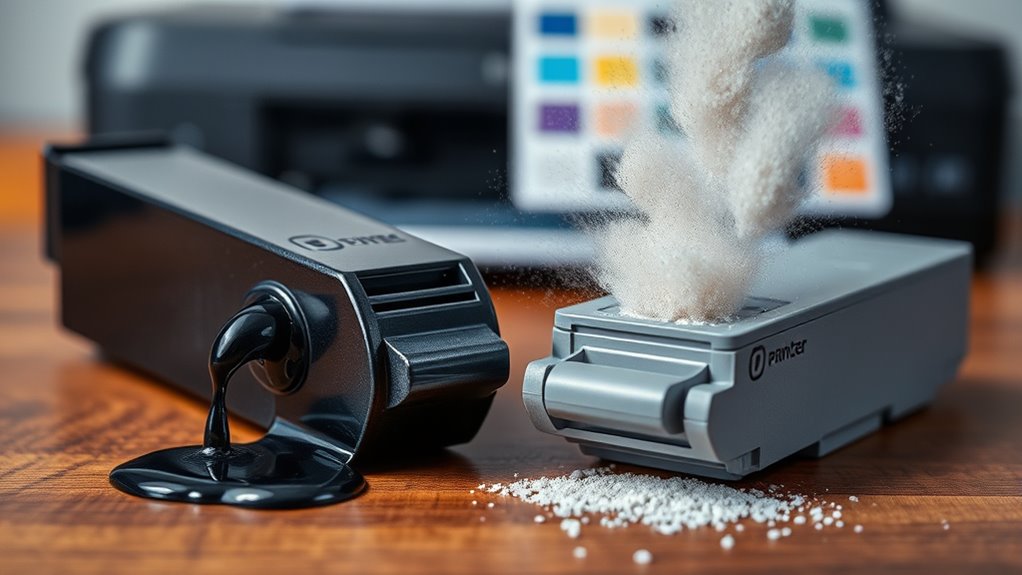
Although both ink and toner cartridges serve the purpose of printing, they differ considerably in composition and function. Ink cartridges contain liquid ink designed for inkjet printers, making them ideal for detailed color prints. Toner cartridges, on the other hand, hold dry powder toner used in laser printers, optimized for fast, high-volume printing.
Ink cartridges use liquid ink for detailed color prints, while toner cartridges contain dry powder for fast, high-volume laser printing.
You’ll notice ink cartridges are smaller and require more frequent replacements because their liquid ink yields fewer pages. Toner cartridges are larger, lasting longer and producing more pages before needing a change.
Additionally, ink can smudge or fade over time since it’s liquid, whereas toner fuses permanently to paper with heat, giving you more durable prints. It’s important to understand these differences because ink and toner cartridges are not interchangeable. They each work exclusively with their specific printer technology.
Knowing how ink and toner cartridges differ helps you choose the right supplies for your printing needs.
Ink Vs Toner: Which Printers Use Which Cartridges?
When you choose a printer, understanding which cartridges it uses can save you time and money. Ink cartridges are designed for inkjet printers, containing liquid ink that’s perfect for detailed images and photos. Toner cartridges, on the other hand, are used in laser printers and hold dry powder toner. This makes them ideal for fast, high-volume text printing.
Knowing the difference helps you pick the right printer for your needs.
| Printer Type | Cartridge Type | Ink/Toner Content | Best Use |
|---|---|---|---|
| Inkjet Printer | Ink Cartridges | Liquid ink | Detailed images, photos |
| Laser Printer | Toner Cartridges | Dry powder toner | Fast, high-volume text prints |
| Inkjet Printer | Multiple cartridges | Separate black & color inks | Color-rich prints |
| Laser Printer | Single/multiple cartridges | Black or color toner | Efficient text and graphics |
Choose ink cartridges for photo-quality prints. Go for toner cartridges when you want efficiency and volume.
How to Identify Ink and Toner Cartridges Visually
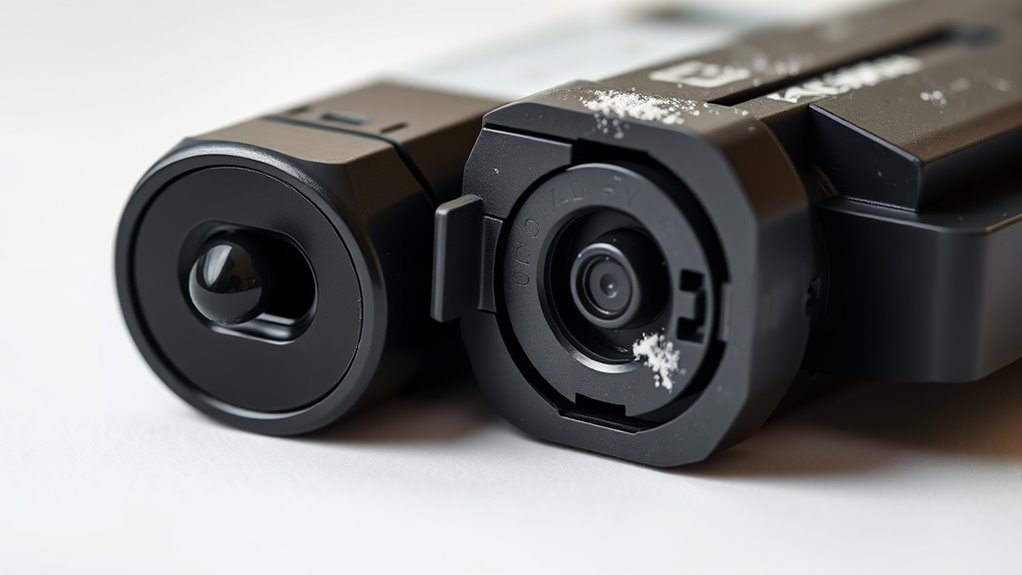
You can usually tell ink and toner cartridges apart just by looking at them. Ink cartridges are smaller and often have visible ink levels or nozzles. On the other hand, toner cartridges are bulkier and have a solid, sealed design.
Cartridge Appearance Differences
Since ink and toner cartridges serve different printing technologies, their appearances offer clear clues to tell them apart. Ink cartridges are typically smaller with clear or opaque plastic bodies that let you see the liquid ink inside. You’ll notice visible nozzles or spray heads on the bottom for ink dispersion.
In contrast, toner cartridges are larger, made of rigid plastic, and have a powdery appearance. They often include a drum and toner hopper, along with visible gears or rollers. Toner cartridges tend to be rectangular or cylindrical, sometimes with a plastic handle or latch for easy installation.
The surface of toner cartridges usually has a matte, slightly rough texture, while ink cartridges have a smoother, glossy finish. Labels also help: toner cartridges often say “toner” or “laser,” whereas ink cartridges show color names and “ink.”
Ink Versus Toner Features
Although both ink and toner cartridges serve the same purpose of printing, you can easily distinguish them by their physical features. Ink cartridges are usually smaller and rectangular, often with clear sections revealing liquid ink inside.
You’ll often see labels specifying “ink” or “liquid,” along with color options. Ink cartridges for inkjet printers also have nozzles or printheads attached.
On the other hand, toner cartridges tend to be larger and bulkier, featuring opaque shells that hide the fine powder inside. They often include a drum or roller visible as part of the cartridge.
Toner cartridges are labeled with “toner” and usually mention page yields or color types designed for laser printers. Recognizing these differences helps you quickly identify whether you’re dealing with ink or toner.
Why Ink Cartridges Are Best for Photos and Color Prints
When you print photos or color images, ink cartridges give you vibrant colors and fine details that really pop. Plus, they work great on different kinds of paper, especially glossy photo paper, which makes your prints look even better. You’ll see sharper, more accurate colors that bring your pictures to life every single time.
Vibrant Color Reproduction
If you want vibrant, detailed color prints, ink cartridges deliver the best results because they use liquid pigment or dye-based inks. These produce smoother gradations and richer saturation than toner. Unlike color laser printers that rely on powder toner, ink cartridges provide a broader color range and more accurate photo reproduction.
The liquid ink creates subtle progression and vivid hues that toner can’t match.
When you choose ink cartridges for your photos, you get:
- Deep, rich colors with smooth blending
- Accurate skin tones and natural shades
- Resistance to fading and water damage
- Crisp, vibrant images that last longer
This makes ink cartridges the go-to for anyone serious about color quality in prints.
Fine Detail Precision
Because ink cartridges use liquid ink and tiny nozzles, they deliver exceptional fine detail and smooth color gradients that toner simply can’t match. When you print photos or color-rich images, this precision lets you see sharp edges and subtle shifts in color that bring your prints to life.
The liquid ink dries quickly, so you won’t have to worry about smudging, making it perfect for projects requiring fine detail. Ink cartridges also offer a broader range of color variations, ensuring every shade is accurate and vibrant.
If you want high-resolution prints with crisp lines and seamless gradations, ink cartridges give you the precision and fine detail that toner-based printers struggle to achieve. This makes them your best choice for photos and color prints.
Versatile Paper Compatibility
Ink cartridges don’t just excel in delivering fine details. They also work well with a wide range of paper types and sizes, which makes them a top choice for printing vibrant photos and color-rich images. Unlike toner, ink cartridges use liquid ink that allows precise color mixing and layering, resulting in vivid, accurate colors. This versatility lets you print on various paper surfaces without sacrificing quality.
When you’re printing photos or color-intensive projects, ink cartridges handle glossy photo paper for sharp, shiny images, matte paper for artistic prints with soft tones, cardstock for durable, high-quality prints, and specialty papers for creative projects.
This adaptability makes ink cartridges the preferred option over toner for colorful, professional-quality prints.
Why Toner Cartridges Excel in High-Volume Document Printing
When you need to print large volumes quickly, toner cartridges outperform other options by using dry powder that speeds up the process. This dry toner allows laser printers to operate at speeds up to 55 pages per minute, far faster than inkjet printers.
If you’re tackling big printing jobs, high-yield toner cartridges are a game-changer, letting you produce up to 10,000 pages before replacement. That means fewer interruptions and more productivity.
Beyond speed, toner delivers sharp, professional-quality text that resists smudging, water, and fading over time. This ensures your documents look crisp and last longer.
The efficiency of toner cartridges also translates into a lower cost per page, especially when you print in high volumes. So if you regularly handle large print runs, choosing toner with high-yield cartridges will save you time and keep your output looking its best.
How Cartridge Yield Affects Your Printing Costs
Choosing the right cartridge yield directly impacts how much you’ll spend on printing over time. Cartridge yield is the number of pages a cartridge can print before needing replacement, and it plays a vital role in managing your printing costs.
High-yield toner cartridges can print roughly 8,000-10,000 pages, which lowers your cost per page considerably compared to standard cartridges. Ink cartridges, on the other hand, usually yield only 200-300 pages, making them less efficient for frequent or high-volume printing.
When you consider about 5% page coverage, opting for higher-yield cartridges helps you save money by reducing the frequency of replacements.
Here’s what to keep in mind about cartridge yield and printing costs:
- High-yield cartridges stretch your budget by printing more pages.
- Frequent replacements increase your overall expenses.
- Lower yield cartridges might suit light, occasional printing.
- Matching cartridge yield to your printing volume controls long-term costs.
Choosing wisely keeps your printing costs manageable and efficient.
Comparing OEM, Remanufactured, and Compatible Cartridges
How do you decide between OEM, remanufactured, and compatible cartridges for your printer? OEM printer cartridges come directly from the original manufacturer, guaranteeing top performance and a warranty, but they tend to be pricier.
Choosing OEM cartridges means guaranteed quality and warranty, though they usually come at a higher price.
If you want to save money and support the environment, remanufactured cartridges offer a solid choice. They’re used cartridges that have been cleaned, refilled, and repaired. However, their quality can vary, so picking a reputable supplier is key.
Compatible cartridges, on the other hand, are made or remanufactured by third-party companies to match OEM specs, often at a lower cost. While they can be cost-effective, their reliability isn’t always consistent, and they may affect cartridge lifespan.
Ultimately, your choice depends on your budget, environmental concerns, and how much risk you’re willing to take with print quality and cartridge longevity. Choosing wisely ensures you get the best value from your printer cartridges.
5 Signs You Need to Replace Your Ink or Toner Cartridge
Even if you don’t monitor your printer closely, signs like faded or streaky printouts clearly show that your ink or toner cartridge needs replacing. When your prints lose sharpness or colors start to disappear, it’s a clear indication that the cartridges are running low.
Often, your printer will alert you with warnings or low ink/toner messages, making it easier to know when to act. Smudging or prints that don’t dry properly also hint at cartridge issues.
Watch for these signs that your cartridges need replacing:
- Faded, streaky, or uneven printouts
- Blurry images or missing colors
- Printer warnings or low ink/toner alerts
- Prints smudging or drying slowly
Keeping an eye on these signs helps you maintain print quality and avoid frustration caused by worn-out ink cartridges.
How to Choose the Right Cartridge for Your Printing Needs
What’s the best way to find the right cartridge for your printer? First, identify your printer model and determine whether it’s an inkjet or laser printer. Ink cartridges are made for inkjet printers, offering vibrant colors and sharp detail. They’re perfect if you print photos or graphics. Toner cartridges suit laser printers and excel at fast, high-volume text printing.
Next, consider your printing volume. If you print occasionally or need color-rich prints, ink cartridges work well despite their lower page yield (usually 200 to 1,000 pages). For frequent, large print jobs, toner cartridges provide better efficiency and often last between 2,000 and 10,000 pages.
Also, check cartridge compatibility. OEM cartridges guarantee a perfect fit and reliable performance. However, remanufactured options can save money without sacrificing quality. By matching the cartridge type to your printer model and printing needs, you’ll get the best results without unnecessary expense or hassle.
Cost Differences Between Ink and Toner Cartridges Explained
You might notice toner cartridges cost more upfront than ink cartridges, but here’s the thing—they print way more pages before needing a replacement. So, when you break it down, your cost per page with toner usually ends up being much lower. This is especially true if you print a lot.
Knowing how long cartridges last can really help you figure out which option makes the most sense for what you need.
Initial Investment Costs
How much you spend upfront on ink versus toner cartridges can vary considerably depending on your printer choice. The initial investment cost for inkjet printers and their cartridges is generally lower, but toner cartridges for laser printers demand a higher upfront cost. Here’s what you can expect:
- Ink cartridges typically cost between $15 and $50
- Toner cartridges often range from $50 to $150 or more
- Laser printers with toner usually exceed $200 initially
- Inkjet printers often cost under $100 upfront
While toner cartridges cost more at first, their larger size means fewer replacements, helping balance long-term expenses. Understanding these initial investment costs helps you choose the right printer aligned with your budget and printing needs.
Cost Per Page
Why does the cost per page vary so much between ink and toner cartridges? It mainly comes down to page yield and cartridge price. Ink cartridges have a lower upfront cost but print fewer pages. This results in a higher cost per page. Toner cartridges cost more initially but last much longer, lowering the cost per page.
| Cartridge Type | Page Yield | Cost Per Page |
|---|---|---|
| Ink Cartridges | 200 – 300 pages | $0.10 – $0.30 |
| Toner Cartridges | 8,000 – 10,000 pages | $0.02 – $0.05 |
If you print a lot, toner cartridges are more economical. Ink cartridges can raise your cost per page, especially with frequent color printing.
Cartridge Longevity Impact
Although toner cartridges often come with a higher upfront cost, their considerably longer lifespan makes them more cost-effective for frequent printing. Cartridge longevity plays a vital role in reducing overall expenses, especially if you print in large volumes. High-yield toner cartridges can print up to five times more pages than standard ink cartridges, meaning fewer replacements and less downtime.
Consider these factors when weighing cartridge longevity:
- Toner cartridges yield between 2,000 to 10,000 pages
- Ink cartridges typically print 200 to 1,000 pages
- Fewer replacements with toner reduce maintenance time
- High-yield toner lowers cost per page in bulk printing
Frequently Asked Questions
Can Ink Cartridges Dry Out if Unused for a Long Time?
Yes, ink cartridges can dry out if you leave them unused for a long time. Ink drying happens because the liquid ink thickens or clogs the nozzles, especially in low-humidity environments.
To avoid this, focus on proper cartridge storage. Keep them sealed, cool, and dry. You should also use your printer regularly or run cleaning cycles to maintain ink flow and prevent cartridges from drying out, ensuring better print quality.
Are Toner Cartridges Recyclable or Environmentally Friendly?
Yes, toner cartridges are recyclable and can be quite environmentally friendly. You should check for recycling programs offered by manufacturers, which make it easy to return used cartridges.
These programs help reduce the environmental impact by cleaning, refilling, and testing cartridges instead of making new ones. By participating, you’re conserving resources, cutting down landfill waste, and preventing harmful toner powder from polluting the environment.
How Long Do Ink Cartridges Typically Last Once Opened?
Once you open an ink cartridge, it typically lasts about 3 to 6 months before ink evaporation starts affecting print quality. How you handle cartridge storage plays a big role here. Keeping it sealed tightly and stored in a cool, dark place slows evaporation and helps preserve the ink.
If you leave it exposed to air or light, the ink dries out faster. So paying attention to storage can really extend your cartridge’s usefulness.
Can Toner Powder Be Harmful if Inhaled or Touched?
Think of toner powder like a hidden storm. You can’t always see the dangers it brings. Yes, toner powder can be harmful if inhaled because it may irritate your lungs.
Skin contact risks exist too, as toner can cause irritation or allergic reactions. To keep safe, always wear gloves and masks. Work in a well-ventilated area to avoid breathing in those tiny particles.
Is It Safe to Refill Ink Cartridges at Home?
Yes, you can safely do a DIY refill of your ink cartridges at home if you follow cartridge safety guidelines. Make sure you use proper refill kits and compatible ink to avoid leaks or damage.
Always work in a well-ventilated area and wear gloves to protect yourself from spills. Remember, improper refilling might void your printer’s warranty, so check the policy before you start.
Taking these steps helps keep your printer running smoothly.
Conclusion
Now that you know the key differences between ink and toner cartridges, choosing the right one gets easier. Did you know that laser printers using toner cartridges can print up to 2,000 pages per cartridge, compared to just 300 pages for ink cartridges?
That’s a huge difference if you print a lot! Keep your printing needs in mind, and you’ll save money and get the best quality every time.
Leave a Reply