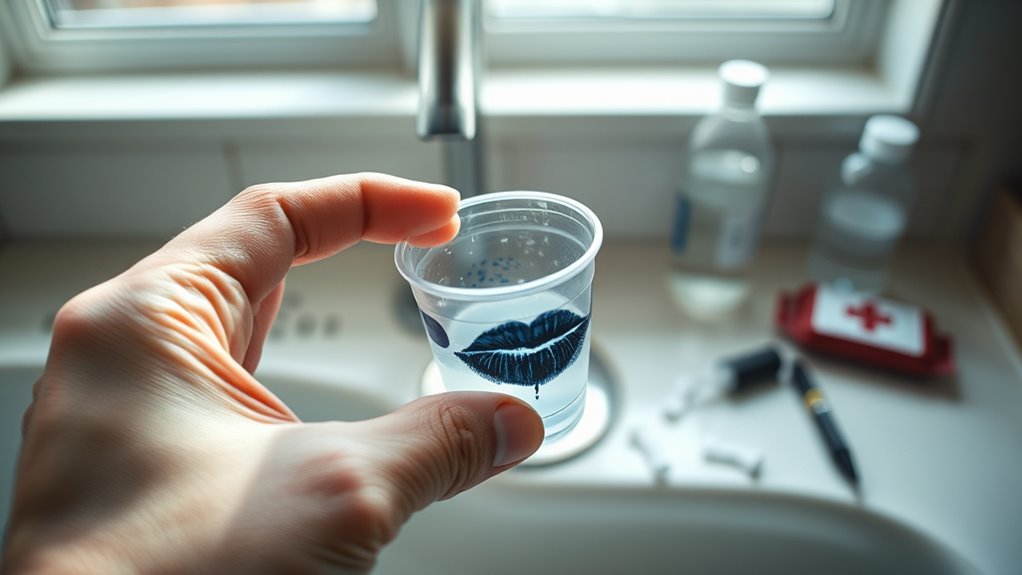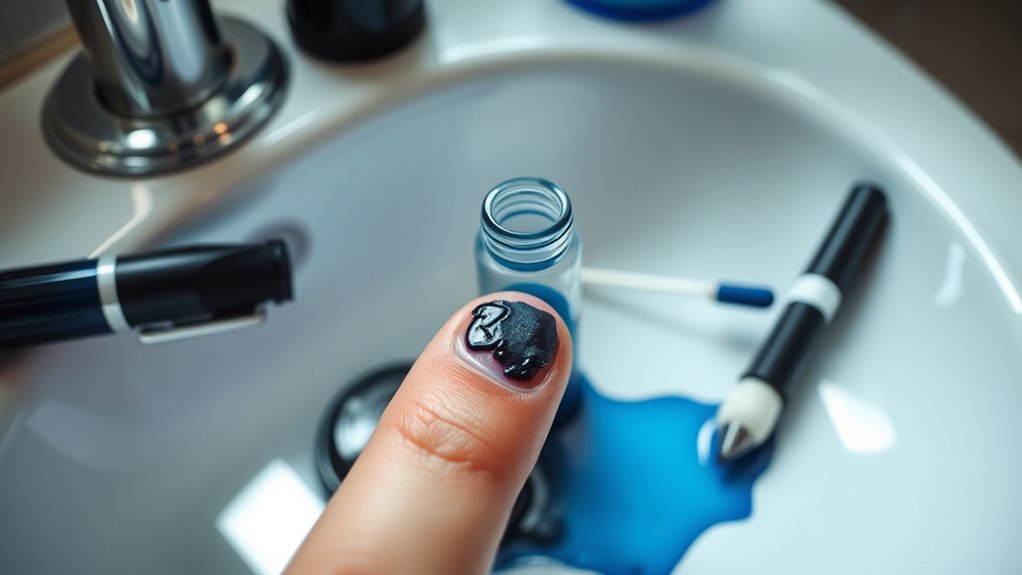
Category: Ink

  • How to Push in Ink Game in 7 Easy Steps

    How to Push in Ink Game in 7 Easy Steps

    You release the Push tool automatically after Red Light Green Light, so jump into the tool menu to equip it.

    Aim carefully by lining up your target close enough for impact, and time your push with the wind-up animation for precision.

    Upgrade your Strength to boost reach and power, and use cooldown management to push repeatedly.

    Enhance your ability further with powers and gamepasses.

    Stick with these steps, and you’ll start mastering pushes to control battles and dominate opponents.

    Unlock the Push Tool
    unlock push after red light

    Although you can’t use the Push tool right away, you’ll gain access to it automatically once you finish the Red Light Green Light stage. You don’t need to meet any extra requirements or buy upgrades to get it; the game grants it as part of progressing through the early phases.

    The Push tool unlocks automatically after completing the Red Light Green Light stage—no extra steps needed.

    Once accessed, you can find the Push tool easily in the in-game tool menu by selecting it. This simple selection lets you start experimenting with Push mechanics right away.

    The Push tool serves as a fundamental ability that lets you interact with objects and players in new ways. While it’s available immediately after the initial stage, you can improve its power later through upgrades, powers, or gamepasses, which enhance its effectiveness.

    Understanding how to obtain and select the Push tool is your first step toward mastering the Push mechanics in Ink Game.

    Aim and Position for the Best Push

    To land the best push, you want to position yourself just right so your target is straight in your line of fire. It’s all about aiming for those vulnerable spots where your push will really make a difference.

    Make sure you line up your push trajectory carefully—that way, you’ll get maximum knockback and hit with precision every time.

    Optimal Player Placement

    When you aim the Push tool directly at your target, you maximize knockback distance and effectiveness. To optimize player placement, stay close enough to connect your push without risking a miss from distance.

    Use your wind-up time to align your crosshair precisely on the target, anticipating their movement. Players moving predictably or standing still are easier to push.

    Elevation and narrow spaces work in your favor, letting you trap opponents or funnel them into positions where your push has maximum impact. Maintaining strong player awareness helps you identify these opportunities quickly.

    Targeting Vulnerable Positions

    Mastering player placement sets the stage for targeting vulnerable positions with your push. Focus your targeting strategies on opponents who are ragdolled or caught off guard in vulnerable zones to maximize knockback impact.

    Position yourself close enough to guarantee your push connects within the tool’s reach, but stay ready to adjust as the situation changes. Timing is paramount. Launch your push just after an opponent becomes exposed or distracted for the best chance of success.

    Also, consider the push direction carefully to send enemies into obstacles or away from safe zones, increasing your advantage. Keep an eye on your cooldown and prepare to strike when targets are most vulnerable. This precision in targeting strategies can turn the tide of any Ink Game match.

    Aligning Push Trajectory

    How do you guarantee your push lands exactly where you want it? Mastering push physics and trajectory control starts with aiming directly at your target. Position yourself close to maximize push distance since range drops with distance.

    Use the wind-up animation to line up your push precisely before releasing, and adjust your camera angle to align your view perfectly.

    Tip Action Benefit
    Aim Directly Target player Accurate trajectory
    Position Close Reduce distance Max push distance
    Use Wind-up Aim during animation Improved precision
    Adjust Camera Align view with target Better trajectory control

    Timing your push cooldown ensures your aim syncs with push readiness for maximum impact.

    Master Push Timing and Wind-Up

    Although it takes patience, waiting for the wind-up animation to finish before releasing your push guarantees you deliver maximum force and accuracy. Mastering push timing and wind-up mastery is vital, as premature releases can leave you vulnerable to counters or let enemies slip away.

    You’ll want to practice syncing your push with enemy movements to sabotage effectively in PvP.

    Key points to focus on include:

    • Recognizing that the push is cancellable during wind-up, so timing your release is essential.
    • Using the cooldown period wisely to time pushes when they’ll have maximum impact.
    • Adjusting your timing if you use upgrades that change wind-up duration, ensuring consistent push power.

    Upgrade Push Strength and Boost With Powers
    enhanced push power strategy

    When you upgrade your Push Strength in Ink Game, you increase both the distance and power of your pushes. This makes your sabotage and PvP tactics far more effective. Focusing on push mechanics, upgrading your Strength level extends how far and forcefully you can push opponents or objects, giving you a clear edge.

    A smart upgrade strategy involves purchasing the Super Push Gamepass, which instantly boosts your Strength level by 3. This profoundly enhances your push capabilities.

    To further amplify your pushes, use Super Strength Powers. These powers triple your push distance, but keep in mind they also double your cooldown time between pushes. Combining upgrades with these powers lets you customize your push strength to fit your gameplay style, whether you prefer aggressive PvP or strategic sabotage.

    Manage Push Cooldown for Faster Retry

    If you want to push more often, you’ve got to manage your cooldown smartly. Using upgrades and powers that cut down your wait time really helps with that.

    Timing your pushes just right is key. It makes sure you get the most out of every chance without getting stuck waiting around.

    Cooldown Reduction Strategies

    If you want to push more frequently in the Ink Game, managing your cooldown is essential. You can reduce cooldown by upgrading your Strength level, which shortens wait times between pushes. However, activating Super Push doubles cooldown duration, so balancing upgrades is key.

    To optimize cooldown reduction, keep these strategies in mind:

    • Time your power-ups carefully to avoid clashes that extend cooldown.
    • Use environmental obstacles to your advantage, allowing recovery during natural delays.
    • Regularly check for game updates or new upgrades to stay ahead with faster cooldown options.

    Timing Your Pushes

    Although managing cooldowns can feel tricky, mastering the timing of your pushes lets you retry faster and stay competitive. You need to wait at least 15-20 seconds for the push cooldown to reset before trying again.

    Use visual indicators, the cooldown timer, and push sound effects to anticipate when your push tool is ready. Pay attention to push animation timing to cancel or interrupt other actions during the wind-up phase, so you’re primed to push the moment cooldown ends.

    Position yourself efficiently to maximize each push’s impact, reducing the need for rapid retries. Keeping track of your push cooldown timer helps you optimize push frequency, ensuring smoother gameplay and quicker retries without wasting valuable time.

    Strategic Tips for Pushing in PvP and Sabotage

    coordinate trap time dominate

    When you time your Push tool right, you can knock opponents off balance and turn the tide in both PvP and Sabotage matches. Using environmental obstacles and teamwork coordination effectively increases your Push’s impact. Aim to activate Push when foes are vulnerable or mid-attack, maximizing disruption.

    Keep these strategic tips in mind:

    • Use environmental obstacles to trap or funnel enemies, forcing them into your Push’s range for easy knockbacks.
    • Coordinate with teammates to combine Push with other abilities, creating combos that corner or isolate opponents.
    • Manage your Push cooldown carefully, striking at key moments to interrupt enemy plans and gain map control.

    Upgrading your Strength and utilizing power-ups like Super Strength can extend your Push’s reach, but timing and positioning remain vital. By blending these elements, you control the battlefield, dominating PvP and sabotage rounds with precision.

    Customize Your Push With Gamepasses and Powers

    By investing in Gamepasses and Powers, you can considerably customize your Push to fit your playstyle and boost its effectiveness. The push mechanics allow you to extend your reach by upgrading your Strength level, which directly enhances how far and powerful your pushes are. For example, purchasing the “Super Push” Gamepass increases your push distance by leveling up Strength by 3, giving you a clear gamepass benefit.

    On top of that, activating Super Strength Powers triples your push distance, though it also doubles the cooldown, so timing is essential. Combining these powers and gamepasses lets you tailor your Push for different gameplay scenarios, whether you want quick, frequent pushes or fewer, more strategic ones. The “Extra push strength” Gamepass adds even more power to your pushes, allowing you to outmaneuver opponents more effectively.

    Frequently Asked Questions

    Can You Push Multiple Players at Once?

    You can’t push multiple players at once using the Push mechanics in Ink Game, since the tool only affects one player per activation. However, you can leverage Player interactions by positioning yourself strategically to push players sequentially.

    Timing your moves well lets you create combos, but the Push tool itself doesn’t support simultaneous multi-player pushes. To affect several players at once, you’ll need to rely on other game mechanics or environmental factors beyond the Push function.

    Does Terrain Affect Push Distance or Direction?

    You’d think terrain influence would totally mess with your push distance, right? Surprise, it doesn’t. The push mechanics keep the force consistent no matter where you stand.

    But here’s the twist: while the distance stays steady, uneven or sloped terrain can redirect your push, changing its direction. So, terrain doesn’t shrink your push but can sneakily alter where your opponent ends up, especially near obstacles or slopes.

    Are There Penalties for Pushing Teammates Accidentally?

    You won’t face direct penalties for accidentally pushing teammates, but it can disrupt strategic positioning and hurt teammate coordination. While occasional accidental pushes are usually forgiven, doing it repeatedly might annoy your team or even draw moderator warnings.

    To keep your gameplay smooth, communicate clearly with your teammates and focus on maintaining good positioning. This helps you avoid unintentional pushes that could undermine your team’s overall success.

    Can You Push While Mid-Air or Jumping?

    You can push while mid-air or jumping, like a gust of wind knocking leaves from a tree. Your character customization and power up effects play a huge role here. They determine your push strength and how far you send opponents flying.

    Activating your push tool mid-jump uses your upgrades, like Super Push, to maximize impact. Just remember, timing matters or your mid-air push won’t pack the punch you’re aiming for.

    Is There a Visual Indicator for Push Cooldown Timing?

    No, you won’t find a visual indicator for the push cooldown in the game. You have to rely on watching the push tool’s animation or wind-up to guess when the cooldown ends.

    Since there’s no timer or bar, you’ll notice you can’t activate push again right away, which signals the cooldown is still active. You’ll need to count or time it manually because upgrades don’t provide any visual cue either.

    Conclusion

    You’ve revealed the Push Tool and mastered every step, but here’s the twist: just when you think you’ve nailed the perfect push, an unexpected cooldown hits. It’s frustrating, right?

    Yet, that moment pushes you to try again, sharpen your timing, and strategize smarter. Funny how the game’s challenges sneak in to make victories even sweeter.

    Keep customizing and upgrading. Your next push could be the one that changes everything. Don’t stop now!
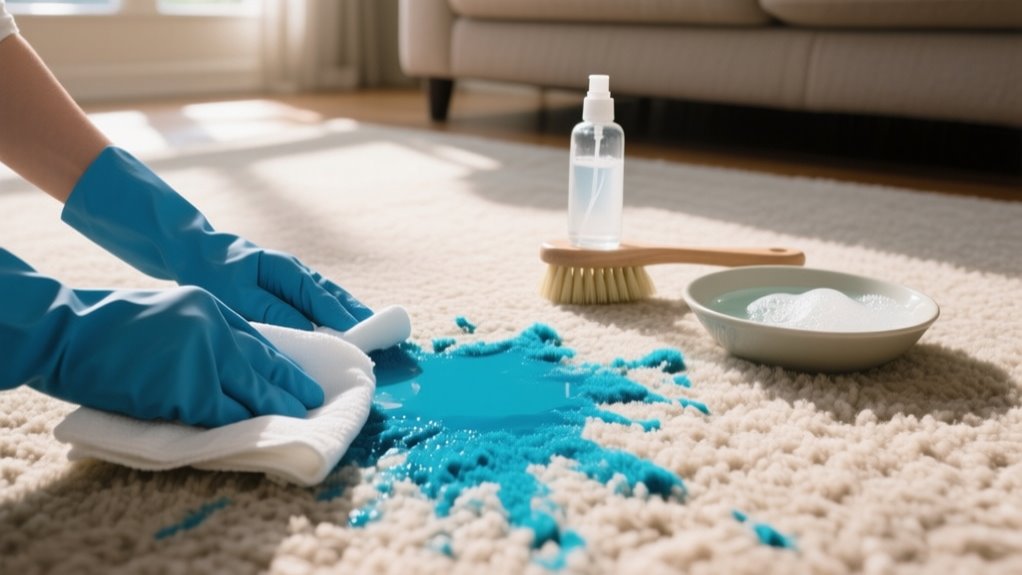
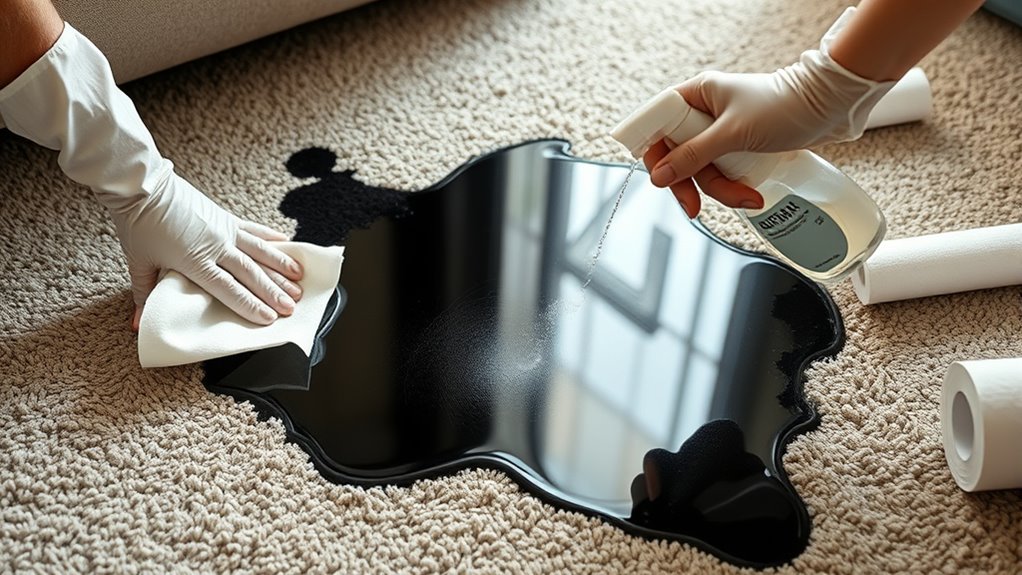
  • How to Get Printer Ink Out of Carpet in 10 Easy Steps

    How to Get Printer Ink Out of Carpet in 10 Easy Steps

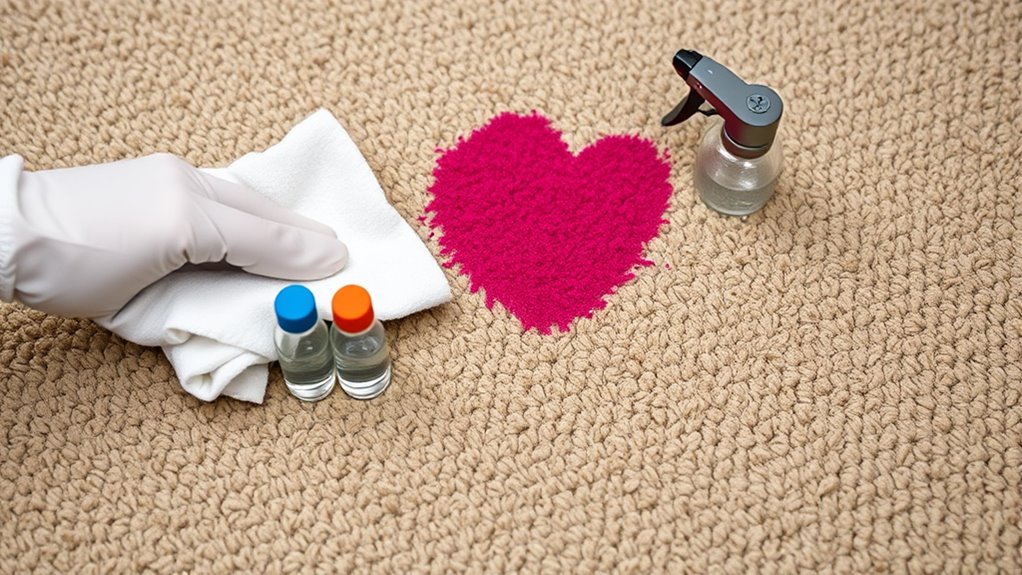
    To get printer ink out of carpet, act fast by blotting the stain gently with a dry cloth to absorb excess ink without rubbing.

    Use isopropyl alcohol or a mixture of dish soap and vinegar on a tested spot, then blot from edges inward.

    Rinse lightly with cold water and blot dry.

    Use fans to speed drying and prevent mold.

    For stubborn stains or detailed steps, keep following for more helpful tips and tricks.

    Act Fast to Prevent Ink Stains Setting

    act fast blot apply solution

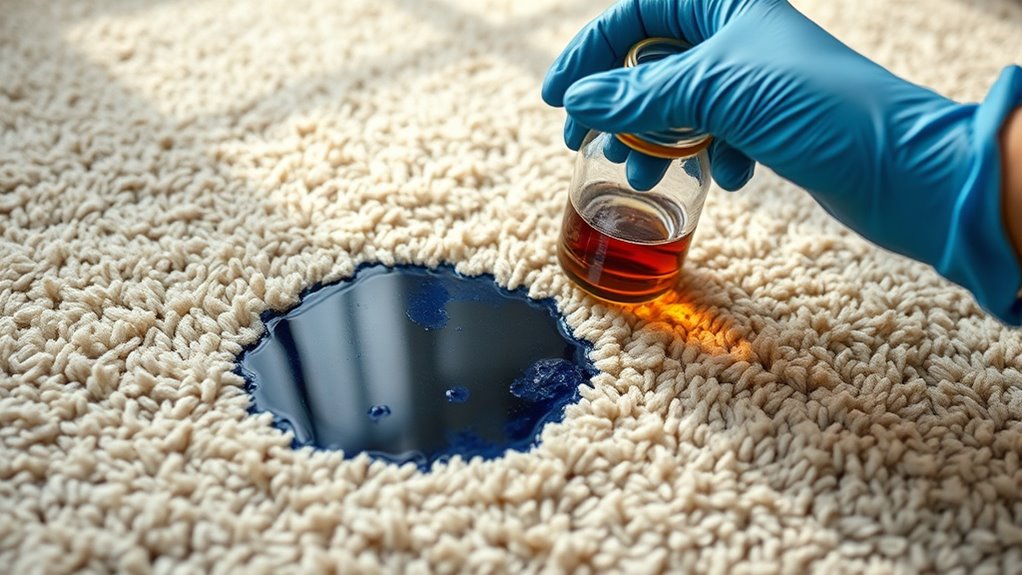
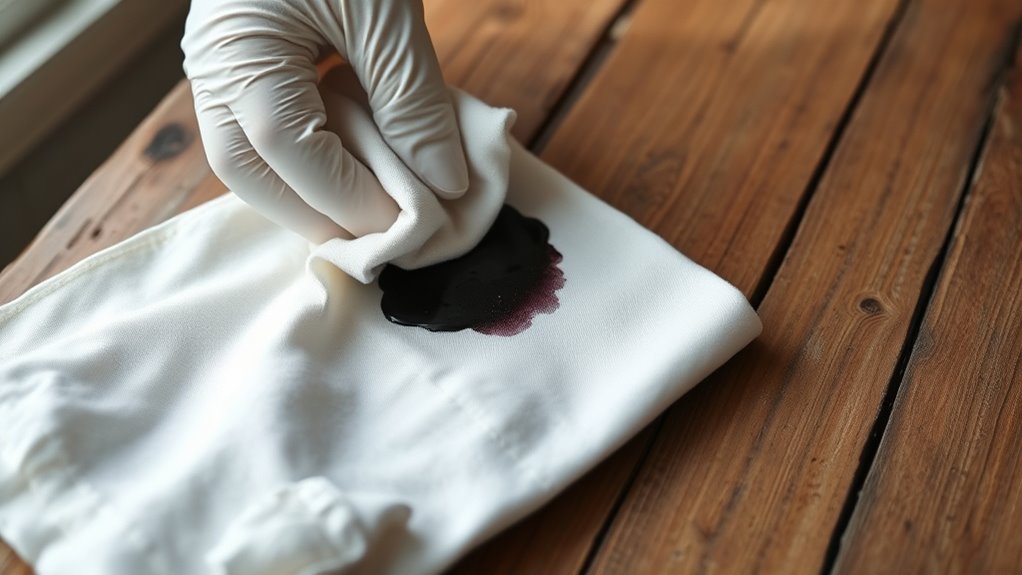
    How quickly you respond to an ink spill on your carpet can make all the difference. The first step is to immediately blot the spill with a dry cloth or paper towel. This helps absorb the excess ink before it soaks deeper into the fibers.

    Remember, don’t rub or scrub the stain. That only spreads the ink and makes it set more permanently. Instead, act fast by applying a cleaning solution or alcohol within the first few minutes to keep the stain from drying out and becoming harder to remove.

    Avoid rubbing the stain; apply cleaning solution quickly to prevent ink from setting permanently.

    Use a clean, damp cloth to gently lift the ink, making sure the stain stays moist for easier removal. If you act within the first 5 to 10 minutes, you’ll greatly increase your chances of completely removing the ink stain.

    Blotting quickly and carefully is your best defense against permanent damage.

    Cleaning Supplies Needed for Ink Removal

    Before you start tackling an ink stain, gather the right cleaning supplies to guarantee effective removal without damaging your carpet. You’ll need isopropyl alcohol (70% or higher) or a commercial ink remover like OxiClean, both proven for breaking down ink.

    Keep plenty of clean, white cloths or paper towels nearby to blot and lift the ink gently. A spray bottle with a homemade cleaning solution made from dish soap, white vinegar, and water offers a gentle approach for delicate carpets. For quick, chemical-free removal, specialized wipes like Tub O’ Towels with Bond Buster™ technology can be handy.

    Having these supplies ready ensures you can act quickly and confidently. Remember, the right cleaning solution and materials minimize the risk of spreading the stain or damaging carpet fibers. This sets you up for a successful ink removal process every time.

    Testing Ink Removal Cleaners Safely on Carpet

    test cleaner on hidden area

    Although it’s tempting to apply your chosen ink remover directly to the stain, you should always test it on a hidden part of your carpet first. This helps you avoid unexpected color fading or fiber damage.

    Pick a discreet spot, like behind furniture or under a rug, and apply a small amount of the cleaner. Wait 5 to 10 minutes, then blot with a clean white cloth to check for bleeding or discoloration. Record your findings to guarantee the cleaner is safe before treating the stain.

    Here’s a simple checklist to guide your test:

    Step What to Do
    1. Choose spot Find a hidden area on the carpet
    2. Apply cleaner Use a small amount on the test spot
    3. Wait Let it sit for 5 to 10 minutes
    4. Blot Use a white cloth to blot gently
    5. Observe & record Note any color change or fiber damage

    Always test first to protect your carpet’s appearance.

    How to Blot and Lift Printer Ink Without Spreading

    If you notice printer ink on your carpet, don’t rub it—that just pushes the stain deeper. Instead, grab a clean cloth and gently blot the ink. Try working from the edges toward the center so it doesn’t spread.

    Keep switching to fresh cloths as the ink lifts off, this way you won’t accidentally reapply the ink back onto the carpet. It’s a simple trick, but it really helps keep the stain from getting worse.

    Blot Don’t Rub

    Two key actions will help you tackle printer ink stains effectively: blotting promptly and avoiding rubbing. When you notice the ink, immediately blot the stain using a clean, dry cloth or paper towel. Use a gentle, dabbing motion instead of rubbing to lift the ink without spreading it further.

    Apply light pressure to absorb the ink rather than pushing it deeper into the carpet fibers. Always blot from the outer edge of the stain inward to keep the ink contained and prevent the stain from growing.

    Remember to replace or rotate your blotting material often, so you don’t re-deposit ink and guarantee maximum absorption. By focusing on blotting, you’ll remove more ink quickly and avoid making the stain worse.

    Use Clean Cloths

    Using clean cloths is essential to blot printer ink from your carpet effectively. Start by pressing a clean, dry white cloth gently onto the stain to absorb excess ink without spreading it. Avoid rubbing; instead, lift the ink by pressing and lifting with the cloth.

    Each time you blot, switch to a fresh section of your white cloth to prevent re-depositing ink back onto the carpet. This prevents the stain from spreading or embedding deeper into the fibers. Be gentle and avoid scrubbing or applying heavy pressure, as this only pushes the ink further in.

    Work From Edges

    Although it might be tempting to tackle the center of the stain first, you should always start blotting from the outer edges and work inward to keep the ink from spreading further into your carpet fibers.

    Begin by using a clean, dry cloth or paper towel to gently lift any excess ink from the edges. Then, dampen a cloth slightly with a cleaning solution or alcohol and carefully blot from the outside toward the center of the stain.

    Avoid rubbing or scrubbing, as this will push the ink deeper and spread it. Make sure to switch to a clean section of your cloth or a fresh paper towel frequently to effectively lift the ink and moisture without transferring it back onto your carpet. This method helps contain and remove the ink efficiently.

    Using Dish Soap and Vinegar to Remove Ink

    If you want to tackle ink stains effectively, try mixing one tablespoon of dish soap, two cups of warm water, and one tablespoon of white vinegar to create a powerful cleaning solution. First, test this on a hidden spot of your new carpet.

    Dampen a clean cloth with the mix and gently blot the printer ink stain, working from the edges toward the center to avoid spreading. Blot up as much ink as possible without rubbing, which can push ink deeper into carpet fibers.

    Use white paper towels to blot up excess moisture. Repeat until the carpet stain fades. Finally, rinse with cold water and blot dry with white paper towels.

    Step Action
    1 Mix dish soap, vinegar, water
    2 Test on carpet
    3 Blot ink stains with cloth
    4 Blot excess with paper towels
    5 Rinse and dry

    This method helps remove ink from carpet safely and effectively.

    How to Use Isopropyl Alcohol for Ink Stains

    use high concentration alcohol carefully

    You’ll want to use isopropyl alcohol that’s at least 70% concentrated for the best results on ink stains. It’s a good idea to test it first on a hidden spot in your carpet, just to make sure it won’t cause any damage or discoloration. When you’re ready to apply, blot gently from the outside of the stain moving inward. And don’t forget to follow safety precautions to protect both yourself and your carpet.

    Choosing The Right Alcohol

    How do you choose the right alcohol to tackle printer ink stains on your carpet? The key is selecting isopropyl alcohol with a concentration of 70% or higher. This strength effectively breaks down ink without damaging your carpet fibers.

    Here’s what you need to keep in mind:

    1. Concentration: Use 70% or stronger isopropyl alcohol for best stain removal.
    2. Test Spot: Always try the alcohol on a hidden carpet patch first to avoid discoloration.
    3. Application: Use a clean cloth or sponge to dab gently, preventing oversaturation and damage.

    Choosing the right alcohol ensures you treat the ink stain effectively while protecting your carpet’s color and texture.

    Application Techniques Explained

    Selecting the right isopropyl alcohol sets the stage for effective stain removal, but applying it correctly makes all the difference. When using isopropyl alcohol for ink stains, start by dampening a clean cloth with 70% or higher alcohol.

    Gently blot the stain, working from the outer edge inward to prevent spreading. Avoid rubbing or scrubbing, as this pushes ink deeper into the carpet fibers. Test the alcohol on a hidden carpet spot first to ensure it won’t discolor.

    For best results, use fresh cloths soaked in alcohol as needed, replacing them to lift more ink without re-depositing it. After treating the stain, rinse the area with cold water and blot dry.

    These application techniques ensure you effectively remove ink without damaging your carpet.

    Safety Precautions Needed

    Although isopropyl alcohol is effective for removing ink stains, you need to take important safety precautions to protect yourself and your home. Wearing the right protective gear is essential to avoid skin irritation and inhaling fumes.

    Follow these safety tips when using isopropyl alcohol on carpet stains:

    1. Always wear gloves and work in a well-ventilated area to reduce exposure to harmful fumes and protect your skin.
    2. Test the alcohol on a hidden carpet spot first to check for any discoloration or damage before full application.
    3. Keep isopropyl alcohol away from open flames and heat sources, as it’s highly flammable and poses a fire hazard.

    How to Rinse Ink Stains Without Over-Wetting

    Because over-wetting can worsen ink stains and damage your carpet, you’ll want to rinse the area carefully using just a small amount of cold water. Avoid soaking the fibers, as excess moisture can cause color fading and weaken the carpet backing.

    Rinse ink stains gently with minimal cold water to prevent damage and color fading.

    Use a damp cloth or sponge to gently blot the stain, lifting ink without spreading it further. Apply water sparingly, blotting with clean towels or paper towels to absorb moisture immediately after each application.

    If you have a wet vacuum or shop vac, use it to extract as much liquid as possible after rinsing. This approach minimizes saturation and helps protect your carpet’s color and texture.

    Taking these steps ensures the ink is diluted and removed effectively without risking damage from over-wetting. By controlling moisture levels carefully, you prevent color fading and maintain your carpet’s appearance while tackling the ink stain.

    How to Dry Carpet After Ink Stain Removal

    Once you’ve carefully rinsed and blotted the ink stain without over-wetting, the next step is to dry your carpet thoroughly. Proper drying techniques are essential to prevent re-soiling and make sure no moisture lingers, which could damage your carpet.

    Follow these steps to dry your carpet effectively:

    1. Blot the damp area with dry paper towels or clean cloths to soak up as much moisture as possible without spreading the ink.
    2. Boost airflow by opening windows and turning on ceiling or portable fans. This helps the carpet dry faster.
    3. Use fans or a dehumidifier to circulate air and reduce humidity, speeding up the drying process.

    Avoid walking on the damp spot until it’s completely dry. Check the area periodically since drying might take a few hours or overnight, depending on humidity. These drying techniques help restore your carpet quickly and keep it looking clean.

    Tackling Stubborn Ink Stains

    When you’re dealing with stubborn printer ink stains, it’s really important to be careful so you don’t end up making the stain worse. A good approach is to use isopropyl alcohol or a commercial ink remover.

    Before you dive in, always test the cleaner on a hidden spot first, just to be safe. When you apply it, start from the outside of the stain and work your way in. Then, make sure to rinse it thoroughly—this helps prevent the ink from spreading or coming back.

    Ink Stain Challenges

    Why do printer ink stains pose such a challenge for carpet cleaning? It’s because the ink quickly penetrates deep into the carpet fibers, making surface cleaning ineffective. Printer ink contains dyes and solvents that can set fast, causing stubborn ink bleeding that spreads if not treated properly. Traditional methods like shampooers often can’t fully lift these stains, leaving you frustrated.

    Here are three main challenges you’ll face with ink stains:

    1. Ink Bleeding – The dyes can spread, making the stain larger and harder to control.
    2. Deep Penetration – Ink seeps deep into fibers, resisting surface cleaning.
    3. Wrong Products – Some cleaners worsen stains or damage carpet fibers.

    Understanding these challenges helps you approach cleaning more effectively.

    Effective Cleaning Techniques

    Although printer ink stains can seem impossible to remove, you can tackle them effectively with the right techniques and quick action. Start by blotting excess ink immediately with a dry cloth or paper towel to prevent color bleeding deeper into the carpet fibers.

    Next, test any cleaning solution, like isopropyl alcohol or commercial ink removers, on a hidden spot before applying it to the stain. Use a cloth soaked in a mixture of dish soap, white vinegar, and warm water to gently dab the ink stain, avoiding vigorous scrubbing that may spread the color.

    Rinse the area thoroughly with plain water, then extract moisture using a wet vacuum. Finally, let the carpet dry completely with fans to prevent the ink from settling again or causing mold growth.

    Preventing Ink Reappearance

    Even after you’ve cleaned the ink stain thoroughly, preventing it from reappearing requires careful attention to drying and sealing the carpet fibers. Ink prevention depends largely on how you handle the carpet post-cleaning.

    Follow these steps to keep stubborn ink stains from resurfacing:

    1. Let the cleaned area dry completely without walking on it. This prevents ink from wicking back up.
    2. Apply a light layer of white vinegar or a specialized stain blocker to seal the fibers and reduce re-staining chances.
    3. Use fans or dehumidifiers to speed drying, minimizing ink’s opportunity to settle back into the carpet.

    Regularly inspect the stain during drying and avoid over-wetting. Over-wetting can cause ink to re-emerge as fibers rehydrate.

    When to Call a Carpet Cleaning Professional

    If your attempts to remove printer ink from the carpet haven’t worked after several tries, it’s time to call a professional. DIY methods can only do so much, especially when ink penetrates deep into the carpet fibers or the stain has set over time. In these cases, professional intervention becomes essential. Carpet cleaning experts use specialized equipment and powerful solutions that effectively target tough, stubborn stains without damaging your carpet.

    Moreover, if the ink stain covers a large area or has been there for a while, a professional can prevent permanent damage and restore your carpet’s appearance. Calling a professional also helps if you want to preserve your carpet warranty, as improper cleaning might void coverage. Don’t hesitate to seek expert help when ink stains persist; it’s the best way to ensure your carpet looks great and lasts longer.

    Frequently Asked Questions

    Can Printer Ink Damage Carpet Fibers Permanently?

    Yes, printer ink can permanently damage carpet fibers because of its ink durability. When ink seeps deep into the fibers, it can cause discoloration and weaken the carpet’s structure.

    If you don’t act quickly, the ink’s chemicals might break down the fibers, leading to lasting damage. You’ll want to address ink stains immediately to avoid this permanent harm and preserve your carpet’s look and feel over time.

    Are Some Carpet Materials More Resistant to Ink Stains?

    Yes, some carpet materials show clear material variability in resisting ink stains. You’ll find synthetic fibers like nylon and polyester resist ink better than natural ones like wool or cotton.

    If your carpet’s tightly woven and low-pile, it’ll also fend off stains more effectively. Plus, if your carpet has stain-resistant treatments, you’re even better protected.

    Understanding this variability helps you choose or treat carpets to minimize ink damage.

    Is It Safe to Use Commercial Stain Removers on All Carpets?

    You shouldn’t use commercial stain removers on all carpets, as 35% of carpets suffer damage from improper cleaning. Chemical reactions between harsh cleaners and delicate fibers like wool or silk can cause discoloration or permanent damage.

    Always check the manufacturer’s label and test on a hidden spot first. Choosing stain removers made specifically for your carpet type helps prevent unwanted chemical reactions and keeps your carpet looking its best.

    How Long Do Ink Stains Typically Take to Set if Untreated?

    Ink stain duration varies, but you’ll usually see printer ink start to set within 10 to 30 minutes if untreated. Water-based inks dry fast and can become permanent quickly.

    For oil-based or permanent inks, the stain duration can stretch from several hours to days before fully setting. The longer you wait, the harder it gets to remove, so acting fast is key to prevent deep bonding with your carpet fibers.

    Can Heat From a Hairdryer Worsen an Ink Stain?

    Yes, heat from a hairdryer can worsen an ink stain due to the heat risk. When you apply heat, the ink molecules bond more tightly with carpet fibers, making the stain harder to remove.

    You might also spread or smudge the ink, increasing the stain’s size and visibility. To protect your carpet, you should avoid using direct heat and instead use cold water or specialized cleaners to tackle the stain safely.

    Conclusion

    Act fast, and you’ll catch that printer ink stain before it settles like unwelcome graffiti on your carpet. With the right supplies and careful blotting, you can lift most stains without spreading them further.

    Remember to rinse gently and dry thoroughly to avoid lingering moisture. If stubborn spots stick around like unwanted guests, don’t hesitate to call in a professional. Your carpet will thank you for the quick and careful care!

  • How to Get Ink Stains Out of Jeans in 10 Easy Steps

    How to Get Ink Stains Out of Jeans in 10 Easy Steps

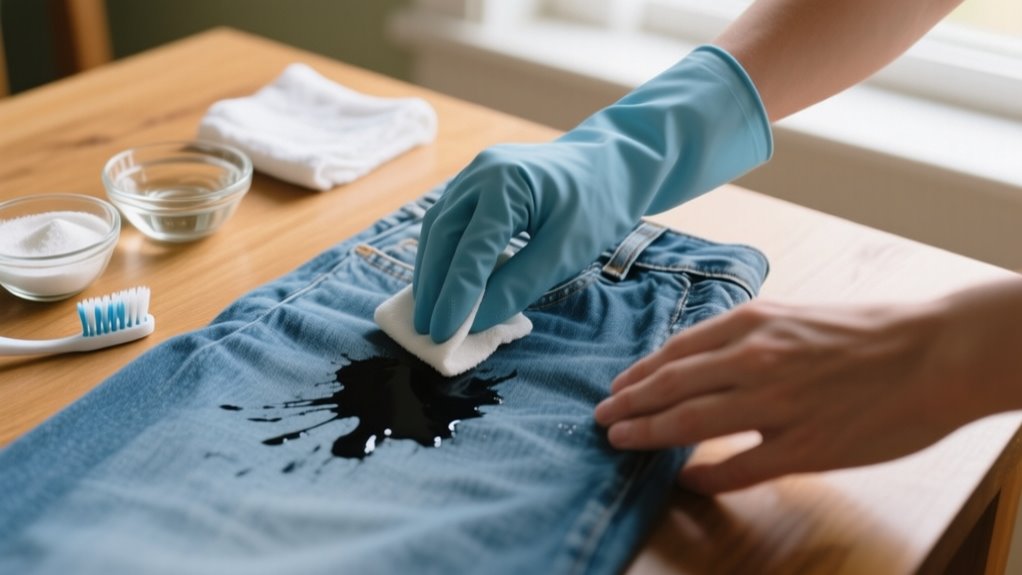
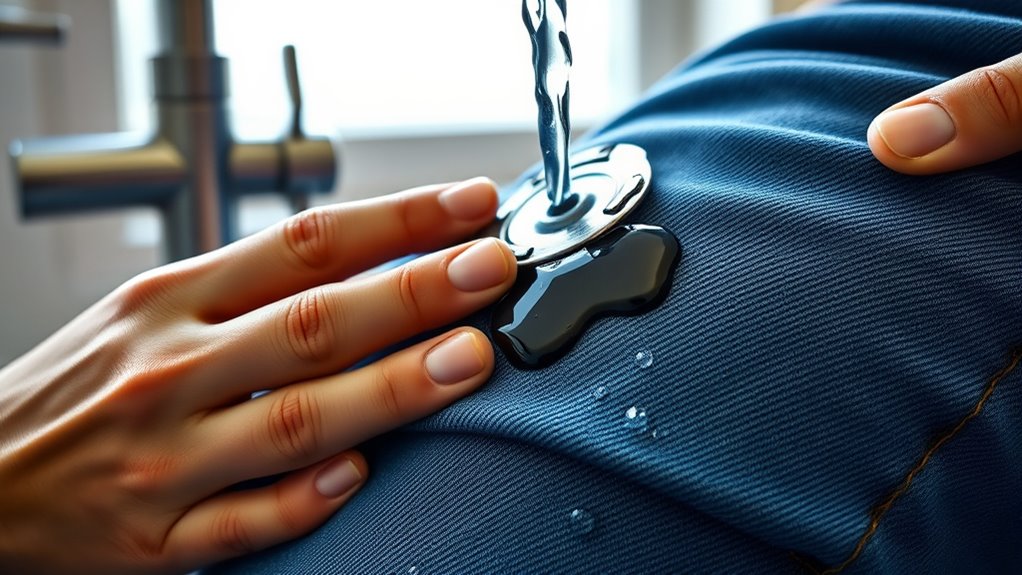
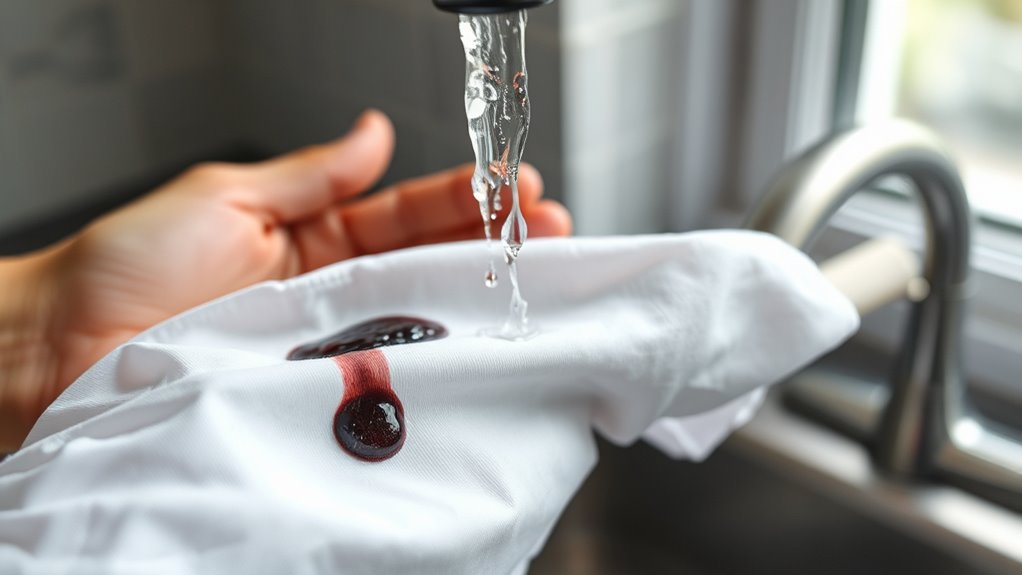
    To get ink stains out of your jeans, start by rinsing the fabric under cold water from the back to stop the ink from setting.

    Blot gently with a clean cloth from the edges inward to prevent spreading.

    Apply rubbing alcohol or hand sanitizer for 10-15 minutes, then rinse again.

    For tough stains, use a dish soap and baking soda paste before washing with the hottest safe water.

    Air dry and inspect before repeating any steps.

    There’s a detailed method you can follow for best results.

    Act Quickly: Blot Ink on Jeans Before It Sets

    blot ink quickly urgently

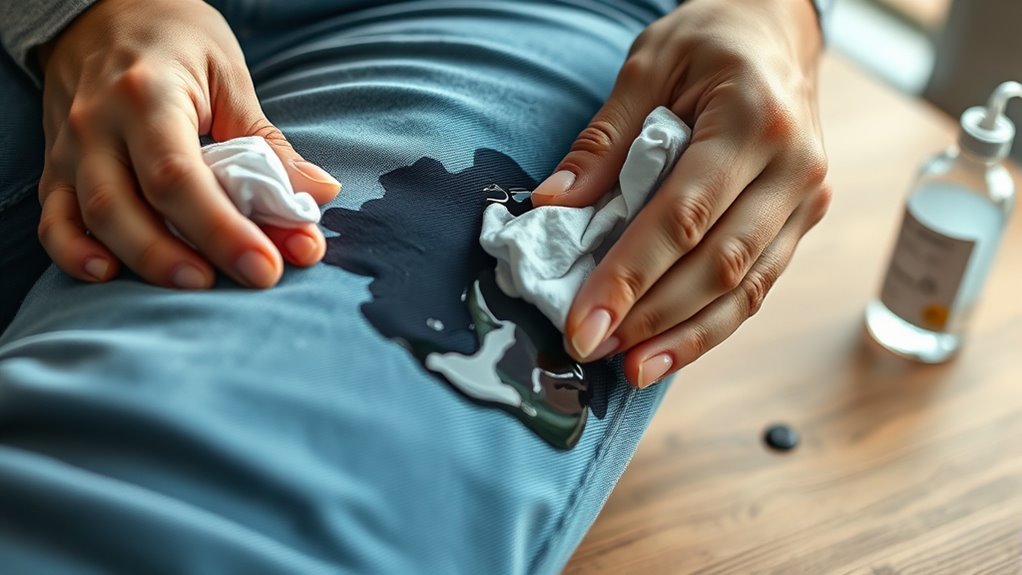
    If you catch an ink stain early, you can prevent it from sinking into your jeans. The key is to act quickly by blotting the ink stain immediately. Use a clean paper towel or cloth to absorb as much excess ink as possible before it penetrates deeper into the fabric.

    Don’t rub or scrub the area. Doing so will only push the ink further into the denim fibers, making the stain harder to remove. Instead, gently blot the spot with a dry cloth to absorb the ink without spreading it to other parts of your jeans.

    Treating the stain within the first few minutes is vital since fresh ink stains respond much better to removal efforts than dried or set stains. Taking this quick step reduces the chance that the ink stain becomes permanent after washing and drying and gives you a better shot at keeping your jeans looking clean.

    Blot Gently to Remove Excess Ink Without Smearing

    Grab a clean paper towel and gently dab the ink stain instead of rubbing it. You want to start blotting from the edges and work your way inward. That way, you keep the ink from spreading. This careful approach really helps soak up the excess ink without pushing it deeper into your jeans.

    Use Paper Towels

    When you notice fresh ink on your jeans, gently blot the stain with a clean paper towel to soak up as much ink as possible without spreading it. Use a fresh, dry paper towel each time you blot to absorb more ink effectively.

    Place a folded paper towel underneath the stained fabric to catch any ink that seeps through, protecting other areas. Always blot gently from the outer edges of the stain inward to keep the ink contained.

    Avoid rubbing or pressing hard with the paper towel, as this pushes ink deeper into the fabric. Repeatedly blot until the paper towel no longer picks up ink. This careful use of paper towels helps minimize the stain and prepares your jeans for further cleaning steps.

    Dab, Don’t Rub

    Although it’s tempting to scrub the ink stain, you need to dab gently with a clean cloth or paper towel to lift excess ink without spreading it further into the fabric. Remember, dab, don’t rub. This gentle blotting motion prevents the ink from sinking deeper into the fibers, increasing your chances of effective stain removal.

    When you blot, you absorb the ink while protecting the denim’s structure. Rubbing can break the ink’s bonds and cause the stain to set permanently, making it much harder to remove later.

    Work From Edges

    After you’ve gently dabbed the stain to lift the excess ink, focus on working from the edges inward. Use a clean cloth or paper towel to blot gently, starting at the outer edges of the ink stain and moving toward the center.

    This method helps contain the ink, preventing it from spreading further into the fabric. Apply light pressure while blotting to absorb ink particles without pushing them deeper into the jeans fibers.

    Working from the edges inward is key in effective stain removal because it reduces the risk of expanding the stain and makes the cleanup more manageable. By carefully blotting this way, you protect the fabric and improve your chances of removing the ink completely without smearing.

    Use Alcohol-Based Hand Sanitizer or Rubbing Alcohol to Break Up Ink

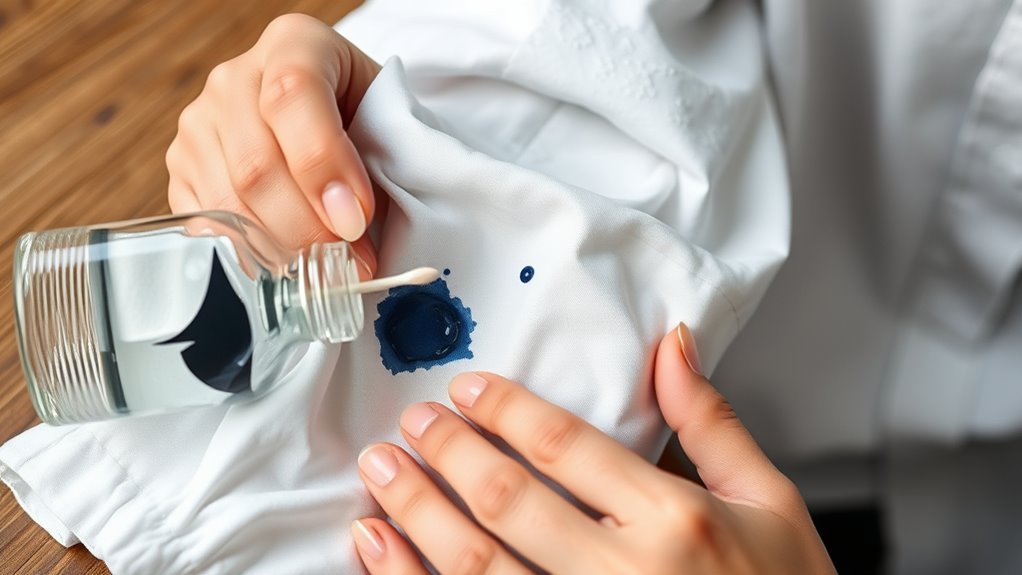
    You can use alcohol-based hand sanitizer or rubbing alcohol to break down ink stains. The alcohol works well because it dissolves the ink molecules. Just apply a good amount right onto the stain and let it sit for about 10 to 15 minutes.

    After that, gently blot the area. Don’t forget to rinse the fabric thoroughly afterward—this helps protect your jeans and gets rid of any leftover ink.

    Alcohol Effectiveness on Ink

    When ink stains appear on your jeans, alcohol-based hand sanitizer or rubbing alcohol can break down the pigments effectively. Alcohol contains ethyl or isopropyl compounds that dissolve the oils and dyes in ink, making ink stain removal more efficient.

    Rubbing alcohol, being more concentrated, excels at loosening even stubborn stains by penetrating fabric fibers and lifting ink away. Using alcohol works best on fresh or semi-dried ink marks since it can break down the ink pigments before they set completely.

    However, be cautious. Excessive use might damage delicate fabrics. Always test alcohol on a small, hidden area first to guarantee safe ink removal without harming your jeans.

    This method provides a reliable way to tackle ink stains with minimal effort.

    Application Techniques

    Alcohol-based hand sanitizer and rubbing alcohol work best when applied correctly to ink stains on jeans. To maximize their effectiveness, follow these steps:

    1. Apply a generous amount of hand sanitizer directly onto the stain, saturating the area completely.
    2. Let it sit for 10-15 minutes to allow the alcohol to break down the ink pigments.
    3. Gently dab the stain with a clean cloth or cotton ball to lift the ink without spreading it.
    4. Rinse the treated area with cold water from the back to flush out loosened ink particles.

    If the stain persists, just repeat this process before laundering your jeans to improve removal results. Using these application techniques ensures the hand sanitizer penetrates the stain effectively without damaging your fabric.

    Safety and Fabric Care

    Although hand sanitizers and rubbing alcohol are effective at breaking up ink stains on jeans, you should always prioritize safety and fabric care. Use alcohol-based solutions like ethyl or isopropyl alcohol, but first perform stain testing by applying a small amount on an inconspicuous area. This guarantees the fabric won’t discolor or weaken.

    When treating the stain, apply enough hand sanitizer or rubbing alcohol to saturate the ink and let it sit for a few minutes to break down the pigments. Always handle the fabric gently to avoid damage during cleaning.

    Try Dish Soap and Baking Soda Paste on Stubborn Ink Stains

    If stubborn ink stains won’t budge, you can try a simple paste made from dish soap and baking soda. This combo works wonders on jeans, thanks to the dish soap’s grease-cutting power and baking soda’s mild abrasiveness. To tackle those tough ink stains, follow these steps:

    1. Mix equal parts dish soap and baking soda until you get a thick, spreadable paste.
    2. Apply the paste directly onto the ink stains on your jeans.
    3. Gently scrub the area with a toothbrush or your fingers to help lift the ink from the fabric fibers.
    4. Let the paste sit for 10-15 minutes to break down the stain.

    This paste is an effective stain removal method that targets stubborn ink stains without damaging your jeans. Afterward, rinse the area and launder as usual to clear away any residue and reveal cleaner denim.

    Rinse Jeans With Cold Water to Avoid Spreading Ink

    rinse jeans quickly cold

    You’ll want to rinse your jeans with cold water right away to stop the ink from setting deeper. Cold water actually helps prevent the stain from spreading, which makes it easier to get out later.

    And here’s a handy tip: always rinse from the back of the stain. That way, you’re pushing the ink out instead of driving it further in. It really makes a difference!

    Importance Of Cold Water

    When ink lands on your jeans, rinsing them immediately with cold water prevents the stain from spreading and setting deeper into the fabric. Cold water plays an essential role in effective stain removal by helping you:

    1. Rinse away fresh ink without causing it to spread further.
    2. Reduce ink solubility, making it easier to lift from denim fibers.
    3. Avoid hot water’s effect, which binds ink more tightly to fabric.
    4. Preserve the jeans’ appearance by preventing ink smearing or diffusion.

    Using cold water right after an ink spill is critical for fabric preservation and improves the chances of removing the stain completely. Don’t skip this step. Cold water is your first defense to keep ink from embedding deeper and damaging your favorite jeans.

    Prevent Ink Spread

    Three key reasons make rinsing your jeans with cold water immediately after an ink spill vital: it prevents the ink from setting deeper, minimizes spreading, and dilutes the stain before it bonds with the fabric. When you rinse immediately with cold water, you effectively prevent stain expansion by reducing ink diffusion across the fabric fibers.

    Cold water acts as a barrier, limiting how far the ink can travel and how deeply it can penetrate. This quick action stops the ink from embedding itself further, making later removal easier. Remember, avoiding hot water is essential since heat causes ink to set permanently.

    Effective Initial Rinse

    Rinsing your jeans with cold water right after an ink spill plays a vital role in stopping the stain from setting deeper into the fabric. To effectively rinse and prevent setting, follow these steps:

    1. Hold the stained area under cold running water, aiming from the back to push the ink out of the fabric fibers.
    2. Avoid hot water, as it causes the ink stain to bond permanently.
    3. Use a gentle flow to dilute the ink, reducing its concentration for easier removal.
    4. Continue rinsing until the water runs mostly clear to make sure you’ve minimized ink adhesion.

    Using cold water helps shrink dye molecules, making it easier to lift ink from the fabric. This initial rinse is essential to prevent setting and makes further stain removal steps far more effective.

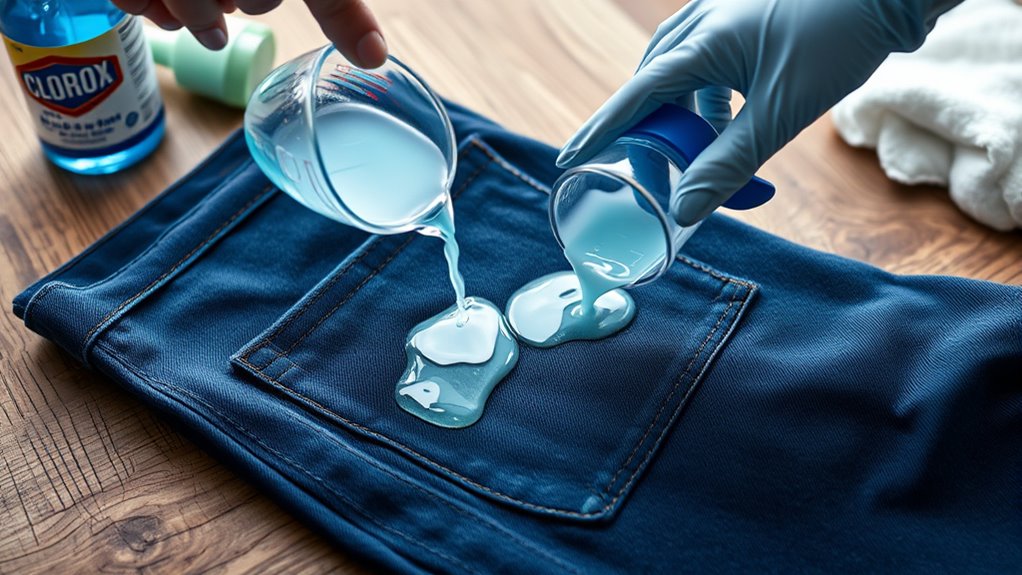
    Use Clorox 2™: A Color-Safe Bleach for Persistent Ink Stains

    pretreat soak wash air dry

    If ink stains won’t budge with regular detergent, you can rely on Clorox 2™, a color-safe bleach designed specifically for colored fabrics like jeans. For effective stain removal, start by pretreating the ink stains: apply Clorox 2 directly to the affected area using the cap and gently rub it in to help the color-safe bleach penetrate the fabric.

    Let it sit for exactly 10 minutes, making sure it doesn’t dry out, to maximize the stain removal power. This pretreatment step helps break down stubborn ink before washing.

    Afterward, wash your jeans in the hottest water recommended for the fabric, adding extra Clorox 2 along with your usual detergent. This combination boosts the cleaning power against ink stains while protecting your jeans’ color.

    Always air dry your jeans after washing to check if the stain is gone, as using a dryer too soon can set any remaining ink permanently.

    Wash Jeans With the Right Water Temperature and Detergent

    After pretreating your jeans with Clorox 2™, the next step is to wash them using the right water temperature and detergent. Choosing the proper water temperature can greatly impact stain removal and fabric care. Follow these steps for the best results:

    1. Check the care label on your jeans and select the hottest water temperature recommended to help dissolve ink residues effectively.
    2. Use hot water for oil-based ink stains, as it breaks down the ink better, increasing the chance of removal.
    3. For delicate or non-colorfast jeans, opt for warm or cool water to protect the fabric while still aiding stain removal.
    4. Add the correct amount of laundry detergent suitable for the chosen water temperature to boost cleaning power during the wash cycle.

    Washing jeans with the right water temperature and detergent ensures better penetration of stain removers and prevents the ink from setting deeper into the fabric.

    Air Dry Jeans and Check if Ink Stain Is Gone

    While your jeans air dry, you’ll prevent any remaining ink from setting deeper into the fabric. This makes it easier to determine if the stain is fully gone. Make certain to air dry your jeans in a well-ventilated area away from direct sunlight to avoid fabric damage or discoloration.

    Avoid using a dryer at this stage because heat can permanently set any residual ink stain.

    Once the jeans are completely dry, it’s time to check the stained area carefully. Ink stains often become more visible on dry fabric, so this is your chance to assess how successful the removal was.

    Look closely for any traces of residual ink. If you spot any, you’ll know that further treatment is necessary before drying again. By air drying and thoroughly checking your jeans, you ensure the best chance of completely removing that stubborn ink stain without causing permanent damage.

    Repeat Treatment or Get Professional Help for Tough Ink Stains

    Even though you’ve treated the ink stain carefully, some stubborn marks might still linger on your jeans. When that happens, don’t give up just yet. You can try repeat treatment to improve your chances of fully removing the stain. However, be cautious to avoid damage prevention issues like fabric weakening.

    Here’s what to do next:

    1. Apply your stain remover again, focusing on the stubborn ink spots.
    2. Use gentle agitation and avoid harsh scrubbing to protect the fabric.
    3. Air dry and reassess the stain before repeating treatment.
    4. If multiple attempts don’t work, consider professional cleaning for better results.

    Professional cleaners use specialized agents and techniques designed to break down deeply set ink while minimizing fabric damage. For valuable or delicate jeans, professional help ensures thorough stain removal and damage prevention. This approach saves your jeans when repeat treatment isn’t enough.

    Tips for Handling Old or Permanent Ink Stains on Jeans

    If repeat treatments don’t fully remove the ink, you’ll need to tackle old or permanent stains with stronger methods. Old ink stains and dried ink stains set deeper into denim fibers, making permanent ink removal more challenging. You’ll often need multiple treatments using strong solvents like rubbing alcohol or commercial ink removers.

    Applying these specialized cleaning solutions carefully can help break down stubborn ink without damaging your jeans. To boost effectiveness, try combining treatments, such as alcohol followed by a vinegar and baking soda paste. This approach can loosen even the most resistant ink.

    Frequently Asked Questions

    Can Ink Stains Be Removed From Jeans Without Using Chemicals?

    Yes, you can remove ink stains from jeans without using harsh chemicals by trying DIY cleaning methods. Home remedies like soaking in milk or applying lemon juice and salt help fade stains naturally.

    You’ll want to understand different stain types to choose the best fabric care approach. Preventing stains early and using gentle scrubbing with cold water also protects your jeans. These natural options support effective stain prevention and safe cleaning at home.

    How Long Should I Wait Before Treating an Ink Stain on Jeans?

    You shouldn’t wait long to treat an ink stain on your jeans. Tackle it within 30 minutes to 2 hours for the best results. Quick action prevents the stain from setting, making removal easier.

    While treating the stain, remember storage tips like keeping your jeans away from heat and direct sunlight to avoid fabric damage. Also, focus on stain prevention by handling pens carefully and storing jeans separately to avoid accidental marks.

    Are There Any Natural Remedies That Work on Ink Stains?

    Yes, natural remedies work well on ink stains and offer eco-friendly stain removal. You can use rubbing alcohol or hand sanitizer with alcohol to break down the ink.

    Baking soda mixed with water creates a paste that lifts stains gently. Soaking your jeans in white vinegar and water weakens ink bonds, while lemon juice with salt acts as a natural bleach.

    These home solutions are safe and effective but might need repeated use for tough stains.

    Will Ink Removal Methods Damage the Color of My Jeans?

    Worried about color fading and fabric damage when removing ink stains? You shouldn’t be if you’re careful. Overusing harsh chemicals or bleach risks dye distortion and texture alteration, which can ruin your jeans.

    Why test solutions first? Because trying a small spot helps you avoid bleach risk and unwanted color loss. Follow care labels closely to protect your jeans’ vibrant color and fabric integrity while tackling ink stains safely.

    How Can I Prevent Ink Stains From Setting During Travel?

    To prevent ink stains from setting during travel, pack stain-removal essentials like alcohol-based sanitizer and stain remover wipes in your bag. Use stain-resistant fabrics or treat your clothes with protective sprays before your trip.

    If ink spills, act fast. Blot with a damp cloth and apply onboard remedies immediately. These travel tips help you tackle stains early, ensuring they don’t settle and ruin your jeans or other garments while you’re on the go.

    Conclusion

    So, next time you channel your inner Picasso on your jeans, don’t panic. Just act fast! Blot like your life depends on it, douse with alcohol like it’s a wild party, and scrub with soapy baking soda magic.

    If all else fails, you might just have to accept your new “abstract art” look or call in the pros. Hey, who knew ink stains could turn laundry day into an epic adventure?

  • How to Get Ink Poisoning Step by Step

    How to Get Ink Poisoning Step by Step

    You get ink poisoning if you swallow a large amount of ink or if it enters your eyes or broken skin in harmful quantities.

    Symptoms like nausea, stomach pain, or breathing trouble often follow.

    If you ingest ink, sip water to dilute it and avoid vomiting.

    Rinse your eyes with lukewarm water if ink gets in them.

    Watch for worsening symptoms and call poison control or emergency services if needed.

    Keep going to find how to handle exposure safely and prevent risks.

    What Ink Is and Where It’s Found

    common ink in everyday items

    Ink comes in many forms, from gel pens to permanent markers, and you’ll find it in everyday items like office supplies, art materials, and printers. It’s a liquid or paste made of dyes or pigments suspended in a solvent, designed to leave marks on paper or other surfaces. Whether you’re using gel pens for smooth writing or permanent markers for labeling, ink is everywhere.

    Because ink can stain skin and surfaces, you might often need to remove ink stains quickly to avoid lasting marks. Though generally minimally toxic in small amounts, ink can be messy and tricky to clean up. Printer cartridges and stamp-pad inks hold larger quantities and sometimes contain extra chemicals.

    Understanding what ink is and where it’s found helps you handle it wisely, especially when dealing with spills or stains from your gel pens or markers. Knowing how to remove ink stains properly keeps your workspace neat and safe.

    How Toxic Is Ink Really

    Although you might worry about the chemicals in your pens or markers, the substances inside are usually only mildly toxic. The ink composition in most writing tools is designed with safety in mind, making serious poisoning unlikely if you ingest small amounts.

    Ink in pens and markers is typically only mildly toxic, with safety prioritized to prevent serious poisoning from small ingestions.

    Ink manufacturing processes focus on creating formulas that minimize health risks, which is why swallowing ink often just causes mild stomach upset or temporary staining of your skin or tongue.

    However, larger quantities, like those from printer cartridges or stamp pads, pose a higher risk and might need medical attention. Keep in mind that ink’s environmental impact also plays a role; manufacturers aim to reduce harmful chemicals to protect both users and ecosystems.

    Still, it’s important to handle ink carefully to avoid contact with sensitive areas like your eyes and to prevent ingestion. Overall, ink’s toxicity level is low, but exercising caution is always wise.

    What to Do If You Swallow Ink

    swallowing ink seek help

    If you happen to swallow some ink, the first thing you should do is sip a little water. This helps dilute the ink in your stomach.

    Keep an eye out for any symptoms like vomiting, stomach upset, or trouble breathing. If you notice any of these, or if you swallowed a large amount, don’t hesitate to contact a medical professional or the Poison Control Center right away. It’s always better to be safe!

    Immediate Actions To Take

    When someone swallows ink, you should immediately give them a few sips of water to help dilute the substance. Different pen types contain various ink colors and chemicals, so knowing what was swallowed can help medical professionals assess the risk.

    Avoid inducing vomiting or using harsh chemicals to remove the ink, as this can cause more harm. Inhalation risks are less common but still important. If ink fumes cause breathing difficulties, seek emergency help.

    After giving water, watch for signs of stomach upset, like nausea or vomiting. Contact the Poison Control Center at 1-800-222-1222 for advice, especially if a large amount was ingested or if you’re unsure about the pen type or ink color. Prompt medical attention guarantees safety.

    Monitoring Symptoms Carefully

    After giving water to dilute the ink, keep a close eye on any symptoms that may develop. Monitoring symptoms carefully is essential for ink safety and effective emergency response.

    Watch for poisoning symptoms like vomiting, stomach pain, nausea, dizziness, or difficulty breathing. Note when symptoms begin and any behavior changes.

    Symptom Observation Time Severity Level
    Vomiting 10 minutes Mild to severe
    Stomach pain 15 minutes Moderate
    Dizziness 20 minutes Mild

    Continue observing until symptoms fade. If symptoms worsen or a large amount of ink was swallowed, seek medical advice promptly.

    Staying vigilant helps manage poisoning symptoms and guarantees a swift emergency response.

    When To Seek Help

    How do you know when it’s time to get medical help after swallowing ink? Ink safety is crucial, especially when dealing with chemical exposure. If you swallow ink, start by sipping water to dilute it and watch closely for poisoning symptoms.

    Seek help immediately if you notice any of the following: vomiting, stomach pain, or difficulty breathing; a large amount of ink was ingested; or severe reactions or uncertainty about the amount swallowed.

    Avoid inducing vomiting or using harsh treatments at home. Instead, call the Poison Control Center at 1-800-222-1222 for expert guidance. When chemical exposure occurs, prompt action can prevent serious illness.

    Don’t hesitate to get emergency medical attention if symptoms worsen or you’re unsure about the situation.

    Recognizing Ink Poisoning Symptoms

    ink poisoning symptoms awareness

    Although ink poisoning is uncommon, you should watch for symptoms like nausea, vomiting, and stomach upset if you swallow ink. The ink composition varies widely due to differences in ink manufacturing processes, which can affect its toxicity and environmental impact.

    Ingesting large amounts may cause more serious issues such as abdominal pain or difficulty breathing. Skin staining often occurs but isn’t a sign of poisoning and is usually harmless.

    If you experience persistent or worsening symptoms after ink exposure, seek immediate medical evaluation. Note that while eye irritation, redness, or burning can indicate ink exposure, these symptoms relate to a different concern and will be covered separately.

    Understanding these symptoms helps you recognize when ink exposure might be dangerous and prevents overlooking potential poisoning signs due to the common use and environmental presence of various inks. Stay alert to your body’s reactions after contact or ingestion to ensure prompt action.

    What to Do If Ink Gets in the Eyes

    If ink gets in your eyes, the first thing you should do is rinse them out immediately with clean, lukewarm water. Keep your eyelids open while you do this and try to rinse for at least 15 minutes.

    It’s really important not to rub your eyes or use any soaps or chemicals, as that can make things worse. If you still feel irritation, notice redness, or experience pain after rinsing, don’t wait—seek medical help right away.

    Immediate Eye Rinsing

    When ink gets in your eyes, you should rinse them immediately with clean, lukewarm water to prevent irritation or damage. Prioritize eye safety by acting fast to minimize chemical exposure. Follow these first aid procedures carefully:

    1. Hold your eyelid open to allow water to reach all parts of the eye.
    2. Rinse the affected eye(s) continuously for at least 15 minutes with lukewarm water.
    3. Stop rinsing only when redness or irritation begins to fade.

    Avoid using soap or harsh chemicals during rinsing, as they can worsen irritation. Immediate and thorough rinsing helps protect your eyes from further harm. If discomfort or redness persists after rinsing, seek medical attention promptly to ensure proper care.

    When To Seek Help

    After thoroughly rinsing your eyes to remove ink, you need to observe how your eyes feel and look. If irritation, redness, or pain persists, don’t ignore these signs. They may indicate chemical exposure or worsening poisoning symptoms.

    Maintain strict ink safety by avoiding rubbing your eyes or applying any substances unless a medical professional advises it. If your discomfort continues after rinsing for at least 15 minutes, seek medical attention promptly.

    Remove contact lenses during rinsing to help flush out the ink effectively. When in doubt, call a healthcare provider or poison control center for guidance. Acting quickly and responsibly ensures the best outcome and prevents complications from ink-related chemical exposure.

    Always prioritize your eye health after ink contact.

    Avoid Harsh Cleaners on Ink Stains

    Since harsh chemicals like bleach or acetone can irritate or damage your skin, you shouldn’t use them to remove ink stains. These harsh chemicals can cause skin irritation, making the problem worse instead of better. Instead, go for gentle cleaning methods to protect your skin and avoid more damage.

    Here’s what you should do:

    1. Wash the ink-stained area gently with soap and lukewarm water.
    2. Avoid scrubbing vigorously, as this can cause abrasions and increase irritation.
    3. If the stain persists, don’t apply stronger cleaners. Just consult a healthcare professional.

    How to Manage Mild Ink Exposure at Home

    If you get ink on your skin, just gently wash it off with some soap and water. Try not to scrub too hard, so you don’t irritate your skin. Now, if you happen to swallow a little bit of ink, drink some water to help it go down. Keep an eye out for any stomach upset or other unusual symptoms. And if you do notice anything strange or if a larger amount was swallowed, don’t hesitate to call Poison Control right away.

    Home Treatment Steps

    How should you handle mild ink exposure at home to prevent complications? Whether you’re working with art supplies or handling various ink types, following safety precautions is key. Here’s how to manage minor ink contact effectively:

    1. Skin Exposure: Gently wash the affected area with soap and water. Avoid scrubbing or using harsh chemicals because these can irritate your skin further.
    2. Ink Ingestion: Sip small amounts of water to dilute the ink. Keep an eye out for vomiting or stomach pain.
    3. Eye Contact: Rinse your eyes with lukewarm water for at least 15 minutes. If irritation continues, seek medical advice.

    When To Seek Help

    Although mild ink exposure is usually harmless, you should watch for certain signs that indicate when to seek medical help. If you notice vomiting, persistent stomach pain, or eye irritation after ink contact or ingestion, get medical attention immediately.

    For mild skin staining, gently wash the area with soap and water. Avoid harsh scrubbing or chemical cleaners to prevent further irritation. If ink is swallowed but no symptoms appear, offer sips of water and monitor closely.

    Always follow safety precautions when handling ink to reduce chemical hazards and practice proper ink disposal to avoid accidental exposure. When unsure about the severity, contact the Poison Control Center at 1-800-222-1222 for guidance.

    Keep observing symptoms until they resolve to ensure safety.

    When to Call the Poison Control Center

    Whenever you suspect someone has swallowed a significant amount of ink or aren’t sure how much was ingested, you should call the Poison Control Center at 1-800-222-1222 right away. Ink manufacturing involves chemicals that can pose health risks, so quick action is vital.

    Even though ink recycling and awareness of ink’s environmental impact help reduce pollution, exposure can still be hazardous.

    Call the Poison Control Center if:

    1. Ink ingestion is large or uncertain in amount.
    2. Ink causes persistent eye irritation or doesn’t improve after rinsing.
    3. Symptoms like vomiting, stomach upset, or skin staining develop.

    Always reach out before trying to induce vomiting or using harsh chemicals, especially with children or those who can’t communicate symptoms. The Poison Control Center provides immediate guidance to prevent complications and ensure safety after ink exposure.

    What to Do in an Ink Poisoning Emergency

    If you suspect ink poisoning, knowing what to do next can make a big difference. First, call 911 immediately if the person has trouble breathing, is unconscious, or shows severe symptoms. For ink in the eyes, rinse with clean, lukewarm water for at least 15 minutes to reduce irritation.

    If ink is swallowed, give small sips of water and watch for vomiting or stomach upset. Contact the Poison Control Center at 1-800-222-1222 if a large amount is ingested or you’re unsure about severity. Stay calm and keep the person comfortable until help arrives or symptoms improve.

    While ink manufacturing often uses chemicals that can be harmful, the rise of ink alternatives and a push for ink sustainability help reduce risks. Being cautious during any ink exposure is critical, especially since even sustainable ink alternatives can cause poisoning if mishandled. Always treat ink emergencies seriously and act quickly.

    Preventing Ink Poisoning: Safety Tips

    Since ink poisoning can happen unexpectedly, you should take clear steps to prevent it at home. Whether you’re involved in ink art or just using pens and markers, proper ink storage and disposal are essential. Follow these safety tips to minimize risks:

    1. Store all ink products, including those used for ink art, out of children’s reach and in clearly labeled containers. Proper ink storage helps avoid accidental spills or ingestion.
    2. Always supervise children when they use ink-containing items and opt for non-toxic inks to reduce health hazards.
    3. Dispose of ink waste responsibly by following local guidelines for ink disposal to prevent environmental contamination and accidental exposure.

    Keep cleaning supplies handy to quickly address any skin or eye contact with ink. Also, educate everyone at home about ink’s potential dangers and safety practices. Taking these simple steps helps you prevent ink poisoning effectively.

    Frequently Asked Questions

    Can Ink Poisoning Be Treated With Home Remedies Alone?

    You can’t rely on home remedy options alone to treat ink poisoning safely. Immediate first aid steps like rinsing your mouth or eyes with water and sipping small amounts of water can help reduce irritation and dilute the ink. However, these are only temporary measures.

    You should seek medical advice if symptoms persist or worsen. To protect yourself, always practice preventative measures like keeping ink away from children and avoiding ingestion.

    Does Ink Poisoning Cause Long-Term Health Effects?

    They say, “An ounce of prevention is worth a pound of cure,” and with ink poisoning, that holds true. You won’t usually face long-term health effects because minimal ink absorption rarely causes lasting harm.

    Symptom duration tends to be short, like mild skin irritation or stomach upset. Your recovery prognosis is generally excellent if you act quickly. Cleaning the area and seeking medical advice when needed helps you bounce back without complications.

    Are Some Types of Ink More Dangerous Than Others?

    Yes, some types of ink are definitely more dangerous than others. You should know that ink toxicity varies based on the chemicals involved.

    Hazardous inks, like those in printer cartridges or industrial markers, pose higher ink exposure risks due to solvents or heavy metals. Meanwhile, common gel pens or water-based inks have much lower toxicity.

    Can Pets Get Poisoned by Ink Ingestion?

    Yes, your pet can suffer ink ingestion risks if they chew on pens or markers. You’ll notice pet toxin symptoms like vomiting, diarrhea, or unusual behavior. If you spot these signs, get your pet to a vet right away.

    To protect them, always use safe disposal methods for ink products and keep them out of reach. Taking these steps helps prevent accidental poisoning and keeps your furry friend safe.

    Is Ink Poisoning Common Among Children or Adults?

    Think of ink as a hidden storm, mostly calm but capable of sudden harm. Ink poisoning is more common among children because their curiosity often leads to chemical exposure. You should take safety precautions seriously to prevent ink allergy or worse reactions.

    Adults face less risk but aren’t immune. So, by storing ink carefully and watching over kids, you can avoid turning innocent play into a hazardous experience.

    Conclusion

    Ink poisoning can be serious, but knowing what to do helps you stay safe. For example, a child accidentally swallowed a small amount of pen ink; quick action and calling poison control prevented any harm.

    If you ever swallow or get ink in your eyes, act fast, watch for symptoms, and seek help when needed. Following safety tips, like keeping ink away from kids, can keep you and your family protected from ink-related dangers.

  • 10 Easy Steps to Get Ink Out of a White Shirt

    10 Easy Steps to Get Ink Out of a White Shirt

    To get ink out of your white shirt, quickly gather rubbing alcohol, clean cloths, and gloves.

    Blot the stain gently without rubbing, placing a paper towel underneath to catch ink.

    Rinse the area with cold water from behind to dilute and push the ink out.

    Dab rubbing alcohol on the stain, rinse again, then wash in the warmest water safe for the fabric.

    Air dry and repeat treatment if ink remains.

    For a detailed process, you’ll find helpful tips ahead.

    Gather Essential Supplies for Ink Stain Removal

    gather stain removal supplies

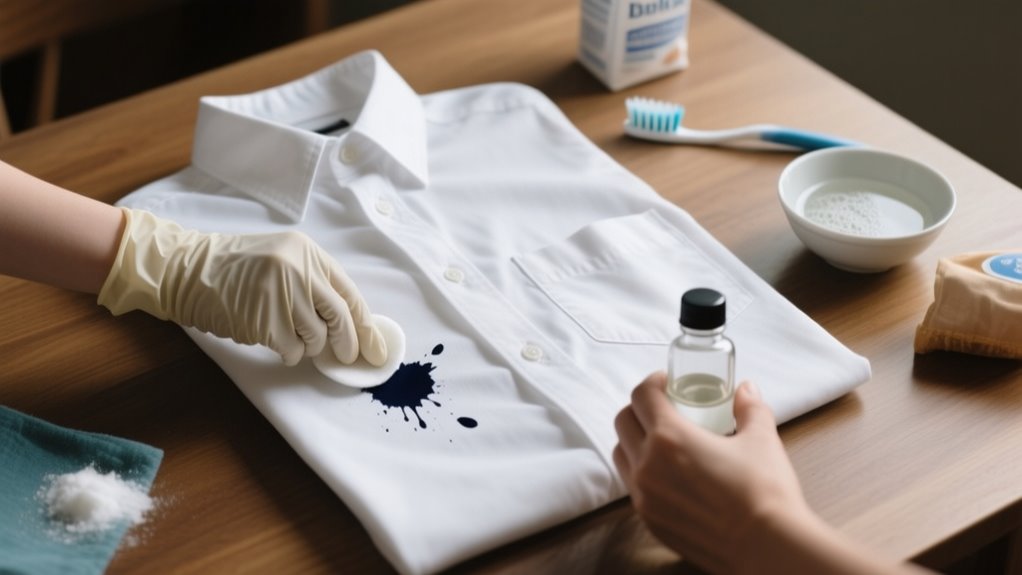
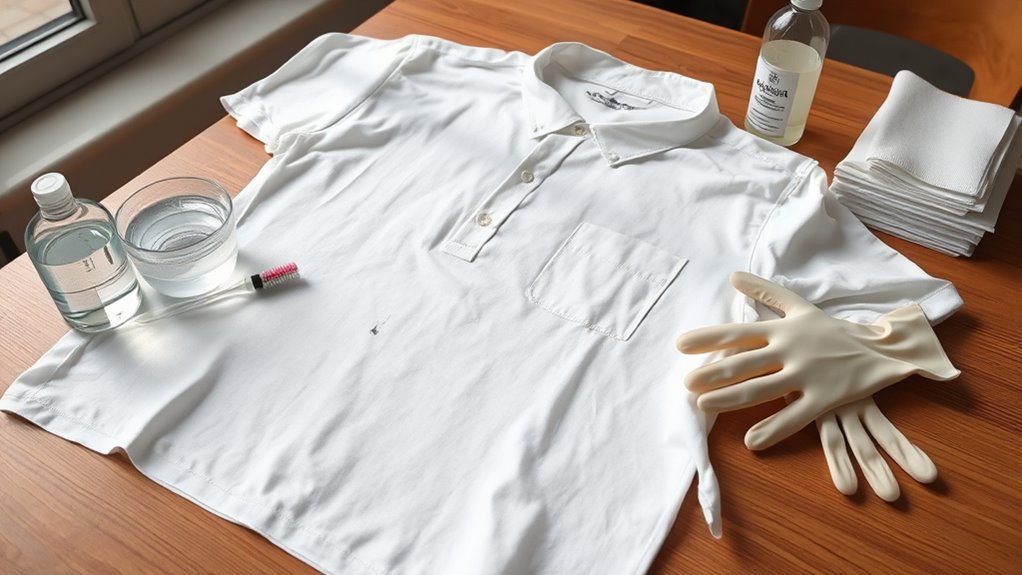
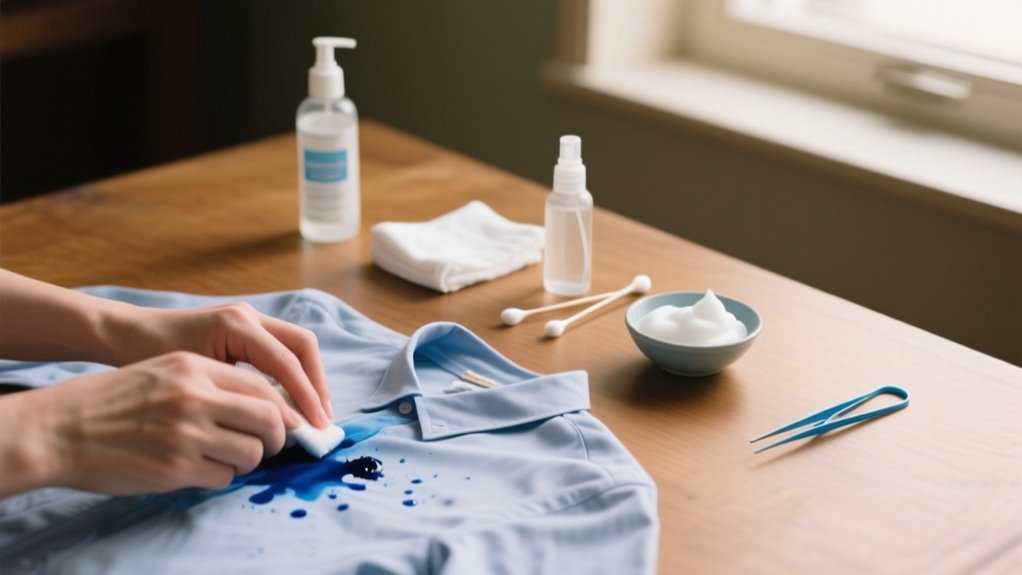
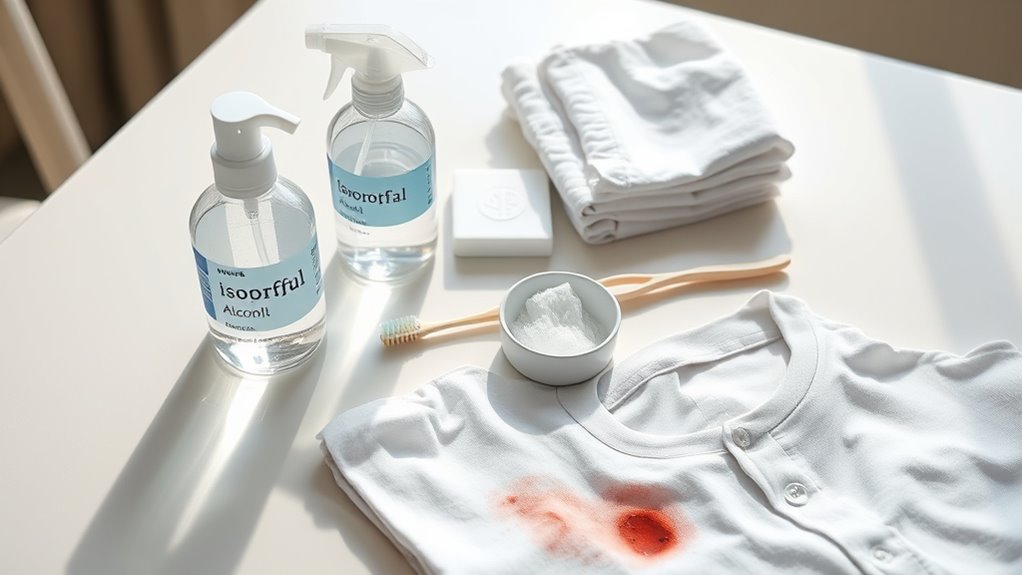
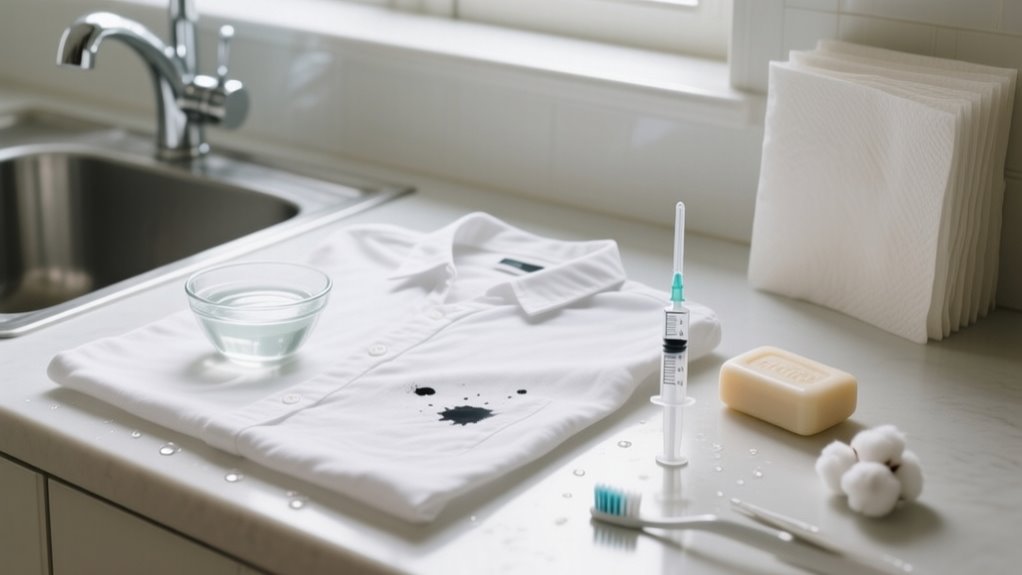
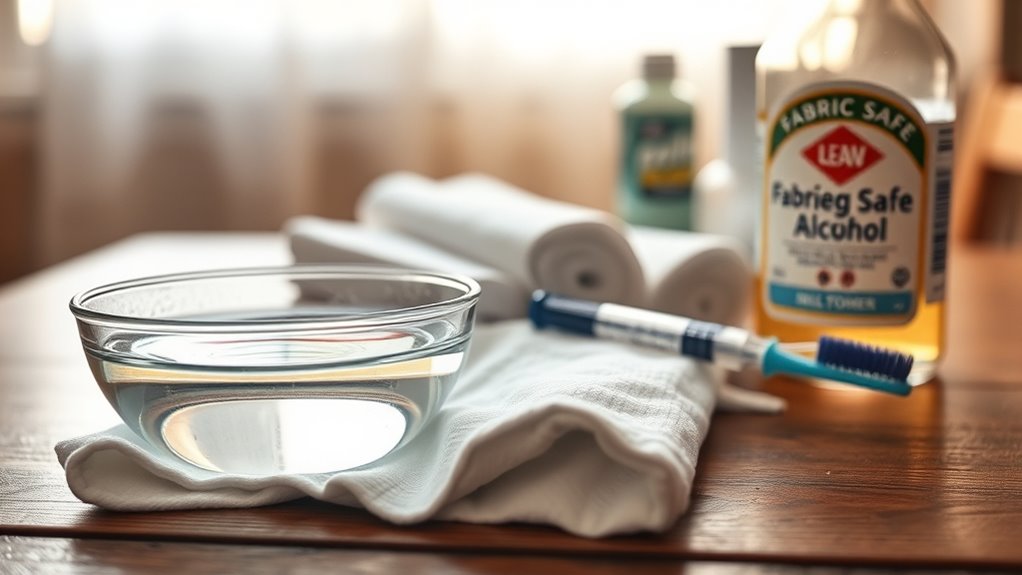
    Before you tackle the ink stain, gather all the essential supplies to make the process smoother. For effective ink stain removal, you’ll need household solvents like rubbing alcohol or hand sanitizer, which break down ink quickly on white shirts.

    Prepare clean white cloths or cotton pads to apply the solvent carefully; this prevents transferring extra color or dirt onto your shirt. Don’t forget a pair of gloves to protect your skin from the solvents’ harsh effects.

    It’s helpful to have a small bowl or container nearby to hold the rubbing alcohol or your chosen solvent for easy dipping and application. Finally, keep a mild laundry detergent ready to wash the shirt thoroughly after treating the stain.

    Having all these supplies on hand before you start will save time and increase your chances of completely removing the ink stain without damaging your white shirt.

    Act Quickly by Blotting and Diluting the Ink Stain

    As soon as you notice the ink stain, start by blotting it gently with a clean cloth. This soaks up the excess ink without rubbing it in. Try to avoid scrubbing because that can actually make things worse by pushing the ink deeper into the fabric. Then, use some cold water to lightly dilute the stain. This helps lift the ink before it has a chance to set.

    Immediate Stain Blotting

    How fast you act can make all the difference in removing ink from your white shirt. Immediate stain blotting is essential to stop the ink from setting permanently. Here’s what you should do right away:

    1. Blot the stain gently with a clean, dry cloth or paper towel to absorb excess ink.
    2. Place a paper towel or cloth underneath the stained area to catch ink that may bleed through.
    3. Use a damp cloth to dilute the stain, working from the outer edges inward to prevent spreading.
    4. Repeat blotting with a fresh cloth as needed, avoiding any rubbing that could push ink deeper.

    Avoid Rubbing Ink

    Although it’s tempting to scrub an ink stain, you should resist rubbing it, as doing so pushes the ink deeper into the fabric. Instead, gently blot the stain with a clean cloth or paper towel to lift excess ink without spreading it further.

    Use a light blotting motion, avoiding pressure that could push the ink deeper or cause it to spread. Acting quickly, dilute the ink stain by blotting with cold water, which helps prevent it from setting permanently.

    Prompt blotting and dilution considerably increase your chances of removing the ink from your white shirt. Remember, rubbing only makes the stain harder to remove, so focus on blotting to tackle the stain effectively and keep your shirt looking clean.

    Use Cold Water

    Once you’ve gently blotted the ink stain to avoid spreading it, the next step is to use cold water to prevent the ink from setting into the fabric. Acting quickly is key to remove ink stains effectively. Here’s what you should do:

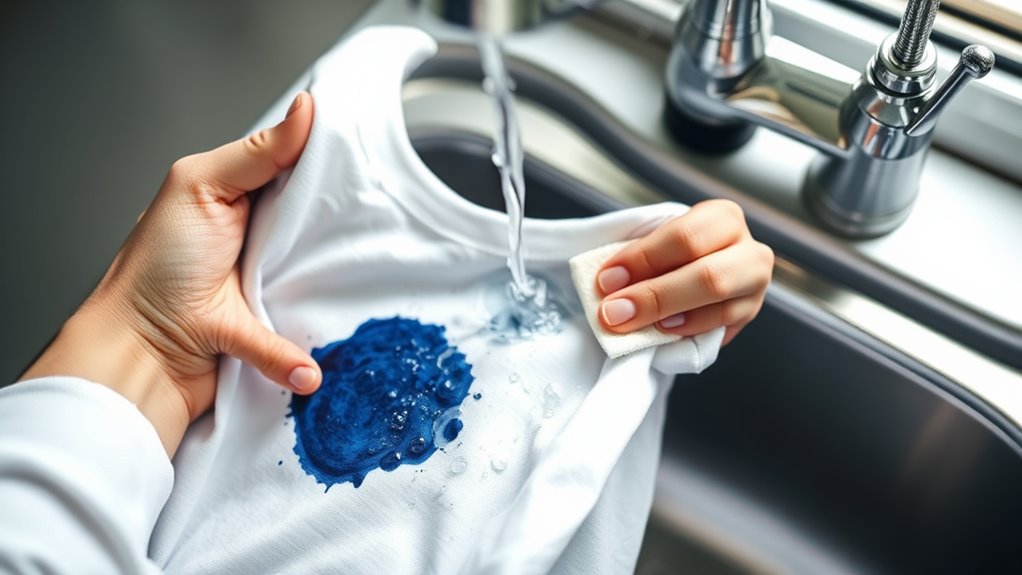
    1. Rinse the stained area with cold water from the back of the fabric to push the ink out of the fibers.
    2. Avoid hot water, which can set the ink and make removal harder.
    3. Continuously blot the stain with a clean cloth while rinsing to dilute the ink.
    4. Repeat until the stain starts to fade before applying any cleaning agents.

    Following these steps helps keep ink stains from settling, improving your chances to remove ink stains successfully.

    Blot the Ink Stain Gently Without Rubbing

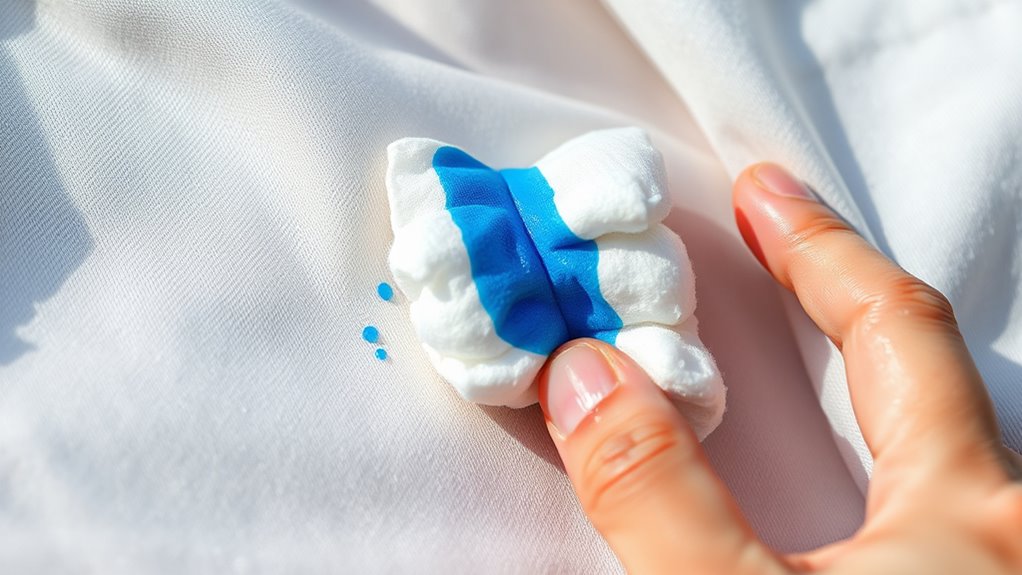
    Before the ink sets deeper into the fabric, gently blot the stain with a clean, white paper towel or cloth to lift excess ink without spreading it. Avoid rubbing, as this can push the stain further into the fibers, making it harder to remove.

    Instead, use a light pressing motion to carefully blot the stain. To prevent the ink from transferring to other parts of your shirt, place a clean cloth or paper towel underneath the stained area.

    Dampen your blotting material slightly with rubbing alcohol or a stain remover before applying it to the stain, which helps break down the ink. Continue blotting with fresh sections of the cloth until no more ink transfers.

    Rinse the Ink Stain With Cold Water

    rinse with cold water

    If you want to stop the ink from settling deeper into your shirt, rinse the stain with cold water immediately. This quick action dilutes the ink and prevents it from embedding further into the fabric.

    Follow these steps to rinse the stain effectively:

    Here’s how to rinse ink stains effectively and prevent them from setting deeper into your fabric.

    1. Turn the shirt inside out to expose the backside of the stain.
    2. Hold the stained area under a gentle stream of cold water.
    3. Let the cold water rinse the stain for 10-15 minutes to flush out as much ink as possible.
    4. Avoid using hot water, as it can set the stain permanently.

    Use Rubbing Alcohol or Hand Sanitizer on the Stain

    Choose rubbing alcohol or hand sanitizer that has at least 60% alcohol for the best results. Go ahead and apply it directly to the stain. Then, blot gently with a clean cloth to lift the ink without spreading it around.

    After letting it sit for a few minutes, rinse the shirt with cold water. Finally, wash it as usual to remove any leftover residue.

    Choosing The Right Product

    Two common household products, rubbing alcohol and hand sanitizer, work wonders for removing ink stains from a white shirt. Both contain isopropyl alcohol, a powerful solvent that dissolves ink pigments effectively.

    When choosing the right product, consider these points:

    1. Rubbing alcohol is a classic solvent specifically designed for cleaning ink stains.
    2. Hand sanitizer is a handy alternative if rubbing alcohol isn’t available.
    3. Always test either product on a hidden area first to avoid discoloring your fabric.
    4. Apply the product as soon as possible after the stain appears for the best results.

    Effective Application Techniques

    When you use rubbing alcohol or hand sanitizer on an ink stain, start by saturating a cotton pad or cloth and gently dabbing the affected area. This helps avoid spreading the ink further. Make certain the stain is fully wetted with the solvent, covering the entire spot.

    Use light tapping motions instead of rubbing to lift the ink without damaging the fabric. Change the cloth frequently to prevent reapplying the ink. After treating, rinse with cold water to remove leftover solvent and ink residue.

    Step Action Tip
    Saturate cloth Dab with solvent Avoid rubbing to prevent spread
    Cover entire stain Light tapping Ensure thorough wetting
    Replace cloth Frequent changes Stop redistributing ink

    Post-Treatment Washing Tips

    Although applying rubbing alcohol or hand sanitizer helps break down the ink, you’ll need to rinse the shirt thoroughly with cold water to wash away the solvent and loosened ink. Follow these post-treatment washing tips to guarantee the best results:

    1. Rinse in cold water immediately after treating the stain to remove excess ink and alcohol.
    2. Wash the shirt in the warmest water safe for the fabric with regular detergent to lift remaining ink particles.
    3. Check the stain before drying; if it’s still visible, repeat the treatment and washing to avoid setting the stain.
    4. Air dry the shirt instead of using a dryer. This way, you can inspect the stain clearly without heat setting any residue.

    These steps maximize your chances of fully removing ink from your white shirt.

    Blot the Stain Repeatedly to Lift Ink

    Since ink easily seeps into fabric fibers, you’ll want to blot the stain repeatedly with a clean, dry cloth or an alcohol-dipped pad to lift as much ink as possible without spreading it. Blotting gently and consistently helps absorb ink without pushing it deeper.

    Use a fresh paper towel or cotton pad for each blot to gradually remove the stain. Allow the fabric to dry slightly between sessions to avoid re-transfer and enhance absorption. Repeated blotting with alcohol pads can considerably reduce the ink’s intensity.

    Step Purpose
    Use clean, dry cloth Prevents spreading the stain
    Blot gently Lifts ink without embedding it further
    Change blotting pad Ensures ink is absorbed effectively
    Allow drying intervals Enhances ink absorption
    Repeat with alcohol pad Decreases stain intensity

    Following these steps ensures you carefully lift the stain while protecting your white shirt’s fabric.

    Rinse the Ink Stain Thoroughly and Prepare for Washing

    rinse stain with cold water

    Rinse the ink stain thoroughly with cold water to dilute the ink and get rid of any leftover solvent. Be sure to hold the fabric under the water from the back of the stain—that way, you can push the ink out more effectively.

    Before you move on to washing, take a moment to check the shirt and make sure the stain has lightened enough for the next steps.

    Use Cold Water

    One of the most essential steps in removing ink from your white shirt is to flush the stain with cold water as soon as you notice it. Cold water helps dilute the ink stain and stops it from setting deeper into the fabric.

    Here’s how to use cold water effectively:

    1. Hold the stained area under cold, running water.
    2. Direct the flow from the backside of the fabric to push the ink out of the fibers.
    3. Keep the water running steadily to rinse out as much ink as possible.
    4. Avoid hot water, which can make the ink set permanently.

    Rinsing immediately with cold water increases your chances of removing the ink stain before it dries and becomes harder to treat.

    Remove Solvent Residue

    After applying a solvent to your ink stain, you’ll want to flush the area thoroughly with cold water to remove any leftover ink and treatment residue. Use a gentle stream of cold water to rinse the fabric under running water for at least five minutes.

    This helps dilute and wash away solvent residue, including rubbing alcohol or hand sanitizer, preventing the stain from resetting during washing. Be careful not to spread the ink further by avoiding harsh scrubbing.

    Once the area looks rinsed, pat it dry with a clean cloth to absorb excess water and residue. Removing all traces of the solvent is essential before you proceed with washing your white shirt normally, ensuring the stain treatment doesn’t interfere with the final cleaning.

    Inspect Before Washing

    Make certain the treated area is thoroughly rinsed with cold water to dilute any remaining ink and prevent it from setting. When you inspect the stain, follow these steps to prepare your shirt for washing:

    1. Rinse the ink stain from the backside with a gentle stream of cold water to flush out as much ink as possible.
    2. Ensure all pretreatment products, like alcohol or soap, are fully rinsed off to avoid washing interference.
    3. Carefully inspect the stained area for any residual ink or pretreatment residue.
    4. Do not dry the shirt until you’re sure the stain is completely gone, as heat can set the ink permanently.

    Following these steps ensures your pretreatment efforts won’t be wasted and your shirt will come out clean after washing.

    Wash the Shirt in the Hottest Water That’s Safe

    Because hot water helps break down ink stains, you should wash your white shirt in the hottest water that’s safe for its fabric. Start by checking the care label to find the maximum water temperature recommended.

    Using hot water can dissolve water-based ink stains more effectively, making them easier to remove. Before washing, don’t forget to apply a thorough pre-treatment to the ink stain; this boosts the chances of getting the ink out completely.

    If your shirt’s fabric is delicate or prone to shrinking, avoid boiling hot water. Instead, use the highest safe temperature according to the label. Washing in water that’s too hot can damage or shrink the fabric, so balance effectiveness with caution.

    Air Dry and Inspect the Shirt Before Using Heat

    When you’ve finished washing your shirt, let it air dry completely before using any heat sources like a dryer or iron. Heat can permanently set any remaining ink stains, making them nearly impossible to remove later. To avoid this, follow these steps:

    1. Air dry your shirt in a well-ventilated area, ensuring it’s fully dry.
    2. Inspect the entire shirt under good lighting to check for any faint ink marks.
    3. Focus on areas that were stained, as some ink might still be visible when dry.
    4. If you spot any remaining ink, don’t use heat; instead, re-treat the stain and air dry again.

    Repeat Solvent Application and Washing if Ink Persists

    If ink still stains your white shirt after the first wash, don’t give up. Apply the solvent again directly to the affected area and let it sit for 10 to 15 minutes. This repeated solvent application helps loosen stubborn ink and improves your chances of full removal.

    Afterward, gently blot the stain to lift the ink before washing the shirt again in cold water. Repeat this solvent and washing process as needed, but always check the stain before drying. If any ink remains, repeat the steps to avoid setting the stain permanently.

    Step Action Tip
    1 Apply solvent to stain Let it sit 10-15 minutes
    2 Gently blot the stain Avoid rubbing
    3 Wash in cold water Check stain before drying

    Stay patient. Multiple treatments often ensure your white shirt gets ink-free.

    Frequently Asked Questions

    Can Ink Stains Be Removed From Colored Shirts the Same Way?

    Yes, you can remove ink stains from colored shirts using similar methods, but you need to do colorfastness testing first. Test any stain remover on a hidden spot to avoid damaging or fading the fabric.

    If rubbing alcohol or hand sanitizer isn’t safe, try alternative stain removers designed for delicate colors. Always blot gently and rinse with cold water to prevent spreading the stain or causing color bleeding.

    Is It Safe to Use Bleach on a White Shirt With Ink Stains?

    Back in the days of quills and parchment, bleach safety wasn’t a concern. But today, you need to be cautious. It’s not always safe to use bleach on ink stains because it can weaken fabric and cause yellowing.

    For ink stain safety, test a small hidden area with diluted bleach first. If you’re unsure, try specialized stain removers or rubbing alcohol before risking damage with bleach on your white shirt.

    How Long Can I Wait Before Treating an Ink Stain?

    You shouldn’t wait long to treat an ink stain. Ideally, act within minutes before the stain starts drying. The longer you delay, the more ink gets absorbed, making it harder to remove.

    If you wait over 24 hours, the stain bonds tightly to fabric fibers, which lowers your chances of a full clean-up. If you can’t treat it right away, keep the area moist to slow down drying and ink absorption until you can deal with it properly.

    Will Professional Dry Cleaning Remove Ink Stains Effectively?

    Yes, professional dry cleaning can effectively handle stain removal, especially with ink stains. They use specialized solvents and techniques that target ink without harming your shirt’s fabric safety.

    Keep in mind, fresher stains respond better, but even stubborn ones often improve. However, some ink stains that have set deeply or are on delicate fabrics might resist complete removal.

    Can Ink Stains Damage the Fabric Permanently?

    Ink stains can definitely leave a lasting impression on your shirt’s fabric durability. When ink penetration runs deep, it’s like the fabric’s strength takes a quiet hit, becoming more fragile over time.

    If you don’t act quickly, the stain can settle in, making the fibers weaker and more prone to damage. So, treating ink spots promptly helps keep your fabric looking fresh and sturdy for longer.

    Conclusion

    Don’t let ink stains paint your white shirt with regret. By acting fast and following these steps, you’ll chase away those stubborn marks like a gentle rain washing away dirt.

    Remember, patience is your brush, and persistence your palette. Sometimes it takes a second stroke to bring your shirt back to life.

    So, roll up your sleeves and turn that blotch into a distant memory, keeping your shirt as fresh as a blank canvas.

  • How to Get Ink Out of Polyester in 7 Easy Steps

    How to Get Ink Out of Polyester in 7 Easy Steps

    Start by blotting excess ink with a paper towel, then rinse the area with cold water.

    Dab rubbing alcohol or hand sanitizer gently onto the stain to break it down.

    Apply mild detergent and let it sit for a few minutes before rinsing.

    Repeat these steps if needed.

    Finally, wash the polyester on a warm cycle, then air dry.

    Never use heat until the stain’s gone.

    Following these steps carefully guarantees the best chance of success, with more helpful tips just ahead.

    Gather Materials and Prepare Polyester for Ink Removal

    prepare test blot rinse

    Before you begin removing ink from polyester, gather rubbing alcohol, a clean white cloth, mild detergent, and a soft brush or sponge. These materials are essential for effective stain removal on polyester fabric.

    Start by testing rubbing alcohol on a small, hidden area of the polyester to ensure it won’t damage or discolor the fabric. This quick test helps protect your garment before you treat the ink stain.

    Always test rubbing alcohol on a hidden polyester spot to prevent fabric damage before stain removal.

    Next, gently blot any excess ink with a paper towel or cloth. Avoid rubbing because it can spread the stain or push it deeper into the fibers.

    Before applying any stain removal solution, dampen a clean white cloth with cold water and lightly rinse the affected area. This prepares the polyester fabric for treatment.

    You can then use a mixture of mild detergent and water or apply rubbing alcohol directly to the stain, depending on how stubborn the ink is. Proper preparation sets the stage for successful ink stain removal on polyester.

    Blot and Rinse the Ink Stain With Cold Water

    Once you spot the ink stain, grab a clean, white cloth or paper towel and start blotting immediately to lift excess ink without spreading it further. Place a dry towel under the stained polyester to catch any ink that seeps through. Avoid rubbing, as this can push the ink deeper into the fabric. Instead, gently blot the stain to absorb as much ink as possible.

    Next, rinse the stained area with cold water. Use a damp cloth soaked in cold water to blot the fabric gently, which helps dilute and loosen the ink particles trapped in the fibers. Repeat the blot and rinse cycle several times. Each round reduces the ink stain further, so keep at it until you notice the stain fading significantly. This careful attention ensures you remove as much ink as possible before moving on to more intensive treatments.

    Dab Rubbing Alcohol or Hand Sanitizer to Lift Ink

    use alcohol to remove ink

    Start by picking rubbing alcohol or a hand sanitizer that has at least 60% alcohol — that way, it works better to remove the ink. Then, take a cotton swab or a clean cloth and apply it carefully, dabbing gently so you don’t end up spreading the stain around. Let it sit for a little bit to break down the ink, and after that, blot it away and give the area a rinse. Easy, right?

    Choosing The Right Alcohol

    Two common household options for lifting ink from polyester are rubbing alcohol and hand sanitizer, but rubbing alcohol usually works better due to its higher concentration of isopropyl alcohol. When choosing rubbing alcohol, aim for at least 70% alcohol concentration to effectively break down ink stains.

    Hand sanitizer can be an alternative, but keep in mind it often contains moisturizers and fragrances that may hinder ink removal. If you opt for hand sanitizer, pick a gel with a high alcohol percentage and always test it on a hidden spot first.

    Regardless of your choice, testing on a small, inconspicuous area of the polyester fabric is essential to avoid discoloration or damage. Prioritizing alcohol concentration will give you the best chance of lifting ink successfully.

    Proper Dab Technique

    Although it might be tempting to scrub the ink stain, you’ll get better results by gently dabbing rubbing alcohol or hand sanitizer onto the fabric with a clean, white cloth or cotton pad. This prevents dye transfer and protects your polyester.

    Use a light, dabbing motion to apply the solvent. Press gently without rubbing to avoid spreading or embedding the ink deeper. Repeat this blotting technique to lift the stain effectively, allowing the solvent to break down the ink.

    Once you’ve dabbed the stain sufficiently, immediately rinse the area with cold water. This helps dilute the ink and stops it from setting further into the fibers. Following this proper dab technique guarantees you’ll tackle ink stains efficiently without damaging your polyester fabric.

    Pretreat the Stain With a Gentle Detergent

    Before you wash your polyester item, apply a small amount of mild liquid detergent, like Tide Ultra Stain Release, directly onto the ink stain. Gently rub the detergent into the stain using your fingertips or a soft toothbrush to break down the ink particles effectively. Let it sit for 5 to 10 minutes to penetrate the fibers.

    Always test the detergent on a hidden part of the fabric first to verify it won’t cause discoloration or damage. This pretreat step is vital for loosening the stain before washing.

    Step Action
    1. Apply detergent Use a mild liquid detergent directly on stain
    2. Rub gently Use fingertips or soft toothbrush
    3. Wait Let detergent sit for 5 to 10 minutes
    4. Test fabric Try detergent on a hidden area first

    Pretreating with detergent gives you the best chance of removing the stain thoroughly during washing.

    Rinse and Repeat Treatment If Ink Persists

    repeat stain removal process

    If the ink stain still shows after washing, don’t worry. Treating it again can make a difference. Start by repeating the pre-treatment using rubbing alcohol or a stain remover. Then rinse the fabric thoroughly before washing it again.

    Persistent stains often need multiple cycles of stain removal efforts to vanish completely. After each treatment, let your polyester air dry to see if the ink has faded fully. Avoid heat drying at this stage, as it can set any remaining ink deeper into the fibers, making removal harder.

    Always use fresh solvent for each cycle to maintain effectiveness. By consistently repeating the rinse and treatment process, you increase your chances of completely lifting stubborn ink stains. Staying patient and methodical with rinse and repeat treatment guarantees your polyester garment looks clean and ink-free without causing damage.

    Wash Polyester on Hot Cycle to Remove Ink Stains

    Before you wash your polyester on the hot cycle, it’s a good idea to check the fabric care label first. You want to make sure it can handle those higher temperatures without any damage.

    Next, go ahead and pre-treat the ink stain. You can use rubbing alcohol or a stain remover—whatever you have on hand. This step really helps increase your chances of getting that stain out.

    Then, when you’re ready, use the hottest water setting recommended on the label. Hot water helps break down the ink more effectively, giving you a better shot at removing the stain completely.

    Optimal Water Temperature

    When you wash polyester on a hot cycle, typically around 130°F (54°C), you’ll find ink stains loosen more effectively. Hot water boosts the solubility of ink residues, making stain removal much easier.

    Using hot water in combination with a strong stain remover, like rubbing alcohol or a high-quality detergent, enhances the chances of completely removing ink from polyester fabric. However, always double-check the garment’s care label before opting for hot water. Some polyester blends may not tolerate high temperatures and could shrink or get damaged.

    After washing, inspect the stain carefully before drying. Air drying is best because heat from a dryer can permanently set any remaining ink stain, undoing all your hard work. Ideal water temperature is key to successful ink stain removal on polyester.

    Fabric Care Label

    Knowing the ideal water temperature is just part of the process; you also need to pay close attention to the fabric care label on your polyester garment. The care label guides you on whether washing with hot water is safe for stain removal without damaging the fabric. Here’s what to do:

    1. Check the care label to confirm if hot water washing is recommended.
    2. Avoid hot water if the label warns against high temperatures to prevent fiber damage.
    3. Use hot water combined with a stain remover like Clorox 2™ for better ink stain removal, if allowed.
    4. Follow all care label instructions precisely to protect your polyester garment while maximizing cleaning effectiveness.

    Prewash Stain Treatment

    Although ink stains can be stubborn, you can tackle them effectively by pre-treating the polyester with rubbing alcohol or hand sanitizer. This helps break down the ink before washing. Use the hottest water cycle safe for your fabric and add a stain remover or extra detergent to boost stain removal.

    Always check the stain before drying. If it remains, repeat the prewash treatment and wash cycle. Air drying is essential to avoid setting any leftover ink.

    Step Action
    Prewash Apply rubbing alcohol or sanitizer
    Water Temperature Use hottest setting allowed
    Additive Use stain remover/detergent
    Post-wash Check Air dry and inspect stain

    This method maximizes polyester ink stain removal effectively.

    Air Dry and Check for Ink Removal Before Final Drying

    Since heat can permanently set ink stains, you should always air dry your polyester garment after treating it. This step is essential to prevent the ink stain from becoming a permanent mark. Here’s what you need to do:

    1. Air dry the polyester fabric completely after applying your stain remover.
    2. Avoid using dryers or any heat source, as they can set any remaining ink stain.
    3. Once dry, check the garment carefully in natural light to spot any leftover ink.
    4. If the stain persists, repeat the cleaning and air drying process instead of applying heat.

    Frequently Asked Questions

    Can Ink Stains on Polyester Be Removed Without Rubbing Alcohol?

    Yes, you can remove ink stains on polyester without rubbing alcohol by using alternative stain removal methods like enzyme-based stain removers or commercial products made for synthetic fabrics. You might also try DIY cleaning solutions, such as a mix of dish soap and baking soda, which break down ink effectively.

    Always use fabric-specific techniques. Test any solution on a hidden spot first to avoid damage, ensuring your polyester stays vibrant and clean.

    Is It Safe to Use Bleach on Polyester Ink Stains?

    You shouldn’t use bleach directly on polyester ink stains because bleach risks damaging the fabric and affecting dye stability. Undiluted bleach can weaken polyester fibers and cause discoloration, leading to fabric damage.

    Instead, try oxygen-based or color-safe bleaches as safer alternatives. Always follow the garment’s care label and do a patch test first to avoid any unwanted damage or color changes.

    That way, you protect your polyester while tackling the stain.

    How Long Should I Wait Before Treating a Fresh Ink Stain?

    Don’t wait, treat that fresh ink stain within 5 to 10 minutes. Every second counts in stain prevention, or the ink will set deeper and threaten fabric durability.

    The quicker you act, the less frequent your cleaning needs become. Imagine that stubborn spot becoming permanent because you hesitated. Avoid that by acting fast.

    Quick action keeps your polyester looking great and saves you from tough, repeated cleanings down the road.

    Will Ink Removal Affect the Color or Texture of Polyester?

    Ink removal usually won’t affect your polyester’s fabric dye if you act quickly and use gentle methods. Since polyester resists color bleeding, you can focus on preserving color by testing solvents on a hidden spot first.

    The longer a stain sets, the tougher it is to remove without risking color loss or texture changes. By following care instructions and treating stains promptly, you’ll protect color preservation and minimize any impact on fabric feel.

    Can Professional Dry Cleaning Remove Ink From Polyester Fabric?

    Yes, professional dry cleaning can often tackle ink stains on polyester, but it’s not always straightforward. You’ll want to trust stain removal techniques that consider fabric dye compatibility and cleaning solution safety to avoid damage.

    Dry cleaners use special solvents designed for synthetic fibers, so your fabric stays vibrant and intact. Just remember, the sooner you act, the better your chances of completely removing that stubborn ink mark without harming your polyester.

    Conclusion

    Think of your polyester as a canvas, and ink stains like stubborn shadows trying to dull its shine. By patiently gathering your tools, gently lifting the stain, and washing it away, you’re restoring its vibrant story.

    Just like an artist carefully erases smudges to reveal a masterpiece, your careful steps bring back the fabric’s true colors. Keep at it, and soon your polyester will be as bright and fresh as the day you first wore it.

  • How to Get Ink Out of a Dryer Step by Step

    How to Get Ink Out of a Dryer Step by Step

    First, unplug your dryer and gather mild soap, a Magic Eraser, and acetone or nail polish remover for tougher stains. Remove the lint filter for better access.

    Start by wiping the ink with soapy water using a lightly damp cloth. Then try a Magic Eraser gently.

    For stubborn ink, use acetone cautiously and always test cleaners first.

    Wipe down with a damp cloth and run a hot empty cycle to clear residue. Keep going to find detailed tips and safety advice.

    Unplug the Dryer and Prepare Ink Removal Tools

    unplug gather remove prepare

    Before you begin removing ink from your dryer, make sure you unplug it from the electrical outlet to avoid any risk of electric shock. Unplugging your dryer is the essential first step for your safety, so don’t skip it.

    Unplug your dryer first to ensure safety before starting any ink removal process.

    Once unplugged, gather all the necessary tools you’ll need to tackle the ink stains efficiently. Grab a Magic Eraser, a soft cloth, and some mild detergent. Having these items ready will streamline your cleaning process.

    Check that your dryer is completely disconnected from power before you proceed to avoid any electrical hazards. Next, remove any detachable parts like lint filters to gain better access to the interior surfaces.

    This step will help you reach hidden ink spots more easily. Finally, prepare a clean, damp cloth or sponge to wipe away ink residues after applying your cleaning agents. By unplugging and preparing tools first, you set yourself up for a safer, more effective ink removal process.

    Avoid Abrasives and Test Cleaners on Small Spots

    Once you’ve unplugged the dryer and gathered your cleaning tools, focus on protecting the dryer’s surface as you remove ink. Avoid abrasive materials that can scratch or damage the finish.

    Instead, always test any cleaning agent, like acetone or a Magic Eraser, on a small, hidden area of the dryer drum first. Use a gentle, non-abrasive cloth for this patch test and apply only a small amount.

    After applying the cleaner, let the spot dry completely and inspect it carefully for any discoloration or surface damage. This test step is essential because some dryer finishes are sensitive to certain chemicals.

    Skipping it could lead to costly damage or irreversible marks. By testing first, you guarantee the cleaner won’t harm your dryer’s surface when you tackle the ink stain fully. This cautious approach helps preserve your dryer’s look while effectively removing ink without abrasive scrubbing.

    Start With Mild Soap and Warm Water Cleaning

    gentle soap soft wiping

    Start by mixing a few drops of mild soap with warm water to make a gentle cleaning solution. Then, take a soft cloth and gently wipe the ink stains—no need to scrub too hard, as you want to protect the dryer drum’s surface. After that, just rinse the area with a damp cloth and dry it thoroughly. This helps prevent any moisture buildup before you run your dryer again.

    Soap And Water Mix

    How do you gently tackle ink stains inside your dryer without causing damage? Start by mixing a few drops of mild dish soap with warm water to create a gentle cleaning solution.

    Dampen a soft cloth or sponge with this mixture, making sure it’s not too wet to avoid excess moisture. Gently wipe the ink-stained areas inside the dryer drum to loosen and lift the stain.

    Rinse the cloth frequently with clean warm water to remove ink and dirt. Finally, use a dry towel to wipe away any remaining soap residue before drying completely.

    Step Action
    1 Mix mild soap with warm water
    2 Dampen soft cloth or sponge
    3 Gently wipe ink stains
    4 Rinse cloth regularly
    5 Dry drum with clean towel

    Gentle Wiping Techniques

    Although ink stains can be tricky, you can remove them effectively by gently wiping the dryer drum with a soft cloth dampened in warm water and mild dish soap. Start by mixing a small amount of dish soap into warm water, then soak your cloth lightly.

    Use gentle, circular motions on the ink-stained areas, applying just enough pressure to lift the ink without scratching the surface. If the stain persists, re-wet your cloth with the soapy solution and continue wiping carefully.

    Avoid harsh chemicals or abrasive scrubbers to keep the dryer’s finish intact. Once you’ve lifted the ink, switch to a clean, damp cloth with plain water to wipe away any soap residue, leaving the drum clean and ready for the next step.

    Drying Dryer Drum

    Before you begin cleaning, make certain you unplug the dryer to keep things safe. Start ink stain removal by mixing mild dish soap with warm water. Dampen a soft cloth or sponge with this solution and wipe the dryer drum thoroughly to loosen ink residues.

    Then, use a clean, damp towel to rinse away soap and ink remnants. Finally, dry the drum with a clean towel to prevent moisture buildup before running a test cycle.

    Step Purpose
    Unplug dryer Ensure safety
    Soap & warm water Gentle ink stain removal
    Wipe with damp cloth Loosen ink residues
    Rinse & dry drum Remove soap, prevent moisture buildup

    Use a Magic Eraser to Gently Remove Ink Spots

    gentle ink removal technique

    Choose a Magic Eraser that’s made for delicate surfaces—this way, you won’t risk scratching your dryer drum. Just dampen it a little bit, and then gently use circular motions to lift the ink spots without harming the finish. After you’re done, grab a damp cloth and wipe the area to get rid of any leftover residue. This will help keep your dryer looking nice and clean.

    Choosing The Right Eraser

    How can you effectively remove ink spots from your dryer without damaging its surface? Choosing the right eraser is essential, and a Magic Eraser is your best bet. This non-abrasive sponge, made from melamine foam, lifts ink stains gently yet effectively.

    Before you start, dampen the Magic Eraser slightly to boost its cleaning power without harming the dryer’s finish. Always test it first on a hidden spot to verify it won’t scratch or dull the surface.

    When you’re ready, scrub the ink in a circular motion using light pressure. This approach prevents damage while removing stains efficiently. Afterward, wipe the area with a clean, damp cloth to clear any residue and avoid streaks.

    With the right eraser, you’ll restore your dryer’s look safely and smoothly.

    Proper Cleaning Technique

    When you dampen a Magic Eraser just enough, you can gently scrub ink spots from your dryer without harming its surface. Start by testing the eraser on a small, hidden area to guarantee it won’t discolor or damage the finish.

    Use light, circular motions to lift the ink, avoiding excessive pressure that could wear down the enamel or coating. Once the ink is removed, take a clean cloth dampened with water and wipe the area to clear away any Magic Eraser residue.

    This step helps prevent buildup and keeps the surface smooth. By following this proper cleaning technique, you’ll effectively remove ink stains while protecting your dryer’s interior finish.

    Post-Cleaning Care

    Although you’ve removed most of the ink, using a dampened Magic Eraser to gently scrub any remaining spots inside the dryer drum will guarantee a thorough clean. Dampen the eraser with water and apply light pressure to avoid damaging the enamel surface while lifting stubborn ink stains.

    After scrubbing, wipe the drum with a clean, damp cloth to remove any Magic Eraser residue. Be sure to let the dryer drum air dry completely before using it again, ensuring no moisture remains that could affect your laundry.

    For ongoing care, regularly inspect and clean the drum with a Magic Eraser to prevent ink buildup and keep your dryer performing at its best. This simple step helps maintain a spotless, efficient dryer.

    Use Acetone or Nail Polish Remover on Tough Ink

    If the ink stain in your dryer won’t budge with regular cleaners, you can turn to acetone or nail polish remover for a stronger solution. Start by applying a small amount of acetone-based nail polish remover onto a clean cloth or cotton ball. Gently rub the acetone onto the ink stain inside the dryer drum, making sure to cover the entire affected area evenly.

    Let the acetone sit for a few minutes to break down and loosen the ink from the surface. Afterward, use a damp cloth to wipe away the dissolved ink and any remaining acetone residue. You might need to repeat this process a few times for stubborn stains.

    Always work carefully to avoid spreading the ink or damaging the dryer’s interior. Using acetone this way can substantially reduce or completely remove tough ink stains, restoring your dryer’s clean appearance effectively.

    Apply Lighter Fluid or Solvent Cleaners Safely for Stubborn Ink

    Since lighter fluid and solvent cleaners can effectively break down stubborn ink stains, you’ll want to handle them with care to avoid damaging your dryer or inhaling fumes. Always work in a well-ventilated area to keep harmful vapors at bay.

    Before applying lighter fluid, test it on a small, hidden spot on the dryer drum to make sure it won’t harm the finish. Instead of pouring the solvent directly, put a small amount on a clean cloth or cotton swab, then gently dab the ink stain. This method helps control the application and prevents the stain from spreading.

    After treating the ink, avoid using the dryer immediately. Let it air out thoroughly to dissipate any lingering fumes. Following these steps guarantees you safely use lighter fluid or solvent cleaners while protecting your dryer and your health.

    Wipe the Dryer Drum With a Damp Cloth to Remove Ink Residue

    Choose a soft cloth that won’t scratch the dryer drum when you’re wiping away ink residue. You’ll want to dampen it just enough—too much water can cause pooling inside the dryer. So, grab a clean, lightly dampened cloth and gently remove the ink without damaging the surface. Easy, right? Just take your time and be careful!

    Choosing The Right Cloth

    When you’re ready to clean ink from your dryer drum, pick a clean, soft microfiber cloth dampened with just a little water. This type of cloth effectively lifts ink without scratching the dryer’s surface. Avoid abrasive materials that might damage the drum. Using the right cloth guarantees you remove residue gently and thoroughly.

    Choose a soft microfiber cloth for its gentle, non-abrasive texture. Make certain the cloth is clean to prevent spreading dirt or ink. Lightly dampen with water, avoiding soaking to protect the dryer. Use a dry part of the cloth afterward to eliminate moisture and streaks.

    Selecting the proper cloth helps you clean efficiently while keeping your dryer in good condition.

    Proper Dampening Techniques

    Although it might seem simple, dampening your cloth properly is key to removing ink from your dryer drum without causing damage. Use a soft, clean cloth lightly dampened with water to avoid excess moisture pooling inside.

    Wipe the drum in circular motions to lift and dilute ink effectively. Remember to rinse and wring the cloth frequently to maintain its cleaning power and prevent spreading ink. Finally, dry the drum with a dry cloth to remove any lingering moisture and avoid new stains.

    Step Action Tip
    1 Lightly dampen cloth Avoid soaking
    2 Wipe in circular motions Lift ink without smearing
    3 Rinse and wring cloth often Maintain cleaning effectiveness
    4 Dry drum after wiping Prevent moisture buildup

    Run an Empty Hot Cycle to Clear Away Residue

    Since residual ink and cleaning agents can linger inside the dryer drum, running an empty hot cycle helps evaporate and clear them away effectively. Set your dryer to the highest heat setting and run it empty for about 20 minutes. This burns off any remaining ink particles and removes cleaning residues.

    Before starting, make sure the dryer is completely empty to avoid transferring ink to your clothes during the cycle. After the hot cycle finishes, wipe down the drum with a clean, damp cloth to remove any loosened ink or residue. Running this cycle also helps eliminate chemical fumes or odors left by cleaning agents.

    To summarize the key steps:

    • Use the highest heat setting for the hot cycle
    • Run the dryer empty for approximately 20 minutes
    • Ensure no clothes or items are inside
    • Wipe the drum thoroughly after the cycle

    This process guarantees your dryer is free from ink and safe for future loads.

    Repeat Cleaning Steps if Ink Stains Persist

    If ink stains still remain after your initial cleaning, you’ll need to repeat the scrubbing process using a Magic Eraser or a solvent like acetone or rubbing alcohol. Apply the cleaning solution directly to the stubborn ink stains and gently scrub, allowing the solution to sit for a few minutes to loosen the residue.

    Use a clean, damp cloth to wipe away both the ink and any leftover cleaning solution thoroughly. This removal procedure may require multiple applications over several days, especially for more persistent stains.

    Each time you repeat the cleaning, check carefully for any remaining residue to avoid setting the ink further during drying. Consistent application and careful wiping will gradually lift the ink from the dryer drum’s surface.

    Inspect and Maintain the Dryer Drum to Prevent Future Ink Stains

    When stubborn ink stains linger despite repeated cleaning, it’s a good idea to take proactive steps to keep your dryer drum clean and stain-free moving forward. Regularly inspect the dryer drum’s interior for any signs of ink stains or residue, especially after dealing with ink spills. Maintaining the drum properly helps prevent these stains from setting and spreading to your clothes.

    To maintain and prevent ink stains effectively, follow these steps:

    Inspect the drum after each drying cycle involving ink-stained items. Wipe the drum with a soft cloth and a mild cleaner, like a dish soap and water mix. Use a soft brush or Magic Eraser to gently remove stubborn ink spots without damaging the surface. Schedule routine maintenance to check for potential ink sources, such as ink cartridges or stained clothing.

    Frequently Asked Questions

    Can Ink Stains Damage the Dryer’s Heating Element?

    Ink stains usually don’t directly damage your dryer’s heating element, but you should be mindful of ink safety. If ink builds up, it can block airflow or seep into internal parts, potentially causing overheating or corrosion over time.

    To protect your dryer, clean ink stains promptly and thoroughly. Taking care of ink safety helps prevent long-term damage and keeps your dryer working efficiently without risking electrical issues.

    Is It Safe to Use Bleach to Remove Ink From My Dryer?

    Bleach risks damaging your dryer’s finish, so using it isn’t always safe. Studies show that 30% of appliance damage comes from improper cleaning agents like undiluted bleach.

    If you decide to use bleach, dilute it well and test a hidden spot first to avoid discoloration or erosion. Always rinse thoroughly to prevent chemical residue and guarantee good ventilation to protect yourself from harmful fumes. Use bleach cautiously to protect your dryer.

    How Long Does It Take for Ink Stains to Set in a Dryer?

    Ink stains in your dryer can start setting within minutes to a few hours, depending on the stain duration and heat exposure. The longer you wait, the deeper the ink bonds to the drum surface, making it tougher to remove.

    If you don’t act quickly, the stain duration extends, and heat from the dryer cures the ink, causing permanent damage. So, tackle ink stains immediately to prevent them from setting in.

    Will Ink Stains Transfer to Clothes During Drying?

    Ink transfer can be a sneaky guest in your laundry routine, and yes, ink stains can indeed make their way onto your clothes during drying. If the ink on your dryer drum isn’t fully settled or cleaned, it’s more likely to spread.

    To keep your garments safe, you’ll want to tackle those stains promptly and thoroughly. Otherwise, you might find unwanted ink decorating your favorite outfits.

    Can Professional Appliance Cleaners Remove Stubborn Dryer Ink Stains?

    Yes, professional cleanup can definitely remove stubborn dryer ink stains. When you hire experts, they use industrial-grade solvents and specialized tools designed to tackle tough ink without damaging your dryer.

    You’ll benefit from their experience in choosing the safest and most effective methods for your specific stain type. Plus, many offer guarantees, so you can trust the job will be done right without risking harm through DIY attempts.

    Conclusion

    Who knew your dryer could double as an accidental ink canvas? While it’s frustrating, getting those stubborn stains out isn’t impossible. You just need patience, some household items, and a bit of elbow grease.

    Remember, skipping abrasives and testing cleaners first saves you from turning your dryer into a bigger mess. So, next time you spot ink, don’t panic. Follow these steps, and your dryer will be ink-free, proving it’s better at drying clothes than holding art exhibitions.

  • How to Get Ink Out of Cotton in 10 Easy Steps

    How to Get Ink Out of Cotton in 10 Easy Steps

    To get ink out of cotton in 10 easy steps, start by blotting the stain gently with a dry cloth to prevent setting.

    Use rubbing alcohol or dish soap to break down the ink, applying with a cotton pad or directly on the fabric.

    Rinse with cold water and soak the fabric in a detergent solution.

    Wash using the highest safe temperature, then air dry to check progress.

    Repeat as needed, skipping hairspray for safer results.

    Keep following for detailed tips to perfect the process.

    Gather Essential Supplies for Ink Removal From Cotton

    gather cleaning supplies beforehand

    Before you start removing ink from cotton, gather all the essential supplies to make the process smoother. You’ll need rubbing alcohol, preferably 90%, as it effectively breaks down ink pigments on cotton fabric. Grab some cotton pads or a clean cloth to apply the rubbing alcohol gently onto the stained area.

    Keep paper towels handy to blot excess liquid and avoid spreading the ink further. Dish soap and white vinegar are also helpful to have on hand for follow-up cleaning. Don’t forget a bowl of clean water nearby to rinse the fabric after treatment. This step prevents the ink from setting permanently.

    If you’re dealing with textured cotton, a soft toothbrush can help you work the cleaning solution deeper into the fibers without damaging them. Having these supplies ready guarantees you’re prepared to tackle the ink stain efficiently and avoid frustration during the removal process.

    Act Quickly by Blotting Ink Before It Sets

    If you catch the ink stain quickly, you can prevent it from soaking deeper into the cotton fibers. The key is to blot the ink immediately with a clean, dry cloth or paper towel. This stops the ink from penetrating further and makes it easier to remove later.

    Place a paper towel or cloth underneath the stained area to absorb excess ink and avoid transferring it to other parts of your fabric. Act within the first few minutes. Fresh ink is much easier to deal with than dried ink. Use a gentle dabbing motion to blot the ink; this lifts the stain without spreading it.

    Promptly applying an effective solvent like rubbing alcohol or hairspray after blotting can greatly improve your chances of removing the ink completely before it sets. Acting quickly and blotting properly gives you the best shot at restoring your cotton item to its original condition.

    Blot the Ink Stain Gently Without Rubbing

    gently blot avoid rubbing

    When you blot the ink stain, do so gently to lift the ink without pushing it deeper or spreading it further. Blotting is a vital step in stain removal because it absorbs the ink instead of grinding it into the cotton fibers.

    Use a clean, absorbent cloth or paper towel to avoid re-depositing ink onto the fabric. Apply light pressure and always work from the outside of the stain toward the center to keep the ink contained.

    If the cloth becomes saturated, swap it out for a fresh one to maintain effective blotting. Avoid rubbing the stain, as that only drives the ink deeper and enlarges the affected area.

    Use Dish Soap and Water to Loosen Ink on Cotton

    Although ink stains can be stubborn, dampening your cotton fabric with water before applying dish soap helps loosen the ink particles effectively. This simple step prepares the fabric, making it easier for the dish soap to break down the stain. Here’s how you can tackle ink stains with dish soap and water:

    1. Dampen the ink-stained area with cold water to loosen the ink.
    2. Apply a small amount of dish soap directly onto the dampened stain using a cloth.
    3. Gently rub the dish soap into the fabric, repeating the process a few times to boost effectiveness.
    4. Rinse the treated area thoroughly with cold water to wash away loosened ink and soap residue.

    Keep in mind, this method might not remove the stain entirely at once, but repeating these steps will gradually fade the ink stains. Dish soap is a handy and accessible solution to help lift ink from cotton fabric gently and effectively.

    Use Isopropyl Alcohol to Remove Ink Stains on Cotton

    dab replace rinse thoroughly

    First, grab a cotton pad and soak it with some isopropyl alcohol. Then, gently blot the ink stain on your cotton fabric—don’t rub, just dab it carefully. Keep the area damp by replacing the cotton pad as the ink starts to lift; this helps avoid spreading the stain around. Once the ink begins to fade, rinse the fabric thoroughly with cold water to wash away any leftover ink and alcohol. Easy, right?

    Applying Alcohol Effectively

    How exactly can isopropyl alcohol help you remove ink stains from cotton? Rubbing alcohol acts as a powerful solvent that breaks down ink molecules, making ink stain removal easier. To apply it effectively, follow these steps:

    1. Moisten a cotton pad with at least 70% isopropyl alcohol and dab it gently onto the ink stain to start dissolving the ink fibers.
    2. Keep the alcohol-soaked pad in contact with the stain, replacing it frequently to maintain the solvent’s strength.
    3. Always test the rubbing alcohol on a hidden area first to avoid fabric discoloration or damage.
    4. After dabbing, rinse the treated area with cold water to wash away loosened ink and residual alcohol before laundering.

    This method maximizes ink stain removal without harming your cotton fabric.

    Blotting And Rinsing

    When you dampen a cotton pad with isopropyl alcohol and gently blot the ink stain, you lift the ink particles without pushing them deeper into the fabric. Place a clean, dry cloth underneath to absorb excess ink and prevent spreading. Replace the alcohol-soaked pad frequently for better blotting.

    Afterward, rinse the area thoroughly with cold water to remove residual ink and alcohol.

    Step Action Purpose
    1 Dampen cotton pad Prepare to lift ink
    2 Blot stain gently Avoid embedding ink deeper
    3 Place cloth underneath Absorb excess ink
    4 Replace pad frequently Maximize ink removal
    5 Rinse with cold water Remove residue, loosen ink

    This method guarantees effective blotting and rinsing without damaging cotton.

    Carefully Use Nail Polish Remover for Tough Ink Stains

    Although nail polish remover can be effective for tough ink stains on cotton, you’ll need to use it carefully to avoid discoloration. Start by testing the nail polish remover on a hidden spot to verify it won’t damage the fabric. When treating the stain, follow these steps:

    1. Dampen a cotton ball with acetone-based nail polish remover and gently dab the ink stains. Avoid rubbing to prevent spreading.
    2. Let the remover sit on the stain for a few minutes to break down the ink.
    3. Rinse the area thoroughly with cold water to remove dissolved ink and chemicals.
    4. If the stain remains, repeat the dabbing process with nail polish remover until it fades.

    Remember to wash the cotton item immediately after treatment to remove residual chemicals and stop the stain from setting. Using nail polish remover cautiously gives you a strong chance at removing stubborn ink stains without harming your cotton fabric.

    Rinse and Soak Cotton Fabric in Detergent Solution

    Start by mixing about half a teaspoon of dish detergent into a quart of cold water to make your soaking solution. Then, go ahead and fully submerge the cotton fabric in it. Let it soak for around 30 minutes—this helps to loosen the ink. It’s a simple step that gets the stain ready for easier removal when you wash it later.

    Preparing Detergent Mixture

    Before soaking your cotton fabric, mix half a teaspoon of dishwashing detergent into one quart of water. Make sure the detergent dissolves completely for an even solution. This detergent solution is key to loosening ink stains effectively.

    Follow these steps to prepare your soak:

    1. Measure half a teaspoon of dishwashing detergent precisely.
    2. Pour one quart of lukewarm water into a clean container.
    3. Stir the mixture thoroughly until the detergent dissolves fully.
    4. Check that no detergent particles remain before immersing your fabric.

    Soaking Duration And Technique

    Once your detergent mixture is ready, you’ll want to soak your cotton fabric in it for about 30 minutes to help loosen the ink stain. Use cold water mixed with around half a teaspoon of dishwashing detergent per quart for the best results.

    Make sure to fully submerge the fabric, allowing the detergent to break down the ink effectively. After soaking, rinse the fabric thoroughly with cold water to prevent the stain from setting.

    If the ink persists, extend the soaking time up to an hour or repeat the soaking process. Avoid hot water, as it can cause the ink to settle deeper into the fibers, making removal harder. Proper soaking and rinsing maximize your chances of lifting the ink stain completely.

    Wash the Cotton Item at the Right Temperature

    Although it might be tempting to use hot water to tackle ink stains, you should always wash cotton items in cold or lukewarm water initially to prevent the ink from setting deeper into the fabric. Rinsing with cold water first helps dilute and loosen fresh ink stains, making the wash more effective.

    Always start with cold or lukewarm water to prevent ink stains from setting deeper into cotton fabric.

    Follow these steps to wash at the right temperature:

    1. Rinse the stained area with cold water before washing.
    2. Use cold or lukewarm water for the first wash to avoid setting the ink.
    3. Check the cotton item’s care label for the hottest safe temperature.
    4. After initial treatment, wash the item at the highest safe temperature to maximize ink removal.

    Air Dry and Repeat Treatment If Ink Remains

    After you’ve treated the ink stain, just let your cotton item air dry completely. This helps avoid setting any leftover ink with heat. Once it’s dry, take a close look to see if the stain is still there. If you can still see the ink, go ahead and repeat the treatment until it’s fully gone.

    Importance Of Air Drying

    Why should you air dry your cotton garment after treating an ink stain? Air drying is essential because it prevents heat from setting any leftover ink. This makes it easier to see if the stain still needs attention. Here’s why air drying matters:

    1. It stops heat from bonding the ink permanently to the fibers.
    2. It lets you assess if the stain remains visible before applying more treatment.
    3. It reduces the risk of the stain setting, increasing removal success.
    4. It allows you to repeat treatments effectively without damaging the fabric.

    Monitoring Stain Progress

    How do you know if the ink stain is truly gone? The key is careful monitoring after each treatment. Always let the fabric air dry completely before checking the stain. Drying prevents heat from setting the ink and reveals the true extent of any remaining mark.

    When the cotton is wet, the ink may appear lighter or partially removed, so don’t judge too soon. After the fabric is fully dry, inspect the area closely under good light. If you still see ink, you’ll know that further treatment is needed.

    When To Repeat Treatment

    Once you’ve checked the fabric and noticed ink stains are still visible, it’s time to repeat the treatment process. Always wait until the cotton is completely dry before evaluating the stains. Air drying prevents setting residual ink stains.

    If any ink remains after drying, follow these steps to repeat treatments effectively:

    1. Air dry the fabric thoroughly to avoid setting the ink.
    2. Reapply your chosen solvent, like rubbing alcohol or detergent, to the stained areas.
    3. Let the solution sit for a few minutes to break down the ink stains.
    4. Wash the fabric again according to care instructions.

    Repeat treatments can gradually dissolve stubborn ink stains, so don’t hesitate to repeat the process until the fabric looks clean.

    Skip Hair Spray When Removing Ink From Cotton

    Although hairspray contains alcohol that might seem helpful, you should skip it when removing ink from cotton to avoid spreading the stain or damaging the fabric. Hairspray can actually worsen ink stains if not applied carefully, causing them to spread rather than lift.

    Plus, many hairsprays contain chemicals that might discolor or weaken cotton fibers. Instead of hairspray, opt for safer alternatives like rubbing alcohol or detergent solutions, which effectively break down ink without risking fabric damage.

    Avoiding hairspray also reduces chemical exposure and prevents sticky residues that complicate cleaning. By steering clear of hairspray, you simplify the ink removal process and increase your chances of completely lifting the stain.

    Frequently Asked Questions

    Can Ink Removal Methods Damage Cotton Fabric?

    Yes, ink removal methods can damage cotton fabric if you’re not careful. Aggressive treatments might cause fabric discoloration or dye transfer, leaving your cotton looking worse.

    You should always test any solvent on a hidden spot first to avoid surprises. Using gentle solutions and avoiding heat drying will help protect the fibers.

    Are Natural or Homemade Ink Stain Removers Effective on Cotton?

    Natural remedies and homemade solutions can be somewhat effective on cotton, especially with water-based inks. You’ll notice they’re safer for delicate fabrics and less likely to cause damage.

    However, don’t expect them to completely remove stubborn or permanent ink stains. You’ll often need to apply these treatments multiple times. Even then, commercial stain removers usually perform better for thorough ink removal on cotton.

    How Long Should I Wait Before Reapplying Stain Treatment?

    You should wait about 10 to 15 minutes before reapplying stain treatment to allow proper stain penetration. This wait lets the solution soak in and work on breaking down the ink without damaging the fabric.

    If the ink set time is longer or the stain is stubborn, wait 15 to 30 minutes between applications. Always check your stain remover’s instructions, as recommended wait times can vary depending on the product.

    Can I Use Bleach to Remove Ink From White Cotton?

    You can use bleach to remove ink from white cotton, but you need to prioritize bleach safety to avoid damaging your fabric. Always test a diluted bleach solution on a hidden spot first to prevent unwanted yellowing or weakening.

    Limit contact time and rinse thoroughly. Remember, stain prevention is key, so try gentler stain removers before bleach to protect your cotton and achieve better results without risking harm.

    What Should I Do if the Cotton Item Is Dry Clean Only?

    If your cotton item is dry clean only, don’t risk DIY treatments. You’re facing a dry cleaning dilemma, so it’s best to take it straight to a professional.

    Blot fresh ink gently with a dry cloth to avoid spreading, focusing on stain prevention. Inform the cleaner about the ink and fabric type so they can use the right methods.

    Avoid water or solvents yourself; improper care could ruin the fabric or set the stain permanently.

    Conclusion

    Now you know how to tackle ink stains on cotton quickly and effectively. Did you know that acting within the first 15 minutes can increase your chances of complete ink removal by over 70%?

    By blotting gently, using dish soap, and applying isopropyl alcohol, you’re giving your cotton fabric the best shot at looking good as new. Remember to air dry and repeat if needed. Your patience really pays off!

  • How to Fix Dry Ink Cartridges on HP Fast

    How to Fix Dry Ink Cartridges on HP Fast

    To quickly fix dry HP ink cartridges, start by running your printer’s automatic cleaning cycle to push ink through the nozzles.

    If that doesn’t help, remove the cartridge and gently flick it downward to dislodge clogs.

    You can also soak the printhead in warm distilled water for a few minutes and wipe it clean with a lint-free cloth.

    Avoid harsh chemicals unless necessary, and always dry the printhead completely before reinstalling.

    There’s more you can do to restore and maintain your cartridges effectively.

    How to Quickly Fix Dry HP Ink Cartridges

    clean soak wipe flick

    If your HP ink cartridge has dried up, you can quickly restore it by running the printer’s automatic cleaning cycle to push ink through the nozzles. This printhead cleaning process often clears minor clogs caused by dry ink cartridges, improving ink flow restoration.

    If that doesn’t work, remove the cartridge and gently wipe the printhead with a lint-free cloth dampened with warm distilled water. This helps dissolve dried ink and prevents damage during cartridge troubleshooting.

    For tougher blockages, soak the printhead in warm distilled water for 5-10 minutes, then dry it thoroughly before reinstalling. You can also use a syringe to flush the nozzles with distilled water or a specialized cleaning solution to clear stubborn clogs.

    Finally, flick the cartridge downward sharply to dislodge minor blockages and restart ink flow. Following these steps will get your dry ink cartridges back in action quickly and efficiently.

    How to Identify a Dry HP Ink Cartridge: Signs and Symptoms

    Knowing how to spot a dry HP ink cartridge can save you time and frustration when your prints start looking off. One common sign is faded printouts or missing lines, which often indicate dried ink blocking the nozzles.

    Even if your cartridge feels full, you might notice no ink flow during printing. This usually points to a printhead clog. Another clue is when you shake the cartridge and hear ink sloshing but still get blank or incomplete prints. This means the nozzles are likely dried or blocked.

    Furthermore, smudges, blotches, or skipped lines during printing suggest partial drying inside the nozzles. Early detection is key. If your documents show faint or missing lines, your cartridge’s nozzles might already be clogged.

    What Causes HP Ink Cartridges to Dry Out Quickly

    cartridge drying and clogging

    When you don’t use your HP printer regularly, the ink inside the cartridges tends to dry out and clog the nozzles, causing printing issues. This drying out happens faster when ink cartridges experience air exposure, especially if they’re not stored properly.

    Improper storage, like keeping cartridges outside the printer or in containers that aren’t airtight, allows ink to evaporate quickly. Even leaving cartridges installed in the printer without regular use can lead to printhead clogging because the ink hardens over time.

    Environmental factors also play a role. Low humidity speeds up drying out by pulling moisture from the ink. Furthermore, shutting down your printer without proper care can increase air exposure inside, accelerating ink evaporation.

    Understanding these causes helps you prevent your HP ink cartridges from drying out quickly and avoids frustrating printhead clogging problems down the line.

    How to Use HP’s Automatic Printhead Cleaning to Fix Dry Ink

    Preventing ink from drying out is important, but if your HP ink cartridges have already clogged, you can use HP’s automatic printhead cleaning feature to fix the issue. This built-in automatic cleaning cycle flushes the printhead by using ink from your cartridges to clear out dried or clogged nozzles.

    You can start the process through your printer’s control panel or HP software by selecting the printhead cleaning option and following the on-screen prompts. Keep in mind, this cleaning uses a small amount of ink, and you might need to run it more than once if the drying is severe.

    To avoid frequent drying and clogging, it’s a good idea to run the automatic cleaning cycle at least once a week, especially if you don’t print often. Using this quick method regularly helps maintain smooth ink flow and keeps your HP ink cartridges performing at their best.

    How to Manually Clean HP Ink Cartridges With Warm Distilled Water

    manual ink cartridge cleaning

    If your HP ink cartridges remain clogged after using the automatic cleaning cycle, you can manually clean them with warm distilled water to remove dried ink buildup. First, turn off your printer and carefully remove the cartridge.

    Dampen a lint-free cloth or cotton swab with warm distilled water. Make sure it’s damp, not soaking wet. Gently wipe the nozzles and electrical contacts on the cartridge to clean off any dried ink residue. Be thorough but gentle to avoid damage.

    After cleaning, let the cartridge air dry completely for 10 to 15 minutes. This step guarantees no moisture remains that could interfere with printing. Once dry, reinstall the cartridge into your printer.

    Run a cleaning cycle or print a test page to check if ink flows properly. This manual cleaning method helps restore your cartridge’s performance without harsh chemicals, keeping your nozzles and contacts in good condition for consistent printing.

    Easy Ways to Remove Stubborn Ink Clogs With Soap and Water

    Although dried ink buildup can be tough to remove, using a mild mixture of dish soap and warm distilled water offers an effective way to clear stubborn clogs. For ink cartridge repair, mix a small amount of dish soap with warm distilled water.

    Soak a lint-free cloth or cotton swab in the solution, then gently dab the printhead and nozzles. This soap and water method loosens dry ink without damaging delicate parts. Avoid harsh chemicals or excess moisture to prevent printhead cleaning issues.

    Afterward, dry the printhead thoroughly before reinstalling. Repeat if needed, then run a cleaning cycle to restore ink flow.

    Step Action Tip
    1 Mix soap and warm distilled water Use mild dish soap only
    2 Dab printhead with solution Use lint-free cloth/swab
    3 Dry printhead thoroughly Soft cloth prevents damage
    4 Run printer cleaning cycle Repeat if stubborn ink clogs

    This simple approach tackles dry ink and stubborn ink clogs effectively.

    When and How to Use Alcohol or Bleach Cleaners Safely

    When soap and water don’t fully clear dried ink, you can turn to isopropyl alcohol to tackle tougher clogs. Use isopropyl alcohol with at least 70% concentration as your cleaning solution. Apply it sparingly with a lint-free cloth or cotton swab, focusing on the printhead while avoiding electrical contacts to prevent damage.

    Bleach should be a last resort; never apply it directly. Instead, dilute bleach heavily, about 1 part bleach to 10 parts water, and use it cautiously on stubborn ink buildup only. After using either isopropyl alcohol or bleach, always rinse and dry the printhead thoroughly.

    This guarantees no residue remains that could harm the cartridge or hinder ink flow. Remember, proper storage of your cartridges after cleaning helps maintain their condition and prevents future clogs. By following these safety tips, you’ll keep your HP ink cartridges functioning smoothly without risking damage from harsh chemicals.

    Try These Quick Tricks to Restart Ink Flow in HP Ink Cartridges

    You can often get the ink flowing again by gently wiping the printhead with a warm, damp cloth to clear away any dried ink. Also, try flicking the cartridge downward sharply a few times—it can help dislodge clogs and get the ink moving better. These quick and easy tricks can save you a lot of time and have your HP printer running smoothly in no time.

    Gentle Printhead Cleaning

    How can you quickly revive dried ink cartridges without harsh chemicals? Start by focusing on gentle printhead cleaning to restore ink flow effectively. Here’s what you can do:

    1. Remove the cartridge and gently wipe the printhead with a lint-free cloth dampened in warm water. This helps dissolve dried ink without damaging the cartridge.
    2. Use a soft brush dipped in warm water to carefully clean around the printhead, avoiding electrical contacts.
    3. Soak the printhead in warm water for 5-10 minutes if stubborn clogs persist. After soaking, dry it thoroughly before reinstalling.

    These simple steps can clean your cartridge’s printhead and kickstart ink flow, saving you time and frustration without resorting to harsh chemicals.

    Cartridge Flicking Technique

    Although it may sound simple, flicking your HP ink cartridge can quickly restart ink flow by dislodging dried clogs in the nozzles. First, remove the ink cartridge from your printer to avoid damaging the printhead or internal parts.

    Hold the cartridge firmly and flick it downward sharply several times. These quick, controlled flicks create enough force to dislodge dry ink blockages stuck inside the nozzles. Be careful not to use excessive force or flick side-to-side, as this can harm the cartridge or printhead.

    After flicking, reinstall the cartridge and run a test print to check if the ink flow has improved. Repeating this flicking technique a few times often restores proper ink distribution, helping you fix dry ink issues fast and easily.

    Best Practices to Prevent HP Ink Cartridge Drying and Clogs

    To prevent your HP ink cartridges from drying out and clogging, make sure to print at least once a week to keep the ink flowing smoothly. When the ink cartridge dries, it can cause poor print quality or blockages. To prevent drying, follow these best practices:

    Print weekly to keep your HP ink cartridges flowing and prevent drying or clogging.

    1. Store cartridges properly in airtight, upright containers within a cool, dry place. Proper storage limits exposure to air and humidity that accelerate drying.
    2. Use the printer’s automatic cleaning cycle weekly. This routine helps clean the printhead by dissolving minor clogs before they worsen.
    3. Always turn off your printer using the power button, not by unplugging it. This maintains sealed printhead conditions, reducing ink exposure to air.

    When to Replace Your HP Ink Cartridge: Key Signs and Tips

    When you notice persistent streaks, missing colors, or faded prints despite running cleaning cycles, it’s a clear sign your HP ink cartridge needs replacement. Print quality issues like these often indicate dried ink or clogging inside the cartridge that cleaning can’t fix.

    If your cartridge feels unusually light or empty when you shake it, don’t rely solely on ink level indicators. They can be inaccurate. Replacing the cartridge promptly ensures you avoid further poor prints and potential damage to your printer.

    Also, if the cartridge stops responding after multiple cleaning attempts or produces no ink at all, it’s time to replace it. Frequent clogging, inconsistent prints, and prolonged inactivity can cause dried ink buildup, signaling the cartridge’s end of life.

    To maintain peak print quality, replace your HP ink cartridges as soon as you spot these signs. Acting quickly keeps your printer running smoothly and ensures every page looks sharp and vibrant.

    Frequently Asked Questions

    Can Dried HP Ink Cartridges Be Revived Without Cleaning Solutions?

    Yes, you can revive dried HP ink cartridges without cleaning solutions by focusing on proper cartridge storage and refill techniques. Shaking or warming the cartridge gently helps loosen dried ink, which extends ink longevity.

    Understanding ink formulation lets you handle cartridges better and reduces clogs. Participating in recycling programs encourages sustainable practices and allows you to reuse or properly dispose of cartridges.

    These methods preserve your printer’s performance without harsh chemicals.

    How Long Should I Wait Between Automatic Printhead Cleanings?

    Think of printhead maintenance like giving your printer a quick breath between sprints. You should wait at least 30 minutes between automatic printhead cleanings to maintain proper ink flow and avoid nozzle blockage.

    If you clean too often, you risk wasting ink and damaging print quality. For heavy use, space cleanings every 2 to 3 days. Remember, pacing your cleaning frequency keeps your printer running smoothly and your prints sharp.

    Is It Safe to Use Third-Party Cartridges in HP Printers?

    Using third-party cartridges in your HP printer can save you money, but you should weigh the third party compatibility and warranty implications carefully. These cartridges might not match HP’s brand authenticity and often come with ink quality concerns, which can affect print results or even damage your printer.

    While cost saving benefits are tempting, using genuine HP cartridges guarantees better performance and keeps your warranty intact. Choose wisely to avoid issues.

    Can Frequent Cleaning Damage My HP Printer’s Printhead?

    Don’t throw the baby out with the bathwater. Yes, frequent cleaning can damage your HP printer’s printhead. Overdoing cleaning harms printhead longevity by causing nozzle damage and wasting ink.

    Too much cleaning can wear down delicate parts, so balance cleaning frequency with actual need. To prevent ink buildup without risking damage, follow maintenance tips like using your printer regularly and running cleaning cycles only when print quality drops.

    What Are the Environmental Impacts of Disposing Dried Ink Cartridges?

    When you dispose of dried ink cartridges improperly, you contribute to environmental pollution and landfill waste. The toxins in ink, including heavy metals, can cause toxin leakage into soil and water, harming ecosystems.

    Plus, the plastic and metals inside lead to resource depletion since they take centuries to break down. Recycling helps but poses challenges, so using refillable cartridges is a smarter way to reduce your environmental footprint.

    Conclusion

    If you’ve dealt with dry HP ink cartridges, you’re not alone. Studies show up to 30% of printer issues come from clogged or dried ink.

    By regularly cleaning your cartridges and using preventive tips, you can save time and money while keeping your prints sharp. Remember, quick action often restores your cartridge’s life, so don’t wait until it’s completely dried out.

    With these simple steps, you’ll keep your HP printer running smoothly and hassle-free.

  • How to Clean HP Ink Cartridge in 7 Easy Steps

    How to Clean HP Ink Cartridge in 7 Easy Steps

    To clean your HP ink cartridge in 7 easy steps, first turn off and unplug your printer. Then gather distilled water, gloves, and lint-free cloths.

    Carefully remove the cartridge without touching contacts or nozzles. Gently clean nozzles and contacts with a damp cloth. Next, soak nozzles in warm distilled water for 5-10 minutes and air dry thoroughly.

    Reinsert the cartridge securely and run a test print. Follow these steps, and you’ll easily restore crisp, clear prints while avoiding damage or spills.

    More helpful tips are just ahead.

    Gather Cleaning Supplies and Power Off Printer

    turn off gather supplies

    Before you begin cleaning your HP ink cartridge, turn off your printer and unplug it from the power outlet to guarantee safety. Power off your device completely to avoid any electrical hazards and to protect sensitive components during printer maintenance.

    Next, gather all necessary supplies so you’re ready to clean the printhead and ink cartridges efficiently. You’ll need distilled water because it’s pure and won’t leave mineral deposits that could clog the nozzles.

    Also, grab lint-free cloths and cotton swabs to gently wipe away dried ink without scratching delicate parts. Don’t forget to wear gloves to keep ink off your hands and prevent contamination of the cartridges.

    Remove the HP Ink Cartridge Safely From the Printer

    Once you’ve powered off and unplugged your printer, open the cover gently to access the ink cartridge compartment. Be careful not to use excessive force to expose the cartridge area properly.

    To remove the HP ink cartridge safely, press down lightly on the cartridge or release any locking mechanism holding it in place. Hold the cartridge by its sides. Avoid touching the metal contacts or nozzles to prevent damage or ink leakage.

    Then, lift the cartridge straight up and out of its slot, keeping it upright to avoid spills. Handling the cartridge with care protects both the ink and the printer’s internal components.

    Following these steps guarantees you remove the cartridge safely without causing harm to your printer or creating a mess. With the cartridge now safely out, you’re ready for the next step in cleaning your HP ink cartridge effectively.

    Clean HP Ink Cartridge Nozzles and Contacts Gently

    clean nozzles and contacts

    With the HP ink cartridge safely removed, you can now focus on cleaning the nozzles and contacts gently. Start by using a lint-free cloth dampened with distilled water to wipe the gold contact points carefully. Avoid abrasive materials that might scratch or damage them.

    For the nozzles, use a soft, damp cloth to remove any dried ink or residue that could block ink flow. If you encounter stubborn dried ink on the nozzles or contacts, lightly moisten a cotton swab with distilled water or isopropyl alcohol and gently clean those areas.

    Be careful not to touch the circuit strip or metal contacts directly to prevent damage or static discharge that can affect cartridge performance. After cleaning, let the cartridge dry completely for at least 15 minutes before reinserting it into your printer.

    This step guarantees no moisture causes electrical issues during printing. Proper cleaning keeps your HP ink cartridge running smoothly and extends its lifespan.

    Soak HP Ink Cartridge Nozzles to Loosen Dried Ink

    Why soak the nozzles of your HP ink cartridge? Soaking helps dissolve dried ink clogging the nozzles, making it easier to flush out residue and restore proper ink flow.

    To do this, submerge only the nozzle end of your HP ink cartridge in warm distilled water. Never immerse electrical contacts or other parts. Use lukewarm water to avoid damaging delicate components.

    Let the nozzles soak for 5 to 10 minutes, giving the dried ink time to loosen effectively. After soaking, carefully remove the cartridge and gently blot the nozzles with a lint-free cloth.

    Then, set the cartridge aside to air dry completely. This step is vital to prevent water from interfering with printing or causing damage.

    Let the HP Ink Cartridge Dry Fully Before Reinstalling

    allow cartridge to dry

    How long should you wait before reinstalling your HP ink cartridge? You need to let the cartridge dry completely to avoid any damage or printing issues caused by residual moisture.

    After cleaning, gently pat the cartridge dry with a lint-free cloth or paper towel, focusing on the nozzle and circuitry areas. Then, place the cartridge on a paper towel with the circuitry side facing up and let it air dry undisturbed for at least 15 minutes.

    Gently dry your cartridge with a lint-free cloth, then air dry circuitry side up for at least 15 minutes.

    Avoid using heat sources like hair dryers, as they can warp the cartridge or harm the delicate nozzles. Before reinstalling, press gently on the nozzles to check for any remaining moisture or ink.

    If no liquid comes out and the cartridge feels firm, it’s dry and safe to reinstall. Taking these steps ensures the cartridge is completely dry, protecting your printer and maintaining print quality.

    Reinstall the HP Ink Cartridge Securely Into the Printer

    Before you reinstall the HP ink cartridge, make sure it’s completely dry and clean to prevent any damage to your printer. If the contact points on the cartridge look dirty or greasy, wipe them gently with a lint-free cloth before reinserting.

    When you’re ready, place the HP ink cartridge into its correct slot in the printer. Press firmly until you hear a click, which means it’s securely seated. This step is essential to guarantee the cartridge is properly connected and will function without issues.

    After the cartridge clicks into place, close the printer cover gently to avoid dislodging it. Make sure the cartridge remains properly seated inside the printer. Taking these care steps will help your printer recognize the cartridge and maintain smooth operation.

    Run a Test Print and Repeat Cleaning If Needed

    After you reinstall the cartridge, go ahead and print a test page from your printer’s maintenance menu. Take a close look at the print—if you notice any missing lines or streaks, it means the clogs are still there. If the print quality hasn’t improved, just run the cleaning cycle again. You can repeat this process up to three times to get the best results.

    Running a test print is a crucial step to check if your HP ink cartridges deliver the right color and clarity. After cleaning, print a test page directly from your printer’s control panel or software to evaluate the print quality.

    If the test page shows faded, streaked, or missing lines, the ink flow might still be compromised. In that case, you’ll need to repeat the cleaning process and run another test cycle. This helps guarantee the nozzles are clear and the ink cartridges function properly.

    Consistently printing a test page after each cleaning cycle allows you to monitor improvements and confirm that your ink cartridges are restored to ideal condition before moving on.

    Repeat Cleaning Cycle

    If your test print still shows streaks or faded areas, you’ll want to run the cleaning cycle again to clear any remaining blockages. After the initial cleaning, print a test page to check the print quality of your cartridges.

    If imperfections persist, repeat the cleaning and test cycle up to three times. Give your printer a few minutes to rest between cycles. This helps the ink settle and prevents overuse.

    Follow these steps to improve print quality:

    1. Run the cleaning cycle to flush clogged nozzles.
    2. Print a test page to evaluate the results.
    3. Repeat if needed, but don’t exceed three cycles without considering cartridge replacement.

    This method guarantees you thoroughly clean your HP ink cartridges and maintain the best print quality.

    Frequently Asked Questions

    How Often Should I Clean My HP Ink Cartridge?

    You should clean your HP ink cartridge every 3 to 6 months to maintain print quality and prevent ink from drying. If you print infrequently, running cleaning cycles after every 10-15 pages helps keep the nozzles clear.

    Avoid over-cleaning because it wastes ink and reduces your cartridge’s lifespan. Pay attention to streaks or faded colors; that’s a sign it’s time to clean.

    Following these maintenance tips balances how often you clean and helps extend your cartridge’s life effectively.

    Can I Use Tap Water Instead of Distilled Water?

    You shouldn’t use tap water instead of distilled water. Imagine trying to water a delicate orchid with salty seawater. Just like tap water’s minerals can clog your HP cartridge, harming ink flow and causing cartridge damage.

    Distilled water guarantees a clean, debris-free cleaning process. It helps maintain printer compatibility and print quality.

    Tap water may leave residues that block nozzles. So stick with distilled water to keep your printer running smoothly.

    Will Cleaning the Cartridge Affect Printer Warranty?

    Cleaning your HP ink cartridge following authorized cleaning procedures won’t affect your printer’s warranty. Manufacturer policies support routine maintenance like manual or automatic cleaning, minimizing warranty voiding risks.

    However, if you use improper techniques or harsh chemicals, you risk damaging the cartridge. This can lead to repair costs and denied claims.

    Always check service center advice and keep records of your cleaning steps to guarantee warranty implications stay favorable.

    How Do I Know if My Cartridge Needs Cleaning?

    You’ll know your cartridge needs cleaning if print quality drops with faded lines, streaks, or blotches. Ink clogging reduces cartridge lifespan, so regular cartridge maintenance is key.

    If your printer shows low ink warnings but the cartridge looks full, it’s a sign to clean. Keeping cartridges clean helps with printer troubleshooting and extends their life, saving you money on replacements and ensuring consistent, crisp prints every time.

    Can I Clean Cartridges From Other Printer Brands the Same Way?

    Think of cleaning cartridges like caring for different breeds of pets. Each needs unique attention.

    You can’t clean cartridges from other printer brands the same way because cartridge lifespan, cleaning frequency, and cartridge storage vary widely. Ink drying and printer compatibility affect how you approach maintenance.

    Using the wrong method risks damage, shortening lifespan and forcing premature cartridge replacement. Always follow brand-specific instructions to keep your cartridges and printer running smoothly.

    Conclusion

    You might think cleaning your HP ink cartridge is just a messy hassle, but ironically, it’s the key to saving your printer and your sanity. Skipping these simple steps often leads to wasted ink, blurry prints, or costly replacements.

    So, next time your printer acts up, don’t just blame technology. Take a moment, clean those nozzles, and watch your printer bounce back like magic. Sometimes, the messiest fixes bring the clearest results.