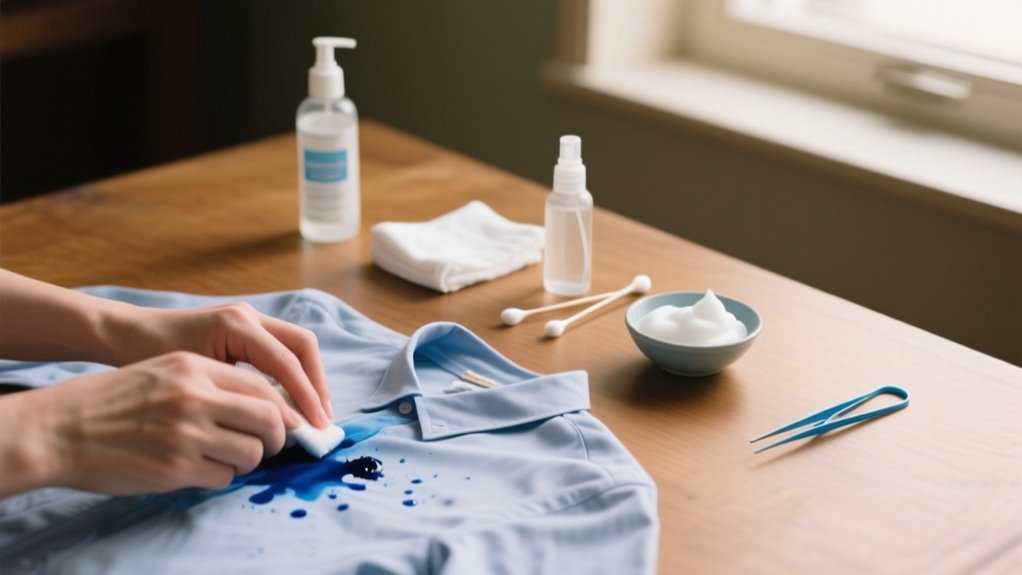
Start by blotting excess ink with a paper towel, then rinse the area with cold water.
Dab rubbing alcohol or hand sanitizer gently onto the stain to break it down.
Apply mild detergent and let it sit for a few minutes before rinsing.
Repeat these steps if needed.
Finally, wash the polyester on a warm cycle, then air dry.
Never use heat until the stain’s gone.
Following these steps carefully guarantees the best chance of success, with more helpful tips just ahead.
Gather Materials and Prepare Polyester for Ink Removal
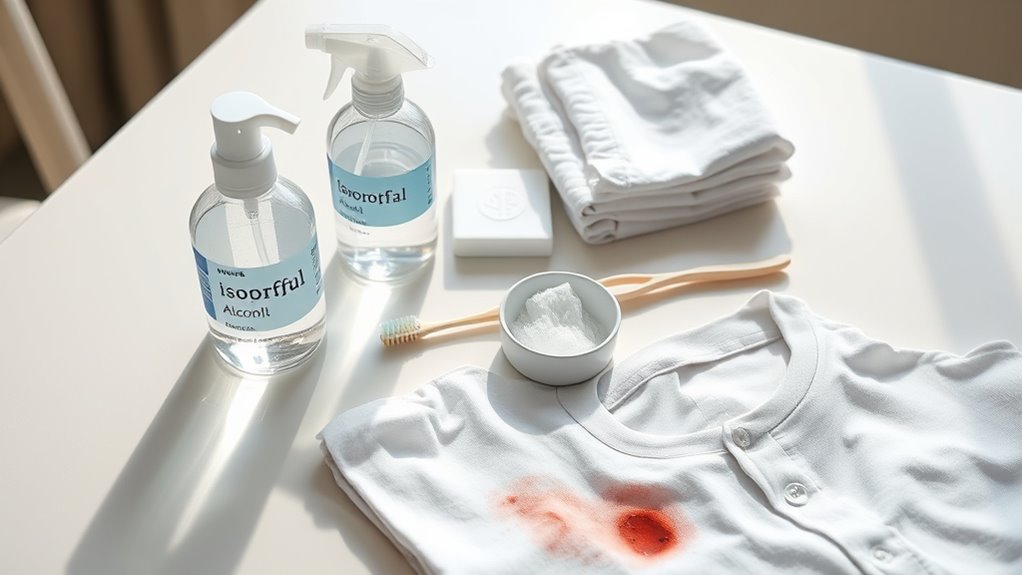
Before you begin removing ink from polyester, gather rubbing alcohol, a clean white cloth, mild detergent, and a soft brush or sponge. These materials are essential for effective stain removal on polyester fabric.
Start by testing rubbing alcohol on a small, hidden area of the polyester to ensure it won’t damage or discolor the fabric. This quick test helps protect your garment before you treat the ink stain.
Always test rubbing alcohol on a hidden polyester spot to prevent fabric damage before stain removal.
Next, gently blot any excess ink with a paper towel or cloth. Avoid rubbing because it can spread the stain or push it deeper into the fibers.
Before applying any stain removal solution, dampen a clean white cloth with cold water and lightly rinse the affected area. This prepares the polyester fabric for treatment.
You can then use a mixture of mild detergent and water or apply rubbing alcohol directly to the stain, depending on how stubborn the ink is. Proper preparation sets the stage for successful ink stain removal on polyester.
Blot and Rinse the Ink Stain With Cold Water
Once you spot the ink stain, grab a clean, white cloth or paper towel and start blotting immediately to lift excess ink without spreading it further. Place a dry towel under the stained polyester to catch any ink that seeps through. Avoid rubbing, as this can push the ink deeper into the fabric. Instead, gently blot the stain to absorb as much ink as possible.
Next, rinse the stained area with cold water. Use a damp cloth soaked in cold water to blot the fabric gently, which helps dilute and loosen the ink particles trapped in the fibers. Repeat the blot and rinse cycle several times. Each round reduces the ink stain further, so keep at it until you notice the stain fading significantly. This careful attention ensures you remove as much ink as possible before moving on to more intensive treatments.
Dab Rubbing Alcohol or Hand Sanitizer to Lift Ink
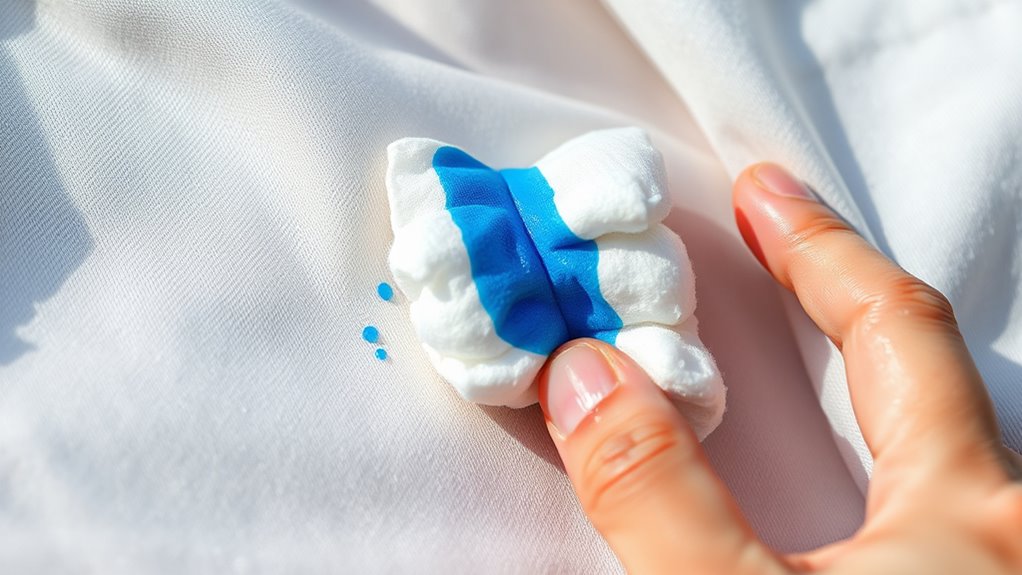
Start by picking rubbing alcohol or a hand sanitizer that has at least 60% alcohol — that way, it works better to remove the ink. Then, take a cotton swab or a clean cloth and apply it carefully, dabbing gently so you don’t end up spreading the stain around. Let it sit for a little bit to break down the ink, and after that, blot it away and give the area a rinse. Easy, right?
Choosing The Right Alcohol
Two common household options for lifting ink from polyester are rubbing alcohol and hand sanitizer, but rubbing alcohol usually works better due to its higher concentration of isopropyl alcohol. When choosing rubbing alcohol, aim for at least 70% alcohol concentration to effectively break down ink stains.
Hand sanitizer can be an alternative, but keep in mind it often contains moisturizers and fragrances that may hinder ink removal. If you opt for hand sanitizer, pick a gel with a high alcohol percentage and always test it on a hidden spot first.
Regardless of your choice, testing on a small, inconspicuous area of the polyester fabric is essential to avoid discoloration or damage. Prioritizing alcohol concentration will give you the best chance of lifting ink successfully.
Proper Dab Technique
Although it might be tempting to scrub the ink stain, you’ll get better results by gently dabbing rubbing alcohol or hand sanitizer onto the fabric with a clean, white cloth or cotton pad. This prevents dye transfer and protects your polyester.
Use a light, dabbing motion to apply the solvent. Press gently without rubbing to avoid spreading or embedding the ink deeper. Repeat this blotting technique to lift the stain effectively, allowing the solvent to break down the ink.
Once you’ve dabbed the stain sufficiently, immediately rinse the area with cold water. This helps dilute the ink and stops it from setting further into the fibers. Following this proper dab technique guarantees you’ll tackle ink stains efficiently without damaging your polyester fabric.
Pretreat the Stain With a Gentle Detergent
Before you wash your polyester item, apply a small amount of mild liquid detergent, like Tide Ultra Stain Release, directly onto the ink stain. Gently rub the detergent into the stain using your fingertips or a soft toothbrush to break down the ink particles effectively. Let it sit for 5 to 10 minutes to penetrate the fibers.
Always test the detergent on a hidden part of the fabric first to verify it won’t cause discoloration or damage. This pretreat step is vital for loosening the stain before washing.
| Step | Action |
|---|---|
| 1. Apply detergent | Use a mild liquid detergent directly on stain |
| 2. Rub gently | Use fingertips or soft toothbrush |
| 3. Wait | Let detergent sit for 5 to 10 minutes |
| 4. Test fabric | Try detergent on a hidden area first |
Pretreating with detergent gives you the best chance of removing the stain thoroughly during washing.
Rinse and Repeat Treatment If Ink Persists
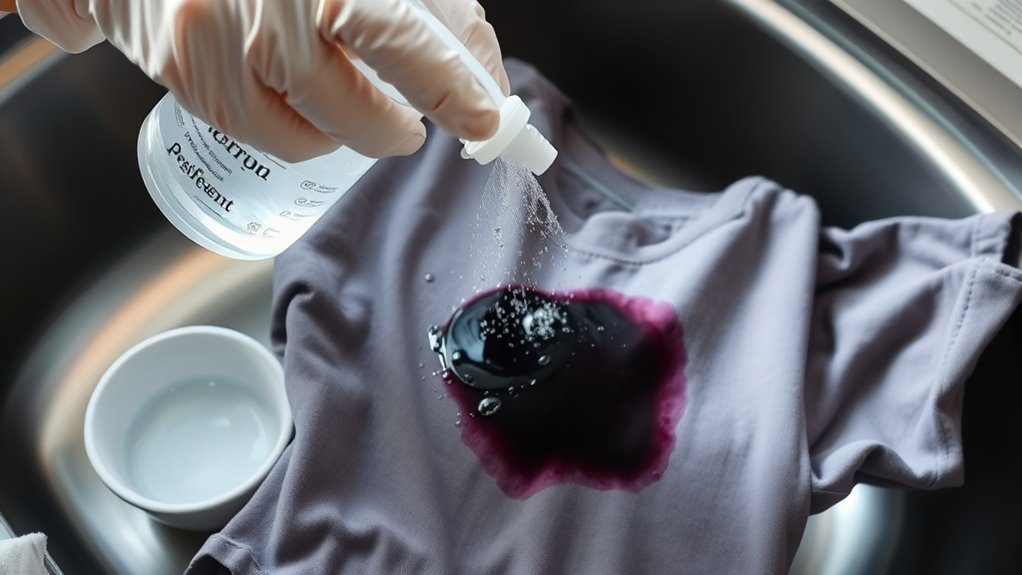
If the ink stain still shows after washing, don’t worry. Treating it again can make a difference. Start by repeating the pre-treatment using rubbing alcohol or a stain remover. Then rinse the fabric thoroughly before washing it again.
Persistent stains often need multiple cycles of stain removal efforts to vanish completely. After each treatment, let your polyester air dry to see if the ink has faded fully. Avoid heat drying at this stage, as it can set any remaining ink deeper into the fibers, making removal harder.
Always use fresh solvent for each cycle to maintain effectiveness. By consistently repeating the rinse and treatment process, you increase your chances of completely lifting stubborn ink stains. Staying patient and methodical with rinse and repeat treatment guarantees your polyester garment looks clean and ink-free without causing damage.
Wash Polyester on Hot Cycle to Remove Ink Stains
Before you wash your polyester on the hot cycle, it’s a good idea to check the fabric care label first. You want to make sure it can handle those higher temperatures without any damage.
Next, go ahead and pre-treat the ink stain. You can use rubbing alcohol or a stain remover—whatever you have on hand. This step really helps increase your chances of getting that stain out.
Then, when you’re ready, use the hottest water setting recommended on the label. Hot water helps break down the ink more effectively, giving you a better shot at removing the stain completely.
Optimal Water Temperature
When you wash polyester on a hot cycle, typically around 130°F (54°C), you’ll find ink stains loosen more effectively. Hot water boosts the solubility of ink residues, making stain removal much easier.
Using hot water in combination with a strong stain remover, like rubbing alcohol or a high-quality detergent, enhances the chances of completely removing ink from polyester fabric. However, always double-check the garment’s care label before opting for hot water. Some polyester blends may not tolerate high temperatures and could shrink or get damaged.
After washing, inspect the stain carefully before drying. Air drying is best because heat from a dryer can permanently set any remaining ink stain, undoing all your hard work. Ideal water temperature is key to successful ink stain removal on polyester.
Fabric Care Label
Knowing the ideal water temperature is just part of the process; you also need to pay close attention to the fabric care label on your polyester garment. The care label guides you on whether washing with hot water is safe for stain removal without damaging the fabric. Here’s what to do:
- Check the care label to confirm if hot water washing is recommended.
- Avoid hot water if the label warns against high temperatures to prevent fiber damage.
- Use hot water combined with a stain remover like Clorox 2™ for better ink stain removal, if allowed.
- Follow all care label instructions precisely to protect your polyester garment while maximizing cleaning effectiveness.
Prewash Stain Treatment
Although ink stains can be stubborn, you can tackle them effectively by pre-treating the polyester with rubbing alcohol or hand sanitizer. This helps break down the ink before washing. Use the hottest water cycle safe for your fabric and add a stain remover or extra detergent to boost stain removal.
Always check the stain before drying. If it remains, repeat the prewash treatment and wash cycle. Air drying is essential to avoid setting any leftover ink.
| Step | Action |
|---|---|
| Prewash | Apply rubbing alcohol or sanitizer |
| Water Temperature | Use hottest setting allowed |
| Additive | Use stain remover/detergent |
| Post-wash Check | Air dry and inspect stain |
This method maximizes polyester ink stain removal effectively.
Air Dry and Check for Ink Removal Before Final Drying
Since heat can permanently set ink stains, you should always air dry your polyester garment after treating it. This step is essential to prevent the ink stain from becoming a permanent mark. Here’s what you need to do:
- Air dry the polyester fabric completely after applying your stain remover.
- Avoid using dryers or any heat source, as they can set any remaining ink stain.
- Once dry, check the garment carefully in natural light to spot any leftover ink.
- If the stain persists, repeat the cleaning and air drying process instead of applying heat.
Frequently Asked Questions
Can Ink Stains on Polyester Be Removed Without Rubbing Alcohol?
Yes, you can remove ink stains on polyester without rubbing alcohol by using alternative stain removal methods like enzyme-based stain removers or commercial products made for synthetic fabrics. You might also try DIY cleaning solutions, such as a mix of dish soap and baking soda, which break down ink effectively.
Always use fabric-specific techniques. Test any solution on a hidden spot first to avoid damage, ensuring your polyester stays vibrant and clean.
Is It Safe to Use Bleach on Polyester Ink Stains?
You shouldn’t use bleach directly on polyester ink stains because bleach risks damaging the fabric and affecting dye stability. Undiluted bleach can weaken polyester fibers and cause discoloration, leading to fabric damage.
Instead, try oxygen-based or color-safe bleaches as safer alternatives. Always follow the garment’s care label and do a patch test first to avoid any unwanted damage or color changes.
That way, you protect your polyester while tackling the stain.
How Long Should I Wait Before Treating a Fresh Ink Stain?
Don’t wait, treat that fresh ink stain within 5 to 10 minutes. Every second counts in stain prevention, or the ink will set deeper and threaten fabric durability.
The quicker you act, the less frequent your cleaning needs become. Imagine that stubborn spot becoming permanent because you hesitated. Avoid that by acting fast.
Quick action keeps your polyester looking great and saves you from tough, repeated cleanings down the road.
Will Ink Removal Affect the Color or Texture of Polyester?
Ink removal usually won’t affect your polyester’s fabric dye if you act quickly and use gentle methods. Since polyester resists color bleeding, you can focus on preserving color by testing solvents on a hidden spot first.
The longer a stain sets, the tougher it is to remove without risking color loss or texture changes. By following care instructions and treating stains promptly, you’ll protect color preservation and minimize any impact on fabric feel.
Can Professional Dry Cleaning Remove Ink From Polyester Fabric?
Yes, professional dry cleaning can often tackle ink stains on polyester, but it’s not always straightforward. You’ll want to trust stain removal techniques that consider fabric dye compatibility and cleaning solution safety to avoid damage.
Dry cleaners use special solvents designed for synthetic fibers, so your fabric stays vibrant and intact. Just remember, the sooner you act, the better your chances of completely removing that stubborn ink mark without harming your polyester.
Conclusion
Think of your polyester as a canvas, and ink stains like stubborn shadows trying to dull its shine. By patiently gathering your tools, gently lifting the stain, and washing it away, you’re restoring its vibrant story.
Just like an artist carefully erases smudges to reveal a masterpiece, your careful steps bring back the fabric’s true colors. Keep at it, and soon your polyester will be as bright and fresh as the day you first wore it.
Leave a Reply