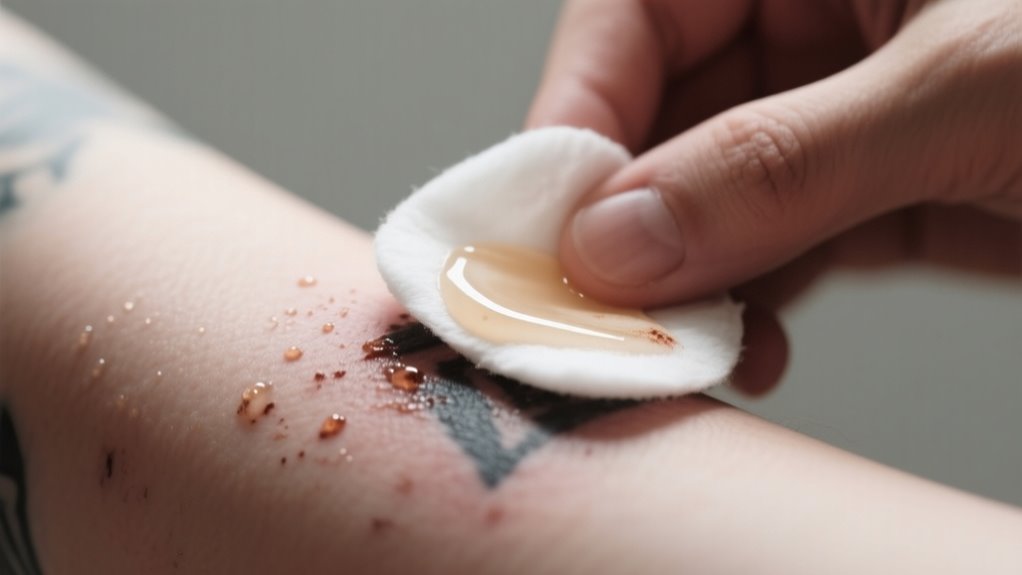
Aquaphor doesn’t pull ink out of your tattoos because the ink sits deep within the dermis, far below where the ointment works. It mainly creates a protective barrier on the skin’s surface to lock in moisture and aid healing.
While you might see fluid that looks like ink, that’s just normal healing plasma, not tattoo pigment.
Using Aquaphor properly supports your tattoo’s recovery without fading the ink.
Keep going to understand how to care for your tattoo best.
What Is Aquaphor and How Does It Work on Your Skin?
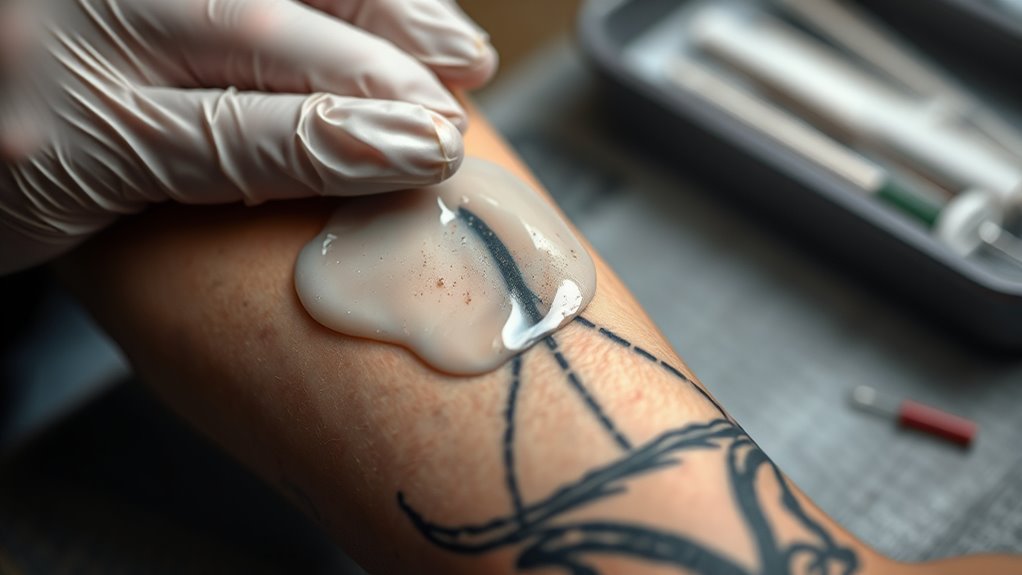
Although you might have heard concerns about Aquaphor affecting tattoo ink, this ointment primarily works by creating a protective barrier on your skin to lock in moisture and speed up healing. Aquaphor’s main ingredient is petrolatum, which forms an occlusive layer that seals in moisture and prevents water loss from your skin.
This barrier helps keep your skin hydrated, which is vital for proper healing after a tattoo. Besides petrolatum, Aquaphor contains glycerin, lanolin, and panthenol, which soothe and hydrate the skin further.
When you apply Aquaphor, it doesn’t penetrate deeply enough to reach the tattoo ink embedded in the dermis. Instead, it focuses on the surface, maintaining a moist environment that accelerates healing and reduces irritation or dryness.
Why Do People Think Aquaphor Pulls Ink Out of Tattoos?
You might think Aquaphor pulls ink out because you notice fluid weeping from your tattoo after you put it on. But actually, that fluid is mostly healing plasma and lymph—not the ink itself. The ink sits deeper in your skin’s dermis, so it’s not really coming out. It’s an easy mix-up to make because natural healing can look like ink loss, even though it’s not.
Misunderstanding Healing Fluid
When you apply Aquaphor to a fresh tattoo, the fluid that appears on the surface might look like ink being pulled out, but it’s actually just your body’s natural healing fluids. This healing fluid includes plasma and lymph and is part of the skin’s normal weeping process as it repairs itself.
Many people mistake this clear or slightly colored fluid for ink because it can resemble the tattoo pigment. However, Aquaphor doesn’t cause ink removal; it simply helps to protect and moisturize the skin, supporting the healing process.
Since tattoo ink is embedded deep in the dermis, topical ointments like Aquaphor cannot reach or extract it. Understanding this can prevent confusion about the role Aquaphor plays during tattoo healing.
Ink Location In Dermis
Understanding why Aquaphor doesn’t pull ink out of tattoos starts with knowing where tattoo ink actually resides in your skin. Tattoo ink is embedded deep in the dermis, the thick layer beneath the outer epidermis.
Since Aquaphor only stays on the surface, it can’t reach the ink or remove it during healing. What you see as fluid when applying Aquaphor is healing plasma and lymph, not ink.
| Skin Layer | Description |
|---|---|
| Epidermis | Outer layer, sheds easily |
| Dermis | Ink resides here, stable |
| Hypodermis | Fat and connective tissue |
| Surface (Topical) | Aquaphor stays here, no ink |
Knowing this clears the misconception that Aquaphor pulls ink out during your tattoo’s healing process.
Weeping Vs Ink Removal
Although Aquaphor doesn’t pull ink from your tattoo, the weeping fluid during healing can easily be mistaken for ink being drawn out. This weeping is a natural part of tattoo healing, consisting mainly of plasma, lymph, and a small amount of excess ink mixed with these fluids.
When you see this fluid, it might look like Aquaphor is causing ink removal, but that’s not the case. Tattoo ink is embedded deep in the dermis, beyond the reach of topical ointments like Aquaphor.
There’s no scientific proof that Aquaphor or any ointment can extract ink once it’s properly placed. People often confuse the normal weeping process with ink removal, misunderstanding how tattoos heal and how ink stays locked within your skin.
Where Does Tattoo Ink Actually Stay: What Aquaphor Can’t Reach
Since tattoo ink settles deep within the dermis layer of your skin, Aquaphor can’t reach or remove it. The ink particles embed themselves firmly in this middle layer, which lies beneath the outer epidermis.
Topical ointments like Aquaphor only create a protective barrier on the surface and don’t penetrate far enough to interact with the ink. What you see leaking from a fresh tattoo isn’t ink but healing fluids: plasma, lymph, and other natural excretions your body produces during the recovery process.
Because the ink remains locked in the dermis, no amount of ointment rubbing or application will pull it out. Aquaphor’s role is to protect and moisturize the surface, assisting healing, but it can’t extract pigment from beneath your skin.
How Does Aquaphor Impact New Tattoo Healing?
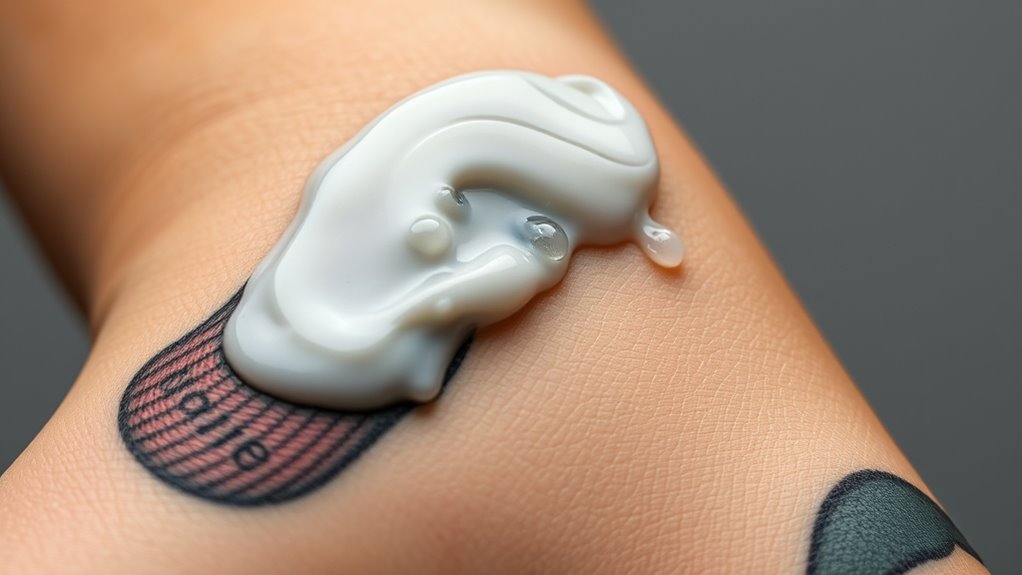
When you put Aquaphor on a new tattoo, it won’t pull the ink out because the pigment is deep in your skin. Instead, it helps by creating a moist environment that speeds up healing and cuts down on scabbing. Just be sure to use it the right way so you don’t end up with irritation or clogged pores while your skin is healing.
Aquaphor And Ink
How does Aquaphor affect the ink in your new tattoo? Rest assured, Aquaphor doesn’t pull tattoo ink out because the ink sits deep within the dermis layer of your skin, beyond the reach of any topical ointment.
When you apply Aquaphor, the ink stays put; what you might notice is healing fluid mixing with surface ink, creating the illusion of ink leaching. Aquaphor forms an occlusive barrier that traps moisture and heat, which can influence your healing environment, but it doesn’t extract or fade the ink itself.
Scientific evidence shows Aquaphor supports healing effectively without compromising the vibrancy or longevity of your tattoo ink. Using Aquaphor properly helps your tattoo heal smoothly while keeping the ink intact.
Healing Effects And Risks
Although Aquaphor doesn’t pull ink from your new tattoo, it plays an essential role in the healing process by keeping your skin moisturized and protected. Using Aquaphor correctly supports healing and promotes ink retention. However, you should be aware of potential risks if overused. Here’s what you need to know:
- Aquaphor locks in moisture, preventing dryness and aiding faster healing.
- Over-application can trap bacteria and fluid, increasing the chance of clogged pores and skin irritation.
- Ink stays intact because it’s embedded in the dermis, beyond Aquaphor’s reach, so no ink loss occurs from ointment use.
In short, Aquaphor helps your tattoo heal well when applied properly, but using too much may hinder healing and cause skin issues.
Can Aquaphor Fade or Damage Your Tattoo?
Since Aquaphor doesn’t contain ingredients that directly affect tattoo ink, it won’t pull or fade your tattoo during healing. Tattoo ink sits deep in the dermis layer of your skin, making it unreachable by topical products like Aquaphor. When used as directed, Aquaphor doesn’t cause fading or damage to the ink itself.
That said, improper or excessive use of Aquaphor might create an overly moist environment, trapping heat and moisture against your skin. This can potentially contribute to premature fading, but it’s not because Aquaphor actively removes your tattoo ink. Instead, poor healing conditions caused by over-application could indirectly affect your tattoo’s vibrancy.
Why Aquaphor Might Not Be Your Best Tattoo Friend
When you’re caring for a new tattoo, choosing the right aftercare product matters, and Aquaphor might not always be the best option. Although it’s popular, Aquaphor’s heavy, occlusive nature can sometimes do more harm than good for your healing tattoo. Here’s why it might not be your best tattoo friend:
- It can clog pores. Trapping moisture and heat creates an environment where bacteria thrive, risking infection and breakouts.
- It may interfere with proper healing. Too much occlusion can slow skin recovery, leading to complications like milia or irritation.
- It’s not breathable. Your tattoo needs air to heal efficiently, and Aquaphor’s thick barrier can suffocate the skin.
For effective aftercare, you want gentle, breathable products that protect without smothering. Avoiding clogged pores and allowing your healing tattoo to breathe helps ensure vibrant, long-lasting results.
What Ingredients Help Tattoos Heal Better Than Aquaphor?
If you want your tattoo to heal quickly and look its best, choosing products with the right ingredients makes all the difference. Healing ingredients like bisabolol offer anti-inflammatory and soothing benefits that calm your skin and support faster recovery.
Vitamins A, C, and B12 boost tissue repair, speeding up the healing process and helping your tattoo retain its vibrancy. For skin hydration, natural oils such as argan and sweet almond oil deeply nourish and improve elasticity, preventing dryness and cracking.
Unlike heavy ointments like Aquaphor, breathable formulations allow your skin to breathe, reducing the risk of clogged pores and irritation. Non-comedogenic ingredients keep pores clear, minimizing breakouts that can interfere with healing.
How to Switch From Aquaphor to Lotion Without Problems
Choosing the right products for your tattoo’s healing stage can make a big difference in the outcome. When you’re ready to switch from Aquaphor to lotion, timing and technique matter. Typically, you’ll make this transition after 2-3 days or once your tattoo starts peeling to avoid clogged pores.
Follow these steps for smooth tattoo aftercare:
- Gently wash your tattoo with mild soap and water to keep it clean before applying lotion.
- Gradually reduce how often you use Aquaphor while increasing lotion application, maintaining hydration.
- Use fragrance-free, non-comedogenic lotions containing skin-nourishing ingredients like glycerin and panthenol.
Avoid putting lotion on raw or heavily scabbed areas to prevent irritation. By carefully managing this switch to lotion, you’ll support your tattoo’s healing without disrupting ink or causing complications.
Best Tattoo Aftercare Practices: Protecting Your Ink While Healing
To keep your tattoo vibrant, it’s important to focus on proper moisture retention. But try not to overdo it with heavy ointments—those can clog your pores and cause issues. Also, be gentle with your new ink. Avoid any mechanical irritation because it can damage your healing skin and the tattoo itself. And one more thing: don’t forget to protect your tattoo from the sun. UV exposure can cause fading, especially during that crucial healing phase. So, keeping it covered or using sunscreen when it’s healed is key!
Proper Moisture Retention
While healing, your tattoo needs proper moisture retention to prevent scabbing and keep the ink vibrant. Balancing hydration without overdoing it is key to preserving your artwork. Here’s how you can manage moisture retention effectively:
- Use breathable, non-clogging moisturizers to support healing without risking ink leaching.
- Apply Aquaphor sparingly; too much can trap heat and moisture, possibly affecting ink retention.
- Keep your skin consistently hydrated to reduce dryness and enhance ink clarity.
Avoiding Mechanical Irritation
Since your tattoo is still healing, you need to protect it from any mechanical irritation that could damage the ink. Avoid tight or rough fabrics that rub against your skin, and refrain from scratching or picking at the tattoo.
Use Aquaphor gently to keep the area moisturized without applying pressure. When cleaning, pat the tattoo softly to prevent pulling ink or causing irritation.
Also, protect your tattoo from friction caused by backpacks or belts by wearing breathable clothing or dressings.
| Avoid | Why | Tip |
|---|---|---|
| Tight clothing | Causes ink fading/distortion | Opt for loose, soft fabrics |
| Scratching/picking | Leads to uneven healing | Keep nails trimmed |
| Rough accessories | Causes friction irritation | Avoid tight belts/backpacks |
| Harsh rubbing | Pulls ink during cleaning | Use gentle patting motions |
Sun Protection Essentials
Although your tattoo is still healing, protecting it from the sun’s UV rays is essential to preserve its color and detail. UV rays can cause tattoo fading and damage delicate ink particles.
To keep your ink vibrant, follow these sun protection essentials:
- Apply a broad-spectrum sunscreen with SPF 30 or higher whenever you go outside, even on cloudy days.
- Cover your tattoo with clothing or a physical barrier to block direct sunlight and reduce the risk of premature fading.
- Continue consistent sun protection after healing to extend your tattoo’s lifespan and prevent UV-induced ink breakdown.
How to Keep Your Tattoo Vibrant for Years to Come
To keep your tattoo vibrant for years to come, you need to protect it from UV damage by regularly applying broad-spectrum SPF sunscreen. Sun protection is essential because UV rays cause ink to fade faster, dulling your tattoo’s colors.
Alongside sunscreen, maintaining moisturized skin with non-comedogenic products supports healthy skin, which preserves your tattoo’s brightness. Proper tattoo aftercare also plays a key role. Use gentle, tattoo-specific products that promote healing and prevent irritation.
Avoid excessive sun exposure and tanning beds, as they accelerate fading. Staying hydrated and following a balanced skincare routine can boost collagen production, helping your tattoo look fresh longer.
Frequently Asked Questions
Can Aquaphor Cause Allergic Reactions on Tattooed Skin?
Yes, Aquaphor can cause allergic reactions on tattooed skin, especially if you have skin sensitivity to its product ingredients like petrolatum and lanolin. These ingredients might trigger redness, itching, or rash when applied to your tattooed area.
To avoid discomfort, you should do a patch test before using Aquaphor extensively. If you notice any signs of an allergic reaction, stop using it immediately and consult a healthcare professional.
How Often Should I Apply Aquaphor to a New Tattoo?
You should apply Aquaphor to your new tattoo 2-3 times daily during the initial tattoo healing phase. As your skin starts peeling and healing, you can reduce it to once or twice a day.
Avoid over-application to prevent skin irritation or trapped moisture. If Aquaphor doesn’t suit you, consider product alternatives like fragrance-free lotions.
Always follow your tattoo artist’s advice for the best healing results.
Is Aquaphor Safe to Use on Colored Tattoos?
Coincidentally, if you’re worried about tattoo ink removal or ink extraction creams harming your art, Aquaphor is safe for colored tattoos. Unlike tattoo fading techniques, it doesn’t pull ink out or cause fading when used correctly.
You can trust it to protect your skin and ink during healing without risking color loss. Just apply it as directed and avoid overuse, so your vibrant tattoo stays sharp and beautiful.
Can Aquaphor Be Used on Tattoos During Sun Exposure?
Yes, you can use Aquaphor on tattoos during sun exposure, especially while your tattoo is healing. It helps keep your skin moisturized and reduces the risk of irritation.
However, Aquaphor isn’t a sunscreen, so it won’t protect your tattoo from UV damage on its own. For full protection, apply a broad-spectrum SPF over Aquaphor once your tattoo is healed to prevent fading and protect your ink effectively.
Should Aquaphor Be Used on Tattooed Skin With Scabs?
Yes, you should use Aquaphor on tattooed skin with scabs. During tattoo healing, skin scabs need gentle care, and Aquaphor offers great moisturizer benefits.
It soothes dryness, reduces itching, and prevents scabs from cracking, which helps your tattoo heal better. Just apply a thin layer gently without picking at scabs.
This protective barrier keeps the area moist and safe, promoting best healing without harming your tattoo ink.
Conclusion
You might worry Aquaphor pulls ink from your fresh tattoo, like rain washing away chalk drawings on a sidewalk, but it doesn’t. The ink lies deep beneath your skin, safe from any ointment’s reach.
Instead, Aquaphor helps seal in moisture, creating the perfect healing environment. So, while you care for your new art, think of Aquaphor as a gentle raincoat, protecting your vibrant tattoo from drying out, not from fading away.
Leave a Reply