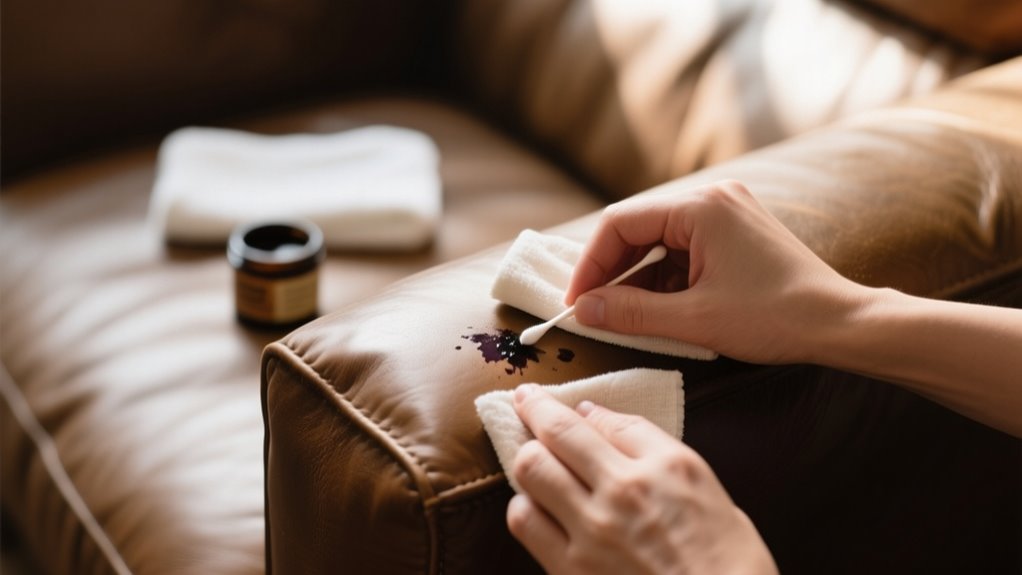
To remove ink from leather in 10 easy steps, start by blotting fresh ink gently without rubbing. Always test any cleaning solution on a hidden spot first.
Use mild soap and water for light stains, or dab rubbing alcohol or vinegar on tougher spots.
Try baking soda paste or natural removers for stubborn marks.
Clean thoroughly, then apply leather conditioner and buff to restore shine.
If the stain is large or delicate, consider professional help.
Keep going to uncover more expert tips and tricks.
Act Quickly to Blot Fresh Ink Stains on Leather
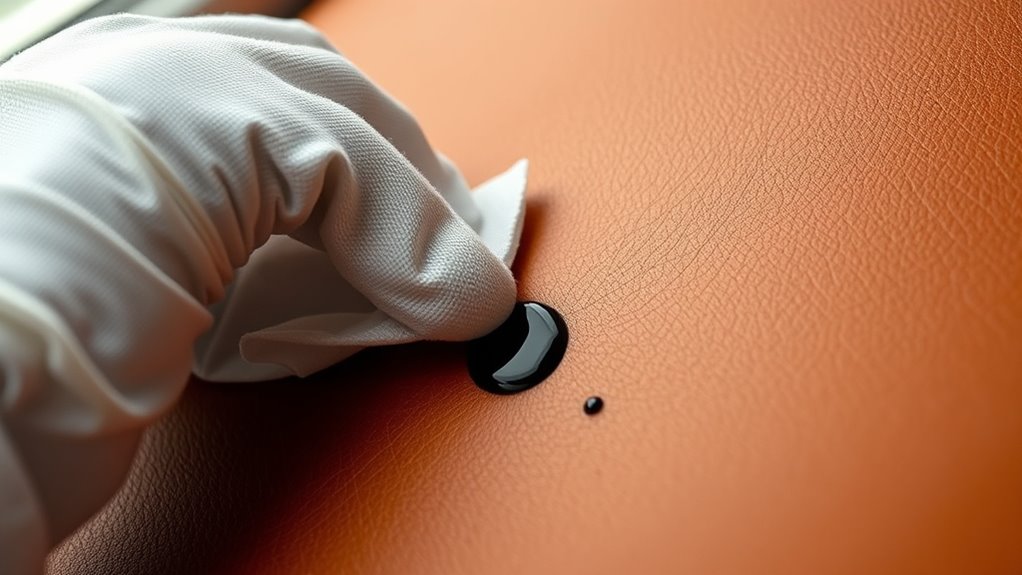
When you notice fresh ink on your leather, act quickly by blotting it with a dry, clean paper towel. This simple step absorbs excess ink before it seeps deeper into the leather fibers, making removal much easier.
Don’t rub or wipe the ink stain vigorously. That only spreads the ink and drives it further into the leather, making the problem worse. Instead, gently blot the affected area, pressing lightly to lift as much ink as possible without damaging the surface.
Time is critical here; the faster you respond, the better your chances of removing the stain entirely. Using a dry paper towel to blot helps prevent discoloration or harm to the leather, preserving its natural texture and appearance.
Test Cleaning Methods on a Hidden Leather Spot First
Before applying any cleaning solution to the visible stain, you should always test it on a hidden spot of the leather. This step helps you avoid unwanted damage or discoloration from the cleaning product. To do this correctly, follow these steps:
Always test cleaning solutions on a hidden leather spot to prevent damage or discoloration before treating visible stains.
- Choose an inconspicuous area like the underside or a hidden seam to apply a small patch of the cleaning solution.
- Use a soft cloth to gently rub the test patch, ensuring you apply the exact product you plan to use on the stain.
- Wait at least 24 hours to monitor any reaction, such as changes in color, texture, or finish.
- Document the initial condition of the test patch so you can compare it after cleaning.
Use Mild Soap and Water for Light Ink Stains
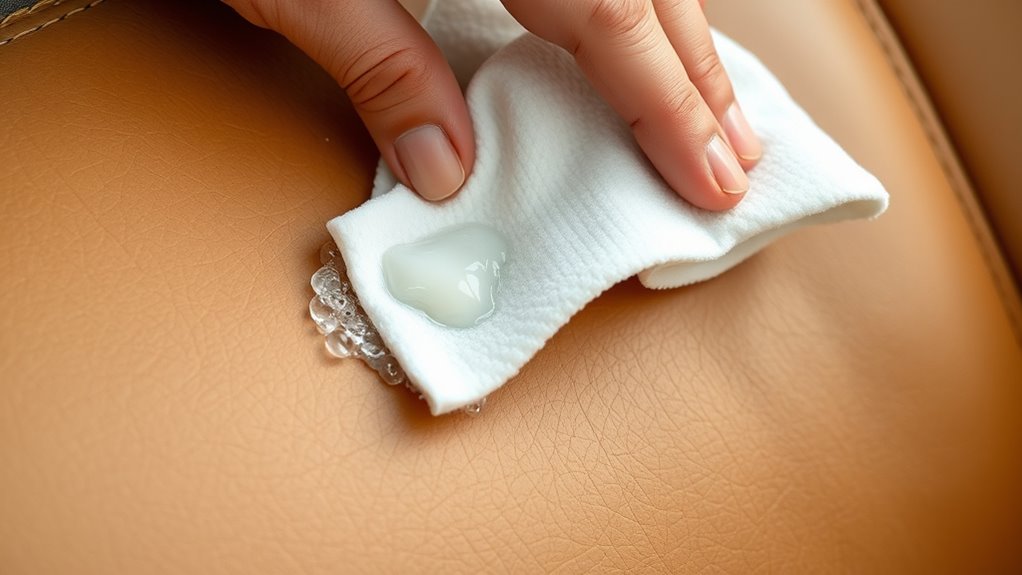
Although ink stains on leather can be stubborn, you can often lighten them using a simple mixture of mild soap and warm water. Start by mixing 1-2 drops of mild soap, like dish soap or saddle soap, into a small bowl of warm water.
Dip a soft, lint-free cloth into the solution and gently wipe the ink stains in circular motions. Always begin at the stain’s outer edges and work toward the center to avoid spreading.
Remember to rinse the cloth frequently and use a clean, damp cloth afterward to remove any soap residue. Once done, dry the area thoroughly with a clean towel. Applying a leather conditioner afterward helps maintain softness and prevents drying.
| Step | Action | Tip |
|---|---|---|
| Mix Solution | 1-2 drops mild soap + water | Use warm water |
| Clean Stain | Gently wipe in circles | Start outer edge, move inward |
| Rinse & Dry | Use damp cloth, then towel | Follow with leather conditioner |
Try Rubbing Alcohol or Vinegar for Tough Ink Marks
If soap and water don’t do the trick, try dabbing some rubbing alcohol on a cotton swab and gently blotting the ink stain. You can also mix equal parts vinegar and water, then apply it with a soft cloth using circular motions to lift those tougher marks. Just remember to test a small hidden area first. And always follow up by wiping with a damp cloth and conditioning your leather.
Alcohol Application Tips
When tough ink marks won’t budge with simple cleaning, you can try applying rubbing alcohol or a diluted vinegar solution to lift the stain. Alcohol works well for fresh ink stains on leather, but you need to handle it carefully to avoid damage.
Here are some alcohol application tips for stain removal:
- Always spot test on a hidden area to make sure the leather won’t discolor.
- Use a cotton swab or soft cloth to gently dab the alcohol onto the ink stain.
- Avoid excessive rubbing because it can spread the stain or dry out the leather.
- After treatment, apply a leather conditioner to restore moisture and prevent cracking.
Use alcohol sparingly for safe, effective stain removal without harming your leather’s finish.
Vinegar Cleaning Method
Two simple ingredients, white vinegar and water, can effectively tackle tough ink stains on leather. Start by diluting white vinegar with an equal amount of water to create a gentle cleaning solution.
Dampen a soft microfiber cloth with the mixture and gently dab or rub the stained area in circular motions. Keep applying the vinegar solution until the ink starts to lift.
Then, wipe away any excess with a clean, damp cloth. To prevent any vinegar residue from lingering, rinse the area with a cloth dampened with plain water.
Finally, follow up with a leather conditioner to restore moisture and keep the leather from drying out after vinegar cleaning. This method offers an easy, effective way to remove stubborn ink marks from your leather items.
Carefully Use Nail Polish Remover or Hairspray on Ink
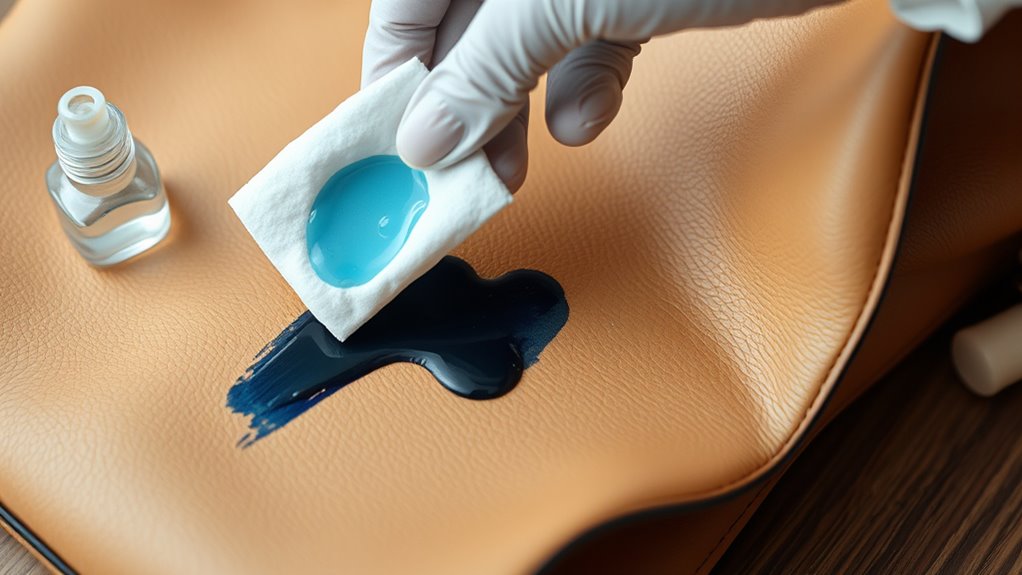
Choose an acetone-free nail polish remover and gently apply it with a cotton swab so you don’t damage your leather. It’s a good idea to test a small hidden spot first to make sure it won’t cause any discoloration. Once you’ve treated the stain, be sure to condition the leather right away to keep it soft and prevent it from drying out.
Choose Acetone-Free Remover
Although removing ink from leather can be tricky, using acetone-free nail polish remover or hairspray can help lift stains without causing damage. These products contain alcohol that breaks down the ink stain gently. Here’s how to choose and use an acetone-free remover effectively:
- Select an acetone-free remover to avoid harsh chemicals that can damage leather.
- Test the remover on a hidden spot first to check for discoloration or damage.
- Dab the remover lightly onto the ink stain using a cotton swab or soft cloth. Avoid soaking the leather.
- After treatment, apply a leather cleaner or conditioner to restore moisture and protect the surface.
Using these steps guarantees you safely remove ink while preserving your leather’s quality.
Apply Gently With Cotton
Once you’ve picked the right acetone-free remover, it’s time to apply it carefully to the ink stain. Dampen a cotton swab or soft cloth with the remover or hairspray, then gently dab the inked area. Avoid rubbing, as that can damage the leather’s surface.
Let the solution sit for a few minutes to soften the ink, but don’t leave it on too long to prevent drying out the leather. Afterward, blot the spot with a clean, damp cloth to lift the ink and any leftover chemicals.
Using cotton helps you control the application and minimizes risk to the leather. This gentle approach ensures you remove the ink effectively without harming the material beneath.
Always Condition Afterward
Because nail polish remover and hairspray contain alcohol that can dry out leather, you should always condition the leather immediately after treating ink stains. Using a leather conditioner after ink removal restores moisture and prevents cracking.
Follow these steps for effective leather care:
- Apply a small amount of leather conditioner evenly over the treated area.
- Let the conditioner soak in for several minutes to nourish the leather deeply.
- Gently buff or wipe away any excess conditioner with a clean cloth.
- Repeat conditioning regularly to maintain softness and extend the leather’s lifespan.
Gently Remove Ink From Leather With a Magic Eraser
If you want to tackle ink stains on leather without harsh chemicals, a Magic Eraser can be an effective tool. Made of melamine foam, it gently lifts or diminishes ink by lightly abrading the surface.
Before you start, test the Magic Eraser on a hidden spot to confirm it won’t discolor or damage your leather. When treating the ink stain, rub the eraser gently in a circular motion, applying minimal pressure. This careful approach prevents removing the leather’s finish or creating uneven patches.
Avoid scrubbing hard, as that can damage the leather. After the ink fades, be sure to follow up with a leather conditioner to restore moisture and keep the leather supple. Using a Magic Eraser this way offers a simple, chemical-free method to reduce ink stains while preserving your leather’s quality.
Use Baking Soda or Natural Removers for Tough Ink Stains
To tackle tough ink stains, try mixing baking soda with water to make a gentle paste. You can apply it to the stain and scrub lightly. Another great option is using natural stain removers that contain plant enzymes. Just spray the remover on, wait about 15 minutes, and then wipe it clean.
Before you start, though, it’s a good idea to test a small, hidden area first. That way, you can make sure your leather won’t get damaged when you treat the whole stain.
Baking Soda Paste Preparation
When tackling tough ink stains on leather, you’ll find that a baking soda paste works wonders. This simple mixture is effective for leather cleaning and ink stain removal without harsh chemicals. Here’s how to prepare and use it:
- Mix equal parts baking soda and distilled water until you get a thick paste.
- Gently apply the paste onto the ink stain using a soft cloth or sponge, covering it evenly.
- Let the paste sit for 10-15 minutes to allow it to lift the ink from the leather fibers.
- Use a damp, soft cloth to scrub the area in circular motions, then wipe away any residue.
This method helps break down ink stains while protecting your leather’s surface.
Applying Natural Stain Removers
How exactly can you tackle tough ink stains on leather without risking damage? Using a natural remover is a safe and effective choice for stain removal. You can apply a natural plant-based remover, like Puracy’s Laundry or Carpet & Upholstery Spot Remover, directly to the ink stain.
Let it sit for up to 15 minutes or longer for stubborn marks to boost its effectiveness. Afterward, gently wipe the area with a damp cloth to remove any leftover residue. This helps protect the leather from buildup.
Always perform a spot test on an inconspicuous area before applying the natural remover broadly. This way, you can make sure it won’t discolor or harm your leather. This method balances strong stain removal with preserving your leather’s quality.
Timing And Removal Techniques
Three key steps can help you tackle tough ink stains on leather using baking soda or natural removers: apply the paste promptly, let it sit to break down the ink, and gently wipe or scrub without rushing. Timing is essential to prevent stubborn stains from settling deeper into the leather fibers.
Here are effective removal techniques to keep in mind:
- Apply a baking soda and water paste immediately after the spill.
- Let the paste sit for 15-20 minutes to break down the ink.
- Gently wipe or use a soft brush to lift the stain without damaging the leather.
- Repeat the application as needed for persistent stains, exercising patience throughout.
Following these steps guarantees you’ll improve your chances of restoring your leather’s look.
Clean the Leather and Let Conditioner Soak In
Once you’ve cleaned the ink stain, apply a small amount of leather conditioner directly to the affected area to nourish the leather and help break down the remaining ink residues. Let the leather conditioner soak in for several minutes without wiping or rubbing the spot, allowing it to penetrate deeply and loosen any ink trapped within the fibers.
After this resting period, use a soft cloth to gently massage the conditioner into the leather. This helps improve absorption and ensures the treatment spreads evenly across the affected area.
Letting the conditioner soak in not only aids in removing residual ink but also restores essential moisture to the leather, preventing it from drying out or cracking. By following these steps carefully, you prepare the leather for the next phase of restoration, maintaining its durability and appearance while effectively tackling stubborn ink stains.
Buff Leather to Restore Its Look and Texture
Although the leather looks cleaner after conditioning, you’ll want to buff it with a soft, dry cloth to restore its smooth texture and natural shine. Buffing helps remove any excess conditioner and evens out the surface, blending cleaned spots with the rest of the leather.
To restore your leather’s look and texture effectively, follow these steps:
- Use gentle circular motions to buff the leather evenly.
- Choose a soft, dry cloth to avoid scratching the surface.
- Apply light pressure to enhance the leather’s natural luster.
- Buff regularly to prevent dirt and oils from dulling the leather.
When to Call a Professional Leather Cleaner for Ink Removal
If you find that the ink stain covers a large area or has soaked deep into the leather, it’s best to call a professional cleaner. Professional leather cleaners have the right tools and stain removal solutions to tackle stubborn ink without harming your leather’s texture or finish.
When the stain is old or set, DIY methods often won’t work and can even make things worse. If you’re unsure about your leather type or the ink’s severity, consulting a professional prevents accidental damage or discoloration.
This is especially important for high-end or antique leather goods, where preserving value and integrity is essential. Instead of risking costly mistakes with home remedies, trust a leather cleaner who understands how to safely and effectively remove ink stains.
Calling in an expert guarantees your leather looks its best without compromising its quality.
Frequently Asked Questions
Can Ink Stains Permanently Damage Leather if Untreated?
Yes, untreated ink stains can permanently damage your leather by causing deep ink absorption into the fibers. If you don’t act quickly, the stain sets, making leather repair much harder or impossible.
You’ll want to focus on stain prevention by addressing spills immediately to avoid long-term harm. Prompt treatment helps protect your leather’s look and feel, ensuring you don’t face costly or irreversible damage down the line.
Are All Types of Leather Equally Easy to Clean Ink From?
Not all leather is equally easy to clean ink from. Remember, “different strokes for different folks.” Your leather’s texture plays a big role in ink absorption. Vegetable-tanned leather soaks ink up quickly, while chrome-tanned leather resists it better.
Oiled or waxed surfaces usually repel ink, making cleaning simpler. You’ll want to pick cleaning tools suited to your leather type to avoid damage and improve stain removal effectiveness.
How Long Should I Wait Before Conditioning Leather After Cleaning?
You should wait at least 24 to 48 hours after leather cleaning before applying leather conditioning. This waiting period guarantees the leather is completely dry, preventing moisture from getting trapped, which can cause damage or discoloration.
Proper drying is essential for ink stain prevention because sealing in moisture or cleaning agents can worsen stains. Always test by pressing the leather gently to check dryness and follow your conditioner’s instructions for the best results.
Can Ink Removal Methods Affect Leather Color or Finish?
Don’t worry, you can remove ink without ruining your leather’s look. But yes, ink removal methods can affect leather dye and cause color alteration if you’re not careful.
Harsh solvents might strip away the finish, leading to finish damage and uneven spots. To protect your leather, always test any cleaning solution on a hidden area first. That way, you’ll avoid ruining the original color or finish you love.
Is It Safe to Use Homemade Ink Removers on Vintage Leather?
It’s usually not safe to use DIY solutions on vintage leather because they can damage the delicate finish and alter color. You need to take chemical safety carefully since homemade mixtures like vinegar or baking soda might be too harsh.
To prevent stains or discoloration, always do a spot test first. Instead, choose commercial leather cleaners designed specifically for vintage leather to guarantee effective stain prevention without risking harm.
Conclusion
Removing ink from leather can feel tricky, but with these 10 simple steps, you’re well-equipped to tackle stains quickly and effectively. Did you know that acting within the first 15 minutes can increase your chances of completely removing ink by up to 90%?
So, don’t wait. Start blotting and testing your cleaner right away. With patience and care, your leather will look fresh and beautiful again in no time!
Leave a Reply