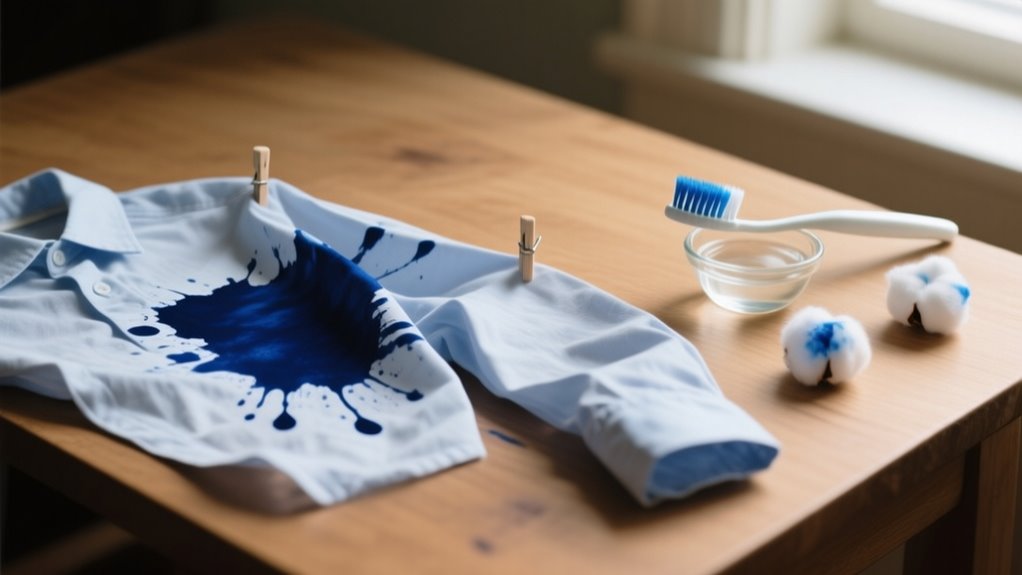
If your clothes have dried with ink stains, don’t panic. You can still tackle them. Avoid heat because it sets ink deeper.
Start by applying rubbing alcohol or hand sanitizer to break down the ink pigments. Let it sit for 5–10 minutes before blotting and rinsing with cold water.
For stubborn stains, try natural remedies like vinegar and cornstarch paste or specialized cleaners. Using these methods carefully can restore your fabric, and exploring more tips can help you master ink stain removal.
Why Ink Stains Set and How to Remove Them
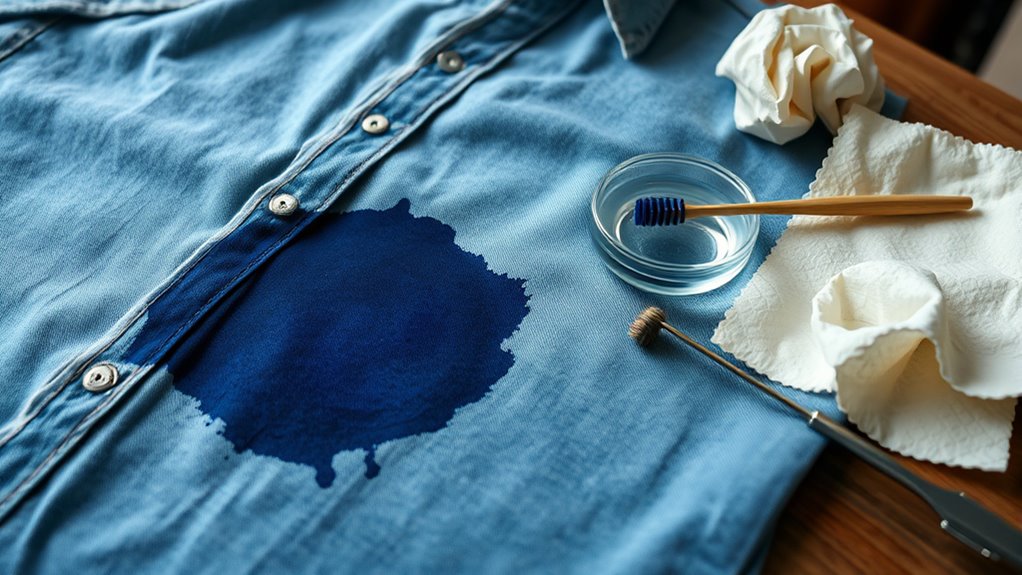
Because heat causes ink molecules to bond firmly with fabric fibers, ink stains set quickly when exposed to drying or ironing. When you use a permanent marker, the ink’s chemical makeup makes it especially vulnerable to setting once heat is applied.
Heat causes ink to bond with fabric, setting stains quickly—especially with permanent markers.
If you dry or iron a stained garment, the heat causes the ink to bond more deeply with the fabric, making the stain permanent or much harder to remove. You want to avoid any heat exposure until you’ve fully treated the stain.
Even washing with hot water or putting clothes in the dryer can cause residual ink to set, locking the stain in place. To prevent this, act quickly by treating fresh ink stains before they dry.
Once the ink sets, your chances of removing the stain decrease dramatically. So, keep heat away and address the stain immediately to stop it from becoming permanent.
Using Rubbing Alcohol to Remove Ink Stains
When you spot an ink stain on your clothes, acting quickly is key to preventing it from setting permanently. Rubbing alcohol is a powerful solvent that dissolves ink stains, even those that have dried into the fabric.
First, test the rubbing alcohol on a hidden fabric area to avoid discoloration. Then, apply it directly to the stain with a cotton ball or cloth and let it sit for 5-10 minutes. Gently blot or rub the area to lift the ink before rinsing with cold water. Repeat if necessary for tough or old stains.
| Step | Action | Result |
|---|---|---|
| Test | Apply on hidden fabric spot | Ensure no damage or discoloration |
| Apply | Dab rubbing alcohol on stain | Ink starts dissolving |
| Blot & Rinse | Gently blot, rinse with cold water | Ink lifts from fabric fibers |
Using rubbing alcohol properly can save your clothes from permanent ink stains.
Applying Hand Sanitizer to Ink Stains
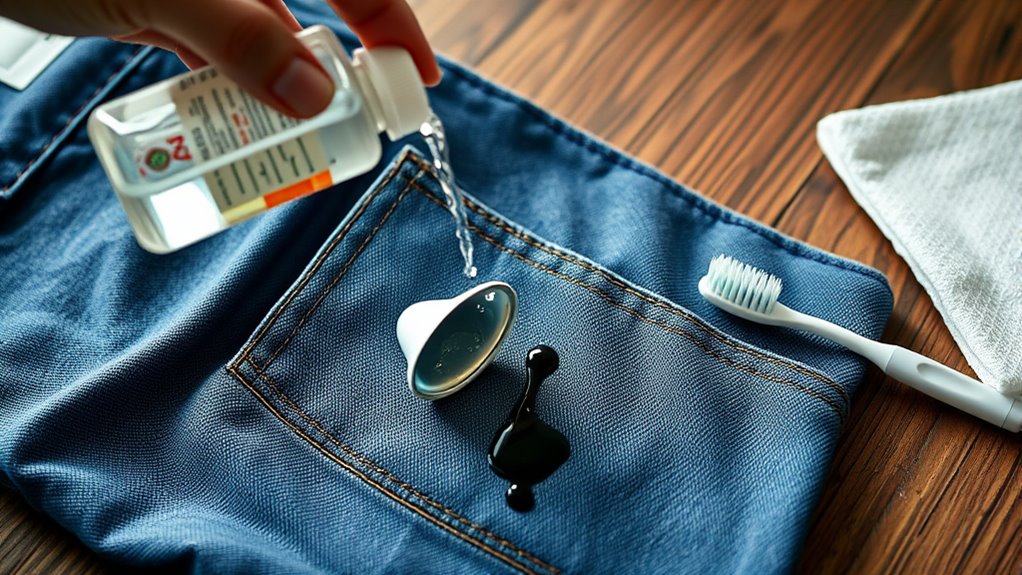
You can use hand sanitizer to tackle ink stains because its alcohol content helps break down the ink pigments. Just apply a generous amount directly to the stain and gently rub it in. Then, let it sit for a few minutes.
After that, for the best results, follow up with a hot water wash. If the stain is really stubborn, you might need to repeat the process a couple of times. It’s pretty simple and usually works well!
Hand Sanitizer Effectiveness
How exactly does hand sanitizer work on ink stains? Its alcohol content breaks down the ink pigments, making stain removal easier. To get the best results, follow these steps:
- Apply a generous amount of hand sanitizer directly onto the ink stains to fully saturate the fabric.
- Gently rub the sanitizer into the stain to help dissolve the ink without harming the material.
- Let the hand sanitizer sit for a few minutes; this allows it to loosen the ink effectively.
- After treatment, rewash your clothes to remove leftover ink and sanitizer for complete stain removal.
Using hand sanitizer this way can be a quick, effective method to tackle stubborn ink stains after drying.
Application Techniques
Although ink stains can be stubborn, applying hand sanitizer correctly boosts your chances of removing them effectively. Start by applying a generous amount of hand sanitizer directly onto the dried ink stain, making sure it fully saturates the area.
Gently rub the sanitizer into the fabric with your fingers or a soft cloth to help break down the ink particles. Let it sit for at least five minutes to maximize stain removal.
Afterward, use a clean cloth or paper towel to blot the stain, lifting the ink and sanitizer mixture from the fabric. Finish by running the clothing through a proper wash cycle to remove any remaining ink and sanitizer, ensuring your garment is clean and stain-free.
Natural Remedies for Ink Stain Removal
You can easily tackle ink stains naturally by using lemon juice and salt. This combo works really well on white cotton fabrics to lighten water-based ink. It’s pretty simple and uses stuff you probably already have at home.
Another great option is making a paste with vinegar and cornstarch. This helps absorb and lift dried ink right off the fabric. These remedies are not only effective but also gentle alternatives to those harsh chemical cleaners. Give them a try next time you’re dealing with ink stains!
Lemon Juice And Salt
When dealing with ink stains on white or light-colored fabrics, lemon juice and salt offer a natural and effective solution. This combination works well for stain removal thanks to lemon juice’s bleaching power and salt’s gentle abrasive effect. Here’s how to use it:
- Dampen the stained area with water to prepare the fabric.
- Sprinkle salt generously over the stain to create a textured surface.
- Apply lemon juice directly on top of the salt, allowing the mixture to work on lifting the ink.
- Leave the fabric in sunlight for enhanced natural bleaching, then rinse and repeat if necessary.
This method is best for water-based ink on cotton or similar fabrics but may not work on permanent ink.
Vinegar And Cornstarch
If you want a natural way to tackle ink stains, vinegar and cornstarch make a powerful duo. Start by mixing equal parts vinegar and cornstarch to form a thick paste.
Apply this paste directly onto the dried ink stain, covering it completely. Let it dry fully, as the vinegar works to break down the ink while the cornstarch absorbs the ink particles, aiding stain removal.
Once dry, brush off the residue gently. Rinse the treated area with cold water to clear any leftover paste. If the stain persists, repeat the process before laundering the clothing as usual.
This natural method is effective and easy, offering a safe alternative to harsh chemicals for removing stubborn ink stains from your clothes.
Removing Ink With Branch Basics Products

Although ink stains can be stubborn, Branch Basics products offer an effective way to tackle them. To remove ink stains using their Concentrate or Oxygen Boost, follow these steps:
Ink stains can be tough, but Branch Basics Concentrate and Oxygen Boost provide a reliable solution.
- Apply Branch Basics Concentrate or a mix of Concentrate and Oxygen Boost directly onto the ink stain.
- Let it sit for 1 to 10 minutes, then gently agitate the fabric to loosen the ink.
- For set-in stains, soak the garment in a solution of Concentrate and Oxygen Boost for 15 minutes to several hours.
- Always test on a hidden area first to verify the fabric doesn’t lighten or get damaged.
After treating the stain, launder the clothing as usual to remove any leftover ink and cleaning agents. This method helps you effectively remove ink stains while protecting your clothes.
Using Clorox 2™ Safely on Colored Ink Stains
You’ll want to apply Clorox 2™ directly to the colored ink stain and gently rub it in. Then, let it sit for about 10 minutes. When it’s time to wash, make sure to use the hottest water that’s safe for your fabric, and add a little extra Clorox 2™ to get the best results. Oh, and don’t forget—always test the product on a hidden spot first. That way, you can avoid any damage or lightening.
Clorox 2™ Application Tips
When tackling colored ink stains with Clorox 2™, apply the product directly to the stain using the cap for targeted coverage. This guarantees precise stain removal and efficient pretreatment. Follow these tips for best results:
- Gently rub Clorox 2 into the stain to help the formula penetrate deeply.
- Let it sit for exactly 10 minutes. Set a timer to avoid overexposure.
- Keep the area moist; don’t let Clorox 2 dry on the fabric during pretreatment.
- Afterward, proceed with washing as recommended to fully remove the stain.
Using Clorox 2 this way maximizes your chances of lifting colored ink stains without damaging your clothes. Remember, careful application and timing are key for effective stain removal.
Washing After Pretreatment
How should you wash your clothes after pretreating ink stains with Clorox 2™? First, make sure you’ve thoroughly pretreat the stain to prevent it from setting further during washing. Use the hottest water safe for your fabric to boost stain removal effectiveness.
Add an extra dose of Clorox 2™ alongside your regular detergent to enhance cleaning power on colored ink stains. Avoid bleach on delicate fabrics like wool, silk, or spandex to prevent damage or discoloration.
After washing, air dry the garment instead of using heat. This lets you check if the stain is completely gone without risking it setting permanently. Following these steps guarantees you safely and effectively remove ink stains using Clorox 2™.
Removing Ink Stains From Different Fabrics
Since ink stains vary widely depending on the fabric, you’ll need to tailor your approach to effectively remove them. Different fabric fibers react uniquely to stain remover treatments, so here’s how to handle pen ink stains on common materials:
Ink stains require fabric-specific treatments for effective and safe removal.
- Cotton: Pre-treat with rubbing alcohol or hand sanitizer to break down the ink, then launder in cold water. This targets the fabric fibers without damage.
- Denim: Spray with alcohol-based hairspray and soak the garment overnight in milk to lift stubborn ink stains gently.
- Leather: Use a specialized leather cleaner or a gentle paste of lemon juice and cream of tartar. Avoid soaking to prevent damage.
- Silk: Treat carefully with a delicate vinegar and cornstarch solution to avoid harming the delicate fibers.
For permanent marker ink, nail polish remover or professional cleaning may be necessary, especially if the stain’s dried. Tailor your stain remover choice to protect your fabric and get the best results.
Washing Clothes After Ink Stain Treatment
Although you’ve treated the ink stain thoroughly, you need to make sure it looks noticeably lighter before washing your clothes. Check that you’ve managed to remove excess ink by blotting or using a stain remover.
If any ink remains, pre-treat the area again with a stain remover or an alcohol-based sanitizer to boost your chances of lifting the stain completely. When washing, use the hottest water safe for the fabric, as heat helps break down ink particles, but avoid using the dryer until you’re certain the stain is gone.
Heat can permanently set the laundry stain, making it much harder to remove later. After washing, opt for air drying or line drying to prevent any leftover ink from setting due to heat.
Tips to Prevent Ink Stains From Setting
To stop ink stains from setting, you need to act quickly and treat the spot before it soaks into the fabric fibers. Here are four key tips to prevent ink stains from becoming permanent:
- Blot, don’t rub. Gently blot the stain with a clean cloth to avoid spreading the ink or pushing it deeper into the fabric.
- Pre-treat immediately. Apply a pre-treatment like rubbing alcohol or hand sanitizer as soon as possible to break down the ink.
- Avoid heat. Don’t use hot water or put the stained garment in the dryer until the stain is fully removed, since heat sets ink stains permanently.
- Test products first. Always try stain removers on a hidden area to ensure they won’t damage or discolor your fabric.
Troubleshooting Tough Ink Stains
If you missed the chance to treat an ink stain right away, don’t worry. Tough, dried stains can still be tackled with the right approach.
Dried ink stains are harder to remove because the ink has settled deep into the fabric fibers, making it tougher for cleaning agents to work. To remove pen ink effectively, soak the garment in a mixture of oxygen-based bleach or vinegar and water to loosen the ink particles.
Dried ink penetrates deep into fibers, so soaking in oxygen-based bleach or vinegar helps loosen the stain effectively.
For stubborn stains, you might need multiple treatments with stronger solutions like OxiClean or specialized stain removers. Avoid applying heat before treating the stain, as heat can set it permanently.
If the stain persists despite your efforts, consider professional cleaning services that can handle tough ink marks. With patience and the right methods, even the most stubborn dried ink stains can be lifted and your clothes restored.
Frequently Asked Questions
Can Ink Stains Damage Fabric Fibers Permanently?
Yes, ink stains can cause permanent damage to fabric fibers. When ink penetration goes deep, it weakens the material, leading to fiber deterioration over time.
You might notice permanent discoloration because the dyes in ink chemically bond with the fibers, making it tough to remove the stain completely. So, once ink sets in, you risk both lasting stains and weakened fabric, especially if you don’t treat it promptly and carefully.
Are Ink Stain Removers Safe for Delicate Fabrics Like Silk?
You want dye compatibility, gentle stain pre-treatment, and safe removal techniques when dealing with silk. Ink stain removers aren’t always safe for delicate fabrics like silk because harsh chemicals can cause discoloration or weaken fibers.
You should choose products labeled for silk, test on a hidden spot first, and consider professional cleaning. By prioritizing silk-safe stain removers and careful methods, you protect your garment’s integrity while tackling ink stains effectively.
How Long Should I Wait Before Treating an Ink Stain?
You shouldn’t wait long to treat an ink pen stain. Act as soon as possible for the best stain removal results. The quicker you address it, the easier it’ll be to protect your fabric’s integrity and maintain proper fabric care.
Waiting more than a few hours lets the ink set deeper, making removal tougher. So, grab rubbing alcohol or hand sanitizer and start treating the stain right away to save your clothes.
Can Professional Dry Cleaning Remove Old Ink Stains Effectively?
Yes, professional dry cleaning can effectively handle old ink stains using specialized stain removal techniques that protect fabric safety. You should tell your cleaner about the ink type and stain age, so they can choose the best cleaning method.
Keep in mind, some stubborn inks might need multiple treatments or extra care, but professionals usually improve or eliminate many old ink marks without damaging your clothes.
Do Ink Stains Pose Any Health Risks During Removal?
Ink stains can be little villains that sneak in ink toxicity, threatening your health during removal. When you tackle them, you might face skin irritation or fume inhalation if you’re not careful.
Those harsh chemicals can sting your skin or make breathing tough, like a smoky battlefield. So, always wear gloves and work in a well-ventilated area to keep those invisible dangers at bay while fighting the stain.
Conclusion
Ink stains can feel impossible to remove once dried, but you’ve got options. Did you know that 70% of ink stains can be notably lightened with the right treatment? Whether you use rubbing alcohol, hand sanitizer, or natural remedies, acting carefully and quickly makes a huge difference.
Remember to tailor your approach to the fabric and always wash correctly afterward. With these tips, you can save your clothes and keep ink stains from ruining your day.
Leave a Reply