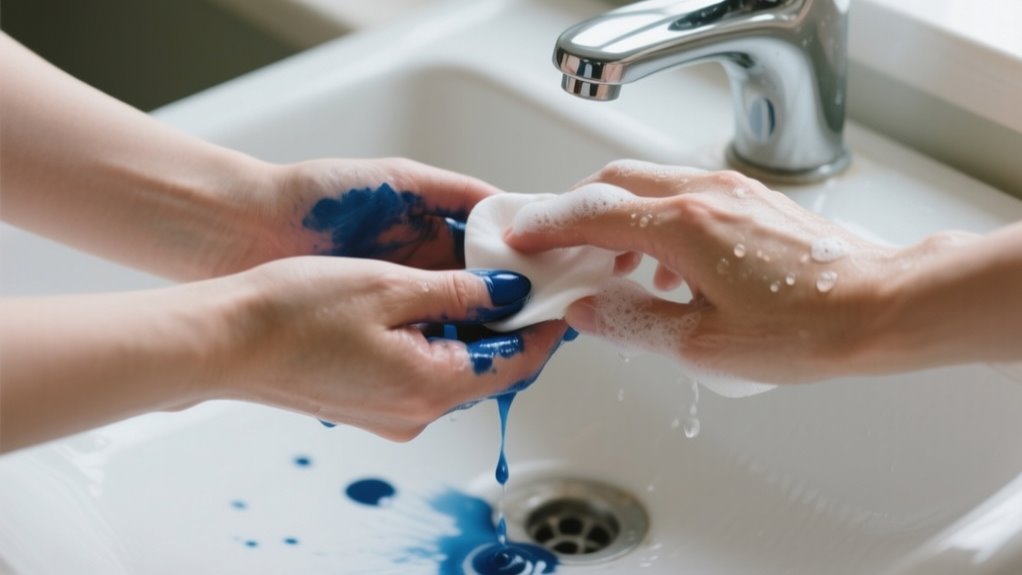
If you want to get pen ink off your skin fast, act quickly before it sets. Use a cotton ball soaked in rubbing alcohol or hand sanitizer, gently rubbing in circular motions to lift the ink.
For a gentler option, try massaging natural oils like coconut or olive oil to break down the stain.
Always rinse with soap and warm water, then moisturize to soothe your skin.
Keep these tips in mind, and you’ll discover even more effective ink-removal techniques ahead.
Why You Should Act Quickly to Remove Ink
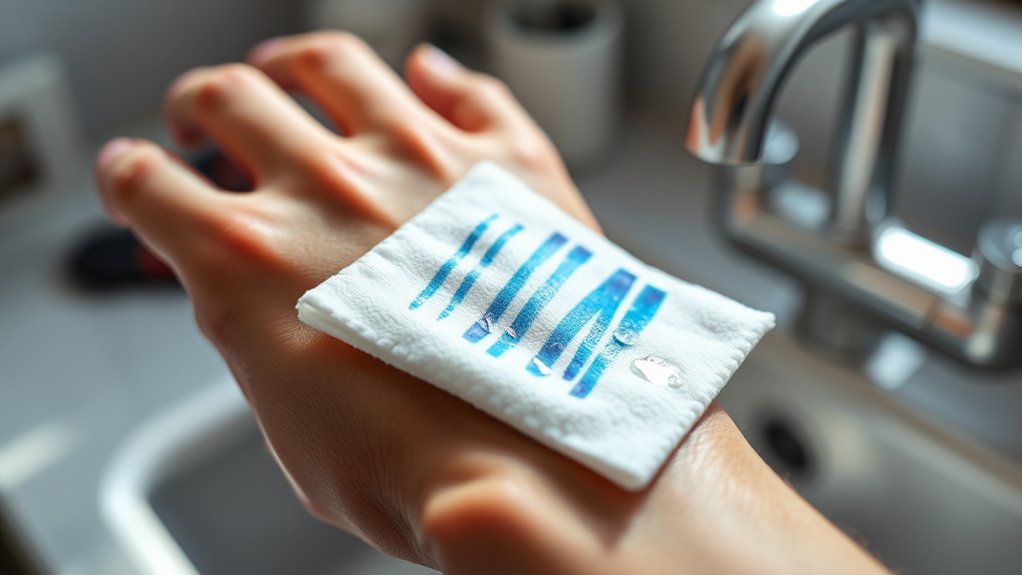
Because fresh ink hasn’t fully set into your skin, you should act quickly to remove it before it dries. When you act quickly, you stop the ink from penetrating deeper layers of your skin, making it easier to clean.
Removing ink while it’s still fresh means you can use gentle methods, which help prevent damage and irritation that harsh chemicals might cause. The longer you wait, the more the ink stains your skin and even nearby clothing or surfaces.
By starting the removal process promptly, you increase your chances of wiping away the ink completely without scrubbing too hard. So, when you notice fresh ink on your skin, don’t delay. Address it right away to avoid stubborn stains and skin damage.
Acting fast is the key to keeping your skin clean and healthy while effectively removing fresh ink with minimal effort.
How to Remove Ink From Skin Immediately
If you catch ink on your skin right away, start by washing the area with soap and warm water to stop the ink from setting in. This initial step is essential for effective ink removal and stain prevention.
Wash ink off immediately with soap and warm water to prevent stains and ensure easy removal.
If the ink lingers, dab rubbing alcohol or hand sanitizer onto a cotton ball and gently apply it to the stain. This helps dissolve stubborn ink quickly.
Next, use gentle scrubbing. Try a sugar scrub or a soft toothbrush to lift the ink naturally without harming your skin.
For faster results, apply a small amount of oil-based remover like coconut or baby oil. It breaks down ink pigments effectively.
Afterward, rinse your skin thoroughly with soap and water to remove any residue. Finally, moisturize the area to prevent skin irritation and dryness caused by cleaning agents.
How to Identify the Type of Ink on Your Skin
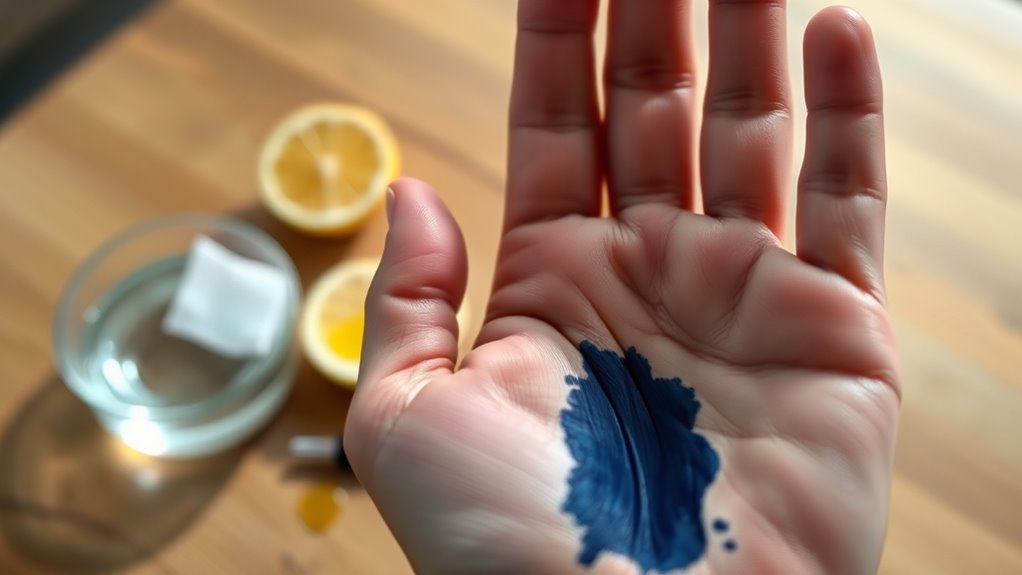
How can you quickly tell what kind of ink is on your skin? First, identify the ink type to choose the best ink removal method. Water-based ink usually washes off easily with soap and water.
Alcohol-based ink, found in permanent markers, often needs solvents like rubbing alcohol. To figure this out, test a small area by applying a bit of water or alcohol. If the ink smears or dissolves with water, it’s water-based ink.
If it only reacts to alcohol, it’s alcohol-based ink. Gel inks are more stubborn; they resist water and alcohol, requiring scrubbing or specialized removers. Knowing whether the ink is from a permanent marker, gel pen, or water-based pen helps you avoid ineffective treatments and skin irritation.
How to Use Soap and Warm Water for Ink Removal
As soon as you notice ink on your skin, go ahead and wash it with warm water and a mild soap. This helps stop the ink from setting in. It’s best to pick soaps that are gentle but still get the job done.
You can use a soft cloth or a loofah to scrub the area gently, moving in circular motions. If the stain doesn’t come off right away, don’t worry—just repeat the process until your skin is clean. It usually takes a few tries, but you’ll get there!
Immediate Hand Washing
Though ink can quickly stain your skin, washing your hands immediately with soap and warm water prevents it from setting in. Immediate hand washing is essential for effective ink removal, especially with water-based ink.
Use soap and water to gently scrub the stained area, which helps dissolve the ink before it dries. You can enhance ink removal by using a loofah or soft scrub brush to loosen ink particles without irritating your skin.
Remember, the sooner you start hand washing, the easier it is to prevent ink setting. Repeat the process if needed to fully remove stubborn stains.
- Act quickly for immediate cleaning
- Use gentle scrubbing with soap and water
- Focus on water-based ink removal
- Prevent ink setting with prompt hand washing
- Repeat washing for stubborn stains
Effective Soap Types
Once you’ve started washing away ink with soap and warm water, choosing the right soap can make a big difference in how effectively the stain lifts from your skin. Gentle soaps like dish soap or antibacterial hand soap break down ink pigments without irritating your skin. Apply soap directly on the ink spot and use gentle rubbing to boost ink removal. Warm water helps soften the ink, making the process more effective.
| Soap Type | Benefits | Usage Tips |
|---|---|---|
| Dish Soap | Breaks down ink pigments | Apply directly, rub gently |
| Antibacterial Soap | Cleans and disinfects | Use with warm water |
| Gentle Hand Soap | Mild on skin | Good for sensitive skin |
Rinse thoroughly with warm water to remove all residues.
Gentle Scrubbing Techniques
When you use warm water and mild soap, gently scrubbing the ink-stained area helps break down the ink pigments more effectively. For ideal ink removal, adopt gentle scrubbing techniques that protect your skin while lifting ink.
Use a soft cloth or loofah and move in circular motions to loosen ink particles without irritation. If you’re dealing with stubborn stains, try exfoliating by mixing a gentle sugar scrub with your mild soap. This combination helps remove dead skin cells and improves cleaning.
Always rinse thoroughly afterward to wash away residual ink and soap, preventing dryness.
- Use warm water and mild soap
- Employ a soft cloth or gentle brush
- Scrub in circular motions
- Exfoliate stubborn stains with sugar scrub
- Rinse completely to avoid irritation
How to Use Rubbing Alcohol Safely on Ink Stains
When you’re using rubbing alcohol to get rid of ink stains, start by soaking a cotton ball with it. Then, gently rub the stain in circular motions—this helps avoid damaging your skin. It’s always a good idea to test a small patch first to make sure you don’t have any irritation. After you’re done, be sure to rinse your skin thoroughly with soap and water. And don’t forget to apply some moisturizer afterward to keep your skin from drying out.
Proper Application Techniques
Although rubbing alcohol is effective at removing ink stains from your skin, you should always test it on a small patch first to avoid any adverse reactions. Once you confirm there’s no irritation, use gentle application to protect your skin.
Dampen a cotton ball with rubbing alcohol and rub the stained area in circular motions. Avoid harsh scrubbing to prevent skin irritation while ensuring effective removal.
Afterward, rinse thoroughly with warm water and apply a moisturizer to soothe and hydrate your skin.
- Perform a patch test before full application
- Use gentle application with light pressure
- Apply rubbing alcohol using circular motions
- Avoid aggressive rubbing to prevent skin irritation
- Rinse well and follow up with a moisturizer
Skin Protection Measures
How can you safely remove pen ink using rubbing alcohol without harming your skin? Start by doing a patch test on a small area to check for any skin irritation, especially if you have sensitive skin.
Use a cotton ball or soft cloth to gently dab the rubbing alcohol onto the ink stain. Avoid vigorous rubbing to prevent damage. Limit contact to 1-2 minutes, then wash the area thoroughly with a mild soap and water solution.
Afterward, apply a moisturizer or aloe vera gel to soothe and hydrate your skin. This helps counteract dryness from the alcohol. Keep rubbing alcohol away from broken skin or sensitive areas like your eyes to avoid irritation or chemical burns.
These skin protection measures guarantee gentle removal while keeping your skin safe.
Managing Irritation Risks
To minimize irritation risks while using rubbing alcohol on ink stains, you should apply it sparingly and carefully. Before starting, do a patch test on a small skin area to check for irritation or allergic reactions.
Use gentle, circular motions with a cotton ball soaked in rubbing alcohol to remove the ink. Avoid harsh scrubbing that can damage your skin. Afterward, wash the area thoroughly with soap and water to remove any residual alcohol.
Finally, moisturize the skin immediately to restore moisture and support skin health. Keep these tips in mind:
- Perform a patch test before full application
- Apply rubbing alcohol sparingly
- Use gentle, circular rubbing motions
- Wash skin thoroughly after use
- Moisturize promptly to prevent dryness and irritation
How Natural Oils and Scrubs Help Lift Ink Gently
When you use natural oils like olive or coconut oil on ink-stained skin, they break down the ink pigments gently. This makes it easier for you to lift the ink without harsh chemicals. The oil loosens ink particles, and when you combine it with a scrubbing method using sugar, it provides gentle exfoliation that enhances ink removal.
This approach is especially good for sensitive skin. It ensures skin safety and minimizes irritation. After scrubbing, rinsing with warm water and soap removes residual oil and ink effectively.
| Step | Action | Benefit |
|---|---|---|
| 1 | Apply natural oil | Breaks ink pigments gently |
| 2 | Massage gently | Loosens ink particles |
| 3 | Add sugar for scrub | Gentle exfoliation |
| 4 | Scrub carefully | Lifts ink from skin |
| 5 | Rinse with soap & water | Removes oil and ink |
Using natural oils and scrubs is a safe, effective method for ink removal without harsh chemicals.
How Lemon Juice and Salt Remove Ink From Skin
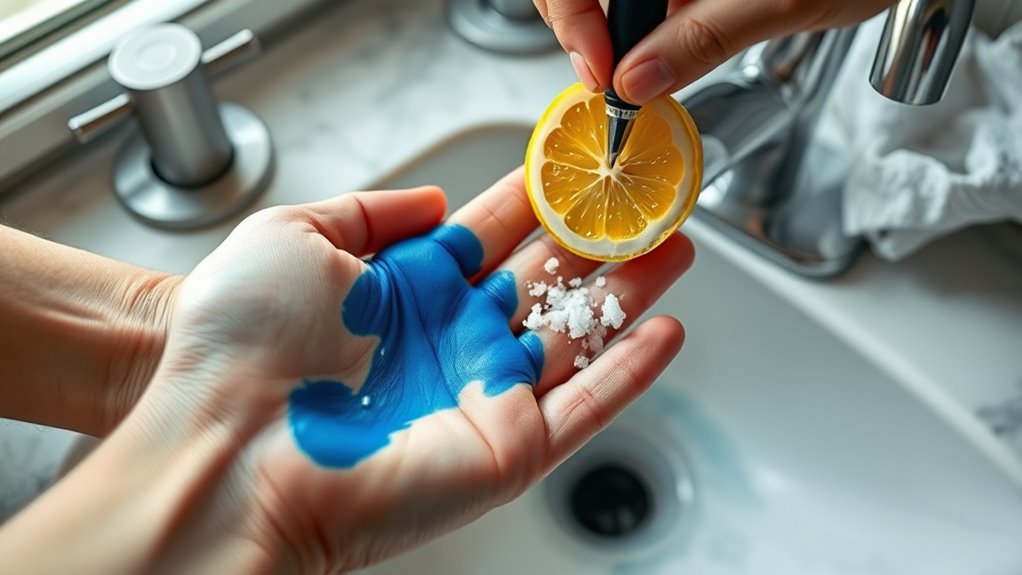
If natural oils and scrubs don’t fully remove ink from your skin, lemon juice paired with salt offers a powerful alternative. Lemon juice’s natural acidity breaks down ink pigments, making ink removal more effective. When combined with salt, which acts as a gentle abrasive, the mixture exfoliates your skin and lifts ink stains efficiently.
You can create a paste by mixing lemon juice and salt, then apply it directly to the inked area. Rubbing this paste onto your skin for a few minutes enhances ink removal through both chemical action and physical exfoliation. Afterward, rinse thoroughly with warm water to wash away all residue.
Keep in mind:
- Lemon juice’s acidity breaks down ink pigments
- Salt exfoliates skin gently
- The lemon juice and salt paste targets ink stains effectively
- Rubbing the paste enhances exfoliation and ink removal
- Rinse well to remove all ink and paste residues
This method offers a natural, effective way to get ink off your skin fast.
Picking the Best Dedicated Ink Removers for Skin
When you’re picking an ink remover, it’s a good idea to go for non-toxic options like Amodex because they’re gentle on your skin. Just apply a small amount right onto the stain and rub it in gently—that usually works best.
And don’t forget some safety tips: you might need to apply it a few times, and make sure to wash the area thoroughly afterward to avoid any irritation.
Top Non-Toxic Products
Although many products claim to remove ink from skin, choosing a non-toxic option guarantees you avoid irritation while effectively lifting stains. When selecting the best non-toxic stain remover, focus on safe ink remover formulas designed for gentle ink stain remover action.
Here are some top skin-safe products for effective ink stain removal:
- Amodex: a non-irritating ink remover formulated specifically for ink removal from skin
- Goo Gone: breaks down ink pigments gently without harsh chemicals
- Micellar water: lifts ink stains safely, ideal for frequent use
- Gentle makeup removers: offer mild but effective ink removal
- Alcohol-based wipes or hand sanitizers: effective but use cautiously to prevent dryness
Application And Safety Tips
Since ink removers designed for skin contain specialized ingredients, you should apply them carefully to avoid irritation and achieve the best results. Start by performing a patch test on a small skin area to check for any sensitivities or allergic reactions.
Use a dedicated remover like Amodex, and apply it directly to dry skin. Gently work the remover into the ink-stained area, following the product’s instructions closely. This careful application helps prevent skin irritations.
Afterward, wash the area with soap and water to remove any leftover chemicals. Finally, moisturize your skin to soothe and prevent dryness caused by the remover. Prioritizing these safety steps guarantees you effectively remove ink while protecting your skin from harm.
Easy Ways to Prevent Ink Stains While Writing
To keep ink stains off your skin while writing, you can take simple preventive steps that save time and hassle. Prevent ink transfer by choosing smudge-resistant pens that dry quickly. This reduces the risk of ink smudging on your hands. Write with care, holding the pen at an angle that minimizes contact between the nib and your skin to protect your skin from accidental stains. Quick cleaning is also key if ink gets on your skin. Having a damp cloth or wet wipe handy helps stop stains from setting.
Here are easy ways to prevent ink stains while writing:
- Wear gloves or apply barrier cream to protect skin from ink.
- Use blotting paper or tissue to absorb excess ink immediately.
- Hold your pen at a safe angle to prevent ink transfer.
- Opt for quick-drying, smudge-resistant pens.
- Keep cleaning materials nearby for quick cleaning of spills.
Following these tips helps you write smoothly without worrying about ink stains.
How to Care for Your Skin After Ink Removal
Even with the best precautions, ink can still find its way onto your skin. After ink removal, it’s essential to follow proper skin care to avoid irritation and support repair. Start by gently washing the area with mild soap and lukewarm water to remove any leftover chemicals. Avoid scrubbing; a gentle approach helps prevent dryness and damage.
Once clean, apply a fragrance-free, hypoallergenic moisturizer to provide hydration and soothe the skin. This post-removal step restores your skin’s natural barrier and promotes healing. Keep monitoring your skin for redness, swelling, or discomfort, as those signs may require medical advice.
Regular moisturizing and maintaining cleanliness play vital roles in post-removal care. By treating your skin with gentle products and consistent hydration, you’ll help minimize irritation and encourage faster repair. This way, you keep your skin healthy after ink removal.
Frequently Asked Questions
Can Pen Ink Cause Allergic Reactions on the Skin?
Yes, pen ink can cause an ink allergy, leading to skin irritation and contact dermatitis. When your skin experiences chemical exposure from certain inks, you risk sensitization, especially with repeated contact.
You might notice allergic symptoms like redness, itching, or swelling, which are signs of hypersensitivity reactions. If you have sensitive skin, it’s important to watch for these signs and avoid prolonged exposure to prevent worsening allergic responses.
Is It Safe to Use Makeup Remover on Ink Stains?
Yes, makeup remover is generally safe and effective for ink stain removal, especially oil-based types that tackle stubborn ink well. You should consider your skin sensitivity and test a small area first.
For quick stain removal, makeup remover works better than many natural methods but avoid waterproof formulas if irritation occurs. Commercial ink removers exist but can be harsh.
Alternative cleaning solutions like micellar water also balance effectiveness and gentleness for safe use on skin.
How Long Does Ink Typically Stay on Skin Without Removal?
Ink residue typically stays on your skin anywhere from a few hours to several days, depending on skin absorption and the ink’s composition. Temporary markings like water-based ink fade faster, while oil-based ink lasts longer because it bonds more strongly with your skin barrier.
Ink longevity varies with factors like skin type and activity. But natural ink fading happens as your skin exfoliates and renews, gradually clearing the stain.
Are There Any Health Risks From Ink Absorption Through Skin?
Did you know your skin’s permeability limits ink absorption to less than 1%? So, ink toxicity from pen ink chemicals is minimal through dermal absorption. Your skin barrier effectively blocks most chemical exposure, meaning pen ink rarely poses health risks.
However, if you have sensitive or broken skin, the risk of irritation increases. Overall, typical ink exposure isn’t dangerous, but avoiding prolonged contact is smart to protect your skin.
Can Ink Stains Transfer to Clothing From Stained Skin?
Yes, ink transfer from stained skin to clothing happens often through surface transfer and dye transfer. When your skin has ink contamination, the ink can diffuse easily, causing stain migration onto your clothes.
If the ink is fresh, clothing staining is more likely because the ink hasn’t dried or set. To avoid this, you should clean ink off your skin quickly to prevent further ink diffusion and reduce dye transfer risks.
Conclusion
Think of ink on your skin as a stubborn shadow. Acting quickly lets you chase it away before it lingers. Using soap, rubbing alcohol, or lemon juice is like shining a light that helps fade the mark.
Choosing the right remover and caring for your skin afterward is like nurturing a garden after a storm. It ensures your skin stays healthy and vibrant. With these steps, you’ll keep your skin as clear and bright as a fresh canvas.
Leave a Reply