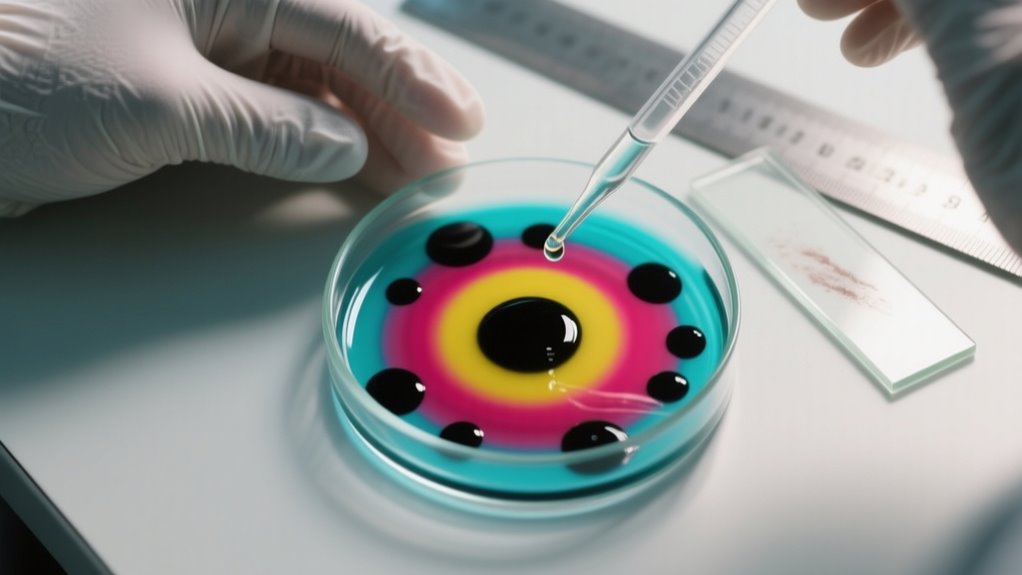
You can determine if ink is an element, compound, or mixture by separating its components using chromatography.
Since ink contains pigments, solvents, additives, and resins combined physically, not chemically bonded, you’ll see multiple spots or bands on a chromatogram, proving it’s a mixture.
Each component keeps its own properties and can be physically separated.
If you discover single, uniform spots, it might be a pure compound.
Explore these techniques to understand ink’s makeup better.
What Ink Is Made Of And Why It Matters For Analysis
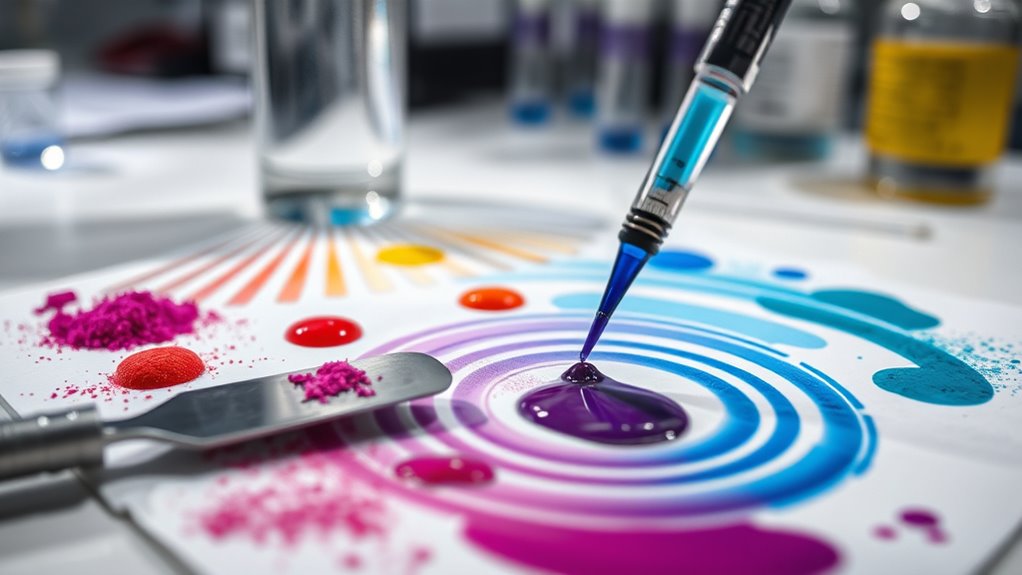
Although ink often looks like a single substance, it’s actually a complex mixture of pigments, solvents, additives, and resins. Understanding the science behind ink’s composition is vital for accurate analysis, especially when you need to distinguish it from elements or compounds. Each component serves a specific purpose. Pigments provide color, solvents help with flow, additives improve performance, and resins bind everything together.
When you analyze ink, techniques like chromatography can separate these components, revealing the unique mixture rather than a chemically bonded compound.
Knowing what ink contains also matters for legal and forensic contexts, where privacy policy compliance in handling sensitive data is essential. Recognizing that ink is a mixture helps you appreciate its variability and complexity, which impacts how you approach testing and identification.
Why Ink Is Usually A Mixture, Not An Element Or Compound
You’ll notice that ink is made up of several substances, like pigments and solvents, all mixed together. These components aren’t chemically bonded, so they keep their own properties. Because of this kind of complex combination, ink is usually a mixture rather than just a single element or compound.
Complex Composition Variety
Because ink contains pigments, solvents, additives, and resins, it’s rarely a pure element or compound. When you analyze ink composition through chemical analysis, you’ll see it’s a complex mix. Mixture identification becomes clear because ink’s ingredients vary and can be separated physically. Unlike elements or compounds, ink shows diverse physical properties due to multiple substances combined.
Here’s a simple breakdown:
| Component | Role | Example |
|---|---|---|
| Pigments | Color source | Carbon black |
| Solvents | Dissolve pigments | Water, alcohol |
| Additives | Enhance features | Drying agents |
| Resins | Bind components | Acrylic resin |
| Variability | Customizable mix | Different formulas |
This variety confirms ink’s identity as a mixture, not a single element or compound.
Multiple Substances Combined
Ink combines multiple substances like pigments, solvents, additives, and resins, all physically mixed rather than chemically bonded. When you analyze ink composition, you’ll find it’s a mixture, not an element or compound, because its components maintain their individual properties.
You can separate these substances through physical separation techniques like chromatography, confirming that ink is a mixture. Remember these key points about ink’s nature:
- Contains multiple substances, not a single element
- Components retain distinct identities
- No chemical bonds link the substances
- Physical separation methods effectively isolate components
- Variability in composition supports mixture classification
Understanding this helps you realize that ink’s complexity comes from combining several substances, making mixture analysis the best approach to study it.
How Chromatography Reveals Ink’s True Composition
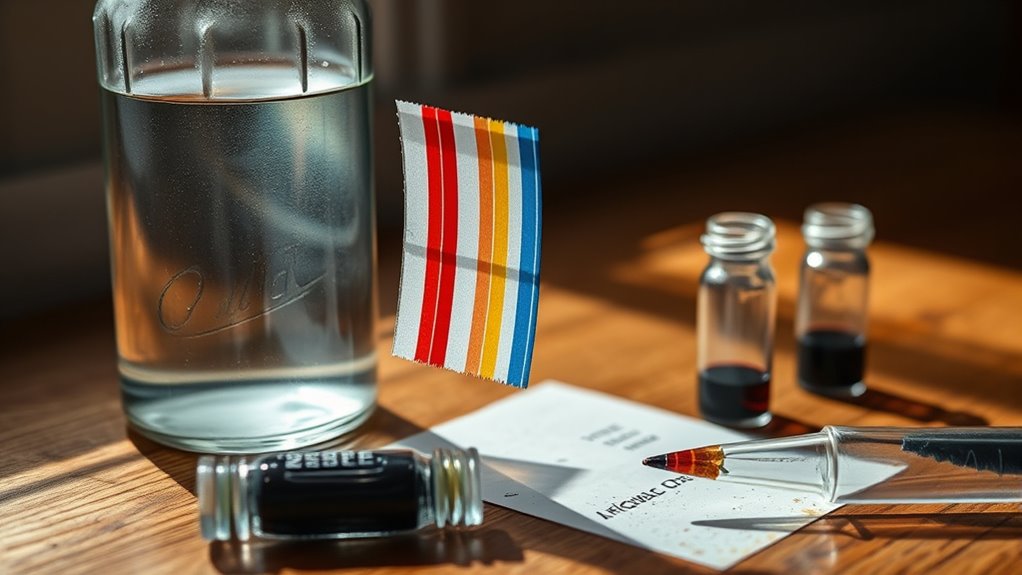
You’ll use chromatography to separate the different components in your ink based on how they interact with the stationary and mobile phases. It’s pretty fascinating because each component behaves differently, which helps in the separation process.
By analyzing the spots on the chromatogram, you can figure out whether your ink is a mixture or just a pure substance. It’s like uncovering the hidden ingredients in your ink.
Understanding the Rf values will also come in handy. These values help you identify each pigment or compound that’s present, making it easier to know exactly what’s in your ink.
Chromatography Process Explained
When you run a chromatography test, you separate the ink into its individual components based on how each substance moves through the paper or medium. This process relies heavily on ink dye properties and solvent selection criteria to guarantee proper separation. Using paper chromatography techniques, different pigments travel unique distances, forming distinct spots on the paper.
Key steps include choosing a solvent that dissolves the ink effectively without damaging the paper. Then, apply a small ink sample near the paper’s base. Next, place the paper in the solvent, allowing it to move upward by capillary action.
You observe how far each pigment travels relative to the solvent front. Finally, calculate Rf values to compare ink components.
This method reveals whether ink is a mixture or a pure substance by showing multiple or single separated spots.
Interpreting Chromatogram Results
After running a chromatography test, interpreting the chromatogram results helps you understand the ink’s true makeup. If you see multiple colored spots or bands, it means the ink is a mixture of substances rather than a pure element or compound.
A single, uniform spot suggests greater ink stability with less risk of color fading over time. Pay attention to the Rf values, which show the distance each pigment travels. Differences in these values reveal how the solvent separates components.
If pigments have similar Rf values across samples, their compositions are alike. But if there’s variation, it signals complex mixtures. The number and diversity of pigments on the chromatogram directly reflect the ink’s complexity.
This helps you figure out if the ink is an element, compound, or mixture based on how these factors affect ink stability and color fading.
Common Ink Components You’ll Find In Chromatography
Although ink may look uniform to the naked eye, chromatography reveals it as a complex blend of pigments, dyes, solvents, and additives. When you analyze ink color through chromatography, you’ll notice how solvent effects influence the separation of these components.
The solvents dissolve the ink’s ingredients, allowing each pigment and dye to travel different distances on the chromatography paper. This separation helps you assess pigment stability and the overall composition of the ink.
Common ink components you’ll find in chromatography include:
- Organic and inorganic pigments with distinct Rf values
- Various dyes contributing to the visible ink color
- Solvents like water, alcohol, or acetone that enable separation
- Additives such as surfactants and stabilizers (often invisible in chromatography)
- Residual binders affecting pigment stability and ink performance
Setting Up Paper Chromatography For Ink

First, cut your chromatography paper into a pointed strip. Then, draw a light horizontal line near the bottom—this will be the starting point for your ink samples. Next, place small drops of each ink on that line and let them dry completely.
Once your ink spots are dry, set up your chromatography chamber with the solvent. Hang the strip so the solvent can travel up the paper, but make sure it doesn’t touch the ink spots. This way, the ink will separate properly as the solvent moves up.
Preparing Chromatography Strips
When you prepare chromatography strips, start by cutting the chromatography paper into pointed strips that will serve as the solid medium for separation. The quality of the paper impacts ink stability and separation accuracy.
Next, draw a faint horizontal line about 2 cm from the bottom to mark where you’ll place the ink samples. Carefully dot different ink samples on this line and let them dry fully to prevent smudging. Remember, your solvent choice affects how well components separate later, so this step is crucial even now.
Use high-quality chromatography paper for consistent results. Ensure ink dots are small and evenly spaced. Allow ink to dry completely to maintain ink stability. Choose solvent compatible with the ink and paper. Keep solvent level below ink spots to avoid dissolving them prematurely.
Conducting The Chromatography Run
Before you start the chromatography run, make sure your solvent level sits below the ink spots to prevent them from dissolving prematurely. Cut a strip of chromatography paper with a pointed end and draw a faint line about 2 cm from the bottom to mark the origin.
Apply small drops of different ink samples on this line and let them dry completely. Next, fill your chromatography chamber with a small amount of solvent like water, alcohol, or acetone, carefully choosing one based on solvent selection principles.
Hang the strip so the ink stays above the solvent, allowing capillary action to separate the ink components. Keep in mind chromatography limitations and ink aging effects. Older inks may not separate clearly, affecting your results.
This setup helps you analyze whether the ink is an element, compound, or mixture.
Interpreting Ink Chromatograms And Rf Values
Although interpreting ink chromatograms might seem complex at first, you can quickly identify whether an ink sample is a mixture or a pure substance by examining the number of spots and their Rf values. Each pigment’s unique Rf value reflects pigment stability and solvent interactions, helping you understand color mixing in the ink.
When you analyze a chromatogram, multiple spots mean the ink is a mixture of pigments. A single spot with a consistent Rf value usually indicates a pure compound.
Comparing Rf values with known standards reveals similarities or differences in composition. Similar Rf values across samples suggest shared pigments or compounds.
Variations in pigment stability and solvent interactions affect the Rf values you observe.
What Happens When Ink Separates Into Colors
Examining how ink separates into different colors during chromatography reveals important details about its composition. When you watch the ink color spread and divide into distinct bands, you’re seeing pigment diversity and dye components moving at different rates through the solvent.
Each substance has its own Rf value, causing this separation. This pattern shows that the ink isn’t a single element or pure compound; instead, it’s a mixture of multiple compounds. If ink were pure, you’d see only one uniform spot without separation.
By observing these separated colors, you can identify the specific pigments and dyes present, confirming the ink’s complexity. Understanding what happens when ink separates into colors helps you recognize the mixture’s nature and appreciate its varied chemical makeup.
This separation is a clear sign that ink contains several substances combined, rather than just one, making chromatography a powerful tool in analyzing ink color and composition.
Identifying Pure Compounds In Ink Samples
When you analyze ink samples through chromatography, identifying pure compounds becomes straightforward by spotting single, uniform marks on the chromatogram. These marks reflect consistent Rf values tied to specific chemical bonding and solvent interactions. Pure compounds in ink produce one distinct color, indicating pigment stability throughout the process.
To identify pure compounds, you should:
- Look for single, well-defined spots without streaks or multiple colors
- Confirm consistent Rf values matching known standards
- Note the uniformity of pigment stability in the solvent system
- Recognize that elements rarely appear as pure substances in ink
- Understand that chemical bonding influences how compounds separate during chromatography
Troubleshooting Ink Separation Issues In Chromatography
If your chromatogram shows overlapping pigment bands or inconsistent Rf values across trials, you’re likely dealing with a mixture rather than a pure element or compound. To troubleshoot ink separation issues, first check your solvent quality and paper type. Poor choices here can cause smudging or incomplete separation.
Also, verify you apply the ink sample correctly. Too much or too little can affect results. Remember, historical ink analysis often reveals complex mixtures, debunking common ink composition myths that suggest inks are simple substances.
In legal ink testing, accuracy is vital, so consistent technique and proper materials are essential to distinguish mixtures from pure compounds. If pigments fail to separate and form a single spot, consider whether your solvent is appropriate or if the ink might indeed be a pure compound.
Using Chromatography To Pick The Best Ink
Although selecting the best ink might seem subjective, chromatography gives you a clear, scientific way to compare inks by breaking them down into their individual pigments. By analyzing the chromatogram, you can assess ink dye stability and pigment solubility. This helps you decide which ink suits your needs best.
Pay close attention to solvent selection, as it affects how pigments separate.
When using chromatography to pick the best ink, focus on:
- Identifying multiple pigment bands to confirm a mixture’s complexity
- Checking consistent Rf values to spot pure compounds or elements
- Evaluating pigment solubility to ensure vibrant and stable colors
- Observing ink dye stability over repeated tests for durability
- Selecting solvents that optimize pigment separation without degrading the ink
Frequently Asked Questions
Can Chromatography Detect Counterfeit Ink in Documents?
Yes, chromatography can detect counterfeit ink in documents by analyzing ink composition through chemical analysis. When you run chromatography, you separate the pigments and dyes, revealing unique patterns.
Genuine inks usually produce consistent results, but counterfeit inks show irregular spots or unexpected profiles. By comparing these chromatograms, you enhance document security, spotting forgeries or adulterations effectively.
This method helps you verify that the ink’s chemical makeup matches authentic samples.
How Long Does a Chromatography Test for Ink Usually Take?
A chromatography test for ink usually takes about 30 to 60 minutes. You’ll spend around 10-15 minutes preparing and drying your sample, then 10-20 minutes letting the solvent front travel up the paper.
After that, analyzing the chromatogram and calculating Rf values takes another 5-10 minutes. Using chromatography techniques helps you achieve analytical accuracy while exploring ink composition, making your results reliable and detailed.
What Safety Precautions Are Needed When Performing Ink Chromatography?
Think of your workspace as a fragile garden. Protect it carefully. When doing ink chromatography, always wear safety gear like gloves and goggles to shield your skin and eyes.
Practice cautious chemical handling to avoid spills or contact. Make sure your workspace ventilation is strong, ideally using a fume hood or open windows. Keep flammable solvents away from heat, and wash your hands thoroughly afterward to stay safe throughout the process.
Can Ink From Pens and Markers Be Analyzed Using the Same Method?
Yes, you can analyze pen ink and marker ink using the same method, like paper chromatography. Both types of ink composition include pigments and solvents that separate well in this process.
While marker ink often has larger, more vibrant pigments, and pen ink contains finer pigments, chromatography helps you compare their Rf values easily. This way, you’ll see the differences and similarities in their ink composition effectively with one method.
How Does Ink Aging Affect Chromatography Results?
Ink aging affects chromatography results by altering ink chemical stability and causing pigment degradation. You’ll notice that as ink ages, the pigment degradation process leads to new compounds forming or original pigments breaking down. This shifts or adds spots on your chromatogram.
When you perform aging effect analysis, older ink samples often produce less distinct or more diffuse patterns. So, it’s essential to compare fresh and aged inks for accurate interpretation.
Conclusion
Now that you know ink is usually a mixture, not just an element or compound, you can see why chromatography is key to uncovering its secrets. By separating ink into its components, you get a clear picture of what’s inside.
Remember, “don’t judge a book by its cover” applies here. Ink may look simple, but it’s a complex blend. With these tools, you’re ready to analyze and even choose the best ink confidently.
Leave a Reply