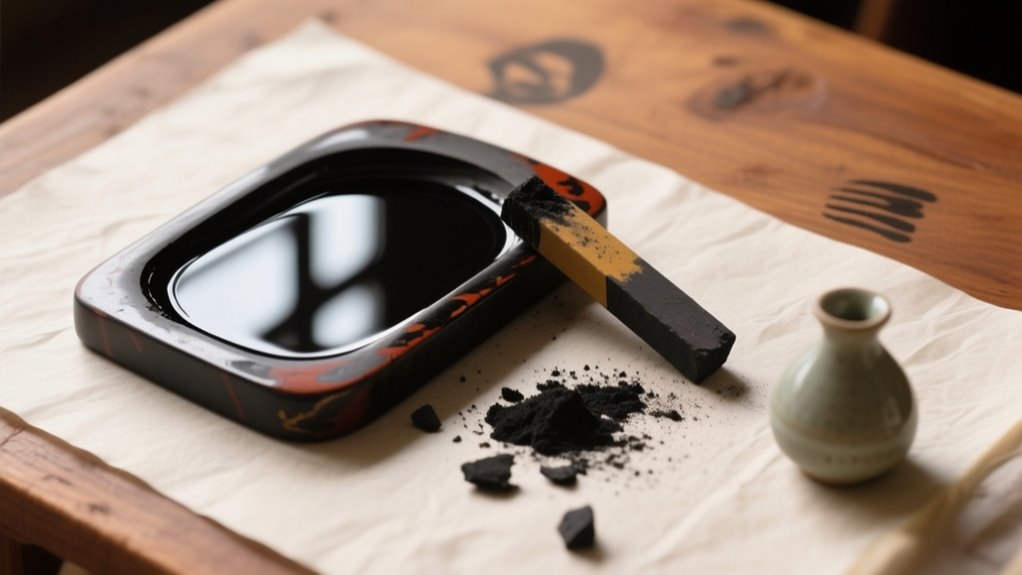
Sumi ink is a traditional East Asian ink made by mixing soot, often from burning pine or lamp oil, with animal glue, then shaping it into solid sticks.
You grind these sticks with water to create rich, deep blacks prized in calligraphy and painting.
The soot source and aging affect its color and texture, giving your artwork unique tonal depth.
If you want to understand how the materials and aging shape sumi ink’s expressive qualities, there’s plenty more to explore.
What Is Sumi Ink?
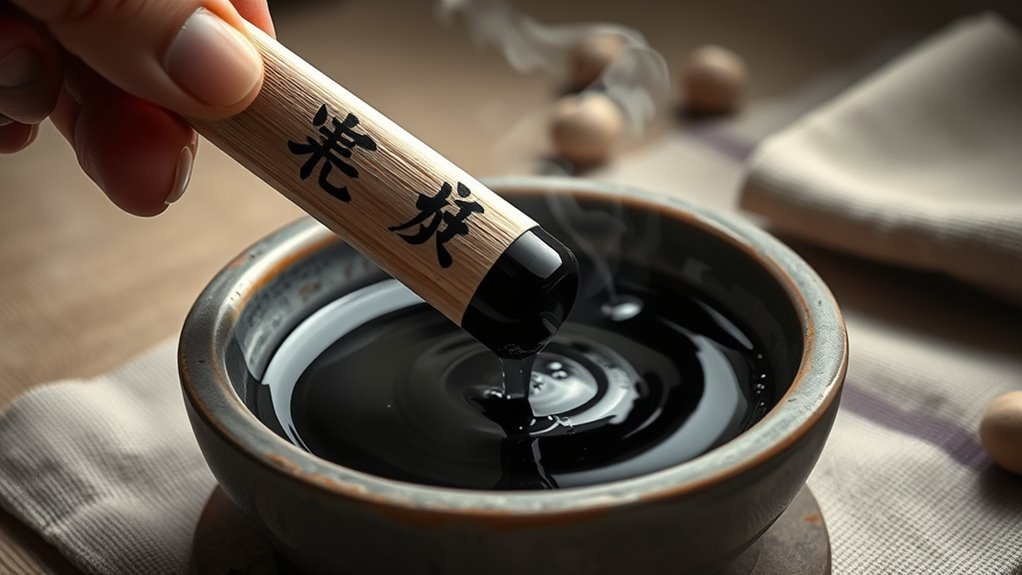
Although sumi ink might look simple at first, it’s a carefully crafted traditional East Asian ink made mainly from soot produced by burning pine branches or lamp oil. When you explore Japanese sumi ink, you’ll find it’s made by mixing soot with animal glue, sometimes incorporating vegetable oil or materials from animal skin to create a fine luster.
This mixture hardens into an Ink Stick, which artists grind with water to produce liquid sumi, perfect for Japanese calligraphy and painting. The highest quality ink is crafted through a meticulous process, ensuring deep, rich blacks and subtle gradations.
Whether you use solid sticks or ready-made liquid sumi, the ink’s composition delivers unique textures and tones. Making sumi ink involves more than just blending ingredients; it’s a traditional art form that’s been refined over centuries.
Why the Soot Source Changes Your Sumi Ink
The quality and character of sumi ink depend heavily on the type of soot used in its creation. The source of soot not only changes the ink’s color but also its texture and longevity. When you choose sumi ink, consider how the soot origin affects your art:
- Pine soot produces larger particles, giving the ink a bluish-black tone with a rich texture that absorbs light differently.
- Lamp oil soot creates finer particles, resulting in a smoother ink with a reddish-black hue that flows more evenly.
- Regional variations in soot cause unique aging behaviors, meaning your ink’s appearance can evolve over time.
Understanding these differences helps you select sumi ink that matches your artistic vision and technique. The soot source directly influences how your strokes look and feel, so it’s essential to recognize this connection when exploring traditional sumi ink.
Traditional Soot Collection and Preparation
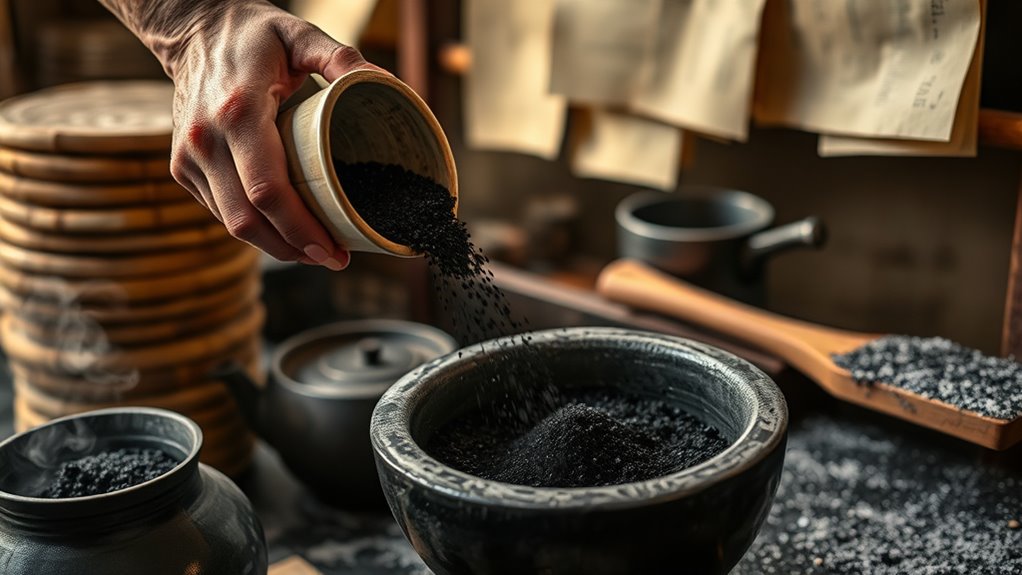
When you watch skilled craftsmen collect soot for sumi ink, you’ll notice they work in dim, candlelit rooms, using small brushes to gather fine particles from burning pine branches or natural materials in earthenware pots filled with vegetable oils like sesame or rapeseed.
This soot forms from the combustion of pine resin, producing ultra-fine black particles that become the ink’s primary pigment. The process demands careful attention to maintain the soot’s purity and consistency, avoiding synthetic additives to preserve the ink’s traditional qualities.
You’ll see the soot gently collected to guarantee it remains uncontaminated and uniform, which directly influences the final ink’s texture and depth. After collection, the soot undergoes preparation before it’s mixed with binding agents, marking the essential first step in crafting high-quality sumi ink.
This traditional method highlights the importance of natural materials and meticulous technique in creating authentic sumi ink.
Why Animal Glue Matters in Sumi Ink
Because animal glue serves as the essential binder in sumi ink, it shapes both the ink’s texture and its behavior on paper. You’ll find that this traditional glue, made from animal skins or bones, holds the soot particles together, creating a smooth, solid ink that glides effortlessly under your brush. Without animal glue, the ink would crack or fail to adhere properly.
Animal glue also influences how sumi ink ages, allowing colors to deepen and shift over time, adding emotional depth to your artwork. Here’s why animal glue matters to you:
- It prevents cracking, ensuring your brushstrokes stay fluid and consistent.
- It controls the ink’s aging, letting colors develop richer tones as you keep your work.
- It binds the ink firmly to surfaces, so your creations last longer and express more.
You’ll see that animal glue isn’t just an ingredient; it’s the heart of sumi ink’s unique qualities.
Kneading and Mixing the Sumi Ink Paste
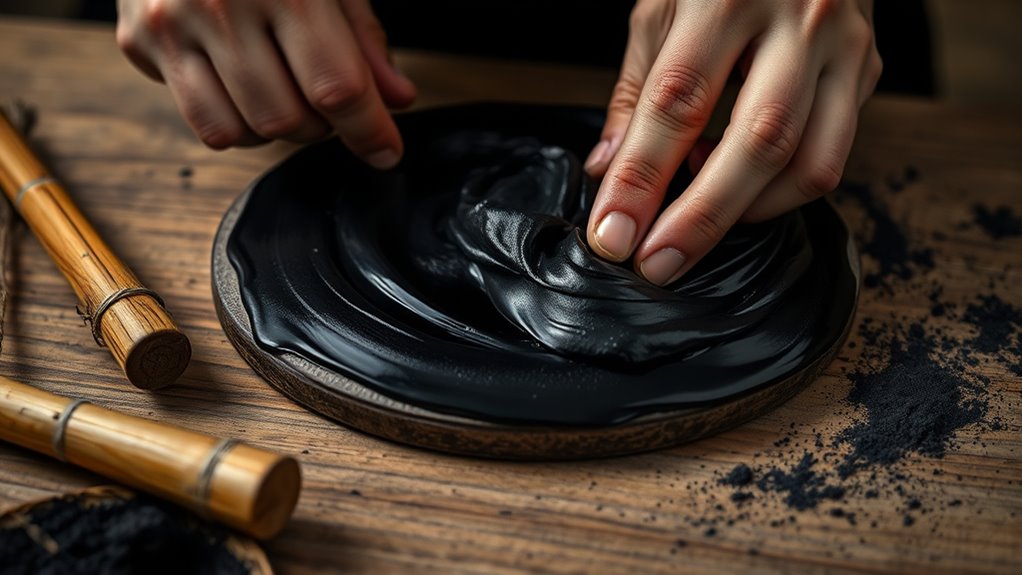
As you knead the soot with animal glue, or nikawa, you transform loose particles into a smooth, workable paste essential for sumi ink’s quality. This kneading process is done by skilled craftsmen who carefully mix by hand, removing air pockets and guaranteeing an even texture throughout.
Maintaining precise moisture levels during kneading helps you achieve the ideal hardness and flexibility of the paste.
Here’s a quick look at key aspects of kneading sumi ink:
| Aspect | Purpose |
|---|---|
| Removing Air | Prevents bubbles, ensures smoothness |
| Moisture Control | Balances hardness and flexibility |
| Even Texture | Guarantees consistent ink flow |
Molding Sumi Ink and Adding Fragrance
How do you transform the kneaded sumi ink paste into its final, solid form? You carefully pour the mixture into wooden molds, which shape the ink into traditional sticks. Before pouring, you add fragrance, often natural oils or herbs, to enrich the sensory experience, making each ink stick unique.
These wooden molds may even be carved with symbols or characters, connecting you to the maker’s identity and the ink’s heritage.
Wooden molds carved with symbols link you to the maker’s identity and the rich heritage of sumi ink.
As you engage in this molding process, consider the emotional journey:
- Anticipation: watching the fragrant ink settle into the carved wooden molds.
- Connection: feeling the history embedded in the symbols on each mold.
- Pride: knowing you’re crafting a tool that artists and calligraphers will treasure.
This step is essential in preserving sumi ink’s cultural and artistic value, capturing both form and fragrance before it solidifies into its timeless shape.
The Drying and Aging Process of Sumi Ink
Once you’ve molded the sumi ink sticks, you begin the essential drying and aging process, which can last anywhere from two months to five years. You dry the ink sticks layered with raw ash and air-dry them carefully, monitoring moisture at every stage to prevent cracking and guarantee even hardening.
Some sticks get wrapped in straw and hung in small structures, letting them age slowly and naturally. This slow aging is critical because it allows the soot particles inside to undergo chemical and physical changes, enriching the color tones and improving the texture.
Proper drying and aging give the sumi ink its characteristic luster and depth, qualities you won’t find in hastily made liquid ink. Without this patient process, the ink wouldn’t develop its unique balance of hardness and smoothness, indispensable for traditional calligraphy and painting. So, this phase is fundamental to transforming raw materials into high-quality sumi ink.
Final Polishing and Marking of Sumi Sticks
After patiently drying and aging the sumi sticks, you move on to the final polishing and marking stage. This step is where craftsmanship truly shines, as you carefully enhance both appearance and tactile feel. Polishing often involves using clam shells or fine abrasives to create a smooth, glossy surface that invites touch and admiration.
Before the ink fully dries, you add traditional markings, Kanji characters, either pressed into the stick or painted with gold or ink. This adds cultural depth and uniqueness.
Here’s what you focus on during this stage:
- Polishing with natural materials like clam shells to boost luster and smoothness.
- Impressing or painting Kanji to give each stick an authentic identity.
- Crafting custom boxes and labels that complement the sumi’s elegance and protect its quality.
This final touch reflects the dedication and detail that define sumi ink production, making each stick a work of art.
New vs. Aged Sumi Ink: Key Differences
Although both new and aged sumi ink share the same origins, you’ll notice distinct differences in their appearance and texture. New sumi ink features smaller soot particles and delivers a uniform, intense black color that’s bold and sharp.
In contrast, aged sumi ink reveals larger soot particles that create richer, more nuanced tones. As the animal glue weakens over time, it causes these particles to shift back to their original shapes, altering both color and texture.
You’ll also find that aged sumi ink often develops a deeper, more complex hue, thanks to natural aging. Its texture becomes more viscous and may even show a slight gloss or luster after long periods.
These differences result mainly from the natural deterioration of animal glue and physical changes in soot particles. Understanding these contrasts helps you appreciate the unique qualities each type of sumi ink brings to your artwork.
Why Handmade Sumi Ink Is Valued by Artists
You’ll really appreciate handmade sumi ink because of its rich craftsmanship and deep connection to tradition. What’s cool is that its unique aging process creates tonal variations you just don’t see in synthetic inks. Plus, the quality is top-notch, which makes every brushstroke pop and helps your art truly stand out.
Craftsmanship and Tradition
When you hold a handmade sumi ink stick, you’re touching centuries of artistry and tradition crafted with unparalleled care. The craftsmanship behind each stick shows patience and skill, passed down through generations.
This traditional process involves selecting and burning pine branches with natural oils to create rich soot. Then, the soot is kneaded with animal glue, making sure the texture and consistency are just right.
After that, the ink is left to dry and age over years, which enhances its depth and expressive qualities.
Unique Aging Effects
Because handmade sumi ink ages naturally, it develops richer, more nuanced colors that you won’t find in synthetic alternatives. As aged sumi ink oxidizes, the soot particles gradually shift back to their original shape and size, creating unique color variations and textures.
The natural animal glue in the ink weakens over time, subtly changing how the ink fixes to paper and deepening its tonal range. This aging process gives the ink a depth and complexity that synthetic inks simply can’t match.
When you use aged sumi ink, you’ll notice it produces delicate gradations and a sense of historical authenticity that skilled artists highly value. These unique aging effects make handmade sumi ink prized for both traditional and expressive artistic creations.
Superior Ink Quality
Although synthetic inks may offer convenience, handmade sumi ink stands out for its superior quality and richness, which artists deeply appreciate. When you use handmade sumi ink, you experience a depth and vibrancy that synthetic versions simply can’t match.
Here’s why artists value it so highly:
- Natural materials like pine soot and animal glue create nuanced color variations and depth.
- Artisans carefully age the ink, enhancing its hues and smoothing its texture.
- The consistent texture and excellent flow of handmade sumi ink allow for precise, detailed brushwork.
You’ll find that this authentic, durable black ink brings your artwork to life with a richness and control that synthetic inks struggle to offer. Choosing handmade sumi ink means embracing tradition and superior craftsmanship in every stroke.
Frequently Asked Questions
How Should Sumi Ink Be Stored for Best Preservation?
To guarantee storage longevity, you should keep your sumi ink in a cool, dry place, away from direct sunlight and heat sources. Wrap the ink stick in paper or cloth to protect it from dust and humidity.
Store it in a sealed container or box to minimize air exposure, which can cause deterioration. Regularly check the environment and maintain proper ventilation to preserve the ink’s quality and prevent mold growth over time.
Can Sumi Ink Be Used With Modern Art Tools?
You can use sumi ink with brushes, pens, and even airbrushes. Its modern compatibility is impressive. You’ll find it flows smoothly through fine brushes and calligraphy pens, adapting well to contemporary techniques.
Just watch drying times and bleeding on different papers. You can dilute it with water or mix it with other mediums to suit your style. Experiment with fixatives to guarantee your work lasts on various modern surfaces.
What Types of Brushes Work Best With Sumi Ink?
For the best brush compatibility with sumi ink, you’ll want soft, flexible brushes made from natural animal hair like goat, horse, or wolf. These brushes hold ink well and offer smooth, expressive strokes.
Use flat, wide brushes for broad sweeps and pointed brushes for fine details. Tapered tips give you control over line thickness and ink flow.
Avoid synthetic brushes since natural hairs release sumi ink more evenly, enhancing your artwork.
Is Sumi Ink Waterproof or Water-Soluble?
Think of sumi ink like a river that can flow or freeze in place. It’s primarily water-soluble, so when you first apply it, it dances with water, letting you create soft gradients.
Once it dries, it gains some water resistance, standing firm like ice, but don’t get too confident; a little moisture can still reactivate or smudge it. Some modern versions boost water resistance, but traditional sumi ink stays beautifully water-soluble.
How Long Does Sumi Ink Last Once Opened?
Once you open sumi ink, its lifespan depends on its chemical composition. Solid sumi ink, made from soot and animal glue, can last for many years if you store it properly in a cool, dry place.
Liquid sumi ink contains preservatives but usually lasts only a year or two before it dries out or spoils. To keep your ink usable longer, make sure you seal it tightly and avoid contamination that can affect its chemical integrity.
Conclusion
You might think sumi ink is just black pigment, but it’s so much more. It’s a blend of soot, glue, and time-tested craftsmanship. While factory-made ink offers convenience, handmade sumi sticks carry the weight of tradition and subtlety in every stroke.
You’ll notice how aged ink breathes life into your art, contrasting sharply with the flatness of new ink. Embracing sumi ink means choosing depth over ease, history over haste.
Leave a Reply