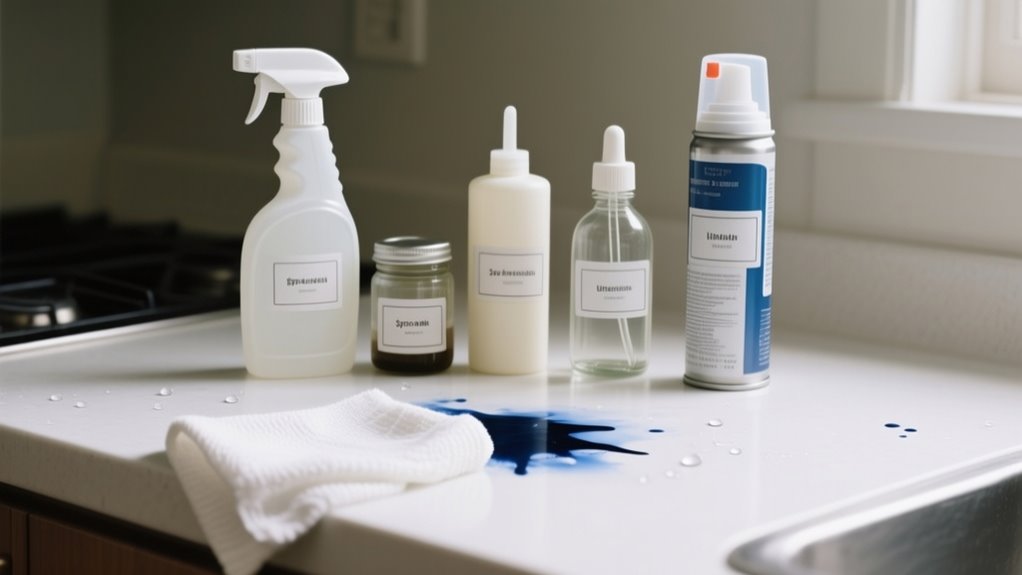
You can quickly remove ink using isopropyl alcohol, which breaks down both water and oil-based inks effectively.
Start gently with dish soap and water to loosen stains, especially on delicate surfaces.
For tougher marks, try acetone nail polish remover cautiously, testing first to avoid damage.
Vinegar and cornstarch can help, though they’re messier and less reliable.
Avoid hairspray; it often spreads stains instead of removing them.
Keep exploring to discover how these solutions work best for your needs.
Why Isopropyl Alcohol Works Best for Ink Removal
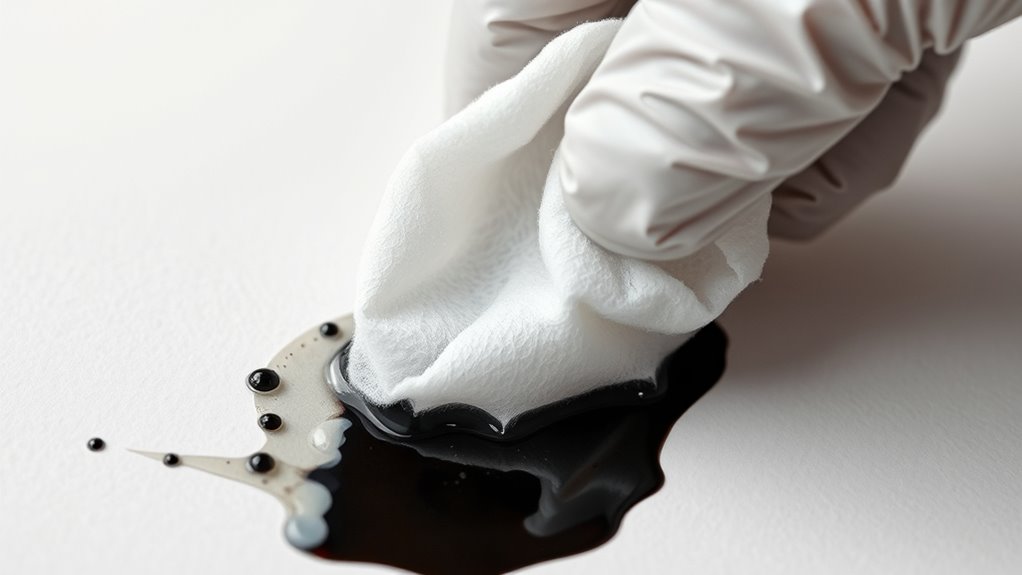
Because isopropyl alcohol breaks down the organic compounds in ink, it effectively dissolves stains, making them easier for you to remove. As a powerful solvent, isopropyl alcohol targets both water-based ink and oil-based ink thanks to its unique chemical properties.
When you apply it as a stain remover, especially on non-porous surfaces like glass, plastic, or metal, it penetrates ink residues and loosens them efficiently. For effective stain treatment, dab the area with a cotton pad moistened with isopropyl alcohol and be patient. Repeated applications often yield better results.
Tests show it scores 4 out of 5 in ink removal effectiveness, nearly completely lifting stains after washing. Its ability to dissolve ink quickly makes isopropyl alcohol your go-to solution when dealing with stubborn marks. By acting fast and using it properly, you maximize your chances of removing ink without damaging the surface.
Dish Soap and Water: A Gentle First Step for Ink Removal
Although dish soap and water might not completely erase ink stains, they offer a gentle and accessible way to start the cleaning process. First, dampen the stained area with water to loosen the ink particles. Then, apply a small amount of dish soap onto a clean cloth and gently blot the ink stain. Avoid rubbing, as this can spread the ink further.
Repeating this process several times can help fade the stain, especially if it’s not too stubborn. This method is beginner-friendly and scores high in ease of use, making it a great first attempt before moving to stronger solutions.
While dish soap and water may only slightly remove the ink, they’re ideal for delicate surfaces where harsh chemicals aren’t suitable. So, when you want to clean an ink stain without risking damage, start with dish soap and water. It’s a simple, effective first step.
Using Acetone Nail Polish Remover Safely for Ink Stains
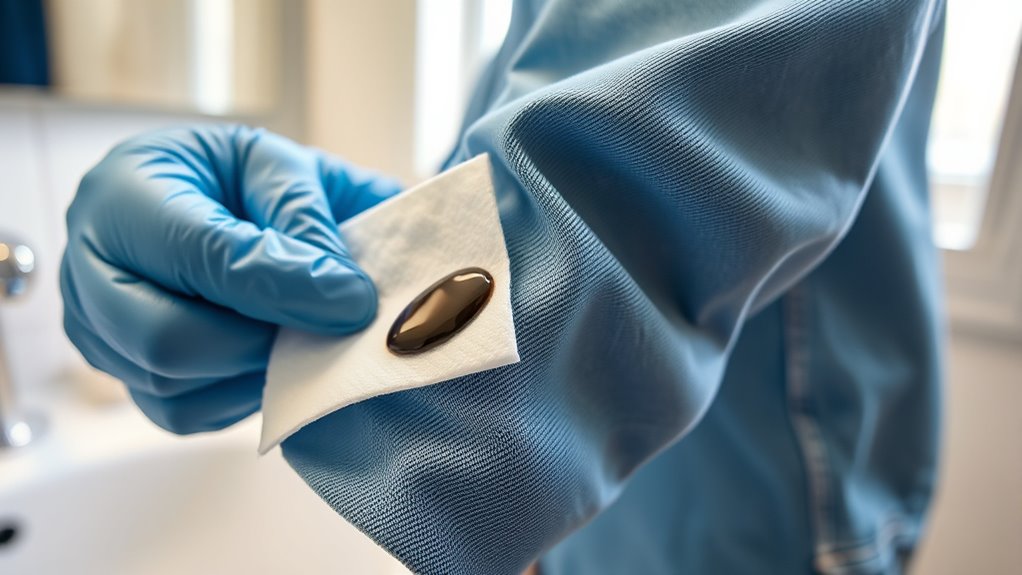
If dish soap and water don’t quite do the trick, acetone-based nail polish remover can tackle fresh or light ink stains more effectively. Before you start, always perform a patch test on an inconspicuous area of the fabric to check for discoloration or damage.
Use a cotton ball soaked lightly in acetone nail polish remover and dab gently onto the ink stain. Avoid rubbing, as that can spread the stain or harm the fabric. Acetone works well for stain removal on sturdy fabrics but steer clear of delicate fabrics since acetone can cause deterioration or unwanted discoloration.
After treating the ink stain, rinse the area thoroughly with cool water to remove any residual acetone and protect the fabric’s integrity. Remember, acetone is powerful, so use it sparingly and carefully, focusing only on fresh ink stains or light marks for the best results without risking damage.
Vinegar and Cornstarch for Ink Stain Removal: Messy but Helpful
When you combine vinegar and cornstarch, you get a paste that can help lift ink stains from fabric. But it often hardens into uneven chunks instead of a smooth mixture.
Combining vinegar and cornstarch creates a paste that lifts ink stains but often hardens unevenly.
This homemade cleaning solution works by applying the paste to the stubborn stains on your clothing, letting it dry, and then peeling off the hardened residue. While it can remove some ink, the hardening process is inconsistent, making this method messy and often ineffective.
The cornstarch tends to clump, preventing full penetration of the ink, which limits stain removal success. You’ll likely need multiple applications and a lot of patience to see any noticeable improvement.
Because of these drawbacks, vinegar and cornstarch rank low among stain removal methods. They’re best saved as a last resort when other, more reliable solutions fail. Although this paste can be helpful, don’t expect it to replace more effective cleaning solutions for ink stain removal on clothing.
Why Hairspray Fails at Ink Removal

Even though many people reach for hairspray to tackle ink stains, you’ll often find it falls short because modern formulas contain much less alcohol than they used to. This significantly reduces the solvent effectiveness needed for ink removal. The low alcohol concentration means hairspray can’t properly break down the complex ink components, making ink dissolving incomplete at best.
Here’s why hairspray fails at ink removal:
- Modern hairsprays have reduced alcohol concentration, weakening stain eradication.
- Instead of lifting ink stains, hairspray often causes stain spread, worsening the problem.
- Rinsing or blotting with hairspray doesn’t reliably remove ink, especially on porous surfaces.
- Hairspray lacks the concentrated solvents necessary for thorough ink dissolving.
If you want effective ink removal, relying on hairspray won’t do the job. It simply doesn’t have the power to eradicate stains completely, especially on delicate or porous materials.
Frequently Asked Questions
Can Ink Stains Be Removed From Leather Using These Solutions?
Yes, you can remove ink stains from leather using careful leather cleaning and DIY solutions like rubbing alcohol or vinegar-water mixtures. For quick cleaning and effective stain treatment, always test on a hidden spot first to guarantee fabric safety and color preservation.
Use gentle spot treatment to avoid damaging leather care or reducing stain resistance. If stains persist, professional products or services help maintain your leather’s integrity while achieving thorough ink removal.
How Soon After Ink Spills Should I Treat the Stain?
You should treat an ink stain within the first few minutes. Did you know a fresh spill can start setting in under five minutes? Timing is really important here.
Immediate action prevents the stain from setting and reduces how much it absorbs. Your quick response stops the stain from becoming permanent.
If you delay, removal gets tougher and the stain becomes more permanent. How fast you react directly affects how urgent the treatment needs to be, so act fast to keep the stain from embedding deeply.
Are There Any Risks of Color Fading With These Ink Removal Methods?
Yes, you risk ink fade and color loss when treating stains, especially with harsh solvents that cause dye damage and fabric discoloration. If you’re not careful, surface deterioration and fabric weakening can happen, leading to color bleeding or stain recurrence.
Sensitive materials need gentle methods to avoid these issues. Always test on a hidden spot first to prevent solution residue and protect your fabric’s vibrancy.
Can These Solutions Be Used on Delicate Fabrics Like Silk?
Yes, you can use some solutions on delicate fabrics like silk, but you must prioritize fabric safety. Since silk stain removal requires gentle cleaning, always do fabric testing on a hidden spot first to avoid damage.
Because of material sensitivity and fragile textiles, follow fabric care instructions carefully. Use mild methods to guarantee stain prevention without harming the fabric. These cleaning tips help protect delicate fabrics while tackling stains effectively.
What Should I Do if the Ink Stain Persists After Treatment?
If the ink stain persists after treatment, don’t ignore it. Early stain detection is key. Adjust your cleaning schedule and use stronger cleaning tools or solvents suited for the ink types involved.
Focus on fabric care to maintain fabric durability and color preservation. Combine stain removal tips like soaking or vinegar treatments, but always consider the stain resistance of the fabric.
For stubborn stains, consult a professional to protect your fabric and guarantee effective stain prevention.
Conclusion
So, next time you’re battling stubborn ink, skip the hairspray. You’ll only end up smelling like a 90s rock concert with zero results. Instead, grab some isopropyl alcohol or gently start with dish soap and water.
If you’re feeling bold, vinegar and cornstarch might turn your kitchen into a mini science experiment. Remember, ink hates these solutions almost as much as you hate waiting forever for stains to disappear. Who knew ink removal could be this dramatic?
Leave a Reply