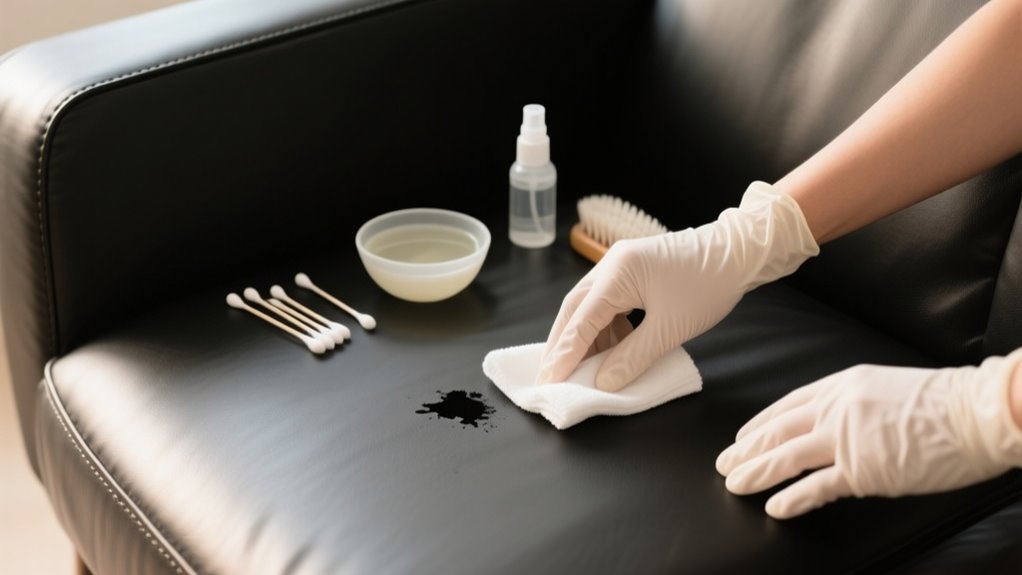
To remove ink from faux leather, first identify your material and ink type.
Then gently blot excess ink without rubbing to avoid spreading.
Test a mild soap and water solution on a hidden spot before dabbing the stain with it.
For stubborn ink, carefully use rubbing alcohol, again testing first.
Rinse with a damp cloth, let it air dry, and apply a conditioner to restore softness.
Keep following for step-by-step guidance and expert tips.
How to Identify Your Faux Leather and Ink Type
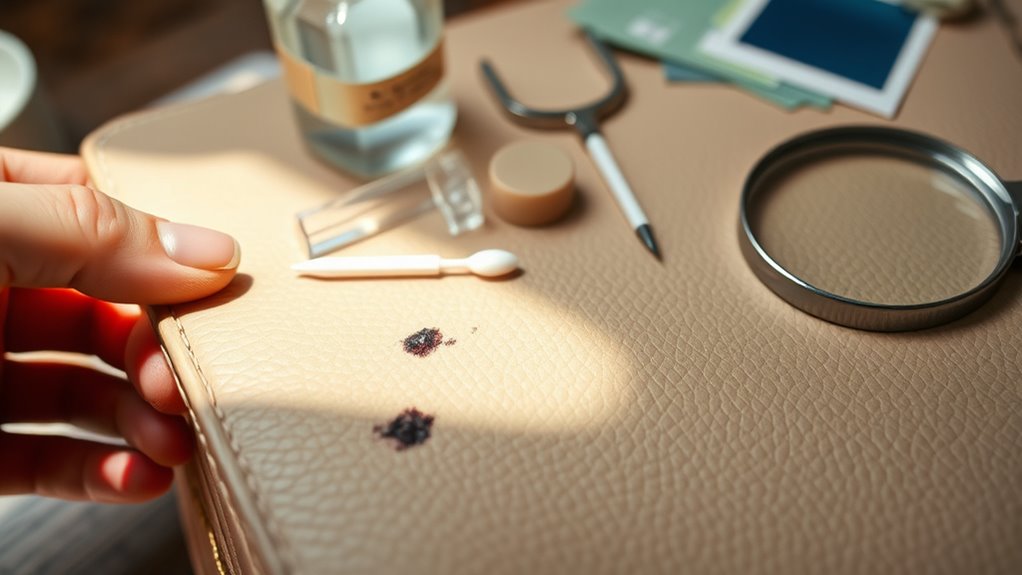
How can you tell what type of faux leather you have and what kind of ink you’re dealing with? Start by checking any manufacturer labels, which often specify whether your faux leather is made from polyurethane or PVC.
If labels aren’t available, gently test a small, hidden area with a mild cleaning solution to observe how the surface reacts. Faux leather typically has a smooth, uniform texture that can be either matte or glossy, which affects the cleaning methods you should use.
Next, identify the ink type: water-based ink is usually easier to remove, while permanent ink requires more careful treatment. Knowing whether the ink is water-based or permanent helps you choose the right cleaning approach without damaging the synthetic material.
Since faux leather is less porous than real leather, harsh chemicals and excessive moisture can cause damage, so it’s essential to match your cleaning methods to both the faux leather type and ink type for the best results.
Remove Excess Ink Carefully Without Spreading
You’ll want to blot the ink gently with a soft cloth. Start from the edges and work your way inward so you don’t end up spreading the stain. Just be careful not to rub or scrub—that can actually push the ink deeper into your faux leather.
Using a small amount of cleaning solution on a soft cloth can help lift the excess ink without soaking the surface too much. Take it slow and steady, and you’ll avoid making the stain worse.
Blot Ink Gently
Start by gently blotting the ink stain with a clean, dry white cloth or paper towel to soak up excess ink without spreading it further. Work from the outer edges inward, applying light pressure to lift the ink without pressing it deeper into the faux leather.
Use a fresh section of the cloth as needed to avoid reapplying ink. Avoid rubbing or scrubbing, which spreads ink and damages the surface. Here’s a quick guide:
| Step | Action |
|---|---|
| 1 | Use a clean cloth or paper towel |
| 2 | Blot gently, don’t rub |
| 3 | Start from outer edges of ink stain |
| 4 | Apply light pressure |
| 5 | Change cloth section frequently |
This careful blotting helps remove ink without worsening the stain.
Avoid Ink Spreading
Although it’s tempting to rub the ink stain, doing so will only spread it further across your faux leather. To avoid this, you need to remove excess ink carefully without causing more damage. Start by gently blotting the ink rather than scrubbing, as rubbing will make the stain spread. Here’s how you can prevent ink from spreading:
- Use a clean, dry cloth or paper towel to blot the ink, working from the outer edges toward the center.
- Avoid scrubbing or rubbing the stained area to keep the ink from smudging.
- Lift and remove as much ink as possible before applying any cleaning products.
- If the ink is fresh, lightly dab with a damp cloth to blot excess ink without pushing it deeper.
Being gentle and patient helps keep the ink from spreading and embedding into the faux leather.
Use Soft Cloth
When dealing with ink stains on faux leather, gently blotting with a soft, clean white cloth helps absorb excess ink without causing it to spread. You want to carefully blot the stain, working from the outside inward to stop the ink from expanding to unaffected areas.
Avoid rubbing or scrubbing, as this only pushes the ink deeper into the faux leather’s surface. Use light, gentle pressure to lift the ink, ensuring the stain stays contained.
Remember to replace the soft cloth often; a dirty or ink-soaked cloth can reapply the stain or dirt, undoing your progress. By using a soft cloth and blotting carefully, you’ll effectively remove excess ink while protecting the faux leather from further damage or spreading the stain.
Test Cleaning Solutions Safely on a Hidden Spot
Before you apply any cleaning solution to the visible areas of your faux leather, test it on a hidden spot to make certain it won’t cause discoloration or damage. This step is essential to protect your item from unwanted effects.
Use a soft, white cloth or sponge to apply a small amount of the cleaning solution to an inconspicuous hidden area. Then, wait 5 to 10 minutes to observe any changes in color or texture. Avoid using too much solution during testing, as a small amount is enough to evaluate compatibility.
To test cleaning solutions safely:
- Apply a small amount on a hidden area
- Use a soft, white cloth or sponge for testing
- Wait 5-10 minutes to check for discoloration or surface changes
- Take photos before and after to compare results
This method guarantees you won’t risk damaging your faux leather while removing ink stains effectively.
Dab Ink Stains With Mild Soap and Water
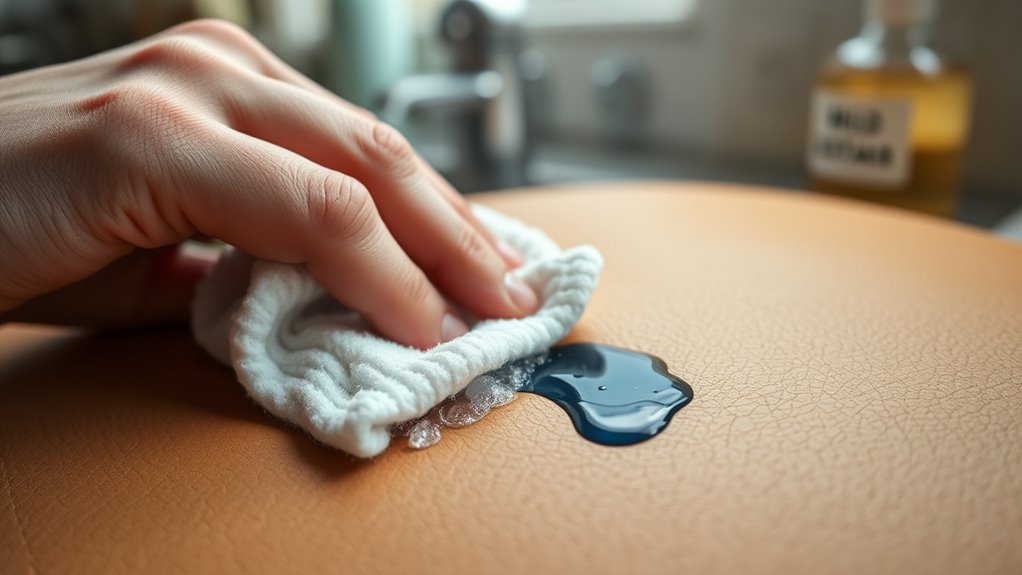
Once you’ve confirmed the cleaning solution won’t harm your faux leather, you can move on to gently tackling the ink stain. Start by mixing a small amount of mild soap, like Woolite®, with water to create a gentle cleaning solution.
Dampen a soft, white cloth with this soapy water, making sure it’s not overly wet to avoid damaging the faux leather. Carefully blot the ink stain, working from the edges toward the center to prevent the ink from spreading. Remember, don’t rub or scrub, as this can push the ink deeper into the material.
Rinse the cloth frequently and continue blotting until the ink begins to lift. Once the stain starts to fade, switch to a clean, damp cloth to gently remove any soap residue. This method keeps your faux leather safe while effectively addressing fresh ink stains.
Remove Stubborn Ink Stains With Alcohol
When you’re dealing with stubborn ink stains, the right kind of alcohol really makes a difference—usually 70% rubbing alcohol works best. You’ll want to gently dab the stain with a soft cloth, being careful not to rub too hard. Rubbing can actually spread the ink or even damage your faux leather.
It’s always a good idea to test a small, hidden spot first. That way, you can be sure the alcohol won’t discolor or harm your material before you go all in.
Choosing The Right Alcohol
- Use 70% isopropyl alcohol for safe, effective stain removal.
- Avoid higher concentrations to prevent damage.
- Test any product on an inconspicuous area before full use.
- Apply alcohol sparingly with a soft cloth or cotton swab.
This careful choice guarantees you tackle stubborn stains while preserving your faux leather’s look and feel.
Application Techniques For Ink
How exactly should you apply rubbing alcohol to tackle stubborn ink stains on your faux leather? Start by dabbing 70% isopropyl alcohol onto a soft cloth, then gently apply it to the ink stain.
Use a cleaning technique that works from the outside of the stain inward to avoid spreading the ink. Blot carefully with a small, damp, white cloth, lifting the ink without soaking the material.
Allow a few seconds for the alcohol to break down the ink before wiping clean. You might need to repeat this application a few times for tough stains. This precise approach guarantees effective ink stain removal while preserving your faux leather’s appearance.
Safety Precautions And Testing
Before applying rubbing alcohol to stubborn ink stains on your faux leather, you should always test the solution on a hidden spot first. This patch test guarantees that alcohol-based solutions won’t discolor or damage your material.
Follow these safety precautions for the best results:
- Use 70% isopropyl rubbing alcohol applied with a soft cloth or cotton swab.
- Dab gently; avoid rubbing or scrubbing to prevent spreading the ink or harming the surface.
- Let the alcohol sit for about 30 seconds to loosen the ink.
- Wipe with a clean, dry cloth, then rinse the area with a damp cloth to remove residue.
These steps help protect your faux leather while effectively removing ink stains using alcohol-based solutions.
How to Rinse and Dry Faux Leather After Cleaning
After cleaning your faux leather, you’ll want to rinse it thoroughly with a damp, clean cloth to remove any leftover cleaning solution and soap. Use a gentle blotting motion instead of rubbing to avoid spreading the ink or damaging the surface. You might need to repeat this rinsing several times until no soap residue or bluish tint remains on the material.
Once rinsed, let the faux leather air dry in a well-ventilated area, keeping it away from direct sunlight to prevent discoloration or warping. If you want to speed up drying, use a hair dryer on a warm setting, maintaining a safe distance from the surface to avoid heat damage. By carefully rinsing and drying your faux leather, you’ll preserve its appearance and prepare it for any further care steps.
Condition Faux Leather to Restore and Protect
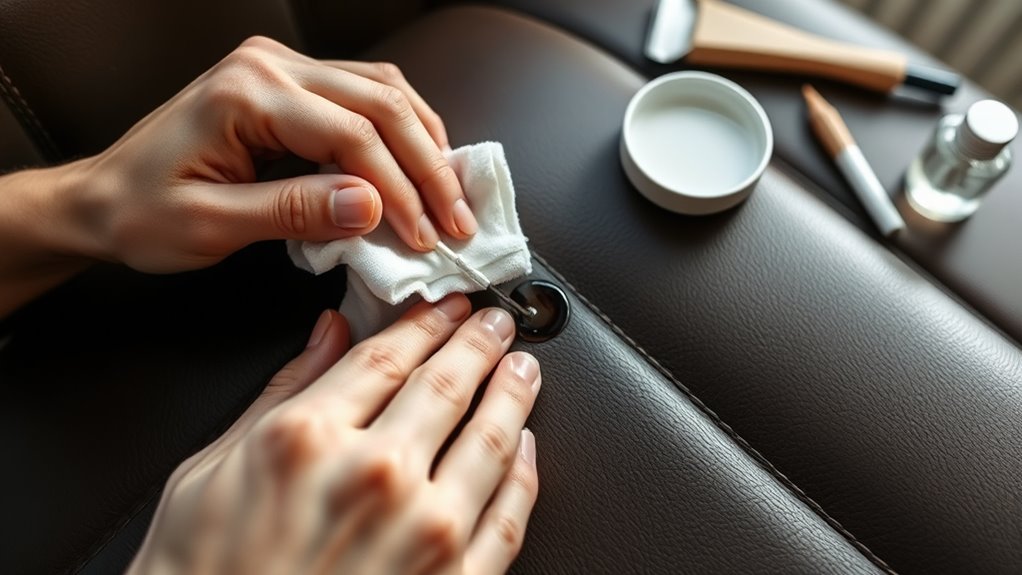
Though cleaning removes visible stains, conditioning your faux leather is essential to restore its moisture and flexibility. This helps prevent stiffness and cracking. Conditioning not only aids in restoring your item but also forms a protective barrier that extends its lifespan.
To condition effectively, follow these steps:
Choose a leather-specific conditioner suitable for faux leather and test it on a hidden spot first. Apply the conditioner in thin, circular motions to ensure even absorption. Allow 10-15 minutes for the conditioner to set before buffing with a dry cloth.
Avoid petroleum-based products, as they can clog pores and damage the material over time.
Frequently Asked Questions
Can Ink Stains on Faux Leather Be Completely Removed Without Damage?
You can sometimes completely remove ink stains on faux leather, but it’s tricky. Using gentle cleaning solvents helps avoid damage, but harsh chemicals might ruin the surface.
If the stain’s deep, you might need leather repair techniques to restore the finish. To protect your faux leather in the future, focus on stain prevention by treating spills quickly and using protective sprays.
How Often Should I Clean My Faux Leather to Prevent Ink Stains?
You might think cleaning your faux leather daily is the best way to prevent ink stains, but that’s not true. The ideal cleaning frequency is every 1 to 2 weeks. This balance keeps dirt from building up and reduces the chance of ink setting in.
Stick to stain prevention tips like wiping spills promptly and using mild cleaners. Regular faux leather maintenance helps protect the surface without causing damage or excessive wear.
Are There Specific Brands of Faux Leather More Resistant to Ink Stains?
Yes, when you look at brand comparisons, you’ll notice some faux leathers offer better stain resistance. Brands like Pleather and Vinyluxe stand out because their coated surfaces prevent ink from soaking in.
If you want material durability that resists stains, choose leatherette with a PU coating. It’s much tougher against ink than cheaper, uncoated options. So, picking the right brand really boosts your chances of avoiding stubborn ink marks.
Can DIY Cleaning Damage the Faux Leather’s Texture or Color?
You’ve got to treat faux leather like a delicate dance partner. One wrong move can leave it bruised. Yes, DIY cleaning can damage its texture or color if you’re too rough or use harsh chemicals.
Proper leather care means gentle cleaning techniques and careful stain prevention. Always test solutions on hidden spots first to avoid ruining the finish.
With the right touch, you’ll keep your faux leather smooth and vibrant, not scratched or faded.
What Should I Do if Ink Stains Reappear After Cleaning?
If ink stains reappear after cleaning, don’t worry. You should repeat stain removal tips using gentle cleaning tools like a soft cloth and mild solution to lift trapped ink. Make sure to clean deeply without harsh scrubbing to protect faux leather care.
After cleaning, apply a protective coating to prevent future stains. If the problem persists, consider consulting a professional for advanced treatment or re-dyeing to fully restore your faux leather.
Conclusion
Did you know that 70% of faux leather users struggle with ink stains at least once? Don’t worry, you’ve got this! By following these simple steps, you can easily tackle ink stains without damaging your faux leather.
Remember to test solutions first, gently dab the stain, and condition your material afterward. With a little care, your faux leather will look fresh and protected, keeping it in great shape for years to come.
Leave a Reply