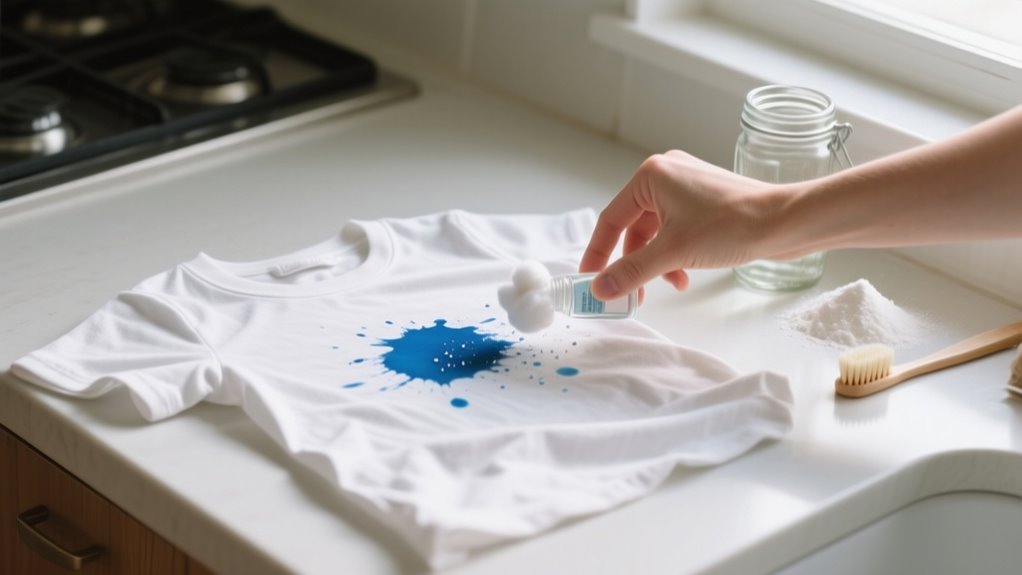
To remove ink stains quickly and easily, act immediately to prevent ink from setting into fabric. Blot fresh stains gently with rubbing alcohol or hand sanitizer, avoiding rubbing to stop spreading.
For dried ink, soak the fabric in stain remover or a gentle solution suited to your fabric type.
Always test cleaners on hidden areas first.
If needed, repeat treatment or seek professional help for delicate fabrics or stubborn stains.
Keep going, and you’ll discover more tips to protect your clothes effectively.
Why You Should Act Fast to Remove Ink Stains
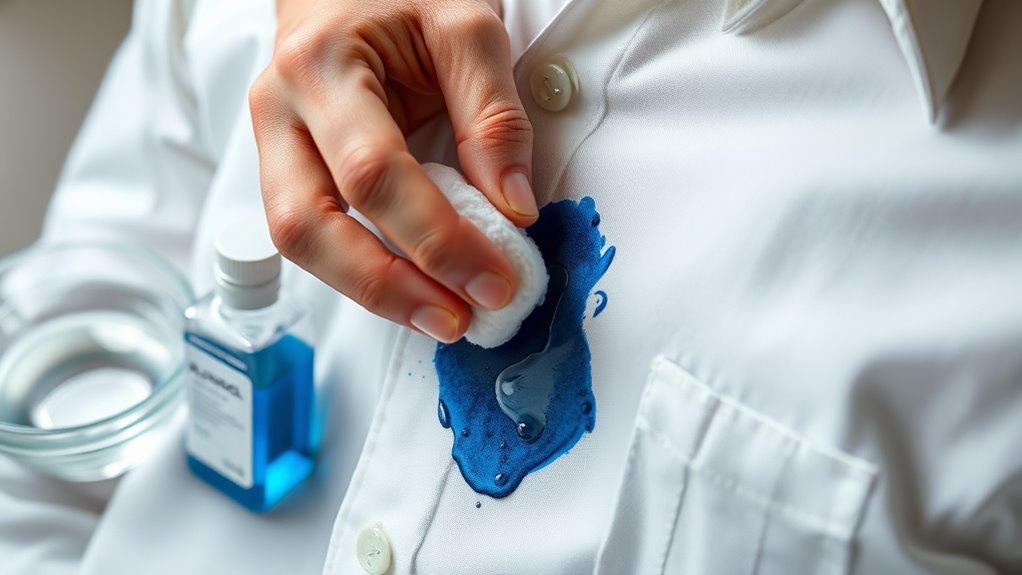
Why should you act fast when dealing with ink stains? Because ink stains can set into fabric within minutes, making prompt stain removal essential. When you act fast, you prevent setting, stopping the ink from drying and penetrating deeper into fibers.
Immediate treatment increases your chances of completely eliminating the stain without leaving a trace. Your quick response not only boosts the effectiveness of fabric care but also reduces the need for harsh chemicals or professional cleaning.
The longer you wait, the more stubborn the stain becomes, risking permanent damage to the fabric’s appearance and value. By addressing ink stains right away, you save time, effort, and avoid costly treatments.
Choosing the Best Cleaning Solutions for Ink Stains
Choosing the right cleaning solution can make all the difference when tackling ink stains. For successful ink stain removal, you need to match the solution to the ink type and fabric. Here’s what to take into account:
Selecting the proper cleaning solution is key to effectively removing ink stains from different fabrics.
- Rubbing alcohol and hand sanitizer: These contain at least 60% alcohol and act as effective solvents for dissolving water-based ink and ballpoint ink stains quickly.
- Commercial stain removers: Products like OxiClean are safe, colorfast, and suitable for most fabrics. They offer reliable results without harsh damage.
- Testing fabric first: Always test any solvent or stain remover on an inconspicuous area to avoid color bleeding or fabric damage.
How to Remove Ink Stains From Common Fabrics
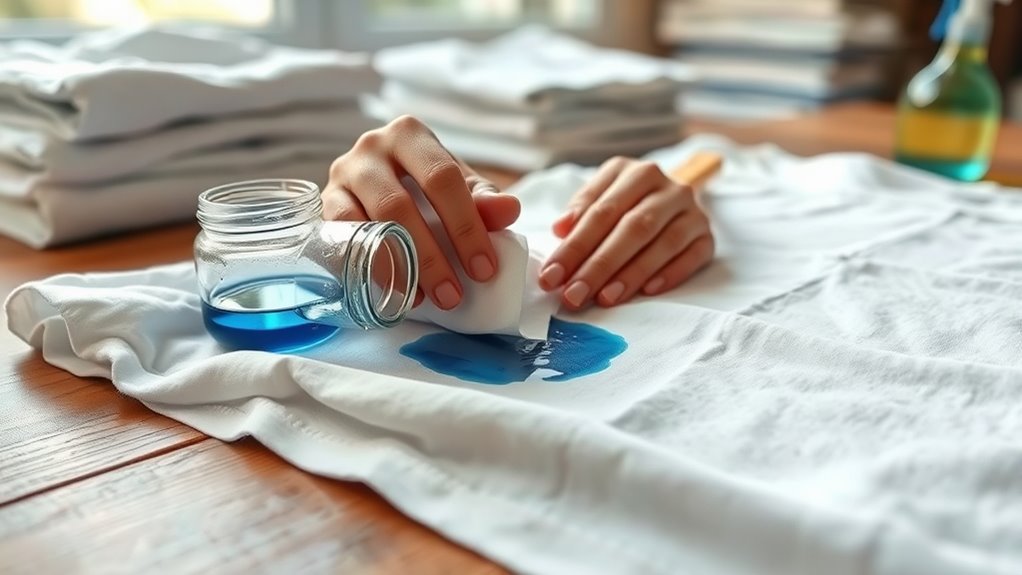
Once you’ve picked the right cleaning solution, you can focus on treating the fabric itself. For common fabrics like cotton, denim, and canvas, quick and repeated stain removal treatments work best.
Apply rubbing alcohol or Tide Ultra Stain Release directly on the ink stains, then blot gently with a white cloth soaked in water. For dried ink on denim, soak the fabric in milk before washing.
Cotton responds well to a paste of vinegar and baking soda for stubborn marks. Always test the treatment on a hidden fabric area first to avoid damage.
| Fabric | Treatment |
|---|---|
| Cotton | Rubbing alcohol, vinegar paste |
| Denim | Milk soak, alcohol-based product |
| Canvas | Tide Ultra Stain Release |
| All | Blot with white cloth and water |
Prompt action and proper treatment help you effectively remove ink stains from common fabrics.
How to Remove Ink Stains From Delicate and Textured Fabrics
Although delicate and textured fabrics demand extra care, you can still tackle ink stains effectively by using gentle blotting and appropriate cleaning solutions. When dealing with delicate fabrics like silk or wool, avoid aggressive rubbing to prevent damage. Instead, gently blot the stain with cold water and a white cloth.
For textured fabrics such as velvet, preserving the texture is key, so soak the area in a mixture of dish soap, white vinegar, and water, then rinse carefully.
Follow these steps for effective stain removal:
- Always test any solvent, like rubbing alcohol or specialized stain removers, on a hidden spot to ensure it won’t harm the fabric.
- Use soft dabbing motions rather than scrubbing to lift the ink without damaging delicate or textured fabrics.
- If unsure about fabric care, seek professional cleaning services to safely remove stubborn ink stains.
This approach guarantees gentle removal without compromising your fabric’s integrity.
How to Remove Fresh vs. Dried Ink Stains
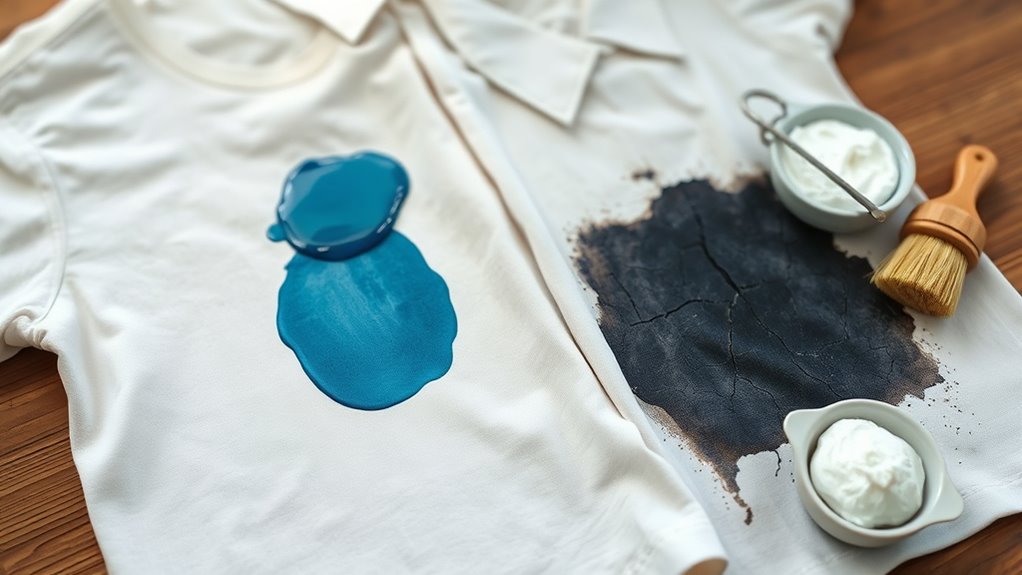
Because fresh ink stains haven’t set into the fabric fibers yet, you can often remove them with quick, gentle action like blotting or applying alcohol. Acting fast is key; quick action prevents the ink from penetrating deeper, making stain removal much easier.
Fresh ink stains can be easily removed with quick, gentle blotting or alcohol before they set into fabric fibers.
For fresh ink stains, avoid rubbing, which can spread the ink and embed it further into the fibers. Instead, gently blot the area to lift the ink.
Dried ink stains, however, are tougher to tackle. Since the ink has already set in the fabric fibers, you’ll likely need more intensive treatment. Start by gently scraping or loosening the dried ink to improve solvent penetration.
Soaking the fabric in a stain remover or solvent can help break down the ink more effectively. Multiple applications might be necessary for complete removal. Remember, the longer you wait, the harder dried ink stains become to eliminate, so prompt stain removal is always your best strategy.
Removing Ink Stains With Rubbing Alcohol and Other Solvents
You’ll want to pick solvents like rubbing alcohol because they break down ink really well without harming your fabric. It’s always a good idea to test the solvent on a hidden spot first. Then, when you apply it, dab gently instead of rubbing. This way, you can lift the stain quickly and avoid spreading it or pushing it deeper into the fabric.
Choosing Effective Solvents
How do you choose the best solvent to tackle stubborn ink stains? Selecting the right solvent is vital for effective removal without harming the fabric. Here’s what you need to take into account:
- Effectiveness: Rubbing alcohol is a top solvent because it breaks down the dye and pigment molecules in the ink stain efficiently.
- Fabric Safety: Always test the solvent on a hidden spot first to make sure it won’t discolor or damage the fabric.
- Alternatives: Consumer dry cleaning solvents and hairspray can help, but use them cautiously and test before applying.
Proper Application Techniques
Once you’ve selected a suitable solvent like rubbing alcohol, applying it correctly can make all the difference in removing ink stains effectively. First, test on an inconspicuous spot to verify the fabric won’t discolor.
Next, hold the fabric taut over a jar or bowl and apply directly by dripping rubbing alcohol onto the stain. You can also gently dab with a cotton swab soaked in the solvent, avoiding rubbing to prevent spreading.
Allow the solvent to sit for about five minutes, letting it break down the ink. Then, blot with a clean cloth to absorb the dissolved ink.
Finally, rinse with cold water to dilute any remaining ink and prevent the stain from setting. Following these steps ensures efficient ink stain removal without damaging your fabric.
How to Avoid Setting Ink Stains When Washing and Drying
Before you toss ink-stained clothes into the dryer, make sure the stain is fully treated and noticeably faded. Heat from drying can permanently set ink stains, undoing all your stain removal efforts. To avoid this, follow these steps carefully:
- Always rinse and wash ink-stained fabrics in cold water. Hot water causes ink to bind tighter to fibers, making the stain harder to remove.
- Ensure the stain is thoroughly pretreated before washing. Check that the stain has visibly faded before moving on to drying.
- Opt for air drying instead of using a dryer. Air drying prevents heat from setting any remaining ink, giving you a chance to re-treat the stain if needed.
Tips for Removing Ink From Jeans and Shirts
When ink finds its way onto your jeans or shirt, acting quickly can make all the difference in removing the stain effectively. First, gently blot the excess ink with a clean cloth to stop it from spreading or setting deeper into the fabric.
Act swiftly to blot excess ink and prevent stains from spreading or settling into your fabric.
Before using any remover, test rubbing alcohol or a stain remover like Tide Ultra Stain Release on a hidden spot to verify your clothing won’t fade. Apply a small amount of rubbing alcohol or hand sanitizer directly to the stained area and dab gently, letting it sit for about five minutes.
This treatment helps break down the ink stains. Afterward, rinse the fabric with cold water to dilute and remove the loosened ink particles. Finally, wash your jeans or shirt on the hottest cycle safe for the material.
Check if the stain has completely disappeared before drying to keep your clothing clean and ink-free. Acting quickly is key to successful ink stain removal.
When to Use Professional Cleaning for Ink Stains
How do you know if an ink stain needs professional cleaning? Sometimes, DIY methods just won’t cut it, especially with certain fabrics and stubborn stains. Here are three key situations when you should opt for expert treatment:
- Delicate Fabrics and Valuable Items: If the stain is on silk, wool, suede, or any valuable item, professional cleaning is safer. It helps avoid damage and ensures thorough removal.
- Set-In Stains and Industrial Inks: Old, dried ink or industrial inks often resist home remedies. Professionals have specialized solutions that tackle these tough stains effectively.
- Failed Home Attempts: If you’ve tried multiple DIY methods without success or the stain worsens, it’s time to seek expert help. This prevents permanent damage.
Choosing professional cleaning in these scenarios guarantees the best outcome. It protects your fabrics and saves you time and frustration.
Troubleshooting Persistent Ink Stains: Causes and Fixes
Although ink stains can be frustratingly stubborn, understanding the common causes behind their persistence can help you tackle them more effectively. Persistent stains often occur when removal methods are insufficient or inappropriate, allowing set-in ink to bond deeply with fabric fibers.
Heat exposure, like hot water or dryers, accelerates stain setting, so timely action is critical. Older or dried ink stains are tougher because the ink’s resin or fabric dyes have strongly adhered, requiring more aggressive cleaning solutions.
Avoid using ineffective solvents such as hairspray or plain water, as they can leave residual ink and worsen the problem. Instead, rely on repeated applications of proper stain removal products like rubbing alcohol or oxygen-based cleaners to break down stubborn stains.
Frequently Asked Questions
Can Ink Stains Be Removed From Leather or Non-Fabric Materials?
Yes, you can remove ink stains from leather and non-fabric materials, but you need to use the right leather cleaning and non-fabric methods. For leather stain removal, apply gentle leather care tips like using a lemon juice and cream of tartar paste sparingly.
For non-fabric cleaning, try rubbing alcohol or commercial non-fabric solutions, but always test first. Regular leather maintenance helps prevent damage and keeps your items looking great.
Are There Any Natural Alternatives to Chemical Solvents for Ink Removal?
When life gives you ink stains, turn to nature’s toolbox. You can use plant-based solvents like olive oil techniques combined with baking soda solutions to gently lift stains.
Lemon juice remedies and vinegar stain removal work wonders with their natural acidity. Herbal extracts act as subtle helpers, enhancing natural dye removal without harsh chemicals.
These natural alternatives keep your fabrics safe while tackling those stubborn ink marks effectively and gently.
How Long Can Ink Stains Remain Before They Become Impossible to Remove?
Ink stain history shows that common ink types start bonding with fabric fibers quickly, making removal tougher over time. You’ll find that after 24 to 48 hours, stain permanence spikes due to deeper stain absorption and color fading.
The older the ink stain, the more removal challenges you’ll face, as age-related difficulty increases. Acting fast is key; once an ink stain sets beyond two days, it often becomes impossible to fully erase without professional help.
Does Ink Stain Removal Differ Between Ballpoint and Gel Pens?
Yes, ink stain removal differs between ballpoint pen and gel ink because of stain penetration and ink drying. Ballpoint pen ink is oil-based, so you’ll need solvents like rubbing alcohol for effective removal.
Gel ink, being water-based, responds better to gentle aqueous techniques. Stain color also matters. Darker stains may require multiple treatments.
Knowing your pen types helps you pick the right removal techniques and act quickly before ink drying sets the stain.
Can Ink Stains Transfer to Other Clothes During Washing?
Yes, ink stains can transfer to other clothes during washing due to fabric transfer. If you don’t take washing precautions, the stain setting can worsen, causing color bleeding and fabric damage.
Detergent effectiveness alone isn’t enough if the stain remains visible before washing. To prevent this, pre-treat the ink thoroughly and wash stained items separately or with similar colors. This minimizes fabric transfer and keeps your clothes safe.
Conclusion
Ink stains can feel like unwelcome shadows on your favorite clothes, but with quick action and the right approach, you can chase them away before they settle in. Remember, treating stains promptly and choosing the right method is your secret weapon.
Whether fresh or stubborn, delicate or durable fabric, you’ve got the power to restore your garments’ spotless glow. Don’t let ink win. Take charge, and watch your clothes shine like new again.
Leave a Reply