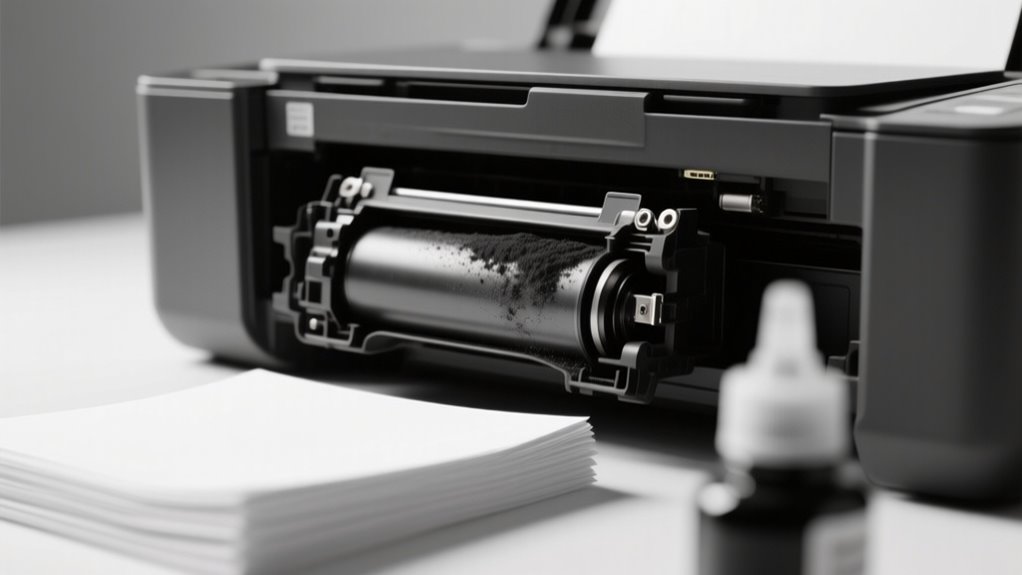
You don’t need ink to print with a laser printer because it uses toner, a fine plastic powder, instead. A laser creates an electrostatic image on a photosensitive drum, attracting toner only to those areas.
The toner then fuses to paper with heat and pressure, producing sharp, durable, and smudge-resistant prints.
This process lasts longer and handles high-volume jobs better than ink cartridges.
Keep exploring to find out how to get the best results and maintain your toner printer.
How Laser Printers Print Without Ink
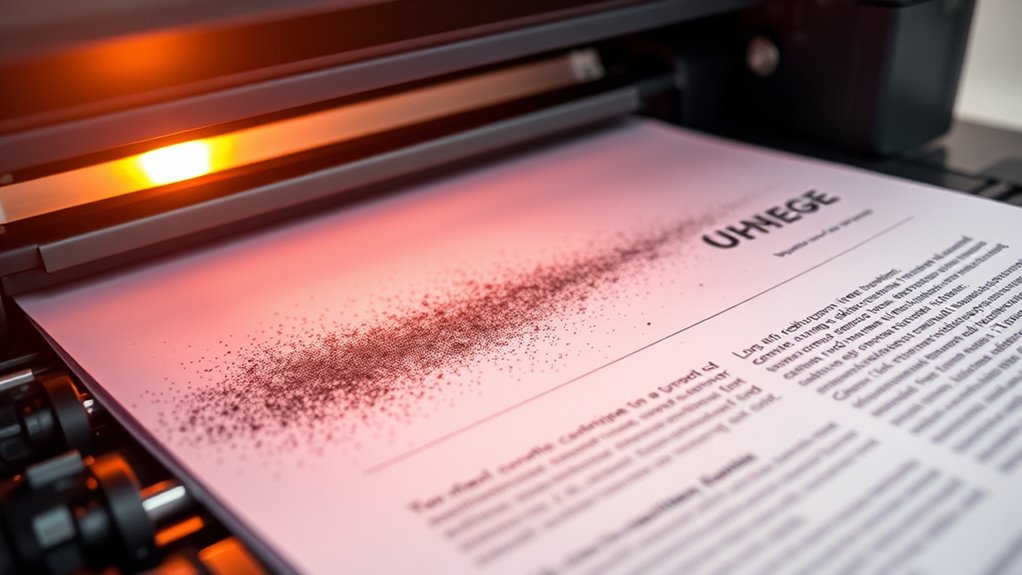
Although laser printers don’t use traditional ink, they create images using toner, a fine powder made of plastic and pigment. In laser printing, a laser beam draws an electrostatic image on a photosensitive drum inside the printer.
This drum holds an electric charge in specific areas that the laser alters, creating a pattern matching your document. Toner particles, which are also electrically charged, stick only to these laser-drawn areas on the photosensitive drum.
Then, the drum rolls over paper, transferring the toner onto it. Finally, heat and pressure fuse the toner permanently onto the paper, producing sharp text and images without any liquid ink.
You’ll notice this process is quite different from inkjet printers, which spray liquid ink directly. Laser printing’s reliance on toner and the photosensitive drum allows for fast, clean, and precise printing, making it a popular choice for both home and office use.
What Is Toner and How It Replaces Ink in Laser Printing
When you use a laser printer, toner takes the place of traditional ink by utilizing a fine, dry powder made mostly of plastic particles and pigments. Unlike ink, toner works through an electrostatic process: a laser beam selectively neutralizes parts of a charged drum, allowing toner particles to stick only to those areas.
Then, heat and pressure fuse the toner onto the paper, creating clear, durable, and water-resistant prints that won’t smudge or dry out like ink.
Toner cartridges in laser printers also offer a higher page yield compared to ink cartridges, often printing between 1,000 to 3,000 pages before needing replacement. This makes toner ideal for high-volume printing tasks.
Why Laser Printers Don’t Use Ink Cartridges
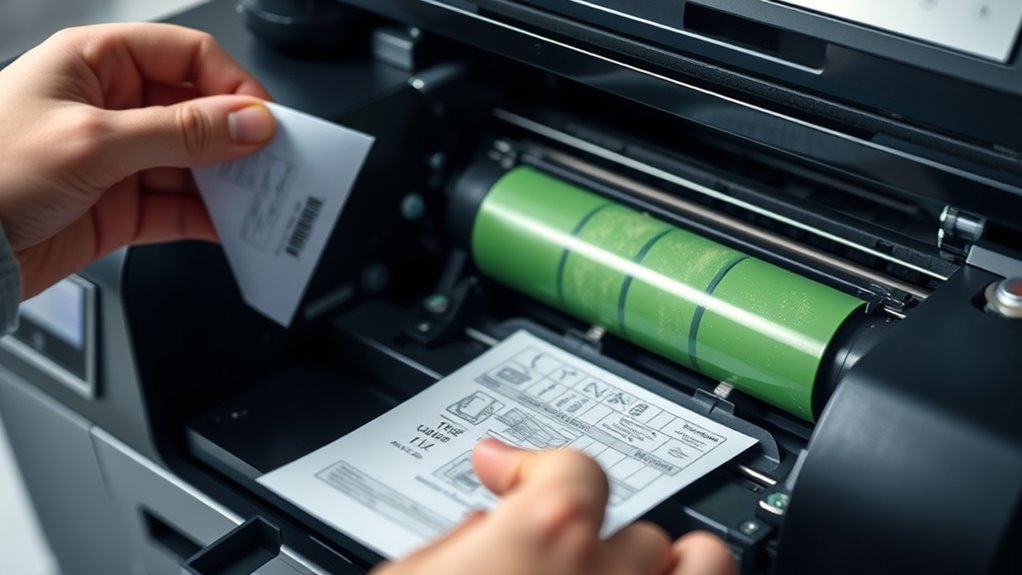
You might be wondering why laser printers don’t use ink cartridges at all. Instead, they use toner, which is a dry powder that gets fused onto the paper with heat. This process gives you sharp, long-lasting prints really quickly. When you understand how toner works in laser printing, it’s easy to see why it’s better than regular ink.
Toner vs Ink
A laser printer doesn’t need ink cartridges because it uses dry toner powder instead of liquid ink. Toner is a fine plastic-based powder that sticks to paper through electrostatic charges and heat. This is different from inkjet printers, which spray liquid ink from cartridges onto the paper.
This key difference means laser printers avoid problems like ink drying out or clogging, which can happen with inkjet cartridges. Toner cartridges also last much longer and offer a higher page yield, making them more cost-effective if you print a lot.
Laser Printing Process
How exactly does a laser printer create images without using ink cartridges? Instead of ink, it uses toner, a dry powder, and a precise laser beam in the printing process. The laser electrically charges a photosensitive drum, which then attracts the toner particles to form the image.
Next, the toner transfers from the drum onto paper. Heat and pressure fuse the toner onto the page, producing sharp, durable prints without any liquid ink involved. This laser printing process eliminates common ink issues like smudging and drying time.
Advantages Of Toner
The laser printing process relies on toner, a dry powder that offers several advantages over traditional ink cartridges. When you use toner, you get sharper text and water-resistant images, ensuring consistent print quality every time. Toner doesn’t dry out like ink, so it’s reliable even if you don’t print often.
Plus, toner cartridges deliver a higher page yield, making them ideal for high-volume printing without constant replacements.
Here are key advantages of toner you’ll appreciate:
- Long-lasting cartridges: Print thousands of pages before needing a replacement.
- Fast, durable prints: Toner fuses with heat, creating smudge-proof documents quickly.
- Consistent quality: Maintains sharp text and vibrant images, even after extended storage.
Toner truly makes laser printers efficient and cost-effective for your printing needs.
Toner’s Role in Durable, Smudge-Resistant Prints
You’ll really notice how toner helps create prints that last much longer and resist smudging way better than ink. Basically, the heat melts the tiny plastic particles, which then stick firmly onto the paper. This makes your documents super durable and even water-resistant. Because of this process, your prints stay sharp and clean, no matter how often you handle them.
Toner Durability Benefits
Although laser printers don’t use ink, they rely on toner to deliver prints that stand up to everyday wear and tear. Toner durability comes from the fusing process, where heat and pressure permanently bond toner particles to the paper.
This guarantees your prints stay smudge-proof and resist fading, even with frequent handling or exposure to humidity. The chemical makeup of toner, including plastic resins, plays a key role in this long-lasting quality.
Here’s why toner durability benefits you:
- Prints resist smudging and water damage thanks to strong fusing
- Documents maintain clarity over time despite environmental factors
- Toner-based prints outperform inkjet ones in durability and fade resistance
With toner, you get reliable, tough prints built to last.
Smudge-Resistant Printing Features
Laser printers rely on toner’s unique heat-fusing process to create prints that resist smudging and wear. When you print, the toner’s plastic particles are melted and pressed onto the paper, bonding permanently through fusing.
This heat-pressing step guarantees your prints stay smudge-resistant, even when handled or exposed to moisture. Unlike traditional ink, which can smear if wet, toner forms a water-resistant and durable surface that won’t smudge easily.
The electrostatic method precisely places toner on the page, resulting in sharp, clear images that remain intact over time. Thanks to this fusing process, your laser-printed documents offer lasting quality, standing up to everyday use without losing their crisp, smudge-resistant finish.
Preparing Your Design for Inkless Laser Printing
When preparing your design for inkless laser printing, guarantee the lines are dark and crisp so the laser can create precise burn marks. Focus on high contrast to help the laser distinguish edges clearly, ensuring consistent results. Adjusting your design’s line thickness prevents overexposure while maintaining visibility.
Also, choose the right format. Vector files like SVG keep your design sharp and detailed throughout the process.
Keep these tips in mind:
- Use high-contrast images with well-defined edges to maximize laser accuracy.
- Optimize line thickness and density for uniform burn marks without smudging.
- Convert your design to vector formats to preserve clarity during engraving.
Before you finalize your project, test your design on scrap material to confirm the burn marks are dark enough. This step helps avoid wasted materials and ensures your inkless laser printing delivers crisp, clean results every time.
Getting Sharp Prints From Your Laser Printer
If you want your prints to stand out with sharp detail, you need to fine-tune your printer’s calibration and settings. Start by adjusting the toner density; too much toner can cause smudging, while too little results in faded prints. Proper calibration of the laser ensures that toner fuses evenly onto the paper, which is essential for crisp lines and clear images.
Pay attention to your printer’s resolution and contrast settings. Higher resolution generally means better print quality with finer details. Also, regularly clean the photosensitive drum and fuser unit to prevent streaks or blurs caused by residue buildup.
Using high-quality, smooth paper can further enhance sharpness by allowing toner to adhere properly without bleeding. By combining these steps—calibration, toner adjustment, maintenance, and the right paper—you’ll consistently produce sharp, professional-looking prints from your laser printer without relying on ink.
Tips to Print Without Ink on Your Laser Printer
Although you don’t need ink to print with your laser printer, you do need to guarantee it has enough toner and that the printer is well-maintained. To print without ink effectively, focus on keeping your toner cartridges full and your printer in good working order. Proper printer maintenance ensures sharp, clear prints every time.
Here are some tips to help you print without ink on your laser printer:
- Regularly check and replace toner cartridges before they run dry to avoid faded prints.
- Use high-quality paper to enhance print clarity and prevent smudging.
- Adjust printer settings to optimize toner density for darker, crisper images.
Maintaining Your Toner Printer for Best Performance
To keep your toner printer running smoothly and producing high-quality prints, you need to maintain its components regularly. Start by cleaning the printer’s interior, especially the toner cartridge and drum unit, to prevent buildup that can affect print quality.
Use the maintenance kit recommended by your printer’s manufacturer and replace parts like fuser units and seals as instructed to keep everything functioning properly. Store toner cartridges in a cool, dry place and handle them carefully to avoid leaks and extend their lifespan.
Regularly check toner levels through your printer’s software or control panel to avoid unexpected print failures and plan replacements timely. Don’t forget to calibrate your printer properly and update the firmware periodically.
These steps optimize performance and help prevent issues such as streaks or inconsistent printing, ensuring your printer delivers the best print quality possible. Consistent maintenance will keep your toner printer reliable and efficient.
Inkjet vs Laser Printers: Ink and Toner Compared
You might be curious about how inkjet and laser printers differ beyond just their names. Well, inkjets use liquid ink cartridges, whereas lasers rely on dry toner powder that fuses to the paper with heat.
This difference doesn’t just affect print speed; it also changes the kind of output you get and how long your supplies will last. So, depending on what you need, one might suit you better than the other.
Inkjet Versus Laser
How do inkjet and laser printers differ when it comes to ink and toner? Inkjet printers use liquid ink sprayed onto paper, while laser printers rely on dry toner powder fused with heat. This fundamental difference affects how they print and what they’re best suited for.
Consider these points when choosing between them:
- Inkjet printers excel at vibrant photo printing thanks to their liquid ink.
- Laser printers produce crisp, fast text and have higher page yields per cartridge.
- Toner in laser printers is a fine plastic and pigment powder, unlike the liquid ink in inkjets.
Understanding these distinctions helps you pick the right printer for your needs, whether you prioritize colorful images or efficient document printing.
Toner Composition Explained
Although both ink and toner serve the same purpose of transferring color to paper, their compositions and application methods differ considerably. Toner in laser printers is a dry powder made of plastic, pigment, and silica, unlike the liquid ink used in inkjet printers.
You’ll find that toner particles are negatively charged and adhere electrostatically to the positively charged drum inside the printer. This electrostatic process allows the toner powder to form a precise image on the paper before being fused with heat, creating a durable print.
In contrast, inkjet printers spray liquid ink droplets directly onto the paper. Understanding this toner composition helps you see why laser printers don’t need traditional ink and why their printing process is distinct from inkjet technology.
Printing Speed Differences
Understanding the composition and application of toner versus ink also sheds light on why laser printers outperform inkjets in printing speed. Laser printers use dry toner fused quickly onto paper, allowing them to print hundreds of pages per minute in high-volume settings. In contrast, inkjet printers spray liquid ink droplets, which takes more time to dry and slows down the process.
You’ll notice laser printers keep a consistent printing speed, even with complex documents or color images.
Here’s why laser printers excel in printing speed:
- Toner fuses rapidly, reducing print cycle time.
- Laser printers handle large volumes efficiently.
- Inkjet printers slow down with detailed or color prints.
If speed matters, toner-based laser printers are the clear choice.
Choosing the Best Printer for Inkless Printing
When you’re choosing the best printer for inkless printing, it’s important to focus on laser models that use toner instead of liquid ink. Toner cartridges last much longer and print more pages. Laser printers use dry toner powder, which means you won’t need to worry about ink drying up or smudging.
Plus, toner cartridges typically print between 1,000 to 3,000 pages, making them ideal for high-volume printing. Some advanced printers even use laser-induced carbonization, which removes the need for toner or ink entirely.
Here’s a quick comparison to help you decide:
| Printer Type | Inkless Feature |
|---|---|
| Standard Laser Printer | Uses toner cartridges |
| High-Capacity Toner | Longer print runs, cost-effective |
| Laser Carbonization | No toner or ink required |
| Inkjet Printer | Requires liquid ink (not inkless) |
Choose based on your volume and budget for efficient inkless printing.
Frequently Asked Questions
Can Laser Printers Print on Fabric Without Ink?
You can’t use ink with laser printers since they rely on toner for fabric printing. To print on fabric without ink, you’ll need to focus on textile compatibility by treating or coating the fabric so the toner sticks properly.
Using ink alternatives like heat-transfer sheets or fabric-compatible toner helps achieve durable prints. Just remember, untreated fabric won’t hold toner well, so preparing the surface is key for successful fabric printing with a laser printer.
How Long Does Toner Last Compared to Ink?
Think of toner as a marathon runner and ink as a sprinter. Toner shelf life outpaces ink by miles, offering cartridge longevity that can reach 3,000 pages or more, even hitting 10,000 with high-yield options.
Ink vs toner? Inkjet cartridges tire quickly, lasting only 200 to 500 pages. So, when you need endurance and fewer replacements, toner’s dry powder form is your reliable champion in the printing race.
Are Laser Printers More Eco-Friendly Than Inkjet Printers?
Yes, laser printers are more eco-friendly than inkjet printers. You’ll notice they have a lower environmental impact because toner cartridges last longer and produce less waste.
They also use less energy during printing, which reduces energy consumption overall. Plus, many toner cartridges are easier to recycle, helping you minimize your environmental footprint.
Choosing a laser printer means you’re making a greener choice for your printing needs.
Can Laser Printers Print in Color Without Ink Cartridges?
Imagine watching vibrant colors emerge on paper without a drop of ink. Yes, your laser printer can print in color without ink cartridges.
Instead, you’ll handle laser printer maintenance by focusing on the toner replacement process, swapping out cyan, magenta, yellow, and black toners. This method guarantees sharp print quality and favors laser printers over inkjets for durability.
You’ll appreciate the clean, efficient color output that toner technology delivers every time.
Is Toner Safe to Handle During Refills?
Toner powder safety is vital during the refill process. You shouldn’t handle toner dust carelessly because it can irritate your skin and lungs. Always wear gloves and a mask to protect yourself from inhaling fine particles.
When refilling, work in a well-ventilated area and clean spills promptly with a damp cloth to avoid spreading dust. Taking these refill process precautions guarantees you stay safe while handling toner cartridges.
Conclusion
Think of your laser printer as a painter who uses powdered pigment instead of liquid paint. It doesn’t rely on ink but on toner, a fine dust that creates sharp, lasting images.
By understanding this, you’re not just printing—you’re crafting with precision and durability. Embrace toner’s power, maintain your printer well, and watch your designs come to life without the mess of ink.
Your prints will stand strong, like a masterpiece framed in time.
Leave a Reply