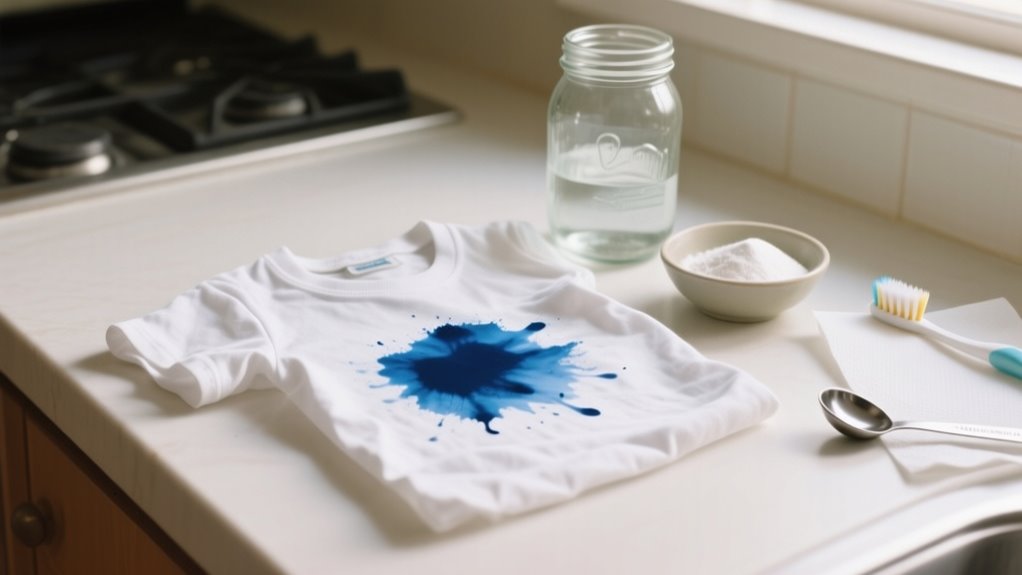
Act quickly to prevent ink from setting by blotting gently with a damp cloth. Avoid rubbing since that just spreads the stain.
Test cleaning solutions like rubbing alcohol or hand sanitizer on a hidden spot first. Then, apply carefully using cotton swabs.
Rinse with cold water from the fabric’s back and wash with cold water and detergent. Avoid heat until the stain’s gone to stop it from setting permanently.
Keep following these tips, and you’ll master effective ink stain removal.
Act Fast: Why Quick Treatment Makes Ink Removal Easier
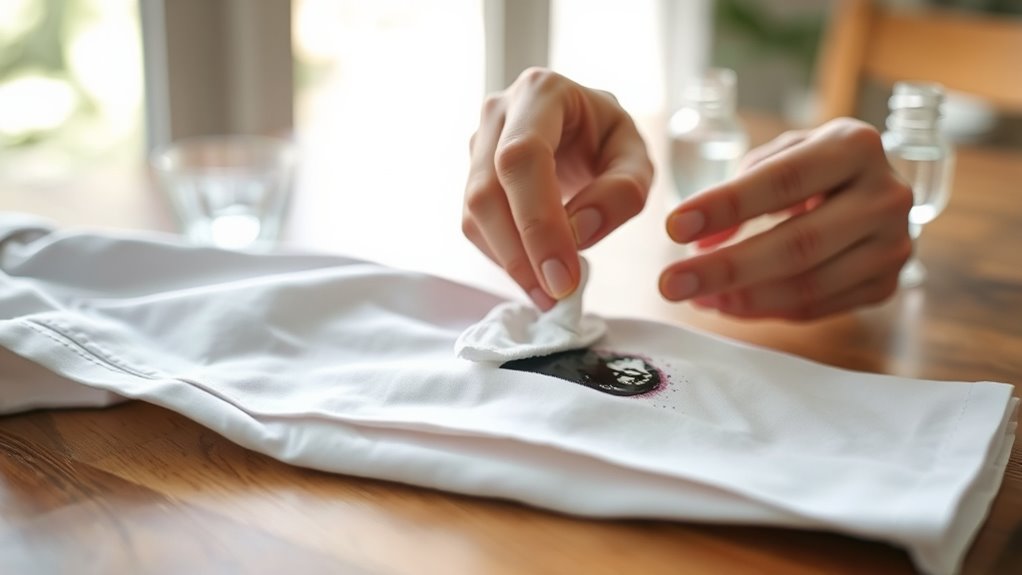
Why wait to tackle an ink stain when acting fast can save your clothes? When you act fast, you increase your chances of completely removing ink stains before they set into the fabric.
Ink quickly bonds with fibers as it dries, making stain removal tougher and often requiring harsher cleaning methods that might damage your clothes. Quick treatment with solvents like rubbing alcohol or hand sanitizer can loosen the ink while it’s still fresh, preventing it from sinking deeper.
The longer you delay, the more the ink penetrates, reducing how effective your cleanup efforts will be. By addressing ink stains within the first few minutes, you often avoid multiple treatments, saving time and preserving your fabric’s quality.
Blot and Prep the Stain Without Spreading It
Before you apply any cleaning solution, gently blot the ink stain with a clean cloth or paper towel to absorb excess ink without spreading it. Avoid rubbing the fabric, as this can push the ink deeper into the fibers, making the stain harder to remove.
To safeguard other areas, place a paper towel or piece of cardboard behind the stained fabric. Slightly dampen your cloth before blotting; this helps lift the ink without causing it to spread further.
Always work from the outside of the stain inward to keep the ink contained. By carefully blotting and prepping the stain this way, you’ll prevent the ink from expanding and set the stage for successful removal.
Gather Supplies for Ink Removal
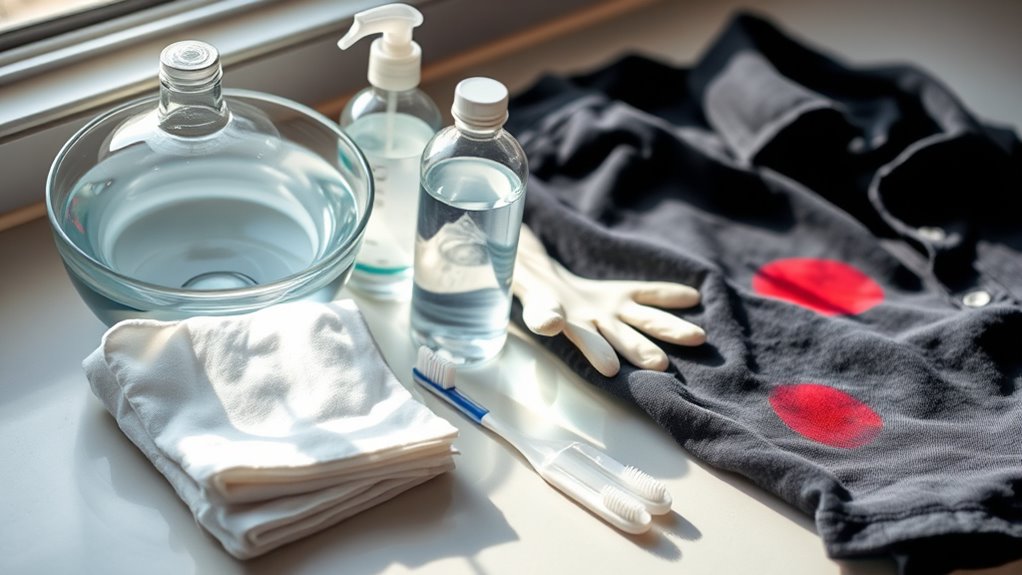
Once you’ve carefully blotted the ink stain, the next step is to gather the right supplies to tackle the removal effectively. Start by grabbing rubbing alcohol, a powerful solvent that breaks down ink, and a stain remover suited for your fabric type to *guarantee* thorough cleaning.
You’ll also need several cotton balls or swabs to apply the rubbing alcohol without spreading the stain further. Have a clean cloth on hand to gently dab the treated area as you work.
Prepare a clean workspace to keep everything organized and wear protective gloves to avoid skin contact with harsh chemicals. Keep cold water nearby to rinse the fabric immediately after applying the stain remover, which helps prevent the ink from setting.
Use Simple Home Remedies to Get Ink Out
Although ink stains can be stubborn, you can often remove them using simple home remedies like rubbing alcohol, hand sanitizer, or a mixture of vinegar and baking soda. Start by testing your chosen home remedy on a hidden fabric area to avoid damage.
Apply rubbing alcohol or hand sanitizer directly to the stain, then gently blot with a clean cloth to lift the ink without spreading it. Alternatively, mix vinegar and baking soda or dish soap with water to dissolve the ink.
You may need to repeat this process several times for the best results. These home remedies break down the ink, making it easier to remove during your laundry routine.
Rinse and Wash Your Clothes the Right Way to Keep Ink From Setting
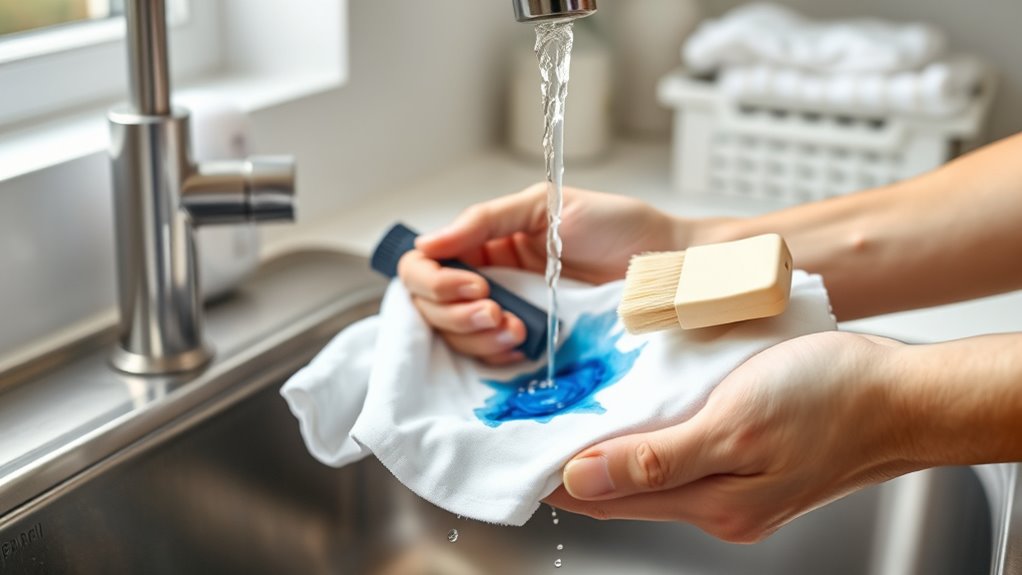
After treating the ink stain with home remedies, you’ll want to rinse and wash your clothing properly to stop the ink from setting. Start by rinsing the stained area immediately with cold water, holding it from the back of the fabric. This helps dilute the ink and prevents it from spreading.
Instead of rubbing, gently blot the stain with a clean cloth or paper towel to lift ink particles without making the stain worse. Before washing, apply a stain remover or rubbing alcohol to break down the ink and boost your chances to remove it completely.
When washing, use cold water and a heavy-duty detergent. Hot water can cause ink stains to set permanently. After washing, check the stain before drying. If the ink remains, repeat the rinse and wash steps.
Avoid drying the clothing until the stain is fully removed since heat will set the ink and make it much harder to remove later.
Troubleshooting Stubborn Ink Stains
If your ink stain won’t budge, don’t give up just yet. You might need to repeat treatments or even try combining methods, like rubbing alcohol and stain remover. It’s worth a shot!
Also, soaking the fabric longer can really help loosen those stubborn ink stains. Just be careful—avoid using heat because it can set the stain permanently. Oh, and always test stronger solvents on a hidden spot first to make sure your clothes stay safe.
Persistent Ink Removal
Tackling persistent ink stains often takes more than one attempt, so you’ll need to treat the area multiple times with stronger solvents like rubbing alcohol or commercial stain removers. For dried ink stains, soak the fabric longer, sometimes several hours or overnight, to help loosen the ink fibers.
Start by applying alcohol to break down the stubborn ink, then follow with a stain remover to lift the residue. Always test these products on a hidden spot first to avoid damaging the fabric.
If the stain remains after repeated treatments, you might need to seek professional cleaning or specialized products designed for tough ink removal. Patience and careful application increase your chances of restoring your clothing to its original condition.
Enhancing Treatment Effectiveness
Two or three rounds of rubbing alcohol or hand sanitizer can greatly boost your chances of removing stubborn ink stains. If the stain persists, soak the fabric overnight in a stain remover like OxiClean. Avoid using heat before the stain is fully gone, as it can set the ink permanently.
Gently scrub with a soft-bristled toothbrush to lift embedded ink particles. Combining treatments often works best, but steer clear of harsh chemicals that can damage fabric.
| Step | Method | Tips |
|---|---|---|
| 1 | Apply hand sanitizer | Multiple rounds improve results |
| 2 | Soak in stain remover | Overnight soak enhances removal |
| 3 | Scrub gently | Use soft brush, avoid heat |
Protect Fabrics When Removing Ink Stains
Before you start tackling an ink stain, it’s a good idea to test your chosen solution on a hidden spot first. This way, you can be sure it won’t damage the fabric. When you’re ready to treat the stain, remember to dab gently instead of rubbing. This helps protect the fibers and stops the ink from spreading around. Once you’ve done that, just let the fabric air dry. Avoid using heat because it can set the stain and make it harder to remove later.
Test Solutions First
Since ink stains can react unpredictably with cleaning products, you should always test any solution on a hidden part of the fabric first. Apply a small amount of the chemical using a cotton swab, then wait 5-10 minutes to check for discoloration or weakening of the fabric.
Avoid harsh chemicals like bleach unless tested thoroughly. Recording your test results helps you decide if the solution is safe to use on the entire stain.
| Solution Tested | Fabric Type | Reaction Observed |
|---|---|---|
| Rubbing alcohol | Cotton | No discoloration |
| Hairspray | Polyester | Slight fading |
| Dish soap | Silk | Fabric weakening |
| Vinegar | Denim | No adverse reaction |
| Acetone | Nylon | Severe discoloration |
Always test before treating.
Use Gentle Techniques
Although tackling ink stains quickly is important, you’ll want to use gentle techniques to protect your fabric’s integrity. Harsh scrubbing or abrasive tools can damage delicate fibers, making the stain worse. Always test a small, hidden area first with a gentle cleaning solution to avoid discoloration.
When treating the stain, remember to blot gently instead of rubbing to lift the ink without spreading it.
To protect your fabric, follow these tips:
- Test cleaning solutions on a concealed spot first
- Use soft, damp cloths or cotton swabs for application
- Gently blot the ink stain rather than rubbing
- Choose mild agents like diluted rubbing alcohol or hand sanitizer
- Avoid abrasive tools and vigorous scrubbing that harm delicate fabrics
These gentle steps will help you remove ink while keeping your clothing safe.
Avoid Heat Setting
If you want to successfully remove ink stains, you shouldn’t expose your clothing to heat until the stain is completely gone. Heat can cause the ink to bond deeply with fabric fibers, making the stain nearly impossible to remove later.
Avoid hot water and heat sources like dryers or irons while treating the stain. Instead, use cold or lukewarm water when applying stain removers.
After treatment, always air dry your clothing or use a low, cool setting to prevent heat from setting any remaining ink. Before using any heat, check the fabric’s care instructions carefully.
If you’re unsure, consider professional dry clean services to protect your garment. Steering clear of heat keeps your clothes safe and improves your chances of fully removing the ink stain.
Frequently Asked Questions
Can Ink Stains Be Removed From Leather or Suede?
Yes, you can remove ink stains from leather or suede, but you need to be careful. Start with gentle leather cleaning or suede treatment using rubbing alcohol or specialized cleaners. Always test on a small area first to avoid damage.
For ink pen removal, blot fresh stains quickly and gently wipe with a cleaner. Afterward, apply a leather conditioner to keep the material soft and prevent drying or cracking. If stains persist, consider professional help.
How Do Ink Removal Methods Vary for Different Fabric Types?
You’ll want to adjust your fabric treatment based on the material’s dye compatibility and weave. For delicate fabrics like silk, use gentle cleaning techniques with diluted rubbing alcohol to avoid damage, while cotton and polyester can handle stronger solvents. Always test first to prevent discoloration.
Stain prevention means acting quickly, but remember, synthetic fabrics might resist some treatments, so choose methods carefully to protect your clothes and keep colors intact.
Are There Any Commercial Products Specifically for Ink Stain Removal?
When it comes to ink stains, don’t put all your eggs in one basket. Commercial options like OxiClean Max Force and Dr. Beckmann Ink & Marker Stain Remover are specifically designed for stain pre-treatment.
While DIY remedies and natural solutions can help, these products combine solvents and enzymes to tackle tough ink stains effectively. Just make sure to test on a hidden area first to avoid any fabric damage before you get started.
Can Ink Stains Be Removed After the Clothing Has Been Dried?
Yes, you can remove ink stains after drying, but the drying impact makes it tougher. Heat sets the ink, causing deeper ink penetration into fibers, increasing stain persistence.
You’ll need stronger treatments, like multiple solvent applications or oxygen-based removers, but be careful to avoid fabric damage. Patience and persistence help, though complete removal isn’t guaranteed once drying has set the stain, so act quickly next time to improve your chances.
How Do You Prevent Ink Stains From Recurring on Clothes?
To prevent ink stains from recurring on clothes, you should focus on quick stain treatment and avoiding ink smudges. Use stain resistant fabrics or apply a clear topcoat to create a barrier.
Always blot ink marks immediately to stop them from setting. Store pens properly and choose washable markers for less risk. By acting fast and keeping fabrics protected, you’ll minimize the chance of ink stains coming back or spreading.
Conclusion
Act quickly, like a firefighter dousing a small flame before it spreads, to tackle ink stains effectively. By blotting carefully, using common household remedies, and washing properly, you’ll keep your clothes looking fresh.
Remember to protect delicate fabrics as you work, and don’t get discouraged by stubborn stains. They can often be removed with a little extra care. With these simple steps, ink stains won’t stand a chance against your quick action and patience.
Leave a Reply