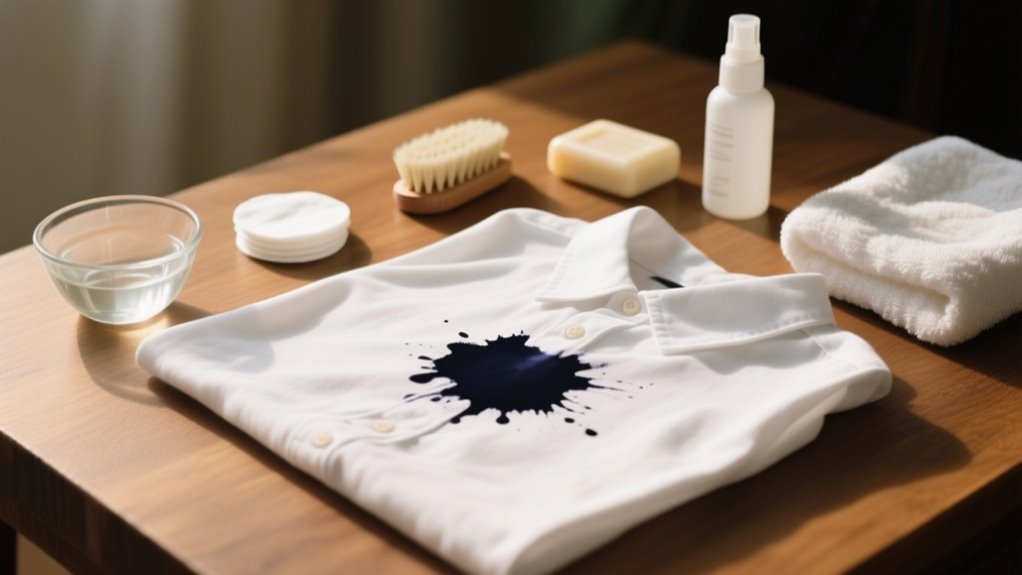
To get ink off fabric in 7 easy steps, start by blotting excess ink with a dry towel.
Then dilute the stain using cold water.
Test rubbing alcohol or hand sanitizer on a hidden spot before applying it to the stain.
Gently rub detergent into the ink, wash following the care label, and air dry to check results.
If the stain lingers, repeat treatment or try fabric-specific methods.
Keep going to uncover tips for stubborn stains and delicate fabrics.
Blot and Dilute Fresh Ink Quickly
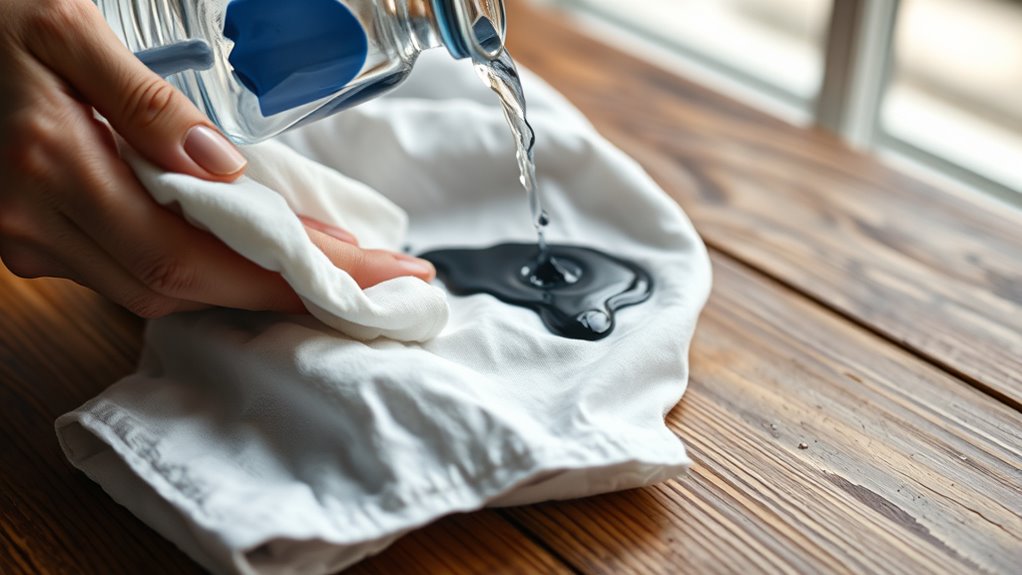
If you catch the ink stain fresh, quickly blot it with a clean paper towel or cloth to absorb excess ink without spreading it. Start by placing a dry paper towel under the fabric to protect surfaces from transferring ink.
Next, dampen another cloth with cold water and gently blot the stain to dilute the fresh ink. This helps weaken the ink’s hold on the fabric fibers, making it easier to lift. Avoid rubbing, as that can push the ink deeper.
Alternate between blotting with the damp cloth to dilute and a dry cloth to absorb the ink you’ve loosened. Acting fast is crucial; the sooner you dilute and blot, the better your chances of removing the stain completely.
Try Solvents Safely Before Treating Your Fabric
After you’ve blotted and diluted the fresh ink, you may need to move on to solvents to tackle stubborn stains. But before applying any solvent, always test solvents on a hidden fabric area. This helps prevent fabric damage and guarantees colorfastness so your fabric won’t lose its original hue.
Use a cotton swab or cloth to apply a small amount and wait a few minutes to watch for any chemical reaction or color change. Remember, solvent safety is vital. Work in a well-ventilated space and avoid harsh chemicals on delicate fabrics to prevent irreversible harm.
| Step | Action | Purpose |
|---|---|---|
| 1 | Choose solvent | Select appropriate cleaner |
| 2 | Apply small amount | Minimize exposure |
| 3 | Wait 3-5 minutes | Observe fabric reaction |
| 4 | Check colorfastness | Guarantee no fading or discoloration |
| 5 | Proceed or choose another | Decide next step safely |
Apply Rubbing Alcohol or Hand Sanitizer
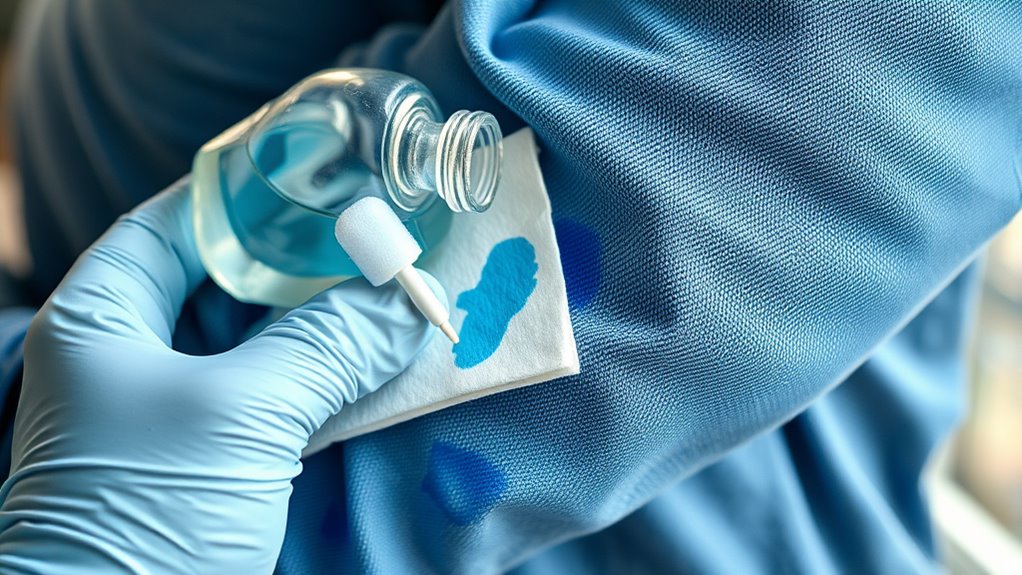
You’ll want to pick either rubbing alcohol or hand sanitizer depending on what you’ve got handy and the type of fabric you’re dealing with. Go ahead and apply it right onto the stain, making sure to soak the area but try not to spread the ink around. Just a quick tip before you get started—always test the product on a hidden spot first to make sure it won’t damage or discolor your fabric.
Choosing The Right Product
When tackling ink stains, choosing between rubbing alcohol and hand sanitizer depends on your fabric type and the stain’s severity. Both contain isopropyl alcohol, a powerful stain remover, but their effects can vary.
To pick the right product, remember to test rubbing alcohol or hand sanitizer on an inconspicuous area of the fabric first. This helps check for discoloration or damage.
Use rubbing alcohol for tougher stains since it’s more concentrated. For milder fabrics or lighter stains, opt for hand sanitizer with at least 70% alcohol.
Just avoid hand sanitizers with added moisturizers or fragrances because they can reduce effectiveness.
Proper Application Technique
Selecting the right product is just the start; how you apply it makes all the difference in removing ink from fabric. Begin by testing the rubbing alcohol or hand sanitizer on a hidden spot to ensure it won’t damage or discolor your fabric.
For application, saturate the ink stain thoroughly to keep it moist, which helps break down the pigments. Hold the fabric taut over a container or paper towel to catch ink runoff.
Then, using a clean, white cloth or cotton pad, gently blot the stain with steady pressure. Avoid rubbing to prevent spreading. Reapply the solvent as needed to maintain moisture, continuing the blotting technique until the ink lifts.
This careful application ensures effective ink removal without harming your fabric.
Safety And Testing
How can you protect your fabric while removing ink stains? Prioritizing safety and testing is key when using rubbing alcohol or hand sanitizer. To avoid discoloration or damage, follow these steps:
- Test the alcohol on a hidden fabric area for colorfastness before applying it to the stain.
- Use a small amount on a cotton pad to prevent over-saturating the fabric.
- Wait a few minutes to observe any discoloration or damage before proceeding.
- Avoid applying alcohol on delicate fabrics like silk or suede without professional advice.
Also, guarantee proper ventilation to reduce inhaling fumes and minimize fire risk. By carefully testing and applying alcohol, you protect your fabric’s integrity while effectively tackling ink stains.
Apply Detergent and Gently Work Ink Stain
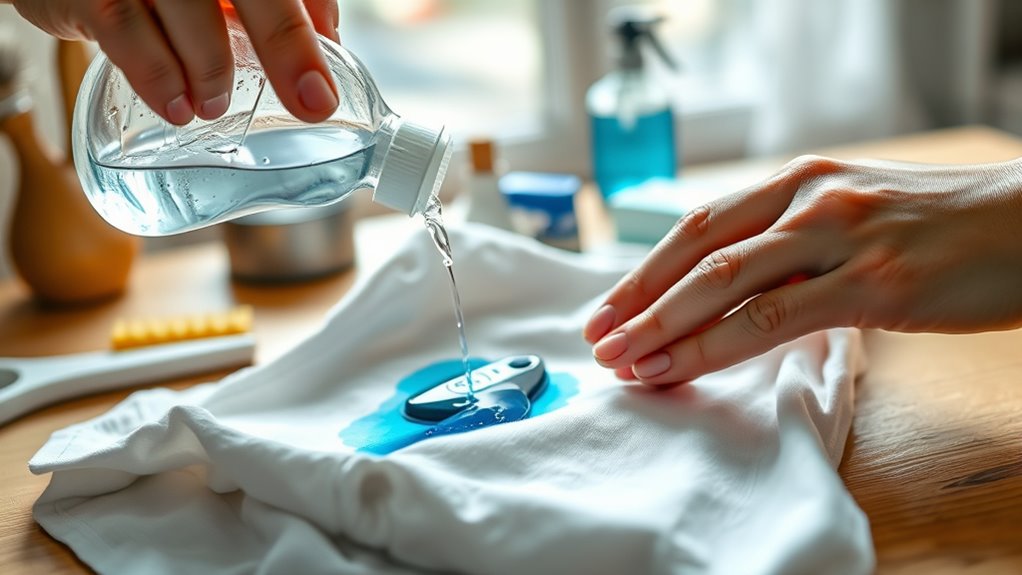
Before rinsing, apply a small amount of liquid detergent directly onto the ink stain and gently rub it in using a soft toothbrush or your fingertips. Make certain the detergent fully covers the ink stain to maximize treatment effectiveness.
Use light, circular motions to gently rub the detergent into the fabric fibers without harming delicate materials. This careful approach helps break up the ink and improves stain removal.
Let the detergent sit on the fabric for several minutes to loosen the ink particles. If the stain is stubborn, reapply detergent and gently rub again to guarantee even coverage and thorough treatment.
This step is essential for penetrating the fabric and preparing the ink stain for rinsing. By treating the stain gently but thoroughly with detergent, you increase your chances of successfully removing ink without damaging your fabric.
Wash Ink-Stained Fabric According to Care Labels
When you’re ready to wash your ink-stained fabric, always check the care label to choose the right water temperature and washing method. This step guarantees effective stain removal without damaging your garment. Follow these guidelines:
- Set your washing machine to the hottest water temperature safe for the fabric, as indicated on the care label. Hot water helps break down ink stains more effectively.
- Use the detergent type recommended on the care label. If allowed, add a stain remover or apply pre-treatment to target the ink before washing.
- For delicate fabrics like silk or wool, avoid bleach unless the care label explicitly permits it, since bleach can harm these materials.
- After washing, inspect the fabric while it’s still wet to see if the stain is gone before drying.
Following these steps based on the care label helps you safely and efficiently remove ink stains from your fabric.
Air Dry and Check If Ink Stain Is Removed
After you’ve treated the ink stain, go ahead and let your fabric air dry. This helps prevent any leftover ink from setting in with heat. Once it’s dry, take a good look at the area to see if the stain is completely gone. If you still notice some ink, just repeat the cleaning steps before putting it in the dryer.
Importance Of Air Drying
Since heat can permanently set ink stains, you’ll want to let your fabric air dry to see if the stain is truly gone. Air drying is essential because it prevents heat from setting any residual ink or cleaning agents into the fabric. This method helps you carefully inspect the fabric to judge the success of stain removal without risking damage.
Here’s why air drying matters:
- It avoids heat, which can make ink stains permanent.
- It allows residual ink to fade naturally without fixing it.
- It gives you a chance to inspect the fabric thoroughly.
- It’s safer for delicate or untreated fabrics prone to heat damage.
Inspecting Stain Removal
How do you know if the ink stain is truly gone? After you treat the fabric, always air dry it to prevent heat from setting any residual ink.
Once dry, inspect the stain carefully in good lighting. Residual ink often becomes more visible after air drying, so it’s important to thoroughly check the stain before moving on.
Avoid using a dryer until you’re sure the stain is completely removed; heat can make the ink permanent. If you spot any remaining ink, don’t hesitate to repeat the stain removal process.
Air drying first helps you assess the stain accurately and decide if additional treatment is needed. This careful inspection guarantees you get the best results without damaging your fabric.
Repeat Treatment or Use Fabric-Specific Methods
If the ink stain doesn’t come out right away, repeating the treatment can boost your chances of removing it completely. Stubborn ink often needs multiple attempts to lift fully. You’ll want to follow these steps carefully:
- Blot with paper towels to absorb excess ink without spreading it.
- Rinse with cold water to flush out loosened ink particles.
- Apply the appropriate solvent again. Rubbing alcohol or hand sanitizer works well for many fabrics.
- Repeat this process until the stain remains faint or disappears.
For fabric-specific methods, tailor your approach: soak linen in a vinegar solution or stretch spandex tightly over a jar to treat ink more effectively. Delicate fabrics like silk or velvet require gentle blotting and might need professional cleaning rather than repeat treatment. Always check care labels and test any method on a hidden area first to avoid damage. With patience and fabric-specific methods, you can tackle even tough ink stains safely and thoroughly.
Frequently Asked Questions
Can Ink Stains Be Removed From Delicate Fabrics Like Silk?
Yes, you can remove ink stains from delicate fabric like silk, but you need to prioritize fabric safety. Start with gentle cleaning by blotting the silk stain using cold water and a white cloth to prevent spreading.
Always test any ink removal method on a small area first to avoid damage. Quick action aids stain prevention, but if the ink persists, consider professional help to protect your silk’s texture and color.
How Long Should I Wait Before Treating an Old Ink Stain?
Don’t wait longer just because the stain seems stubborn. Treat old ink stains as soon as you can, even if it’s days later. The stain age, dry time, and ink oxidation toughen the stain hardness, making removal harder the longer you delay treatment.
Fabric absorption means the ink sinks deeper over time. So, minimize treatment delay to improve results. If you must wait, pre-soak the fabric to soften the stain before tackling it.
Are There Natural Alternatives to Chemical Solvents for Ink Removal?
Yes, you can use natural remedies for ink removal that avoid harsh chemicals. Try homemade solutions like a paste of vinegar and baking soda or lemon juice with salt for organic stain removal.
Plant-based solvents such as rubbing alcohol made from ethanol offer eco friendly techniques. Botanical alternatives like natural enzymes from pineapple or papaya also help break down ink.
These options provide effective, gentle, and environmentally conscious ways to treat ink stains.
Will Ink Removal Methods Damage Colored or Patterned Fabrics?
Yes, ink removal methods can damage colored or patterned fabrics if you’re not careful. Aggressive treatments might cause fabric dye to fade or color bleeding, ruining pattern preservation.
You should test solvents first to avoid stain masking or damaging fabric texture. Since ink penetration varies, gentle blotting helps prevent deeper damage.
Always handle fabrics delicately to keep colors vibrant and patterns intact while effectively removing ink stains.
How Can I Prevent Ink Stains From Setting Permanently?
Did you know 90% of ink stains become permanent if not treated within minutes? For ink stain prevention, act fast by rinsing with cold water and using fabric treatment tips like applying rubbing alcohol.
Incorporate stain resistance methods and stain barrier techniques in your fabric care routines to safeguard your clothes. Investing in ink proof fabrics also helps minimize damage.
These steps ensure your fabrics stay fresh and stain-free longer.
Conclusion
Getting ink off fabric can feel like chasing a shadow. It’s tricky but not impossible. Just like a marathon runner pacing themselves, you’ll need patience and persistence with each step.
Remember, a study shows 90% of ink stains respond well to timely treatment. So, don’t rush; follow each step carefully. You’ll soon see your fabric looking fresh again.
This proves that even stubborn stains can be beaten with the right approach and a little determination.
Leave a Reply