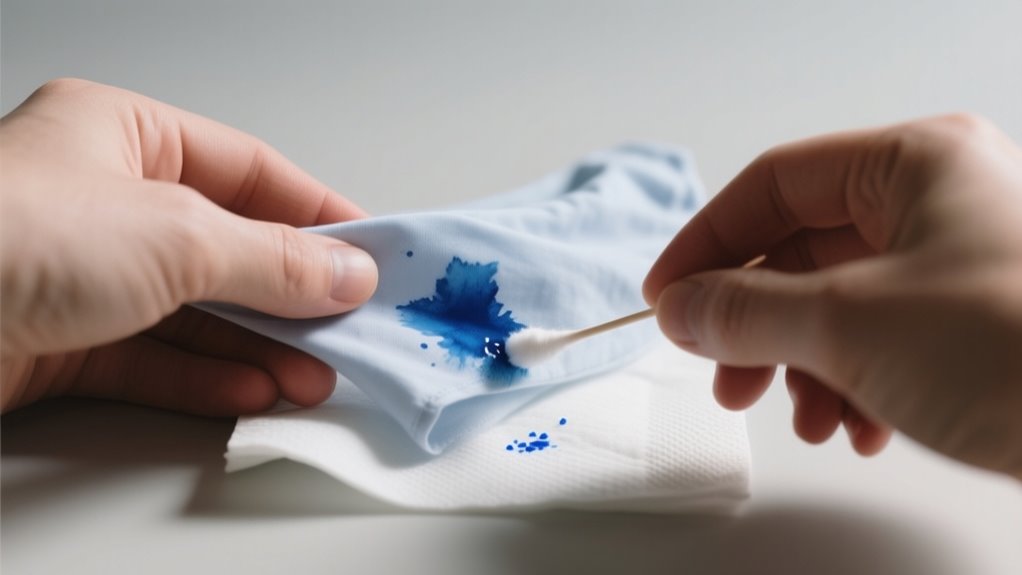
To remove dried ink from clothes quickly, act fast and blot excess ink with an absorbent material like salt.
Test rubbing alcohol or hand sanitizer on a hidden spot first to avoid damage.
Dab the stain gently with your chosen cleaner, let it sit for a few minutes, then rinse with cold water.
Avoid rubbing or heat to prevent setting the stain.
If you want more tips and safe methods, you’ll find plenty of helpful solutions to try next.
Why Acting Fast Helps Remove Ink Stains
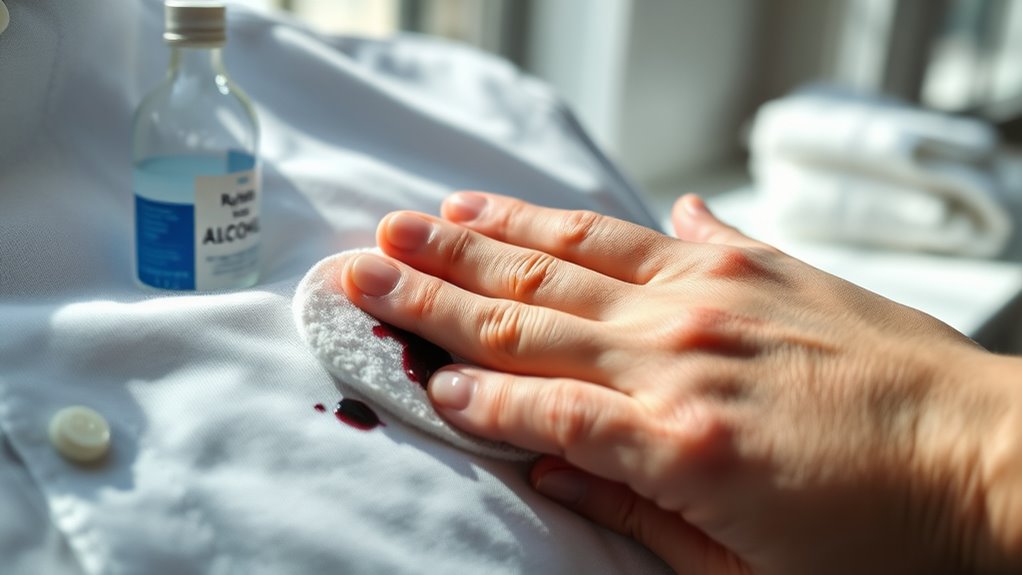
Why should you act fast when dealing with ink stains? Because the quicker you respond, the easier it is to remove ink stains before they settle deep into the fabric fibers.
When ink dries, it bonds tightly and becomes much harder to eliminate. Acting immediately lets you prevent this by using absorbent materials like salt or blotting to soak up excess ink right away, reducing the stain’s intensity.
How to Test Fabric Before Treating Ink Stains
Before you treat an ink stain, you should always test your chosen cleaning method on a hidden area of the fabric. This fabric test helps guarantee the stain removal solution won’t damage or discolor your clothing.
Apply a small amount of the cleaner to an inconspicuous spot using a gentle cloth or cotton swab. Wait at least five minutes to check for any fading, bleeding, or fabric damage.
If the original color stays intact, you’re good to proceed with treating the visible stain. However, if you notice any color change or weakening of the fabric, avoid using that method on the ink spot.
Performing this fabric test before applying solvents or chemicals prevents irreversible harm and keeps your clothes looking their best. Taking this simple precaution saves time and protects your garment during the stain removal process.
How to Remove Dried Ink With Rubbing Alcohol
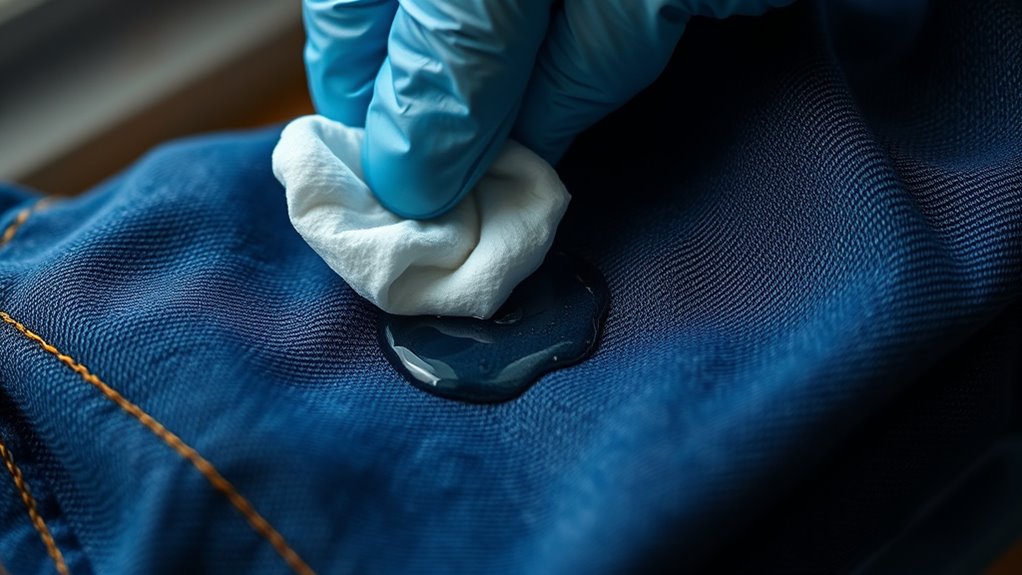
Wondering how to tackle dried ink stains quickly? Rubbing alcohol is a powerful solution that breaks down ink fibers, making removal easier. Here’s how to use it effectively:
Moisten a cotton ball or cloth with rubbing alcohol and dab it onto the dried ink stain. Let the alcohol sit for 5-10 minutes to loosen the ink.
Then, gently blot or scrub the area with a clean cloth or paper towel to lift the ink as it breaks down. Rinse the treated spot with cold water to wash away residual alcohol and ink particles.
Finish by running the fabric through a regular wash cycle to remove any remaining traces. Using rubbing alcohol this way targets ink stains quickly and efficiently without damaging your clothes.
Just remember to always test on a small, hidden patch first to ensure fabric safety.
How Hand Sanitizer Can Remove Ink Stains From Clothes
You can use hand sanitizer to get rid of ink stains because the alcohol in it helps break down the ink pigments. Just apply a good amount right onto the stain and gently scrub it to lift the ink from the fabric.
After that, make sure to wash the clothing again to remove any leftover ink and sanitizer. It’s a pretty handy trick when you’re in a pinch!
Hand Sanitizer Effectiveness
How does hand sanitizer tackle stubborn ink stains on your clothes? The key lies in the alcohol content of hand sanitizer, which breaks down the chemical bonds in ink stains, making removal easier. When you apply hand sanitizer, it penetrates the fabric and lifts the ink from the fibers.
Here’s why hand sanitizer is effective for ink stains:
- Contains alcohol that dissolves ink particles
- Loosens dried ink from fabric fibers
- Enhances stain removal with gentle rubbing
- May require multiple applications for tough stains
- Leaves no residue when washed afterward
Using hand sanitizer can considerably speed up ink stain removal, making it a handy solution when you need quick, effective results.
Application Techniques
Although dried ink stains can be stubborn, applying hand sanitizer correctly can make removal much easier. Start by applying a generous amount of hand sanitizer directly onto the ink stain, making sure the area is fully saturated.
Next, gently blot or rub the hand sanitizer into the fabric using your fingers or a soft cloth; this helps break down the ink. Let the hand sanitizer sit for 5 to 10 minutes to loosen the ink pigments effectively.
After waiting, use a clean cloth or paper towel to blot the stain, lifting the ink and sanitizer mixture from the fabric. Following these steps guarantees you maximize the hand sanitizer’s effectiveness in breaking down dried ink before proceeding with further treatment.
Post-Treatment Washing
Once the hand sanitizer has had time to break down the ink stain, you’ll want to rewash the garment in cold water to remove any remaining residue. This post-treatment washing step is essential to fully eliminate both the ink and sanitizer from the fabric.
To maximize your stain remover’s effectiveness, follow these tips:
- Use cold water to prevent setting the stain further.
- Apply a mild detergent suited for your fabric type.
- Avoid hot water until the stain is completely gone.
- Repeat the sanitizer application and washing if the stain persists.
- Air dry the garment to guarantee the stain is fully removed before using heat.
Using Household Products Like Dish Soap, Vinegar, and Cornstarch
You can tackle dried ink stains using common household products like dish soap, vinegar, and cornstarch. First, try applying some dish soap to break down the ink. If the stain is being stubborn, go ahead and make a paste using vinegar and cornstarch to help lift it. Just keep in mind, these methods work best on light fabrics and might take a few tries to get those tough marks out.
Dish Soap Application Tips
When tackling dried ink stains, start by dampening the area with cold water to loosen the ink particles. Next, apply dish soap directly onto the ink stain. Here are some dish soap application tips to maximize your stain removal success:
Gently rub a small amount of dish soap into the ink stain with your fingers or a soft cloth. Let the dish soap sit for 5-10 minutes to break down the ink.
Rinse the treated area with cold water after soaking. Repeat the process for stubborn stains, keeping the fabric moist throughout.
Finish by washing the garment in a regular cycle to remove any leftover residue. Following these steps helps ensure the dish soap effectively lifts the ink stain without damaging your clothes.
Vinegar And Cornstarch Paste
After using dish soap to treat dried ink stains, combining vinegar and cornstarch offers a powerful natural alternative for lifting ink from fabric. Mix equal parts vinegar and cornstarch to create a thick paste, then apply it directly onto the dried ink stain.
Let the paste dry completely. As it dries, it breaks down the ink and absorbs it from the fabric fibers. Once dry, gently brush or scrape off the paste to lift the ink particles away.
Rinse the treated area with cold water to remove residue. If the stain remains, just repeat the process. This method works best on light-colored cotton fabrics and water-based ink stains, making vinegar and cornstarch an effective, household-friendly solution for quick ink removal.
Effectiveness And Limitations
Although household products like dish soap, vinegar, and cornstarch can help fade dried ink stains, their effectiveness depends heavily on the type of ink and fabric involved. When you use these household products, keep in mind:
Dish soap usually only slightly fades ink stains and may need several applications. Vinegar and cornstarch paste can lift ink but might create a messy process.
These methods often struggle with set-in or heavily dried ink stains. Results vary widely, so patience is key when applying these household products.
Commercial or solvent-based removers typically outperform household alternatives.
Understanding these limitations helps set realistic expectations. While household products offer a convenient option, they’re best suited for fresh or light ink stains rather than stubborn, fully dried ones.
Using Nail Polish Remover Safely to Treat Ink Stains
How exactly can you use nail polish remover to tackle dried ink stains without ruining your clothes? Start by choosing an acetone-based nail polish remover with at least 60-70% acetone, as this concentration effectively breaks down ink stains.
Before applying, test the remover on a hidden fabric spot to ensure it won’t damage or discolor your garment. Next, dab the nail polish remover directly onto the dried ink stain using a cotton ball or cloth. Gently blot the stain, avoiding rubbing because that can spread the ink.
Test remover on a hidden spot, then gently blot the ink stain without rubbing to prevent spreading.
Let the remover sit for a few minutes to dissolve the ink thoroughly. Afterward, rinse the area with cold water to flush out loosened ink and chemicals. If the stain persists, repeat the process carefully.
Finally, launder the item as usual to remove any remaining residue. By following these steps, you can use nail polish remover safely and effectively to treat ink stains without harming your clothes.
Avoiding Common Mistakes That Make Ink Stains Worse
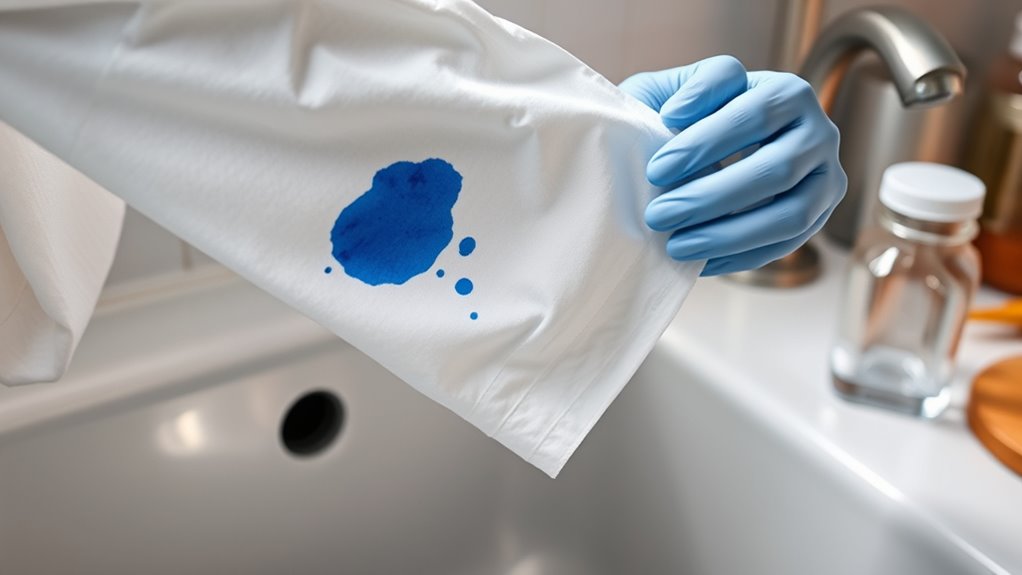
Don’t rub the ink stain because it can actually push the ink deeper into the fabric. Also, steer clear of heat sources like hot water or dryers since they might set the stain for good. And before you try any cleaning solution, make sure to test it on a hidden spot first to avoid any damage or discoloration.
Avoid Rubbing Ink
If you rub or scrub a dried ink stain, you’ll only push the ink deeper into the fabric fibers, making it much harder to remove. Avoid rubbing the stain vigorously to prevent spreading the ink or damaging your clothes. Instead, handle the stain gently to improve your chances of success. Keep these points in mind:
Don’t apply excessive force; it can fray or tear delicate fabrics. Avoid rubbing the stain before using a solvent to prevent embedding ink further. Skip abrasive tools or brushes that weaken fabric fibers.
Gently blot or dab the stain with a cloth soaked in solvent. Always use a light touch to protect your clothing while treating the stain.
This careful approach helps you remove ink without making the stain worse.
Skip Heat Sources
While it might be tempting to speed up drying with heat, applying warmth to ink stains will only set them deeper into your clothes. Heat sources like dryers, irons, or hot water cause ink to bond permanently with fabric fibers, making removal much harder.
Avoid using hot water when treating ink stains because it can make the ink settle instead of lifting it. Don’t dry or iron clothes until you’ve fully removed the stain; heat locks the ink in place, preventing solvents from working effectively.
Instead, keep the fabric cool and treat the stain with appropriate cleaning agents first. Skipping heat sources until the ink stain is gone gives you the best chance of completely removing the mark without making it permanent.
Use Proper Testing
Before applying any stain removal method, you should always test it on a small, hidden area of your fabric. This guarantees it won’t cause damage or discoloration. Proper testing helps avoid common mistakes that worsen ink stains.
When you test, keep these points in mind:
- Choose inconspicuous spots like inside seams or hem lines.
- Apply the treatment and wait at least five minutes to check for color or texture changes.
- Avoid hot water or heat until you confirm the stain is removed.
- Use caution with strong solvents such as alcohol or bleach.
- Document how the fabric reacts to decide if the method is safe for the entire stain.
How to Treat Set-In Ink Stains With Branch Basics Concentrate
When you encounter set-in ink stains, applying Branch Basics Concentrate directly can effectively break down the dried ink. Start by blotting the stain with a damp cloth to loosen the ink without spreading it further.
Next, apply Branch Basics Concentrate to the affected area, making sure it’s fully covered. Let it sit for 1 to 10 minutes so the product can penetrate and break down the ink stains thoroughly.
Afterward, gently agitate the fabric with your fingers or a soft brush to help lift the ink from the fibers. Finally, rinse the area thoroughly with water to remove the loosened ink and cleaning solution.
Using Branch Basics Concentrate this way targets tough, set-in ink stains without harsh chemicals. Remember, this process prepares the fabric for a regular wash, ensuring the ink stains don’t linger.
This method saves your clothes and helps you tackle stubborn ink stains quickly and effectively.
Tips for Washing and Drying Clothes After Ink Stain Removal
After treating ink stains with Branch Basics Concentrate, you’ll want to handle washing and drying carefully to prevent the stain from setting permanently. Before you wash and dry your clothes, make sure the ink stain is fully removed. Heat can set any leftover ink, making it impossible to remove later.
Keep these tips in mind when you wash and dry clothes after ink stain removal:
- Inspect the fabric in good lighting to confirm the stain is gone before drying.
- Use gentle wash cycles for delicate fabrics and stronger cycles for sturdy ones.
- Avoid high heat in the dryer; opt for air drying or a low-heat setting.
- If the stain persists, repeat the ink stain removal process before drying.
- Treat the garment promptly to increase your chances of complete stain removal.
Following these steps will help keep your clothes ink-free and looking their best after treatment.
What to Do When Ink Stains Don’t Come Out
Even if initial attempts don’t fully remove ink stains, you shouldn’t give up. Reapplying solvents like rubbing alcohol or specialized removers often improves results. To remove pen ink stubbornly stuck on your clothes, try combining treatments such as alcohol followed by a commercial ink remover.
Remember, avoid heat sources like dryers, which can set ink stains permanently. If ink stains from clothes still won’t budge, consider professional cleaning or stronger solvents like ethanol. But always test on a hidden area first.
Here’s a quick guide on what to do next:
| Step | Action |
|---|---|
| 1 | Reapply rubbing alcohol or ink remover |
| 2 | Combine treatments for tough stains |
| 3 | Avoid heat to prevent setting the stain |
| 4 | Seek professional help if needed |
Patience and repeated treatments are key to successfully remove pen ink and restore your clothes.
Frequently Asked Questions
Can Ink Stains Be Removed From Delicate Fabrics Like Silk or Wool?
Yes, you can remove ink stains from delicate fabrics like silk or wool, but you need to be careful. Since fabric dyeing is sensitive, avoid harsh treatments. Different ink pen types react differently, so start with a patch test using 70% isopropyl alcohol or a specialized cleaner.
Don’t scrub; gently blot instead. If you’re unsure, professional cleaning is your safest bet to protect your delicate fabric and maintain its color.
Are There Any Natural Remedies to Remove Ink Stains Safely?
You don’t need a magic potion from Merlin’s time to tackle ink stains. Natural remedies like lemon juice with salt or vinegar mixed with cornstarch offer safe stain removal without harsh chemicals. They gently break down ink while preserving your fabric’s integrity.
After applying, sun-drying can boost fading naturally. While you might need to repeat treatments for stubborn stains, these methods keep your clothes safe and eco-friendly.
How Long Should I Wait Before Re-Washing Ink-Stained Clothes?
You should wait at least 15-30 minutes before re-washing ink-stained clothes to let stain removal techniques work effectively. For tougher stains, waiting several hours or overnight is best to prevent setting the ink further.
Always follow fabric safety tips by checking the stain’s progress before washing again. Avoid rushing, as quick re-washing can make removal harder. Patience ensures the stain loosens properly without damaging your clothes.
Can Ink Stains Cause Permanent Damage to Certain Fabric Types?
Ink stains can be like tiny villains, threatening to destroy your fabric’s soul forever. Yes, certain fabrics have different durability, so ink can cause permanent damage, especially to delicate ones like silk or wool.
You’ll want to watch out for colorfastness concerns, as harsh treatments might fade or weaken the material. So, you’ve got to treat stains carefully to protect your clothes and keep them looking great.
Is It Safe to Use Hair Spray to Remove Ink Stains?
You shouldn’t rely on hair spray safety when tackling ink stains. Using hair spray to remove ink stains carries risks, including making the stain worse or damaging your fabric.
It can cause discoloration or weaken delicate materials, so it’s a risky choice. Instead, consider safer, proven methods like rubbing alcohol or specialized stain removers to protect your clothes and avoid permanent damage.
Conclusion
When ink stains try to steal your clothes’ spotlight, don’t let them win the show. Act fast, test gently, and use your trusty household heroes: rubbing alcohol, hand sanitizer, or a vinegar-cornstarch combo to rewrite the story.
Remember, patience and the right moves turn a stubborn stain into just a distant memory. If all else fails, treat it like a plot twist with Branch Basics, then wash and dry with care. You’ve got this. Stains don’t stand a chance.
Leave a Reply