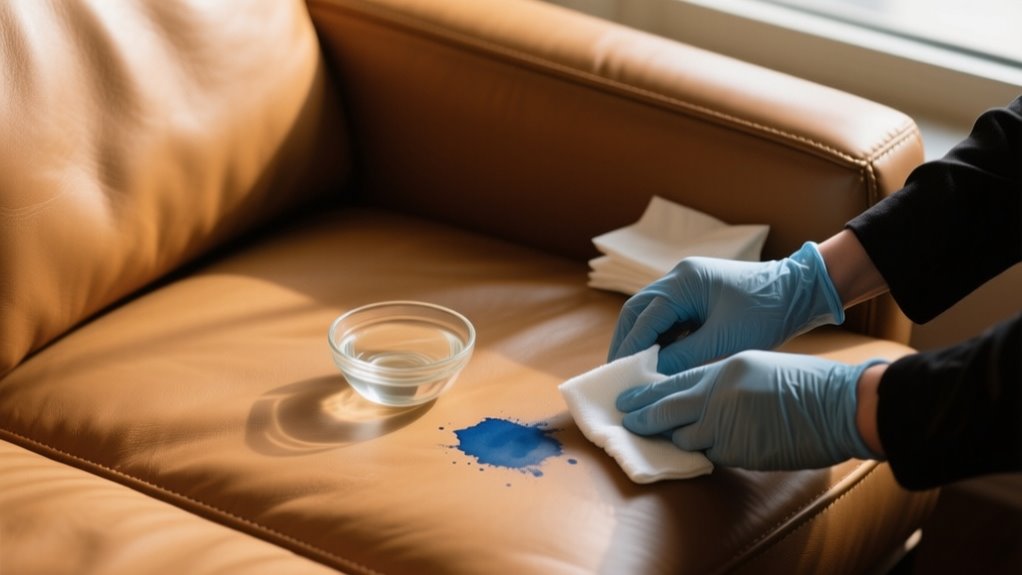
Act quickly by gently blotting the fresh ink with a soft cloth to avoid spreading. Test any cleaning method on a hidden spot first.
Start with mild soap and warm water, dabbing the stain lightly from edges inward.
For tougher marks, carefully use rubbing alcohol or diluted vinegar sparingly.
You can also try hairspray or acetone-free nail polish remover after testing.
Finish by conditioning the leather to restore moisture and flexibility.
Keep following these tips to discover more effective care strategies.
Act Quickly to Blot Ink From Your Leather Couch
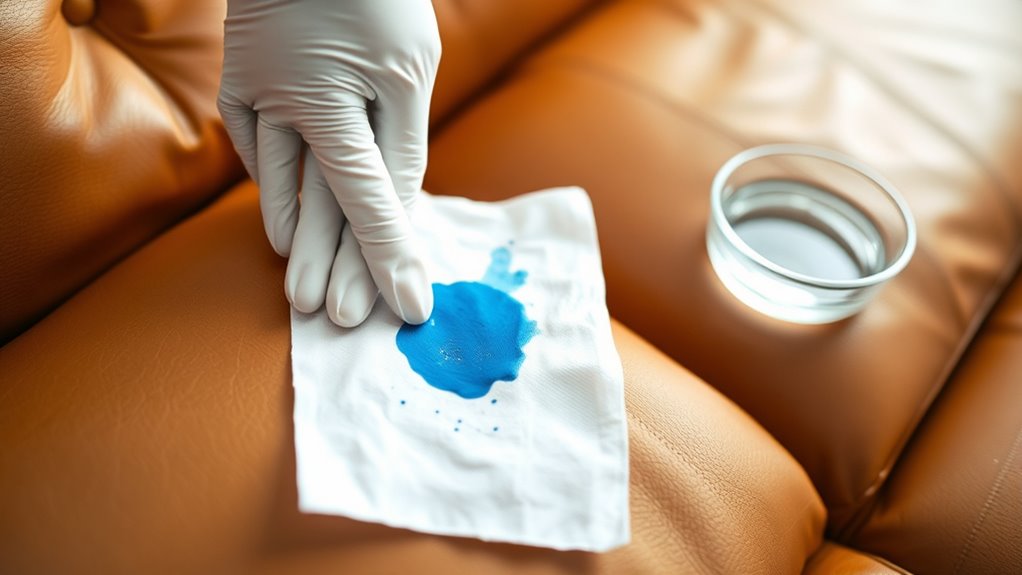
How quickly you respond to an ink stain on your leather couch can make all the difference. The moment you notice the ink stain, grab a dry, soft cloth or paper towel and gently blot the area. Quick action is crucial because fresh ink is far easier to remove than dried marks.
Avoid rubbing the stain. You might be tempted to scrub, but this only spreads the ink and pushes it deeper into the leather’s pores. Instead, use a gentle blotting motion, lifting the ink without pressing hard, which could damage the leather surface.
Test Cleaning Methods Safely on a Hidden Spot
After you’ve gently blotted the ink stain, the next step is to test your cleaning method on a hidden spot of the leather couch. Choose a small, inconspicuous area like the underside or a corner to avoid visible damage.
Apply only a minimal amount of your cleaning solution to this spot. This careful test lets you observe how the leather reacts without risking the main area. Wait at least 10 to 15 minutes to check for any adverse reaction such as discoloration or texture changes.
If you notice any damage or color transfer, avoid using that cleaning method on the stain. Record your findings to track which solutions are safe for your leather. Testing guarantees you protect your couch’s finish and avoid worsening the ink stain.
Use Mild Soap and Water for Gentle Ink Removal
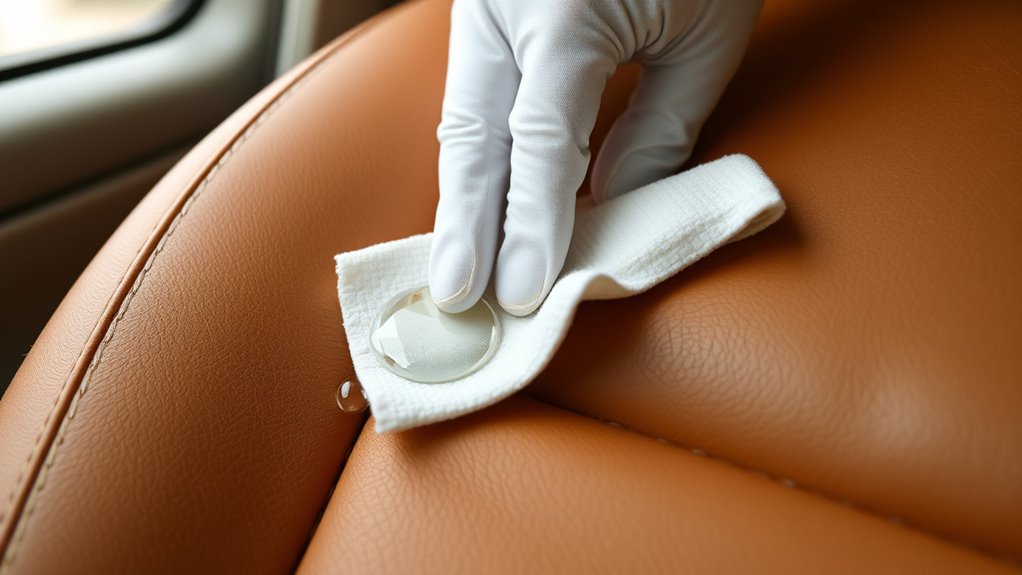
Since ink stains can be stubborn, you’ll want to start with a mild cleaning solution that won’t damage your leather couch. Mix a few drops of mild soap with warm water to create a gentle cleaning mixture.
Dampen a soft cloth with this soapy water and gently dab the ink stains, beginning at the edges and working toward the center. Avoid rubbing, as this can spread the stain or damage the leather surface.
After you’ve treated the area, use a clean, damp cloth with just water to rinse away any soap residue. Finally, pat the leather dry with a soft towel to prevent moisture from soaking in and causing damage.
Before you tackle visible stains, test this mild soap and water method on a hidden spot to verify it won’t discolor or harm your leather. This careful, gentle cleaning approach helps preserve your couch while effectively reducing ink stains.
Carefully Use Rubbing Alcohol or Vinegar for Tough Ink
For tougher ink stains, try using rubbing alcohol sparingly. Just dab the area gently with a soft cloth—avoid rubbing too hard.
You can also mix vinegar with water in equal parts to make a mild solution that lifts ink safely.
Just remember to test these methods on a hidden spot first, so you don’t accidentally cause any damage.
Alcohol Application Tips
When tough ink stains won’t budge with gentle methods, you can carefully use rubbing alcohol or vinegar to tackle the problem. Always test on a hidden area first to prevent damage or discoloration.
Use a cotton swab or soft cloth dampened with rubbing alcohol or dilute vinegar for a gentle dab. Apply sparingly to avoid drying out the leather. Let it sit for 1-2 minutes before blotting gently.
Afterward, use a leather conditioner to restore moisture and maintain flexibility, ensuring proper leather care.
| Step | Action | Tip |
|---|---|---|
| 1 | Test on hidden area | Prevent damage or discoloration |
| 2 | Apply rubbing alcohol | Use gentle dab, avoid soaking |
| 3 | Wait 1-2 minutes | Loosen ink without harsh rubbing |
| 4 | Blot ink gently | Don’t scrub to prevent damage |
| 5 | Condition leather | Restore moisture and flexibility |
Vinegar Dilution Guide
If rubbing alcohol feels too strong or you want a gentler alternative, diluted white vinegar can effectively tackle stubborn ink stains. For safe leather stain removal, prepare a vinegar solution by mixing equal parts white vinegar and water. Use a soft, damp cloth to gently dab the ink stains without soaking the leather.
Follow these steps:
- Test the vinegar solution on a hidden area to check for discoloration or damage.
- Lightly apply the damp cloth with vinegar solution to the ink stains, lifting the ink carefully.
- Blot the area with a clean, damp cloth to remove residue and odor.
Finish by applying a leather conditioner to restore moisture and prevent drying or cracking. This method balances effectiveness with leather care.
Try Hairspray or Acetone-Free Nail Polish Remover Safely
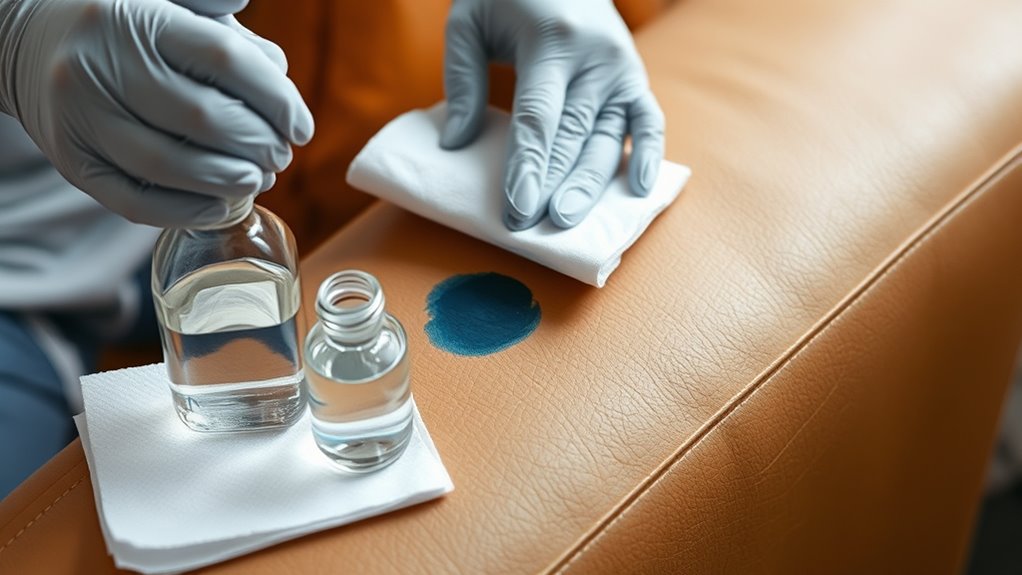
Although hairspray and acetone-free nail polish remover can effectively lift ink stains from your leather couch, you need to use them carefully to avoid damaging the leather. Start by doing a spot test in an inconspicuous area to make sure these products won’t discolor or harm your leather.
When using hairspray, spray it from a distance and apply sparingly to soften the ink stains without saturating the leather. For nail polish remover, choose an acetone-free formula and gently dab the stain with a cotton swab to avoid stripping the finish.
After treating the stains, wipe the area with a damp cloth to remove residue. Finally, condition the leather to restore moisture and prevent drying or cracking. Avoid overusing hairspray or nail polish remover, as too much can damage the leather’s protective coating and cause it to lose its natural suppleness.
Using these products cautiously will help you safely tackle ink stains without harming your couch.
Gently Use a Magic Eraser for Stubborn Ink Stains
Since stubborn ink stains can resist gentle treatments, you can turn to a magic eraser made from melamine foam to lift the marks without harsh chemicals. Before you start, test the magic eraser on a hidden spot of your leather couch to make sure it won’t damage or dull the finish.
For tough ink stains, try a melamine foam magic eraser—just test it first on a hidden spot.
When ready, dampen the eraser with water and gently rub the ink stains, applying light pressure to avoid scratching the leather surface. Afterward, wipe away any residue with a damp cloth and dry the area with a soft towel to prevent water marks.
Follow these steps to use a magic eraser safely:
- Test on an inconspicuous area first to check for damage.
- Lightly rub the ink stains with a damp magic eraser. Don’t overdo it.
- Clean off residue and dry the leather thoroughly.
This method effectively tackles tough ink stains while protecting your leather couch.
Condition Your Leather Couch to Restore Moisture
Once you’ve removed the ink, the next step is to condition your leather couch to bring back the moisture it lost and help prevent any cracking. You’ll want to pick a high-quality conditioner that’s made for your specific type of leather to keep it feeling soft and supple.
Then, just apply it evenly using a soft cloth. Make sure to follow the instructions on the product for the best results. It’s pretty straightforward, and your couch will thank you for the extra care!
Importance Of Conditioning
A well-conditioned leather couch stays soft and supple, preventing dryness and cracking caused by cleaning. Conditioning is essential because it restores the moisture leather loses during cleaning. Without it, your couch can become brittle and prone to damage.
When you condition your leather, you replenish lost moisture, keeping the leather flexible and smooth. You also create a protective barrier that resists stains and future damage. Plus, conditioning preserves the leather’s natural oils, enhancing its longevity and appearance.
Choosing The Right Product
When you choose the right leather conditioner, you guarantee your couch regains its softness and stays protected from drying out or cracking. Pick a leather conditioner specifically designed for furniture to assure it works well with your couch’s leather finish.
Before applying it fully, always do a test patch on a hidden spot to make sure it won’t discolor or damage the leather. After removing ink stains with appropriate leather cleaners, conditioning helps restore moisture and flexibility by penetrating the surface with nourishing oils and emollients.
Regular use every 3 to 6 months supports leather preservation, maintaining its natural luster and extending its lifespan. Choosing the right product is essential to keep your leather couch looking fresh and feeling supple for years to come.
Frequently Asked Questions
Can Ink Stains on Leather Cause Permanent Damage?
Yes, ink stains on leather can cause permanent damage if you don’t act quickly. Proper leather care involves stain prevention and using safe cleaning techniques to avoid making things worse.
Before applying any treatment, you should perform material testing to make sure it’s compatible. If you’re unsure, get a damage assessment from a professional to protect your couch.
Prompt, cautious care is key to preserving your leather’s appearance and longevity.
How Long Does It Take for Ink to Set on Leather?
Oh, ink on leather doesn’t waste time making itself at home. It starts ink penetration in mere minutes! You’ve got roughly 10 to 15 minutes before stain drying time kicks in seriously.
Leather absorption speeds up ink curing, so the longer you wait, the deeper the stain diffusion goes. If you blink, that ink’s already settling, turning your couch into an unwilling canvas faster than you’d expect. Act fast, or the stain’s here to stay!
Are There Any Commercial Products Specifically for Ink Removal on Leather?
Yes, you’ll find commercial products specifically designed for ink stain removal on leather. These leather cleaning solutions use gentle solvents to lift ink without harming your leather’s finish.
Brands focused on leather care offer ink stain removal products that help prevent further damage while effectively treating stains. Always do a patch test before applying any commercial products, ensuring they suit your leather type and support long-term stain prevention.
Can I Use Household Items Like Milk or Lemon Juice on Leather Stains?
You shouldn’t use household remedies like milk or lemon juice on leather stains. These DIY leather care tips often do more harm than good, as milk can cause mold and lemon juice’s acidity may damage the leather’s finish.
For effective stain removal methods, stick to leather cleaning tips that recommend gentle solvents or commercial products. Home stain solutions with balanced pH are safer and preserve your couch’s look without risking damage.
How Often Should I Condition My Leather Couch After Cleaning?
You should condition your leather couch every 3 to 6 months after cleaning to keep it soft and prevent cracking. Waiting at least 24 hours after cleaning makes sure the leather is dry before you apply conditioner.
This routine helps with upholstery maintenance and stain prevention. Regular conditioning also aids in leather repair by restoring moisture lost through use.
Just remember to apply conditioner sparingly to avoid a greasy finish.
Conclusion
Removing ink from your leather couch is like tending a delicate garden. You need patience and gentle care. By acting quickly, testing first, and using mild cleaners before moving to stronger solutions, you protect the beauty of your leather.
Don’t forget to condition afterward to keep it soft and vibrant. With these steps, you’ll nurture your couch back to its best, turning ink stains into just a fleeting memory.
Leave a Reply