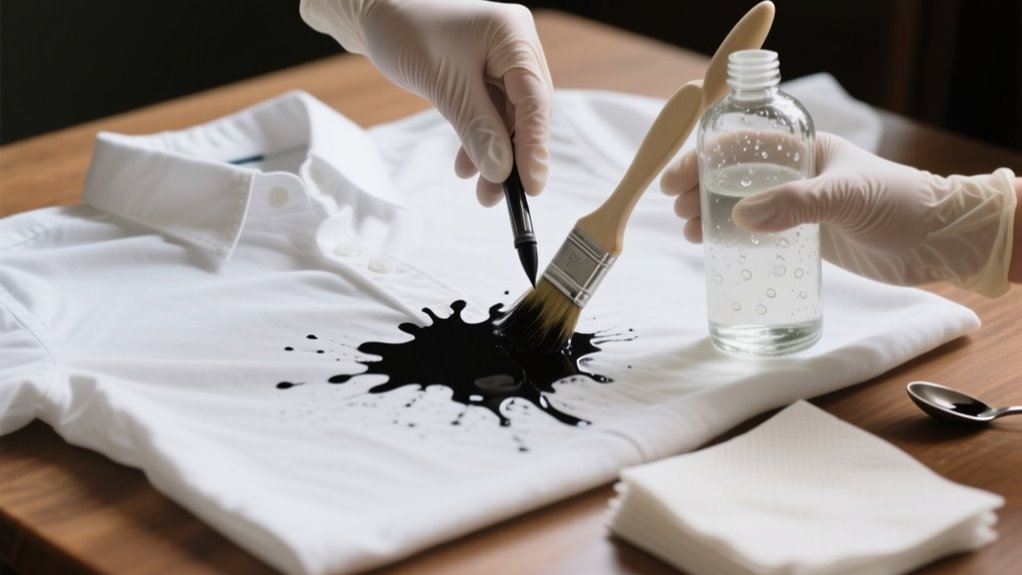
If you want to get ink out of fabric quickly, act fast before the stain sets. Use rubbing alcohol or hand sanitizer to gently blot fresh ink. These alcohol-based products break down ink pigments effectively.
Avoid heat because it can lock the stain in permanently. Always test removers on hidden spots to protect your fabric.
For tougher stains, repeat treatments every 15-30 minutes without drying the fabric. Keep going, and you’ll discover even more effective ink removal tips.
Why Acting Quickly Matters for Ink Stains
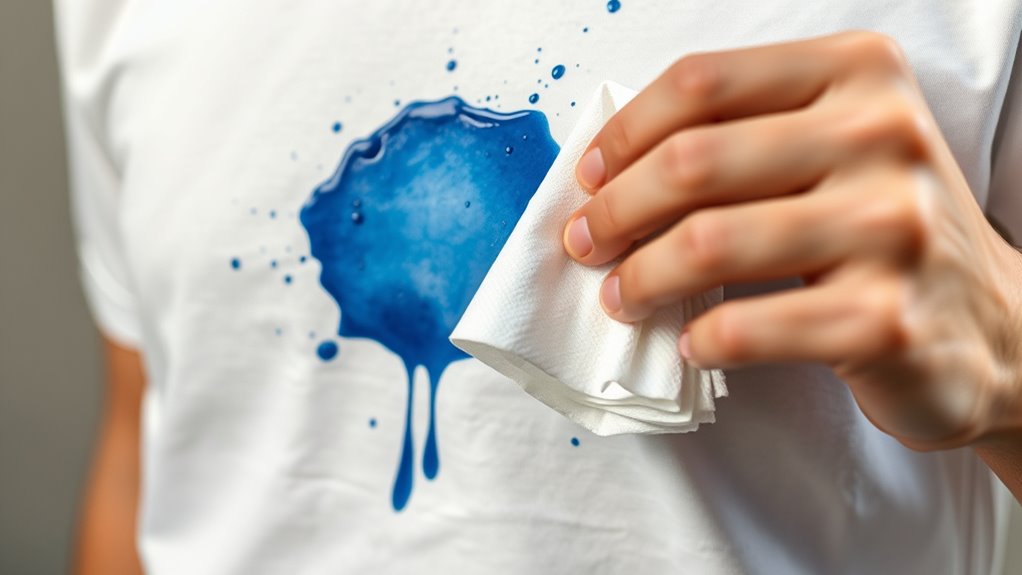
Why does acting quickly matter when dealing with ink stains? Because immediate action makes all the difference in stain removal. When ink first lands on fabric, it hasn’t yet soaked deeply into the fabric fibers, so quick treatment can prevent the stain from setting.
Once ink dries, it becomes much harder to remove. Dried ink resists cleaning agents and binds tightly to the fibers, making stain removal a tougher, longer process. If you wait too long, the ink penetrates more deeply, increasing the risk of permanent discoloration.
How Rubbing Alcohol Lifts Ink Stains Effectively
When you apply rubbing alcohol to an ink stain, it quickly breaks down the ink’s solvents, allowing the pigment to dissolve and lift from the fabric fibers. This makes rubbing alcohol a powerful agent for ink stain removal, especially on fresh stains.
You want to apply it directly onto the ink stain so it can penetrate and loosen the ink effectively. After that, use blotting with a clean cloth to lift the dissolved ink without spreading it further. Remember, blotting is key because it helps you absorb the ink without rubbing it deeper into the fabric.
If the stain is dried, rubbing alcohol might need more time or repeated applications to fully dissolve the ink. Before you start, always test rubbing alcohol on an inconspicuous area of your fabric to avoid discoloration or damage.
Using these steps, you can tackle ink stains quickly and keep your fabric looking clean.
Using Hand Sanitizer to Remove Ink Stains Easily
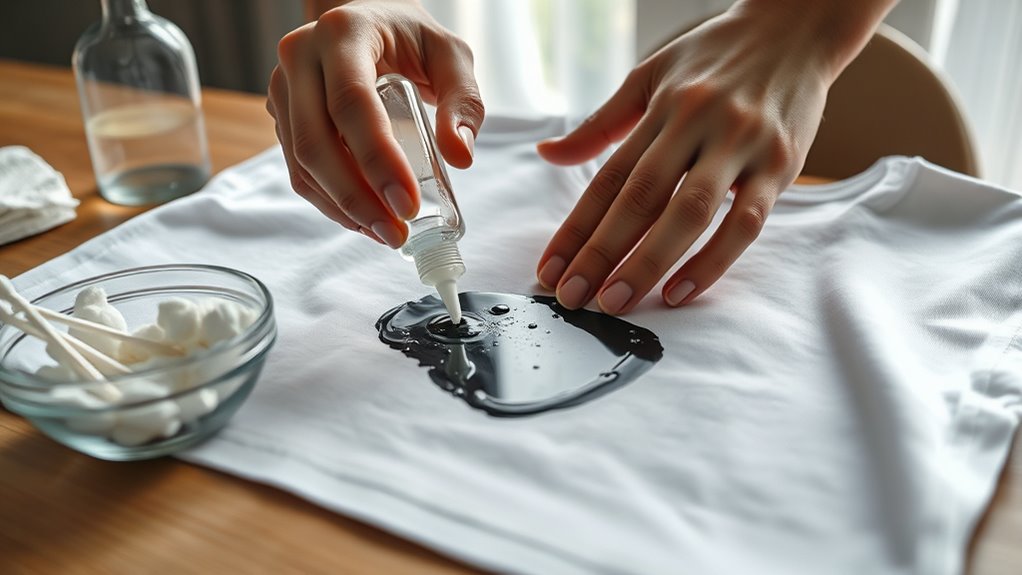
You can use hand sanitizer that contains at least 60% alcohol to break down ink stains quickly and safely on most fabrics. Just apply it generously to the stain.
Then, let it sit for a few minutes. After that, gently scrub the area to help lift the ink without damaging the material.
Once you’ve done that, rewashing the fabric is a good idea. This makes sure all the ink and any leftover sanitizer are completely gone.
Hand Sanitizer Effectiveness
How quickly you act can make all the difference when removing ink stains with hand sanitizer. Hand sanitizer contains alcohol, a powerful agent that dissolves ink pigments, making ink stain removal from fabric more effective.
Applying a generous amount of hand sanitizer directly onto fresh ink stains boosts stain treatment success. You should gently rub the sanitizer into the fabric to help the alcohol penetrate and break down the ink.
After treatment, rewashing the fabric is essential to rinse away loosened ink particles completely. For stubborn or older stains, multiple hand sanitizer applications may be necessary to fully lift the ink.
Using hand sanitizer as an ink stain removal method combines convenience with effective stain treatment, especially when you act promptly on fresh fabric stains.
Application Techniques Explained
Acting quickly with hand sanitizer sets the stage for effective ink stain removal, but knowing the right application techniques makes the process even smoother. Start by applying hand sanitizer directly onto the ink stain to let its alcohol content break down the ink pigments. Make sure to use enough sanitizer to saturate the fabric thoroughly.
After letting it sit for a few minutes, use a white cloth for gentle dabbing. This helps lift the ink without spreading it. Repeat the application and dabbing process as needed, especially for stubborn or dried ink stains.
Consistent, careful dabbing combined with proper hand sanitizer application ensures quicker, more efficient stain removal, saving your fabric from lasting damage.
Fabric Safety Tips
Although hand sanitizer is a powerful tool for removing ink stains, you should always prioritize fabric safety to avoid damage. Before applying, perform a patch test on an inconspicuous area to check colorfastness. This step is crucial, especially for delicate fabrics like silk or wool.
Use a generous amount of hand sanitizer directly on the stain, gently blotting rather than rubbing to protect the fabric fibers. Rinse with cold water before laundering for best stain removal results.
Remember, hand sanitizer works best on fresh ink stains and might be less effective on dried or permanent ink.
| Step | Action | Fabric Safety Note |
|---|---|---|
| 1 | Perform patch test | Check colorfastness |
| 2 | Apply hand sanitizer | Use on fresh stains only |
| 3 | Blot gently | Avoid rubbing delicate fabrics |
| 4 | Rinse with cold water | Prevent fabric damage |
Using White Vinegar and Baking Soda to Remove Ink Stains
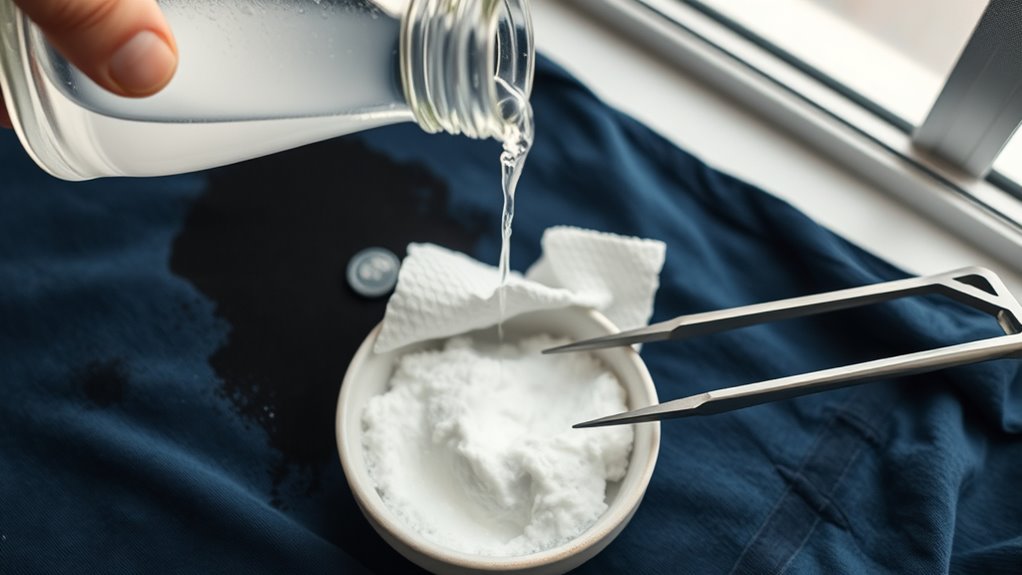
You’ll want to mix white vinegar and baking soda to create a fizzy paste that really targets ink stains. The vinegar works by breaking down the ink pigments, and the baking soda helps lift those pigments right out of the fabric fibers. Just apply the paste directly onto the stain, let it sit for a bit, and then rinse it thoroughly. That’s how you get the best results!
Vinegar’s Role In Ink
How exactly does white vinegar help remove ink stains from fabric? Vinegar acts as a mild acid that breaks down ink pigments, making it easier to remove them from fabric fibers. When you combine vinegar with baking soda, it creates a foaming reaction that lifts ink stains effectively.
This natural method targets especially fresh, water-based inks, neutralizing dye molecules without harming delicate fabric.
Keep these vinegar benefits in mind:
- Mild acid helps break down ink pigments
- Neutralizes water-based and fresh ink stains
- Creates a foaming reaction with baking soda
- Loosens ink for easy washing
- Chemical-free and gentle on fabric
Using vinegar is a smart, natural way to tackle ink stains without harsh chemicals.
Baking Soda Application Tips
When you mix equal parts white vinegar and water, then apply a baking soda paste to the ink stain, you create a powerful yet gentle cleaning solution. The baking soda acts as a mild abrasive that lifts the ink stain, while the vinegar helps break down the pigments.
To use, apply the paste directly onto the fabric’s ink stain and let it sit for 10-15 minutes. Afterward, gently scrub the area with a soft toothbrush or cloth to boost stain removal without damaging the fabric.
Always test this baking soda and vinegar mixture on a hidden spot first to avoid discoloration. This method effectively targets ink stains while being safe for most fabrics when used carefully.
Combining Vinegar And Soda
Although ink stains can be stubborn, combining white vinegar and baking soda creates a foaming action that helps lift fresh ink from fabric fibers. You can make a paste by mixing equal parts vinegar and baking soda. Apply this paste directly onto the ink stains on fabric to penetrate and loosen ink particles quickly.
Keep these tips in mind:
- Best for fresh ink stains before they set deeper
- Apply paste generously over the stain
- Gently blot or rub to lift ink
- Rinse thoroughly with cold water after treatment
- May not fully remove old or stubborn stains
This vinegar and baking soda method offers a quick, easy way to tackle ink stains while they’re still fresh on your fabric.
Safe Ways to Apply Ink Removers Without Damaging Fabric
Since ink removers can sometimes harm fabric, you should always test them on a hidden spot first to check for discoloration or damage. Testing guarantees the remover won’t ruin your garment before you apply it to the visible stain.
When ready, use a cotton swab or soft cloth to gently dab small amounts of ink removers onto the fabric. Avoid rubbing, which can distort or fray fibers. Hold the fabric taut to prevent stretching or tearing, especially when using solvents like rubbing alcohol.
Applying ink removers carefully in this way prevents oversaturation that could weaken the fabric during drying. Always follow the manufacturer’s instructions and steer clear of harsh chemicals on delicate fabrics like silk or velvet. By combining careful testing and gentle application, you can safely remove ink without damaging your fabric.
Quick Ink Removal for Different Fabrics
How can you quickly tackle ink stains on different fabrics without causing damage? To remove ink fast and safely, you need to adjust your approach depending on the fabric type. Here’s how to act quickly and effectively:
Quickly and safely remove ink stains by tailoring your approach to each fabric type for effective results.
Test any ink remover on a hidden fabric spot to avoid damage or color bleeding. Use rubbing alcohol or hand sanitizer to blot fresh ink stains on most fabrics gently.
For delicate fabrics like silk or wool, blot with cold water immediately and seek professional cleaning. Treat dried ink on sturdy fabrics like cotton or denim by soaking them before washing.
Combine immediate blotting, alcohol-based solvents, and thorough washing to speed up ink stain removal.
How to Use OxiClean for Ink Stains
When you want to remove ink stains effectively, using OxiClean can be a reliable choice. Start by mixing OxiClean Versatile Stain Remover with warm water following the package instructions. Soak the ink-stained fabric in this solution for 1 to 6 hours, depending on how stubborn the stain is.
If the ink is dried or especially tough, apply OxiClean Max Force Laundry Stain Remover directly to the stain and let it sit anywhere from 5 minutes up to a week for deeper penetration. After soaking or treating the fabric, run it through the hottest wash cycle safe for the material, as indicated on the care label.
This wash cycle will help lift the ink stain effectively. Before full application, always test OxiClean on an inconspicuous spot to guarantee it won’t damage or discolor your fabric. With these steps, OxiClean offers a practical and efficient method for ink stain removal.
Why You Should Avoid Heat When Treating Ink Stains
Although it might be tempting to speed up drying or ironing, heat actually locks ink stains deeper into fabric fibers, making them much harder to remove. Using heat too soon can permanently set the stain, ruining your chances of effective cleaning.
Avoid heat when treating ink stains; it locks ink deeper, making removal nearly impossible.
Avoid hot water, ironing, or any form of drying that involves heat until the ink is fully treated.
Here’s why you should steer clear of heat when dealing with ink stains:
Heat causes the ink dye to set deeper into fabric fibers. Ironing or drying with heat can fix the stain permanently. Hot water can bond certain inks more strongly to the fabric. Heat also triggers chemical changes in ink, making stain removers less effective.
Air drying or keeping the fabric cool prevents the stain from setting.
How to Repeat Treatments for Tough or Dried Ink Stains
When you’re tackling tough or dried ink stains, it’s a good idea to reapply your treatment every 15 to 30 minutes. This gives the fabric a little time to recover between each try.
Make sure to keep a close eye on how the stain is responding after each application. You don’t want to accidentally damage the fabric by being too harsh.
And here’s a key tip: don’t dry the fabric until the ink is completely gone. Otherwise, you risk setting the stain permanently, which is the last thing you want!
When To Reapply
If the ink stain doesn’t disappear after the first wash, don’t hesitate to reapply the treatment. Effective stain removal often requires repeating the process, especially with tough or dried ink stains. Here’s when and how to reapply:
Wait 15-30 minutes before you reapply to allow the solvent to penetrate deeply. Use fresh solvent each time to avoid spreading dried ink back onto the fabric.
Always re-treat before drying; heat can set the ink permanently. Repeat up to three times for stubborn stains, but test first on a hidden spot.
Avoid applying heat until the stain is completely gone to prevent setting it further.
Monitoring Stain Progress
How can you tell if your ink stain treatment is working? After each wash, take time to carefully inspect the fabric for any remaining ink. Monitoring stain progress is essential, especially with stubborn stains that don’t lift easily.
Always allow the fabric to air dry before checking, as drying in a machine may set any leftover ink. If the stain persists, don’t hesitate to repeat treatments. Applying your solvent or remover multiple times increases your chances of complete removal.
Keep track of how many times you treat the fabric; some tough stains require several rounds over multiple days. By consistently inspecting fabric and repeating treatments as needed, you’ll improve the odds of fully erasing even the most persistent ink spots from your clothing.
When to Seek Professional Cleaning for Ink Removal
Although tackling ink stains yourself can be effective, you should turn to professional cleaning for delicate fabrics like silk or velvet to avoid damage. Professionals use specialized solvents and equipment designed for safe and thorough stain removal, especially on fragile materials.
You’ll want to seek professional cleaning when:
- Ink stains have dried for more than 48 hours, making home removal less effective
- You’re dealing with delicate fabrics such as silk, suede, or velvet
- The ink is from permanent markers or resin-based sources requiring specialized solvents
- Large or persistent stains resist household treatments
- Multiple home attempts have failed, risking further fabric damage
Frequently Asked Questions
Can Ink Stains Be Removed From Upholstery as Quickly as Fabric?
You can remove ink stains from upholstery quickly if they’re temporary stains or fresh spills, especially on colorfast fabric. However, you won’t get the same speed as with fabric because upholstery fibers absorb ink faster.
Old stains tend to become permanent marks, making quick removal tough. So, act fast to tackle fresh spills; otherwise, you might be stuck with stubborn, set-in ink that’s harder to lift from upholstery.
Are There Any Natural Remedies for Ink Removal Besides Vinegar and Baking Soda?
You might think natural remedies for ink removal are limited, but you’ve got plenty of eco-friendly solutions beyond vinegar and baking soda. Try lemon juice with salt or rubbing alcohol for effective homemade treatments that lift stains fast.
Milk soaks and cornstarch paste also help with stain prevention by absorbing ink naturally. These options aren’t harsh on fabric or the environment, so you can confidently tackle ink stains using gentle, natural methods.
How Long Should I Wait Before Laundering After Treating an Ink Stain?
You should wait at least 15 to 30 minutes before laundering after treating an ink stain to allow the cleaning tools to work effectively. For tougher stains or certain ink formulations, waiting several hours or overnight helps with stain prevention.
Consider your fabric types and stain severity. Delicate fabrics might need gentler, longer treatments. Always check the stain before drying. If it’s still visible, reapply treatment and wait longer to avoid setting the stain permanently.
Does the Color of Ink Affect the Removal Process?
Yes, ink color definitely affects the removal process. When you deal with ink stains, darker ink colors usually have deeper dye penetration and stronger ink composition, making them tougher to remove.
Stain visibility also plays a role. You’ll notice light colors fade faster. Before treating, you should consider colorfastness testing to avoid fabric damage.
Understanding the ink’s composition helps you choose the right remover and technique for a quicker, more effective cleanup.
Can Ink Stains Be Removed From Synthetic Fabrics Differently Than Natural Fabrics?
Don’t worry, you can successfully tackle ink stains on synthetic fibers differently than on natural fabrics. Synthetic fabrics often resist ink better, so you’ll need stronger stain removal agents like rubbing alcohol or specialized removers. You should always test these on a hidden spot first to avoid damage.
Natural fabrics absorb ink deeply, requiring gentler, repeated treatments. Understanding these differences lets you act quickly and save your favorite clothes without stress or disappointment.
Conclusion
When ink decides to make an unwanted mark, acting swiftly gives you the upper hand. Using gentle friends like rubbing alcohol, hand sanitizer, or a clever mix of vinegar and baking soda can work wonders without ruffling your fabric’s feathers.
Remember, warmth isn’t always a cozy companion here. Skip the heat to keep stains at bay. If stubborn spots linger, don’t hesitate to call in the pros who can give your fabric the VIP treatment it deserves.
Leave a Reply