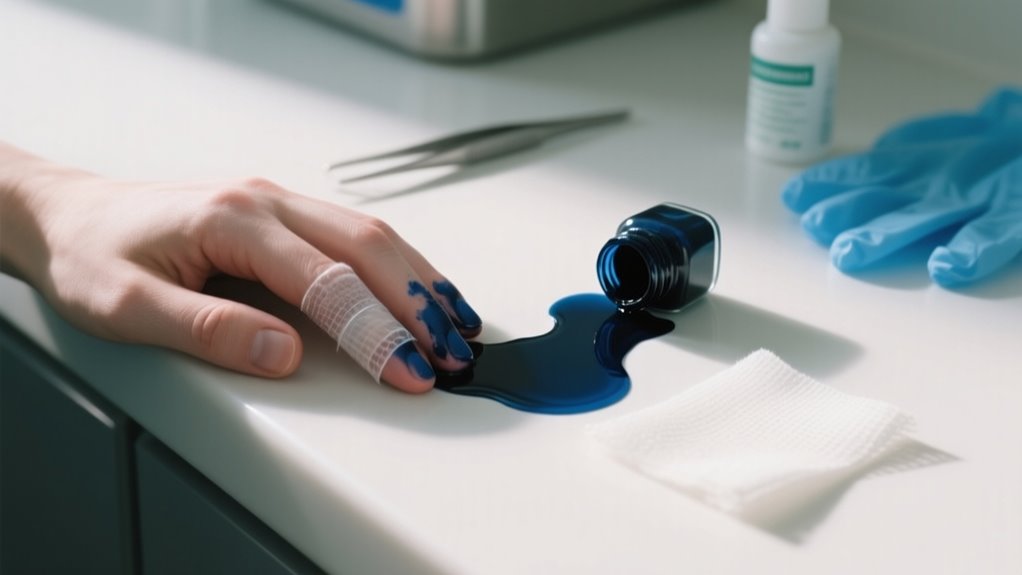
Ink poisoning usually causes minor issues like skin or tongue staining and mild irritation. If ink gets in your eyes, it might cause redness or blurred vision.
Ingesting small amounts is generally harmless, but larger amounts can cause nausea or breathing trouble.
Treat exposure by rinsing eyes with cool water for 15 minutes and washing skin with soap.
Seek medical help if symptoms worsen. Keep an eye out for serious signs and learn what else you should know to stay safe.
What Is Ink Poisoning and Its Health Risks
Although ink poisoning sounds alarming, it usually results in only minor issues like skin or tongue staining rather than serious toxicity. When ink touches your skin, it mainly causes discoloration or mild irritation rather than poisoning.
Ink exposure typically causes minor staining or irritation, not serious poisoning.
If you accidentally ingest a small amount of ink from pens or markers, it’s typically harmless and won’t require medical treatment. However, swallowing larger quantities, especially from printer cartridges or stamp pads, increases the risk of poisoning and may need you to call a healthcare professional.
The main health risks involve skin and eye irritation, not systemic poisoning. Treatment usually focuses on cleaning the affected skin to prevent further irritation.
If you suspect significant ink ingestion or experience any unusual symptoms, don’t hesitate to call for medical advice. Understanding these health risks helps you respond appropriately without unnecessary panic, ensuring proper care when dealing with ink exposure.
Symptoms of Ink Poisoning to Watch For
You might notice stained skin or tongue after getting ink on you. Usually, that’s nothing to worry about if it’s just a small amount. Sometimes, ink can irritate your eyes or cause temporary discoloration if it gets in them. But if you start having symptoms that don’t go away, or if you’ve swallowed a lot of ink, it’s really important to get medical help right away.
Common Ink Poisoning Symptoms
What signs should you watch for if you suspect ink poisoning? Generally, symptoms from ink exposure are mild and localized. You might notice stained skin or a discolored tongue, which are harmless and temporary.
However, if you ingest ink, even though toxicity is usually minimal, you could experience stomach upset. Pay attention to these common symptoms:
- Visible staining on skin or tongue following ink exposure.
- Mild irritation or discomfort, especially around the mouth or areas where ink contacted skin.
- Stomach discomfort or nausea after ink ingestion, which may require treatment if severe.
If symptoms persist or worsen, especially after ingestion, seek medical attention promptly. Immediate treatment helps prevent complications from larger exposures, even though serious poisoning is rare.
Eye And Skin Effects
How does ink affect your eyes and skin if exposed? When ink comes into contact with your eyes, you might experience eye irritation, including redness, discomfort, and blurred vision. Fortunately, these symptoms are usually temporary and don’t cause permanent damage.
If ink gets in your eyes, rinsing them with cool water until the irritation subsides helps reduce discomfort. On your skin, ink exposure often leads to skin staining rather than poisoning. Promptly washing the affected area can help remove the discoloration.
It’s important to note that skin or eye contact with ink rarely causes systemic poisoning symptoms like headaches or nausea. So, while ink can be irritating and messy, the effects on your eyes and skin are generally temporary and manageable with proper rinsing and cleaning.
When To Seek Help
Although most ink exposures cause only mild irritation or staining, certain symptoms mean you should get medical help right away. If you notice any of the following after ink contact or ingestion, don’t hesitate to seek help:
- Persistent eye irritation, vision changes, or skin staining that doesn’t fade quickly.
- Ingesting large amounts of ink (over 1 oz/30 mL), even if symptoms seem mild.
- Signs of systemic poisoning like dizziness, nausea, or unusual drowsiness.
If poisoning happens, give first aid and call your local emergency number or poison control center immediately. Early action can prevent complications, so always be cautious and get medical help without delay.
First Aid for Ink Exposure and Ingestion
If ink gets in your eyes, just rinse them with cool water for at least 15 minutes. If the irritation doesn’t go away, make sure to get medical help. For any ink on your skin, wash it off with soap and water.
Usually, swallowing a little bit of ink isn’t harmful. But if you swallow more than an ounce or start feeling unwell, don’t hesitate to contact poison control or emergency services right away.
Immediate Response Actions
What should you do immediately after ink exposure or ingestion? Quick and proper action can prevent serious poisoning. Here’s what you need to do:
- If ink gets into your eyes, rinse thoroughly with cool water for at least 15 minutes to reduce irritation. For skin contact, wash with soap and water. There’s no poisoning risk from skin exposure.
- In case of ingestion, especially more than 1 oz (30 mL), call poison control at 1-800-222-1222 immediately. Don’t induce vomiting unless instructed.
- Seek emergency medical help if symptoms worsen or if advised by poison control. Monitor essential signs closely until medical help arrives.
Taking these steps quickly helps minimize risk and ensures you get the right care for ink poisoning.
Medical Care Guidelines
How should you provide first aid after ink exposure or ingestion? First, rinse the affected skin or eyes with water for at least 15 minutes. If ink is ingested, don’t induce vomiting. Call poison control at 1-800-222-1222 immediately and seek urgent care.
Medical treatment may include skin and eye irrigation, monitoring vital signs, and administering IV fluids or medications.
| Situation | Immediate Action | Medical Care Needed |
|---|---|---|
| Skin Exposure | Rinse with water 15 mins | Irrigation, monitor vital signs |
| Eye Exposure | Flush eyes thoroughly | Eye irrigation, urgent care |
| Ink Ingestion | Do not induce vomiting | Emergency care, IV meds |
Prompt first aid and treatment improve outcomes markedly.
How Ink Poisoning Affects the Skin and Eyes
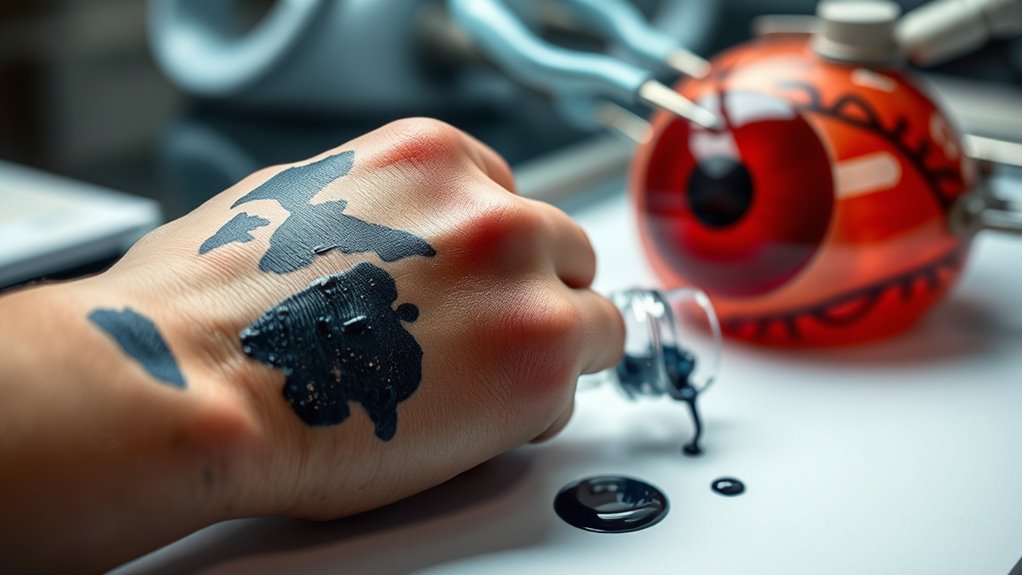
Although ink poisoning rarely causes serious health issues, it can temporarily affect your skin and eyes. When you come into skin contact with ink, you might notice skin staining. This staining is a common temporary effect and doesn’t lead to systemic poisoning.
Similarly, if ink gets into your eyes, it can cause eye irritation and discolor the white part of your eye.
Here’s how ink poisoning affects you:
- Skin staining from ink is temporary and can be removed easily with soap and water.
- Eye irritation caused by ink exposure usually subsides after thorough rinsing with cool water.
- Neither skin contact nor eye exposure to ink results in permanent damage or poisoning symptoms.
What to Do If Ink Gets Into Your Eyes?
If ink gets into your eyes, the first thing you should do is rinse them thoroughly with cool water for at least 15 minutes. Make sure not to rub your eyes while rinsing, as that can make things worse.
Keep an eye out for any signs like persistent redness or discomfort—these could mean your eyes are irritated or even injured.
If the symptoms don’t start to get better, don’t wait around. It’s important to seek medical help promptly to make sure everything is okay.
Immediate Eye Rinsing
Wondering what to do the moment ink splashes into your eyes? Immediate eye rinsing is crucial to minimize ink poisoning and chemical exposure effects. Here’s what you should do:
- Rinse your eyes gently with cool, clean water for at least 15 minutes to flush out the ink and reduce eye irritation. Avoid rubbing, as it can worsen the damage.
- Continue irrigating until the discomfort eases or you can get medical help. Persistent staining or irritation shouldn’t be ignored.
- Seek urgent care if you experience ongoing pain, blurred vision, or visible ink remains in your eyes after rinsing. Quick action is essential to prevent long-term complications.
Prompt eye rinsing combined with timely medical attention ensures the best outcome in cases of ink exposure.
Recognizing Irritation Signs
When ink gets into your eyes, you’ll likely notice redness, irritation, or a burning sensation. These signs mean your eye is reacting to the foreign substance, causing pain and discomfort.
To relieve irritation, rinse your eye thoroughly with cool, clean water for at least 15 minutes. Avoid rubbing your eye or applying any ointments without medical advice because this can make things worse.
You might see temporary staining on the white part of your eye, but this usually fades without lasting effects. If the redness, pain, or discomfort continues after rinsing, it’s important to seek medical attention promptly.
Recognizing these irritation signs early helps you take the right steps to protect your eyes and prevent further complications.
When To Seek Help
After rinsing your eye thoroughly to ease irritation, you need to know the signs that call for medical help. Ink poisoning in the eye can cause varying symptoms, some requiring emergency treatment. You should seek help if you experience any of the following:
- Persistent pain, redness, or blurred vision after rinsing.
- Symptoms that worsen or do not improve within a short time.
- Any unusual discharge or swelling around the eye.
Don’t rub your eye or apply ointments, as these may worsen irritation. Temporary staining is common but usually harmless. If symptoms persist, contact a healthcare professional immediately for proper treatment. Prompt medical help guarantees the best outcome and prevents complications from ink poisoning in your eye.
When to Seek Medical Help for Ink Poisoning
If you ingest more than an ounce (30 mL) of ink or experience symptoms like vomiting, trouble breathing, or confusion, you need to get medical help right away. Contact poison control at 1-800-222-1222 immediately if you suspect ink ingestion, especially from printer cartridges or stamp pads. Urgent treatment is vital to avoid complications from a large amount of ink or toxic substances.
Also, seek medical help if ink enters your eyes and causes persistent irritation or vision changes. When in doubt, always get a professional evaluation to guarantee your safety.
| When to Seek Medical Help | Why It’s Urgent |
|---|---|
| Ingested over 1 oz (30 mL) ink | Large amount can cause poisoning |
| Symptoms like vomiting, confusion | Indicates serious systemic effects |
| Eye exposure with vision changes | Risk of lasting eye damage |
Don’t hesitate. Urgent treatment can prevent severe consequences.
How Doctors Diagnose and Treat Ink Poisoning

Doctors use a combination of your medical history, observed symptoms, and details about the ink involved to diagnose ink poisoning accurately. To confirm the diagnosis and assess severity, they often perform medical tests like physical exams, blood work, or imaging to check for systemic absorption or complications.
For treatment, doctors focus on supportive care tailored to your symptoms. This may involve irrigating affected areas such as skin or eyes to remove ink residues, and monitoring vital signs closely to detect any changes.
They may also administer activated charcoal or induce vomiting if large amounts of ink were ingested and if it’s medically appropriate. Your healthcare provider will rely on poison control guidelines to determine the best course of action.
Prompt diagnosis and treatment help prevent complications and guarantee a safer recovery from ink poisoning.
Tattoo Ink Risks and How to Stay Safe
While getting a tattoo can be a meaningful form of self-expression, you need to be aware of the risks associated with tattoo ink. Tattoo ink risks include allergic reactions, infections, and long-term skin problems caused by contaminated ink or unsterilized equipment.
Allergic reactions often stem from pigments like red, yellow, green, or blue, leading to painful skin rashes. Since the FDA hasn’t approved pigments for cosmetic tattooing, unregulated inks increase your chances of adverse effects.
To stay safe, always choose reputable tattoo artists who follow strict sterilization protocols and use sterile, FDA-approved inks whenever possible. Avoiding contaminated ink and ensuring proper hygiene during the tattoo process considerably reduces your infection risk.
Being informed about these risks helps you make safer choices and enjoy your tattoo without complications.
Preventing Ink Poisoning in Everyday Life
Understanding the risks of tattoo ink is just one part of staying safe around ink products. Preventing ink poisoning starts with mindful handling and storage to avoid accidental ingestion or harmful ink exposure.
You can protect yourself and others by following these key steps:
- Store ink-containing items like pens and markers out of reach of children to prevent accidental ingestion.
- Use ink products only in well-ventilated areas and clean any ink stains from your skin or surfaces promptly to reduce prolonged contact.
- Always read and follow ink product safety instructions, and avoid using unsterilized ink for tattoos to prevent infections and allergic reactions.
How WebPOISONCONTROL Can Help You Quickly and Safely
Wondering where to turn if you suspect ink poisoning? WebPOISONCONTROL is your go-to resource for quick guidance and expert advice. This fully automated, confidential online tool handles hundreds of cases daily, providing immediate first aid instructions and clear steps on when to seek emergency care.
If you suspect ink poisoning, WebPOISONCONTROL offers quick, confidential guidance and first aid advice anytime.
By entering specific details like the type and amount of ink involved, you get tailored recommendations that guarantee accurate and prompt assistance. WebPOISONCONTROL saves you from lengthy phone calls to traditional poison centers, making the response swift and efficient.
Beyond managing emergencies, it offers follow-up resources to enhance poison prevention and safety education. Launched as a digital service in 2025, WebPOISONCONTROL has quickly become a trusted platform to help you safely navigate ink poisoning incidents online.
With its user-friendly interface and reliable support, you can act confidently and quickly to protect yourself or others.
Frequently Asked Questions
Can Ink Poisoning Cause Allergic Reactions?
Ink poisoning itself doesn’t typically cause an ink allergy or allergic symptoms because it’s more about toxicity than immune response. However, you might experience skin reactions or hypersensitivity reactions if you’re allergic to specific pigments in the ink.
These allergic symptoms can include redness, itching, or swelling, sometimes even respiratory issues. If you notice these signs, it’s likely an allergic reaction rather than poisoning, so you should seek treatment for the immune response accordingly.
Is Ink Poisoning More Dangerous for Children?
Yes, ink poisoning is more dangerous for children due to their smaller size and developing bodies. If a child ingests ink, you need to watch for toxic symptoms like vomiting or difficulty breathing.
Always take safety precautions by keeping inks out of reach and practicing hazard awareness. Perform a quick risk assessment if exposure happens, and contact poison control immediately for guidance.
Prompt action can prevent serious complications in kids.
How Long Does Ink Poisoning Recovery Take?
Think of ink poisoning recovery like a fading stain; it depends on the severity. Once you spot symptoms, quick action with treatment options is key.
Minor exposure often clears in 24 to 72 hours, but toxic ink types or larger ingestions may stretch recovery to weeks. Always take emergency measures seriously to avoid serious health consequences.
Practicing poisoning prevention helps keep you safe from ink’s hidden dangers.
Can Swallowing Small Amounts of Ink Be Harmless?
Yes, swallowing small amounts of ink can be mostly harmless because ink absorption in your digestive system is minimal. The ink residue usually passes through without causing serious digestive impact.
Since toxicity levels in small quantities are low, symptom severity tends to be mild or nonexistent. However, if you notice any unusual symptoms, don’t hesitate to seek medical intervention to rule out complications and guarantee your safety.
Are Certain Types of Ink More Toxic Than Others?
You might think all inks could knock out an elephant, but ink toxicity varies wildly! It all boils down to the chemical composition and ink formulations.
Some inks contain toxic pigments or harsh solvents from ink manufacturing that make them far more dangerous than typical pen ink. Environmental exposure to these chemicals can worsen effects.
Conclusion
Ink poisoning might sneak in like a shadow, but you’re not powerless against it. By knowing the signs and acting fast, you can turn the tide before it takes hold.
Treat ink exposure like a small spark. Handle it quickly to prevent a wildfire of symptoms. Stay aware, protect your skin and eyes, and don’t hesitate to seek help.
With the right steps, you’ll keep ink’s dark side from staining your health.
Leave a Reply