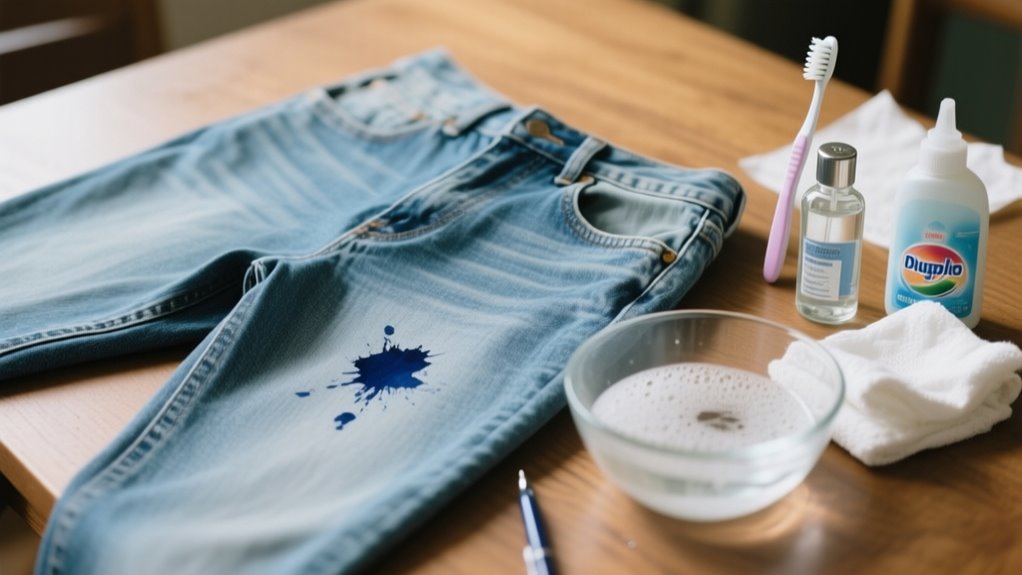
Start by identifying the ink type and fabric to choose safe cleaning methods.
Gently blot excess ink without spreading it, then test rubbing alcohol or hand sanitizer on a hidden area.
Pre-treat the stain with alcohol, blot from edges inward, and apply OxiClean for tough spots.
Wash the garment in the hottest safe water, then air dry and inspect.
Repeat steps if needed for stubborn stains.
Keep following for detailed tips to restore your clothes effectively.
Know What Kind of Ink and Fabric You’re Dealing With
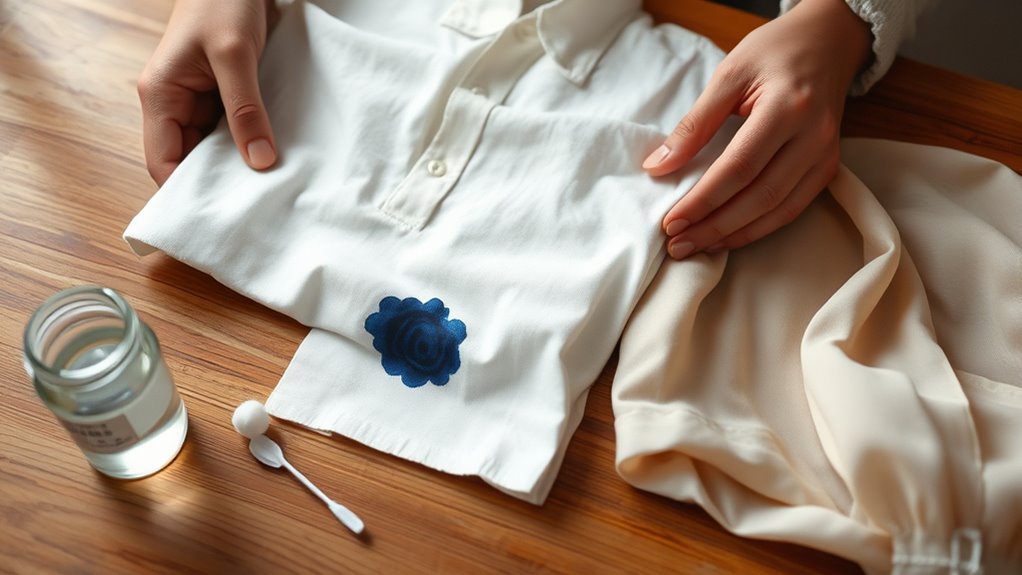
Before you tackle a dried pen ink stain, you need to identify both the type of ink and the fabric you’re dealing with. Different inks like ballpoint, water-based, and permanent inks vary in composition and how they react to stain removal methods. Water-based inks are usually easier to remove if you catch them early, while permanent inks have resins that make them tougher to dissolve. Knowing the ink type helps you pick the right approach.
Equally important is understanding the fabric. Cotton, silk, and polyester each respond differently to cleaning agents. Some fabrics are delicate and may get damaged by harsh treatments, so recognizing the fabric guides you to safer stain removal techniques. Since dried ink sets deeper into fabric fibers, identifying both ink and fabric ensures you use the most effective, targeted cleaning method without causing harm. This step lays the foundation for successfully removing that stubborn ink stain.
Remove Excess Ink Stain Gently to Avoid Spreading
When you start removing excess ink from your clothes, gently blot the stain with a clean, damp cloth to lift ink without spreading it further. This approach helps you remove excess ink effectively while avoiding damage. To prevent spreading the stain, follow these steps carefully:
- Use a soft, absorbent paper towel or cotton ball to gently blot around the edges before working inward, which contains the ink.
- Avoid rubbing or scrubbing, since this pushes ink deeper into fibers and expands the stain.
- Place a piece of cardboard behind the fabric to stop ink from transferring to other areas during the process.
Always work from the outside toward the center of the stain to keep the ink contained. By gently blotting and carefully following these steps, you’ll prevent spreading and make the next cleaning steps more effective.
Test Alcohol-Based Solutions on a Hidden Area First
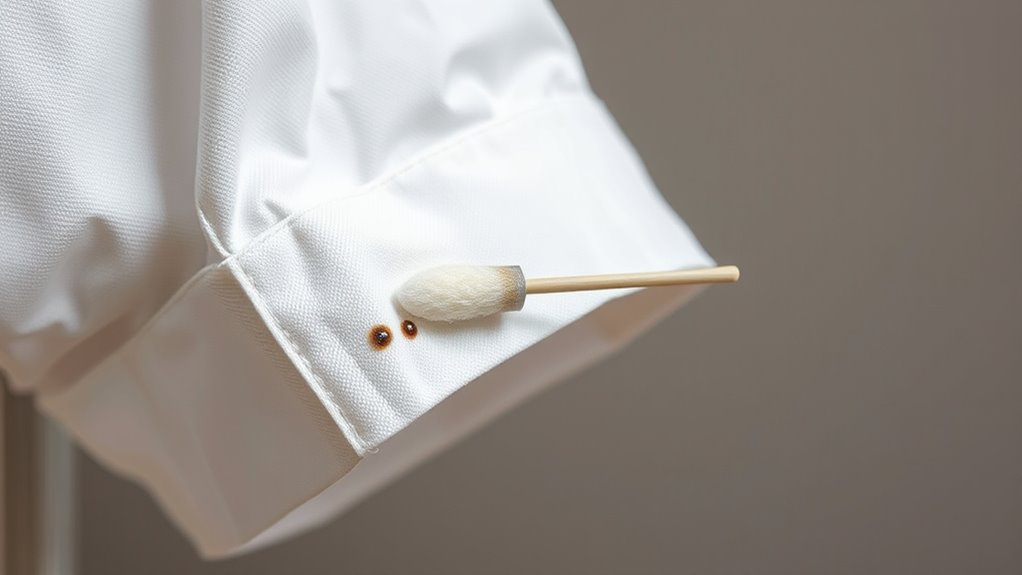
Since alcohol-based solutions can sometimes damage fabric, you should always verify them on a hidden area first. Take a small amount of rubbing alcohol or hand sanitizer and apply it to an inconspicuous spot using a cotton swab or cloth.
Wait several minutes to check for any discoloration or weakening of the fabric. This simple test helps you avoid unwanted bleaching or damage during stain removal. If you notice any adverse effects, avoid using the solution on the visible parts of your clothing.
Testing also prevents wasting product on areas that might react poorly. Once you confirm the fabric holds up without discoloration, you can confidently proceed to treat the ink stain directly.
This step ensures your clothes stay intact while effectively tackling dried pen ink stains. Always prioritize this test as a precaution before applying any alcohol-based cleaner to your fabric.
Pre-Treat the Ink Stain With Rubbing Alcohol or Hand Sanitizer
Start by picking rubbing alcohol or hand sanitizer that has at least 60% alcohol—this helps get the stain out better. Just apply it straight onto the ink stain and let it sit for a few minutes. Then, gently blot the area to lift the ink. After you’ve pre-treated the stain, make sure to wash the garment right away so the stain doesn’t set back in.
Choosing The Right Product
Two of the most effective products for pre-treating dried pen ink stains are rubbing alcohol and hand sanitizer, thanks to their alcohol content that breaks down ink pigments. When choosing the right stain remover, consider these key points:
- Alcohol Type: Confirm the product contains isopropyl or ethyl alcohol for effective ink breakdown.
- Fabric Safety: Test on a hidden area first to avoid discoloration or damage.
- Saturation: Use enough rubbing alcohol or hand sanitizer to fully soak the stain, allowing the alcohol to penetrate fibers.
Both rubbing alcohol and hand sanitizer work by dissolving ink pigments, so either can be your go-to. Just remember to choose a product with sufficient alcohol content. And always check fabric compatibility before applying directly to the dried ink stain.
Application Techniques Explained
After selecting the right product, you’ll want to apply it effectively to tackle the dried ink stain. Start by pouring rubbing alcohol or hand sanitizer directly onto the stain, making sure the fabric is fully saturated.
Then, take a clean cloth or cotton ball and gently rub the area, working from the outside inward to prevent the stain from spreading. Let the solution sit for several minutes; this helps break down the ink for easier stain removal.
Next, blot the stain with a dry cloth or paper towel to lift the loosened ink and excess product. If the stain persists, just repeat the process until you see improvement. This careful application technique maximizes your chances of successfully removing dried pen ink from clothes.
Post-Treatment Washing Tips
While treating the dried ink stain with rubbing alcohol or hand sanitizer is essential, you’ll also want to pre-treat the fabric thoroughly before washing. Start by fully saturating the stain and letting it sit for 5-10 minutes to break down the ink.
Then, follow these post-treatment washing tips to maximize removal:
- Use the hottest water temperature that’s safe for the fabric during the wash cycle.
- Add a laundry stain remover or enzyme-based detergent to target any remaining ink residue.
- After washing, inspect the stain; if it’s still visible, repeat the pre-treatment before drying.
Proper pre-treatment combined with an effective wash cycle markedly increases your chances of completely removing dried pen ink from clothes.
Blot the Ink Stain From the Edges Toward the Center
Because ink tends to spread easily, you should always blot the stain from the edges toward the center. This technique prevents the ink from spreading further into the fabric, helping you contain the damage.
Start by applying a small amount of rubbing alcohol or another solvent at the edges of the stain to loosen the ink. Then, use a clean, absorbent cloth or paper towel to gently blot the ink from the outer edges inward.
Avoid rubbing, as that can push the ink deeper into the fibers. Work gradually, shifting to a fresh section of your cloth frequently to guarantee you’re lifting the ink rather than spreading it back onto the fabric.
Lift Ink With Dish Soap and Baking Soda
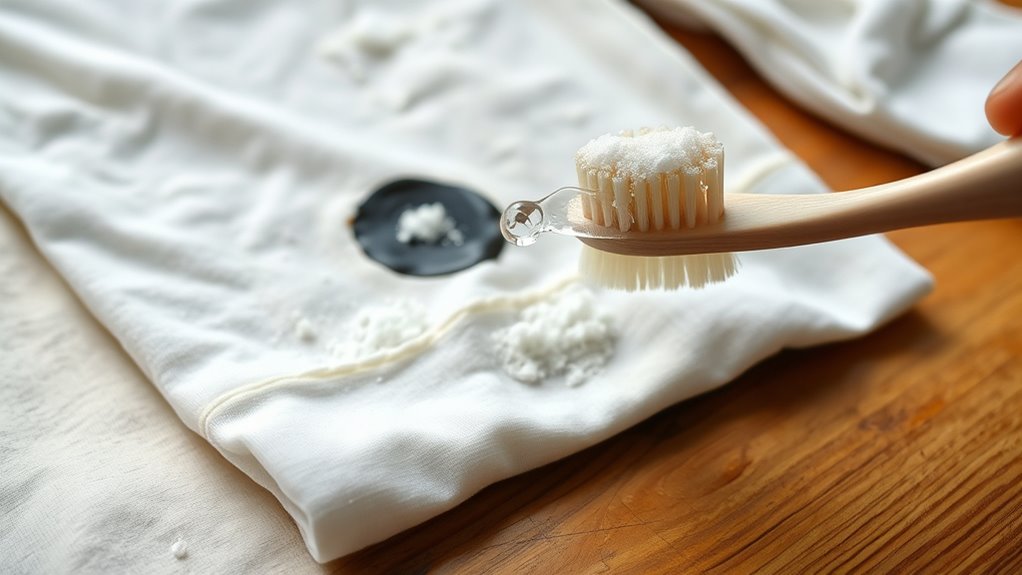
You’ll want to start by applying dish soap directly onto the ink stain to break down the pigments. After that, sprinkle some baking soda over the soap. Then, gently scrub the area with a soft brush to help lift the ink from the fabric.
Let the mixture sit for a few minutes before rinsing it off. If the stain is still there, just repeat the process for the best results.
Soap And Soda Combo
Two simple household ingredients, dish soap and baking soda, can work wonders on dried pen ink stains. Start by applying dish soap directly to the ink stain. This breaks down the ink pigments, making them easier to remove.
Then, sprinkle baking soda over the soaped area. The baking soda acts as a gentle abrasive that lifts the ink from fabric fibers without damaging them. For best results:
- Gently scrub the mixture with a toothbrush to work the soap and baking soda into the stain.
- Rinse thoroughly with cold water to wash away dissolved ink and cleaning agents.
- Repeat the process if the stain remains stubborn or deeply set.
Using this soap and soda combo is an effective, affordable way to tackle dried ink stains on clothes.
Application Techniques
When tackling dried pen ink stains, start by applying a small amount of dish soap directly onto the affected area. Gently work it into the fabric with your fingers or a soft brush.
Next, sprinkle baking soda over the soaped area to form a paste that helps lift the ink from the fibers. Use a damp cloth or toothbrush to gently scrub the dish soap and baking soda mixture into the stain, enhancing stain removal.
Let the treatment sit for 10-15 minutes to loosen the dried ink before rinsing thoroughly with cold water. If the stain persists, repeat these steps as multiple applications with dish soap and baking soda improve your chances of completely removing the dried pen ink from your clothes.
Stain Removal Tips
Although dried pen ink can seem stubborn, applying dish soap and baking soda directly to the stain breaks down the ink’s oils and lifts it from fabric fibers effectively. For removing ink stains, follow this simple method:
- Apply dish soap directly onto the dried ink stains to target the ink’s oils and dyes.
- Sprinkle baking soda over the soap to create a gentle abrasive that helps lift the ink from fabric.
- Gently scrub with a soft toothbrush, then rinse thoroughly with cold water to remove loosened ink and cleaning agents.
If the stain remains, just repeat these steps before doing laundry. This process enhances ink removal without damaging your clothes, making it a reliable approach for treating stubborn ink stains before washing.
Apply OxiClean or Enzyme-Based Stain Remover for Tough Ink Stains
If your ink stain has set in stubbornly, applying OxiClean or an enzyme-based stain remover can make all the difference. Start by applying the stain remover directly onto the dried ink, making sure the affected fabric is fully covered.
To boost effectiveness, gently work the stain remover into the fabric using a soft brush or cloth. Next, soak the garment in warm water mixed with the stain remover, following the product’s recommended concentration.
Let the clothing soak for at least 1 to 6 hours, or overnight for the toughest stains. This allows the stain remover to break down the ink thoroughly.
This combination of soaking and gentle agitation helps the stain remover penetrate deep into the fabric fibers. After soaking, you’ll be ready for the next step to fully eliminate the stain.
Applying OxiClean or an enzyme-based stain remover is a key move when dealing with persistent ink stains on your clothes.
Wash the Garment in the Hottest Water Safe for the Fabric
Washing your garment in the hottest water safe for its fabric can considerably boost ink stain removal. Hot water helps to loosen and dissolve ink particles, making the stain easier to remove. It also enhances the effectiveness of chemical stain removers like OxiClean or rubbing alcohol by improving their penetration into the fabric.
Using the hottest safe water loosens ink and boosts stain remover effectiveness for cleaner results.
Before washing, always check the garment’s care label to avoid damaging the fabric with excessive heat.
To maximize stain removal while maintaining fabric care, follow these steps:
- Identify the highest safe water temperature on the care label.
- Pre-treat the ink stain with an alcohol-based solution to break down ink residues.
- Wash the garment using this hot water setting to ensure thorough cleaning and quicker drying.
Air Dry and Check the Ink Stain Before Using Heat
Always let your clothing air dry after treating the ink stain. This helps prevent the heat from setting the stain permanently. You see, dryers and irons can actually make any leftover ink stick to the fabric for good. So, before you turn up the heat, take a close look and make sure the stain has faded or disappeared completely. That way, you won’t accidentally make the stain worse!
Importance Of Air Drying
Three key reasons make air drying essential after treating pen ink stains on clothes. First, air drying lets you visually check stain removal progress before any heat setting occurs. Second, it prevents the heat from a dryer from permanently setting any residual ink, which would make future removal nearly impossible. Third, letting your clothes air dry reduces fabric damage caused by premature heat exposure.
Here’s why you should prioritize air drying:
- You can assess if the stain is fully removed or needs retreatment.
- It avoids locking in ink stains with heat setting.
- It helps protect your fabric from unnecessary damage caused by heat.
Heat Effects On Ink
Before you apply any heat to an ink stain, you should air dry the garment and check the stain carefully. Heat can cause dried ink to set deeper into the fabric fibers, making removal much harder.
If you use a dryer or iron before fully treating the stain, the heat may permanently fix the ink. That’s why it’s important to avoid heat initially and rely on cold water rinses and air drying first.
After these steps, inspect the stain to see if any ink remains. Only apply heat once you’re sure the stain is gone or nearly gone to prevent setting residual ink.
Taking these precautions helps protect your clothes from stains that become impossible to remove once heat sets the dried ink.
Stain Visibility Check
After treating an ink stain, let your clothing air dry completely to avoid setting the stain with heat. Once dry, check the stain visibility carefully before using any heat-based drying methods. Heat can permanently set the stain, making stain removal much harder.
To guarantee the best results, follow these steps:
- Inspect the stain’s color intensity and size after air dry.
- Decide if the stain is still visible enough to require further treatment.
- Avoid using a dryer or iron until the stain is fully removed.
Patience is key. Air drying helps you see the true extent of the stain without risking it becoming permanent. This careful stain visibility check ensures you only apply heat when it’s safe, improving your chances of complete stain removal.
Repeat Treatment Steps for Persistent or Dried Ink Stains
If the ink stain still lingers or has dried, you’ll want to reapply a stain remover such as rubbing alcohol or hand sanitizer and let it sit for several minutes before blotting. For dried ink stains, repeat treatment is key. You might need to go through this process multiple times if the stain starts to fade but isn’t completely gone.
Use a saturated cloth or cotton pad to gently dab the stain, avoiding rubbing to protect the fabric. After each application, wash the garment in the hottest water safe for the fabric, as indicated by the care label, to help lift leftover ink particles.
If the stain remains stubborn, try soaking the garment in an oxygen-based stain remover like OxiClean before applying the alcohol-based stain remover again. By being patient and consistent with these repeat treatment steps, you’ll improve your chances of fully removing those tough ink marks from your clothes.
Frequently Asked Questions
Can Ink Stains Be Removed From Leather or Suede?
Yes, you can remove ink stains from leather or suede, but you’ll need to be careful. For leather cleaning, try gently dabbing with a soft cloth and mild soap solution first.
Suede stain removal is trickier. Alcohol-based solutions might help, but test a hidden spot to avoid damage.
To protect your items, focus on ink stain prevention by treating stains quickly. Also, consider professional cleaning for stubborn marks to keep your leather or suede looking great.
Is It Safe to Use Bleach on Ink Stains?
Bleach safety depends on the fabric you’re treating. You shouldn’t use bleach on ink stains if your fabric’s delicate or color-sensitive since it risks discoloration and damage.
For ink stain risks, bleach can cause uneven fading or weaken fibers, especially on wool, silk, or spandex. Always consider fabric compatibility. Oxygen-based stain removers are safer alternatives.
To avoid ruining your clothes, test any bleach solution on a hidden spot before applying it directly.
How Long Should I Wait Before Treating a Fresh Ink Stain?
Why wait at all when you spot an ink stain? You shouldn’t delay stain removal. Treat the ink stain within the first 15 minutes for the best results.
Prompt stain timing is essential because ink sets quickly, making removal harder as time passes. The faster you act, the higher your chances of getting that pesky ink out before it bonds with the fabric.
Can Ink Stains Be Removed From Delicate Fabrics Like Silk?
Yes, you can remove ink stains from delicate fabrics like silk, but you need to approach silk stain removal with care. Always use gentle cleaning methods to protect the fabric’s integrity. Avoid harsh chemicals and test any solution on a hidden spot first.
Using alcohol-based products sparingly and blotting gently helps prevent damage. With delicate fabric care, you increase your chances of successfully lifting ink stains without ruining your silk garment.
Will Professional Dry Cleaning Remove Dried Pen Ink Effectively?
Think professional dry cleaning can always handle pen stain removal? Not always. While dry cleaners use specialized solvents that help with ink cleaning, their success varies, especially with dried or permanent ink stains.
You’ll want to inform your cleaner about the stain upfront so they can apply the right treatment. Remember, stain prevention is easier than removal, so act quickly next time to avoid stubborn marks on your clothes.
Conclusion
Removing dried pen ink from clothes might seem tricky, but with the right steps, you can tackle it effectively. Why settle for stained fabric when you can restore your favorite clothes?
By knowing your fabric, using gentle techniques, and treating the stain promptly, you’ll increase your chances of success. Remember, patience and care are key, so don’t rush.
Follow these steps, and you’ll be amazed at how much ink you can remove!
Leave a Reply