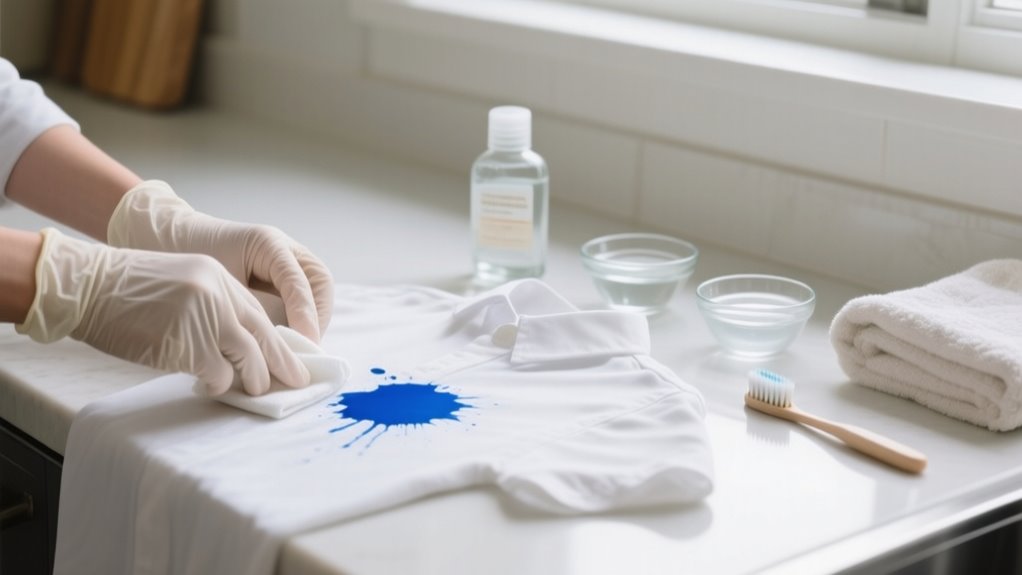
To remove blue ink from clothes, act fast by blotting excess ink gently without rubbing.
Test an alcohol-based solvent on a hidden spot, then apply it to break down the ink.
Rinse the fabric with cold water from the back to loosen the stain.
Pretreat with detergent or stain remover, then wash in the proper water temperature.
Air dry and repeat if any ink remains.
Keep following these steps carefully to fully restore your garment.
Spot the Blue Ink Stain and Start Treatment Quickly
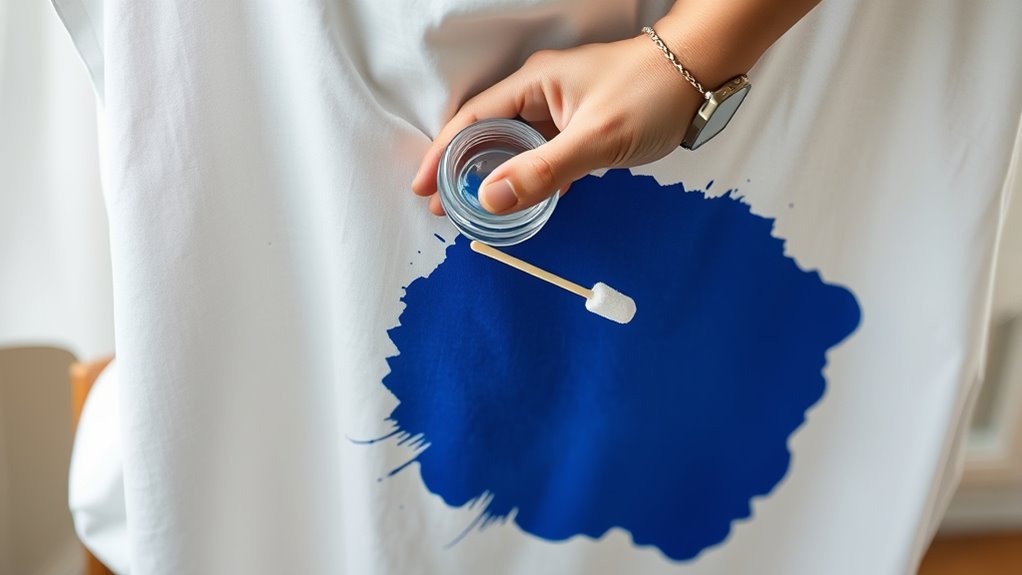
When you spot a blue ink stain on your clothes, act quickly to blot the excess ink with a clean cloth or paper towel without rubbing. Rubbing can spread the stain or push it deeper into the fabric. Identifying the exact location of the blue ink stain early allows you to treat it promptly, increasing the chances of successful stain removal.
Fresh ink is much easier to handle, so don’t wait for the ink to dry and set into the fabric. Carefully inspect the stained area to confirm your treatment process covers every part of the stain. Timing is vital. Starting treatment soon after the stain occurs considerably improves your chances of complete removal.
Blot the Blue Ink Gently to Remove Excess Ink
Although it might be tempting to rub the stain, gently blotting the blue ink with a clean paper towel or cloth is the best way to lift excess ink without spreading it further. Start by placing a clean, absorbent towel underneath the stained area to catch any ink that comes off during the blotting process.
Use a fresh, dry clean towel each time you blot to avoid reapplying ink back onto the fabric. Remember to gently blot, don’t press too hard or rub, as this helps remove surface ink without pushing it deeper into the fibers.
Repeat the blotting process several times until you see no more excess ink transferring onto the towel. This careful approach will prevent spreading the stain and protect the fabric from damage.
Taking these steps ensures you remove as much blue ink as possible before moving on to further stain treatments.
Test Solvent Safety and Apply Alcohol-Based Treatment
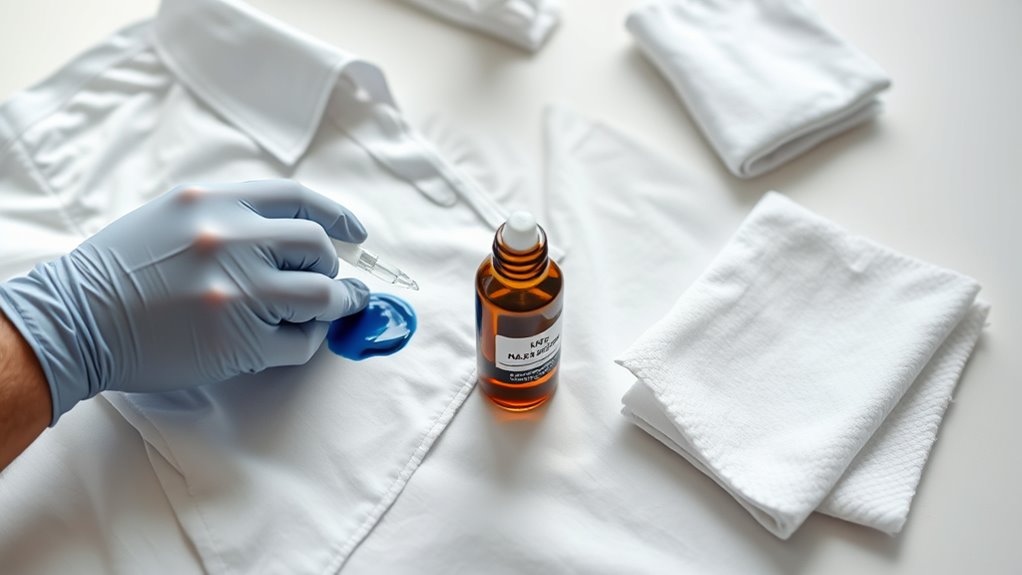
After you’ve gently blotted away as much excess ink as possible, the next step is to test an alcohol-based solvent on a hidden part of your fabric. This guarantees fabric safety and helps prevent fabric damage. Here’s how to test solvent safety and apply alcohol-based treatment effectively:
- Test inconspicuous area: Dab a small amount of rubbing alcohol or hand sanitizer on a hidden spot and wait 10 minutes to check for colorfastness or damage.
- Soak stain: If safe, saturate the ink stain with the alcohol-based solvent, ensuring it penetrates the fibers completely.
- Apply alcohol-based treatment: Let the solvent sit for 10-15 minutes to break down the blue ink.
- Avoid delicate fabrics: For silk or wool, always test first, as alcohol-based solvents may cause discoloration or damage.
Following these steps helps you safely and effectively tackle blue ink stains without harming your clothes.
Rinse Fabric With Cold Water to Loosen Blue Ink
To prevent the blue ink from setting deeper into the fabric, you’ll want to rinse the stained area immediately with cold water. Doing this promptly helps dilute the ink and stops it from embedding further into the fibers.
Hold the fabric under cold running water from the back of the stain. This technique pushes the ink out rather than driving it deeper into the fabric. Cold water is essential because hot water can cause the ink to set, making it much harder to remove later.
As you rinse, you’ll notice the ink loosening and washing away, which considerably improves your chances of fully removing the stain. The quicker you act to rinse the fabric with cold water, the better the outcome will be in loosening the ink before it dries.
This simple step is vital for managing blue ink stains effectively and preparing the fabric for any further treatment.
Pretreat Blue Ink Stains With Detergent or Stain Remover
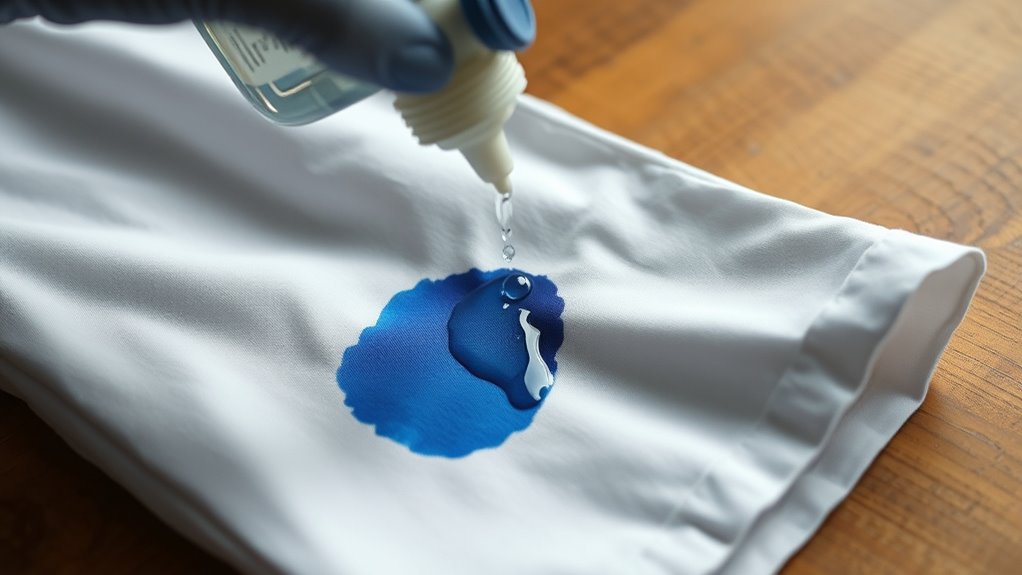
Once you’ve rinsed the stain with cold water, you can move on to pretreating the fabric with detergent or a stain remover. This step is vital for effective stain removal of blue ink. Here’s how to pretreat properly:
- Apply a commercial stain remover or liquid laundry detergent directly onto the blue ink stain, ensuring full coverage.
- Give the fabric a gentle rub with your fingers or a soft brush to help break down the ink particles.
- Let the pretreated area sit for 5-10 minutes to loosen the stain before you wash.
- For stubborn stains, repeat the application of detergent or stain remover to boost effectiveness.
Remember to test the stain remover on an inconspicuous area first to avoid damaging your fabric. Pretreating properly sets you up for a successful wash and helps keep your clothes ink-free.
Wash Clothes in Proper Water Temperature for Blue Ink
Although selecting the right water temperature depends on your fabric type, washing blue ink stains in hot water often breaks down water-based inks more effectively. Before tossing your garment into the laundry, check the fabric care label to avoid damage like shrinking or discoloration.
For durable fabrics, using hot water (above 130°F) enhances stain removal, especially when combined with pretreatment using detergent or a stain remover. However, if you’re dealing with delicate materials, stick to cold or lukewarm water to prevent setting the stain further or harming the fabric.
Choosing the proper water temperature maximizes the effectiveness of your stain removal efforts and helps dissolve the ink thoroughly. Remember, pairing pretreatment with the right water temperature can make a significant difference in removing stubborn blue ink from your clothes.
Always tailor your approach based on fabric care instructions to keep your garments safe and clean.
Air Dry and Repeat Treatment if Blue Ink Remains
After you’ve treated your clothes, just let them air dry completely. This helps make sure you don’t accidentally set any leftover ink with heat. Once they’re dry, take a good look at the stain to see if it’s gone.
If it’s still there, don’t worry! Sometimes stubborn stains need a few more rounds of treatment and air drying before they finally disappear. So, just repeat the process as needed until the ink is completely gone.
Importance Of Air Drying
Why should you always air dry your clothes after treating blue ink stains? Air drying clothes lets you check if the stain removal worked before heat sets the stain. Using a dryer too soon can set leftover ink, making it much harder to remove.
Here’s why air drying is essential:
- It prevents heat from permanently setting any leftover ink.
- You can visually inspect the fabric for residual ink.
- It lets you repeat stain treatment if the ink remains.
- It protects delicate fabrics from heat damage.
Monitoring Stain Removal Progress
One essential step in removing blue ink stains is to air dry your garment completely before checking the results. Once dry, carefully inspect the stain to evaluate your stain removal progress.
If you notice residual ink or stubborn stains, avoid using any heat setting like a dryer, as heat can permanently set the stain. Instead, repeat the process by applying pre-treatment again and washing the garment.
Air drying after each treatment allows you to accurately assess whether the stain is fading or still present. This cycle of air drying and reapplying pre-treatment is vital for tackling tough ink stains effectively.
When To Repeat Treatment
If blue ink still stains your garment once it’s completely dry, you should repeat the treatment process to boost your chances of removal. Heat can set the stain, so always air dry before checking if the stain remains. For stubborn stains, multiple cycles may be necessary.
Follow these steps to repeat treatment effectively:
- Thoroughly soak the stained area with your chosen solvent.
- Gently blot or scrub the stain to loosen the ink.
- Avoid using heat to dry, since it can heat set the stain.
- Air dry the garment completely before reassessing.
Repeat these steps until the blue ink disappears. Being patient and careful during each repeat treatment helps prevent permanent damage and increases the likelihood of complete ink removal.
Frequently Asked Questions
Can Blue Ink Stains Be Removed From Delicate Fabrics Like Silk?
Yes, you can remove blue ink stains from delicate fabrics like silk, but you’ve got to take fabric sensitivity and ink absorption carefully into account. Ink penetration often causes stain layering, making removal tricky.
Since silk’s fabric dyeing can react poorly to harsh stain removal tools, you’ll want to use gentle methods compatible with the dye. If stain persistence is high, avoid aggressive treatments to protect the fabric and prevent damage.
Is It Safe to Use Bleach on Blue Ink Stains?
You might think bleach instantly removes blue ink stains, but it’s not that simple. Bleach’s chemical reactions can break down ink composition, yet stain penetration and fabric compatibility matter.
Bleaching risks include fabric damage and discoloration, especially on delicate or colored materials. Stain persistence varies, so test first.
Instead, try safer removal techniques and focus on stain prevention to protect your clothes. Bleach works best only on white, bleach-safe fabrics.
How Long Should I Wait Before Treating a Dried Blue Ink Stain?
You shouldn’t wait long before treating a dried blue ink stain because timing delay allows stain fixation and ink oxidation, making removal harder. Once the drying process completes, stain penetration deepens due to fabric absorption, reducing your treatment window.
Ideally, treat the stain as soon as you notice it’s dried to prevent further stain set. If you must wait, avoid heat to slow fixation and improve your chances of successful removal later.
Can Blue Ink Stains Be Removed Using Natural or Homemade Remedies?
You might be surprised that over 60% of people trust natural remedies for stain removal. Yes, blue ink stains can be tackled using homemade solutions like white vinegar and baking soda.
These eco friendly methods use plant based treatments and herbal extracts to gently break down ink. Organic stain removal through DIY cleaning offers chemical free techniques that are safer for you and the environment, though stubborn stains might need repeated efforts.
Will Removing Blue Ink Affect the Color or Texture of My Clothes?
Removing blue ink can affect your clothes’ color and fabric texture depending on the fabric type and material sensitivity. Older, set-in stains or intense ink might need stronger treatments, which can risk dye interaction and color fading.
Delicate fabrics demand gentle methods to preserve color and avoid texture damage. Washing effects also matter because repeated cycles may weaken fibers.
Always test a hidden spot first to see how your fabric reacts before fully treating the stain.
Conclusion
Now that you’ve tackled the blue ink stain step by step, your clothes can breathe easy again. Remember, acting fast is like catching a wave; you either ride it or miss the chance.
Blot gently, test solvents, and treat with care to keep your fabric looking fresh. If the stain lingers, don’t lose heart. Repeat the process until the ink fades away, leaving your clothes spotless once more.
Leave a Reply