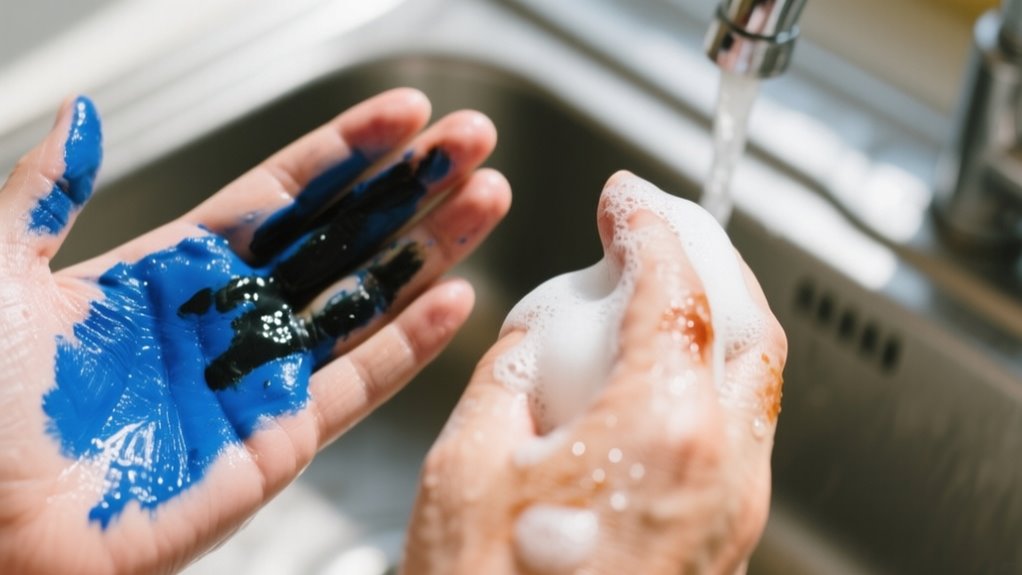
To quickly remove ink from your hands, start by washing thoroughly with warm water and soap while gently scrubbing, especially around nails and between fingers.
If the stain persists, apply rubbing alcohol with a cotton ball in circular motions, then wash again.
For a natural option, try a scrub made of sugar or salt mixed with olive oil.
Always moisturize afterward to protect your skin.
Keep these tips handy, and you’ll find even more helpful ways to tackle stubborn ink stains.
Why Ink Stains Cling to Your Skin
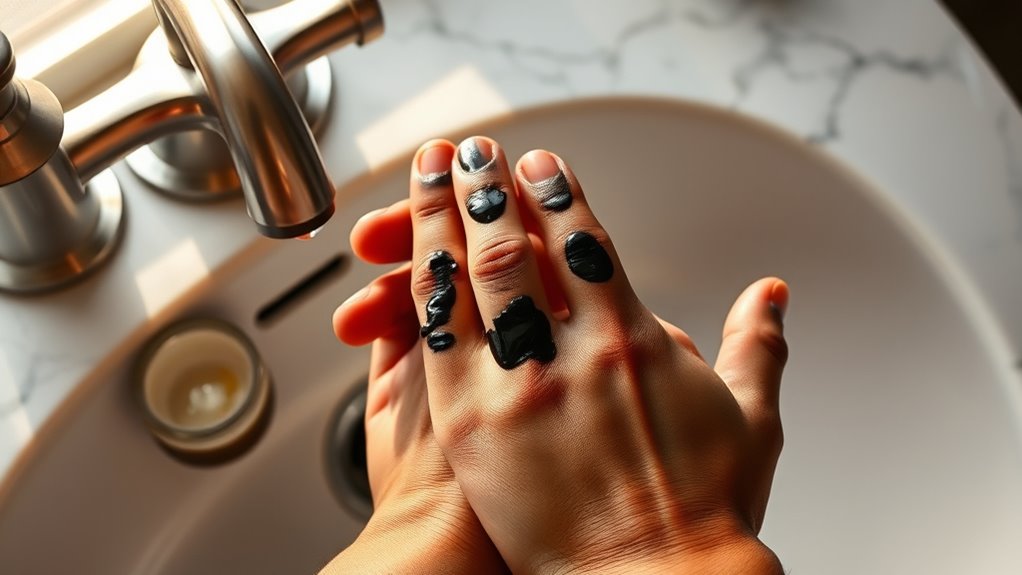
Although you might think washing your hands would easily remove ink, the dyes and pigments in ink actually penetrate your skin’s surface, making stains stubborn. Ink stains cling because their chemical composition allows them to bind deeply and firmly to your skin layers.
These pigments are designed to be water-resistant and long-lasting, so they don’t just sit on top; they embed themselves within your skin cells. The binding agents in ink contribute to how strongly the stain adheres, making it tough to scrub off with regular washing.
Because ink pigments penetrate past the outermost layer, simple rinsing often won’t cut it. Understanding why ink stains cling helps you realize that removing them requires more than just soap and water.
The persistent nature of these stains comes down to the ink’s ability to latch onto your skin chemically and physically, which is why they remain visible and tricky to erase even after multiple washes.
Quickly Wash Ink Off Your Hands With Soap
If you catch the ink on your hands early, washing with warm water and plenty of soap can stop the stain from setting in. Start by applying a generous amount of dish soap, which breaks down ink pigments effectively.
Rub the stained spots thoroughly, focusing on areas around your nails and between your fingers where ink loves to hide. Use warm water to help dissolve the ink as you scrub.
Don’t hesitate to repeat the process if some ink remains; persistence pays off.
Here’s a quick guide to washing ink off your hands:
| Step | Action | Tip |
|---|---|---|
| 1 | Wet hands with warm water | Warm water loosens ink |
| 2 | Apply plenty of soap | Dish soap works best |
| 3 | Rub stained areas thoroughly | Focus on nails and fingers |
| 4 | Rinse and repeat if needed | Ink may require multiple washes |
How to Use Rubbing Alcohol for Stubborn Ink Stains
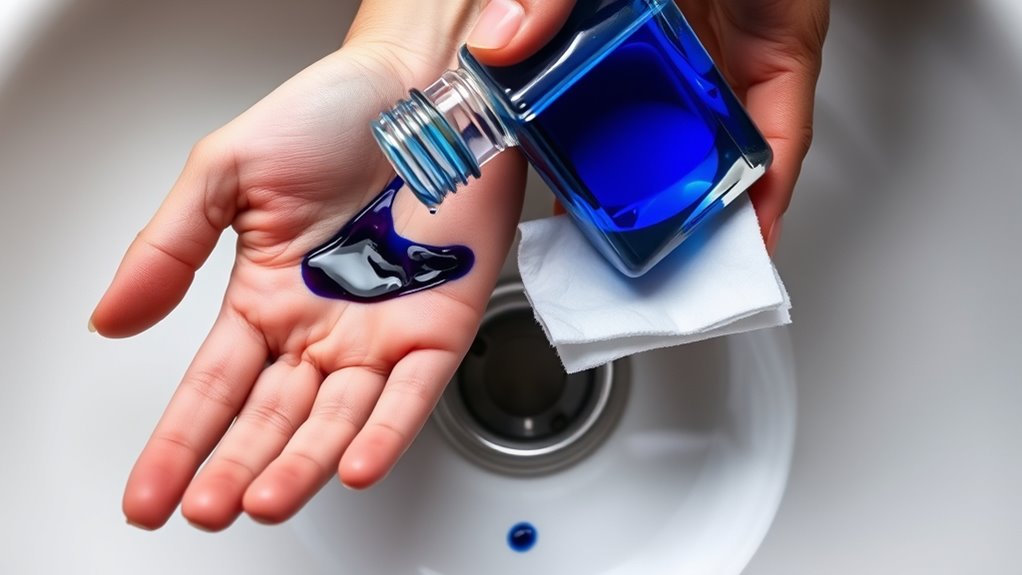
When soap and water don’t quite do the trick, rubbing alcohol can tackle stubborn ink stains on your hands effectively. Start by soaking a cotton ball or pad in rubbing alcohol. Gently apply it to the ink-stained area, rubbing in circular motions to break down the ink pigments.
This method helps loosen the ink without harsh scrubbing. Afterward, wash your hands with soap and water to remove the ink residue and reduce any irritation. If the stain persists, you can repeat the process, but make sure to rinse your hands thoroughly between applications.
Since rubbing alcohol can dry out your skin, especially if it’s sensitive, use it sparingly and consider moisturizing afterward. This simple technique offers a quick and practical solution for those stubborn ink marks that just won’t wash away with soap alone.
Natural Scrubs to Gently Remove Ink Stains
Since harsh chemicals can irritate your skin, natural scrubs offer a gentle and effective way to remove ink stains from your hands. You can make a simple scrub by mixing sugar or salt with olive oil, which exfoliates your skin gently while lifting ink particles from the surface.
Another option is combining lemon juice with salt; this natural abrasive works well to break down the ink without causing damage. When you massage these natural scrubs onto your hands, you increase blood flow and help dislodge ink trapped in your skin.
Make sure to rub gently to avoid irritation while still effectively reducing stains. After scrubbing, rinse your hands thoroughly to wash away loosened ink residue, leaving your skin cleaner and less stained. Using natural scrubs this way not only removes ink but also nourishes your skin without the harsh effects of chemical-based removers.
When to Try Professional Ink Removers for Tough Stains
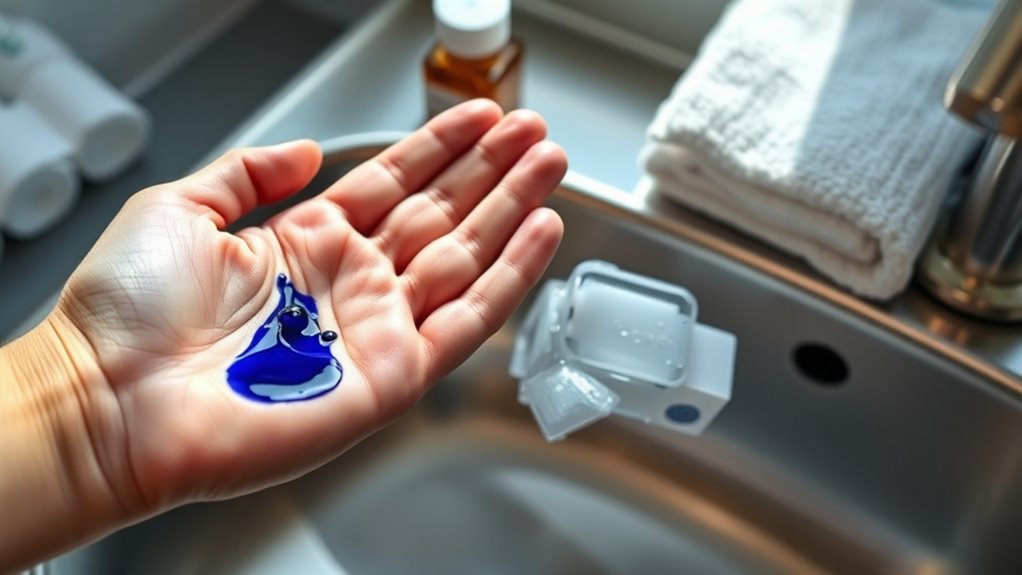
Natural scrubs can handle many ink stains gently, but some marks cling stubbornly despite your best efforts. When natural and household methods don’t fully erase those tough stains, it’s time to try professional ink removers.
Products like INKO Special use abrasive microspheres that break down deeply embedded ink pigments while being gentle on your skin. These removers are specially formulated to respect your skin’s natural balance, reducing irritation risks compared to harsh chemicals you might find at home.
If you’re unsure which product suits your stubborn stain, consulting a skincare or industrial hygiene professional can help you choose the safest and most effective option. By opting for professional ink removers, you guarantee a more efficient stain removal process without compromising your skin’s health.
How to Protect Your Skin While Removing Ink Stains
If you want to protect your skin while removing ink stains, it’s best to stick with gentle methods like soap and water or oil-based solutions. These are much kinder than harsh chemicals that can irritate your skin. Also, don’t forget to wear gloves when you’re handling ink—it really helps minimize direct contact and keeps those stubborn stains off your hands. Once you’ve finished cleaning, a little moisturizer goes a long way in keeping your skin hydrated and healthy. So, taking these simple steps can make a big difference!
Skin-Friendly Removal Techniques
When removing ink from your hands, you’ll want to choose methods that protect your skin rather than harm it. Opt for skin-friendly removal techniques like gentle methods using soap and water or natural remedies such as olive oil. These minimize irritation while effectively lifting ink stains.
Avoid harsh scrubbing or aggressive substances that can cause dryness and redness. You can also try professional solutions like INKO Special, designed to remove ink while respecting your skin’s health.
To further protect and nourish your skin, look for products containing skin-conditioning ingredients like silk-derived sericin. After removing the ink, always follow up with a good moisturizer to maintain your skin’s barrier and prevent dryness.
This approach keeps your hands clean and healthy.
Avoiding Harsh Chemicals
Although it might be tempting to reach for strong chemicals or scrub hard to remove ink stains, doing so can seriously damage your skin. Harsh chemicals and abrasive scrubbing can cause irritation, dryness, or even burns. Instead, protect your skin by following these tips:
Avoid harsh chemicals and opt for gentle, natural remedies like lemon juice or olive oil. Use blotting paper or tissue to absorb excess ink immediately after contact. Wash your hands promptly with soap and water to reduce ink penetration.
Wear gloves during ink handling or refilling to prevent direct skin contact. Be gentle when removing ink and avoid scrubbing hard to protect your skin’s barrier.
Taking these steps helps you remove ink safely without compromising your skin’s health.
Protective Measures During Cleaning
Since ink removal can involve exposure to chemicals or repeated washing, you should take steps to protect your skin throughout the process. Start by applying a thick moisturizer or barrier cream to create a protective barrier before cleaning.
Wearing gloves also helps prevent direct contact with solvents, reducing irritation or dermatitis risk. Choose gentle, natural ink removal methods to avoid excessive dryness or redness.
Be sure to avoid aggressive scrubbing and work in a well-ventilated area to maintain your skin’s barrier and minimize damage. After removing the ink, rinse your hands thoroughly with water to wash away any leftover chemicals.
These protective measures will help keep your skin healthy while effectively removing ink stains.
What to Do If Ink Stains Irritate Your Skin
If ink irritates your skin, start by washing the area thoroughly with soap and warm water to remove as much ink as possible. Removing ink promptly helps reduce skin irritation and prevents further damage to the stained area.
If you experience discomfort after getting ink on your skin, follow these steps to help reduce irritation:
- Apply a gentle, natural moisturizer or aloe vera gel to soothe the skin.
- Avoid scratching or rubbing the irritated area to prevent worsening inflammation.
- Use a mild antihistamine cream if you notice persistent itching or signs of an allergic reaction.
- Keep the stained area clean and dry to promote healing.
- Seek medical advice if irritation worsens, persists, or develops into a rash or dermatitis.
Taking quick action when dealing with ink on your skin can minimize discomfort and support faster recovery from skin irritation.
How to Care for Your Skin After Removing Ink Stains
Once you’ve removed the ink, be sure to moisturize your skin with a soothing lotion. This helps keep it hydrated and can calm any irritation you might have. Try to avoid harsh scrubbing, too—gentle products are best for protecting your skin’s natural barrier. By taking these simple steps, you’ll help prevent dryness down the line and keep your hands feeling healthy.
Moisturizing After Ink Removal
Although removing ink from your hands can leave your skin feeling dry and irritated, applying a moisturizing lotion or cream right afterward helps restore hydration and soothe any discomfort. Moisturizing is essential to prevent dryness and maintain your skin’s natural barrier.
To care for your skin effectively after ink removal, remember to:
- Use moisturizers enriched with sericin or glycerin for added nourishment
- Avoid harsh soaps or alcohol-based products without following up with moisturizer
- Apply lotion immediately after washing to lock in moisture
- Keep your skin hydrated regularly to improve elasticity
- Choose gentle, fragrance-free creams to minimize irritation
Soothing Irritated Skin
Because ink removal can leave your skin irritated and sensitive, you should rinse your hands with lukewarm water and apply a gentle, fragrance-free moisturizer right away to soothe discomfort and support healing. Choose a moisturizer containing soothing ingredients like aloe vera or sericin to help reduce redness and promote skin repair.
Avoid harsh scrubbing or using aggressive chemicals after ink removal, as this can worsen irritation. If your skin feels inflamed, applying a cool compress can ease redness and calm discomfort effectively.
Regularly moisturizing keeps your skin hydrated and resilient during recovery. By treating your skin gently and consistently using a proper moisturizer, you’ll support healing and prevent further irritation, ensuring your hands feel comfortable and healthy after removing ink stains.
Preventing Future Irritation
To prevent future irritation after removing ink stains, you should wash your hands thoroughly with gentle soap and water to eliminate any leftover chemicals. Then, take care of your skin by following these tips:
Apply a moisturizing lotion with soothing ingredients like aloe vera or sericin to restore hydration. Avoid harsh scrubbing or abrasive tools that can dry or damage your skin.
Wear gloves when handling ink in the future to reduce direct contact. Also, monitor your skin regularly for redness, itching, or other signs of irritation.
If any irritation persists or worsens over time, consult a dermatologist.
Tips to Avoid Ink Stains on Your Hands
When you want to keep your hands clean while working with ink, taking simple precautions can make a big difference. To avoid an ink stain, use blotting paper immediately after writing to absorb excess pen ink. This prevents ink from spreading and reduces the need to remove ink later.
Wearing gloves during refilling or handling ink creates a protective barrier, keeping your skin free from stains. You should also hold pens away from the nib or tip to minimize accidental leaks onto your hands.
Adjusting your grip and writing angle, especially if you’re left-handed, helps reduce smearing and ink transfer. Furthermore, using a rocker blotter quickly soaks up extra ink, preventing smudges while you write.
These cleaning methods not only save you time but also keep your hands looking clean and free from stubborn ink stains. Taking these steps will help you maintain ink-free hands effortlessly.
Best Practices for Keeping Your Hands Ink-Free
You can keep your hands ink-free by taking some simple preventive measures. For example, using blotting paper to absorb excess ink right away really helps.
Also, wearing gloves while handling ink is an easy way to protect your skin from stains. It’s a quick step that makes a big difference.
Plus, adjusting your grip and cleaning your hands promptly can minimize ink contact and prevent smudging. These little habits add up to keeping your hands clean.
Preventive Measures
How can you keep your hands free of ink stains during your work? Taking preventive measures is key to avoiding stubborn ink marks. Start by using blotting paper to absorb excess ink immediately after writing. This stops smudges and skin contact.
Here are five effective tips to keep your hands ink-free:
- Use blotting paper right after writing to soak up extra ink.
- Hold the pen away from the nib and adjust your grip to reduce ink transfer.
- Employ a rocker blotter to press excess ink off paper quickly.
- Clean your hands and nails regularly during ink work to prevent buildup.
- Consider wearing gloves during ink refilling to protect your skin.
Protective Tools
Although ink stains can be stubborn, using protective tools makes it much easier to keep your hands clean. Wearing gloves is one of the most effective protective tools; it creates a barrier that prevents direct ink contact.
Moreover, using blotting paper right after writing absorbs excess ink, stopping it from spreading to your fingers. Adjust your grip to keep the pen’s nib away from your skin, reducing accidental smudges.
Employing a rocker blotter while working further controls ink smudges, minimizing cleanup. By consistently using these protective tools and handling techniques, you’ll reduce ink stains and save time on removal.
Incorporating them into your routine helps maintain ink-free hands and makes your writing experience cleaner and more enjoyable.
Frequently Asked Questions
Can Ink Stains on Hands Be Removed With Toothpaste?
Yes, you can remove ink stains on your hands with toothpaste, but don’t believe the full Toothpaste Myth. It’s not a miracle cure. Toothpaste contains mild abrasives that help scrub away light ink stains when you rub it gently.
Whitening toothpaste with baking soda works better, but it might not tackle stubborn inks. Rinse well afterward to avoid dryness. So, toothpaste helps, but it’s not foolproof for every ink stain.
How Long Does It Take for Ink Stains to Fade Naturally?
Like waiting for a telegram to arrive, ink stain duration varies. It usually takes anywhere from a few hours to several days for ink stains to fade naturally.
Water-based inks typically disappear within 24 to 48 hours, while oil-based inks might linger longer. You’ve got to keep your hands clean and moisturized to speed up skin renewal, which helps shorten the stain duration and gets your hands back to normal faster.
Are There Specific Ink Types That Are Harder to Remove?
Yes, certain ink types are definitely harder to remove because of their ink chemistry. Industrial inks with deep-penetrating pigments, oil-based, and solvent-based inks stick more stubbornly to your skin.
Permanent markers and pigment inks use chemical binders or resins that bond strongly, making removal tougher. The longer the ink sits, the more those chemical interactions set in. So, you’ll want specialized removers for these tougher ink types.
Can Hand Sanitizer Help Remove Ink Stains?
Absolutely, hand sanitizer can help remove ink stains! Think of it as a tiny chemical reaction hero. Its alcohol content dissolves the ink pigments faster than soap alone.
When you apply sanitizer, it breaks down the ink’s hold on your skin, making it easier to rub off. So, next time ink smudges your hands, grab that sanitizer and watch the chemical reaction work its magic for quick removal.
Is It Safe to Use Nail Polish Remover on Skin Ink Stains?
You can use nail polish remover to get rid of ink stains, but you need to prioritize chemical safety. Acetone in nail polish remover can irritate and dry out your skin, so don’t overuse it.
Always do a patch test first to check for reactions. After using it, wash your hands thoroughly and apply moisturizer to protect your skin barrier.
For safer options, try soap and water or gentler removers instead.
Conclusion
Now that you know how to tackle ink stains quickly and gently, why let a little ink ruin your day? With simple soap washing, rubbing alcohol for stubborn spots, and natural scrubs, you can keep your hands clean without harsh damage.
Remember to care for your skin afterward and avoid future stains with smart habits. Isn’t it easier to enjoy your work when your hands stay ink-free and comfortable?
Leave a Reply